
Blog
/
Network
/
November 26, 2025

CastleLoader & CastleRAT: Behind TAG150’s Modular Malware Delivery System

TAG-150, a MaaS operator active since March 2025, uses CastleLoader and CastleRAT in multi-stage attacks. CastleLoader acts as a loader that retrieves and executes additional malware through deceptive domains and malicious GitHub repositories, while CastleRAT functions as a remote access trojan providing attackers with system control, command execution, and data theft capabilities. Darktrace detected and blocked early attack activity, leveraging Autonomous Response to prevent further compromise and protect enterprise networks.
No items found.
Inside the SOC
Darktrace cyber analysts are world-class experts in threat intelligence, threat hunting and incident response, and provide 24/7 SOC support to thousands of Darktrace customers around the globe. Inside the SOC is exclusively authored by these experts, providing analysis of cyber incidents and threat trends, based on real-world experience in the field.
No items found.
CastleLoader & CastleRAT: Behind TAG150’s Modular Malware Delivery SystemDefault blog image
26
Nov 2025

What is TAG-150?

TAG-150, a relatively new Malware-as-a-Service (MaaS) operator, has been active since March 2025, demonstrating rapid development and an expansive, evolving infrastructure designed to support its malicious operations. The group employs two custom malware families, CastleLoader and CastleRAT, to compromise target systems, with a primary focus on the United States [1]. TAG-150’s infrastructure included numerous victim-facing components, such as IP addresses and domains functioning as command-and-control (C2) servers associated with malware families like SecTopRAT and WarmCookie, in addition to CastleLoader and CastleRAT [2].

As of May 2025, CastleLoader alone had infected a reported 469 devices, underscoring the scale and sophistication of TAG-150’s campaign [1].

What are CastleLoader and CastleRAT?

CastleLoader is a loader malware, primarily designed to download and install additional malware, enabling chain infections across compromised systems [3]. TAG-150 employs a technique known as ClickFix, which uses deceptive domains that mimic document verification systems or browser update notifications to trick victims into executing malicious scripts. Furthermore, CastleLoader leverages fake GitHub repositories that impersonate legitimate tools as a distribution method, luring unsuspecting users into downloading and installing malware on their devices [4].

CastleRAT, meanwhile, is a remote access trojan (RAT) that serves as one of the primary payloads delivered by CastleLoader. Once deployed, CastleRAT grants attackers extensive control over the compromised system, enabling capabilities such as keylogging, screen capturing, and remote shell access.

TAG-150 leverages CastleLoader as its initial delivery mechanism, with CastleRAT acting as the main payload. This two-stage attack strategy enhances the resilience and effectiveness of their operations by separating the initial infection vector from the final payload deployment.

How are they deployed?

Castleloader uses code-obfuscation methods such as dead-code insertion and packing to hinder both static and dynamic analysis. After the payload is unpacked, it connects to its command-and-control server to retrieve and running additional, targeted components.

Its modular architecture enables it to function both as a delivery mechanism and a staging utility, allowing threat actors to decouple the initial infection from payload deployment. CastleLoader typically delivers its payloads as Portable Executables (PEs) containing embedded shellcode. This shellcode activates the loader’s core module, which then connects to the C2 server to retrieve and execute the next-stage malware.[6]

Following this, attackers deploy the ClickFix technique, impersonating legitimate software distribution platforms like Google Meet or browser update notifications. These deceptive sites trick victims into copying and executing PowerShell commands, thereby initiating the infection kill chain. [1]

When a user clicks on a spoofed Cloudflare “Verification Step” prompt, a background request is sent to a PHP script on the distribution domain (e.g., /s.php?an=0). The server’s response is then automatically copied to the user’s clipboard using the ‘unsecuredCopyToClipboard()’ function. [7].

The Python-based variant of CastleRAT, known as “PyNightShade,” has been engineered with stealth in mind, showing minimal detection across antivirus platforms [2]. As illustrated in Figure 1, PyNightShade communicates with the geolocation API service ip-api[.]com, demonstrating both request and response behavior

Packet Capture (PCAP) of PyNightShade, the Python-based variant of CastleRAT, communicating with the geolocation API service ip-api[.]com.
Figure 1: Packet Capture (PCAP) of PyNightShade, the Python-based variant of CastleRAT, communicating with the geolocation API service ip-api[.]com.

Darktrace Coverage

In mid-2025, Darktrace observed a range of anomalous activities across its customer base that appeared linked to CastleLoader, including the example below from a US based organization.

The activity began on June 26, when a device on the customer’s network was observed connecting to the IP address 173.44.141[.]89, a previously unseen IP for this network along with the use of multiple user agents, which was also rare for the user.  It was later determined that the IP address was a known indicator of compromise (IoC) associated with TAG-150’s CastleRAT and CastleLoader operations [2][5].
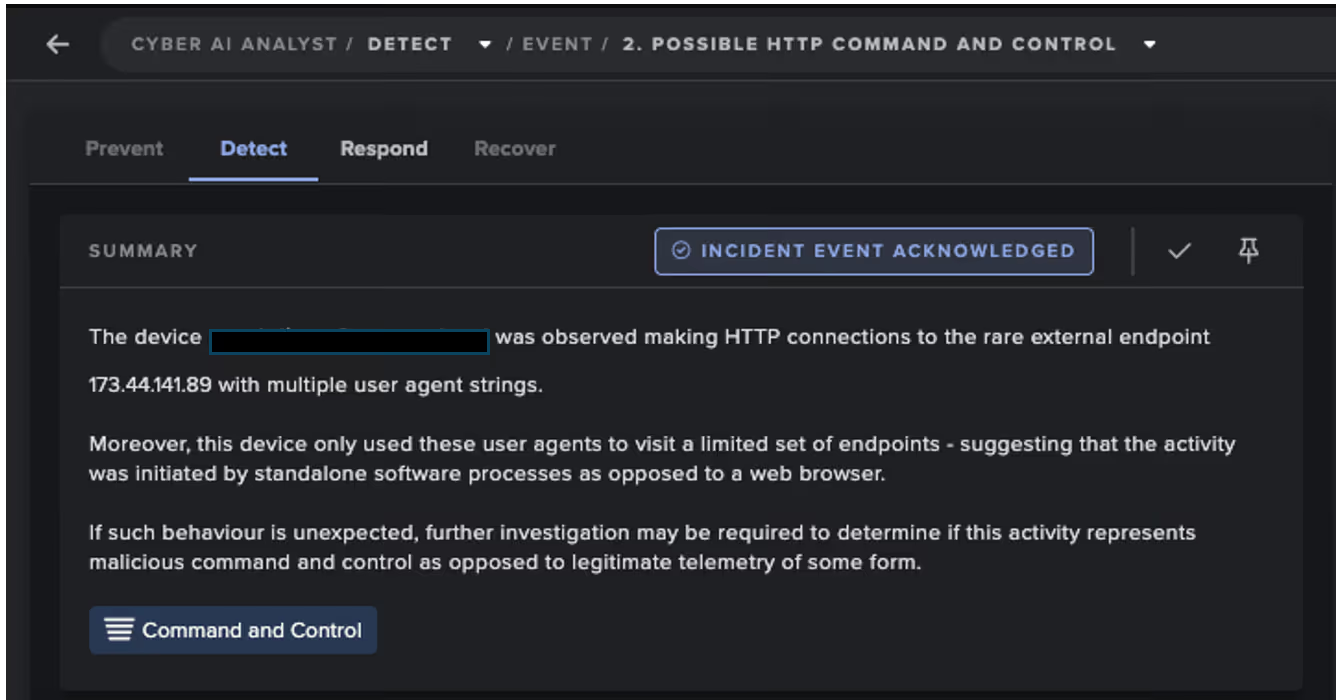
Figure 2: Darktrace’s detection of a device making unusual connections to the malicious endpoint 173.44.141[.]89.

The device was observed downloading two scripts from this endpoint, namely ‘/service/download/data_5x.bin’ and ‘/service/download/data_6x.bin’, which have both been linked to CastleLoader infections by open-source intelligence (OSINT) [8]. The archives contains embedded shellcode, which enables attackers to execute arbitrary code directly in memory, bypassing disk writes and making detection by endpoint detection and response (EDR) tools significantly more difficult [2].
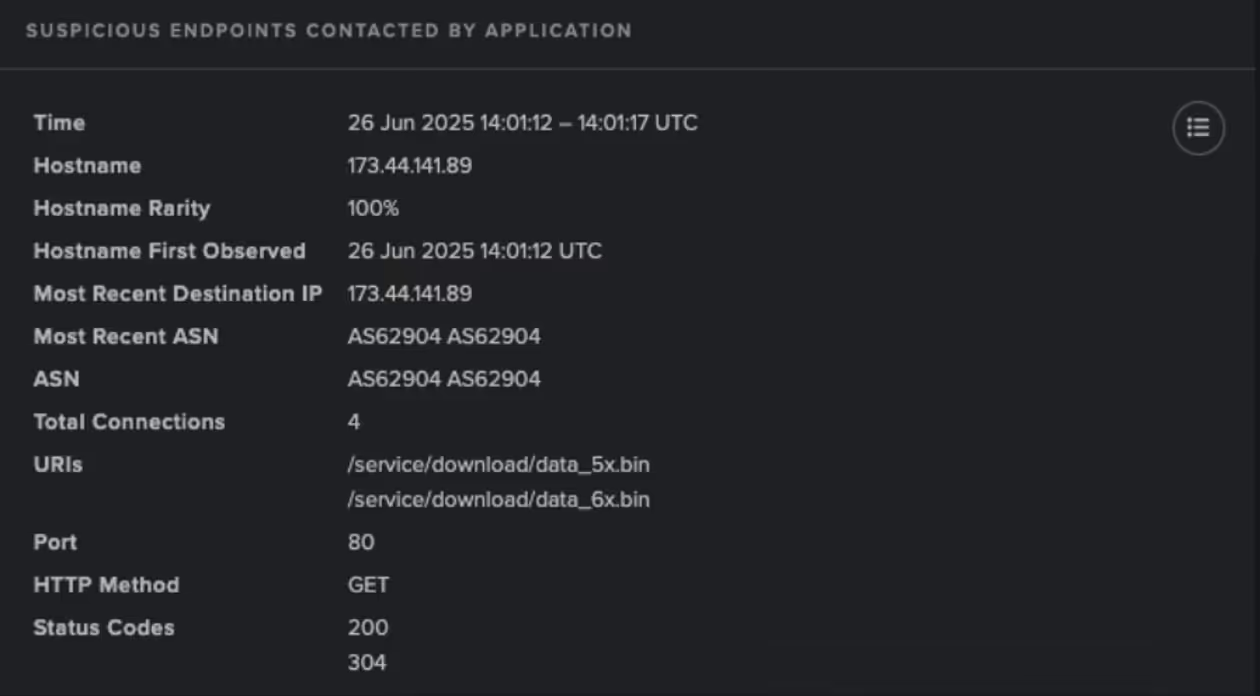
 Darktrace’s detection of two scripts from the malicious endpoint.
Figure 3: Darktrace’s detection of two scripts from the malicious endpoint.

In addition to this, the affected device exhibited a high volume of internal connections to a broad range of endpoints, indicating potential scanning activity. Such behavior is often associated with reconnaissance efforts aimed at mapping internal infrastructure.

Darktrace / NETWORK correlated these behaviors and generated an Enhanced Monitoring model, a high-fidelity security model designed to detect activity consistent with the early stages of an attack. These high-priority models are continuously monitored and triaged by Darktrace’s Security Operations Center (SOC) as part of the Managed Threat Detection and Managed Detection & Response services, ensuring that subscribed customers are promptly alerted to emerging threats.
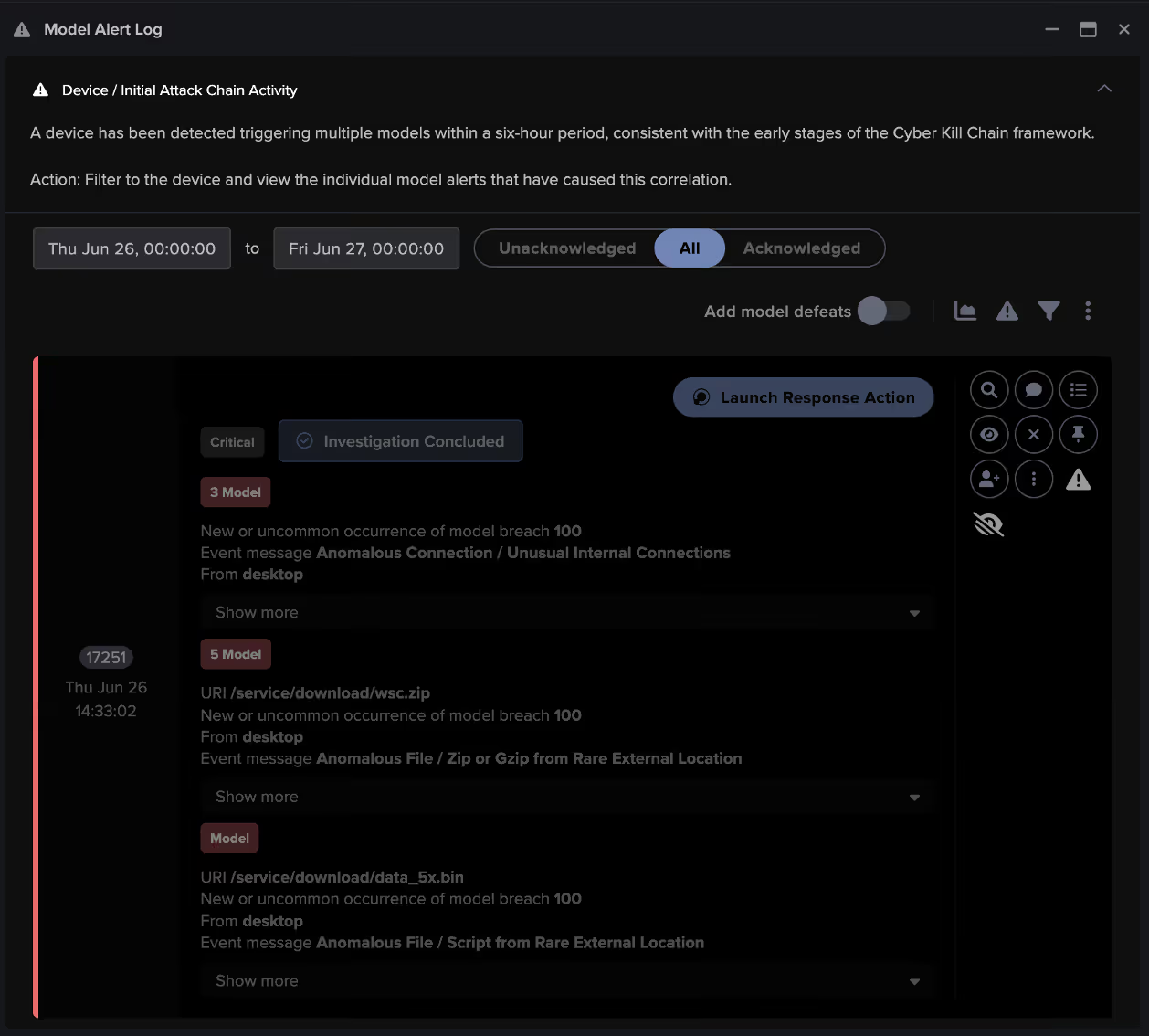
Darktrace detected an unusual ZIP file download alongside the anomalous script, followed by internal connectivity. This activity was correlated under an Enhanced Monitoring model.
Figure 4: Darktrace detected an unusual ZIP file download alongside the anomalous script, followed by internal connectivity. This activity was correlated under an Enhanced Monitoring model.

Darktrace Autonomous Response

Fortunately, Darktrace’s Autonomous Response capability was fully configured, enabling it to take immediate action against the offending device by blocking any further connections external to the malicious endpoint, 173.44.141[.]89. Additionally, Darktrace enforced a ‘group pattern of life’ on the device, restricting its behavior to match other devices in its peer group, ensuring it could not deviate from expected activity, while also blocking connections over 443, shutting down any unwanted internal scanning.
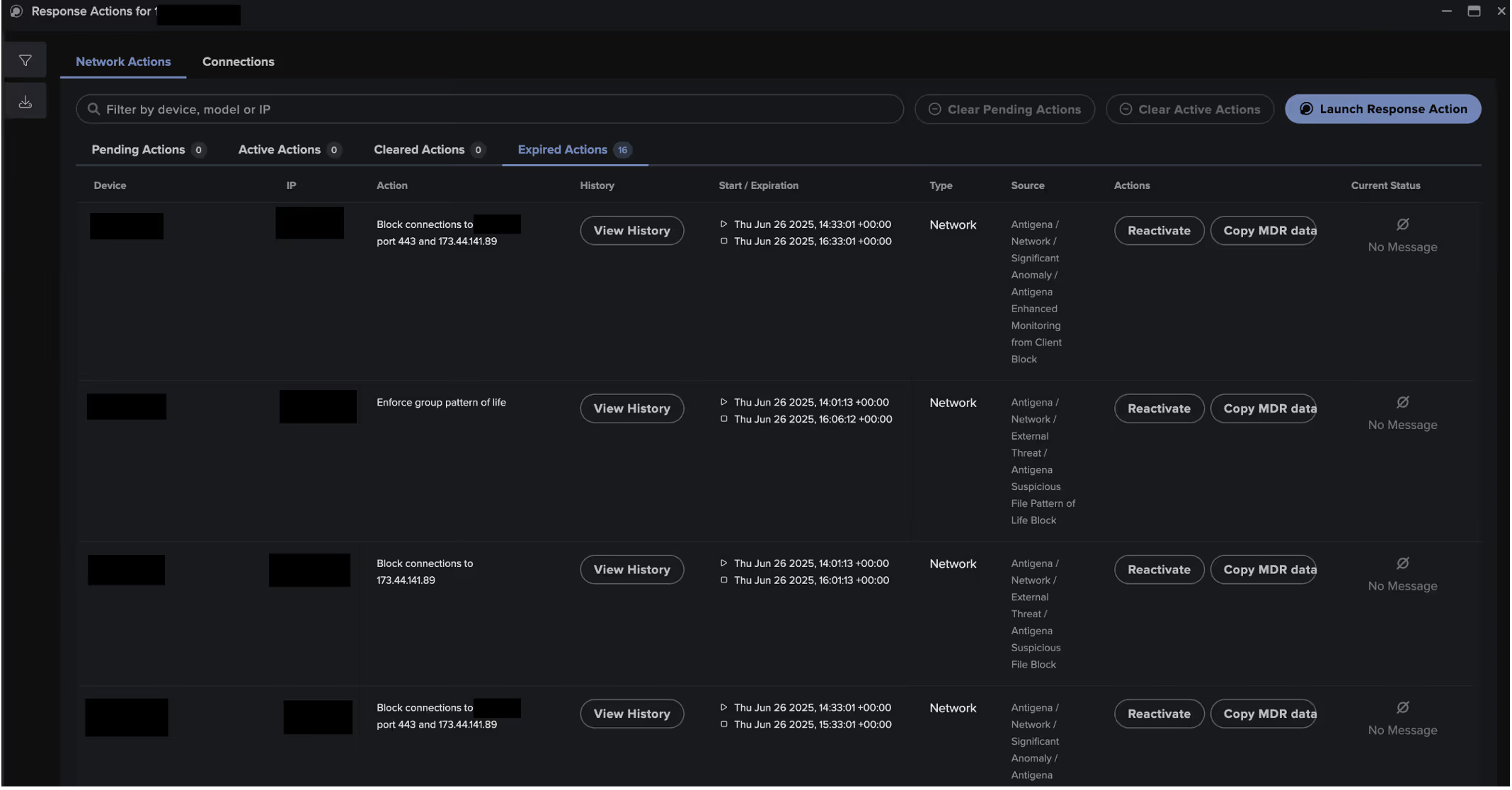
Figure 5: Actions performed by Darktrace’s Autonomous Response to contain the ongoing attack.

Conclusion

The rise of the MaaS ecosystem, coupled with attackers’ growing ability to customize tools and techniques for specific targets, is making intrusion prevention increasingly challenging for security teams. Many threat actors now leverage modular toolkits, dynamic infrastructure, and tailored payloads to evade static defenses and exploit even minor visibility gaps. In this instance, Darktrace demonstrated its capability to counter these evolving tactics by identifying early-stage attack chain behaviors such as network scanning and the initial infection attempt. Autonomous Response then blocked the CastleLoader IP delivering the malicious ZIP payload, halting the attack before escalation and protecting the organization from a potentially damaging multi-stage compromise

Credit to Ahmed Gardezi (Cyber Analyst) Tyler Rhea (Senior Cyber Analyst)
Edited by Ryan Traill (Analyst Content Lead)

Appendices

Darktrace Model Detections

  • Anomalous Connection / Unusual Internal Connections
  • Anomalous File / Zip or Gzip from Rare External Location
  • Anomalous File / Script from Rare External Location
  • Initial Attack Chain Activity (Enhanced Monitoring Model)

MITRE ATT&CK Mapping

  • T15588.001 - Resource Development – Malware
  • TG1599 – Defence Evasion – Network Boundary Bridging
  • T1046 – Discovery – Network Service Scanning
  • T1189 – Initial Access

List of IoCs
IoC - Type - Description + Confidence

  • 173.44.141[.]89 – IP – CastleLoader C2 Infrastructure
  • 173.44.141[.]89/service/download/data_5x.bin – URI – CastleLoader Script
  • 173.44.141[.]89/service/download/data_6x.bin – URI  - CastleLoader Script
  • wsc.zip – ZIP file – Possible Payload

References

[1] - https://blog.polyswarm.io/castleloader

[2] - https://www.recordedfuture.com/research/from-castleloader-to-castlerat-tag-150-advances-operations

[3] - https://www.pcrisk.com/removal-guides/34160-castleloader-malware

[4] - https://www.scworld.com/brief/malware-loader-castleloader-targets-devices-via-fake-github-clickfix-phishing

[5] https://www.virustotal.com/gui/ip-address/173.44.141.89/community

[6] https://thehackernews.com/2025/07/castleloader-malware-infects-469.html

[7] https://www.cryptika.com/new-castleloader-attack-using-cloudflare-themed-clickfix-technique-to-infect-windows-computers/

[8] https://www.cryptika.com/castlebot-malware-as-a-service-deploys-range-of-payloads-linked-to-ransomware-attacks/


No items found.
Inside the SOC
Darktrace cyber analysts are world-class experts in threat intelligence, threat hunting and incident response, and provide 24/7 SOC support to thousands of Darktrace customers around the globe. Inside the SOC is exclusively authored by these experts, providing analysis of cyber incidents and threat trends, based on real-world experience in the field.
No items found.

More in this series

No items found.

Blog

/

Network

/

October 15, 2026

CikaBika Bot: Inside a Discord RAT

Default blog imageDefault blog image

‍

Key Takeaways

·      Darktrace malware researchers have found an ongoing malware campaign using a document-themed lure containing a malicious LNK file and a PDF with an embedded payload.

·      The Nim based loader deploys a Rust-based remote access trojan (RAT), using a UAC bypass and DLL search-order hijacking technique targeting Microsoft Edge.

·      The RAT uses Discord for C2, creating dedicated channels to manage infected devices and execute commands.

·      CikaBika Bot supports system reconnaissance, remote command execution, screenshot capture, and file transfers.

‍

Introduction

In a threat landscape where attackers continue to rely on social engineering techniques to deliver malware, legitimate services are increasingly being abused to support malicious operations. Communications platforms like Discord can provide attackers with a ready-made channel for command-and-control (C2), allowing them to manage compromised devices without establishing dedicated infrastructure.

Malware researchers at Darktrace have identified a campaign distributing CikaBika, a Rust-based RAT that uses Discord for C2. The infection chain begins with a disk image and a malicious Windows shortcut. A Nim loader extracts the final payload and attempts to plant it in Microsoft Edge’s installation directory using a PowerShell UAC bypass. Once running, the RAT collects host information, registers the device with Discord, and accepts commands through a dedicated channel.

Technical Analysis

‍

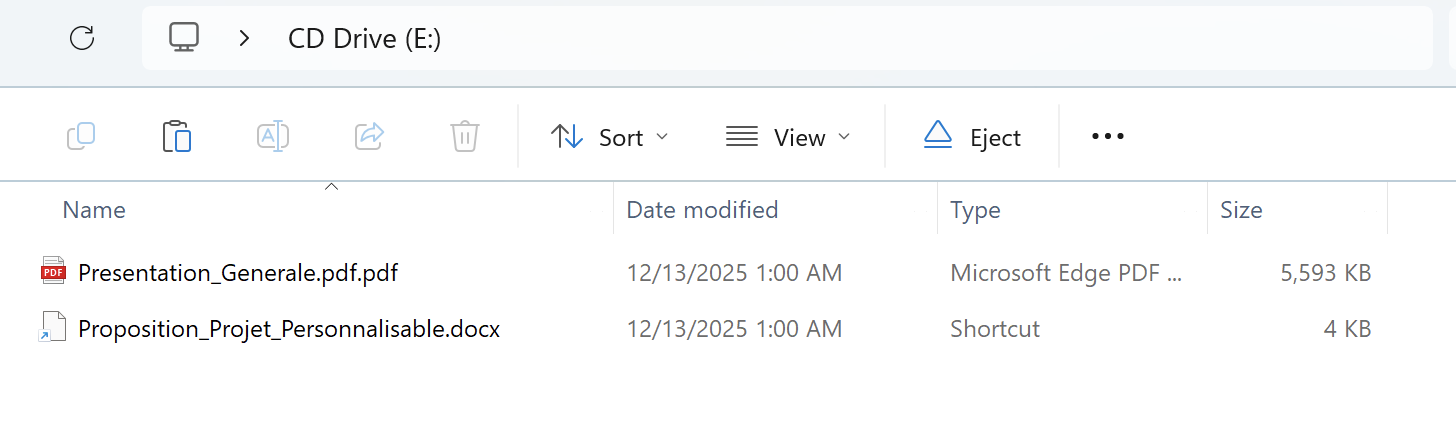
Figure 1: Contents of Proposition_Projet.img.

‍

Initial access and PDF payload

The malware is packaged within a disk image named Proposition_Projet.img. Inside are a PDF titled “Presentation_Generale.pdf.pdf” and a Windows shortcut (LNK) disguised as a Word document, “Proposition_Projet_Personnalisable.docx”. The delivery method has not been confirmed; however, the filenames and document-themed lure are consistent with a phishing campaign.

‍

Figure 2: PowerShell command embedded in the malicious shortcut.


Opening the shortcut launches a hidden PowerShell process while displaying the PDF as a decoy. The French-language document explains how to produce a written summary or contraction of a text. In the background, PowerShell reads the PDF as bytes and uses the value at offset 239 (0x20) as an XOR key to decode an embedded executable. The resulting payload is written to %TEMP%\IfyuUapz.txt and executed using cmd /c.

Nim loader and UAC bypass

“IfyuUapz.txt” is a Nim-based loader that contains two Base64-encoded blobs: a Rust dynamic-link library (DLL)  and a PowerShell deployment script. Both are decoded and written to temporary files, referenced to within the loader as “dllFile” and “copyPs1”. The loader runs the script through a hidden PowerShell process using an encoded command, then attempts to load the DLL using Nim’s loadLib function. If loading fails, it invokes regsvr32.exe and retries.

Figure 3: Silent DLL deployer.

The PowerShell component is responsible for moving the DLL to C:\Program Files (x86)\Microsoft\Edge\Application\dbghelp.dll. It first copies the DLL to C:\Windows\Temp\dbghelp.tmp, then modifies HKCU\Software\Classes\ms-settings\shell\open\command so that launching computerdefaults.exe can trigger a command to move the staged DLL into the protected Edge directory. This is an attempt to bypass User Account Control (UAC), which depends on the target’s Windows configuration.

The script also compiles a small C# helper that calls ShowWindow to hide windows associated with Windows Settings and ApplicationFrameHost. It launches the bypass helper three times, checks for the presence of the destination DLL, and attempts to delete the temporary scripts, intermediate DLL, and associated registry changes.

‍

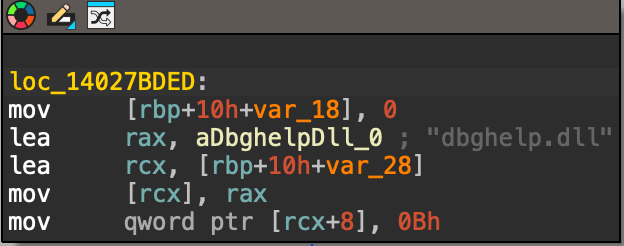
Figure 4: Legitimate msedge.exe function to load the legitimate dbghelp.dll.

‍

The legitimate msedge.exe has a delay-loaded dependency on dbghelp.dll, and the malicious DLL exports a subset of the functions associated with Microsoft’s debugging library. The attacker appears to be exploiting this dependency through DLL search-order hijacking. However, it does not export every function in Edge’s delay-import table, meaning its compatibility with the host is incomplete. The observed code establishes the intended sideloading route, rather than proving that Edge successfully loaded the planted DLL.

‍

Rust RAT payload

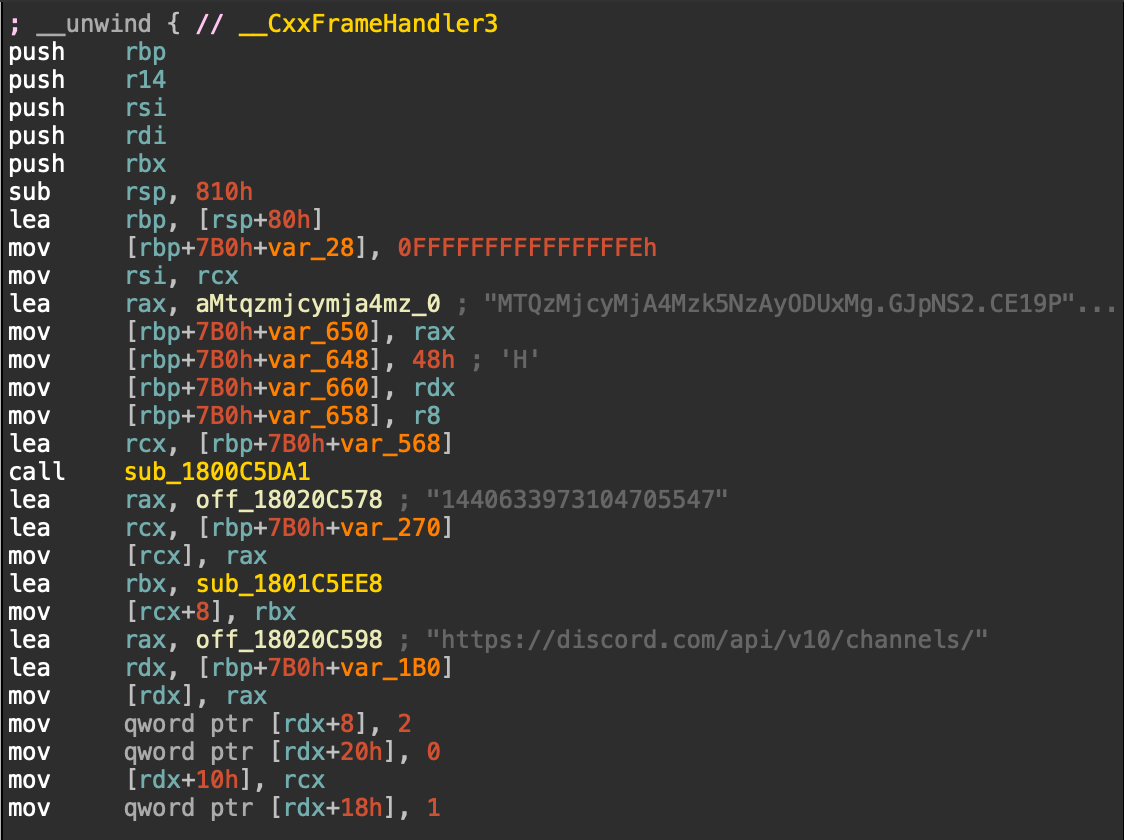
Figure 5: Discord configuration within the RAT.

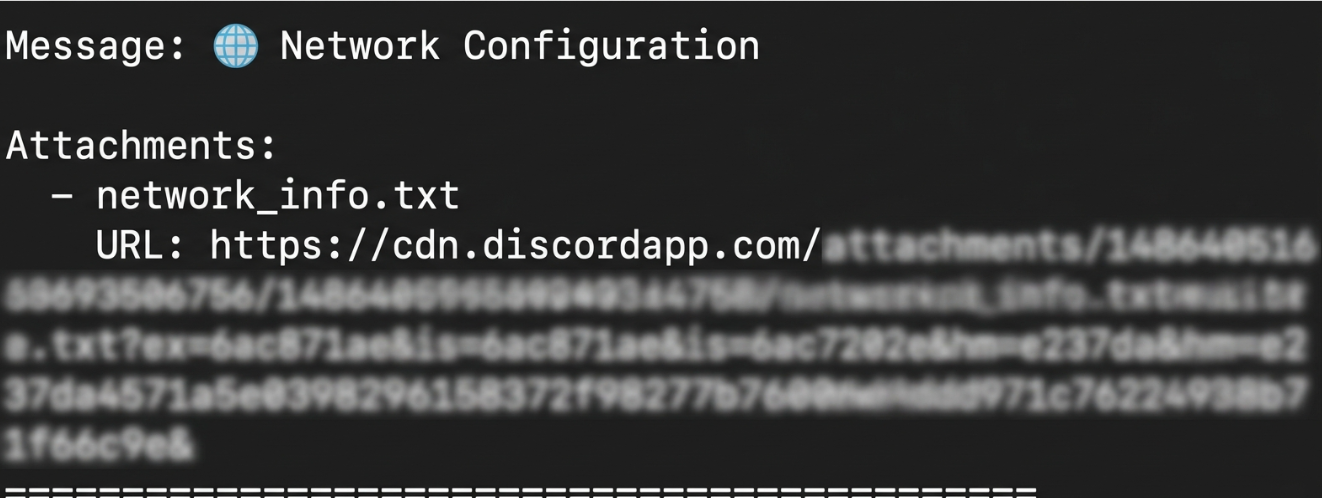
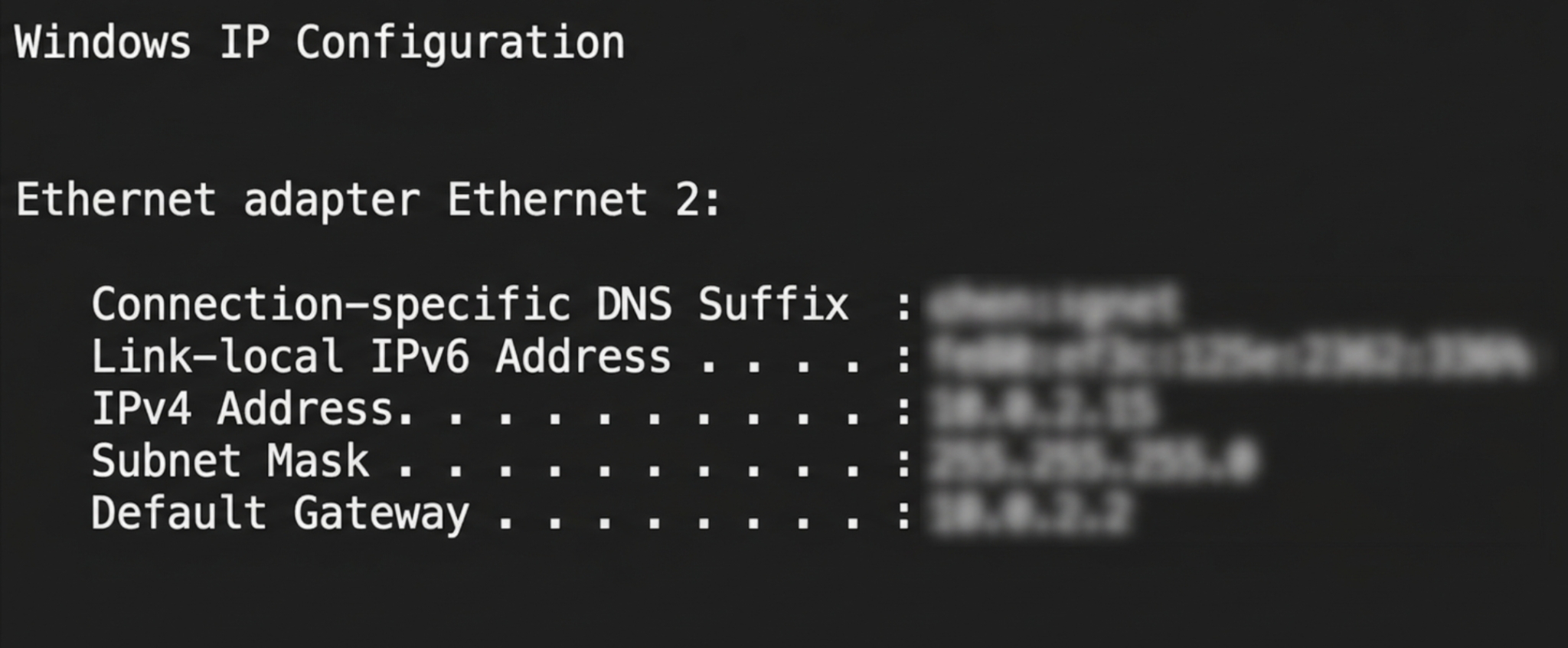
The malicious dbghelp.dll (IfyuUapz.txt) is a Rust-based RAT. At startup, the RAT registers the compromised device with Discord and begins collecting information about the host. Its reconnaissance routine gathers system details, runs tasklist to enumerate processes, executes ipconfig to obtain network configuration, and attempts to take a screenshot. The resulting artifacts include tasklist_startup.txt, network_info.txt, and screenshot.png.

Figure 6: Network configuration notification in Discord channel.

‍

Figure 7: Network configuration output from network_info.txt.

‍

Discord C2

The RAT uses Discord channels to send commands and report results. The operator can send commands to the device’s channel and receive the resulting output in the same conversation. This gives the attacker an interactive command interface without having to operate and maintain a dedicated C2 server.

Figure 8: Commands available in Discord.

The command set includes !shell for remote command execution; !sysinfo and !info for host details; !isOn for status checks; !tasklist and !ps for process enumeration; and !kill for process termination. File-transfer commands include !upload and !download. Additional strings and command handlers reference screenshots (!src), camera access (!camera), streaming (!stream), and broadcasting (!broadcast).

‍

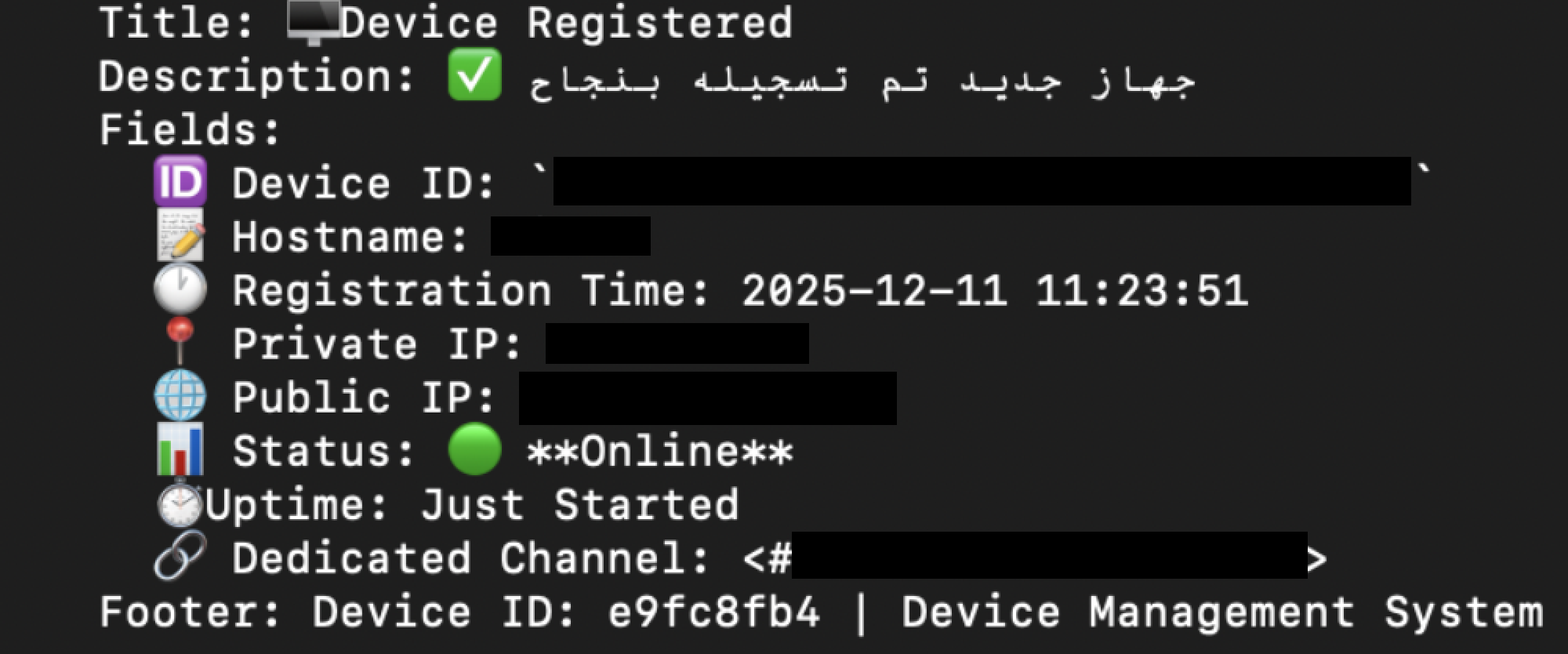
Figure 9: Device registration in Discord.

During device registration, the malware retrieves the victim’s public IP address using ipify.com. The registration message records the device ID, hostname, registration time, private and public IP addresses, status, uptime, and the Discord channel assigned to that device.

Operator activity and exfiltration

Figure 10: Powershell commands sent through Discord to exfiltrate data.

Once a device is registered, the attacker can issue commands through its dedicated Discord channel. In the observed activity, the attacker compressed a directory into a ZIP and exfiltrated it using ngrok.

Figure 11: Download command to retrieve a document from the target.

‍

The operator can also use !download to retrieve files from target. The example above displays a request for a specific document on the victim’s desktop. The requested file is then returned through the device’s Discord channel, giving the attacker a direct way to store and access selected data.

Conclusion

CikaBika Bot demonstrates how attackers continue to rely on social engineering techniques to deliver malware. Although the initial distribution method has not been confirmed, the use of a disk image containing a shortcut disguised as a Word document, alongside a legitimate-looking PDF, suggests the campaign was designed for phishing.

While Nim is less commonly encountered than C in Windows malware, it has increasingly appeared in malicious tooling. In this case, Nim is used to unpack and deploy a Rust-based RAT, adding another layer to the infection chain.

Once installed, CikaBika Bot uses Discord as its C2 platform, allowing the attacker to manage compromised devices, execute commands, and retrieve files without maintaining dedicated C2 infrastructure. The observed use of Discord channels for individual victims, alongside additional data exfiltration through ngrok, shows how legitimate services can be repurposed to support malicious operations.

Credit to Tara Gould (Malware Research Lead)

Indicators of Compromise (IoCs)

Presentation_Generale.pdf.pdf - eeb52cb95113a131c2c7713c17872da6

Proposition_Projet_Personnalisable.docx.lnk - 62e3e85eca78a0cd7e6669e9f33d936d

dbghelp.dll - c66858718d883bcfb9ce2c19b59f96c9

IfyuUapz.txt - 2deb724a709b0b892248405323350e9b

MITRE ATTACK

T1204.002 – User Execution: Malicious File
T1036.007 – Masquerading: Double File Extension
T1059.001 – PowerShell
T1027 – Obfuscated Files or Information
T1140 – Deobfuscate/Decode Files or Information
T1548.002 – Bypass User Account Control
T1112 – Modify Registry
T1574.001 – DLL Search Order Hijacking
T1036.005 – Masquerading: Match Legitimate Resource Name or Location
T1082 – System Information Discovery
T1016 – System Network Configuration Discovery
T1057 – Process Discovery
T1113 – Screen Capture
T1059.003 – Command and Scripting Interpreter: Windows Command Shell
T1102.002 – Web Service: Bidirectional Communication
T1560.001 – Archive Collected Data: Archive via Utility
T1567 – Exfiltration Over Web Service
T1070.004 – Indicator Removal: File Deletion
T1218.010 – Regsvr32
T1005 – Data from Local System
T1074.001 – Data Staged: Local Data Staging
T1041 – Exfiltration Over C2 Channel
T1564.003 – Hide Artifacts: Hidden Window
T1027.013 – Encrypted/Encoded File

Continue reading
About the author
Tara Gould
Malware Research Lead

Blog

/

/

October 5, 2026

AI-Assisted Attacks Still Leave a Behavioral Trace  

Default blog imageDefault blog image

Key Insights

  • Darktrace identified behavioral indicators associated with two campaigns linked to AI-assisted threat activity, highlighting the growing role of AI in modern cyber-attacks.
  • Observed activity involved suspicious WebDAV file transfers, disguised executable downloads, beaconing to rare infrastructure, unusual process execution, and communications with C2 infrastructure linked to active intrusion campaigns.

Introduction

Just as organizations are incorporating AI into their operations to take advantage of its benefits, threat actors are doing the same, creating new challenges for defenders.

Much of the discussion around AI risk has focused on the expanding attack surface created by AI systems within organizations. These systems are often granted privileged access and heightened permissions to carry out their duties, introducing new security risks and unintended consequences.

At the same time, threat actors are learning to leverage AI to enable malicious activities such as vulnerability discovery, exploit creation, and progressing through the Cyber Kill Chain more quickly. By accelerating development, adaptation, and scaling, AI enables attackers to operate more efficiently while making some capabilities more accessible to less skilled operators.

Whether AI is the target or the enabler, the resulting activity still manifests through networks, identities, endpoints and cloud services. Those interactions create observable signals that defenders can investigate, regardless of how the attack was developed.

AI as part of the attacker’s workflow

Darktrace has previously documented how threat actors are increasingly incorporating AI into offensive operations [1]. Two recent investigations from open-source intelligence (OSINT) illustrate this. In both cases, researchers identified the role of AI within malicious operations. Separately, Darktrace detected activity in customer environments that aligned with the infrastructure and techniques reported in those campaigns. These perspectives provide a view of both attacker workflow and operational consequences.

Although AI played different roles in each campaign, it did not remove the need for the attackers to interact with their targets. Payloads still had to be delivered, processes executed, and command-and-control (C2) connections established, creating behavioral anomalies that Darktrace was able to identify.

‍

Case 1: A Mexican government impersonation campaign with LLM-assisted malware development

Rapid7 reported on a malware delivery operation that used generative AI to assist development, testing, documentation and refinement of attacker infrastructure. Between May and June 2026, Darktrace similarly observed two chains of suspicious activity across customer environments in the Americas that exhibited clear similarities in behavior.

In both cases Darktrace observed:

  • WebDAV communication with onedrive[.]cv·138.124.123[.]87, retrieving a file from the path /Downloads/CURP/
  • Transfer of a masqueraded .scr executable
  • Subsequent communication with google.services[.]ug·77.110.127[.]205 over unusual high ports
  • Additional Darktrace detections correlating the unusual behavior seen spanning payload delivery and C2 communication
  • Darktrace’s Autonomous Response capability alerted across multiple stages of the attack

The infrastructure and behavior observed by Darktrace closely aligned with a campaign reported by Rapid7, in which a WebDAV malware delivery environment was exposed. Rapid7 assessed that threat actors had used generative AI to support the development, testing, documentation and refinement of the operation. The observed activity also aligned with reporting on a campaign in which impersonation of Mexico’s government Unique Population Registry Code (CURP) identity-record service led to delivery of PureRAT, a .NET-based information stealer and remote access trojan (RAT) [2]. The infrastructure overlap and consistent behavioural sequence provides strong alignment and offers a view of how an AI-assisted development pipeline ultimately manifested inside target environments.

Case 2: A suspected China-linked intrusion campaign with AI-assisted automation

In July 2026, Hunt.io published research into a suspected China-based intrusion operation targeting government and financial services organizations [3]. Material recovered from exposed attacker infrastructure by Hunt.io indicated that Claude Code and DeepSeek-v4-pro were being used as active components of the attacker’s workflow. According to the research, the models supported activities including attack reasoning, script generation, execution, exploit adaptation, and phishing-page development.

The investigation identified 192.229.115[.]229 and 192.229.115[.]230 as infrastructure associated with suspected TencShell operations and a possible second C2 framework known as Gshell [3].

Darktrace identified likely related activity within a financial services customer environment involving a newly observed laptop running the Windows 11 Pro operating system. Over a six-day period in July, the device made repeated outbound connections to 192.229.115[.]229 over port 8083.

Darktrace recognized the destination was highly rare for the environment, and the connectivity exhibited beaconing characteristics. During the same timeframe, Darktrace also identified suspicious process behavior associated with process chains involving svchost.exe and cmd.exe. The device repeatedly communicated with infrastructure identified in the Hunt.io research while exhibiting beaconing characteristics and suspicious process activity, strengthening the assessment that the activity likely was associated with the same operation.

Unlike many previous examples of AI-assisted cybercrime, the Hunt.io investigation provided rare visibility into how large language models were being incorporated directly into operational workflows rather than being used solely for content generation. Darktrace, meanwhile, observed how activity associated with that operation ultimately manifested inside a target environment, providing a complementary view of its operational impact.

Operational consequences of AI-assisted attacks

These investigations provide two complementary perspectives on AI-assisted cyber operations. OSINT research revealed how AI was incorporated into attacker workflows, while Darktrace observed the resulting activity within customer environments.

Although AI played different roles in each campaign, it did not remove the need for attackers to interact with their targets, deliver payloads, execute processes, and communicate with C2, all of which generated observable signals.

In these cases, Darktrace identified suspicious file delivery, unusual process behavior, beaconing activity, and communication with rare external infrastructure that aligned with campaigns later linked to AI-assisted operations. While AI may influence how attacks are developed, adapted, and scaled, it does not make them operationally invisible.

For defenders, the broader lesson extends beyond these specific campaigns. As AI becomes increasingly embedded within both enterprise operations and attacker workflows, understanding what a model was asked to do is often less important than understanding the actions it ultimately took and the consequences those actions produced. Whether the actor is human, AI-assisted, or increasingly autonomous, activity still manifests through identities, endpoints, applications, cloud services and network infrastructure.

Credit to Angel Arribas Lopez (Associate Principal Cyber Analyst), Emma Foulger (Global Threat Research Operations Lead), Nathaniel Jones, SVP Global Threat Intelligence
Edited by Ryan Traill (Content Manager)

‍

Appendices

Darktrace Model Detections

Case 1

Anomalous File / Masqueraded File Transfer from New External Endpoint

Anomalous File / Script from Rare External Location

Anomalous File / EXE from Rare External Location

Anomalous File / Script and EXE from Rare External

Anomalous Connection / Multiple Failed Connections to Rare Endpoint

Anomalous Connection / Rare External SSL Self-Signed

Compromise / New or Repeated to Unusual SSL Port

Compromise / Large Number of Suspicious Failed Connections

Device / Initial Attack Chain Activity

Antigena / Network / External Threat::Antigena Suspicious File Block

Antigena / Network / Significant Anomaly::Antigena Enhanced Monitoring from Client Block

Antigena / Network / Significant Anomaly::Antigena Controlled and Model Alert

Antigena / Network / External Threat::Antigena File then New Outbound Block

Antigena / Network / Significant Anomaly::Antigena Significant Anomaly from Client Block

Antigena / Network / Significant Anomaly::Antigena Alerts Over Time Block

Case 2

Anomalous Connection / Multiple Failed Connections to Rare Endpoint

Compromise / High Volume of Connections with Beacon Score

Compromise / Large Number of Suspicious Failed Connections

‍

Indicators of Compromise (IoCs)

‍

Case 1

                                                                                                                                                                                                                                                 
IoCTypeDescription + Confidence
onedrive[.]cvHostnameLikely C2 server
138.124.123[.]87IP AddressPossible C2 server
hXXp://onedrive[.]cv/Downloads/CURP/ReportFinal.%E2%80%AE%E1%BA%9D%D4%81%EF%BD%90.scrURIPossible payload
google.services[.]ugHostnameLikely C2 server
77.110.127[.]205IP AddressLikely C2 server
google.services[.]ug:57666Hostname + PortLikely C2 communication
google.services[.]ug:57888Hostname + PortLikely C2 communication
google.services[.]ug:56001Hostname + PortLikely C2 communication

‍

Case 2

IoC Type Description + Confidence
192.229.115[.]229 IP Address Likely C2 communication
Continue reading
About the author
Angel Arribas Lopez
Associate Principal Cyber Analyst
Your data. Our AI.
Elevate your network security with Darktrace AI