Du phishing à la compromission de comptes, en passant par la perte de données et la sécurité de la collaboration, Darktrace aide les équipes de sécurité à identifier et à stopper les menaces, où que travaillent vos collaborateurs.

Protégez les personnes qui font tourner votre entreprise

Le défi de la sécurité de la messagerie
Les menaces par e-mail évoluent plus rapidement que les défenses traditionnelles
41 %
des e-mails de phishing constituent un acte de harponnage (spear phishing) personnalisé pour des destinataires individuels
(Rapport Darktrace 2026 sur les menaces)70 %
des e-mails de phishing passent l’authentification DMARC
(Rapport Darktrace 2026 sur les menaces)Aujourd'hui, les attaquants exploitent des infrastructures légitimes et des relations de confiance pour rendre l'ingénierie sociale plus difficile à détecter – et l'IA générative permet un phishing hyper-personnalisé et une usurpation d'identité de dirigeants extrêmement convaincants, à grande échelle.
Attaques personnalisées
La plupart des outils de sécurité des e-mails s'appuient sur des schémas d'attaque connus, des renseignements sur les menaces et des données provenant d'autres organisations. Mais les attaques conçues spécifiquement pour vos collaborateurs ne ressemblent souvent à rien de ce qui a été observé auparavant.
Lacunes de détection
Et les menaces ne se limitent plus aux e-mails. Les attaquants ciblent de plus en plus les identités, les outils de collaboration et les processus métier. À mesure que le risque se propage sur Teams, Slack, Zoom et les applications Cloud, les organisations ont besoin d'une visibilité sur chaque interaction humaine, et non plus seulement sur la sécurité de la boîte de réception.
Risques en expansion
The Darktrace solution
Sécurité comportementale des emails, adaptée à votre entreprise
Apprend à connaître votre entreprise, pas celle des autres
La plupart des solutions de sécurité des e-mails s'appuient sur des schémas d'attaque connus et des renseignements collectés auprès d'autres organisations. Darktrace apprend exclusivement à partir de votre activité et de vos utilisateurs, ce qui lui permet de distinguer les comportements normaux des risques réels.
Une protection autonome, selon vos conditions
Aucune règle ni signature à maintenir, aucune décision de type boîte noire. Darktrace s'adapte en permanence tout en vous offrant un raisonnement clair et un contrôle à chaque niveau – sans verrouiller les réglages derrière un ticket de support.
Stoppez les menaces inédites et ciblées
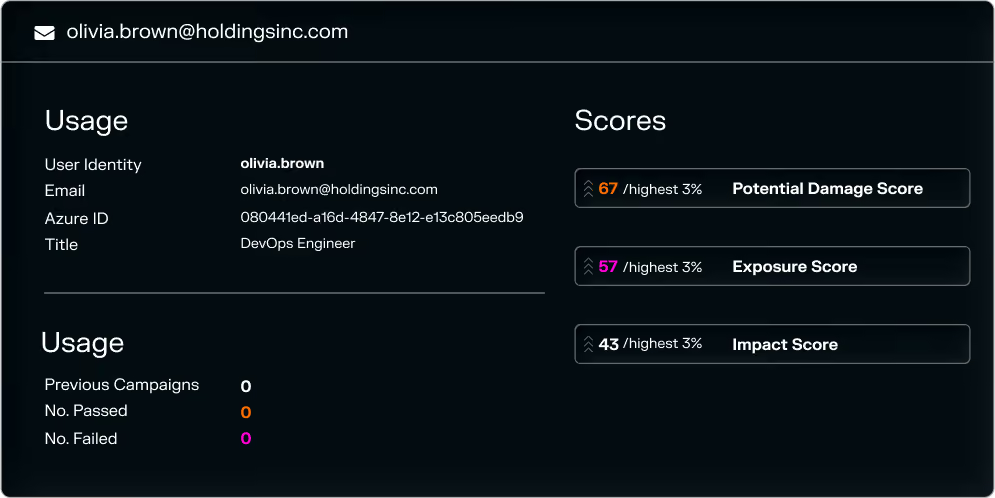
Détecte le phishing, la compromission de messagerie professionnelle (BEC), l'usurpation d'identité de dirigeants et les attaques d'ingénierie sociale – des menaces ciblées que les modèles d'IA basés sur des signatures ou sur des données mutualisées manquent par nature.
Un modèle comportemental unique pour toutes les surfaces de risque
Darktrace applique le même modèle comportemental aux e-mails, à l'identité, aux données et à la gestion du risque humain, de sorte qu'un signal détecté dans un domaine renforce la détection dans les autres, plutôt que de rester isolé.
Découvrez la différence Darktrace
Lire la présentation de la solution
Sécurité adaptative de la messagerie
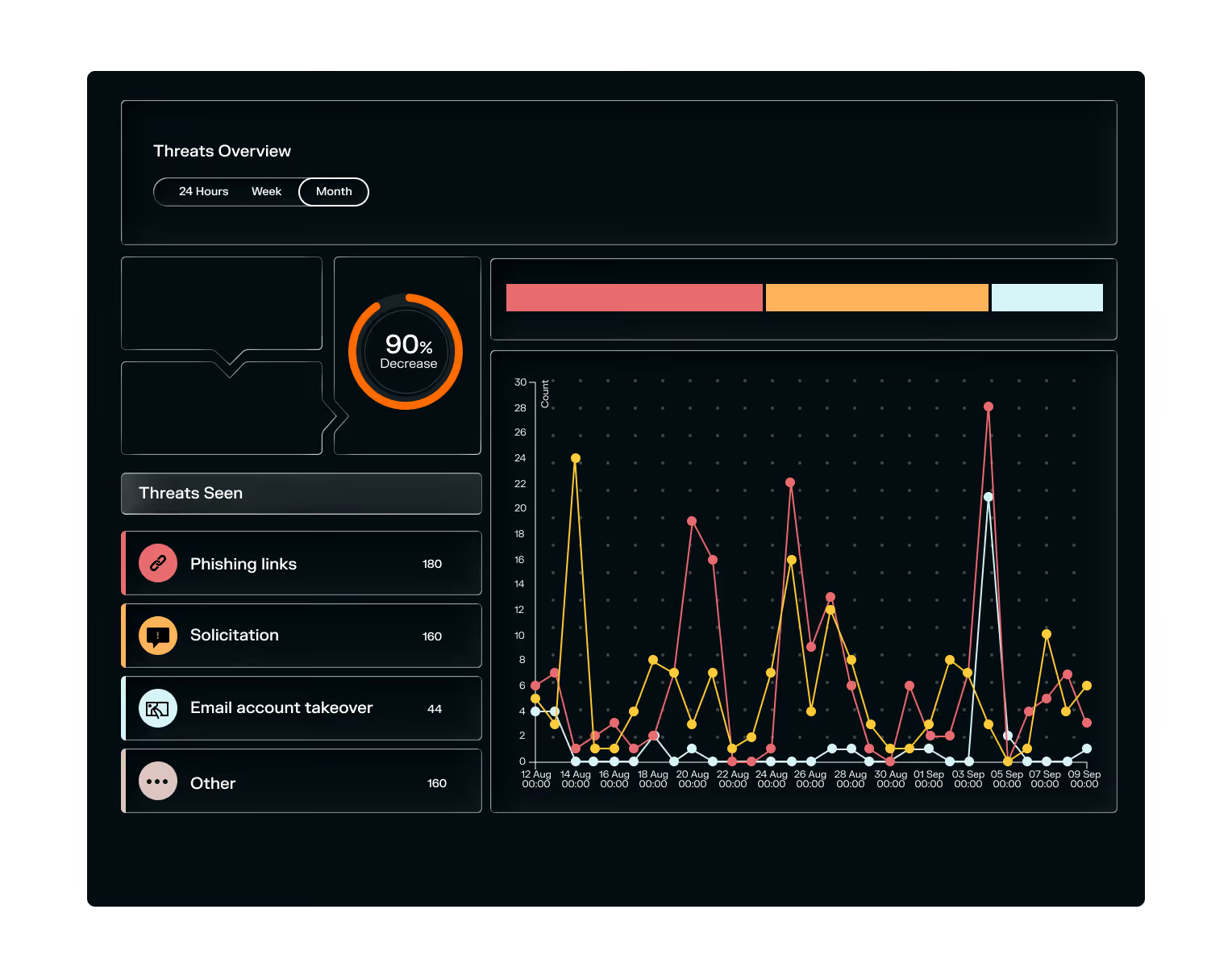
Bloquez le phishing, la compromission de messagerie professionnelle (BEC) et les attaques générées par l’IA sur l’ensemble de votre flux de messagerie
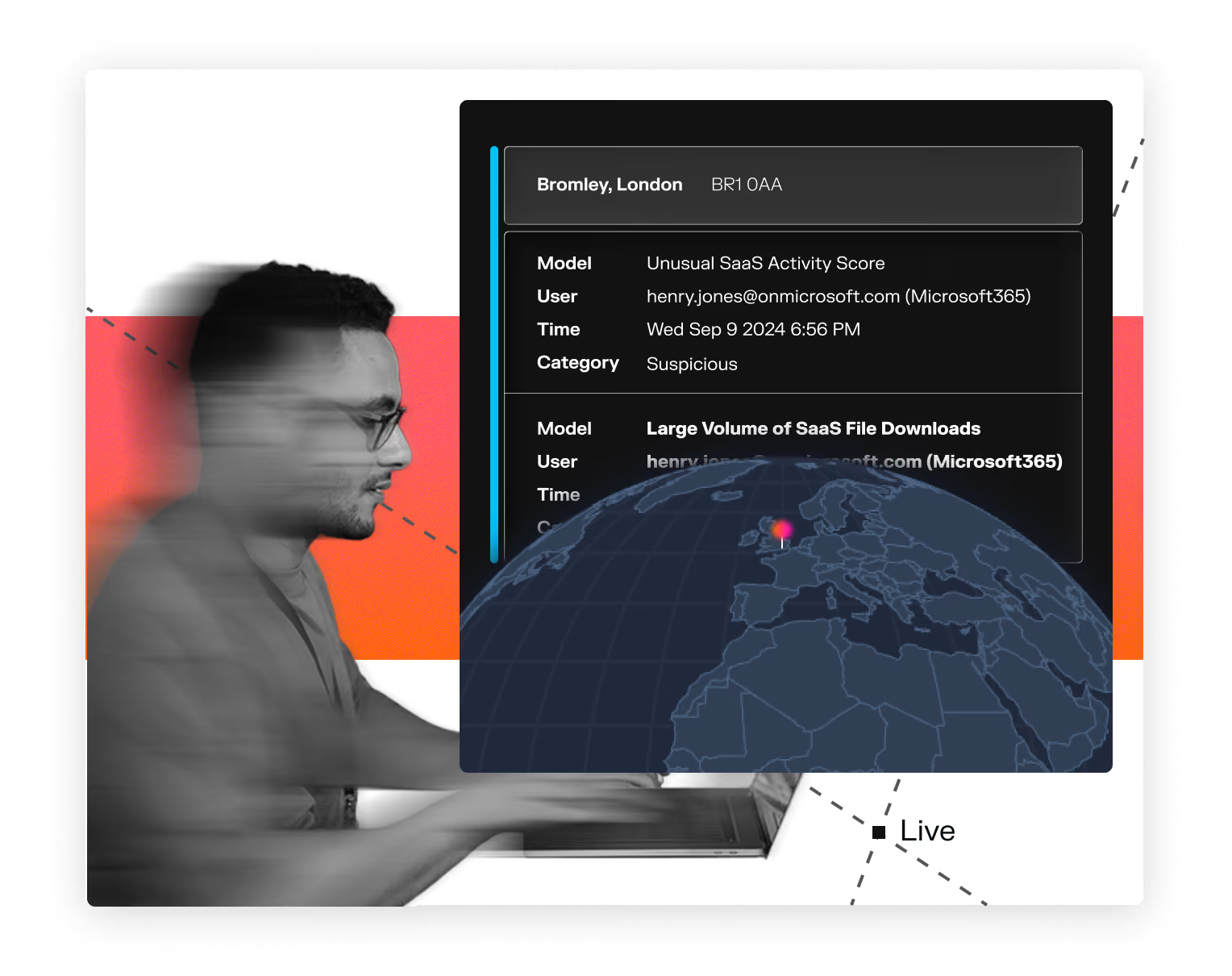
Détection et réponse aux menaces visant les identités
Contenez la prise de contrôle de compte avant que les dommages ne se propagent
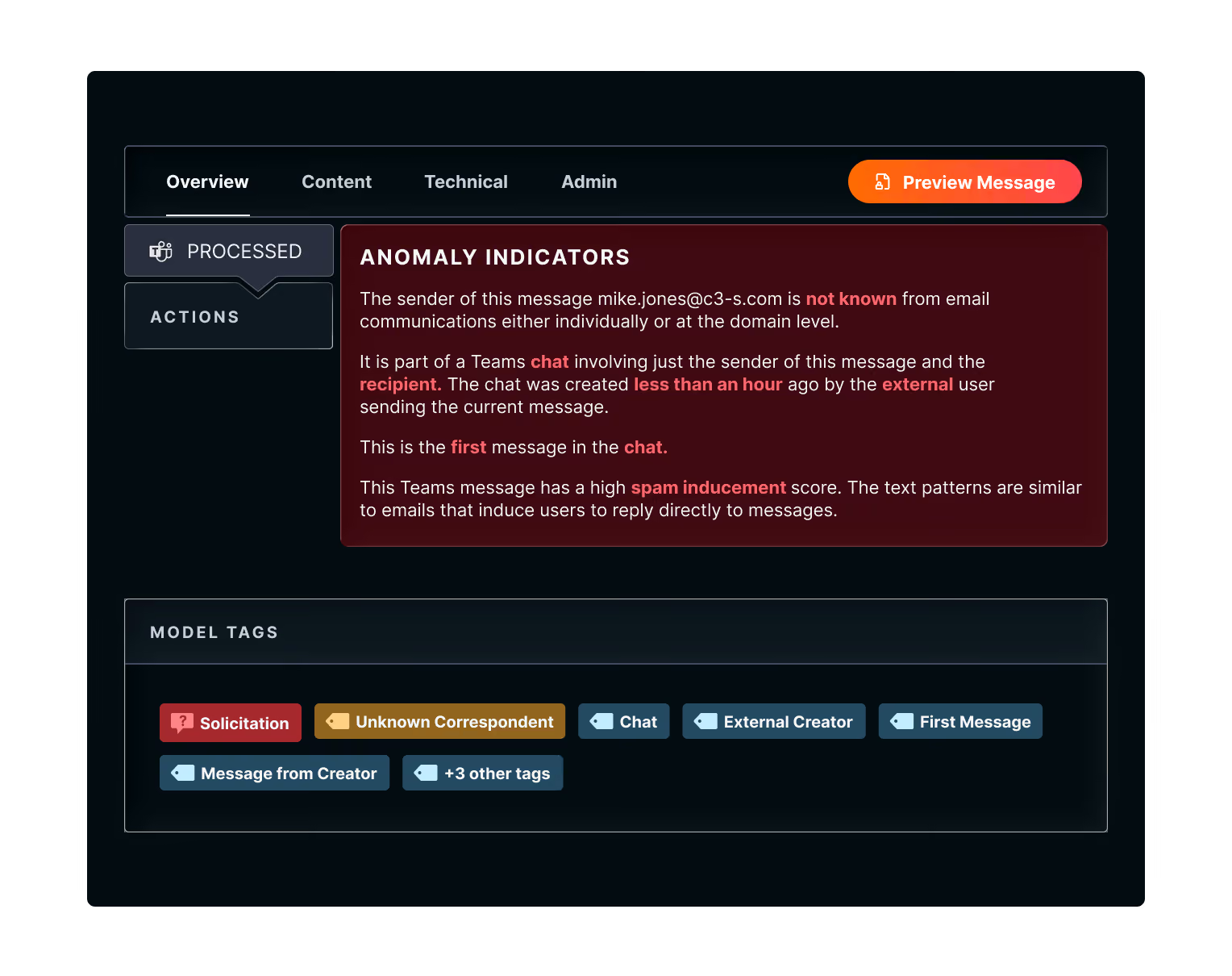
DLP pour la messagerie et collaboration sécurisée
Protéger les données sensibles partout où elles circulent
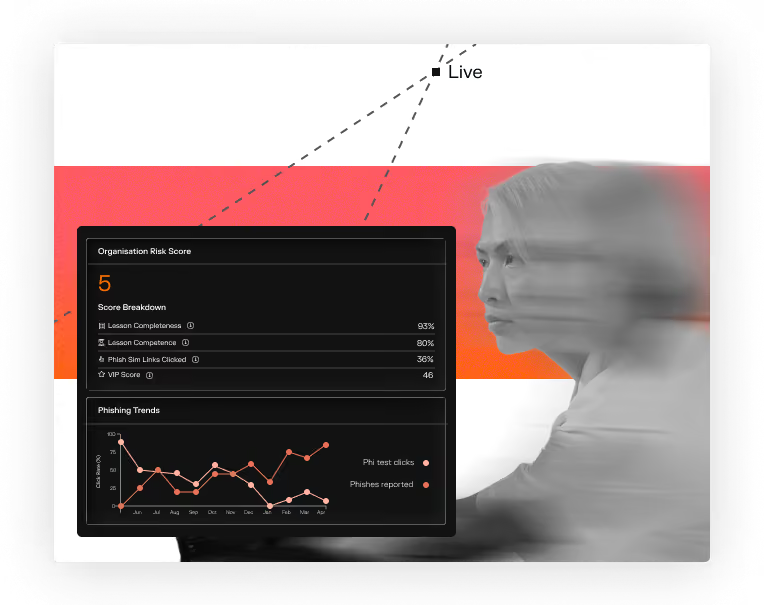
Formation adaptative de sensibilisation à la sécurité
Faites de la formation un élément vivant de votre défense
Témoignages clients
Découvrez les témoignages de nos clients



Magic Quadrant™ 2025 de Gartner®
pour les plateformes de sécurité de la messagerie
Leader
Darktrace / EMAIL reconnu par Gartner®
Darktrace est Leader dans le Magic Quadrant™ 2025 de Gartner® pour les plateformes de sécurité de la messagerie, avec une protection native basée sur l’IA, une expérience client supérieure et de solides intégrations.
Questions fréquemment posées
Qu’est-ce que la protection contre les menaces par email ?
La protection contre les menaces par e-mail désigne l’ensemble des outils et technologies conçus pour protéger les communications par e-mail contre un large éventail de cybermenaces. Dans la mesure où l’e-mail demeure l’un des vecteurs d’attaque les plus courants, la protection contre les menaces par e-mail est cruciale pour se défendre contre le phishing, les malwares, la compromission de messagerie professionnelle (BEC) et d’autres tactiques sophistiquées employées par les cybercriminels.
Alors que les cyberattaques via e-mail gagnent en sophistication, les fournisseurs de solutions de protection contre les menaces par e-mail adoptent différentes approches pour y faire face. Nombre d’entre eux s’appuient sur l’historique des données d’attaque pour tenter de prédire à quoi ressemblera la prochaine menace.
D’autres utilisent l’IA et l’apprentissage automatique pour détecter les menaces inédites ou ciblées, telles que les tentatives de phishing sophistiquées et la compromission de messagerie professionnelle. L’IA peut identifier les moindres anomalies dans les habitudes d’envoi d’e-mails et le comportement des expéditeurs. Cette attention portée à l’analyse comportementale aide les équipes de sécurité à détecter les activités suspectes sur les comptes et à empêcher les déplacements latéraux au sein des comptes compromis, contribuant ainsi à identifier les menaces qui exploitent la confiance au sein des organisations.
Pour contrer les menaces en plusieurs étapes et multicanales, la sécurité de la messagerie intègre de plus en plus une protection s’étendant aux plateformes telles que Microsoft Teams ou Slack, afin d’augmenter la visibilité sur les menaces et réduire la surface d’attaque hors messagerie électronique. Les solutions avancées intègrent également la Threat Intelligence en temps réel et le sandboxing (bac à sable), ce qui leur permet d’isoler et d’analyser les contenus potentiellement malveillants, offrant ainsi une défense robuste contre l’évolution des vecteurs d’attaque.
En matière de sécurité des données, certains fournisseurs proposent désormais des fonctionnalités intégrées de prévention des pertes de données (DLP) et de chiffrement afin de prévenir les fuites d’informations sensibles. Ces fonctionnalités incluent parfois une protection automatisée et la formation des utilisateurs. De plus, la protection contre les menaces par e-mail intègre parfois les événements de messagerie dans des cadres de sécurité plus larges, tels que le SIEM et l’XDR, favorisant ainsi une approche globale pour répondre aux menaces à l’échelle de l’organisation.
Cette transition vers des solutions de sécurité de la messagerie plus avancées et intégrées reflète le besoin de protections flexibles et adaptatives, alors que les menaces liées aux communications continuent de gagner en complexité.
En quoi la sécurité de la messagerie basée sur l’IA diffère-t-elle des systèmes traditionnels fondés sur des règles ?
La principale différence entre la sécurité de la messagerie traditionnelle fondée sur des règles et celle basée sur l’IA réside dans la manière dont elles détectent les menaces et s’adaptent. Les systèmes plus anciens fondés sur des règles (comme les passerelles de messagerie sécurisée, ou SEG) fonctionnent selon des instructions fixes. Ces derniers signalent les e-mails en fonction d’une liste de signatures de malware connues, d’expéditeurs bloqués ou de mots-clés spécifiques. Cette approche sous forme de liste de contrôle crée une défense statique qui nécessite une connaissance exacte de chaque caractéristique d’une menace pour être efficace. C’est pourquoi ces systèmes ne peuvent réagir qu’aux menaces connues, et prennent ainsi du retard face aux acteurs de la menace qui font constamment évoluer leurs tactiques.
De plus, la gestion d’importants ensembles de règles mises à jour manuellement représente une charge considérable pour les équipes des centres opérationnels de sécurité (COS), ce qui peut entraîner de mauvaises configurations et la négligence de changements subtils dans les schémas de communication d’une organisation.
À l’inverse, la sécurité de la messagerie basée sur l’IA peut transformer la défense en apprenant en continu le « Pattern of Life » propre à une organisation. Ces solutions d’IA multicouche dressent automatiquement un portrait dynamique du comportement normal de chaque utilisateur. L’IA analyse les thématiques de contenu, les types de pièces jointes et même les styles rédactionnels.
Cette technologie traite les données en continu afin d’identifier tout écart par rapport au comportement habituel qui pourrait indiquer un signe possible de compromission. Par conséquent, ces outils peuvent détecter de manière proactive le harponnage (spear phishing) hautement ciblé, les tentatives sophistiquées d’usurpation d’identité et les attaques par la chaîne d’approvisionnement qui imitent fidèlement des communications authentiques.
L’approche de l’apprentissage automatique non supervisé garantit une adaptation continue de la sécurité sans intervention humaine permanente, offrant ainsi une protection renforcée contre les nouvelles menaces sans signature existante. Celle-ci permet de ne plus se focaliser sur la connaissance de chaque attaque, mais plutôt sur la compréhension et la protection de l’identité numérique unique de votre organisation, afin d’améliorer considérablement la résilience face aux menaces persistantes avancées, et réduire le risque de violation.
Qu’est-ce que l’analyse comportementale, et comment améliore-t-elle la sécurité de la messagerie ?
L’analyse comportementale consiste à comprendre ce qui est "normal" pour un utilisateur, un appareil, ou un système particulier. Au lieu de vérifier les emails par rapport à une liste de règles, elle établit un profil dynamique de l’activité habituelle. Elle surveille en permanence de nombreux points de données, notamment qui envoie habituellement des emails à qui, la taille et le type habituels des pièces jointes, la langue utilisée, les heures d’envoi habituelles, et même les zones géographiques depuis lesquelles les utilisateurs accèdent à leur messagerie.
En apprenant continuellement et en établissant un référentiel de comportement normal, le système peut identifier tout écart suggérant une activité malveillante potentielle. Cette approche excelle dans la détection des menaces inédites, telles que les attaques zero-day ou les campagnes de harponnage (spear phishing) hautement sophistiquées qui ne présentent aucune signature connue. Puisqu’il recherche des comportements anormaux plutôt que des schémas de menace spécifiques, il peut détecter les attaques conçues pour contourner les défenses traditionnelles.
Supposons, par exemple, que la messagerie électronique d’un cadre dirigeant commence soudainement à envoyer des demandes financières inhabituelles à la comptabilité ou tente d’accéder à des fichiers sensibles. L’analyse comportementale signalera cet écart par rapport à son profil habituel, même si le contenu ne contient aucun malware évident. Cette analyse peut détecter en temps réel les moindres tentatives d’usurpation d’identité ou les prises de contrôle de compte, accélérant de ce fait le confinement et la réponse.
L’analyse comportementale améliore également la compréhension du contexte, ce qui la rend plus efficace pour distinguer un email authentique, mais inhabituel, d’un email véritablement malveillant. Cela réduit les faux positifs, permettant aux équipes SOC de se concentrer sur les menaces réelles.
Comment la protection contre le phishing basée sur l’IA détecte-t-elle les menaces avancées par e-mail ?
La protection contre le phishing optimisée par l’IA détecte les menaces avancées en évaluant l’ensemble du contexte d’un message (comportement de l’expéditeur, schémas linguistiques, historique des relations et activité du compte) plutôt qu’en analysant uniquement les liens ou pièces jointes malveillants connus, que le phishing avancé est souvent capable de contourner.
La fonctionnalité de sécurité adaptative de la messagerie (Adaptive e-mail Security) de Darktrace / EMAIL applique cette approche contextuelle en apprenant les schémas de communication individuels et au niveau de l’entreprise, afin d’identifier les nouvelles tentatives d’ingénierie sociale, d’usurpation d’identité et de phishing qui ne correspondent à aucune signature d’attaque connue.
Comment la sécurité de la messagerie basée sur l’IA peut-elle aider à protéger les entreprises ?
La sécurité de la messagerie basée sur l’IA aide les entreprises en étendant la détection des menaces au-delà des indicateurs connus pour intercepter les attaques inédites, en réduisant les ajustements manuels nécessaires pour suivre l’évolution des menaces, et en corrélant l’activité de messagerie dans l‘analyse comportementale combinée des comptes et des identités, afin d’obtenir un contexte plus complet.
Darktrace / EMAIL soumet la messagerie électronique à la même analyse comportementale utilisée dans l’ensemble de l’environnement d’une organisation, afin d’aider les équipes de sécurité à comprendre comment une menace par e-mail parvient à exploiter parallèlement des identités, des données et des activités de compte.
Comment la sécurité de la messagerie peut-elle détecter la compromission de messagerie professionnelle ?
La compromission de messagerie professionnelle (BEC) est difficile à détecter avec des outils basés sur des règles, car elle utilise généralement des comptes légitimes, compromis ou usurpés de manière convaincante, sans pièce jointe ni lien malveillant. Pour la détecter, il est nécessaire d’identifier le moment où le comportement de communication (ton, heures d’envoi, demandes ou activités du compte) s’écarte de la normale pour tel expéditeur ou telle relation.
Darktrace / EMAIL identifie cela en apprenant comment les individus et les organisations communiquent habituellement, puis signale les tentatives de BEC telles que des demandes de paiement inhabituelles ou des schémas de communication atypiques de la part de dirigeants, même lorsque le message lui-même ne contient aucun signe d’alerte évident.
Que doivent rechercher les entreprises dans une solution de sécurité de la messagerie ?
Les entreprises devraient rechercher une solution de sécurité de la messagerie capable de détecter les menaces au-delà des signatures connues, corréler les activités de messagerie aux comportements des identités et des comptes plutôt que de traiter les e-mails de manière isolée, et de réduire la maintenance manuelle des règles à mesure que les techniques d’attaque évoluent.
Darktrace / EMAIL répond à ces exigences grâce à une protection adaptative de la messagerie et une capacité de détection et de réponse aux menaces visant les identités. Au lieu de traiter la messagerie comme un silo autonome, son modèle comportemental unique s’étend de la messagerie, aux plateformes de collaboration et aux activités liées à l’identité.