Von Phishing und kompromittierten Konten bis hin zu Datenverlust und Sicherheit bei der Zusammenarbeit – Darktrace unterstützt Sicherheitsteams dabei, Bedrohungen überall dort zu erkennen und zu stoppen, wo Menschen arbeiten.

Schützen Sie die Menschen, die Ihr Unternehmen am Laufen halten

Die Herausforderung der Email-Sicherheit
Email-Bedrohungen entwickeln sich schneller als herkömmliche Abwehrmechanismen
41%
der Phishing-Emails sind Spear-Phishing-Angriffe, die auf einzelne Empfänger zugeschnitten sind
(Darktrace Threat Report 2026)Die Angreifer von heute missbrauchen legitime Infrastrukturen und vertrauenswürdige Beziehungen, um Social Engineering schwerer erkennbar zu machen – und generative KI ermöglicht hochgradig überzeugendes, hyper-personalisiertes Phishing sowie die Imitation von Führungskräften in großem Stil.
Personalisierte Angriffe
Die meisten Email-Sicherheitstools verlassen sich auf bekannte Angriffsmuster, Threat Intelligence und Daten anderer Unternehmen. Doch Angriffe, die gezielt auf Ihre Mitarbeiter zugeschnitten sind, sehen oft völlig anders aus als alles, was bisher bekannt war.
Erkennungslücken
Bedrohungen machen längst nicht mehr bei der Email halt. Angreifer nehmen zunehmend Identitäten, Kollaborationstools und geschäftliche Workflows ins Visier. Da sich Risiken über Teams, Slack, Zoom und Cloud-Anwendungen hinweg ausbreiten, benötigen Unternehmen Transparenz über jede menschliche Interaktion – und nicht nur Sicherheit für den Posteingang.
Erweiterte Risiken
Die Darktrace-Lösung
Verhaltensbasierte Email-Sicherheit, trainiert auf Ihr Unternehmen
Lernt Ihr Unternehmen kennen – nicht das der anderen.
Die meisten E-Mail-Sicherheitslösungen stützen sich auf bekannte Angriffsmuster und Informationen, die von anderen Unternehmen gesammelt wurden. Darktrace lernt ausschließlich von Ihren Aktivitäten und Benutzern und kann so normales Verhalten von echten Risiken unterscheiden.
Autonome Sicherheit,
ganz nach Ihren Vorstellungen
ganz nach Ihren Vorstellungen
Keine Regeln oder Signaturen, die gepflegt werden müssen, keine Blackbox-Entscheidungen. Darktrace passt sich kontinuierlich an und bietet Ihnen gleichzeitig klare Begründungen und volle Kontrolle auf jeder Ebene – ohne dass Sie für Anpassungen erst ein Support-Ticket eröffnen müssen.
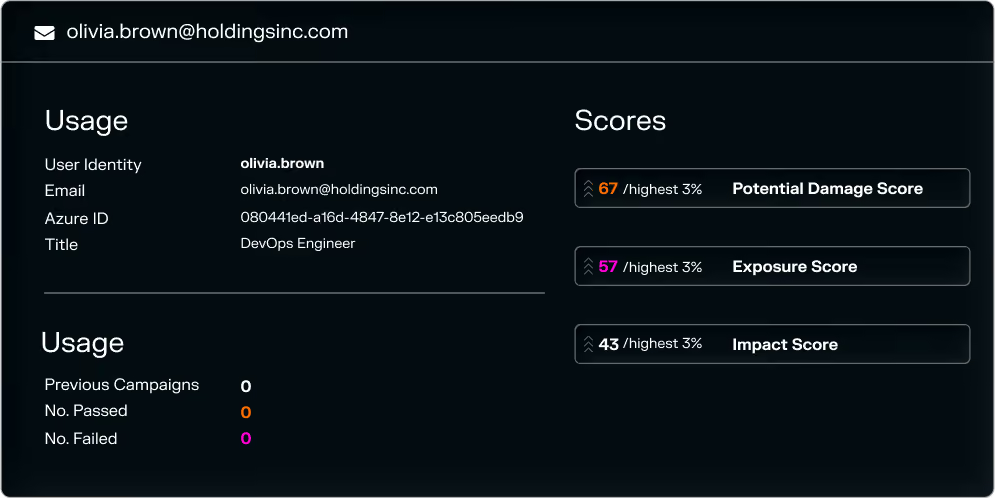
Stoppen Sie neuartige und gezielte Bedrohungen
Erkennt Phishing, Business Email Compromise, Identitätsdiebstahl von Führungskräften und Social-Engineering-Angriffe – gezielte Bedrohungen, die signaturbasierten und crowd-basierten KI-Modellen konzeptbedingt entgehen.
Ein Verhaltensmodell für jede Angriffsfläche
Darktrace wendet dasselbe Verhaltensmodell auf Email, Identität, Daten und das Management menschlicher Risiken an. Dadurch stärkt ein Signal in einem Bereich die Erkennung in allen anderen, anstatt isoliert zu bleiben.
Entdecken Sie den Darktrace-Unterschied
E-Mail-Lösungsübersicht
Adaptive E-Mail-Sicherheit
Stoppen Sie Phishing, BEC und KI-generierte Angriffe in Ihrem gesamten E-Mail-Verkehr
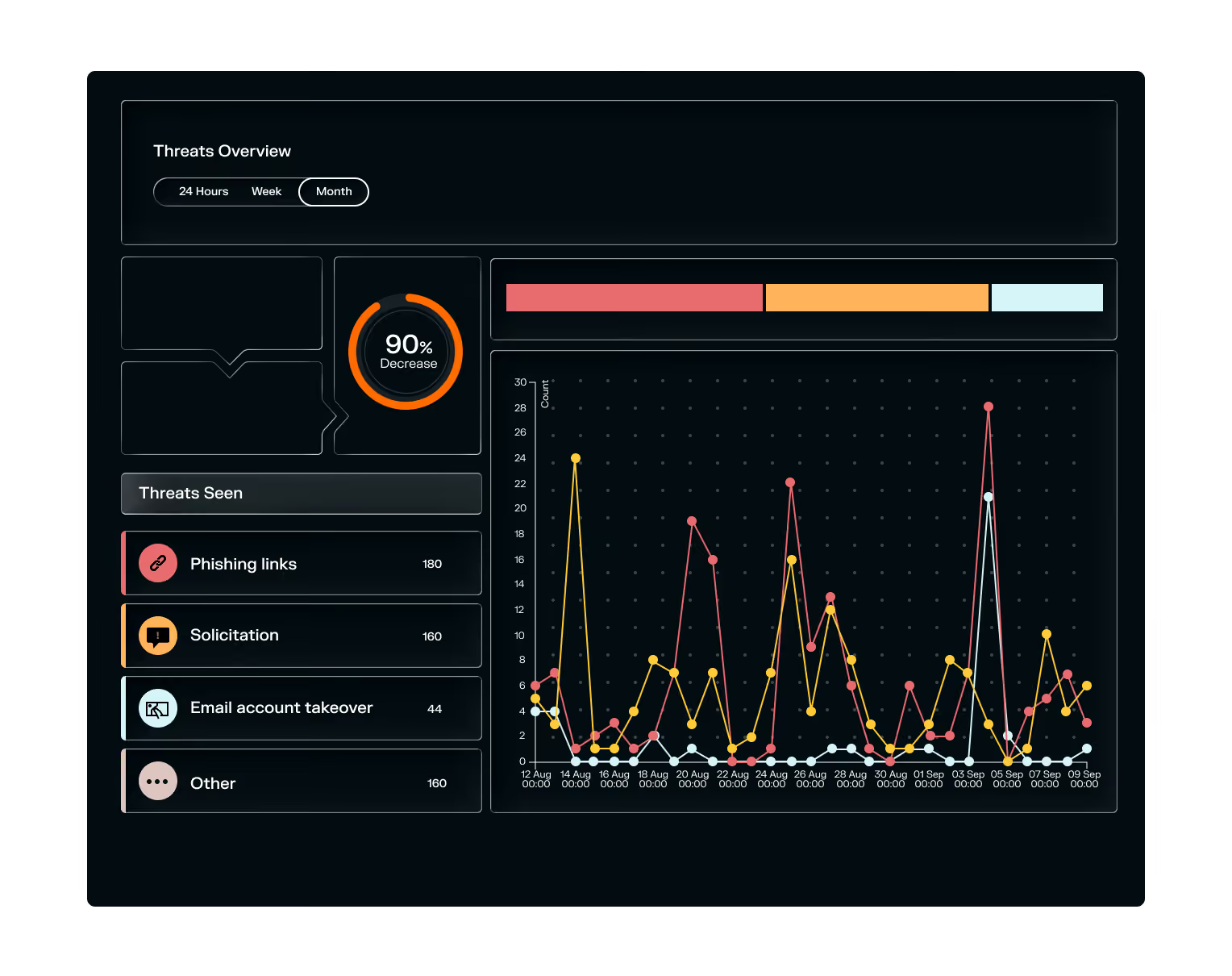
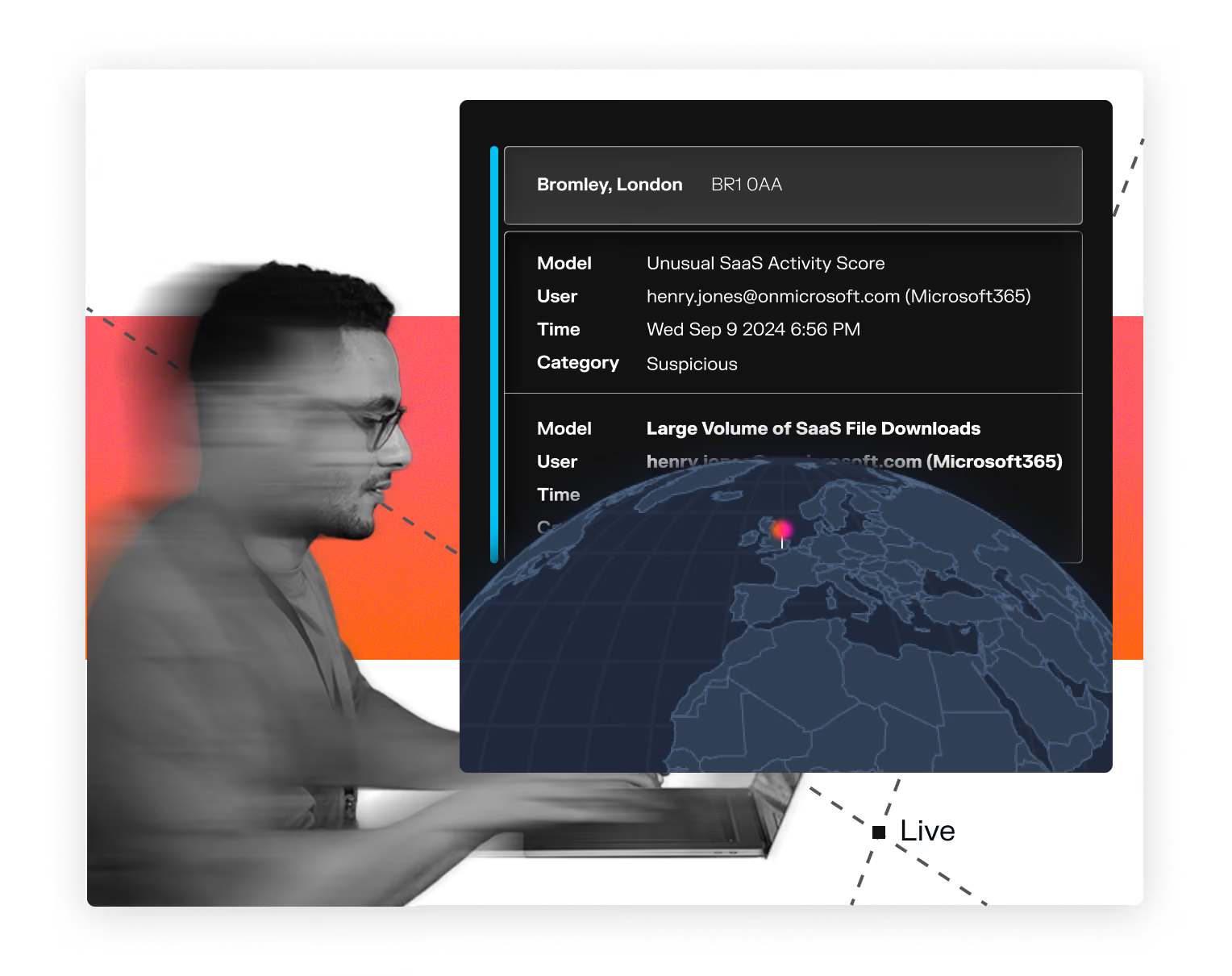
Identity Detect & Respond
Kontoübernahmen verhindern, bevor sich der Schaden ausbreitet
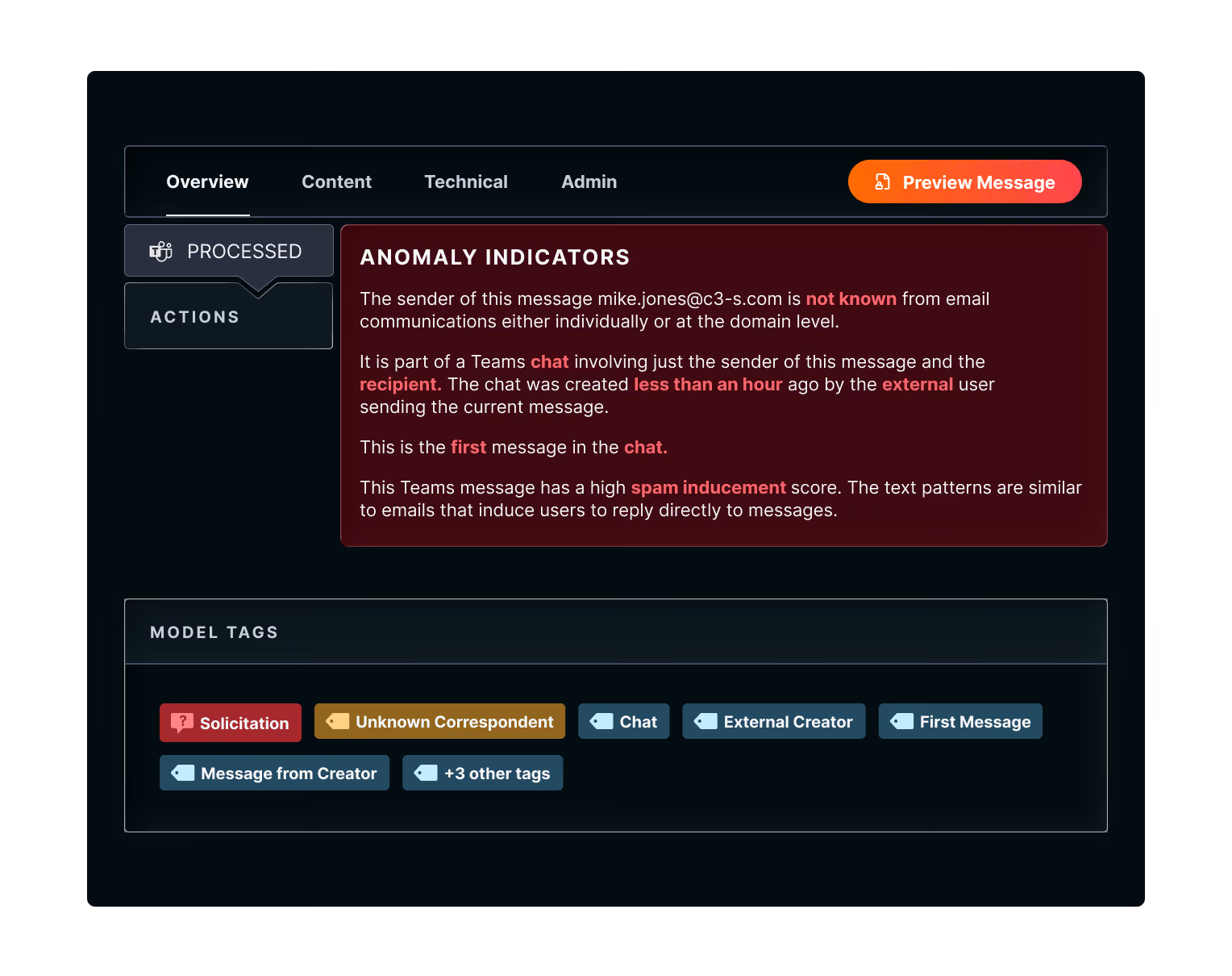
Email DLP & Collaboration Security
Sensible Daten überall dort schützen, wo sie übertragen werden
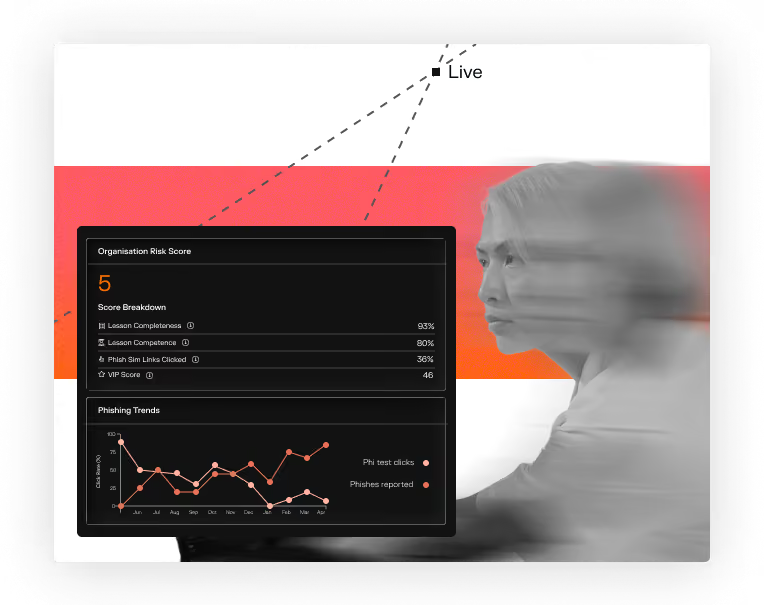
Adaptives Sicherheitsbewusstseinstraining
Machen Sie Training zu einem lebendigen Bestandteil Ihrer Verteidigung
Kundenerfolgsgeschichten
Das sagen unsere Kunden




Frequently asked questions
What is email threat protection?
Email threat protection refers to the suite of tools and technologies designed to safeguard email communications from a wide range of cyber threats. As email remains one of the most common attack vectors, email threat protection is crucial in defending against phishing, malware, business email compromise (BEC), and other sophisticated tactics used by cybercriminals.
As email-based cyberattacks grow more sophisticated, vendors in email threat protection are taking varied approaches to address threats. Many rely on using historical attack data to try and predict what the next threat will look like.
Others are using AI and machine learning to detect novel or targeted threats, such as sophisticated phishing attempts and business email compromise. AI can identify subtle anomalies in email patterns and sender behavior. This focus on behavioral analysis helps defenders detect suspicious account activity and prevent lateral movement within compromised accounts, helping identify threats that exploit trust within organizations.
To tackle multistage and multichannel threats, email security is increasingly integrating protection across platforms like Microsoft Teams or Slack, expanding threat visibility and minimizing attack surfaces beyond email. Advanced solutions also incorporate real-time threat intelligence and sandboxing, allowing them to isolate and analyze potentially malicious content, providing robust defenses against evolving attack vectors.
For data security, some vendors now offer integrated data loss prevention (DLP) and encryption to prevent sensitive information leaks. These features sometimes include automated protection and user training. Additionally, email threat protection sometimes integrates email events into broader security frameworks, such as SIEM and XDR, supporting a comprehensive, organization-wide approach to threat response.
This shift towards more advanced, integrated email security solutions reflects the need for flexible, adaptive protections as communication-based threats continue to evolve in complexity.
How does AI-powered email security differ from traditional rule-based systems?
The main difference between AI-powered and traditional rule-based email security lies in how they detect threats and adapt. Older rule-based systems (like Secure Email Gateways, or SEGs) work on fixed instructions. They flag emails based on a list of known malware signatures, blocked senders, or specific keywords. This checklist approach creates a static defense that requires exact knowledge of every threat characteristic to be effective. Because of this, these systems can only respond to known threats, meaning they fall behind threat actors who are constantly evolving their tactics.
Plus, managing large sets of manually updated rules places a significant burden on security operations center (SOC) teams, which can lead to misconfigurations and miss the subtle changes in an organization's communication patterns.
Conversely, AI-powered email security can transform defense by constantly learning an organization's unique "pattern of life." These multi-layered AI solutions automatically build a moving picture of normal behavior for every user. The AI studies content themes, attachment types, and even writing styles.
This technology continuously processes data to identify any deviation from the usual pattern that could indicate possible sign of compromise. As a result, these tools can proactively detect highly targeted spear phishing, advanced impersonation attempts, and supply chain attacks that closely resemble genuine communications.
The unsupervised machine-learning approach ensures security continuously adjusts without constant human input, providing stronger protection against new threats with no existing signatures. It shifts the focus from knowing every attack to understanding and protecting your organization's unique digital identity, significantly improving resilience against advanced persistent threats and lowering the risk of a breach.
What is behavioral analysis, and how does it improve email security?
Behavioral analysis involves understanding what "normal" looks like for a particular user, device, or system. Instead of checking emails against a list of rules, it builds a dynamic profile of typical activity. It continuously monitors numerous data points, including who typically emails whom, the usual size and type of attachments, the language used, common sending times, and even the geographic locations from which users access their mail.
By continually learning and establishing a baseline of normal behavior, the system can identify any deviations that suggest potential malicious activity. This approach excels at detecting novel threats, such as zero-day attacks or highly sophisticated spear phishing campaigns that have no known signatures. Since it's looking for abnormal behavior rather than specific threat patterns, it can detect attacks designed to bypass traditional defenses.
For example, say an executive's email suddenly starts sending unusual financial requests to accounting or tries to access sensitive files. Behavioral analysis flags this deviation from their normal pattern, even if the content doesn't contain obvious malware. This analysis can detect subtle impersonation attempts or account takeovers in real time, speeding up containment and response.
Behavioral analysis also enhances contextual awareness, making it more effective at distinguishing between a genuine but unusual email and a truly malicious one. This reduces false positives, allowing SOC teams to focus on genuine threats.
How does AI-powered phishing protection detect advanced email threats?
AI-powered phishing protection detects advanced threats by evaluating the full context of a message – sender behavior, language patterns, relationship history, and account activity – rather than scanning only for known malicious links or attachments, which advanced phishing is often designed to evade.
Darktrace / EMAIL's Adaptive Email Security capability applies this contextual approach, learning individual and organizational communication patterns to identify novel social engineering, impersonation, and phishing attempts that don't match a known attack signature.
How can AI email security help protect enterprise organizations?
AI email security helps enterprises by extending threat detection beyond known indicators to catch novel attacks, reducing the manual tuning required to keep pace with evolving threats, and connecting email activity to broader account and identity behavior for fuller context.
Darktrace / EMAIL brings email into the same behavioral understanding used across an organization's broader environment, helping security teams see how an email-based threat connects to identity, data, and account activity elsewhere.
How can email security detect business email compromise?
Business email compromise (BEC) is difficult to detect with rule-based tools because it typically uses legitimate, compromised, or convincingly spoofed accounts with no malicious attachment or link. Detecting it requires identifying when communication behavior – tone, timing, requests, or account activity – deviates from what's normal for that sender or relationship.
Darktrace / EMAIL identifies this by learning how individuals and organizations typically communicate, flagging BEC attempts such as unusual payment requests or atypical executive communication patterns even when the message itself contains no obvious red flags.
What should businesses look for in an email security solution?
Businesses should look for email security that detects threats beyond known signatures, connects email activity to identity and account behavior rather than treating email in isolation, and reduces manual rule maintenance as attack techniques evolve.
Darktrace / EMAIL addresses these requirements through Adaptive Email Security and Identity Detect & Respond, applying one behavioral model across email, collaboration platforms, and identity activity rather than securing email as a standalone silo.