/ NETWORK

The most advanced NDR solution, powered by Self-Learning AI

Recognized as a Leader in the 2025 Gartner® Magic Quadrant™ for NDR, Darktrace brings its powerful, multi-layered AI to your data to neutralize known and unknown threats in real time.

10,000
Darktrace customers
The challenge

Network security is lagging behind attacker innovation

128%
rise in number of ransomware victims between 2022 and 2023
(Security Affairs)
74%
of security professionals are seeing AI-powered cyber threats significantly impact their organizations
(Security Affairs)

Darktrace delivers new innovations in Network Detection & Response 

Darktrace / NETWORK

A complete solution for prevention, detection, and response to known and unknown threats.

Detection

Identify known and unknown threats across your entire network

While other NDR vendors process your data in the cloud as part of globally trained models, we bring our Self-Learning AI™ directly to your data, preserving your privacy while delivering customized security outcomes, tailored to each unique environment and ready for novel threats.

Complete coverage for the modern network

Get full visibility across your on-prem, virtual, cloud and hybrid networks, including remote worker endpoints, OT devices and ZTNA

Uncover blind spots in your network

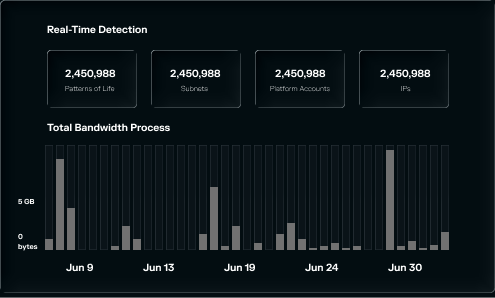
Self-Learning AI continuously analyzes every connection, device, identity and attack path for unusual behavior, including decrypted and encrypted traffic analysis

Eliminate alert fatigue with precision threat detection

Our AI continually tunes itself to cut through the noise and improve detection accuracy, saving you the hassle of manual tuning

Image Of Darktrace Analysis
See what Darktrace finds

Evaluate in your environment today

Automate triage and investigation, at scale

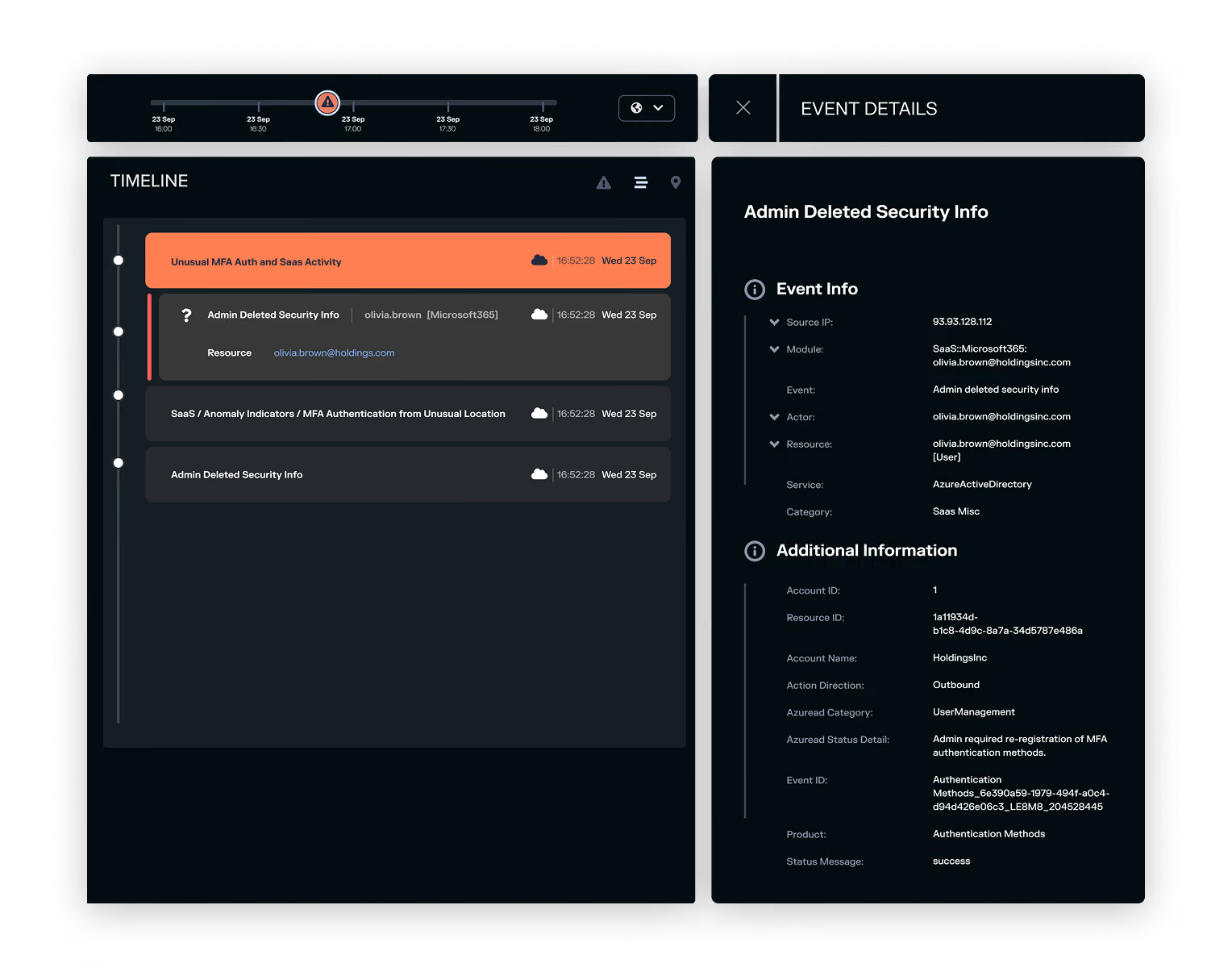
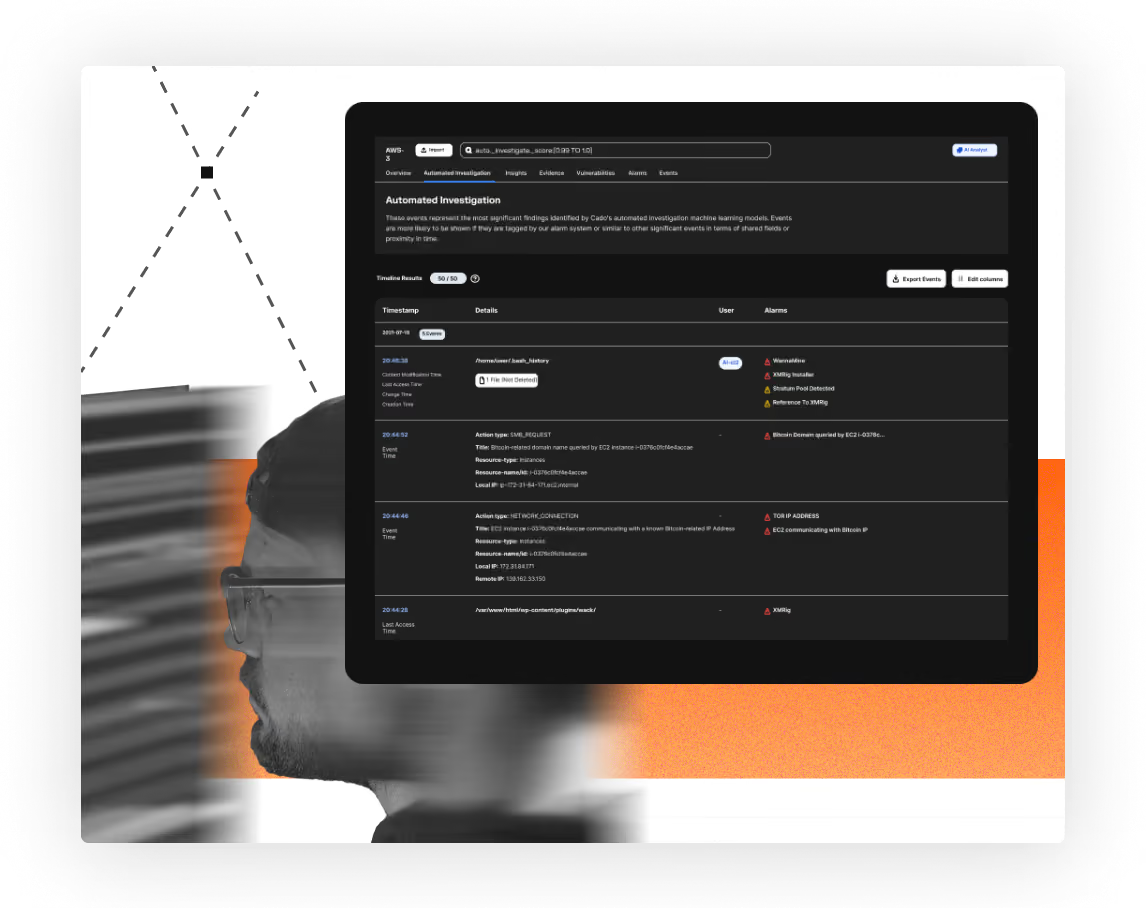
Darktrace / NETWORK™ leverages the power of Cyber AI Analyst™, which continually performs end-to-end investigations of thousands of anomalous or risky alerts and prioritizes the ones with the most potential to impact your business.

Investigates every relevant alert like a human analyst

Unlike prompt-based chatbots, Cyber AI Analyst™ brings cognitive automation to your SOC team, autonomously forming hypotheses and reaching conclusions just like a human would.

Stops threats before patient zero

Cyber AI Analyst™ investigates suspicious network activity to identify previously unseen threats without relying on threat intelligence or signatures to be available first. Secondary STIX/TAXII intelligence can also be ingested to detect known threats or create custom detections based on existing IoCs.

Correlates and contextualizes all relevant alerts

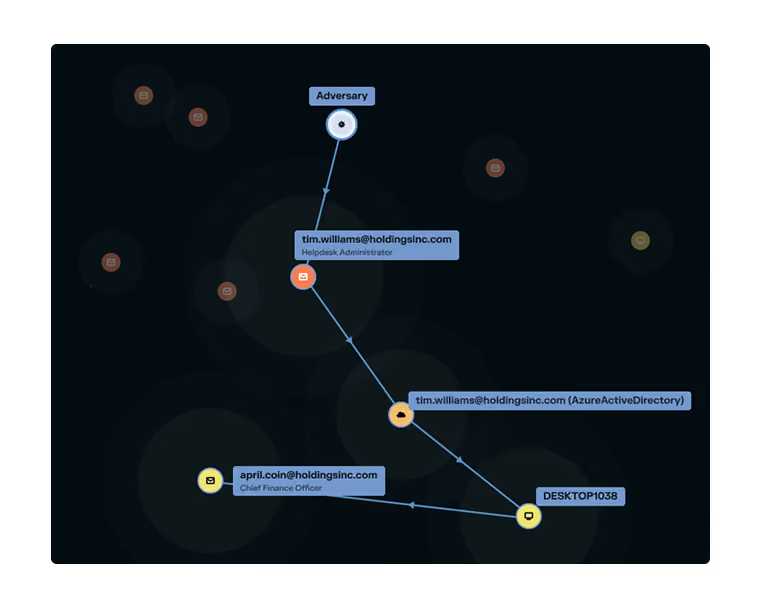
Cyber AI Analyst™ tracks connections and events across your network, endpoints, cloud, identities, OT, email, and remote devices, helping you detect modern threats that traverse your entire digital estate.

Darktrace Threat Visualizer
Resource

Read the

solution brief

Discover the unique features and capabilities of Darktrace / NETWORK in more detail
90%

Find out how Darktrace / NETWORK increased threat detection accuracy by 90% in one customer environment

Network Solution Brief
Autonomous response

Neutralize attacks autonomously
in real time

Contain threats with minimal business disruption

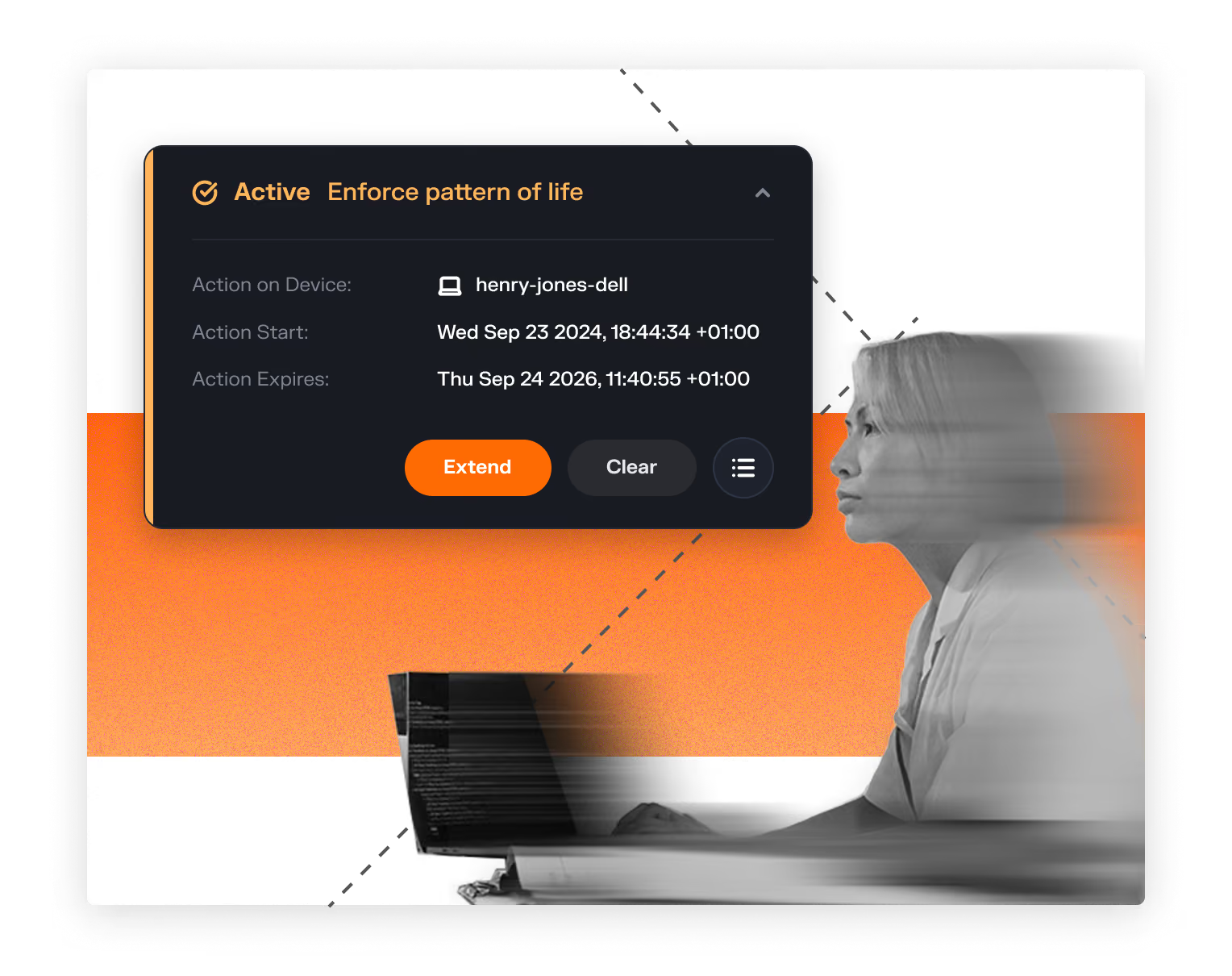
Rapidly contains and disarms threats based on the context of the environment and a granular understanding of what is normal for a device or user

Stay in control with advanced customization options

Darktrace autonomously takes the most effective response to network threats, while remaining fully customizable to suit the needs of your organization

Extend AI to your existing workflows

Targeted response actions can be taken natively or via integrations with your existing security investments. Darktrace’s open API architecture means there’s no need for complex or costly development

Model Breach Event Log

Over 350 reviews on Gartner Peer Insights

Proactive network resilience

Darktrace goes beyond traditional NDR solutions, helping to reduce the impact of alerts on your security teams, so they can refocus their time on proactive security measures and reducing cyber risk.

Darktrace / Proactive Exposure Management

Stop cyber risks from becoming reality with cross-stack attack path modeling, threat and vulnerability management, and AI risk assessments that understand your business.

Darktrace / Incident Readiness & Recovery

An AI recovery and incident simulation engine that uplifts teams, optimizes IR processes, and reduces the impact of active cyber-attacks using an understanding of your unique business data.

Darktrace / Managed Detection and Response

Our expert SOC analysts monitor your Darktrace environment 24/7 to detect, triage, investigate and escalate response actions for the highest priority alerts across network, cloud, OT, endpoints and SaaS applications – freeing up your team to focus on security outcomes and proactive tasks.

Three Coworkers Speaking At A Desk
Analyst Recognition

Darktrace / NETWORK™ recognized as a Leader in Gartner® Magic Quadrant™ for Network Detection and Response

Darktrace / NETWORK is not just another NDR tool, it’s a platform that empowers security teams to operate at the speed and scale of AI. 
From real-time threat detection and autonomous response to proactive risk management, we’re transforming network security from reactive to resilient. 

Named a Leader in multiple industry reports — Gartner, IDC, & KuppingerCole

Driving SOC transformation by shifting to an AI-led SOC 

Going beyond traditional NDR — Build proactive network resilience

Over 10,000 customers trust Darktrace’s application of AI to NDR

/ NETWORK

Frequently asked

 questions

How can NDR be integrated with other cybersecurity tools?

Integrating Network Detection and Response (NDR) tools with other cybersecurity solutions enhances an organization’s threat detection and response capabilities. NDR tools monitor network traffic to identify suspicious activities and patterns, making them an excellent complement to Endpoint Detection and Response (EDR) and Security Information and Event Management (SIEM) systems. NDR helps to fill the gaps left by EDR, expanding visibility from individual devices to network-wide threats, offering a broader perspective on attacks that may bypass traditional endpoint defenses.

NDR tools can also be integrated with firewalls to provide enriched threat intelligence and respond to network threats. When unusual traffic patterns or network anomalies are detected, NDR can alert the firewall, which may then block or restrict access based on predefined rules. Additionally, NDR integrates well with SIEM systems, feeding network-level data into the SIEM for centralized monitoring and comprehensive analysis of potential threats across an organization. By combining these technologies, security teams gain holistic visibility and can correlate data from various sources for a stronger defense against multi-stage attacks.

How can I evaluate the effectiveness of an NDR solution in my environment?

The effectiveness of an NDR solution is measured by its ability to provide early and accurate detection of threats, enable rapid and effective incident response, and reduce the overall risk to your organization.
Focus on whether a platform provides complete visibility across your on-premise, virtual, cloud, and hybrid networks, including remote worker endpoints, OT devices, and ZTNA. Also, consider its effectiveness in reducing alert fatigue and improving your security posture.
There are several useful evaluation methods, such as live traffic analysis. Can you analyze real-time network traffic and detect anomalous behavior? Look for demonstrations of the tool's abilities to detect subtle indicators of compromise that bypass traditional security controls. Also, conduct simulated attacks to evaluate the system's detection and response capabilities against various adversaries and scenarios.
Consider alert prioritization and enrichment too. Does the platform prioritize security alerts based on severity and potential impact? Look for features that automatically enrich alerts with contextual information to aid in investigation.
To streamline workflows and enhance incident response, evaluate the tool's ability to integrate with your existing security infrastructure, including SIEM and SOAR platforms. Finally, assess the NDR platform's effectiveness in improving analyst workflow efficiency. Look for features that automate tasks and reduce manual effort. The platform should also provide actionable insights so teams can move from a reactive to a proactive security posture.

What are the key features to look for in an NDR solution?

Most NDR vendors on the market and traditional solutions such as Intrusion Detection Systems (IDS) or Intrusion Prevention Systems (IPS) rely on detecting known attacks with historical data such as external threat intelligence, signatures and detection rules, leaving organizations vulnerable to novel threats. This legacy approach to threat detection means that at least one organization needs to fall victim to a novel attack before it is formally identified. It also produces a vast number of false positives, since most vendors apply models that are trained globally and are not specific to a particular organization or the context of their unique environment. 
When choosing an NDR solution, it’s essential to evaluate specific features that enhance network visibility, threat detection, investigation and response capabilities. Some organizations can benefit from NDR solution that use anomaly detection  and AI, enabling detection of abnormal network behavior. Darktrace / NETWORK uses multi-layered AI to learn what is normal behavior for your organization, detecting any activity that could cause business disruption, and autonomously responds to both known and previously unseen threats in real time. 
Another key feature is integration with other cybersecurity tools, such as SIEM, EDR, and firewalls. This compatibility ensures that the NDR solution can feed valuable data into a centralized system, providing a comprehensive view of potential threats across the organization. Additionally, autonomous response capabilities are crucial for reducing the total damage and dwell time of an attack. Some autonomous response solutions, like Darktrace / NETWORK, can take immediate action without causing business disruption, these actions include isolating infected devices, forcing a user to reauthenticate, or blocking suspicious IP addresses.
An NDR solution should also offer scalable architecture to support growing network environments, along with real-time alerting and detailed forensic capabilities. These allow security teams to investigate incidents thoroughly and trace the origin of attacks. Unlike chat or prompt-based LLMs that create static incident summaries, Darktrace’s Cyber AI Analyst continually analyzes and contextualizes every relevant alert in your network, autonomously forming hypotheses and reaching conclusions just like a human analyst would, saving your team a significant amount of time and resources. 

What is NDR vs EDR?

NDR (Network Detection and Response) and EDR (Endpoint Detection and Response) serve complementary roles in cybersecurity, but they focus on different areas. NDR tools monitor network traffic to detect threats that traverse or originate within the network, such as lateral movement by malicious actors. In contrast, EDR focuses on endpoints—such as laptops, servers, and mobile devices—detecting suspicious activities at the device level, such as unauthorized file modifications or unusual program executions.

While EDR is adept at identifying threats targeting individual endpoints, NDR provides a broader perspective, focusing on network-wide patterns and behaviors. For example, an NDR tool can detect an attacker moving across the network or attempting to establish command-and-control communications. When combined, NDR and EDR offer a more comprehensive defense, with NDR handling network-level anomalies and EDR focusing on endpoint-specific threats.

What is the difference between NDR and NTA?

NDR (Network Detection and Response) and NTA (Network Traffic Analysis) both monitor network traffic, but they differ in functionality and purpose. NTA tools primarily focus on passive monitoring and analysis of network traffic to help detect unusual patterns, and performance-related issues, while NDR is focused on security and adds a response capability. NTA systems can detect anomalies in network traffic but typically do not provide automated response capabilities, which is what NDR solutions are designed to do.

What is the difference between NDR and SIEM?

NDR and SIEM (Security Information and Event Management) serve distinct but complementary functions in cybersecurity. NDR tools focus specifically on analyzing and responding to network traffic, providing deep insights into network-based threats like lateral movement or abnormal traffic flows. SIEM systems, on the other hand, aggregate and analyze data from multiple sources, including network traffic, endpoints, and applications to provide a centralized view of an organization’s security posture.

How does network detection and response differ from traditional security approaches like signature-based detection?

Conventional approaches mainly rely on predefined patterns to identify known threats. Signature-based systems can be effective at blocking established malware and known attack techniques, but they are limited in their ability to detect novel or sophisticated threats that have not been previously encountered. This limitation leaves organizations vulnerable to zero-day exploits, advanced persistent threats (APTs), and other evasive attacks that deliberately circumvent known signatures and security protocols.

NDR takes a more proactive and adaptive approach. It continuously monitors network traffic and analyzes behavior patterns, identifying anomalous activity that may indicate an unknown threat. Unlike purely signature-based systems, NDR also employs behavioral analysis, learning what constitutes "normal" behavior for every user, device, and network segment within your environment. It then automatically detects even subtle deviations from that continually updated baseline, providing real-time intelligence on these and other potential threats.

For instance, zero-day exploits, which leverage previously unknown vulnerabilities, are revealed by the unusual network communication or resource access they initiate, even before signatures exist. APTs, characterized by their sophisticated, low-and-slow tactics, are uncovered through the cumulative effect of small, unusual behaviors that deviate from established norms. Insider threats, stemming from malicious or negligent actions by authorized users, become evident when a user's activity strays from their typical operational profiles. Evasive malware, designed to bypass traditional, signature-based security controls, cannot hide its network-level interactions, allowing NDR to detect its presence.