are extremely or very concerned with the security implications of third-party LLMs (like Copilot or ChatGPT)
AI security and governance
Securing AI in the Enterprise
AI is accelerating faster than governance can keep up, expanding attack surfaces and creating unseen risks. From data and models to AI agents and integrations, security starts by knowing what to protect.

Security professionals are increasingly concerned about the rise of AI
Read more +
44%
92%
are concerned about the use of AI agents across the workforce and their impact on security
Select Text
How concerned are you about the security implications of the following AI technologies in your organization’s computing environment?
Full Audience 1
Full Audience 2
Full Audience 3
Number of respondents extremely or very concerned about the security impact of different kinds of AI use
Public sector
Number of respondents extremely or very concerned about the security impact of different kinds of AI use
Financial Services
Number of respondents extremely or very concerned about the security impact of different kinds of AI use
Healthcare
Number of respondents extremely or very concerned about the security impact of different kinds of AI use
Manufacturing
Number of respondents extremely or very concerned about the security impact of different kinds of AI use
Education
Five categories for
securing AI
AI introduces risk through both third-party tools and internally developed systems. This framework shows how those risks span five categories, from preemptive controls in AI development to reactive measures in live operations, helping security leaders visualize where protection is needed across the enterprise.
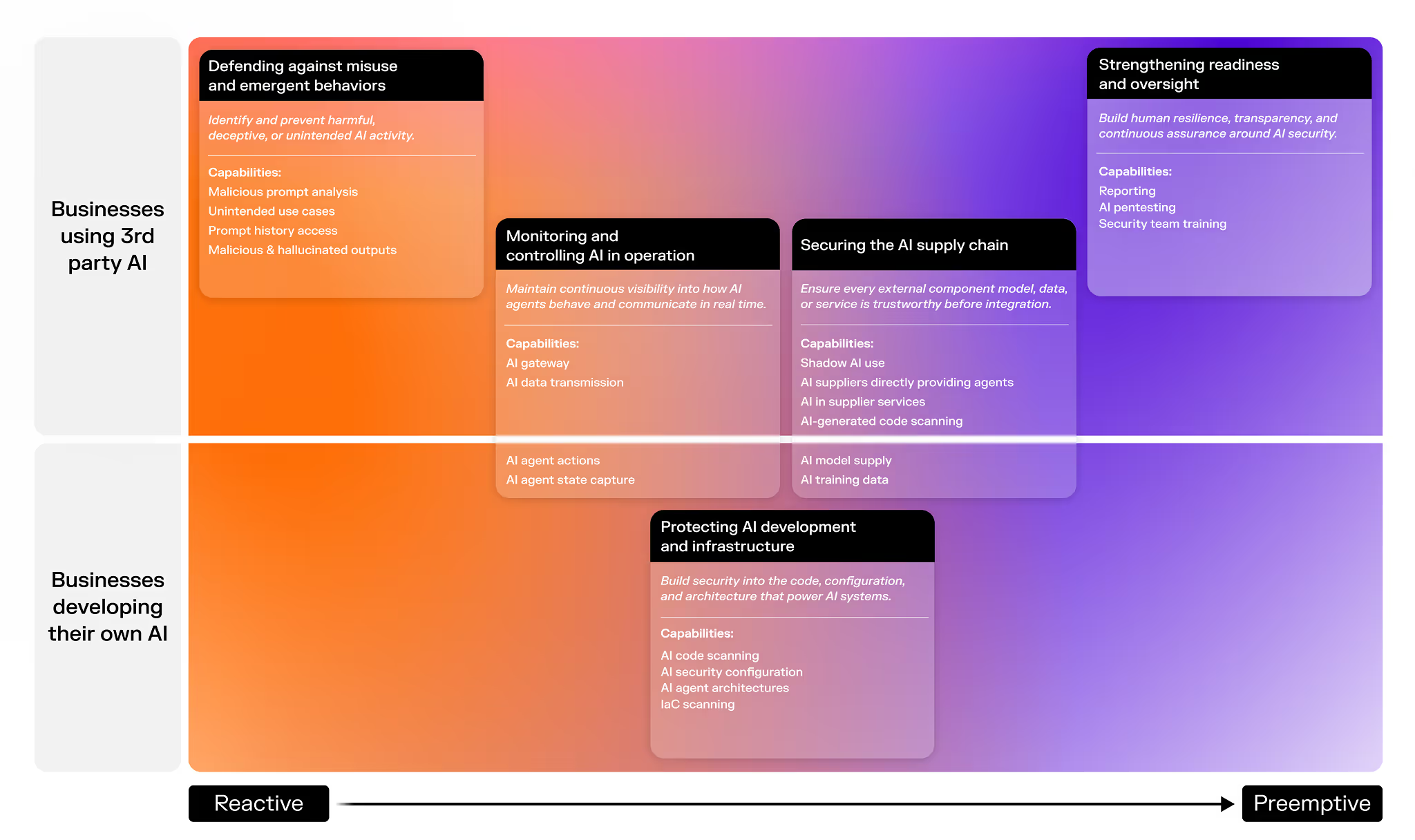
AI adoption rapidly expands the attack surface
Artificial intelligence is being woven into every layer of business, from SaaS tools to custom-built agents. Each new model, dataset, and integration point introduces new pathways for compromise, making it harder than ever to maintain visibility and control over organizational risk. Security teams must consider the impact of:

Autonomous and generative AI agents
Systems capable of independent action can operate beyond human guardrails or monitoring.

Embedded AI in SaaS and productivity tools
Employees use AI features that process sensitive data outside direct security visibility.

Cloud and on-prem providers extending services with AI
New embedded functions increase complexity and expand the perimeter of control.

Vendors and acquired software adding AI features
Third-party tools introduce AI capabilities without clear oversight or risk evaluation.
Identify AI risks
Every AI system brings its own set of uncertainties, ranging from data leakage and model bias to regulatory exposure. Recognizing these risks is the first step toward building AI governance frameworks that ensure AI operates safely, transparently, and in alignment with business objectives.

Engage today, safeguard tomorrow
AI is moving fast. Staying informed isn't just a competitor advantage – it's a business imperitive. Access expert-led programs and practical resources built to strengthen your AI security strategy.

Enter the readiness program
Get exclusive access to product updates, thought leadership, and opportunities to connect with peers

Speak to us
Speak with a Darktrace expert to get tailored, practical guidance to secure your AI
Join our launch broadcast
Unveiling the new Darktrace Behavioral Defense Platform and the launch of Darktrace / SECURE AI.

See our product page
See our survey findings for how security leaders are thinking about security AI and discover our framework
Accelerate AI innovation with Darktrace / SECURE AI
AI manifests in various ways: employee productivity tools, cloud services, vendor solutions, and internally developed systems. Darktrace brings together full visibility, intelligent behavioral oversight, and real‑time control across both human and machine interactions — giving teams the confidence to adopt, experiment with, and scale AI safely.
Gain full visibility across your AI ecosystem
Get a real‑time picture of how prompts, agents, identities, and data interact so nothing falls through the cracks
Detect subtle, high impact misuse early
Spot complex, fast‑moving forms of AI misuse that traditional guardrails miss, enabling timely, meaningful intervention.
Achieve real-time oversight that aligns AI to the business
Catch unusual activity the moment it appears, and ensure AI supports security, compliance, and business goals — without adding friction.

White Paper
Understand how to secure AI tools
Discover how to identify AI-driven risks, so you can establish AI governance frameworks and controls that secure innovation without exposing the enterprise to new attack surfaces.
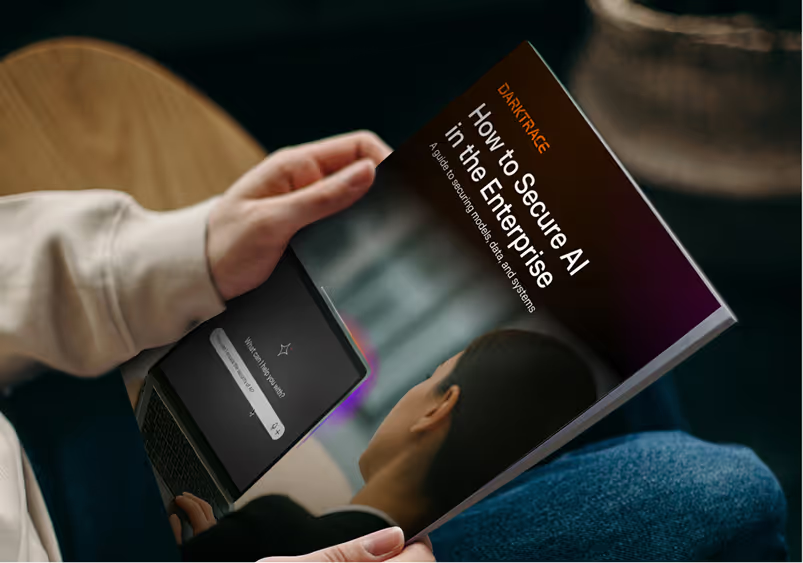
Deepen your understanding of AI-driven cybersecurity
AI is reshaping how organizations defend, detect, and govern. These resources offer expert insights, from evaluating AI tools and building responsible governance to understanding your organization’s maturity and readiness. Discover practical frameworks and forward-looking research to help your business innovate securely.
Responsible AI
Build trust through transparency and responsible innovation
How do you balance innovation with governance and security? Explore the principles guiding ethical, explainable AI in cyber.
The AI Arsenal
Discover the spectrum of AI types in cybersecurity
Understand the tools behind modern resilience, from supervised machine learning to NLP, and how they work together to stop emerging threats.
AI Maturity Model
Benchmark your AI adoption against the industry in cyber
The AI Maturity Model helps CISOs and security teams assess current capabilities and chart a roadmap toward autonomous, resilient security operations.
State of AI Survey

See how security leaders feel about the impact of AI
We surveyed 1500 cybersecurity pros around the world to uncover trends on AI threats, agents and security tools.
Become an expert in securing AI – join the Readiness Program
AI is moving faster than your security. We’re about to change that.
The Securing AI Readiness Program by Darktrace is designed to bring together a cohort of IT and security leaders who are confronted with the common experience of securing AI tools at their organizations.
The information you’ll receive in this program has been designed to help security and IT professionals anticipate, understand, and prepare for the risks and realities of AI adoption, from security and governance to operational and reputational impact so they can clearly advise the business, set guardrails for responsible AI use, and guide adoption with confidence at a time when uncertainty is the norm.
Register your interest today
Thank you for registering, and congratulations on your first step to becoming an expert in securing AI in the enterprise. We'll be in touch soon giving you early access to product updates, exclusive thought leadership content, and community experiences with leaders navigating similar challenges.

Oops! Something went wrong while submitting the form.
FAQs
How do you identify AI security risks?
Identifying AI security risks involves understanding how AI systems interact with data, users, and connected technologies. Continuous AI monitoring across models, prompts, and integrations helps reveal anomalies or unintended behavior. Combined with AI security posture management, this provides a clear picture of system integrity as AI environments evolve.
How should leaders establish governance and controls for AI risk?
AI governance and AI risk management frameworks define how AI is controlled, audited, and aligned with organizational and regulatory expectations. Standards such as the NIST AI Risk Management Framework (RMF) and ISO/IEC 42001 emphasize transparency, accountability, and consistency, ensuring that AI systems are managed responsibly across their lifecycle.
What does responsible AI mean for cybersecurity?
Responsible AI refers to the secure and ethical use of AI technologies in alignment with established governance and regulatory principles. In cybersecurity, it focuses on ensuring transparency, traceability, and trust so that AI-driven decisions and actions can be understood, validated, and safely integrated into enterprise systems.
How can organizations monitor AI systems effectively?
AI monitoring encompasses the continuous observation of model behavior, data flows, and system outputs to identify unexpected or unauthorized activity. It provides ongoing visibility into how AI operates within its environment, helping maintain confidence in accuracy, security, and compliance over time.
What is AI security posture management?
AI security posture management (AI-SPM) is the process of maintaining and evaluating the configuration, policy, and control environment of AI systems. It provides continuous insight into security readiness, allowing teams to detect misconfigurations or emerging risks before they affect broader operations.
What is AI supply chain security?
AI supply chain security focuses on validating the integrity of external AI components—such as models, datasets, and APIs—that are introduced into an organization. It helps ensure that external sources are legitimate, properly licensed, and free from malicious or manipulated content.
How do you secure AI systems?
Securing AI systems means addressing risks throughout the AI lifecycle, including model creation, training, deployment, and ongoing operation. This involves protecting data, monitoring system behavior, and maintaining governance structures that preserve trust and reliability.
What is AI model risk?
AI model risk describes the potential for models to produce biased, inaccurate, or harmful outcomes due to poor data quality, design flaws, or manipulation. Managing model risk depends on the reliability of training data, the accuracy of performance metrics, and the transparency of model behavior.