Learn how disconnected tools create alert fatigue, visibility gaps, and slower response times that small IT and security teams struggle to manage.
Learn how platform tools help improve security forunder-staffed teams
See how AI-native security platforms help understaffed organizations reduce complexity, improve visibility, and accelerate threat response without adding more tools, alerts, or operational overhead.

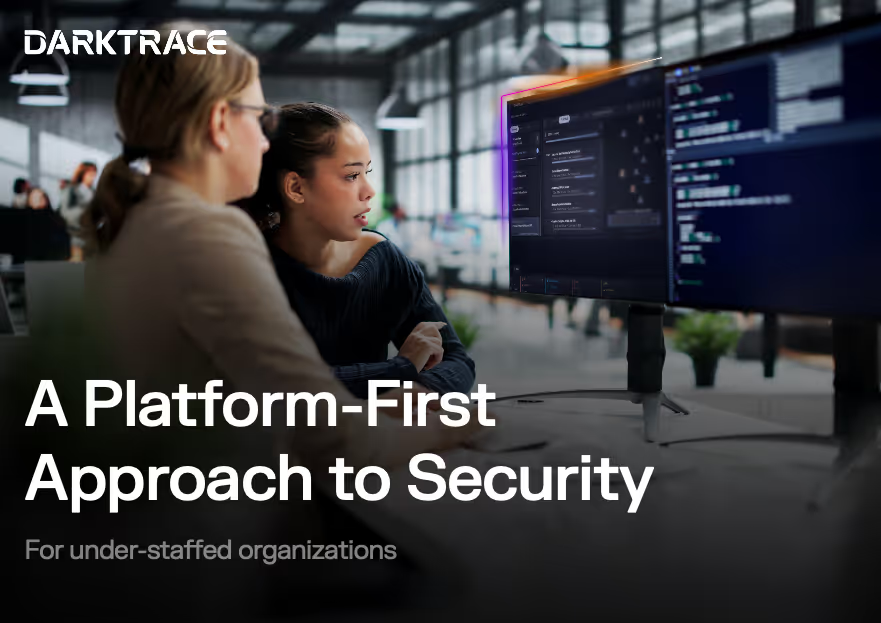

Learn how disconnected tools create alert fatigue, visibility gaps, and slower response times that small IT and security teams struggle to manage.
Explore the core capabilities modern platforms need, including cross-domain visibility, automated investigations, business-aware triage, and controlled autonomous response.
See how organizations are reducing manual investigations, saving analyst time, and improving resilience without expanding headcount or operational complexity.
Understaffed security teams are being asked to defend increasingly complex environments while managing more alerts, more tools, and more operational pressure than ever before. Yet many organizations still rely on fragmented security stacks that create blind spots across email, SaaS, cloud, identity, endpoint, and network environments.
This eBook explores why lean teams are shifting toward an AI-native platform approach to security and how consolidating visibility, investigation, and response into a unified platform can reduce operational overhead without adding complexity.
Rather than introducing more disconnected tools and dashboards, a platform-first model helps organizations correlate activity across domains, automate investigations, and prioritize the incidents that actually matter to the business. The guide also explains why not all AI approaches are equal in cybersecurity, and why understanding how AI techniques are applied across detection, triage, investigation, and response is critical for long-term resilience.
Modern attackers move fluidly across cloud, SaaS, identity, email, and network environments, often using legitimate credentials and low-and-slow techniques that appear normal in isolation. For lean teams, manually correlating these signals across disconnected tools becomes difficult to sustain at scale.
This guide breaks down what organizations should expect from an effective AI-native security platform, including cross-domain visibility, business-aware detection and triage, autonomous investigations, and controlled response actions designed to buy valuable investigation time without disrupting operations.
Readers will also see how organizations are simplifying operations and improving resilience through real-world outcomes, including autonomous investigations, reduced analyst workload, and faster incident response.
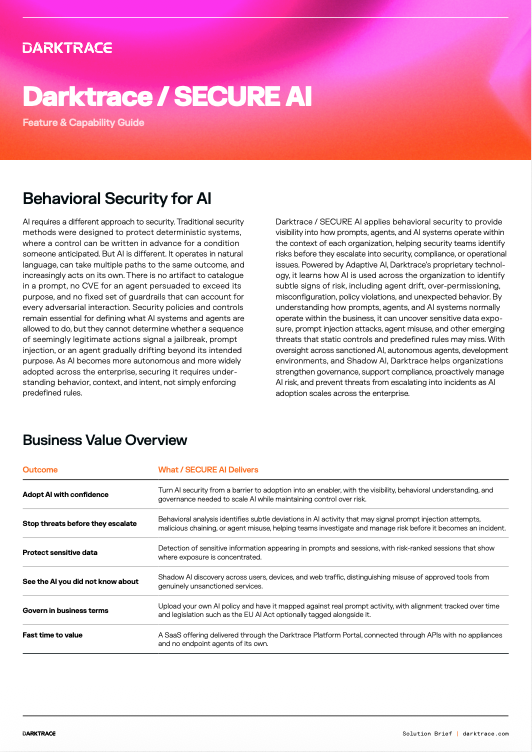
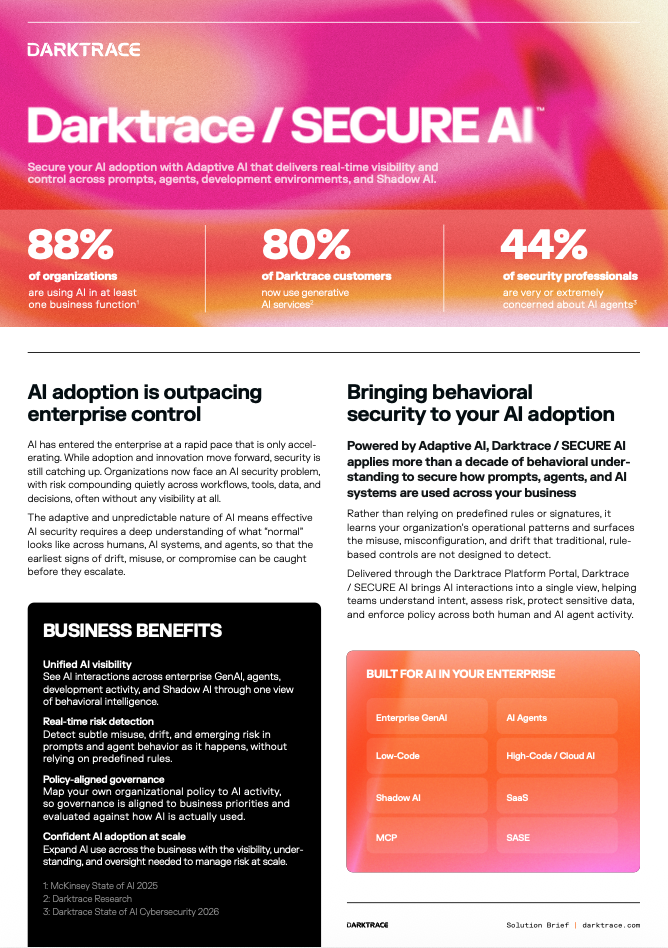
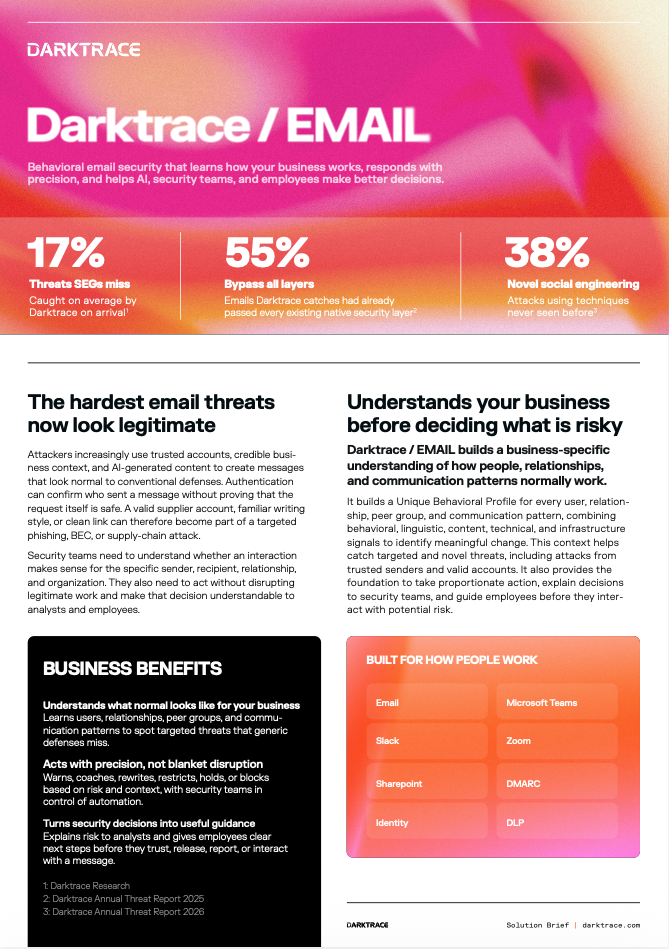
Darktrace customers


Your data. Our AI.