Security Awareness Training
Understanding security awareness training
Modern cybersecurity threats target more than just systems. The advancement and availability of AI technology are enabling cyber criminals to target individuals using sophisticated systems and tools.
Advanced security awareness training is a critical layer of defense, as traditional approaches cannot keep pace with AI-driven attacks. The modern workforce needs more than annual security refreshers. Today's professionals require a dynamic, intelligent, and continuous approach to building a security-first culture.
Advanced cybersecurity training moves beyond simple education to fundamentally change human behavior, address risks in real time, and reduce cyber risk at its source.
What is security awareness training?
Security awareness training is an ongoing process of educating employees about the cyber risks they face and the roles they play in defending the organization.
This type of training differs from standard IT policy reminders, such as notifying staff to update passwords. Cybersecurity awareness training for employees focuses on building a deep understanding of modern vulnerabilities and fostering shared responsibility for security.
The goal of this training is to move beyond mere compliance and create a culture where employees become an active part of the defense, not the weakest link. This proactive approach helps employees understand specific attack tactics like phishing, ransomware, and social engineering, which empowers every employee to recognize and mitigate potential risks.
Challenges of traditional security awareness training
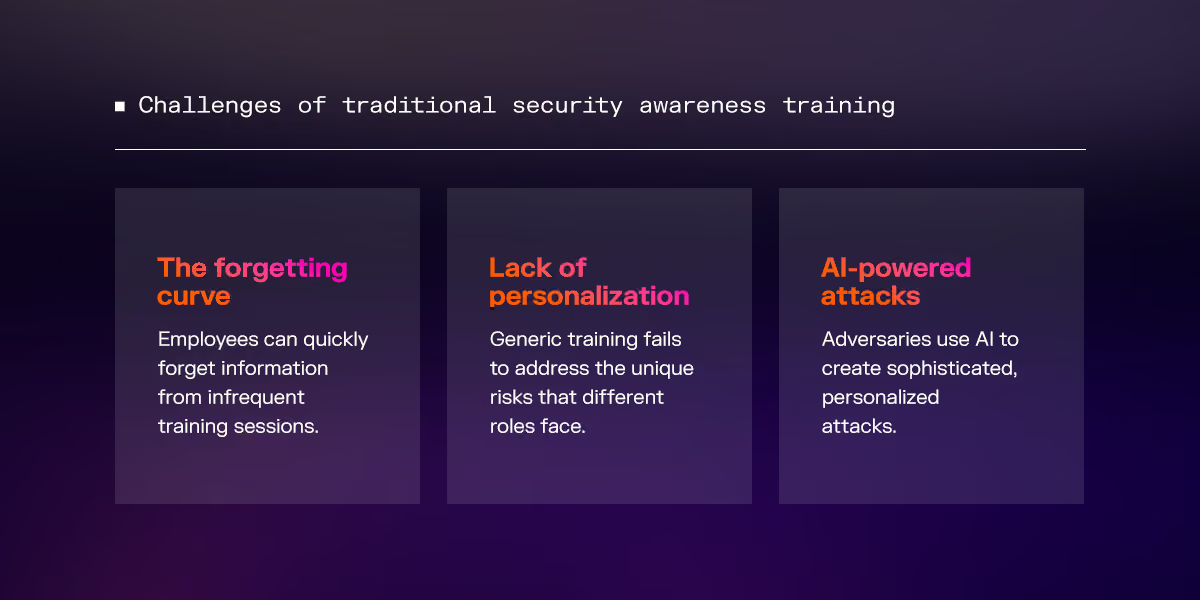
Traditional, compliance-focused training programs often have the following drawbacks:
- The forgetting curve: Employees can quickly forget information from infrequent training sessions, leaving them vulnerable to emerging threats.
- Lack of personalization: Generic training fails to address the unique risks that different roles face, such as finance, HR, or C-suite positions.
- The rise of AI-powered attacks: Adversaries use AI to create sophisticated, personalized attacks that traditional training doesn't prepare employees for.
Core topics for a modern security awareness program
A robust cybersecurity awareness training program must address the full spectrum of tactics that today's threat actors use. The curriculum should be dynamic and cover evolving threats with the following topics:
- Advanced social engineering: Train employees to recognize tactics beyond email, including voice phishing (vishing), SMS phishing (smishing), and pretexting, where adversaries impersonate trusted figures like IT support or executives.
- Phishing and spear phishing: Modern phishing attacks present nuances such as mass-market scams, highly targeted spear phishing, and whaling attacks aimed at senior leadership.
- Malware and ransomware: Cyber criminals deliver malware, malware as a service (MaaS), and ransomware via malicious downloads and infected attachments, which can have devastating impacts on business operations.
- Credential security and multi-factor authentication (MFA): MFA is an essential defense against account takeover. Using a strong password is not enough when adversaries can use credential stuffing to access multiple accounts with the same password.
- Insider risk: Disgruntled employees may attempt to steal data, known as a malicious insider threat. Your team should also understand how accidental or negligent employee behavior can lead to unintentional data leaks.
- Generative AI risks: The risks of generative AI represent a crucial new topic. Pasting proprietary code, internal strategy documents, or customer data into public AI chat tools can lead to irreversible data leakage.
- Cloud and SaaS security: Understanding the shared responsibility model, where both the provider and user have security duties, is essential. Misconfigurations in services like S3 buckets or SaaS applications are significant risks and often lead to unauthorized data exposure.
What makes an effective cybersecurity awareness training program?
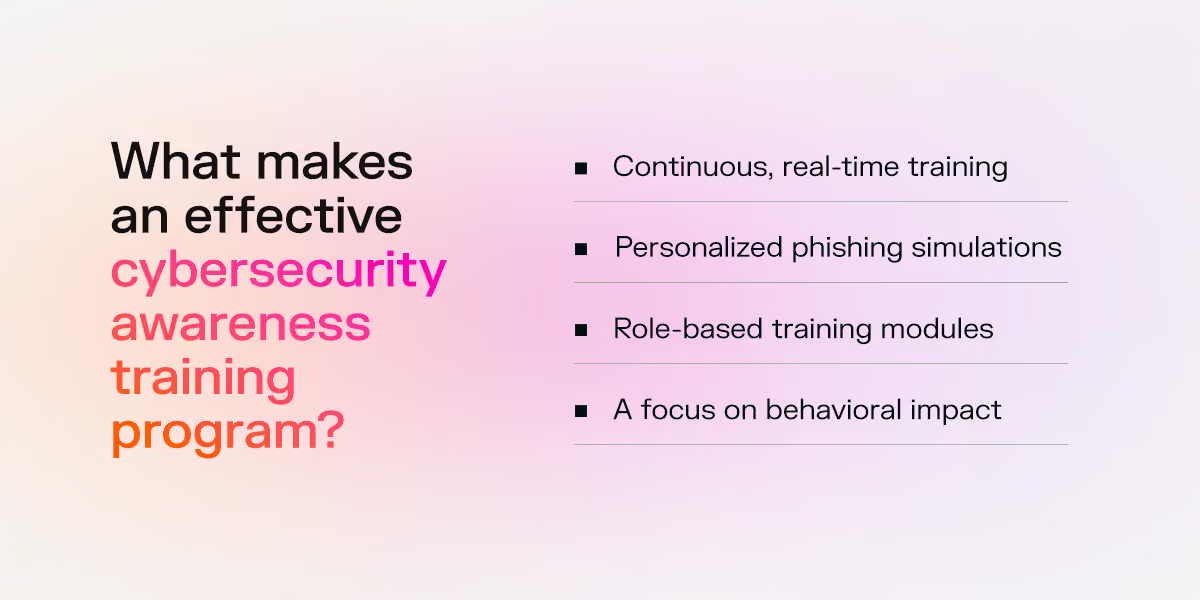
A continuous, adaptive, and data-driven security awareness training program for employees requires the following elements:
Continuous, real-time training
Real-time training is vital for modern security programs. Ongoing, in-the-moment training provides employees with immediate feedback on real-world scenarios, reinforcing secure behaviors exactly when needed. In addition to empowering employees, continuous training supports compliance objectives and demonstrates organizational commitment to cybersecurity, which can be crucial during audits or when pursuing certifications.
Personalized phishing simulations
You can use AI to create and send realistic, personalized phishing simulations that mimic the real threats employees may face. These simulations help your employees practice identifying threats on a regular basis, helping them become familiar with more challenging and novel risks. Regular exposure to simulated attacks significantly improves recognition rates when employees encounter actual threats.
AI automates phishing simulations, helping to save time and reduce costs. This frees IT security teams to concentrate on higher-priority initiatives.
Role-based training modules
You should tailor training content to the specific risks and responsibilities of different roles within your organization. Tailoring cybersecurity training means that a software developer would receive different, more technical training on secure coding practices than a marketing professional, who might focus more on social engineering threats like phishing.
The content should directly address the digital assets each role handles, the systems they access, and the unique ways they might be targeted or contribute to risk. A role-based focus makes the training more relevant and effective for each employee's specific job functions.
A focus on behavioral impact
To track a cybersecurity awareness training program's effectiveness beyond completion rates, focus on observable behavioral changes. This approach may involve the following strategies:
- Post-training simulations: You can conduct simulated phishing campaigns before and after training to see if employees are less likely to engage with malicious links.
- Behavioral monitoring: Consider monitoring adherence to security policies, such as proper reporting of suspicious emails or use of approved software.
- Incident report analysis: Analyzing incident reports helps you determine if the frequency or severity of user-driven security incidents decreases.
- Surveys: Regular surveys assessing employee confidence and knowledge retention about specific threats can also deliver meaningful insights into behavioral shifts and training effectiveness.
The role of AI in an adaptive training program
Traditional cybersecurity training is often static, offering a one-size-fits-all curriculum that quickly becomes outdated. In contrast, AI-driven training platforms can dynamically adapt content, simulate real-time threats, and personalize learning paths based on individual performance and evolving threat landscapes.
AI-powered training is significantly more engaging and effective. It can understand each user's unique pattern of life, establishing a behavioral baseline. This baseline enables multi-layered AI to identify risky behavior and deliver personalized, in-the-moment coaching, which creates a human-AI feedback loop that continuously improves both employee security awareness and organizational defense posture.
Download Darktrace's guide to adaptive security awareness training
An adaptive security awareness training program should focus on real-time understanding of employee behavior. Darktrace / Adaptive Human Defense unifies threat detection and response with behavior-driven training.
This multi-layered solution creates a powerful, self-improving feedback loop where the AI learns the specific risks of each user. The AI delivers personalized training, helps employees improve cybersecurity behavior, and further refines its understanding of "normal" for the organization.
Download the Darktrace / Adaptive Human Defense Solution Brief to learn more about cybersecurity awareness training for employees in the age of AI threats.