What is Software-Defined Wide Area Network (SD-WAN)?
What is SD-WAN?
In an environment where distributed work and cloud computing are now the norm, traditional Wide Area Network (WAN) architectures present challenges, such as backhauling traffic for cloud applications and the high cost of Multiprotocol Label Switching (MPLS). Software-Defined Wide Area Network (SD-WAN) is a virtualized network architecture that offers an agile, flexible, and cost-effective solution for managing network traffic.
SD-WAN networking provides significant operational benefits, but it also presents new security complexities that require a modern cybersecurity approach.
How SD differs from traditional WAN
SD-WAN uses software to connect a network's various locations, such as data centers and branches, across transport methods like LTE/5G or broadband internet. This virtual network separates the data plane from the control plane, simplifying network management. The shift from hardware-centric, traditional WAN to software-centric SD-WAN facilitates the following:
- Centralized control: SD-WAN has a centralized controller and can manage policies across the whole network. This setup enables IT professionals to define policies once and automatically push them to every site within the network, which allows quick changes and reduces configuration errors.
- Application-aware routing: An SD-WAN's network architecture offers intelligent, application-aware traffic routing based on application needs. It recognizes each application and measures path quality metrics, such as latency, loss, and jitter, to steer it over the best link. This approach also prioritizes critical traffic and reroutes around failures or congestion in real time.
- Multiple simultaneous connection types: SD-WAN orchestrates diverse links and can support various connection types, such as 5G, MPLS, and broadband. Its centralized control enables the simultaneous management of multiple connections, boosting performance and resilience. It also optimizes costs via bandwidth aggregation and dynamic path selection.
SD-WAN benefits for business
Adopting an SD-WAN network architecture offers the following business benefits:
Cost savings
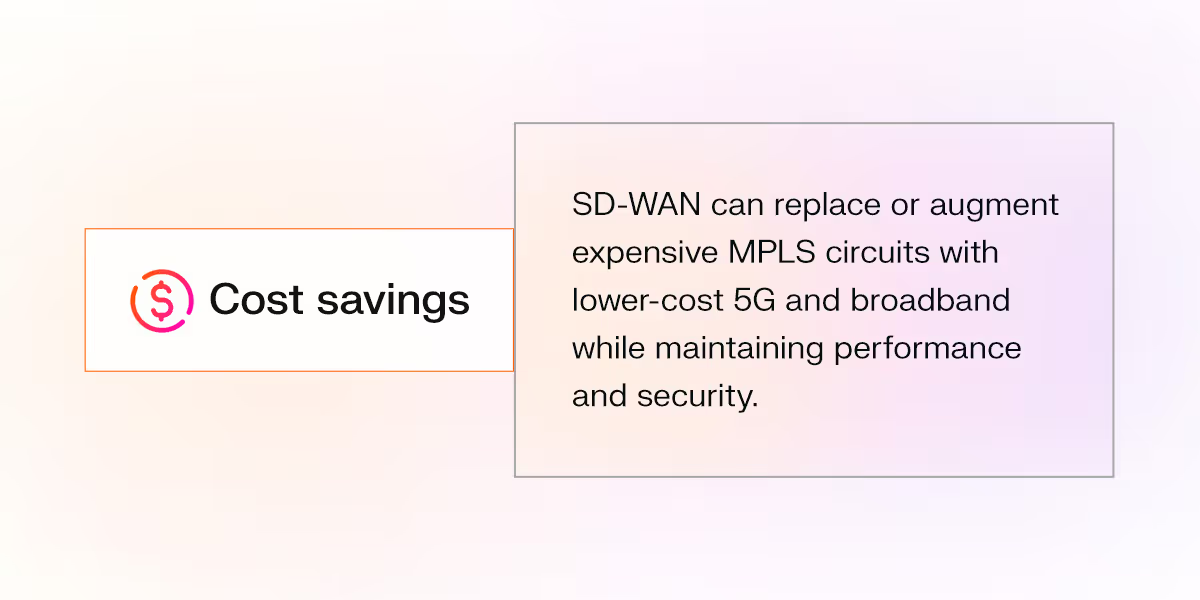
SD-WAN can replace or augment expensive MPLS circuits with lower-cost 5G and broadband while maintaining performance and security, which can significantly reduce bandwidth spend. SD-WAN automation and centralized management also lower operational costs by reducing overprovisioning and manual labor.
Improved performance
Implementing SD-WAN optimizes routing to improve network performance. It continuously monitors path metrics to direct traffic to the best-performing link. SD-WAN helps ensure that latency-sensitive applications such as video, voice, and SaaS remain responsive and high-quality, even during network congestion, by supporting the following:
- Application-aware routing
- Quality of Service (QoS)
- Packet duplication/FEC
Simplified management through centralization
SD-WAN's single, cloud-based console enables IT to define policies once and push them to every site with real-time analytics and visibility. Templated configurations and zero-touch provisioning replace device-by-device changes, reducing errors and accelerating updates.
Increased agility
In SD-WAN networking, teams can bring sites online quickly over any available transport, bypassing long carrier lead times. Policies for security, apps, and routing can be deployed globally within minutes, which accelerates change management.
Security challenges of SD-WAN
SD-WAN presents security challenges such as:
- Expanded attack surface: SD-WAN extends connectivity beyond private MPLS to public internet, mobile links, and the cloud. The greater reach exposes more potential vectors, making each branch edge, controller, home user, API, and cloud on-ramp a possible target.
- Visibility gaps: Traditional router metrics such as basic NetFlow and SNMP don't map cleanly to user experience or app performance in an SD-WAN, allowing branch breakouts and SaaS traffic to bypass centralized sensors. This can create visibility gaps for compliance monitoring and threat detection, making unified security vital.
- Encrypted threats: Adversaries can use Transport Layer Security (TLS) or Quick UDP Internet Connections (QUIC) traffic to hide command-and-control, data exfiltration, and malware delivery. Without decryption or strong side-channel analytics, malicious activity may blend into normal encrypted traffic.
- Misconfiguration risks: Centralized control makes it easier for minor mistakes to instantly propagate across all sites. Errors such as incorrect match conditions, overly permissive segmentation, route leaks, misordered firewall rules, and Network Address Translation (NAT) mishaps can happen without careful attention. Interactions between security stacks, cloud routes, and SD-WAN during outages or upgrades can also create unintended fail-open gaps.
How to secure SD-WAN
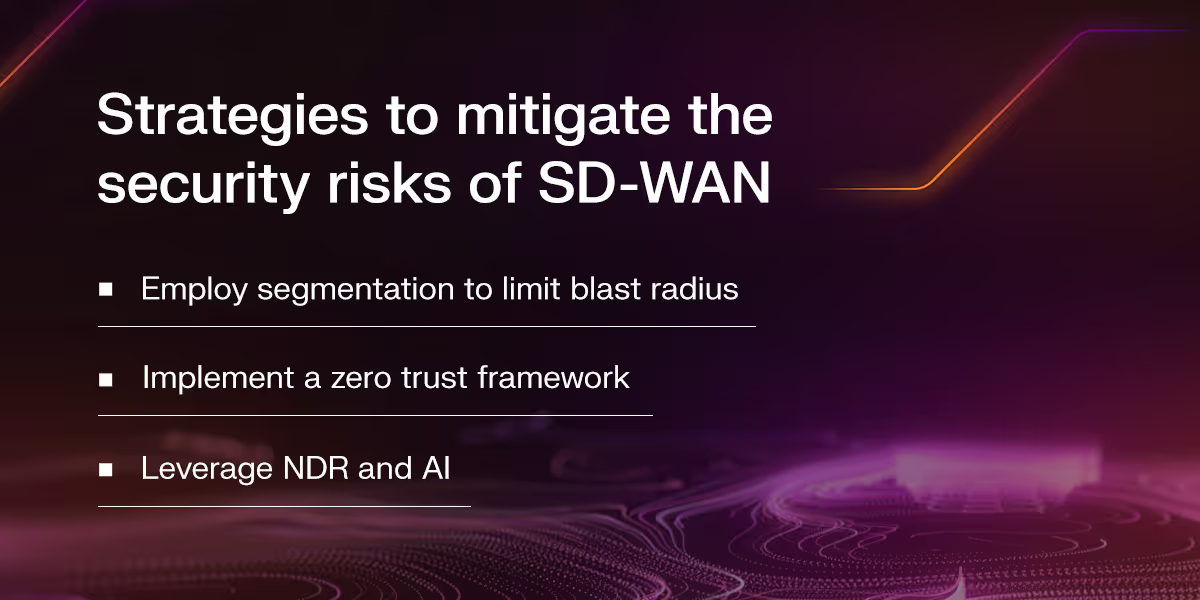
Enhancing network security is vital for protecting the confidentiality, integrity, and availability of data and computer networks. Your organization can mitigate the security risks of SD-WAN with the following strategies:
Employ segmentation to limit blast radius
Segmentation divides your network into smaller, isolated networks to limit unauthorized access and minimize a cyber-attack's blast radius. You can implement macrosegmentation and microsegmentation using SD-WAN's app- and identity-aware policies. Use these tips to facilitate successful segmentation:
- Enforce default-deny between segments.
- Require intersegment traffic to traverse security services such as firewalls, Intrusion Prevention System (IPS), and Secure Web Gateway (SWG) via service chaining.
- Isolate user, Internet of Things (IoT) and operational technology (OT), and guest internet breakouts to prevent lateral movement in the event of a compromised device.
- Continuously validate with policy simulation and traffic analytics to detect unintended paths.
- Separate management and control-plane networks with strict Mutual Transport Layer Security (mTLS) and Access Control Lists (ACLs).
Implement a zero trust framework
A “never trust, always verify” approach focuses on granular access and continuous verification for all devices and users within a network. This position can thwart lateral threat movement, isolate network segments, and reduce the attack surface. Identity-based access, least-privilege principles, and microsegmentation help contain breaches even if one part of a network is compromised.
You can implement an effective zero trust framework by authorizing and authenticating every connection based on device posture, workload identity, and user identity. You should also protect the control plane with just-in-time admin access and continuously assess risk with real-time behavior tracking, geolocation, and Endpoint Detection and Response (EDR)/Mobile Device Management (MDM).
Leverage network detection and response (NDR) and artificial intelligence (AI)
NDR deepens network traffic visibility, which enables advanced threat detection and automates incident response. AI-powered security solutions and behavioral analytics allow you to continuously monitor all network traffic, identify threats to traditional firewalls, understand how they move laterally across your network, and mitigate damage with streamlined responses. The following solutions and strategies can help you leverage NDR and AI in your SD-WAN network:
- Establish a baseline for normal behavior: Use AI-driven NDR to analyze user behavior, traffic patterns, and application flows within the network. With these insights, you can establish a baseline for normal activity in your unique environment.
- Detect anomalous traffic: Once you set a baseline, AI-driven NDR can identify deviations from the established norm in real time.
- Monitor all network traffic: Choose an NDR solution that monitors traffic across all parts of your SD-WAN network. It should cover cloud, hybrid, and on-premise environments for comprehensive visibility and threat detection.
- Automate incident response: The NDR solution you choose should also integrate with additional security tools such as Security Orchestration, Automation, and Response (SOAR) and Security Information and Event Management (SIEM) to facilitate automated response actions.
Learn more about SD-WAN security with Darktrace
SD-WAN is a flexible, agile, and cost-effective alternative to traditional WAN networking, but it presents unique cybersecurity challenges. Deploying SD-WAN and NDR in tandem is a more effective way for organizations to protect both networks and data from sophisticated threats. SD-WAN ensures performance and segmentation, while NDR helps ensure those segments remain trusted and uncompromised. When unified, these solutions provide resilient connectivity and behavioral threat detection across cloud, branch, and on-premises environments.
Learn more about the cyber-threat landscape and how cybersecurity solutions with multi-layered AI can help combat risks.