Blog
/
Network
/
April 26, 2026

Why Most Ransomware Attacks Occur "After Hours"

Cyber-criminals target weekends and holidays to strike while employees are away. Discover how defensive AI can protect your business 24/7.
Inside the SOC
Darktrace cyber analysts are world-class experts in threat intelligence, threat hunting and incident response, and provide 24/7 SOC support to thousands of Darktrace customers around the globe. Inside the SOC is exclusively authored by these experts, providing analysis of cyber incidents and threat trends, based on real-world experience in the field.
Written by
Max Heinemeyer
Global Field CISO
ransomware after hoursDefault blog image
26
Apr 2026

What is an after-hours ransomware attack?

An after-hours ransomware attack is a type of cyber-attack where threat actors delay key stages of the attack, particularly encryption, until nights, weekends, or holidays when activity within the organization is low.

Rather than triggering ransomware immediately after gaining access, attackers often spend time establishing a foothold, moving laterally, and escalating privileges. Encryption is then executed at a time when monitoring is reduced and response times are slower.

This timing increases the likelihood that malicious activity goes unnoticed and allows attackers to maximize impact before security teams can detect and contain the threat.

Why ransomware attacks happen after hours and on weekends

Darktrace regularly observes an increase in cyber-attacks carried out during holidays, weekends, and outside of working hours. It is clear that such ‘off peak’ attacks allow easy exploitation of standard organizational practices and human vulnerabilities.

As reduced staff wind down and employees mentally and physically log off from the workplace, there is a decline in the speed of detection and triage within an enterprise. This allows threat actors to sneak in unnoticed. Without real-time autonomous systems, when executed these unexpected attacks have a much greater impact on response and recovery.

One of the most frequent threats detected out of hours is ransomware. In 76% of infections, the encryption process begins either after hours or during the weekend. Darktrace was alerted to a ransomware incident which was executed in the early hours of a client’s network on Christmas Day, when most employees were offline.

How ransomware spreads before encryption begins

Figure 1: Timeline of the Christmas Day ransomware breach

Over a week before the encryption began, an initial foothold was established on an unassuming desktop. Using this vector, the threat actor was able to move laterally and gain access to two domain controllers – servers used to verify users and authenticate requests. The two servers then made unusual command and control (C2) connections to a rare endpoint linked to ransomware. Next, the threat went into hiding. Although Darktrace had alerted to this activity at every stage, the security team was under great stress during the December period and did not manage to action even these highly critical alerts. Without Darktrace / NETWORK or Proactive Threat Notifications (PTNs), the threat remained uninterrupted.

It suddenly re-emerged after hours on December 24 and utilized its additional privileges to write suspicious executable files to a range of internal devices. A pre-determined set of company data was exfiltrated and a ransomware payload downloaded from the same cloud destination.

Why after-hours ransomware attacks are harder to detect

A cyber-attack striking on a public holiday is likely to destabilize communication – who is responsible for dealing with it? Are they hard to reach? Are there different protocols for an out-of-hours breach? When unexpected during the holidays, these questions may be surprisingly hard to answer. When answers finally arrive, it is often too late – the damage has already been done.

Once dealt with, there are also repercussions for evaluation: security personnel will be needed to investigate what happened and the future consequences of the attack. If internal staff are hard to mobilize, and external security services come at a premium, this process can be arduous and key evidence may be lost. In turn, the company will be left open to similar attacks in the future.

Why ransomware attacks increase during weekends and low-visibility periods

Holidays clearly pose a human and logistical vulnerability. However, it is often overlooked that these same down periods occur on a small scale throughout the year – at the end of every week. Darktrace has observed a huge surge in weekend attacks in recent months.

Figure 2: Diagram of the key terms Darktrace has observed over the past six months in out-of-hours model breaches

This includes another ransomware incident, which struck a hospitality organization based in the UK. A company device was compromised when a user unintentionally accessed a harmful email. The infection exploited cleartext password files to laterally move to four other devices, including critical servers which it then used to host outbound spam and further disseminate. For several following weekends, compromised devices made a large volume of open or Tor-hosted C2 connections to endpoints associated with the XINOF ransomware.

This example shows that out-of-hours infections can come from any vector, and human compliance errors can be exploited to quickly propagate malware and hide before the security team returns to work on Monday. With many data breaches already taking months to discover, threat actors are looking to extend their concealment by implementing the initial compromise at times with decreased monitoring.

Improving detection of these first compromises and adapting to smaller out-of-hours periods may lead to improved response and adjustment for larger holidays as well. But for a permanent fix, enterprises need a proactive approach.

How AI detects and stops ransomware before encryption

In the case study above, Autonomous Response was possible at every attack stage, had it been switched on in active mode. Darktrace / EMAIL would have stopped the initial compromise by identifying the anomalous attachment and quarantining the infection before it could enter the network. Once inside, the critical servers exploited would not have been compromised, as the malicious login activity using gathered passwords would have been halted until verified. Finally, connections to the malicious sites containing the XINOF payload could have been blocked, stopping further damages from occurring.

Unlike a human, AI never sleeps, and never takes a holiday. Instead, the AI stays active around the clock, containing all types of threats in their earliest stages. This prevents malicious activity from escalating while giving human security teams valuable airtime to react and remediate the root cause of any incidents.

If a security team requires an extra set of eyes to augment their investigation, incidents can also be mitigated with Proactive Threat Notifications (PTNs). This service funnels high-severity detections straight into Darktrace’s customer-dedicated SOC to be investigated by expert cyber analysts. The Darktrace PTN SOC has a follow-the-sun approach to monitoring customer environments, meaning that organizations are protected from attacks around the clock.

Why attackers use timing to evade detection

The case studies in this blog should serve as a reminder of the need for 24/7 attentiveness. As security professionals increase their skills and creativity in combating threats, malicious actors continue to adapt themselves and are using timing to their advantage during attacks. Now more than ever, it is clear that autonomous AI-based detection is the only means to remove the advantage of timing from threat actors so that even when the office is closed or the laptop is switched off, your security remains on.

How to prevent ransomware attacks after hours with AI-driven detection

Preventing ransomware attacks after hours requires visibility beyond working hours, when traditional monitoring and response are limited. Attackers take advantage of these gaps to move laterally and trigger encryption when detection is least likely.

Security teams can reduce this risk by identifying early-stage compromise before encryption begins, monitoring behavioral changes across users and devices, and maintaining continuous detection even when staff are offline. This allows threats to be contained before they escalate into full ransomware incidents.

To see how this works in practice, explore how Darktrace uses AI to detect and stop ransomware attacks in real time.

Thanks to Darktrace Product Manager Gabriel Few-Wiegratz for his insights.

Inside the SOC
Darktrace cyber analysts are world-class experts in threat intelligence, threat hunting and incident response, and provide 24/7 SOC support to thousands of Darktrace customers around the globe. Inside the SOC is exclusively authored by these experts, providing analysis of cyber incidents and threat trends, based on real-world experience in the field.
Written by
Max Heinemeyer
Global Field CISO

More in this series

No items found.

Blog

/

/

August 21, 2026

AI Agents: Securing the Path from Intent to Action

Photograph of AI data centerDefault blog imageDefault blog image

The UK’s National Cyber Security Centre (NCSC) recently published guidance on managing the cyber risk of agentic AI. While the document is framed as interim advice as more formal guidance is developed, the framing reflects the current state of the industry: organizations are already deploying agents into production environments while standards, controls, and operating models for autonomous systems remain unsettled. Governance is evolving alongside adoption rather than preceding it, a reality which underscores the importance of robust controls.  

The NCSC’s guidance recommends aligning controls to an agent's level of autonomy, assigning distinct identities, limiting permissions, constraining access to systems and data, monitoring activity, maintaining human oversight, and preserving the ability to intervene when necessary. Most of these recommendations will sound familiar to security teams. The challenge is not the novelty of the controls. It is the type of system those controls now need to govern.

The shift from model security to agent security

For several years, AI security discussions have focused heavily on models. Can a model be manipulated? Jailbroken? Trusted? Can it expose information it should not? Those questions remain important, but they capture only part of the problem. A model generating text is one thing. A system connected to identities, applications, tools, workflows, and business data is another.

The difference becomes clearer when comparing a chatbot that answers questions with an agent that can retrieve customer records, update tickets, invoke tools, trigger workflows, and interact with external systems. The underlying model may be identical. Its access is not. The security question begins to shift from what the model knows to what the system can do.

The same theme appears in the Five Eyes statement released earlier this year, describing AI as a force multiplier that is accelerating both offensive and defensive cyber operations. The NCSC guidance explores what that reality looks like when autonomous systems begin operating inside enterprise environments.

Securing AI agents in operation

The NCSC spends relatively little time debating model behavior and considerably more time discussing identity, permissions, monitoring, oversight, containment, and response. Agents are treated as participants within an environment rather than isolated pieces of technology.  

That's broadly consistent with how we think about the problem at Darktrace.

An agent should not be treated as an extension of a user account. It develops its own behavioral patterns. It accesses systems, interacts with data, invokes tools, and moves across workflows in ways that can be observed independently. Understanding what an agent is permitted to do matters. Understanding how it actually behaves once deployed, and whether that behavior aligns with business intent, matters just as much.

Identity provides an obvious example. The NCSC recommends assigning distinct identities to agents rather than allowing them to disappear into surrounding human or service accounts. Most importantly, assigning agents distinct identities enables independent behavioral monitoring.

Development assumptions vs. real-world behavior

The same principle extends to monitoring. NCSC guidance places agent activity within normal security operations rather than treating it as a separate AI governance function. Many of the controls described are put in place before an agent begins operating. Sandboxing, credential design, approval workflows and human oversight all reflect judgments about how the system is expected to behave and what risks it is likely to create.

Actual use may challenge those assumptions. Access patterns change. Workflows expand. Systems begin interacting with resources they have never touched before. Processes that appeared reasonable during design behave differently in production. Human oversight requirements may turn out to be either excessive or inadequate once the system is operating at scale and operating within the context of unique business processes.

The Five Eyes statement points to a similar issue: organizations need confidence that controls continue to work as intended once systems are exposed to real users, data, tools and operational pressures. Often, the question is not whether an agent is technically allowed to perform an action, but whether its behavior remains consistent with the role it was intended to play.

Monitoring and governance of AI agents go hand-in-hand

This problem is exactly why monitoring and governance should be treated as part of the same process. Governance sets the initial parameters for deployment, while monitoring provides evidence about whether those parameters remain appropriate. That evidence should, in turn, inform changes to permissions, controls and oversight.

This matters increasingly as autonomous systems are integrated into business processes. The relevant risk is shaped not only by the model or agent itself, but by what it can access, what actions it can take, and how its behavior changes in practice.

Developing continuous oversight of AI agent behavior

The implication is clear: governance cannot end at deployment. Organizations need a way to understand how agents behave after deployment, test whether controls remain appropriate, and adjust them as conditions change. That requires visibility not just into technical activity, but into whether that activity makes sense in the context of the business process the agent is intended to support.

This is where business-centric behavioral security can become critical. Risk does not emerge from the model itself: it emerges from the actions an autonomous system takes within the enterprise and the downstream consequences of those actions.  

An agent can operate exactly as intended and still create risk if it accesses sensitive information in an unexpected context, exercises permissions in ways that create unintended exposure, or influences business processes in ways that were not anticipated during design and review.

Traditional governance vs. behavioral analytics

Traditional governance frameworks provide assurance at a point in time. Behavioral security can provide ongoing visibility into how autonomous systems interact with the organization they are meant to serve. Rather than focusing exclusively on model performance or policy compliance, organizations need to understand whether an agent's behavior aligns with business intent, operational expectations, and acceptable risk tolerances as conditions change.

As enterprises move from isolated AI deployments to interconnected ecosystems of agents, visibility into behavior becomes as important as visibility into code. Governance determines what an autonomous system is permitted to do. Behavioral analytics helps determine what it is doing, what business outcomes it is producing, and whether those outcomes remain aligned with the organization's objectives.

[related-resource]

Continue reading
About the author
Margaret Cunningham, PhD
VP, Security & AI Strategy, Field CISO

Blog

/

/

August 19, 2026

When AI Becomes the Lure: A Fake Gemini Installer Delivers Vidar

Default blog imageDefault blog image

Key takeaways

  • Darktrace observed a customer download a fake Google Gemini installer hosted on Google Colab, resulting in the execution of the Vidar information stealer.
  • Darktrace identified the compromise through behavioral indicators, including suspicious process activity, anomalous network communications, and indicators of credential theft, before autonomously containing the threat.
  • The incident highlights how threat actors are increasingly exploiting trusted platforms and a growing interest in AI tools to distribute malware through seemingly legitimate software acquisition workflows.

The Growing Abuse of Generative AI

As organizations are increasingly adopting generative AI tools into their daily workflows, attackers are adapting their distribution methods accordingly too. As part of their day-to-day work, users are now searching for AI assistants, programming tools, browser extensions, desktop applications, and productivity integrations.

Recent reports have highlighted campaigns that use fake AI software and AI-related installers to distribute malware and steal credentials [1]. Researchers have documented campaigns that exploit fake AI-themed websites and services to distribute information stealers and backdoors [2]. Security researchers have also observed attackers disguising malware as legitimate installers for AI software to increase the likelihood of victim interaction and execution [3].

In July 2026, Darktrace observed one such case within a customer environment in the Europe, Middle East and Africa (EMEA) region, where attackers used a fake generative AI installer to deliver the prolific information stealer Vidar. This incident highlights how threat actors are exploiting interest in AI services to distribute established malware using increasingly convincing social engineering techniques.

How a Fake Gemini Installer Delivered Vidar

Initial Access: From Search Result to Malware Download

Unlike many malware campaigns that begin with a phishing email, this activity appears to have originated from a user searching for and downloading software.

Darktrace first observed unusual activity on the customer network after a suspicious executable file was launched from a user’s Download folder. Further investigation revealed that the file purported to be a Google Gemini installer and was named “Download_Google_Gemini_For_Windows.exe”.

During the initial analysis, it was noted that the top search result for the suspicious filename associated pointed to a file hosted on Google Colab, a cloud-based Jupyter notebook platform, commonly used by developers, researchers, and data scientists to run code and machine learning workloads through a web browser. By leveraging another trusted Google platform, the attacker increased the likelihood that users would perceive the download as legitimate, making the lure more convincing to those searching for Gemini-related software.

Figure 1: The Google Colab page containing a download prompt for the fake Google Gemini installer.

Further investigation of the Google Colab page revealed that the download prompt redirected users to a secondary site, hxxps://micronsoftwares[.]com, which posed as a "Windows Software Hub" download page and offered the fake Gemini installer for download.

Figure 2: The secondary website posing as a "Windows Software Hub" download page, which likely hosted the fake Gemini installer.

While the investigation did not uncover any HTTP or file-download telemetry data that conclusively identified the download source, SSL communication sessions with Google Colab were detected immediately before the suspicious file was executed. The timing of these connections suggests that the user interacted with the Colab resource before being redirected to the secondary site from which the executable was downloaded.

The user was not simply tricked into opening an email attachment; instead, the attacker embedded malicious content into a process many users would consider entirely legitimate: searching for and downloading software associated with a trusted platform.

Weaponizing Trusted Platforms

At the time of review (July 15, 2026), Darktrace's Threat Research team confirmed that the Google Colab page was still active and prompting users to download a ZIP archive containing the binary file.

The archive also appeared to contain a README file instructing users to run the binary file with administrator privileges and add it to their antivirus software’s exception lists. These instructions suggest that the campaign relied heavily on social engineering, convincing users to take actions that would facilitate malware execution and potentially bypass security checks.

The use of a legitimate platform also complicates the user’s decision-making. Downloads associated with a trusted service are often perceived as less suspicious than those hosted on unfamiliar domains. When combined with the branding of a widely used AI tool, the lure becomes even more convincing.

Malware Analysis

Darktrace’s Threat Research team identified the executable file as the information-stealing malware Vidar. Analysis revealed that the binary file was a newer Go-compiled variant that communicated with Telegram-based infrastructure. Darktrace’s researchers also identified dtm[.]kijangturbo88[.]top as a command-and-control (C2) endpoint associated with the activity. While the malware itself was not novel, the lure and delivery mechanism was.

For a deeper look at the information stealer, see Darktrace’s 2023 analysis of Vidar.

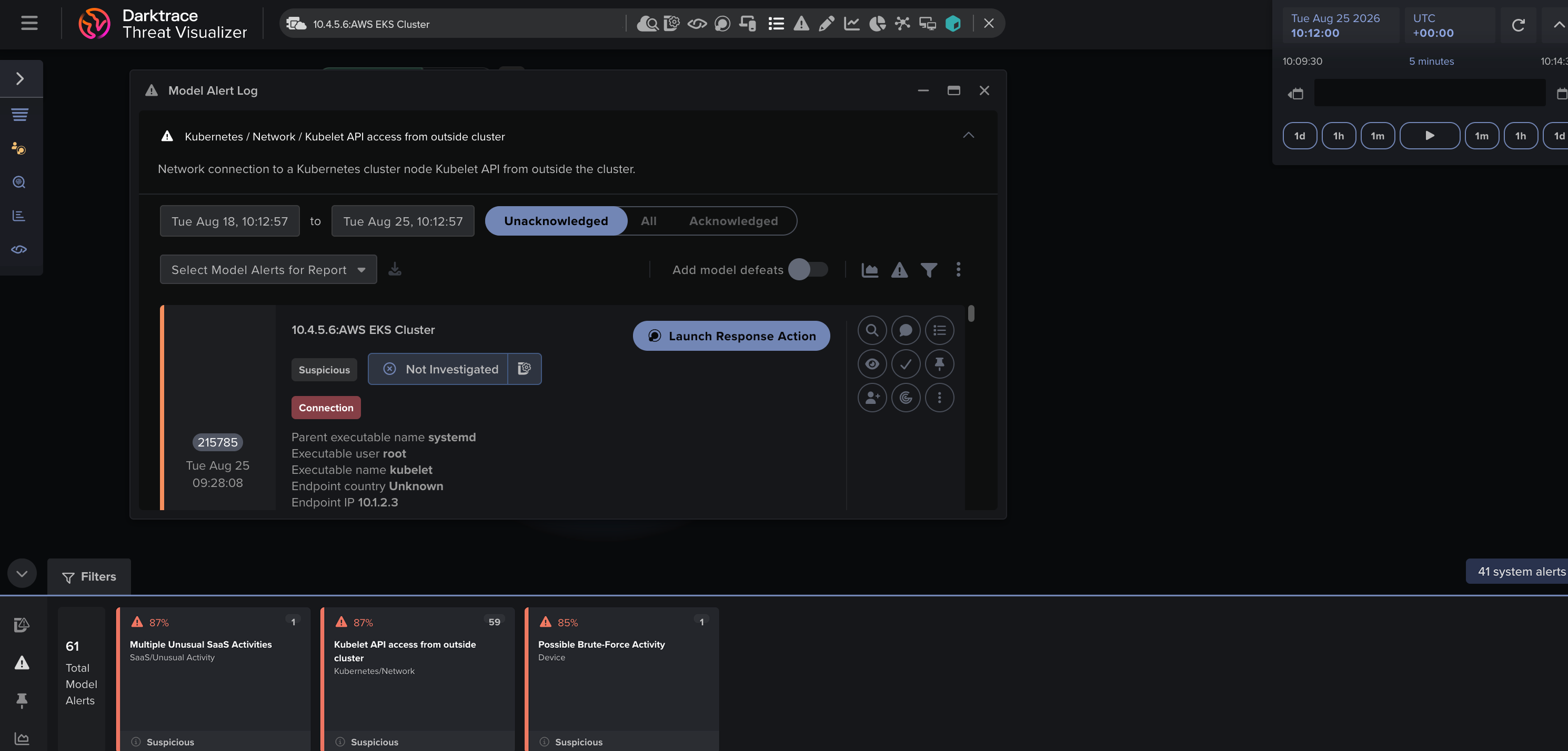
Figure 3: Darktrace’s detection of the unusual outbound connection associated with the fake Gemini installer.

Shortly after execution, the process established communications with the external IP address 91.98.98[.]86 via port 443, directly linking the executable to suspicious network activity observed on the device. Subsequent open-source intelligence (OSINT) analysis of the revealed multiple malicious associations [5].

Additional Darktrace detections included unusual SSL activity from the affected device. Analysis of related SSL telemetry identified 91.98.111[.]49 as additional infrastructure associated  with the activity [6].

Subsequent alerts from the customer's Microsoft Defender for Endpoint integration later confirmed activity consistent with the theft of browser credentials and other sensitive data from the affected endpoint.

Taken together, these detections provided a clear picture of the attack, from the execution of a suspicious file and unusual network connections to indicators of C2 activity and credential theft.

Figure 4: Darktrace’s detection of anomalous activity following the execution of the fake Gemini installer, seen in the Model Alert Event Log.

Darktrace's Autonomous Response

Following the detection, Darktrace’s Autonomous Response took immediate containment action, including blocking communication with suspicious external infrastructure, including 91.98.98[.]86, and quarantining the compromised device.

Despite the apparent legitimacy of the activity, with the installer hosted on a trusted platform and resembling a routine software download, Darktrace was able to detect and contain the attack because the device's behavior deviated from its normal pattern.

Figure 5: Automated containment actions implemented by Darktrace's Autonomous Response following the detection of activity associated with the fake Gemini installer.

Conclusion

This investigation highlights how threat actors continue to adapt established malware delivery techniques to emerging technology trends. While the malware itself was not new, the distribution method was. By disguising Vidar as a Google Gemini installer and hosting the malicious content on a trusted platform, the attack aligned its lure with a growing behavioral trend: users actively searching for AI tools and services as part of their day-to-day work.

Although fake installers are not a new phenomenon, the rapid rise of generative AI has created new opportunities for threat actors. Rather than relying solely on traditional delivery methods, attackers can now target users who are actively searching for AI applications. As AI adoption continues to accelerate across enterprise environments, organizations should remain alert to campaigns that exploit this interest through fake applications, malicious websites, manipulated search results, the misuse of trusted platforms, and AI-themed social engineering.

Credit to Rushanth Ramanathan (Cyber Analyst) Joanna Ng (Detection Engineer)

Edited by Ryan Traill (Content Manager)

Appendices

Darktrace Model Detections

  • Security Integration / C2 Activity and Integration Detection
  • Endpoint / New Suspicious Executable Launched
  • Endpoint / Process Connection / Unusual Connection from New Process
  • Anomalous Connection / Rare External SSL Self-Signed
  • Security Integration / High Severity Integration Detection
  • Antigena / Network / Significant Anomaly /  Antigena Significant Security Integration and Network Activity Block

•Antigena / Network / Significant Anomaly /  Antigena Significant Anomaly from Client Block

List of Indicators of Compromise (IoCs)

IoC Type Description
Download_Google_Gemini_For_Windows.exe File Fake Gemini-themed installer observed during the investigation.
GoogleAppInstaller.exe File Related executable identified through endpoint telemetry.
91.98.98[.]86 IP Address External destination contacted by the malicious executable.
91.98.111[.]49 IP Address Related infrastructure identified through SSL certificate pivoting.
dtm[.]kijangturbo88[.]top Domain Command-and-control endpoint identified during malware analysis.
1e13c2c9eac72daf63fd00a9946878949e159ae6ec51b54ec64f942d79d61913 SHA256 Malware sample associated with the fake Gemini installer.

MITRE ATT@CK Mapping


MITRE ATT&CK Mapping Tactic Technique
Initial Access T1204 User Execution
Execution T1204.002 User Execution: Malicious File
Defence Evasion T1036 Masquerading
Credential Access T1555 Credentials from Password Stores
Credential Access T1555.003 Credentials from Web Browsers
Command and Control T1071 Application Layer Protocol
Exfiltration T1041 Exfiltration Over C2 Channel
Continue reading
About the author
Rushanth Ramanathan
Cyber Analyst
Your data. Our AI.
Elevate your network security with Darktrace AI