

Driving Greater Value from Cybersecurity Investments: Korry Electronics’ Approach to Proactive Optimization

Korry Electronics wanted to assess the current tools in their security stack to ensure they were operating effectively to reduce cyber and operational risk. Working with engineers as part of the Darktrace Proactive Health Optimization (PHO) yielded strong results. Darktrace’s involvement strengthened and improved the efficacy of Darktrace / NETWORK and the overall cybersecurity posture, giving Korry’s leadership team greater confidence in the tools ability as the core security platform at the organization
Inside the SOC
Darktrace cyber analysts are world-class experts in threat intelligence, threat hunting and incident response, and provide 24/7 SOC support to thousands of Darktrace customers around the globe. Inside the SOC is exclusively authored by these experts, providing analysis of cyber incidents and threat trends, based on real-world experience in the field.
Written by
Michael Ohlfs
Vice President of Finance
Default blog image

Korry Electronics, a long‑standing manufacturer serving mission‑critical aerospace and defense programs, has been a Darktrace customer since 2023. Korry operates within a highly sensitive environment, GCC High, a highly secure version of Microsoft 365 built for U.S. government agencies, defense contractors, and organizations handling classified or export-controlled data. Due to government contracting requirements, Korry has to maintain rigorous controls across its network, endpoints, email, and cloud systems.

Korry were already running Darktrace / NETWORKTM , when they decided to optimize their deployment using Darktrace Proactive Health Optimization (PHO),a service offering designed to keep Darktrace solutions operating at peak performance. PHO quickly surfaced previously unseen gaps and environmental in consistencies that required addressing to strengthen Korry’s resilience.

Why optimization became the focus

Operating in highly regulated environments like GCC High creates a different set of security and operational expectations. Organizations must not only defend against a rapidly evolving threat landscape, but also maintain strong visibility,disciplined security operations, and continuous alignment with compliance and vendor best practices. In these environments, under-utilized or improperly tuned security tooling can introduce unnecessary operational and organizational risk.

Given that the financial impact of a security incident can reach millions in direct costs and even more when considering indirect losses such as reduced productivity or the potential loss of intellectual property, investments in proactive detection and response capabilities are essential. Leveraging Darktrace effectively within GCC High enhances the organization's assurance that future threats can be identified and contained quickly, helping us safeguard critical assets and maintain compliance.

Within that context, the team took a step back and reframed the problem.

Rather than asking whether its tools were capable, the organization focused on whether it was getting the maximum benefit from them on an ongoing basis. Shifting from capability to amplifying utilization created a clear direction: optimization needed to become a deliberate, structured effort rather than an occasional adjustment.

These discussions led to evaluating Darktrace’s ProactiveHealth Optimization (PHO) service to strengthen system tuning, improve detection accuracy, and mitigate the organizational risk associated with under utilizing a mission critical security tool.

Turning optimization into a repeatable process

Darktrace Proactive Health Optimization (PHO) introduced a different way of working. It provided immediate visibility into risks and inefficiencies that had not been fully understood when the in-house security team was working on their own.

During the initial assessment, the dedicated PHO engineer identified numerous areas where the deployment was misconfigured or under optimized. Additionally, the PHO team delivered a prioritized and structured remediation plan, along with detailed instructions for the Korry IT team to adjust configurations, tuning, and system settings.

With this expert guidance, these issues became easier for the local team to address, building confidence in tooling and opening opportunities to explore risk reduction in other areas of the business.

Extending internal capability without adding headcount

A tangible benefit of this approach was how Korry thought about resources.

Advanced cybersecurity platforms bring depth, but in some cases require specialized understanding to operate at a high level. For many organizations, that creates pressure to expand internal teams or stretch existing ones further.

Darktrace’s PHO service offered an alternative.

By working closely with a dedicated engineer, Korry was able to strengthen its internal capabilities without increasing headcount. The partnership acted as an extension of the team, providing not just answers, but context, reasoning, and direction.

This changed the dynamic. Instead of navigating challenges independently, the organization could rely on a steady source of human expertise that helped accelerate decisions and reduce uncertainty.

Making progress visible

One of the challenges with optimization is that success can be difficult to measure in real time. Improvements often happen gradually through tuning, configuration changes, and operational refinement, making it hard for teams to clearly demonstrate progress or understand what still requires attention.

To address this, Korry leveraged Proactive Health Optimization's reporting cadence to create amore structured and measurable refinement process. The recurring reports documented completed actions, outstanding recommendations, and overall system health, giving the team a clearer view of how the environment was evolving overtime.

That visibility helped connect day-to-day operational effort with broader security outcomes. It also introduced a stronger sense of accountability, ensuring this program remained an ongoing priority rather than a one-time initiative — particularly important in cybersecurity programs where success is often defined by the absence of disruption.

Collaboration that reinforces confidence

As the engagement developed, the human element became justas important as the technical side. Consistent communication and collaboration between Korry and the Darktrace team helped reinforce trust throughout the process.

Korry worked closely with Darktrace’s sales representative, account manager, and engineering team, who provided timely updates, practical guidance, and proactive support throughout the engagement. Recommendations were not only focused on improvingsystem performance, but also on ensuring changes were implemented carefully and with minimal operational risk.

For example,Darktrace advised leaving certain flagged services enabled out of precaution, reflecting an approach that prioritized accuracy, operational continuity, and long-term effectiveness over unnecessary disruption. That balance between technical precision and measured decision-making strengthened Korry’s confidence not only in the platform itself, but also in  supporting it.

Connecting cybersecurity to long‑term planning

For organizations operating in regulated industries, cybersecurity decisions influence far more than technical security outcomes alone. They directly affect operational resilience, compliance readiness, and long-term financial planning.

At Korry, improving the effectiveness of existing security investments created greater operational confidence in the organization’s ability to detect and respond to potential threats. That stronger foundation made it easier to evaluate future priorities, allocate resources strategically, and approach security planning with greater certainty.

The impact extends beyond avoiding the immediate cost of a security incident. Disruption to operations, productivity loss, and potential exposure of sensitive information can create lasting organizational consequences. Strengthening confidence in day-to-day security operations ultimately supports more informed business decision-making over the long term.

Building forward from a stronger foundation

With a more structured approach to optimization in place, the focus naturally shifts to becoming proactive about their cyber risk reduction.

For Korry, this means continuing to evolve its security posture in step with a changing threat landscape, while maintaining the discipline that PHO introduced. It also includes exploring additional capabilities that can extend protection into new areas, particularly where human behavior introduces risk. Darktrace / Adaptive Human Defense would allow the team to address the continual risk of social engineering attacks with tailored security awareness training modules and AI‑driven behavioral analysis.

The lesson is treating optimization as a foundational system that supports continuous adaptation rather than reactive change.

From tools to outcomes

Looking back, the initial challenge wasn’t about stripping out technology that wasn’t working. It was about ensuring that what Korry had in place was delivering against its full potential.

By approaching cybersecurity as an ongoing process of refinement, supported by close partnership and structured oversight, Korry Electronics moved closer to aligning capability with outcome.

In doing so, it reframed what value in cybersecurity actually looks like: not just protection, but confidence grounded in how well systems are understood, maintained, and continuously improved.

‍

Inside the SOC
Darktrace cyber analysts are world-class experts in threat intelligence, threat hunting and incident response, and provide 24/7 SOC support to thousands of Darktrace customers around the globe. Inside the SOC is exclusively authored by these experts, providing analysis of cyber incidents and threat trends, based on real-world experience in the field.
Written by
Michael Ohlfs
Vice President of Finance

More in this series

No items found.

Blog

/

OT

/

October 21, 2026

Beyond the Fridge: Exposed Industrial Control Systems

Default blog imageDefault blog image

Introduction

In October 2026, hundreds of supermarkets across France were reportedly affected by a cyberattack targeting their refrigeration systems. According to public reports, the attackers gained access to internet-connected controllers and modified their settings, forcing refrigeration units into high and extremely low temperatures and causing significant disruption. Total losses have been reported to reach several million euros.

The incident drew attention to the security of industrial refrigeration systems, particularly older devices with exposed management interfaces and known vulnerabilities.

The exact details of how the attackers gained access have not been confirmed, however it is speculated that the public-facing web server could be accessed with the username “admin” and password being the current date. Researchers from Claroty’s Team82 identified a vulnerability in Danfoss AK-SM 8xxA Series in 2025, “CVE-2025-41450", allowing for administrative access using a time-based “code-of-the-day" for authentication [1].

Default credentials, outdated firmware and publicly accessible administrative interfaces have been an issue for years. And yet these systems continue to appear in internet scans and require little sophistication to gain admin access. A simple search of internet-connected devices shows a range of exposed devices from Programmable Logic Controllers (PLCs) and remote gateways, to, yes, more fridges.

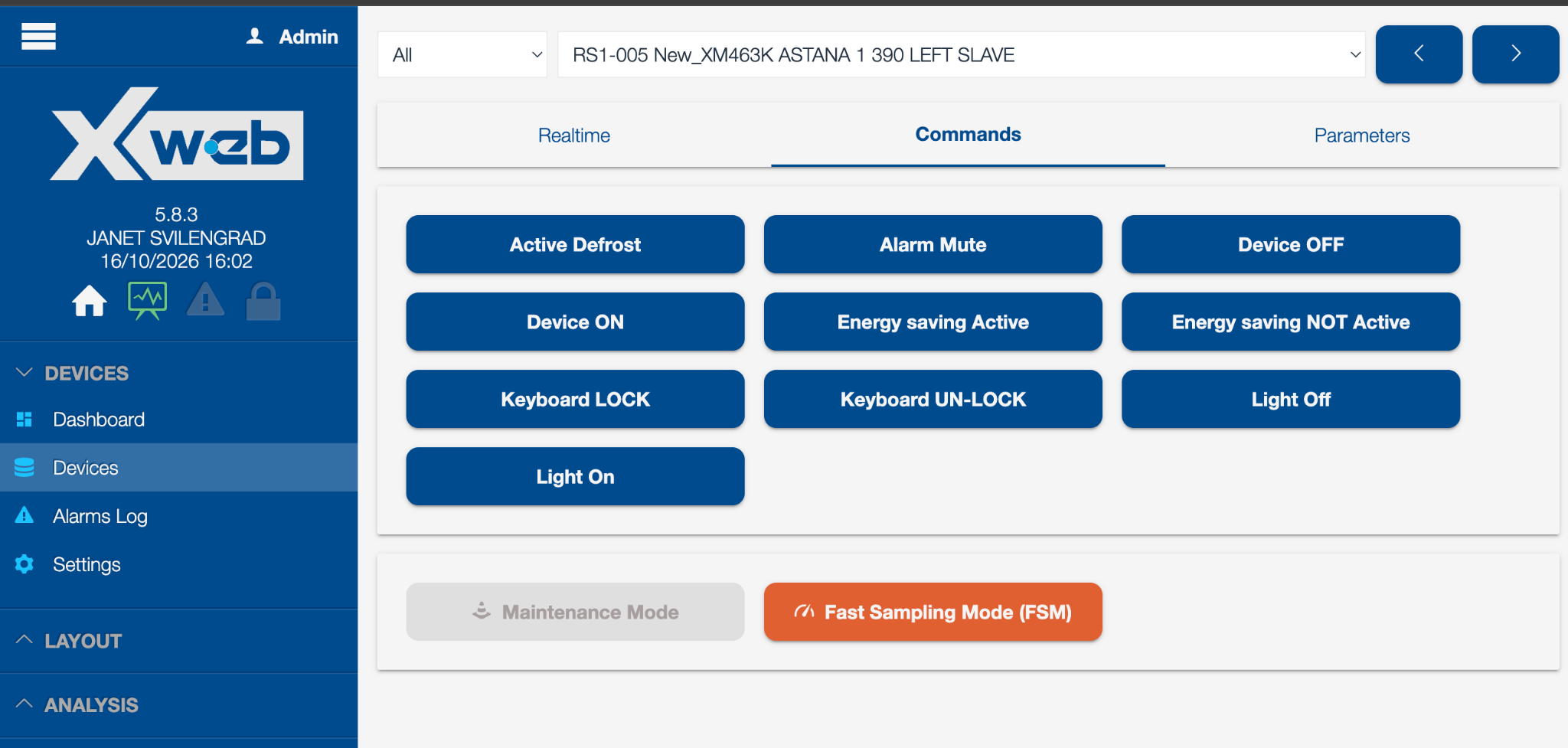
Darktrace malware researchers identified hundreds of IoT and OT devices publicly exposed on the internet, many of which are configured with no authentication, weak credentials, or default credentials. As shown in Figure 1, an exposed Copeland XWEB web interface, used to manage Dixell equipment, including refrigerators, can provide the ability to remotely control connected devices.

‍

Figure 1: Copeland XWEB interface used to control systems including refrigerators and air conditioning.

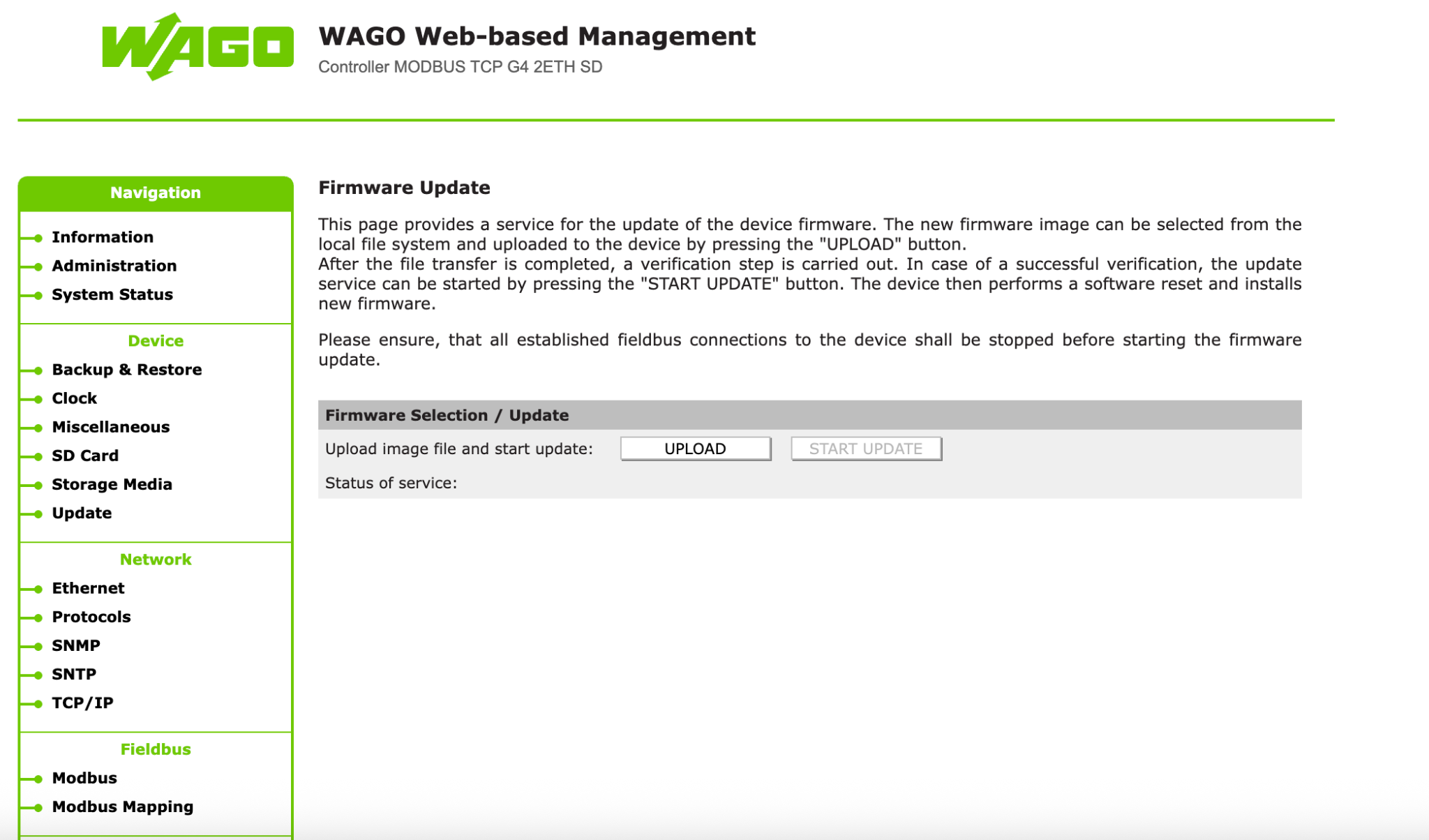
However, it’s not only fridges; web management interfaces for industrial controls are also publicly accessible, often protected only by weak credentials. Figure 2 shows an example of a publicly exposed WAGO interface. The WAGO management interface is a configuration and administration panel for controllers. Through it, a logged-in user can view device details and diagnostics, manage user accounts and passwords, update firmware, back up or restore the full configuration, set the clock, and manage SD card storage. While it typically doesn’t manage switch outputs or read live process values, someone with access could still disrupt operation by changing network or Modbus settings, loading bad firmware or configurations, or by resetting passwords and enabling insecure services.

‍

Figure 2: WAGO Management interface.

‍

The issue extends beyond management interfaces. During our research, we identified publicly accessible web interfaces belonging to PLCs, including Rockwell Automation Allen-Bradley devices. In each case, the risk arises from how the devices have been deployed and configured, not from a flaw in the vendors’ products.

‍

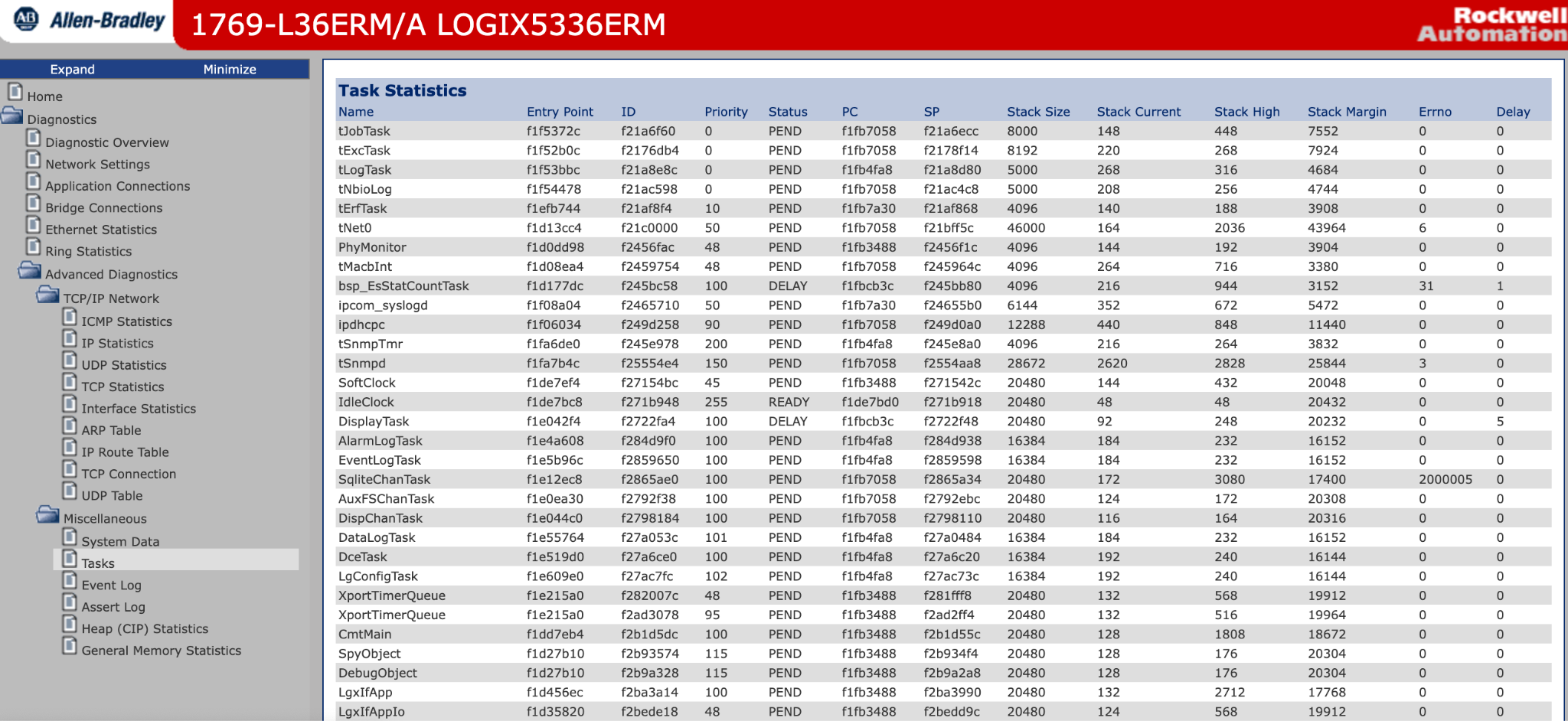
Figure 3: Web interface for Allen-Bradley CompactLogix controller.

‍

Figure 3 shows the web interface of an Allen-Bradley CompactLogix controller. Unlike the previous examples, this interface provides a view into the controller's operation, including running tasks, network connections, memory usage and diagnostic information. Rockwell Automation's CompactLogix controllers are commonly used to automate industrial processes, from manufacturing and packaging lines to water treatment and material handling systems. Depending on their configuration, these controllers can operate motors, pumps, valves and other physical equipment.

Although in this example the interface shown does not provide direct control over the PLC's logic, it exposes information about the model, firmware, network layout, and connections, which is useful reconnaissance for a bigger attack.

The concern is not necessarily that every exposed interface allows an attacker to immediately manipulate industrial processes. However, these devices are accessible from the public internet in the first place, providing information about systems that may be responsible for controlling physical equipment.

The attacks on refrigeration systems in France highlight the consequences of poorly secured industrial devices. As demonstrated throughout this research, publicly accessible management interfaces are not limited to refrigeration controllers but extend to PLCs and other systems used to manage industrial equipment.

Finding these devices requires little effort. Internet scanners make it possible to identify publicly exposed interfaces quickly, and in some cases these interfaces rely on publicly documented default credentials or have no authentication at all. As attackers increasingly use AI tools, such attacks may be identified and carried out faster and at a greater scale.

The consequences of this access depend on the device and the functionality exposed. While some interfaces provide little more than diagnostic information, others allow users to modify configurations, disrupt communications, or change settings that affect physical equipment. In industrial environments, this can result in operational downtime, damaged equipment and financial losses.

Weak passwords, default credentials and exposed administrative interfaces are not new security issues. Yet their continued presence on internet-connected industrial systems demonstrates how easily preventable weaknesses can leave physical operations vulnerable to attack.

Exposed devices often come from third-party suppliers and contractors, who frequently install refrigeration controllers, gateways and PLCs without the organization ever being aware they are connected to the internet. Asset visibility remains an important foundation, but organizations should assume that some unknown assets and services will exist. Effective security therefore also depends on continuous monitoring, anomaly detection, network segmentation and rapid response, so that risky exposure and unusual activity can be identified and addressed before it becomes disruptive.

Darktrace helps security teams gain visibility across IT and OT and respond to risks: https://www.darktrace.com/products/operational-technology.

Copeland, Dixell, WAGO, Rockwell Automation, Allen-Bradley and CompactLogix are trademarks of their respective owners. Their use here is for identification only and does not imply any affiliation with or endorsement by those owners.

References

1.        https://claroty.com/team82/research/freeze-the-controller-defrost-the-food-uncovering-vulnerabilities-in-danfoss-refrigeration-controllers

‍

Continue reading
About the author
Tara Gould
Malware Research Lead

Blog

/

Network

/

October 20, 2026

Why Kubernetes Security Needs A Behavioral Approach

Man at computerDefault blog imageDefault blog image

Kubernetes has become a foundational technology for modern cloud-native infrastructure. It can orchestrate everything from customer-facing applications to data pipelines and, increasingly, AI workloads. This is due to the highly scalable nature of Kubernetes, making it cost efficient and reliable.

Gartner projects that by 2028, 95% of new AI deployments will run on Kubernetes, up from less than 30% today1. However, the same qualities that make Kubernetes powerful also make it uniquely challenging to secure, leaving many organizations with limited visibility into their clusters. This lack of visibility increases risk - it’s difficult to secure what you can’t see.

However, this risk is often looked at as purely a posture management challenge. While Cloud Security Posture Management (CSPM) solutions can tell you how a cluster should be configured, they don’t tell you what it is doing in real time. This requires runtime behavioral monitoring of clusters to detect active threats.

Yet existing approaches to securing Kubernetes by most Cloud Detection and Response (CDR) and Network Detection and Response (NDR) vendors often have limited coverage or require a third-party integration to forward traffic and metadata. This means that capabilities can be limited and detections can lack the context of the wider environment, which slows down triage, investigation and response.

Why Kubernetes is hard to secure

Traditional security tooling was built for persistent, long-term infrastructure such as servers and virtual machines with fixed identities that last months or years. Some elements of Kubernetes environments can have a much shorter lifespan, breaking many assumptions those tools rely on:

  1. Increased complexity
    1. Kubernetes environments can be complex in comparison to traditional infrastructure, with many different elements to consider such as nodes, clusters, containers, pods and the workloads themselves.
  2. Ephemeral by design
    1. Kubernetes pods can spin up and terminate in seconds. A container that was compromised may no longer exist by the time a deeper investigation is required, leaving no artifact to analyze. This poses a unique challenge for security operations.
  3. Weaker workload boundaries
    1. Kubernetes containers use lightweight, shared-kernel isolation rather than separate virtual machines, improving efficiency but reducing separation between workloads and the host. As a result, a compromised container may have a greater potential impact on the node and neighboring workloads than a compromised virtual machine (VM).2
    2. Recent vulnerabilities have shown that threat actors can escape a container and gain access to the underlying host.3, 4
  4. Everything is API-driven
    1. Dozens or hundreds of microservices communicate over internal APIs, and the Kubernetes control plane itself is an API. This creates a large and dynamic attack surface, making it difficult to distinguish legitimate activity from malicious behavior.
    2. Without identity-aware runtime visibility, threat actors can move laterally between pods and exploit misconfigured role-based access controls (RBAC) with little chance of detection.

Rising to the challenge of securing Kubernetes

With the release of Darktrace 7.2, Darktrace / HYBRID NETWORK can extend behavioral security into Kubernetes, delivering visibility, detection and response capabilities across runtime activity. Darktrace addresses the challenges of securing Kubernetes environments in several ways.

Behavioral detection, not static rules

Many Kubernetes runtime tools rely on predefined rules and signatures - a fixed list of “bad” behaviors to match against. That approach struggles with novel attacks and generates noise at scale. Darktrace takes a different approach: our Adaptive AI builds a Unique Behavioral Profile for each organization from the ground up, learning the normal behavior of every workload, node and identity in your cluster. It then uses this understanding to detect meaningful deviations from expected behavior, which serves as the basis for surfacing suspicious and malicious activity.  

A pod reaching out to an unfamiliar destination, an unexpected executable launching inside a workload, or an identity performing an action it has never performed, all surface as anomalies without anyone having to write a rule in advance.

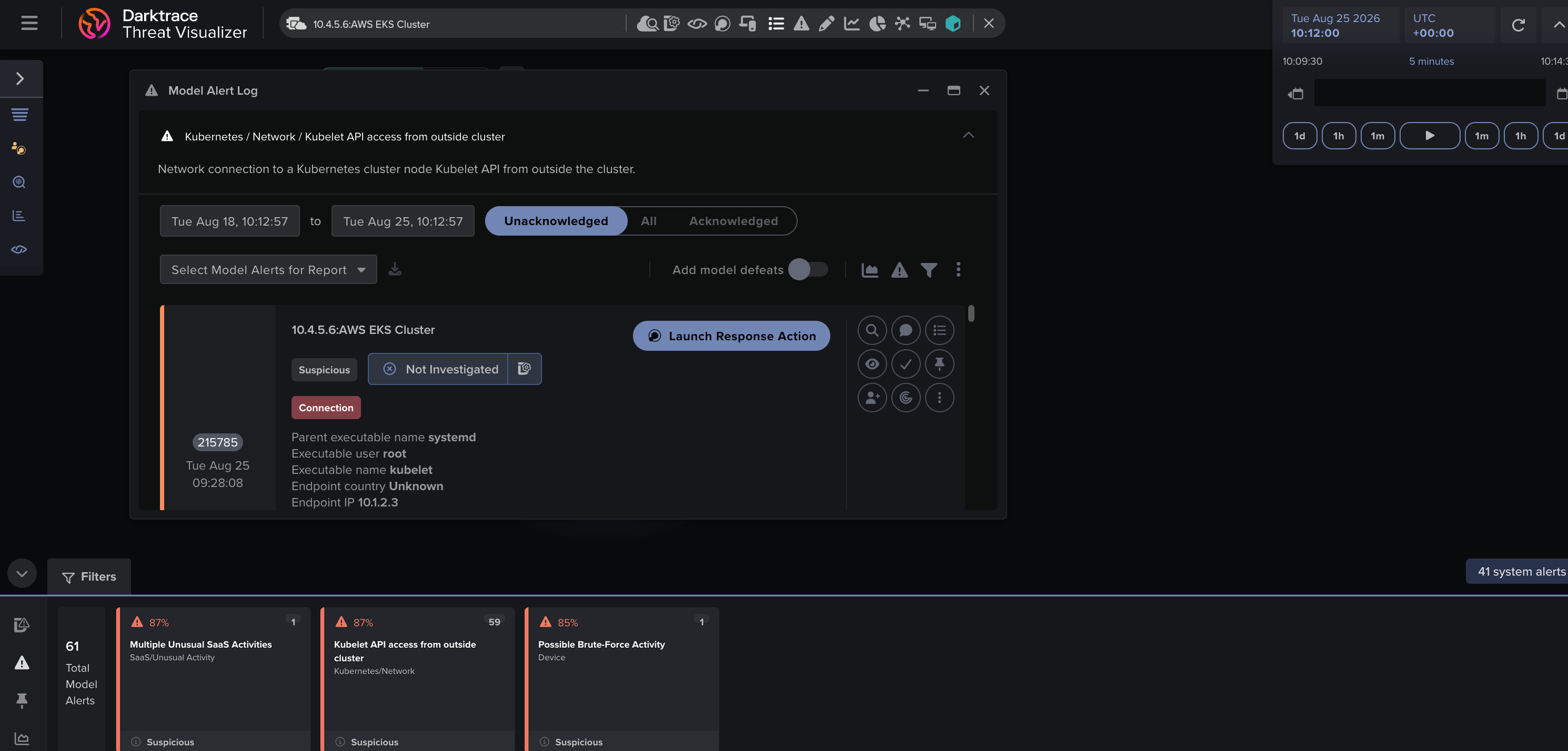
Darktrace surfaces unexpected Kubernetes activity that does not align with an organization’s Unique Behavioral Profile

‍

Visibility across the network, the process, and the control plane

Darktrace monitors Kubernetes at three levels that together provide comprehensive runtime visibility:

  1. Network-layer
    1. Traffic between pods, across nodes and out to the internet. This helps to detect lateral movement and unusual connectivity, whether internal or external.
  2. Process-layer
    1. What is executing inside your containers. If a process reads a sensitive credential file or spawns an unexpected shell inside a production pod, Darktrace can identify that activity and use it as context for further detections.
  3. Control plane
    1. Activity against the Kubernetes API itself: someone executes a command in a running pod, RBAC changes, or unusual administrative actions. Many high-impact security events involve the control plane, an area that is often less visible to solutions that only analyze or scan network-layer telemetry.

Misconfiguration and vulnerability awareness

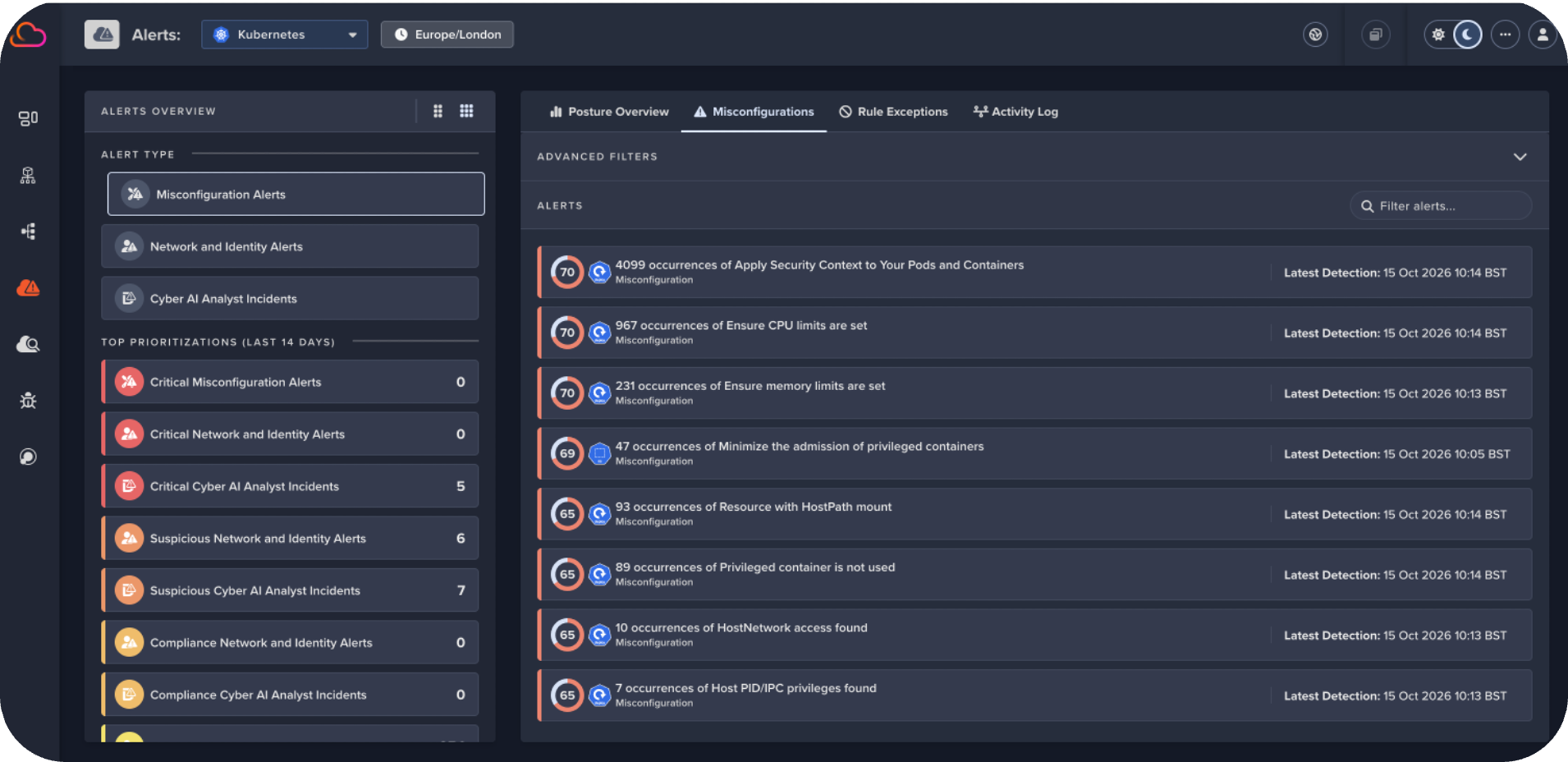
Runtime detection is strongest when combined with posture and exposure management. Darktrace surfaces risky pod configurations, such as privileged containers, host networking, and over-permissive service accounts as workloads are deployed, and links CVEs from images to the workloads running them. Security teams can go beyond simply knowing that a vulnerability exists and see exactly where it is in the cluster. When combined with behavior-based detections, this provides invaluable context that can help prioritize incidents and proactively identify areas that need further attention. For example, anomalous workload behavior on its own might not be very interesting to a security team at first, but if that same workload is known to host sensitive data, is known to have critical vulnerabilities associated with it, or is publicly accessible, then this narrative becomes much more suspicious and demanding of their attention.

Darktrace highlights Kubernetes misconfigurations such as privileged containers, host networking, and missing security controls, helping teams prioritize runtime alerts with valuable exposure and risk context

‍

Response, tailored to Kubernetes

Detection is most effective when paired with response. Darktrace can take precise actions on Kubernetes workloads, including blocking a malicious connection at the pod level, helping to safely contain threats while security teams investigate. Response actions can be taken fully autonomously or via a human-in-the-loop process, which is completely configurable depending on the desired level of autonomy and scope. Darktrace is expanding the number of Kubernetes-native response actions to give customers even more flexibility when containing threats.

Forensics that survive the workload

Because containers are so short-lived, evidence disappears fast and this can make it very difficult to answer questions related to the initial detections. Darktrace solves this with Forensic Acquisition & Investigation capabilities that extend to Kubernetes containers, allowing investigations to be triggered manually by an analyst, or automatically from an alert, preserving evidence before the workload is gone.

For incident responders, this addresses a key challenge in container security: being able to answer “what actually happened?” after an ephemeral workload has vanished.

One platform, not another silo

Kubernetes doesn't exist in isolation, and neither should its security. Darktrace correlates cluster activity with the surrounding cloud environment, including AWS, Azure and GCP identities, network activity and cloud assets, allowing analysts to pivot between a Kubernetes workload and its wider context. A single anomalous action can be traced from the control plane to the pod, and from the pod to the cloud identity behind it, all within a single investigation workflow. This can also include alerts from other areas of hybrid infrastructure or third-party sources where relevant, adding more context to investigations and speeding up workflows for human analysts.

Built to deploy easily

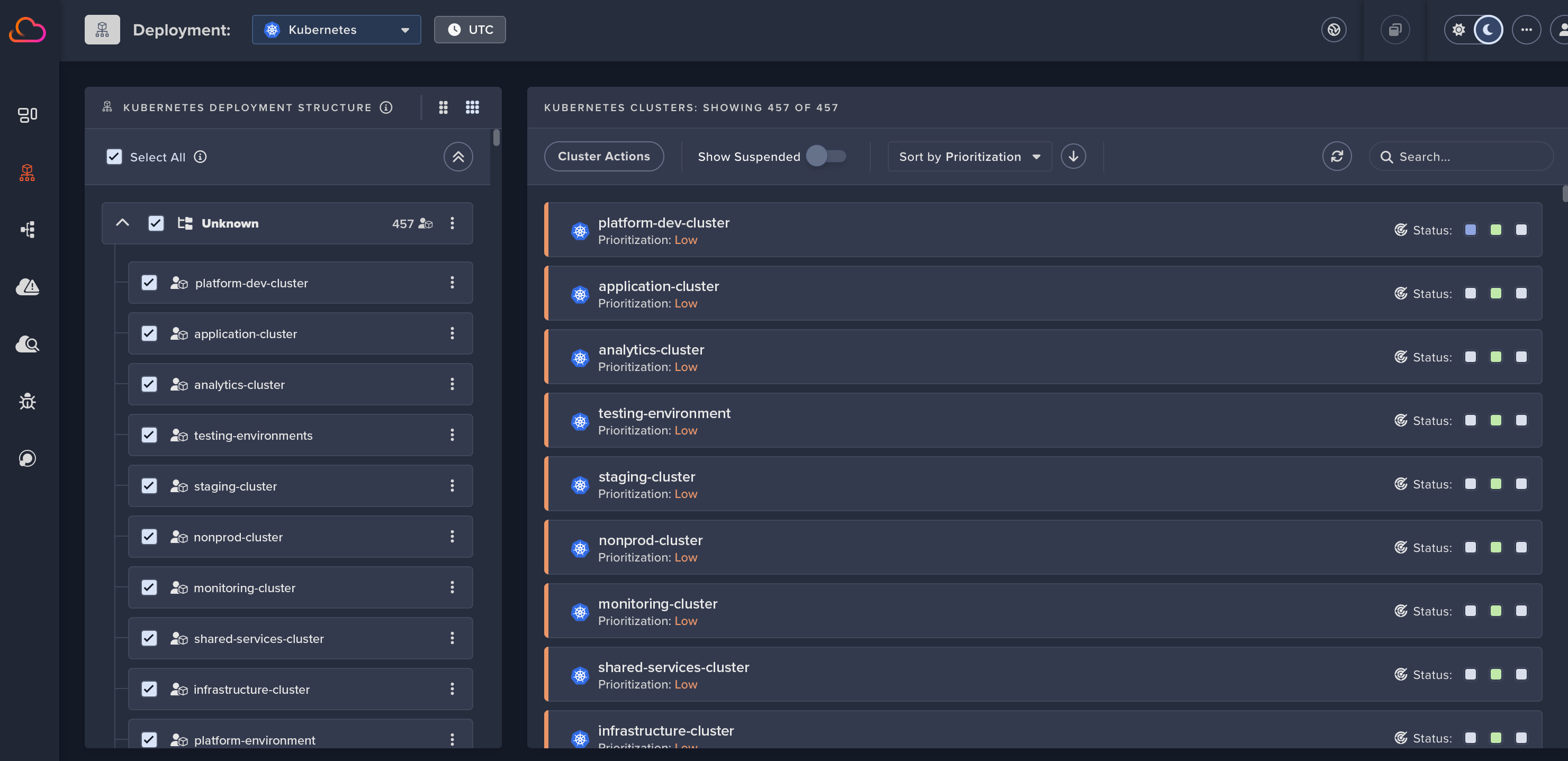
Operational complexity can be a barrier to security adoption. Darktrace / HYBRID NETWORK for Kubernetes installs with a single command, and for teams that manage their infrastructure as code, it supports raw manifests so the deployment can live in a Git repository and be managed through existing GitOps workflows. The same deployment approach works across Kubernetes environments in AWS, Azure, Google Cloud, and on-premises infrastructure. Early adopters of Darktrace’s Kubernetes capabilities have highlighted the simplicity of deployment and time to value.

Darktrace can deploy across your Kubernetes environment and wider hybrid infrastructure, while also providing visibility into Kubernetes deployment structure and status

Next steps

Kubernetes environments are dynamic, ephemeral and API-driven in ways that challenge traditional security tooling. With Kubernetes usage increasing due to widespread AI adoption, it is essential to secure Kubernetes environments as part of securing what AI can do. Darktrace / HYBRID NETWORK addresses these challenges by learning normal behavior in Kubernetes environments across network, process and control-plane layers, identifying meaningful threats and enabling targeted response. Combined with the context of wider hybrid infrastructure and forensic investigation capabilities, Darktrace provides visibility into both emerging threats and active incidents.

To see how Darktrace can help secure your Kubernetes environment and your wider hybrid infrastructure, get in touch to arrange your free trial. Existing customers can contact their Darktrace Account Team for more information about deployment options and licensing.

‍

Sources

[1] Gartner, Container Management research, 2025: "By 2028, 95% of new AI deployments will use Kubernetes, up from less than 30% today."  https://www.gartner.com/en/documents/7913109. (quote reproduced under Gartner reprint at https://www.kubermatic.com/magic-quadrant-and-critical-capabilities-for-container-management/)

[2] Palo Alto Networks (Unit 42) – Container Breakouts: Escape Techniques in Cloud Environments. https://unit42.paloaltonetworks.com/container-escape-techniques/

[3] runC container-escape vulnerabilities (CVE-2025-31133, CVE-2025-52565, CVE-2025-52881), disclosed by a SUSE researcher on November 5, 2025. https://www.securityweek.com/runc-vulnerabilities-can-be-exploited-to-escape-containers/

[4] NVIDIAScape (CVE-2025-23266), CVSS 9.0. https://nvidia.custhelp.com/app/answers/detail/a_id/5659

[related-resource]

‍

Continue reading
About the author
Elise Longhurst
Senior Product Executive
Your data. Our AI.
Elevate your network security with Darktrace AI