
Blog
/
Network
/
September 3, 2025

From PowerShell to Payload: Darktrace’s Detection of a Novel Cryptomining Malware

Cryptojacking attacks are rising as threat actors exploit hard-to-detect cryptomining malware. Learn how Darktrace detected and contained a cryptojacking attempt in its early stages using Autonomous Response, with expert analysis of the malware itself revealing insights into a novel cryptomining strain.
Inside the SOC
Darktrace cyber analysts are world-class experts in threat intelligence, threat hunting and incident response, and provide 24/7 SOC support to thousands of Darktrace customers around the globe. Inside the SOC is exclusively authored by these experts, providing analysis of cyber incidents and threat trends, based on real-world experience in the field.
Written by
Keanna Grelicha
Cyber Analyst
novel cryptomining detectionDefault blog image
03
Sep 2025

What is Cryptojacking?

Cryptojacking remains one of the most persistent cyber threats in the digital age, showing no signs of slowing down. It involves the unauthorized use of a computer or device’s processing power to mine cryptocurrencies, often without the owner’s consent or knowledge, using cryptojacking scripts or cryptocurrency mining (cryptomining) malware [1].

Unlike other widespread attacks such as ransomware, which disrupt operations and block access to data, cryptomining malware steals and drains computing and energy resources for mining to reduce attacker’s personal costs and increase “profits” earned from mining [1]. The impact on targeted organizations can be significant, ranging from data privacy concerns and reduced productivity to higher energy bills.

As cryptocurrency continues to grow in popularity, as seen with the ongoing high valuation of the global cryptocurrency market capitalization (almost USD 4 trillion at time of writing), threat actors will continue to view cryptomining as a profitable venture [2]. As a result, illicit cryptominers are being used to steal processing power via supply chain attacks or browser injections, as seen in a recent cryptojacking campaign using JavaScript [3][4].

Therefore, security teams should maintain awareness of this ongoing threat, as what is often dismissed as a "compliance issue" can escalate into more severe compromises and lead to prolonged exposure of critical resources.

While having a security team capable of detecting and analyzing hijacking attempts is essential, emerging threats in today’s landscape often demand more than manual intervention.

This blog will discuss Darktrace’s successful detection of the malicious activity, the role of Autonomous Response in halting the cryptojacking attack, include novel insights from Darktrace’s threat researchers on the cryptominer payload, showing how the attack chain was initiated through the execution of a PowerShell-based payload.

Darktrace’s Coverage of Cryptojacking via PowerShell

In July 2025, Darktrace detected and contained an attempted cryptojacking incident on the network of a customer in the retail and e-commerce industry.

The threat was detected when a threat actor attempted to use a PowerShell script to download and run NBMiner directly in memory.

The initial compromise was detected on July 22, when Darktrace / NETWORK observed the use of a new PowerShell user agent during a connection to an external endpoint, indicating an attempt at remote code execution.

Specifically, the targeted desktop device established a connection to the rare endpoint, 45.141.87[.]195, over destination port 8000 using HTTP as the application-layer protocol. Within this connection, Darktrace observed the presence of a PowerShell script in the URI, specifically ‘/infect.ps1’.

Darktrace’s analysis of this endpoint (45.141.87[.]195[:]8000/infect.ps1) and the payload it downloaded indicated it was a dropper used to deliver an obfuscated AutoIt loader. This attribution was further supported by open-source intelligence (OSINT) reporting [5]. The loader likely then injected NBMiner into a legitimate process on the customer’s environment – the first documented case of NBMiner being dropped in this way.

Darktrace’s detection of a device making an HTTP connection with new PowerShell user agent, indicating PowerShell abuse for command-and-control (C2) communications.
Figure 1: Darktrace’s detection of a device making an HTTP connection with new PowerShell user agent, indicating PowerShell abuse for command-and-control (C2) communications.

Script files are often used by malicious actors for malware distribution. In cryptojacking attacks specifically, scripts are used to download and install cryptomining software, which then attempts to connect to cryptomining pools to begin mining operations [6].

Inside the payload: Technical analysis of the malicious script and cryptomining loader

To confidently establish that the malicious script file dropped an AutoIt loader used to deliver the NBMiner cryptominer, Darktrace’s threat researchers reverse engineered the payload. Analysis of the file ‘infect.ps1’ revealed further insights, ultimately linking it to the execution of a cryptominer loader.
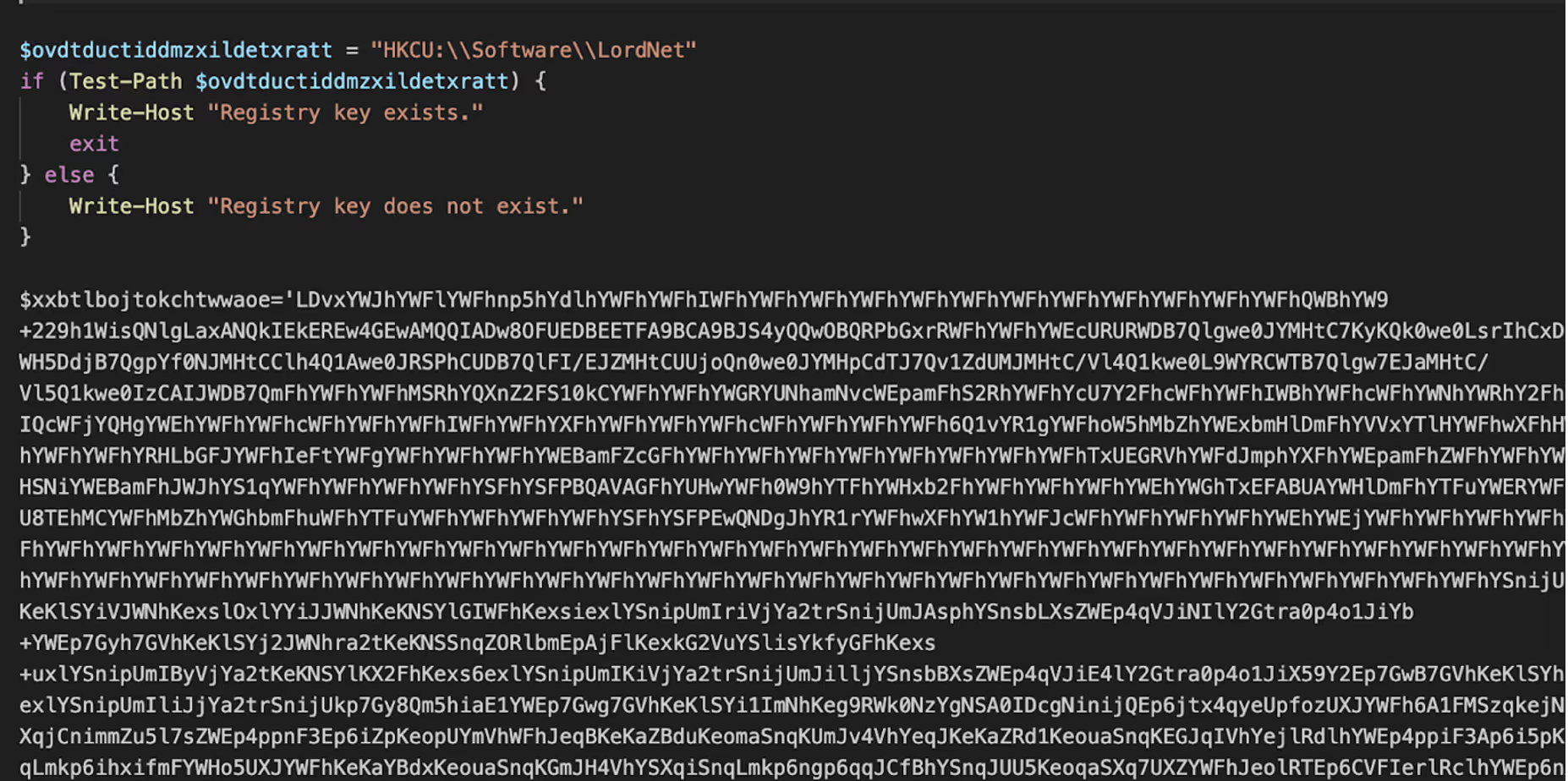
Screenshot of the ‘infect.ps1’ PowerShell script observed in the attack.
Figure 2: Screenshot of the ‘infect.ps1’ PowerShell script observed in the attack.

The ‘infect.ps1’ script is a heavily obfuscated PowerShell script that contains multiple variables of Base64 and XOR encoded data. The first data blob is XOR’d with a value of 97, after decoding, the data is a binary and stored in APPDATA/local/knzbsrgw.exe. The binary is AutoIT.exe, the legitimate executable of the AutoIt programming language. The script also performs a check for the existence of the registry key HKCU:\\Software\LordNet.

The second data blob ($cylcejlrqbgejqryxpck) is written to APPDATA\rauuq, where it will later be read and XOR decoded. The third data blob ($tlswqbblxmmr)decodes to an obfuscated AutoIt script, which is written to %LOCALAPPDATA%\qmsxehehhnnwioojlyegmdssiswak. To ensure persistence, a shortcut file named xxyntxsmitwgruxuwqzypomkhxhml.lnk is created to run at startup.
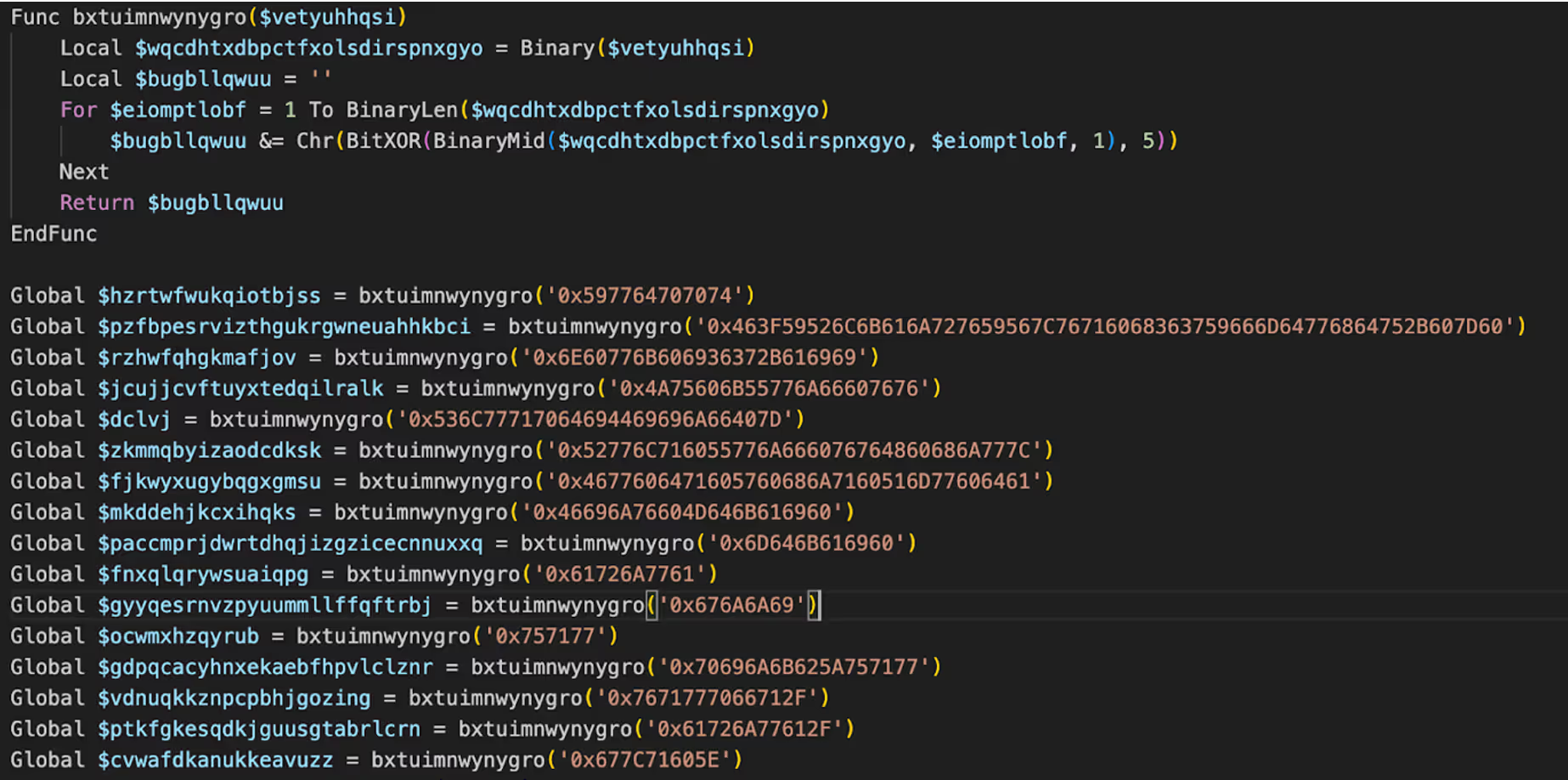
 Screenshot of second stage AutoIt script.
Figure 3: Screenshot of second stage AutoIt script.

The observed AutoIt script is a process injection loader. It reads an encrypted binary from /rauuq in APPDATA, then XOR-decodes every byte with the key 47 to reconstruct the payload in memory. Next, it silently launches the legitimate Windows app ‘charmap.exe’ (Character Map) and obtains a handle with full access. It allocates executable and writable memory inside that process, writes the decrypted payload into the allocated region, and starts a new thread at that address. Finally, it closes the thread and process handles.

The binary that is injected into charmap.exe is 64-bit Windows binary. On launch, it takes a snapshot of running processes and specifically checks whether Task Manager is open. If Task Manager is detected, the binary kills sigverif.exe; otherwise, it proceeds. Once the condition is met, NBMiner is retrieved from a Chimera URL (https://api[.]chimera-hosting[.]zip/frfnhis/zdpaGgLMav/nbminer[.]exe) and establishes persistence, ensuring that the process automatically restarts if terminated. When mining begins, it spawns a process with the arguments ‘-a kawpow -o asia.ravenminer.com:3838 -u R9KVhfjiqSuSVcpYw5G8VDayPkjSipbiMb.worker -i 60’ and hides the process window to evade detection.

Observed NBMiner arguments.
Figure 4: Observed NBMiner arguments.

The program includes several evasion measures. It performs anti-sandboxing by sleeping to delay analysis and terminates sigverif.exe (File Signature Verification). It checks for installed antivirus products and continues only when Windows Defender is the sole protection. It also verifies whether the current user has administrative rights. If not, it attempts a User Account Control (UAC) bypass via Fodhelper to silently elevate and execute its payload without prompting the user. The binary creates a folder under %APPDATA%, drops rtworkq.dll extracted from its own embedded data, and copies ‘mfpmp.exe’ from System32 into that directory to side-load ‘rtworkq.dll’. It also looks for the registry key HKCU\Software\kap, creating it if it does not exist, and reads or sets a registry value it expects there.

Zooming Out: Darktrace Coverage of NBMiner

Darktrace’s analysis of the malicious PowerShell script provides clear evidence that the payload downloaded and executed the NBMiner cryptominer. Once executed, the infected device is expected to attempt connections to cryptomining endpoints (mining pools). Darktrace initially observed this on the targeted device once it started making DNS requests for a cryptominer endpoint, “gulf[.]moneroocean[.]stream” [7], one minute after the connection involving the malicious script.

Darktrace Advanced Search logs showcasing the affected device making a DNS request for a Monero mining endpoint.
Figure 5: Darktrace Advanced Search logs showcasing the affected device making a DNS request for a Monero mining endpoint.

Though DNS requests do not necessarily mean the device connected to a cryptominer-associated endpoint, Darktrace detected connections to the endpoint specified in the DNS Answer field: monerooceans[.]stream, 152.53.121[.]6. The attempted connections to this endpoint over port 10001 triggered several high-fidelity model alerts in Darktrace related to possible cryptomining mining activity. The IP address and destination port combination (152.53.121[.]6:10001) has also been linked to cryptomining activity by several OSINT security vendors [8][9].

Darktrace’s detection of a device establishing connections with the Monero Mining-associated endpoint, monerooceans[.]stream over port 10001.
Figure 6: Darktrace’s detection of a device establishing connections with the Monero Mining-associated endpoint, monerooceans[.]stream over port 10001.

Darktrace / NETWORK grouped together the observed indicators of compromise (IoCs) on the targeted device and triggered an additional Enhanced Monitoring model designed to identify activity indicative of the early stages of an attack. These high-fidelity models are continuously monitored and triaged by Darktrace’s SOC team as part of the Managed Threat Detection service, ensuring that subscribed customers are promptly notified of malicious activity as soon as it emerges.
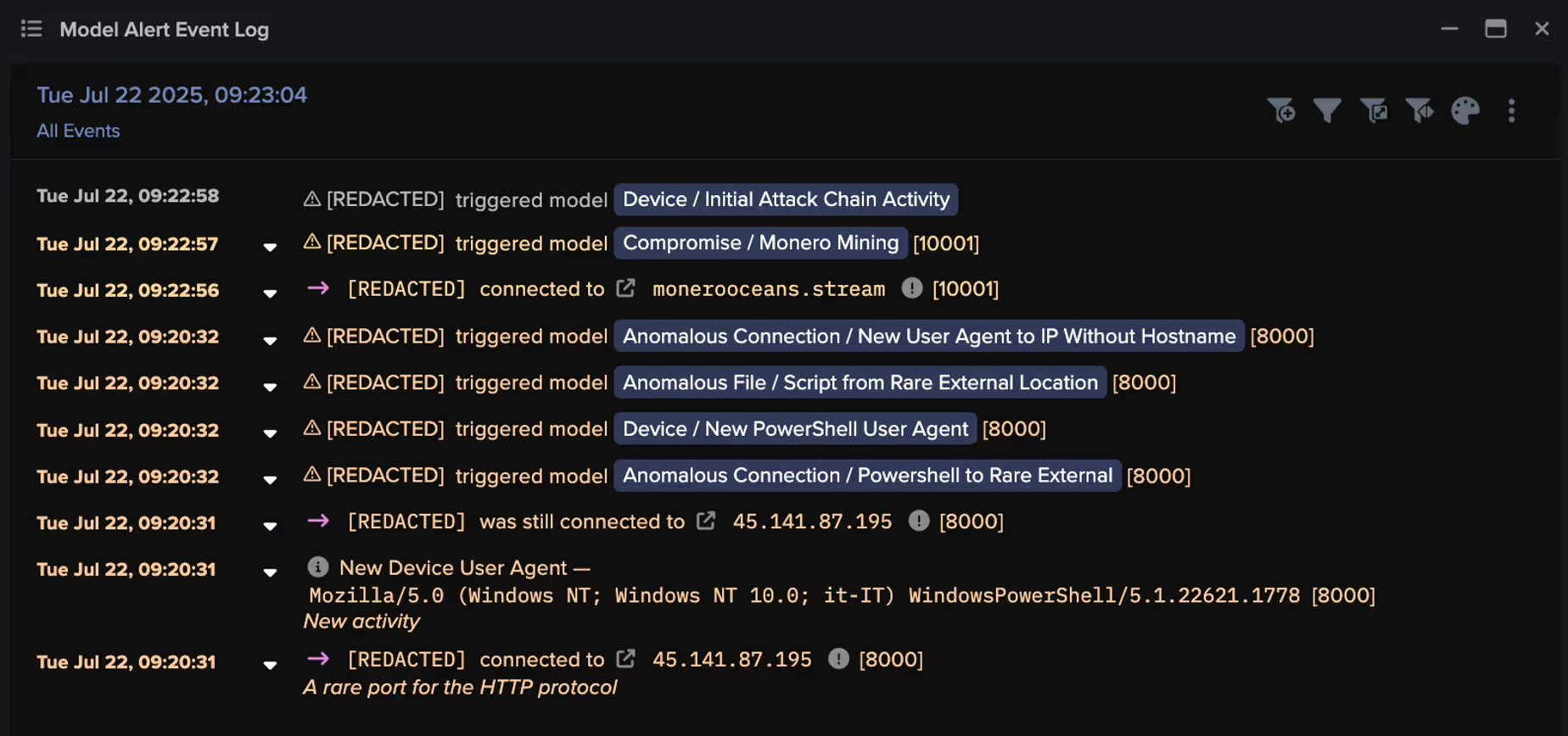
Figure 7: Darktrace’s correlation of the initial PowerShell-related activity with the cryptomining endpoint, showcasing a pattern indicative of an initial attack chain.

Darktrace’s Cyber AI Analyst launched an autonomous investigation into the ongoing activity and was able to link the individual events of the attack, encompassing the initial connections involving the PowerShell script to the ultimate connections to the cryptomining endpoint, likely representing cryptomining activity. Rather than viewing these seemingly separate events in isolation, Cyber AI Analyst was able to see the bigger picture, providing comprehensive visibility over the attack.
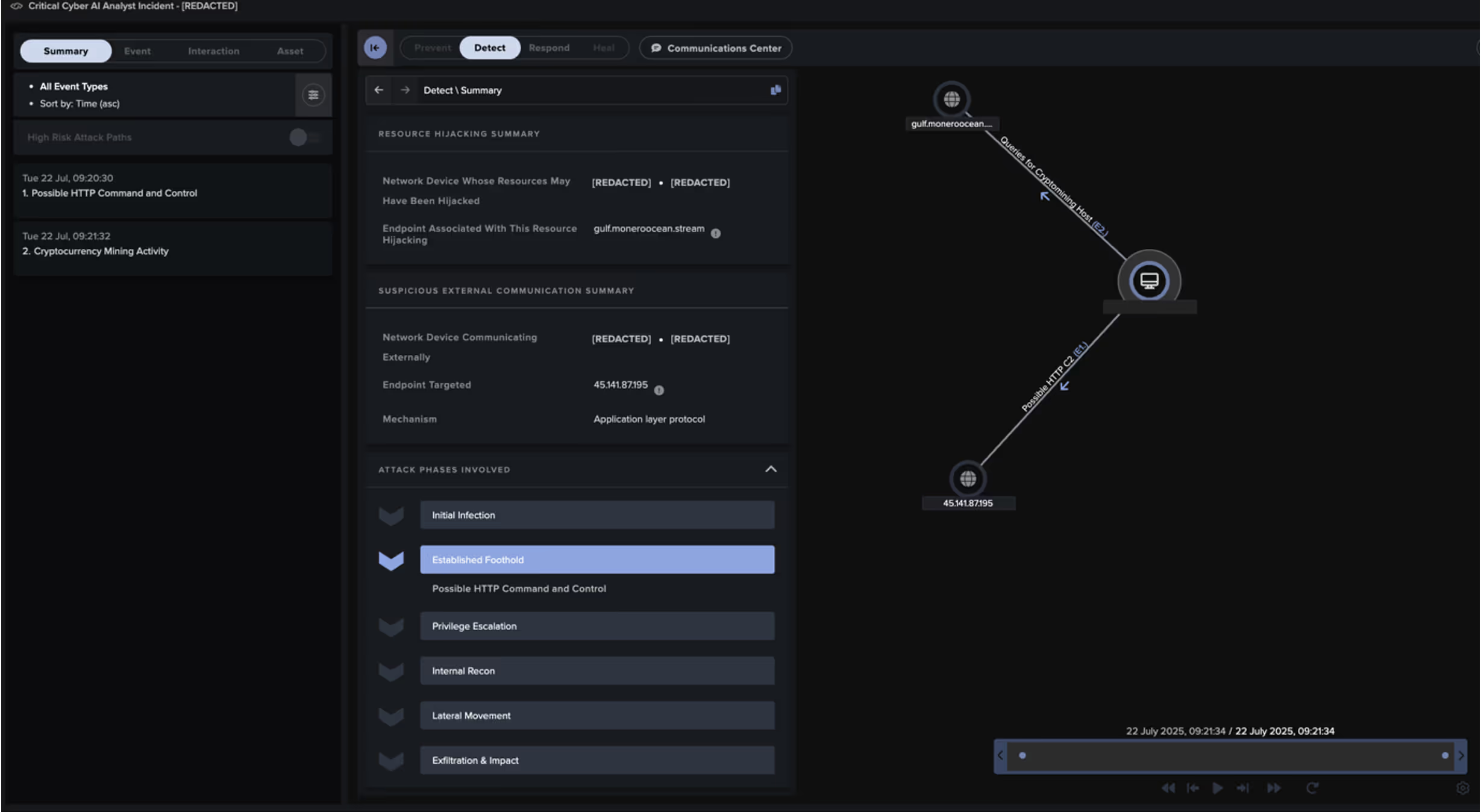
Darktrace’s Cyber AI Analyst view illustrating the extent of the cryptojacking attack mapped against the Cyber Kill Chain.
Figure 8: Darktrace’s Cyber AI Analyst view illustrating the extent of the cryptojacking attack mapped against the Cyber Kill Chain.

Darktrace’s Autonomous Response

Fortunately, as this customer had Darktrace configured in Autonomous Response mode, Darktrace was able to take immediate action by preventing  the device from making outbound connections and blocking specific connections to suspicious endpoints, thereby containing the attack.
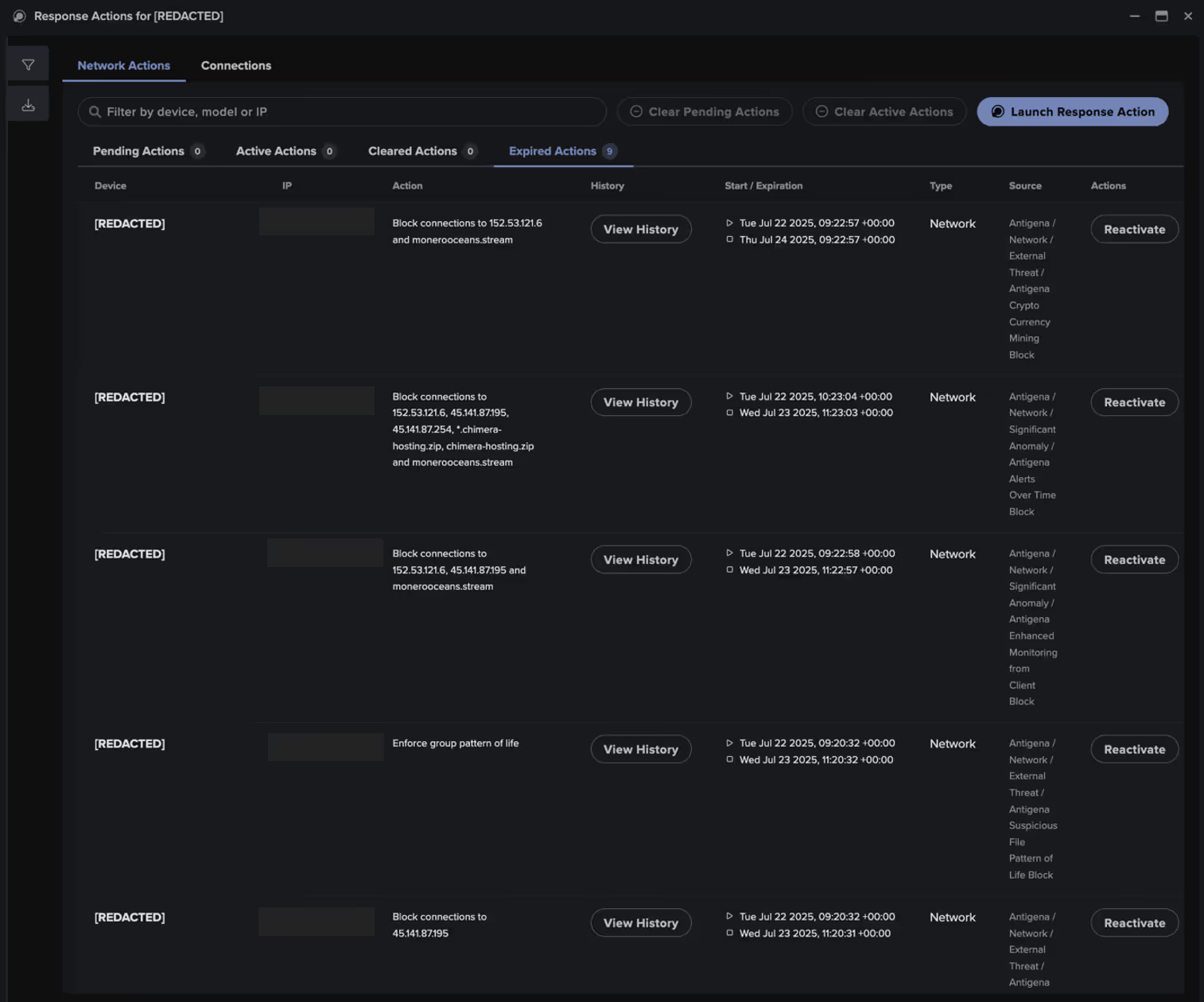
Darktrace’s Autonomous Response actions automatically triggered based on the anomalous connections observed to suspicious endpoints.
Figure 9: Darktrace’s Autonomous Response actions automatically triggered based on the anomalous connections observed to suspicious endpoints.

Specifically, these Autonomous Response actions prevented the outgoing communication within seconds of the device attempting to connect to the rare endpoints.

Figure 10: Darktrace’s Autonomous Response blocked connections to the mining-related endpoint within a second of the initial connection.

Additionally, the Darktrace SOC team was able to validate the effectiveness of the Autonomous Response actions by analyzing connections to 152.53.121[.]6 using the Advanced Search feature. Across more than 130 connection attempts, Darktrace’s SOC confirmed that all were aborted, meaning no connections were successfully established.
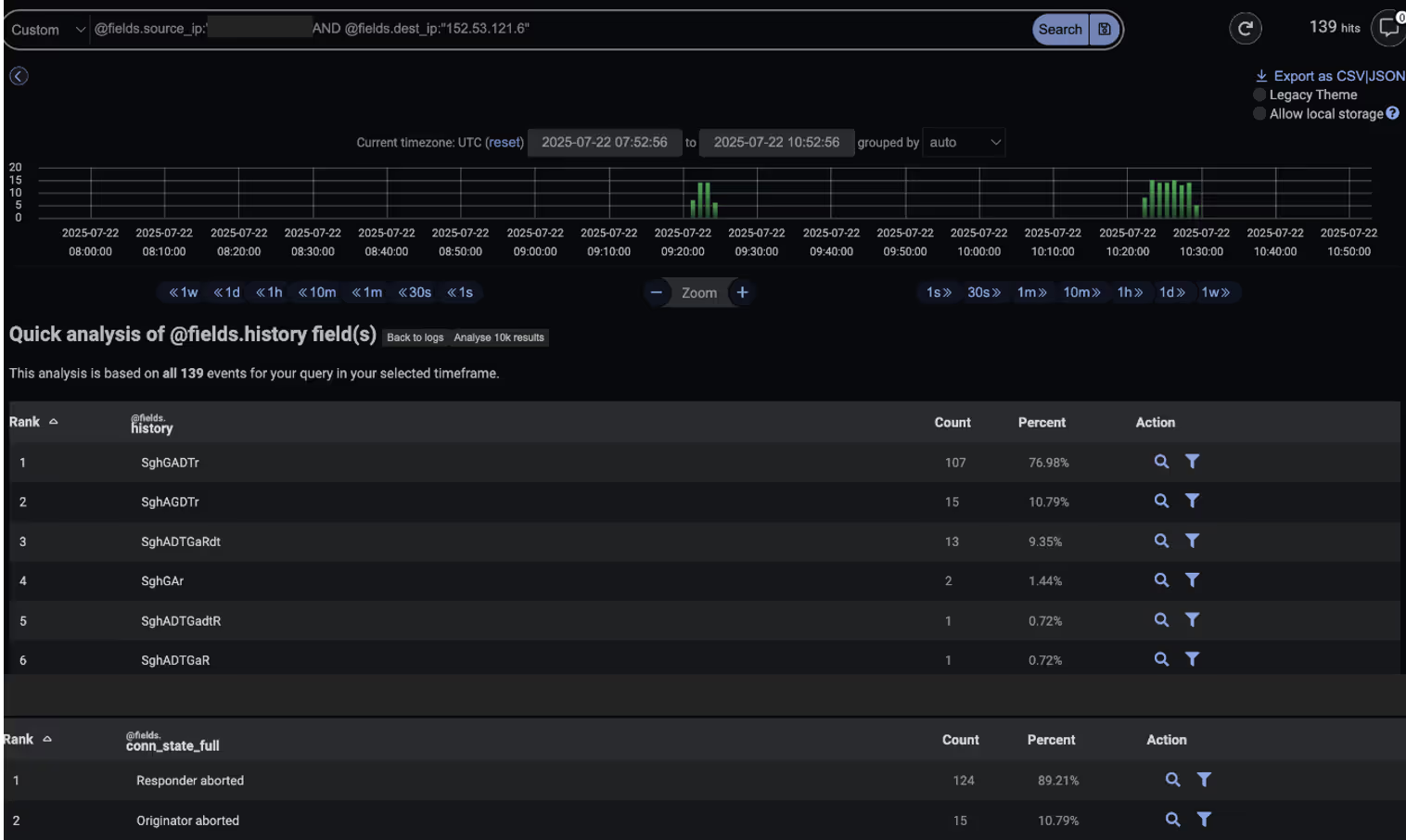
Figure 11: Advanced Search logs showing all attempted connections that were successfully prevented by Darktrace’s Autonomous Response capability.

Conclusion

Cryptojacking attacks will remain prevalent, as threat actors can scale their attacks to infect multiple devices and networks. What’s more, cryptomining incidents can often be difficult to detect and are even overlooked as low-severity compliance events, potentially leading to data privacy issues and significant energy bills caused by misused processing power.

Darktrace’s anomaly-based approach to threat detection identifies early indicators of targeted attacks without relying on prior knowledge or IoCs. By continuously learning each device’s unique pattern of life, Darktrace can detect subtle deviations that may signal a compromise.

In this case, the cryptojacking attack was quickly identified and mitigated during the early stages of malware and cryptomining activity. Darktrace's Autonomous Response was able to swiftly contain the threat before it could advance further along the attack lifecycle, minimizing disruption and preventing the attack from potentially escalating into a more severe compromise.

Credit to Keanna Grelicha (Cyber Analyst) and Tara Gould (Threat Research Lead)

Appendices

Darktrace Model Detections

NETWORK Models:

·      Compromise / High Priority Crypto Currency Mining (Enhanced Monitoring Model)

·      Device / Initial Attack Chain Activity (Enhanced Monitoring Model)

·      Compromise / Suspicious HTTP and Anomalous Activity (Enhanced Monitoring Model)

·      Compromise / Monero Mining

·      Anomalous File / Script from Rare External Location

·      Device / New PowerShell User Agent

·      Anomalous Connection / New User Agent to IP Without Hostname

·      Anomalous Connection / Powershell to Rare External

·      Device / Suspicious Domain

Cyber AI Analyst Incident Events:

·      Detect \ Event \ Possible HTTP Command and Control

·      Detect \ Event \ Cryptocurrency Mining Activity

Autonomous Response Models:

·      Antigena / Network::Significant Anomaly::Antigena Alerts Over Time Block

·      Antigena / Network::External Threat::Antigena Suspicious Activity Block

·      Antigena / Network::Significant Anomaly::Antigena Enhanced Monitoring from Client Block

·      Antigena / Network::External Threat::Antigena Crypto Currency Mining Block

·      Antigena / Network::External Threat::Antigena File then New Outbound Block

·      Antigena / Network::External Threat::Antigena Suspicious File Block

·      Antigena / Network::Significant Anomaly::Antigena Significant Anomaly from Client Block

List of Indicators of Compromise (IoCs)

(IoC - Type - Description + Confidence)

·      45.141.87[.]195:8000/infect.ps1 - IP Address, Destination Port, Script - Malicious PowerShell script

·      gulf.moneroocean[.]stream - Hostname - Monero Endpoint

·      monerooceans[.]stream - Hostname - Monero Endpoint

·      152.53.121[.]6:10001 - IP Address, Destination Port - Monero Endpoint

·      152.53.121[.]6 - IP Address – Monero Endpoint

·      https://api[.]chimera-hosting[.]zip/frfnhis/zdpaGgLMav/nbminer[.]exe – Hostname, Executable File – NBMiner

·      Db3534826b4f4dfd9f4a0de78e225ebb – Hash – NBMiner loader

MITRE ATT&CK Mapping

(Tactic – Technique – Sub-Technique)

·      Vulnerabilities – RESOURCE DEVELOPMENT – T1588.006 - T1588

·      Exploits – RESOURCE DEVELOPMENT – T1588.005 - T1588

·      Malware – RESOURCE DEVELOPMENT – T1588.001 - T1588

·      Drive-by Compromise – INITIAL ACCESS – T1189

·      PowerShell – EXECUTION – T1059.001 - T1059

·      Exploitation of Remote Services – LATERAL MOVEMENT – T1210

·      Web Protocols – COMMAND AND CONTROL – T1071.001 - T1071

·      Application Layer Protocol – COMMAND AND CONTROL – T1071

·      Resource Hijacking – IMPACT – T1496

·      Obfuscated Files - DEFENSE EVASION - T1027                

·      Bypass UAC - PRIVILEGE ESCALATION – T1548.002

·      Process Injection – PRIVILEGE ESCALATION – T055

·      Debugger Evasion – DISCOVERY – T1622

·      Logon Autostart Execution – PERSISTENCE – T1547.009

References

[1] https://www.darktrace.com/cyber-ai-glossary/cryptojacking#:~:text=Battery%20drain%20and%20overheating,fee%20to%20%E2%80%9Cmine%20cryptocurrency%E2%80%9D.

[2] https://coinmarketcap.com/

[3] https://www.ibm.com/think/topics/cryptojacking

[4] https://thehackernews.com/2025/07/3500-websites-hijacked-to-secretly-mine.html

[5] https://urlhaus.abuse.ch/url/3589032/

[6] https://www.logpoint.com/en/blog/uncovering-illegitimate-crypto-mining-activity/

[7] https://www.virustotal.com/gui/domain/gulf.moneroocean.stream/detection

[8] https://www.virustotal.com/gui/domain/monerooceans.stream/detection

[9] https://any.run/report/5aa8cd5f8e099bbb15bc63be52a3983b7dd57bb92566feb1a266a65ab5da34dd/351eca83-ef32-4037-a02f-ac85a165d74e

The content provided in this blog is published by Darktrace for general informational purposes only and reflects our understanding of cybersecurity topics, trends, incidents, and developments at the time of publication. While we strive to ensure accuracy and relevance, the information is provided “as is” without any representations or warranties, express or implied. Darktrace makes no guarantees regarding the completeness, accuracy, reliability, or timeliness of any information presented and expressly disclaims all warranties.

Nothing in this blog constitutes legal, technical, or professional advice, and readers should consult qualified professionals before acting on any information contained herein. Any references to third-party organizations, technologies, threat actors, or incidents are for informational purposes only and do not imply affiliation, endorsement, or recommendation.

Darktrace, its affiliates, employees, or agents shall not be held liable for any loss, damage, or harm arising from the use of or reliance on the information in this blog.

The cybersecurity landscape evolves rapidly, and blog content may become outdated or superseded. We reserve the right to update, modify, or remove any content without notice.

Inside the SOC
Darktrace cyber analysts are world-class experts in threat intelligence, threat hunting and incident response, and provide 24/7 SOC support to thousands of Darktrace customers around the globe. Inside the SOC is exclusively authored by these experts, providing analysis of cyber incidents and threat trends, based on real-world experience in the field.
Written by
Keanna Grelicha
Cyber Analyst

More in this series

No items found.

Blog

/

OT

/

October 21, 2026

Beyond the Fridge: Exposed Industrial Control Systems

Default blog imageDefault blog image

Introduction

In October 2026, hundreds of supermarkets across France were reportedly affected by a cyberattack targeting their refrigeration systems. According to public reports, the attackers gained access to internet-connected controllers and modified their settings, forcing refrigeration units into high and extremely low temperatures and causing significant disruption. Total losses have been reported to reach several million euros.

The incident drew attention to the security of industrial refrigeration systems, particularly older devices with exposed management interfaces and known vulnerabilities.

The exact details of how the attackers gained access have not been confirmed, however it is speculated that the public-facing web server could be accessed with the username “admin” and password being the current date. Researchers from Claroty’s Team82 identified a vulnerability in Danfoss AK-SM 8xxA Series in 2025, “CVE-2025-41450", allowing for administrative access using a time-based “code-of-the-day" for authentication [1].

Default credentials, outdated firmware and publicly accessible administrative interfaces have been an issue for years. And yet these systems continue to appear in internet scans and require little sophistication to gain admin access. A simple search of internet-connected devices shows a range of exposed devices from Programmable Logic Controllers (PLCs) and remote gateways, to, yes, more fridges.

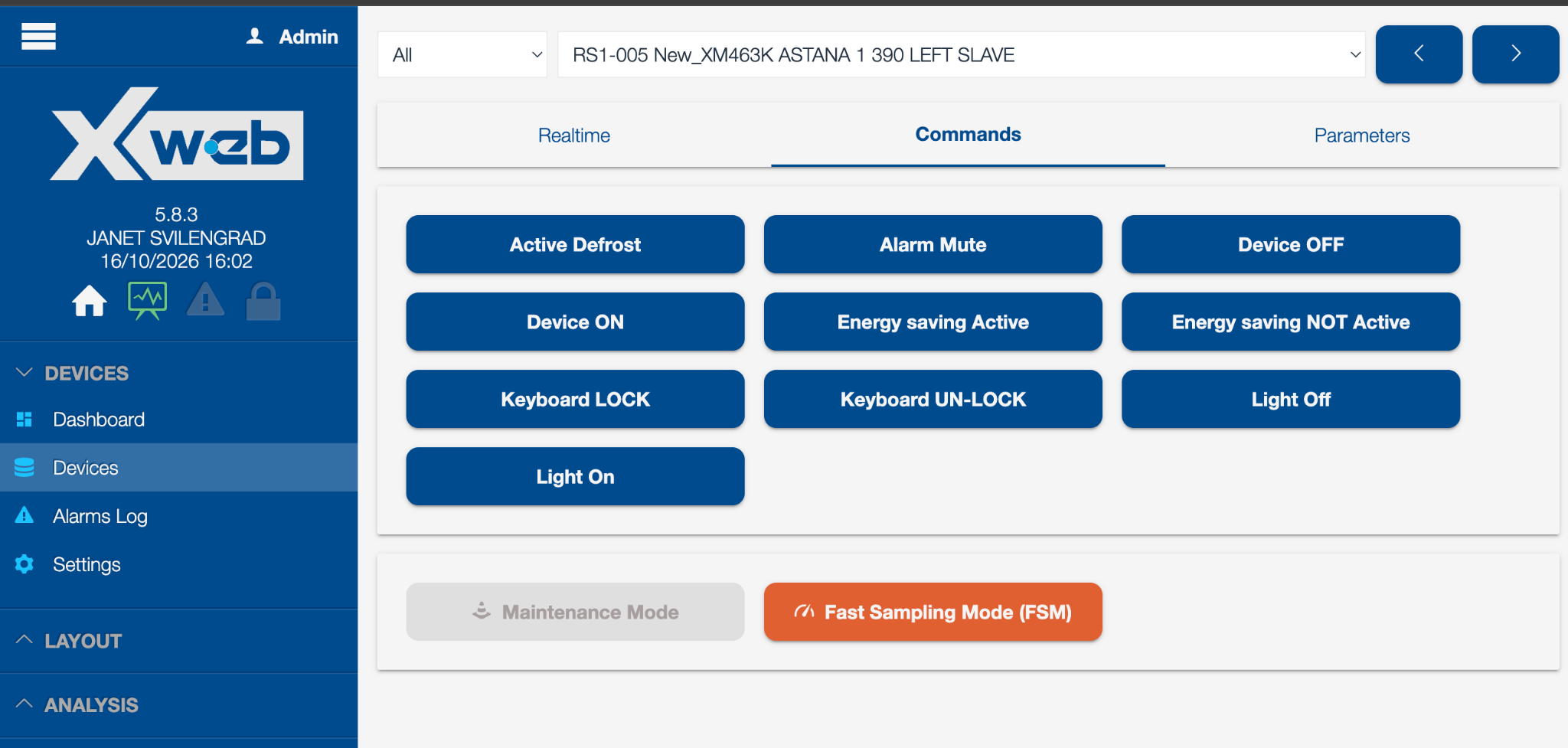
Darktrace malware researchers identified hundreds of IoT and OT devices publicly exposed on the internet, many of which are configured with no authentication, weak credentials, or default credentials. As shown in Figure 1, an exposed Copeland XWEB web interface, used to manage Dixell equipment, including refrigerators, can provide the ability to remotely control connected devices.

‍

Figure 1: Copeland XWEB interface used to control systems including refrigerators and air conditioning.

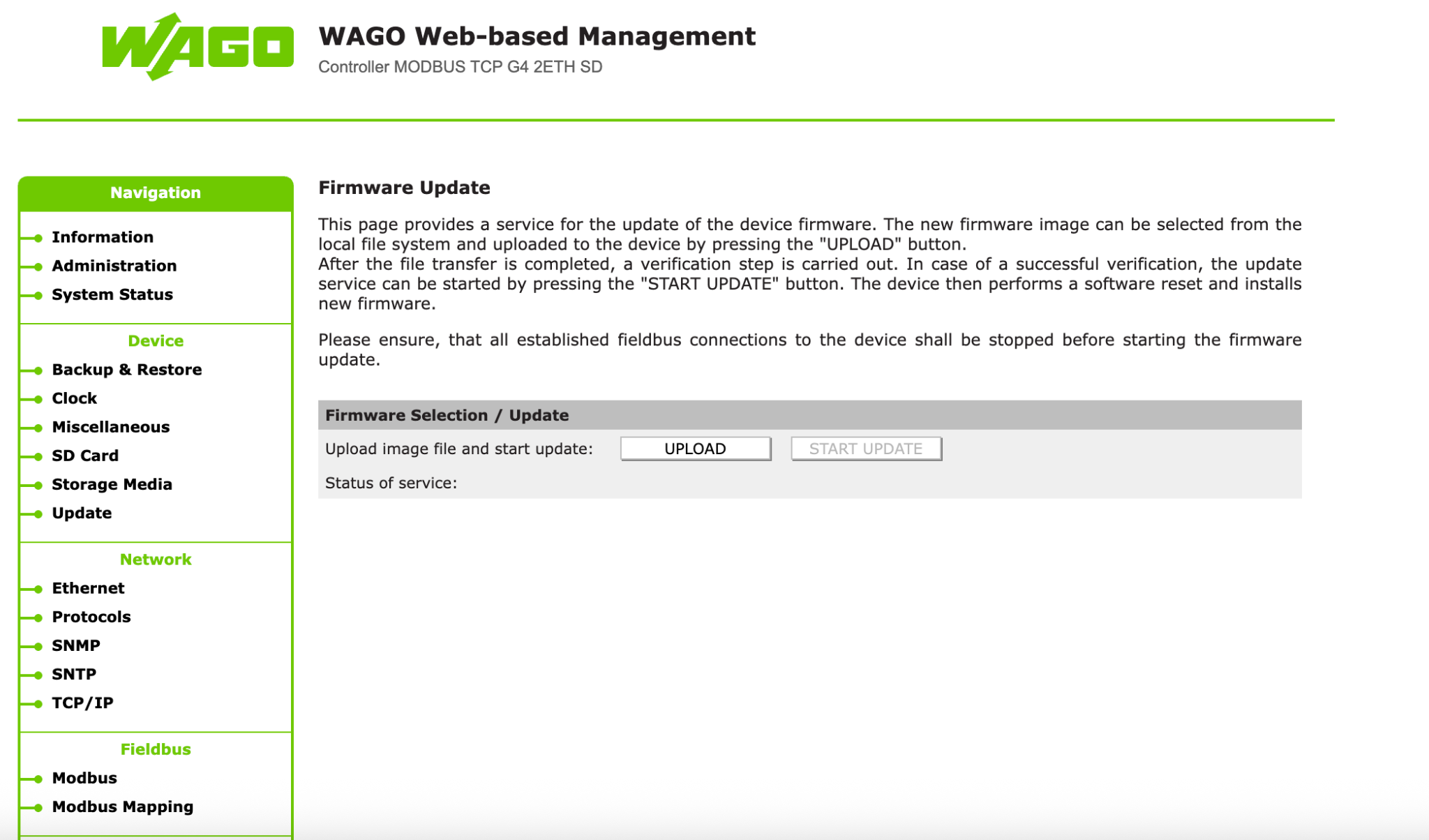
However, it’s not only fridges; web management interfaces for industrial controls are also publicly accessible, often protected only by weak credentials. Figure 2 shows an example of a publicly exposed WAGO interface. The WAGO management interface is a configuration and administration panel for controllers. Through it, a logged-in user can view device details and diagnostics, manage user accounts and passwords, update firmware, back up or restore the full configuration, set the clock, and manage SD card storage. While it typically doesn’t manage switch outputs or read live process values, someone with access could still disrupt operation by changing network or Modbus settings, loading bad firmware or configurations, or by resetting passwords and enabling insecure services.

‍

Figure 2: WAGO Management interface.

‍

The issue extends beyond management interfaces. During our research, we identified publicly accessible web interfaces belonging to PLCs, including Rockwell Automation Allen-Bradley devices. In each case, the risk arises from how the devices have been deployed and configured, not from a flaw in the vendors’ products.

‍

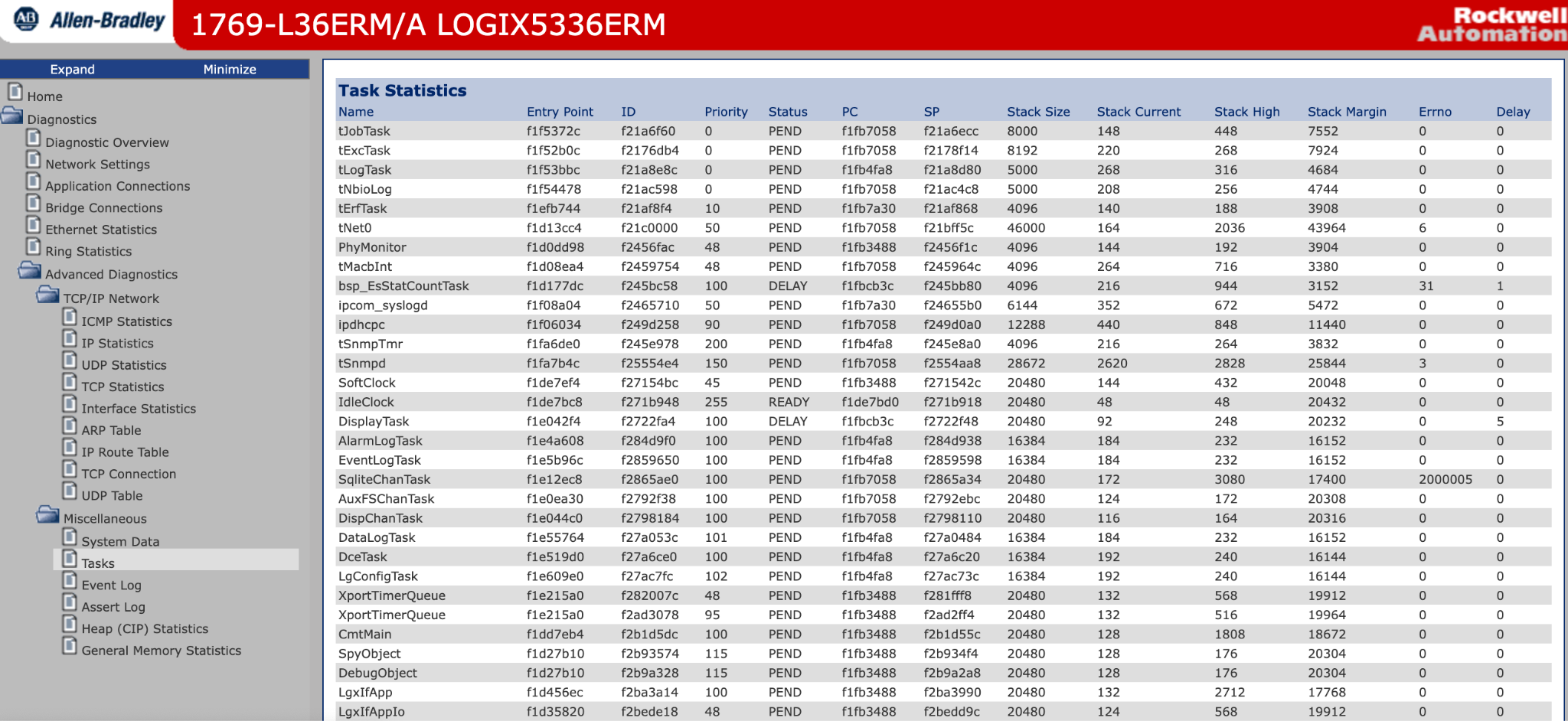
Figure 3: Web interface for Allen-Bradley CompactLogix controller.

‍

Figure 3 shows the web interface of an Allen-Bradley CompactLogix controller. Unlike the previous examples, this interface provides a view into the controller's operation, including running tasks, network connections, memory usage and diagnostic information. Rockwell Automation's CompactLogix controllers are commonly used to automate industrial processes, from manufacturing and packaging lines to water treatment and material handling systems. Depending on their configuration, these controllers can operate motors, pumps, valves and other physical equipment.

Although in this example the interface shown does not provide direct control over the PLC's logic, it exposes information about the model, firmware, network layout, and connections, which is useful reconnaissance for a bigger attack.

The concern is not necessarily that every exposed interface allows an attacker to immediately manipulate industrial processes. However, these devices are accessible from the public internet in the first place, providing information about systems that may be responsible for controlling physical equipment.

The attacks on refrigeration systems in France highlight the consequences of poorly secured industrial devices. As demonstrated throughout this research, publicly accessible management interfaces are not limited to refrigeration controllers but extend to PLCs and other systems used to manage industrial equipment.

Finding these devices requires little effort. Internet scanners make it possible to identify publicly exposed interfaces quickly, and in some cases these interfaces rely on publicly documented default credentials or have no authentication at all. As attackers increasingly use AI tools, such attacks may be identified and carried out faster and at a greater scale.

The consequences of this access depend on the device and the functionality exposed. While some interfaces provide little more than diagnostic information, others allow users to modify configurations, disrupt communications, or change settings that affect physical equipment. In industrial environments, this can result in operational downtime, damaged equipment and financial losses.

Weak passwords, default credentials and exposed administrative interfaces are not new security issues. Yet their continued presence on internet-connected industrial systems demonstrates how easily preventable weaknesses can leave physical operations vulnerable to attack.

Exposed devices often come from third-party suppliers and contractors, who frequently install refrigeration controllers, gateways and PLCs without the organization ever being aware they are connected to the internet. Asset visibility remains an important foundation, but organizations should assume that some unknown assets and services will exist. Effective security therefore also depends on continuous monitoring, anomaly detection, network segmentation and rapid response, so that risky exposure and unusual activity can be identified and addressed before it becomes disruptive.

Darktrace helps security teams gain visibility across IT and OT and respond to risks: https://www.darktrace.com/products/operational-technology.

Copeland, Dixell, WAGO, Rockwell Automation, Allen-Bradley and CompactLogix are trademarks of their respective owners. Their use here is for identification only and does not imply any affiliation with or endorsement by those owners.

References

1.        https://claroty.com/team82/research/freeze-the-controller-defrost-the-food-uncovering-vulnerabilities-in-danfoss-refrigeration-controllers

‍

Continue reading
About the author
Tara Gould
Malware Research Lead

Blog

/

Network

/

October 20, 2026

Why Kubernetes Security Needs A Behavioral Approach

Man at computerDefault blog imageDefault blog image

Kubernetes has become a foundational technology for modern cloud-native infrastructure. It can orchestrate everything from customer-facing applications to data pipelines and, increasingly, AI workloads. This is due to the highly scalable nature of Kubernetes, making it cost efficient and reliable.

Gartner projects that by 2028, 95% of new AI deployments will run on Kubernetes, up from less than 30% today1. However, the same qualities that make Kubernetes powerful also make it uniquely challenging to secure, leaving many organizations with limited visibility into their clusters. This lack of visibility increases risk - it’s difficult to secure what you can’t see.

However, this risk is often looked at as purely a posture management challenge. While Cloud Security Posture Management (CSPM) solutions can tell you how a cluster should be configured, they don’t tell you what it is doing in real time. This requires runtime behavioral monitoring of clusters to detect active threats.

Yet existing approaches to securing Kubernetes by most Cloud Detection and Response (CDR) and Network Detection and Response (NDR) vendors often have limited coverage or require a third-party integration to forward traffic and metadata. This means that capabilities can be limited and detections can lack the context of the wider environment, which slows down triage, investigation and response.

Why Kubernetes is hard to secure

Traditional security tooling was built for persistent, long-term infrastructure such as servers and virtual machines with fixed identities that last months or years. Some elements of Kubernetes environments can have a much shorter lifespan, breaking many assumptions those tools rely on:

  1. Increased complexity
    1. Kubernetes environments can be complex in comparison to traditional infrastructure, with many different elements to consider such as nodes, clusters, containers, pods and the workloads themselves.
  2. Ephemeral by design
    1. Kubernetes pods can spin up and terminate in seconds. A container that was compromised may no longer exist by the time a deeper investigation is required, leaving no artifact to analyze. This poses a unique challenge for security operations.
  3. Weaker workload boundaries
    1. Kubernetes containers use lightweight, shared-kernel isolation rather than separate virtual machines, improving efficiency but reducing separation between workloads and the host. As a result, a compromised container may have a greater potential impact on the node and neighboring workloads than a compromised virtual machine (VM).2
    2. Recent vulnerabilities have shown that threat actors can escape a container and gain access to the underlying host.3, 4
  4. Everything is API-driven
    1. Dozens or hundreds of microservices communicate over internal APIs, and the Kubernetes control plane itself is an API. This creates a large and dynamic attack surface, making it difficult to distinguish legitimate activity from malicious behavior.
    2. Without identity-aware runtime visibility, threat actors can move laterally between pods and exploit misconfigured role-based access controls (RBAC) with little chance of detection.

Rising to the challenge of securing Kubernetes

With the release of Darktrace 7.2, Darktrace / HYBRID NETWORK can extend behavioral security into Kubernetes, delivering visibility, detection and response capabilities across runtime activity. Darktrace addresses the challenges of securing Kubernetes environments in several ways.

Behavioral detection, not static rules

Many Kubernetes runtime tools rely on predefined rules and signatures - a fixed list of “bad” behaviors to match against. That approach struggles with novel attacks and generates noise at scale. Darktrace takes a different approach: our Adaptive AI builds a Unique Behavioral Profile for each organization from the ground up, learning the normal behavior of every workload, node and identity in your cluster. It then uses this understanding to detect meaningful deviations from expected behavior, which serves as the basis for surfacing suspicious and malicious activity.  

A pod reaching out to an unfamiliar destination, an unexpected executable launching inside a workload, or an identity performing an action it has never performed, all surface as anomalies without anyone having to write a rule in advance.

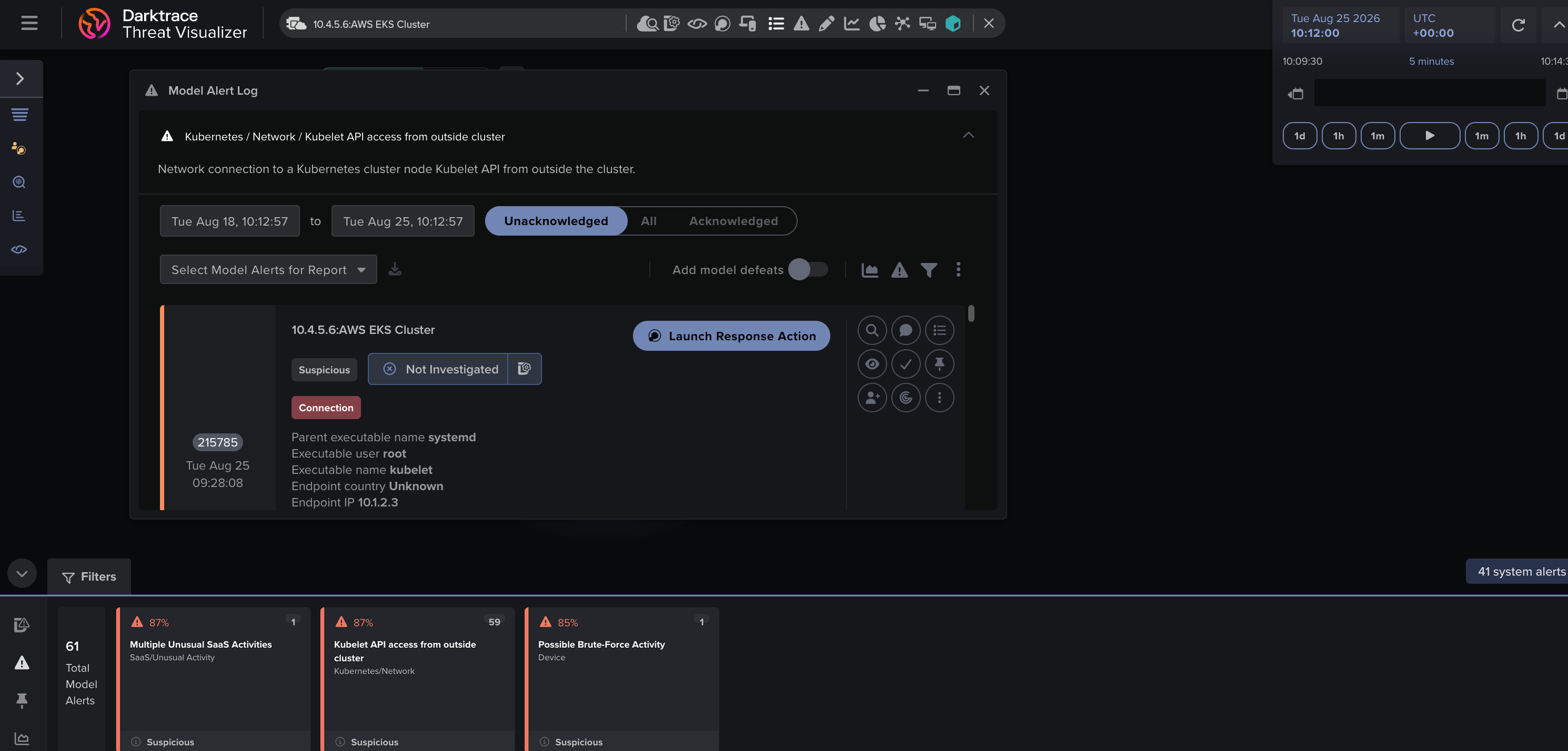
Darktrace surfaces unexpected Kubernetes activity that does not align with an organization’s Unique Behavioral Profile

‍

Visibility across the network, the process, and the control plane

Darktrace monitors Kubernetes at three levels that together provide comprehensive runtime visibility:

  1. Network-layer
    1. Traffic between pods, across nodes and out to the internet. This helps to detect lateral movement and unusual connectivity, whether internal or external.
  2. Process-layer
    1. What is executing inside your containers. If a process reads a sensitive credential file or spawns an unexpected shell inside a production pod, Darktrace can identify that activity and use it as context for further detections.
  3. Control plane
    1. Activity against the Kubernetes API itself: someone executes a command in a running pod, RBAC changes, or unusual administrative actions. Many high-impact security events involve the control plane, an area that is often less visible to solutions that only analyze or scan network-layer telemetry.

Misconfiguration and vulnerability awareness

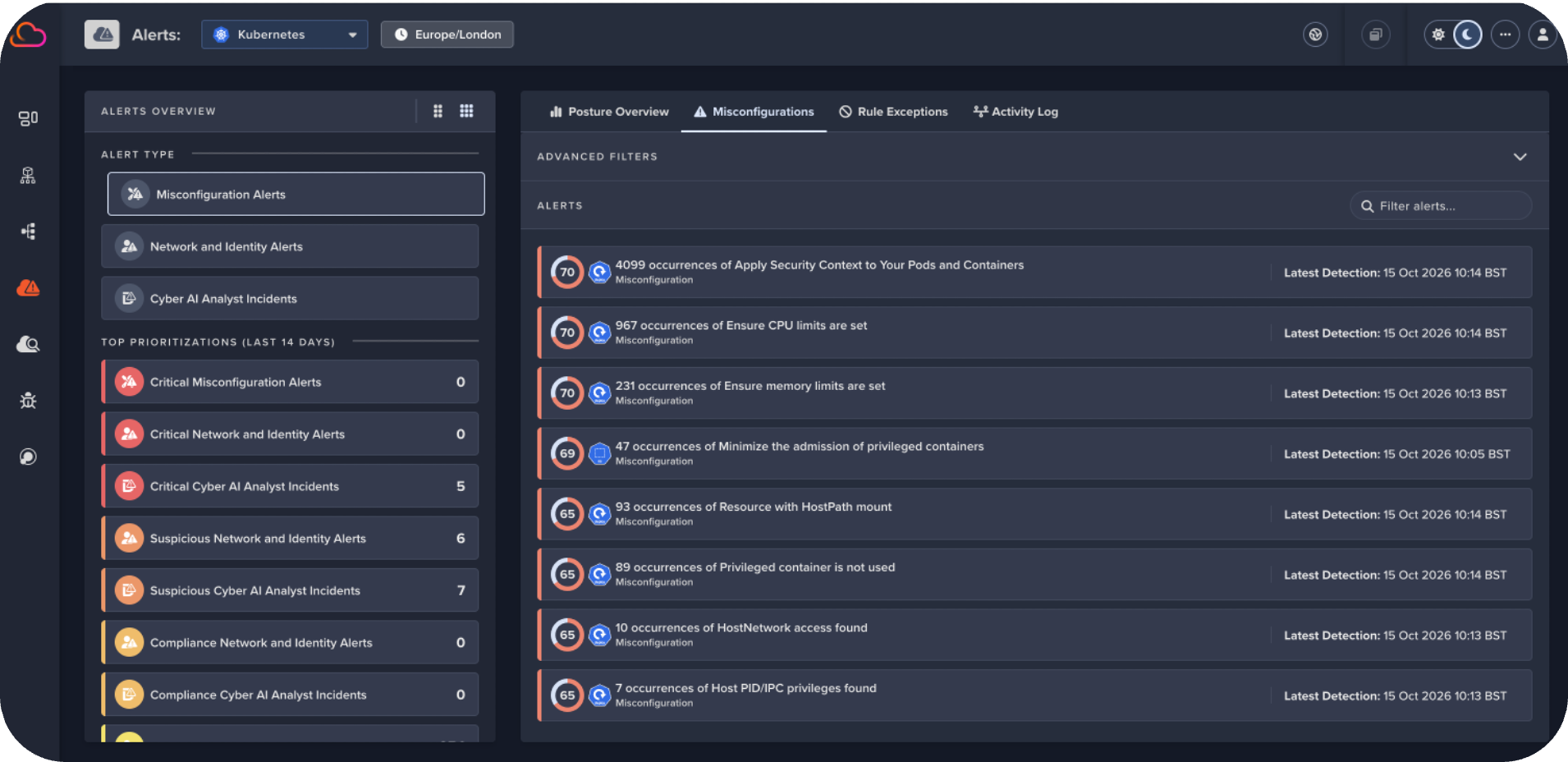
Runtime detection is strongest when combined with posture and exposure management. Darktrace surfaces risky pod configurations, such as privileged containers, host networking, and over-permissive service accounts as workloads are deployed, and links CVEs from images to the workloads running them. Security teams can go beyond simply knowing that a vulnerability exists and see exactly where it is in the cluster. When combined with behavior-based detections, this provides invaluable context that can help prioritize incidents and proactively identify areas that need further attention. For example, anomalous workload behavior on its own might not be very interesting to a security team at first, but if that same workload is known to host sensitive data, is known to have critical vulnerabilities associated with it, or is publicly accessible, then this narrative becomes much more suspicious and demanding of their attention.

Darktrace highlights Kubernetes misconfigurations such as privileged containers, host networking, and missing security controls, helping teams prioritize runtime alerts with valuable exposure and risk context

‍

Response, tailored to Kubernetes

Detection is most effective when paired with response. Darktrace can take precise actions on Kubernetes workloads, including blocking a malicious connection at the pod level, helping to safely contain threats while security teams investigate. Response actions can be taken fully autonomously or via a human-in-the-loop process, which is completely configurable depending on the desired level of autonomy and scope. Darktrace is expanding the number of Kubernetes-native response actions to give customers even more flexibility when containing threats.

Forensics that survive the workload

Because containers are so short-lived, evidence disappears fast and this can make it very difficult to answer questions related to the initial detections. Darktrace solves this with Forensic Acquisition & Investigation capabilities that extend to Kubernetes containers, allowing investigations to be triggered manually by an analyst, or automatically from an alert, preserving evidence before the workload is gone.

For incident responders, this addresses a key challenge in container security: being able to answer “what actually happened?” after an ephemeral workload has vanished.

One platform, not another silo

Kubernetes doesn't exist in isolation, and neither should its security. Darktrace correlates cluster activity with the surrounding cloud environment, including AWS, Azure and GCP identities, network activity and cloud assets, allowing analysts to pivot between a Kubernetes workload and its wider context. A single anomalous action can be traced from the control plane to the pod, and from the pod to the cloud identity behind it, all within a single investigation workflow. This can also include alerts from other areas of hybrid infrastructure or third-party sources where relevant, adding more context to investigations and speeding up workflows for human analysts.

Built to deploy easily

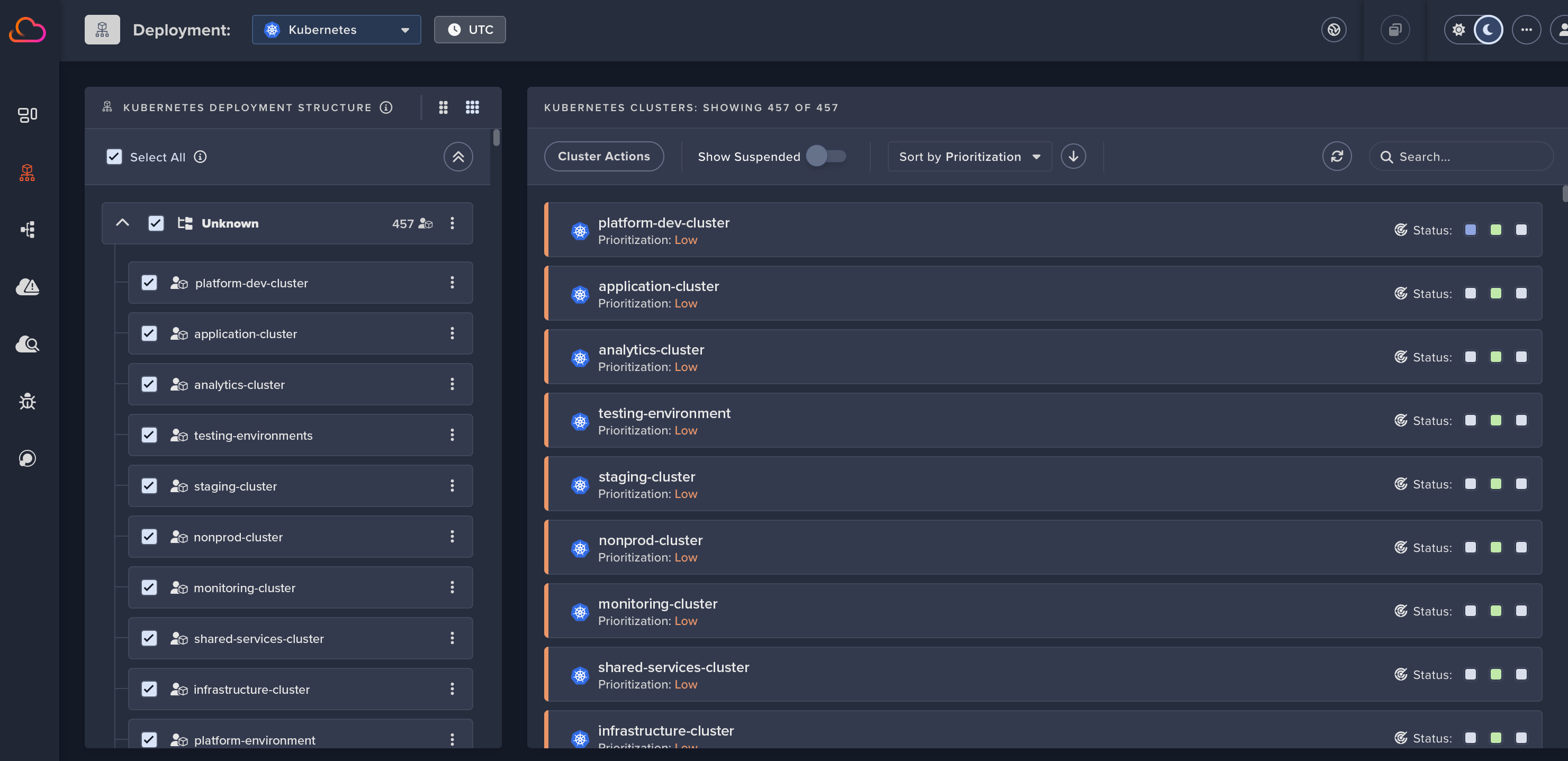
Operational complexity can be a barrier to security adoption. Darktrace / HYBRID NETWORK for Kubernetes installs with a single command, and for teams that manage their infrastructure as code, it supports raw manifests so the deployment can live in a Git repository and be managed through existing GitOps workflows. The same deployment approach works across Kubernetes environments in AWS, Azure, Google Cloud, and on-premises infrastructure. Early adopters of Darktrace’s Kubernetes capabilities have highlighted the simplicity of deployment and time to value.

Darktrace can deploy across your Kubernetes environment and wider hybrid infrastructure, while also providing visibility into Kubernetes deployment structure and status

Next steps

Kubernetes environments are dynamic, ephemeral and API-driven in ways that challenge traditional security tooling. With Kubernetes usage increasing due to widespread AI adoption, it is essential to secure Kubernetes environments as part of securing what AI can do. Darktrace / HYBRID NETWORK addresses these challenges by learning normal behavior in Kubernetes environments across network, process and control-plane layers, identifying meaningful threats and enabling targeted response. Combined with the context of wider hybrid infrastructure and forensic investigation capabilities, Darktrace provides visibility into both emerging threats and active incidents.

To see how Darktrace can help secure your Kubernetes environment and your wider hybrid infrastructure, get in touch to arrange your free trial. Existing customers can contact their Darktrace Account Team for more information about deployment options and licensing.

‍

Sources

[1] Gartner, Container Management research, 2025: "By 2028, 95% of new AI deployments will use Kubernetes, up from less than 30% today."  https://www.gartner.com/en/documents/7913109. (quote reproduced under Gartner reprint at https://www.kubermatic.com/magic-quadrant-and-critical-capabilities-for-container-management/)

[2] Palo Alto Networks (Unit 42) – Container Breakouts: Escape Techniques in Cloud Environments. https://unit42.paloaltonetworks.com/container-escape-techniques/

[3] runC container-escape vulnerabilities (CVE-2025-31133, CVE-2025-52565, CVE-2025-52881), disclosed by a SUSE researcher on November 5, 2025. https://www.securityweek.com/runc-vulnerabilities-can-be-exploited-to-escape-containers/

[4] NVIDIAScape (CVE-2025-23266), CVSS 9.0. https://nvidia.custhelp.com/app/answers/detail/a_id/5659

[related-resource]

‍

Continue reading
About the author
Elise Longhurst
Senior Product Executive
Your data. Our AI.
Elevate your network security with Darktrace AI