
Blog
/
Network
/
June 24, 2026

From Click to Command: Behavioral Detection of AppleScript-Led MacOS Intrusions

Darktrace researchers analyze a recurring macOS intrusion pattern leveraging ClickFix-style social engineering and AppleScript post-compromise activity. By correlating weak behavioral signals such as HTTP POST beaconing, rare destinations, and SSL anomalies, defenders can detect and disrupt command-and-control activity before sustained attacker control is established.
Inside the SOC
Darktrace cyber analysts are world-class experts in threat intelligence, threat hunting and incident response, and provide 24/7 SOC support to thousands of Darktrace customers around the globe. Inside the SOC is exclusively authored by these experts, providing analysis of cyber incidents and threat trends, based on real-world experience in the field.
Written by
Justin Torres
Cyber Analyst
applescript-led mac os intrusionDefault blog image
24
Jun 2026

Introduction

Darktrace’s Threat Research team is publishing this analysis to help defenders understand an active pattern of macOS tradecraft observed in multiple customer environments. This post summarizes the behaviors observed, how they were assessed, and what defenders can do now.

Across multiple environments, Darktrace observed a consistent MacOS intrusion pattern beginning with ClickFix-style user-assisted “update” execution and transitioning into AppleScript-driven post-compromise activity and sustained outbound signaling.

While individual indicators were low-confidence, the repeated convergence of weak behavioral signals — including HTTP POST beaconing, rare or IP-only destinations, SSL anomalies, and abnormal client characteristics — provided a defensible indication of command-and-control establishment Darktrace detection and response in these cases was driven by behavior over artifacts. In the highest-confidence instances, automated containment disrupted outbound signaling before sustained tasking could occur.

Background

ClickFix-style activity typically relies on user-assisted execution and plausible “update” pretexting, followed by post-execution use of native tools to keep the footprint light. In MacOS environments, AppleScript and other built-in scripting mechanisms enable flexible post-compromise workflows while minimizing stable file-based indicators.

Following execution, affected devices exhibited a consistent behavioral pattern. AppleScript or equivalent native scripting activity was observed initiating follow-on workflows, after which outbound communications began to establish a structured rhythm.

These communications were characterized by repeated HTTP POST requests to low-prevalence or IP-only endpoints, often combined with unusual SSL properties and client identifiers that diverged from baseline device behavior. Individually, these signals were weak. When correlated across time and devices, they formed a pattern consistent with control establishment rather than benign software activity.

In higher-confidence cases, Autonomous Response actions were able to reduce or halt outbound signaling, interrupting the attacker’s ability to maintain control.

Detection Timeline

In representative cases, the sequence unfolded as follows:

Stage 1 – Initial Execution

Initial activity began with suspicious or masqueraded execution on a MacOS endpoint, consistent with ClickFix-style user deception.

Stage 2 – Post-Execution Scripting

This was followed closely by native scripting activity, most commonly AppleScript, indicating the transition into post-execution workflow.

Stage 3 – Outbound Communications

Outbound communications then emerged, initially sporadic but quickly forming a consistent cadence of HTTP POST requests to rare external endpoints.

Stage 4 – Anomaly Convergence

As activity persisted, additional anomalies became visible — unusual SSL characteristics, abnormal user agents, and connections to infrastructure with no prior network prevalence.

Stage 5 – Autonomous Response

In the most mature stages of the activity, automated containment actions disrupted outbound communications on affected devices, limiting the attacker’s ability to continue tasking while investigations progressed.

Darktrace coverage and detections

The following use-case highlights systems likely affected by malicious macOS intrusion activity linked by Microsoft to the Democratic People’s Republic of Korea (DPRK) [1], with indications of suspicious behavior observed between March 1 and May 3, 2026. The activity overlaps with patterns described in recent reporting on DPRK-nexus MacOS intrusions [1], though attribution confidence in this case remains moderate and based on behavioral alignment rather than solely infrastructure linkage.

Analyst confidence emerged through the correlation of multiple weak signals across time and devices. This included model coverage for rare external communications, sustained beaconing patterns, repeated HTTP POSTs, and anomalous client characteristics. Where enabled, Autonomous Response actions disrupted the most active outbound paths to reduce the attacker’s ability to maintain control while Darktrace’s investigation continued.

Notably, this highly anomalous behavior included:

  • Outbound connections to the rare external endpoint, zoom[.]uswebob[.]us associated with IP address, 148.72.73[.]98 [2][3] over port 443
  • Outbound connections to the rare external endpoint, check02id[.]com associated with IP address, 83.136.210[.]180 [4] over port 7365
  • Outbound connections to the rare external endpoints, 104.145.210[.]107 [5] over port 8443 and 83.136.208[.]48 [6] over port 443
  • Outbound connections to the rare external endpoint, 83.136.208[.]246 [7] over port 6783 with observed URI `/api/daemon` and a PowerShell user agent

Darktrace’s detection initially highlighted a desktop device (running MacOS) engaging in anomalous behavior as early as March 12, 2026. Starting on March 12, the source device triggered a ‘Possible Doppelganger Attack’ alert including connectivity to the hostname "zoom[.]uswebob[.]us · 148.72.73[.]98" over port 443 (TCP, HTTPS, H2). This model highlights a device connecting to a location that is rare but masquerades as legitimate software, such as Zoom in this case, a commonly used technique to blend into expected traffic [2] [3].

 Initial connectivity observed to the rare external hostname, zoom[.]uswebob[.]us · 148.72.73[.]98, over port 443.
Figure 1: Initial connectivity observed to the rare external hostname, zoom[.]uswebob[.]us · 148.72.73[.]98, over port 443.

This was followed roughly seven later by a connection to 104.145.210[.]107 over port 8443, during which approximately 250 KiB of data of inbound data and 30 MiB of outbound data was observed, triggering the ‘Unusual Activity / Unusual External Data to New Endpoint’ in Darktrace.

Quickly after this connection, Darktrace’s Autonomous Response intervened, blocking the device’s access to the unusual external location and halting the data exfiltration attempt.
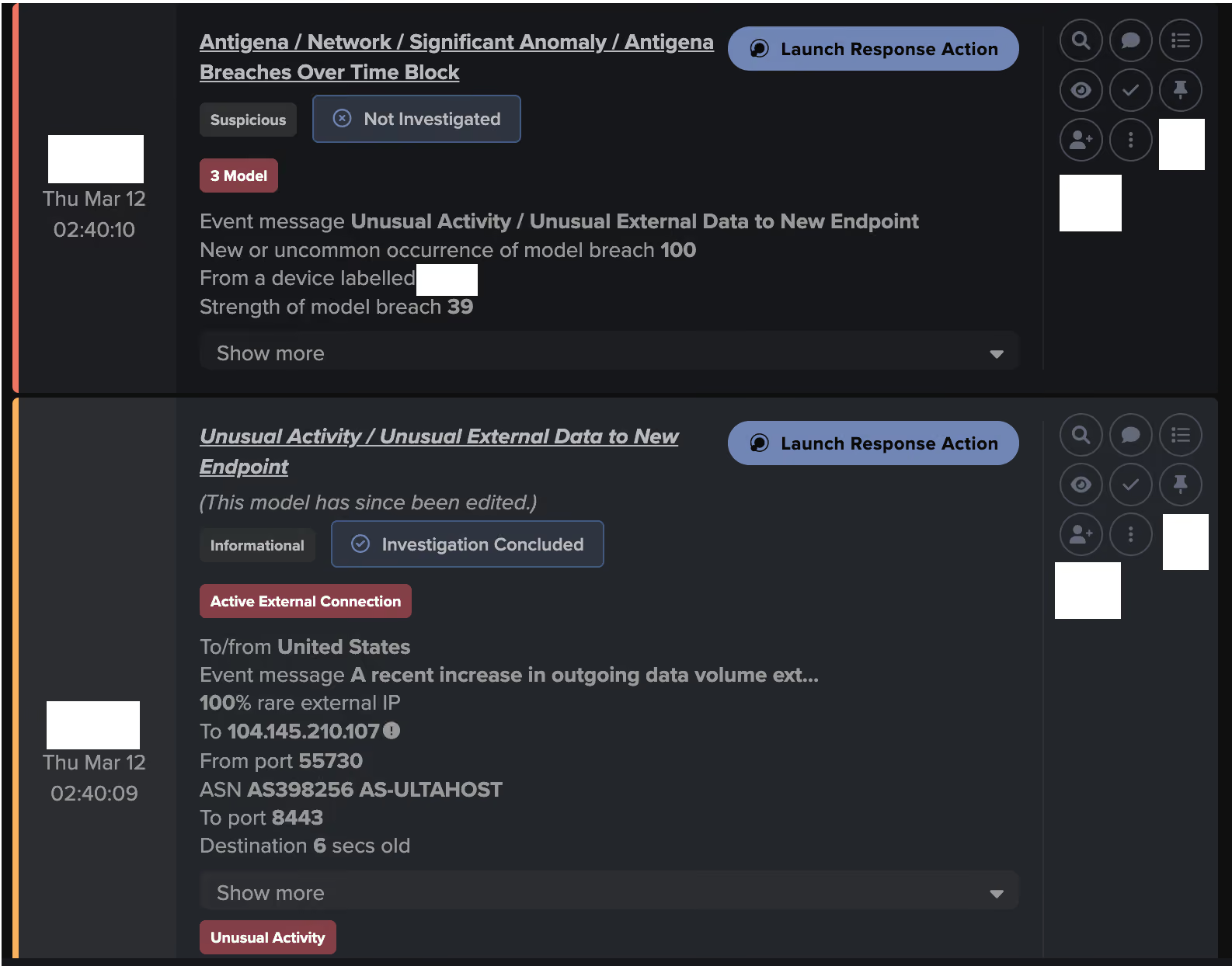
Figure 2: Darktrace’s detection of unusual data exfiltration, shortly followed by an Autonomous Response action to block it.

The device continued to consistently trigger model alerts relating to unusual external connectivity, including 'Posting HTTP to IP Without Hostname', 'Anomalous Connection / Rare External SSL Self-Signed' alerts, until well after 3 PM that day.
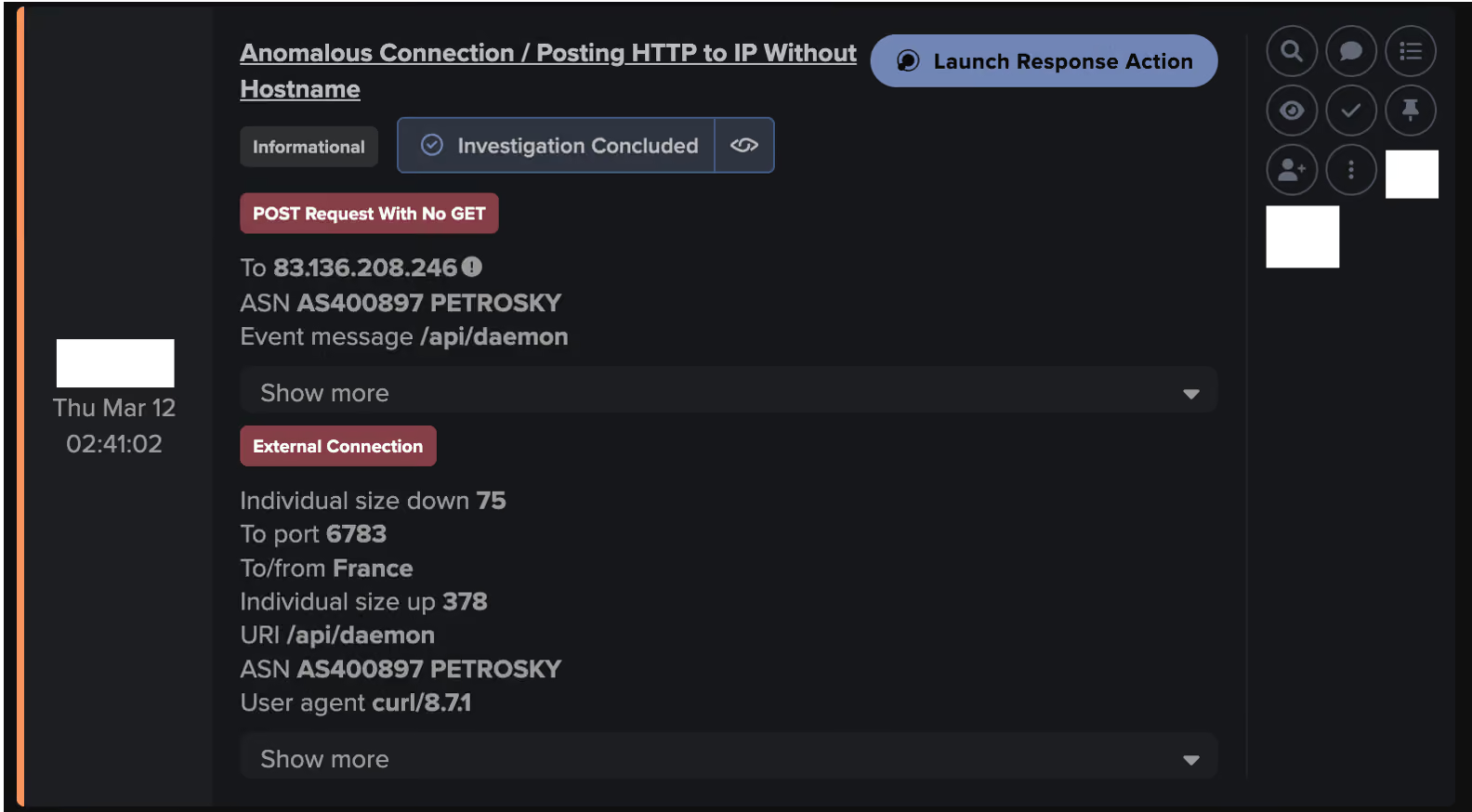
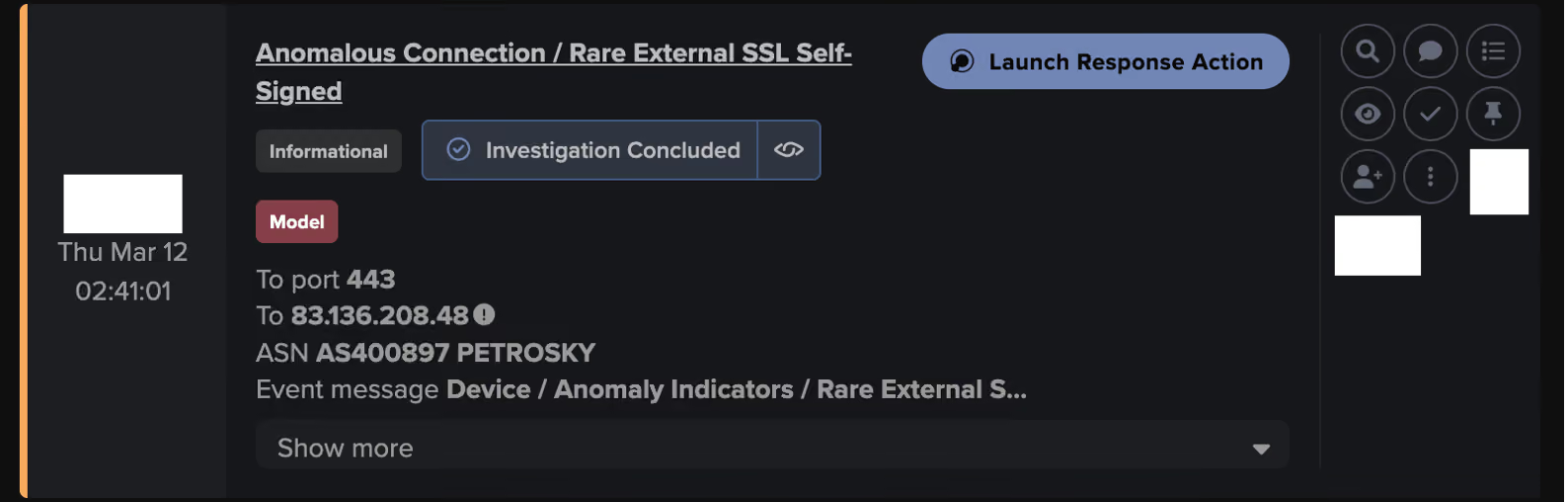
Figure 3: Additional external connectivity to new IP without a hostname, including connectivity to 83.136.208[.]246, alongside an anomalous ‘curl/8.7.1’ user agent and ‘/api/daemon’ URI.
Figure 4: Continued external SSL connectivity to IP 83.136.208[.]48, including connectivity to 83.136.208[.]246, alongside an anomalous ‘curl/8.7.1’ user agent and ‘/api/daemon’ URI.
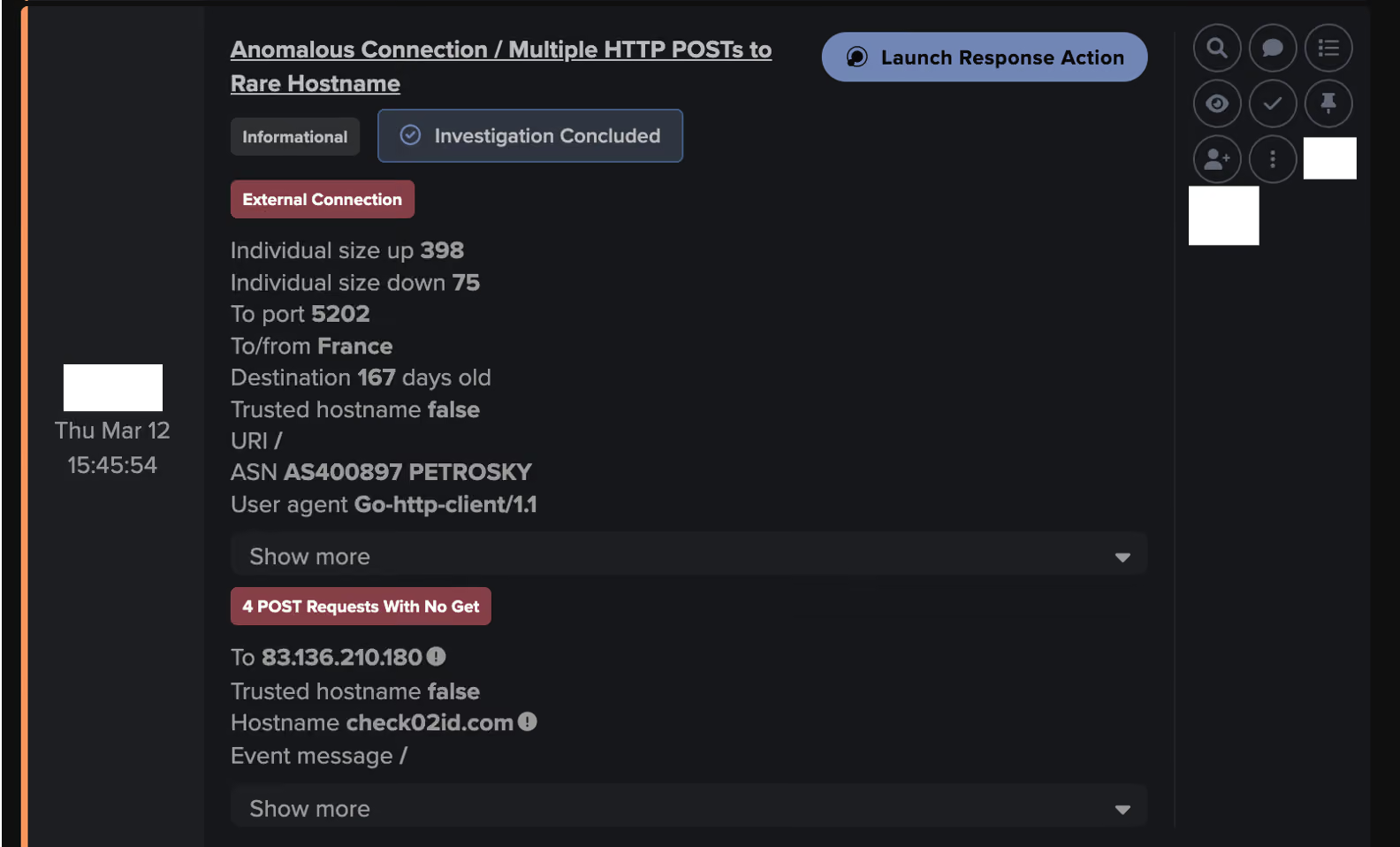
Figure 5: Continued external HTTP connectivity to hostname, check02id[.]com · 83.136.210[.]180, alongside an anomalous ‘Go-http-client/1,1’ user agent.

From March 13 to March 28, the device continued exhibit unusual connectivity to various endpoints (e.g., 83.136.208[.]48, 83.136.208[.]246, check02id[.]com · 83.136.210[.]180), with the 'Multiple HTTP POSTs to Rare Hostname' model consistently triggering.

Windows OS Case

Pivoting over to an additional device, this time running Windows OS, anomalous behavior was also observed between March 30 and April 20. Notably, on March 30, the device was observed making a large number of suspicious external connection attempts to 83.136.208[.]246 over port 6783, all of which failed.

A further indicator was observed on April 1 with PowerShell connectivity to the same rare endpoint (83.136.208[.]246, port 6783), using the URI '/api/daemon' and the user agent 'Mozilla/5.0 (Windows NT; Windows NT 10.0; fr-FR) WindowsPowerShell/5.1.26100.7920'.  Additional alerts included 'New User Agent to IP Without Hostname' and 'Anomalous Github Download', alongside activity involving the same endpoint.
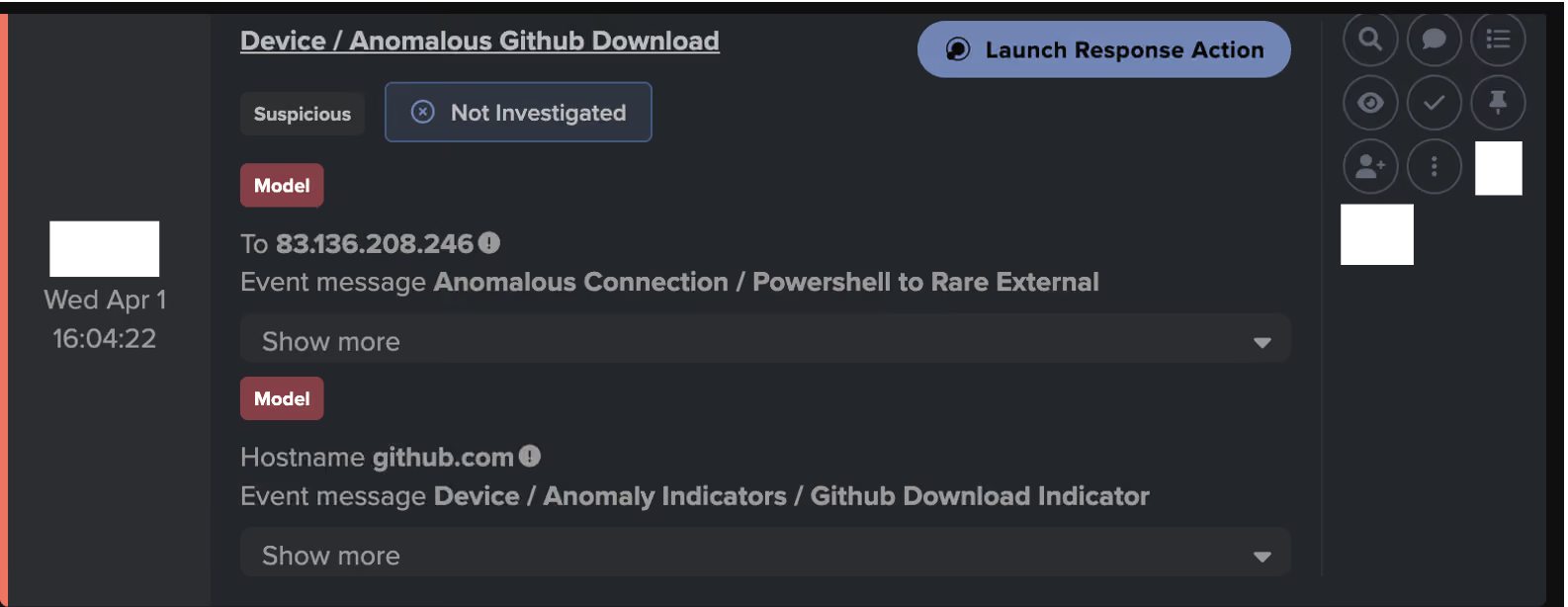
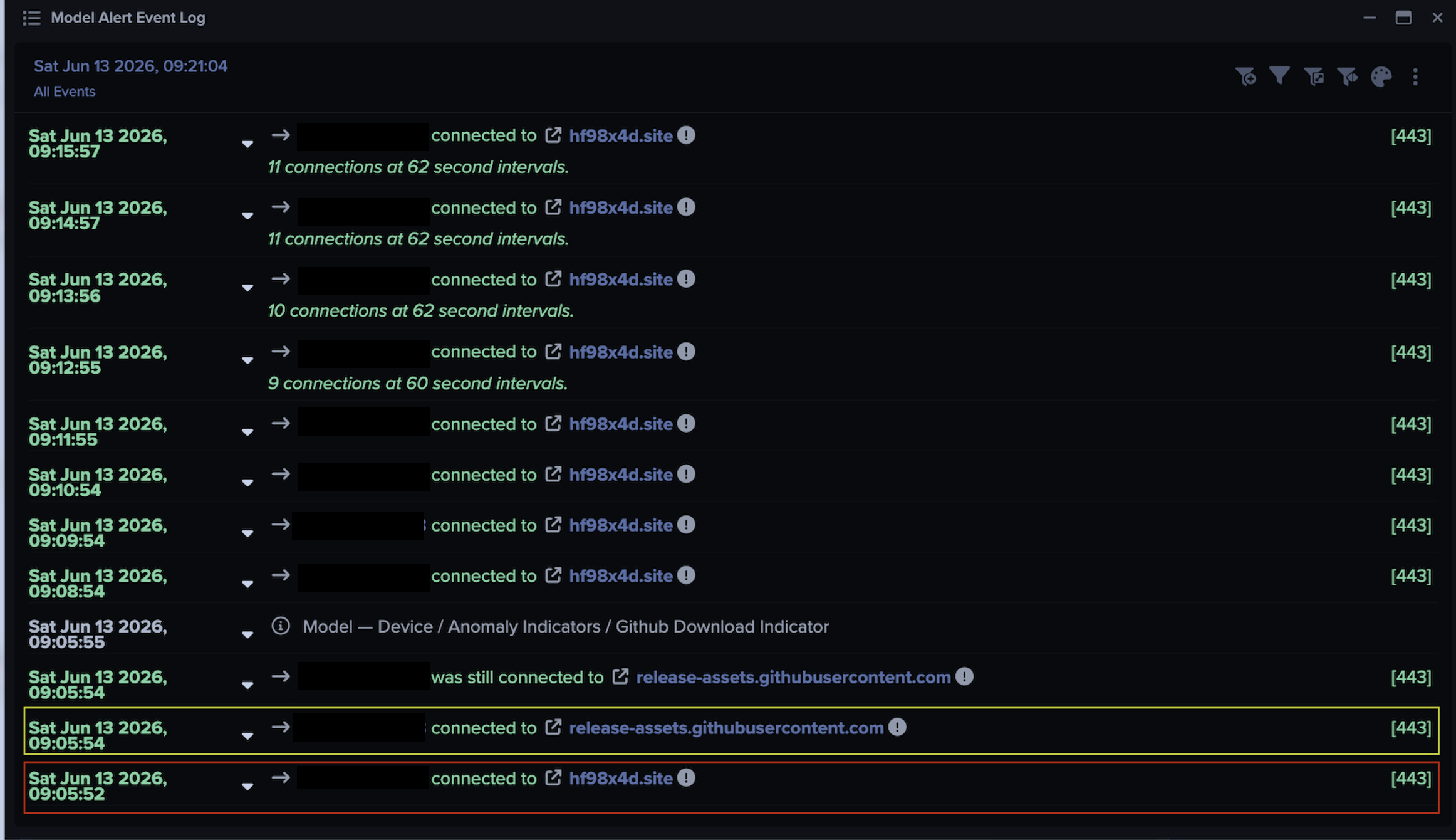
Figure 6 : ‘Anomalous Powershell to Rare External Destination’ and ‘Github Download’ model alerts. This behavior involved connectivity with the endpoints ‘83.136.208[.]246’ and ‘github[.]com’.

The device continued triggering 'Posting HTTP to IP Without Hostname' & 'PowerShell to External Rare' alerts between April 4 and April 20 across multiple related endpoints (i.e., 83.136.208[.]48, 83.136.208[.]246, check02id[.]com · 83.136.210[.]180).

Darktrace’s Autonomous Response capability was able to block suspicious PowerShell attempts to unusual external locations, as shown below in an example from April 20.
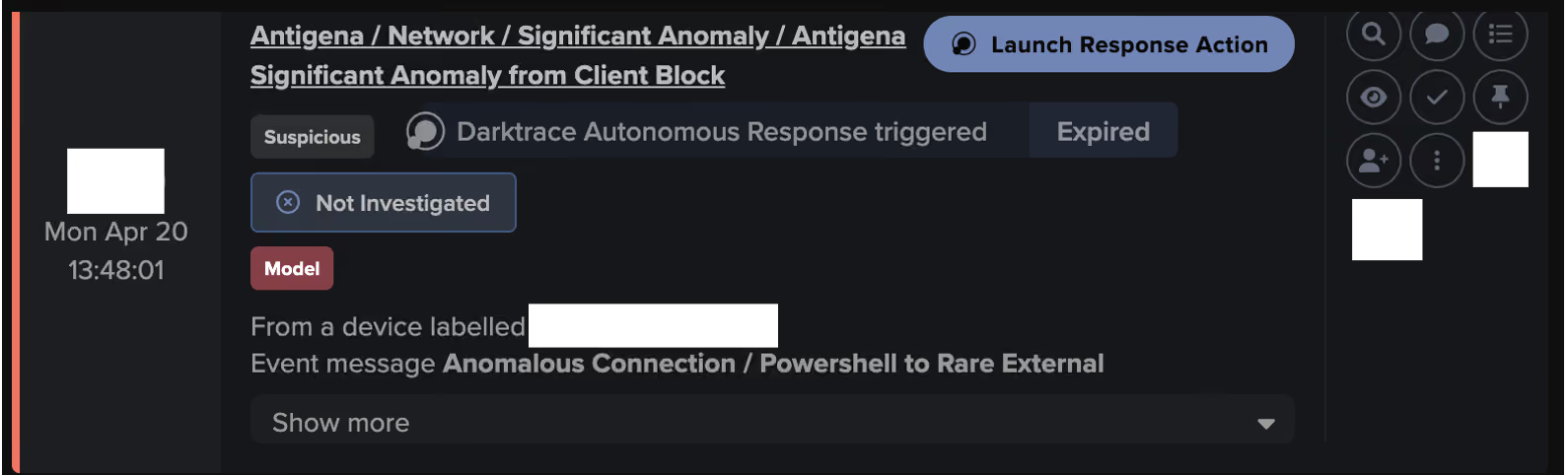
Figure 7:  Autonomous Response intervening to block an unusual PowerShell connection to an external destination.

Cyber AI Analyst investigations

In higher-confidence instances, Darktrace’s Cyber AI Analyst investigations helped connect otherwise separate model alerts into a single incident narrative, highlighting the attacker’s progression from post-execution scripting into sustained outbound signaling. This contextual stitching is particularly valuable in macOS scenarios where static artefacts are limited, and behavioral sequencing defines the intrusion.

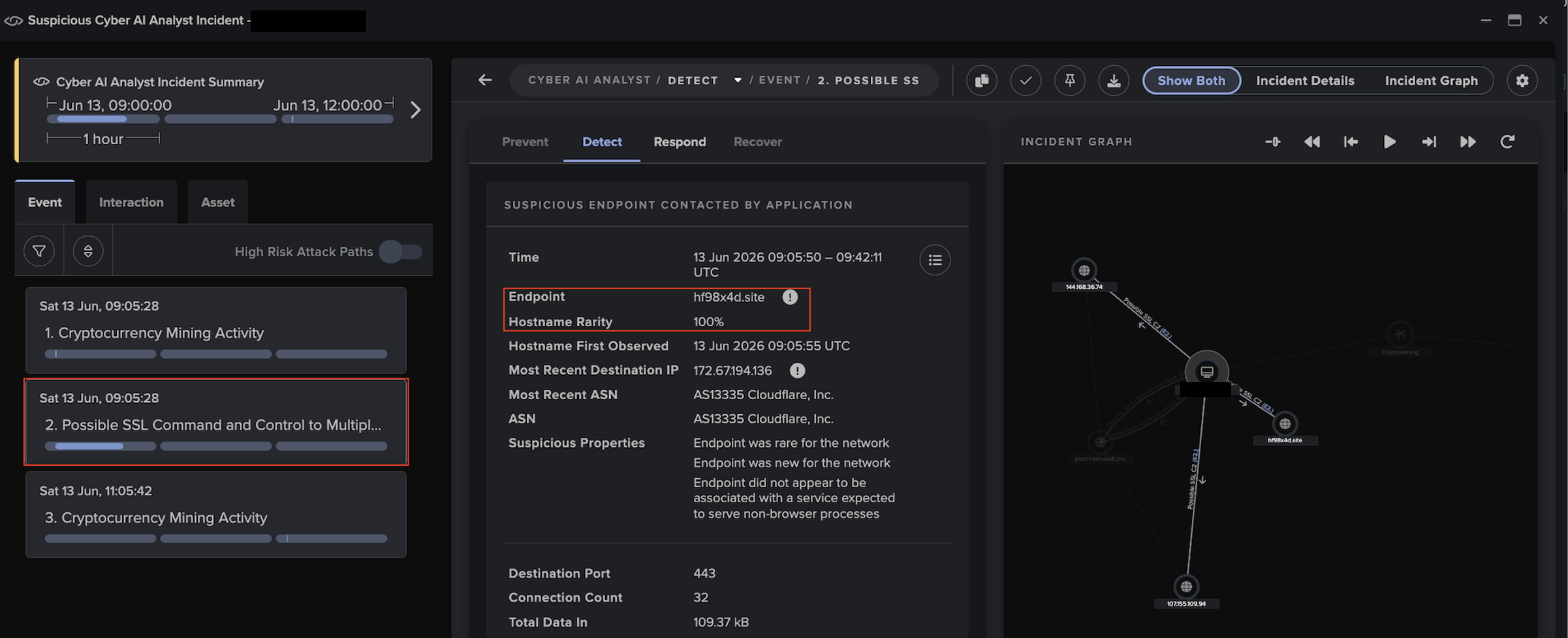
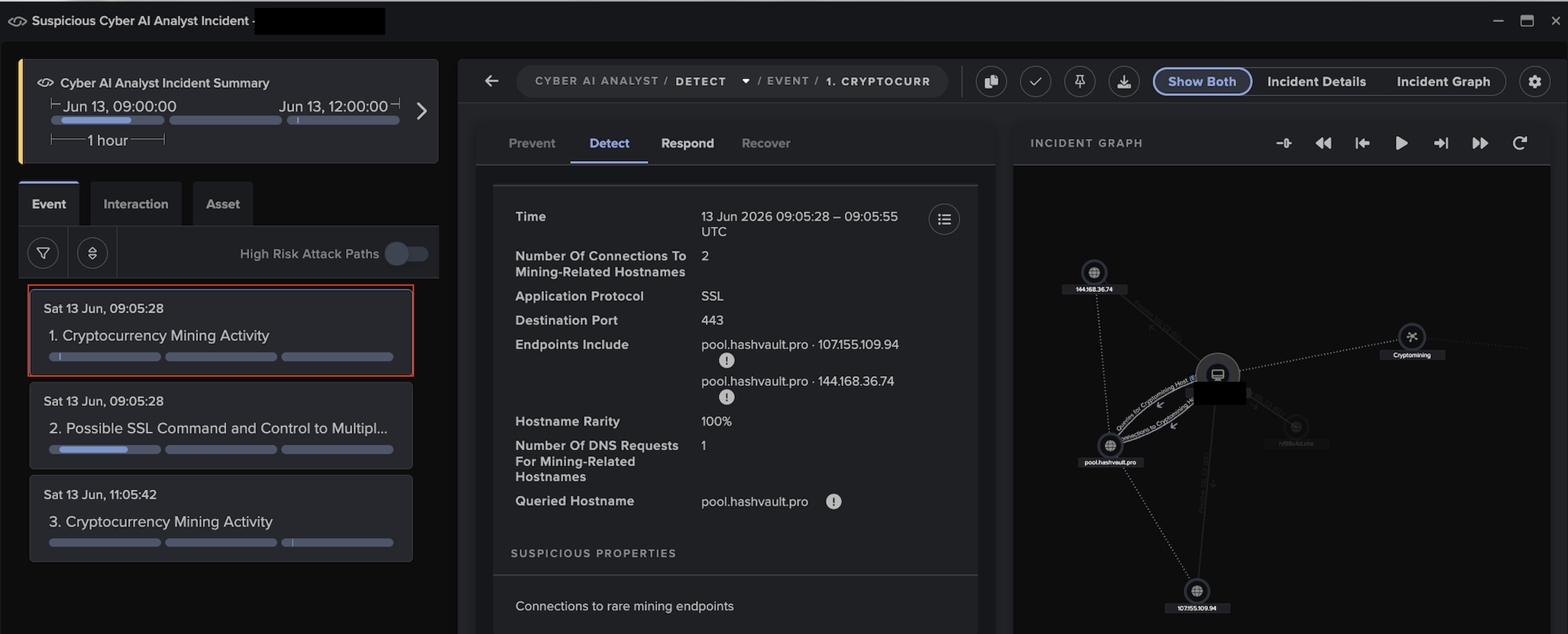
Cyber AI Analyst investigations highlighted alerts on March 12, including unusual repeated connections and possible SSL command-and-control (C2) to multiple endpoints:
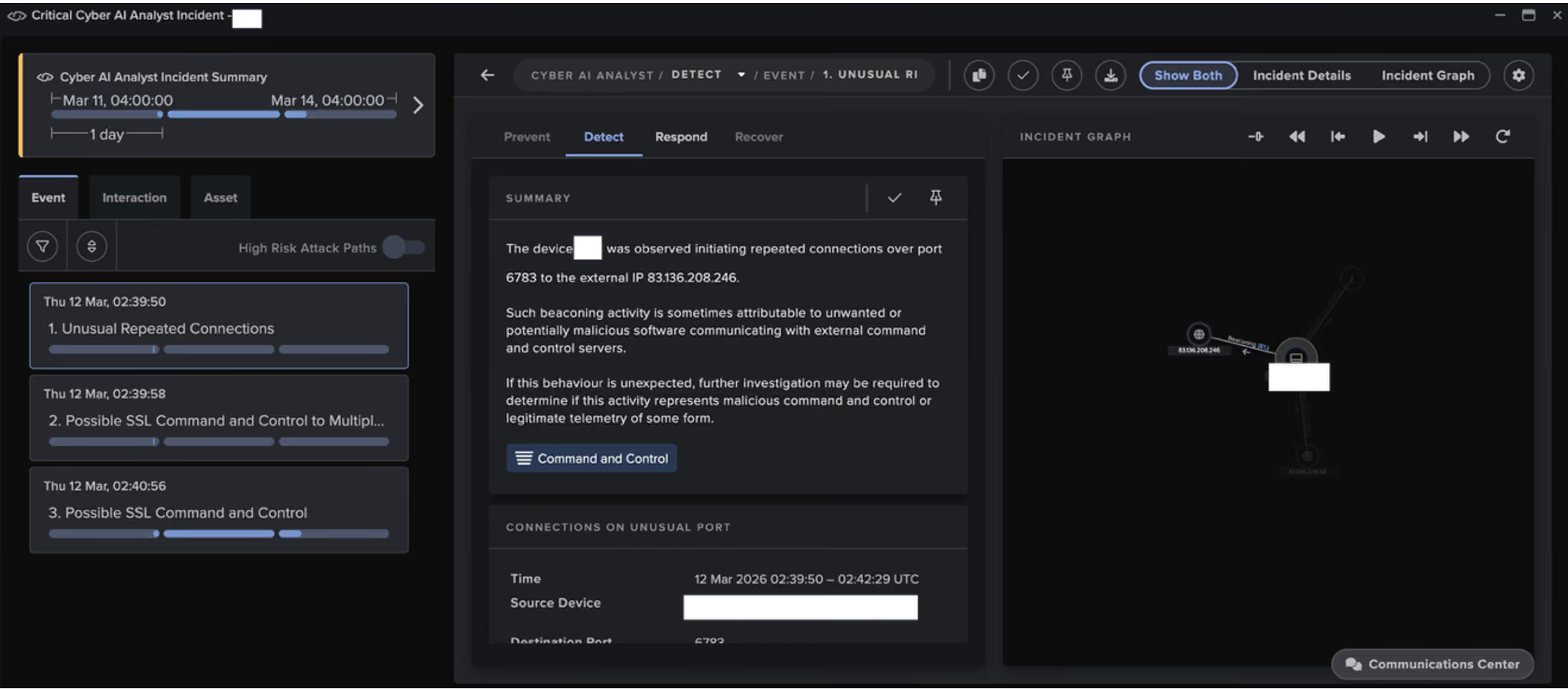
Figure 8: Cyber AI Analyst investigation linking events into a unified incident.

Autonomous Response

In addition to the containment actions detailed earlier, Autonomous Response implemented multiple additional measures to contain suspicious activity throughout the course of this attack. Whenever unusual external connectivity was detected, Darktrace blocked it, closing down potential C2 channels. Likewise, when data exfiltration attempts were identified, these connections were stopped to prevent the potential loss of sensitive data.
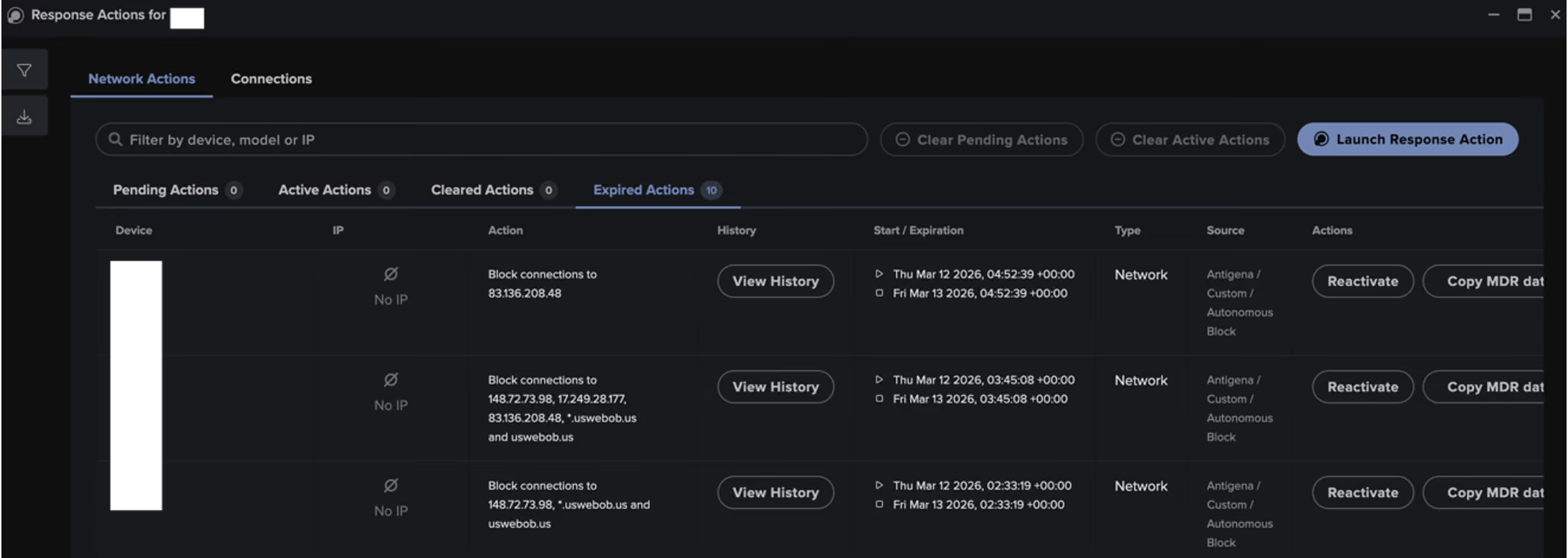
Figure 9: Autonomous Response actions implemented by Darktrace in response to suspicious connectivity in mid-March.

Furthermore, in cases where a device was deemed to have carried out a significant number of anomalous activities, Darktrace enforced a “pattern of life” on the device, preventing it from deviating from its expected behavior while allowing legitimate business operations to continue uninterrupted.
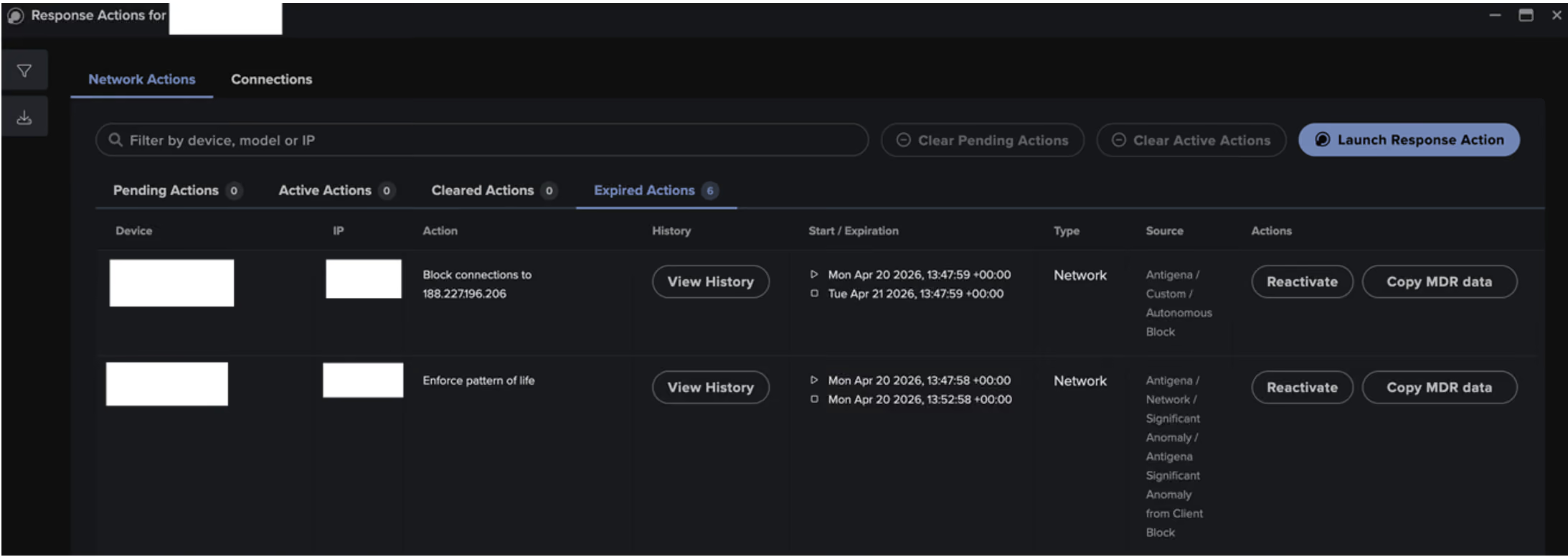
Figure 10: Autonomous Response actions implemented by Darktrace in response to suspicious connectivity in April, including the “Enforce Pattern of Life” action.

Conclusion

macOS intrusion tradecraft continues to shift toward native tooling and lightweight control channels designed to evade signature-led controls.

The repeated convergence of rare destinations, POST-based signaling, and anomalous client behavior — observed across time and across devices — provided sufficient evidence to act early and with confidence.

As macOS tradecraft continues to evolve, the defender advantage increasingly lies not in signatures, but in the ability to reason from behavior.

Credit to Justin Torres (Senior Cyber Analyst), Nathaniel Jones (VP, Security & AI Strategy, FCISO)

Edited by Ryan Traill (Content Manager)

Appendices

Darktrace Model Alert Coverage:

/ NETWORK-based model alerts:

·       Anomalous Connection::Multiple HTTP POSTs to Rare Hostname

·       Anomalous Connection::Rare External SSL Self-Signed

·       Anomalous Connection::Powershell to Rare External

·       Anomalous Connection::New User Agent to IP Without Hostname

·       Anomalous Connection::Posting HTTP to IP Without Hostname

·       Compromise::Fast Beaconing to DGA

·       Compromise::Large Number of Suspicious Failed Connections

·       Device::Anomalous Github Download

·       Device::New PowerShell User Agent

·       Unusual Activity::Unusual External Data to New Endpoint

/ NETWORK-based Autonomous Response model alerts:

·       Antigena / Network::Significant Anomaly::Antigena Significant Anomaly from Client Block

·       Antigena / Network::Significant Anomaly::Antigena Controlled and Model Breach

·       Antigena / Network::Significant Anomaly::Antigena Breaches Over Time Block

Indicators of Compromise (IoCs)

IP/Hostname:

·       zoom[.]uswebob[.]us · 148.72.73[.]98

·       83.136.208[.]246

·       check02id[.]com · 83.136.210[.]180

·       83.136.208[.]48

·       104.145.210[.]107

URIs:

·       /api/daemon

Destination Port Usage:

·       6783

·       5202

·       443

·       7365

·       8443

ASN:

·       AS400897 PETROSKY

·       AS398256 AS-ULTAHOST

User agents:

·       Mozilla/5.0 (Windows NT; Windows NT 10.0; fr-FR) WindowsPowerShell/5.1.26100.7920

·       Go-http-client/1.1

·       curl/8.7.1

MITRE ATT&CK Mapping

(Technique Name - Tactic - ID - Sub-Technique of)

·       Browser Session Hijacking - COLLECTION - T1185

·       Web Protocols - COMMAND AND CONTROL - T1071.001 - T1071

·       Install Digital Certificate - RESOURCE DEVELOPMENT - T1608.003 - T1608

·       PowerShell - EXECUTION - T1059.001 - T1059

·       Domain Generation Algorithms - COMMAND AND CONTROL - T1568.002 - T1568

·       Non-Standard Port - COMMAND AND CONTROL - T1571

·       Malware - RESOURCE DEVELOPMENT - T1588.001 - T1588

·       Web Service - COMMAND AND CONTROL - T1102

·       Code Repositories - COLLECTION - T1213.003 - T1213

·       Exploitation of Remote Services - LATERAL MOVEMENT - T1210

·       Exfiltration Over C2 Channel - EXFILTRATION - T1041

·       Exfiltration to Cloud Storage - EXFILTRATION - T1567.002 - T1567

References:

[1] https://www.microsoft.com/en-us/security/blog/2026/04/16/dissecting-sapphire-sleets-macos-intrusion-from-lure-to-compromise/

[2] https://radar.securityalliance.org/advisory-on-dprk-unc1069-fake-microsoft-teams-and-zoom-calls/

[3] https://www.virustotal.com/gui/domain/uswebob.us

[4] https://www.virustotal.com/gui/ip-address/83.136.210.180/community

[5] https://www.virustotal.com/gui/ip-address/104.145.210.107/community

[6] https://www.virustotal.com/gui/ip-address/83.136.208.48/community

[7] https://www.virustotal.com/gui/ip-address/83.136.208.246/community

[8] https://www.darktrace.com/blog/applescript-abuse-unpacking-a-macos-phishing-campaign

Inside the SOC
Darktrace cyber analysts are world-class experts in threat intelligence, threat hunting and incident response, and provide 24/7 SOC support to thousands of Darktrace customers around the globe. Inside the SOC is exclusively authored by these experts, providing analysis of cyber incidents and threat trends, based on real-world experience in the field.
Written by
Justin Torres
Cyber Analyst

More in this series

No items found.

Blog

/

AI

/

July 17, 2026

AI Is Taking on Stadium Operations. How Can Security Teams Keep it Protected?

Photo of a sports stadiumDefault blog imageDefault blog image

How to Secure AI in Stadium Operations

Key takeaways

  • AI is entering high-impact stadium functions such as access control, crowd management, ticketing, facilities, and surveillance.  
  • Shadow AI and third-party AI use can create risks that stadium security teams cannot readily see.  
  • Security teams must understand not only which AI systems exist, but also what they can access and what actions they can take.  
  • Live-event resilience requires continuous monitoring and response across AI, IT, OT, identities, and third parties.

Modern stadiums are infrastructure unlike any other. I’ve written before on event day sparking stadiums into life with shops and food stands, transport hubs, vast telecommunications infrastructure, field-side technology and beyond, acting as one super-sized, connected ecosystem. Stadiums’ scale and complexity make them some of the toughest environments in cybersecurity. Now, we’re adding AI to those operations and bringing a new dimension of risk.

The benefits of AI in stadium operations are easy to see. It can help stadium operators move fans safely through crowded gates, forecast demand at concession stands, support biometric entry, identify suspicious behavior on CCTV, and manage heating and ventilation. Used well, it can make live events safer, faster, and more efficient.

But it also changes the security model.

In Darktrace’s recent research into the threat landscape surrounding sports, we asked cybersecurity professionals protecting professional sports organizations where in their footprint a cyber compromise would have the greatest impact. The area they named most, highlighted by 34% of the professionals we spoke to, was stadium operations. At the same time, 35% said their organizations are already using AI in stadium operations, or plan to do so in the next 12 months.

Security teams are no longer just protecting traditional IT systems around a stadium. They are increasingly being asked to protect AI systems that are operating in the stadium’s most fundamental functions.

Approved AI vs. shadow AI in stadium operations

There is a clear difference between AI a stadium’s security team knows about and AI it does not.

Approved AI is the AI that has been reviewed, tested, and integrated into the venue’s operating environment. It may support CCTV analytics, access control, facility management, ticketing, logistics, broadcast operations, or anti-piracy monitoring. It should have clear ownership, access controls, logging, vendor review, and data protection rules. That does not make it risk-free, but it allows security teams to institute proper governance.

Shadow AI is different. It is the unapproved use of AI tools by employees, contractors, or suppliers. It often starts with good intent. Someone wants to work faster. A staff member pastes internal information into a public AI tool to draft a briefing. A developer uses an AI assistant to debug ticketing code. A supplier connects an AI scheduling tool to delivery routes. A designer uploads unreleased venue plans or sponsor material to generate a mockup.

None of those actions may feel like a security decision to the person doing them. But each one can move sensitive operational data into an environment the stadium does not control, creating hidden risk.

The approved AI stack may be visible to security teams. The shadow AI stack often is not.

Why game day increases AI cybersecurity risk

In a typical enterprise environment, a security team may have hours to investigate a strange login or an unexpected connection to a third-party service. Within a stadium, the moment an incident is likely to occur is also the moment when teams are at their most stretched and the incident can have the greatest repercussions: game day.

If an AI system used for crowd management behaves unexpectedly, the issue is not only technical. It may affect physical movement inside the venue.

If a supplier tool is sending operational data to an unapproved AI platform, the issue is not only data governance. It may expose delivery routes, restricted access schedules, or staffing plans.

The most dangerous scenario is not always a loud, dramatic attack but a hidden dependency that no one has mapped such as a vendor adding an AI feature through a software update or a staff workflow using an unapproved tool.

By the time the venue is live, those hidden connections can become operational risk.

The supply chain is part of the stadium attack surface

Any major sporting event is made by its supply chain and partnerships: catering firms, transport providers, broadcast systems, facilities teams. Every piece is necessary and each creates a security channel. The risk of supply chain compromise has been well established for some time and has been the source of some of the most high-profile breaches we’ve seen. The data breach at MSG Entertainment, owner of Madison Square Garden, that was widely reported in March, originated in a breach of Oracle’s E-Business Suite, used in MSG Entertainment’s back-office systems, while the 2018 Olympic Destroyer attack on the Pyeongchang Winter Olympics reportedly began with the compromise of the main IT service provider for the Games. The addition of AI is heightening the risk.

A stadium can have strict rules for its own AI systems, but its vendors may be using separate tools. Some may use AI to manage staffing, delivery windows, inventory, or customer communications. Others may not realize that AI features have been added into software they already use.

This is one of the hardest parts of securing AI in stadium operations. The risk does not always come from a tool the venue selected. It may come from a tool a supplier selected or a feature the supplier did not know had been turned on.

Security teams need to treat vendor AI the same way they treat vendor access. They need to know what suppliers can connect to, what data they can see, what tools they use, and whether those tools introduce new routes for data exposure or lateral movement.

A third-party AI tool does not need deep access to create risk. Sometimes it only needs the right operational detail at the wrong time.

Four questions for securing AI in stadium operations

As AI becomes part of stadium operations, security teams need to move beyond basic approval lists. There are four questions they need to ask:

1. Where is AI being used?

This includes obvious tools, such as computer vision, access control, ticketing, logistics, and facility management. But it also includes less visible AI inside SaaS platforms, vendor tools, browser extensions, developer workflows, smart building systems, and collaboration tools.

2. What can the AI access?

Can it see incident logs, staffing plans, ticketing data, video feeds, building controls, fan information, credentials, or supplier systems? Can it only analyze information, or can it also trigger actions?

3. What can the AI do?

AI agents are not just passive tools. Some can call APIs, update records, generate instructions, trigger workflows, or act with the permissions of a user or service account. In a stadium, that distinction is critical. There is a big difference between an AI system that recommends an action and one that can take an action.

4. What does normal look like?

In your security architecture, static rules will not be enough. AI use changes quickly: tools appear inside existing platforms, vendors add new services, and staff find workarounds when they are under pressure. Security teams need to understand normal behavior across people, identities, devices, networks, cloud services, suppliers, and AI tools so they can spot when something changes.

That is especially important in live-event environments, where small anomalies can matter. A connection to an unapproved AI service may be harmless in one context and serious in another, and an AI agent taking action at 3 a.m. may be expected during setup but suspicious during a match. Context is what turns raw activity into useful security insight. It’s also what enables rapid response. Your own AI-based security systems can respond to threats at machine speed if they can build the live context to know action needs to be taken.

AI can make stadiums safer, but only if it is secured

AI has a real role to play in stadium operations. It can help teams detect crowd pressure earlier, reduce bottlenecks, manage facilities more efficiently, improve the fan experience, and support event teams during high-pressure moments.

The answer is not to slow all AI adoption. That's not the goal. The answer is to make AI visible, governed, and secure before it becomes part of match-day operations.

For stadium operators and event organizers, that means mapping AI use across the venue and supplier ecosystem. It means understanding what each AI system can access and what actions it can take. It means giving staff approved tools that meet their needs, rather than leaving them to find workarounds. It means writing AI use into vendor contracts and audits. And it means monitoring behavior across the full environment, not only the systems that are easiest to see. A stadium cannot secure what it cannot see.

When AI becomes part of how a stadium moves people, controls access, manages facilities, supports suppliers, and protects media rights, it stops being a side project. It becomes part of the event infrastructure.

Event infrastructure must be thoroughly prepared before venue gates open and sustained with the operational resilience required to support a secure, seamless, and reliable event experience.

How Darktrace helps secure AI in stadium operations

Darktrace brings more than a decade of behavioral AI expertise, built on an enterprise‑wide platform designed to operate in complex, ambiguous environments. We protect the large-scale integrated IT and OT environments that underpin stadium operations from the 2022 FIFA World Cup in Qatar, to Formula 1 Grand Prixes around the world and stadiums across the USA.

Other cybersecurity technologies try to predict each new attack based on historical attacks. The problem is that AI operates like humans do. Every action introduces new information that changes how AI behaves, making it unpredictable in nature. Historical attack tactics are now only a small part of the equation, forcing vendors to retrofit unproven acquisitions to secure AI.  

Darktrace is fundamentally different. Our Adaptive AI continuously learns how your people and AI behave, building an understanding of your organization so it can detect and respond autonomously when behavior deviates. Our Behavioral Defense Platform secures your AI, people, and infrastructure as you onboard new workflows, agents, and applications, enabling your AI transformation at scale.

As AI changes what organizations can do, Darktrace helps them move forward with confidence. We give the security teams defending the people and technology within stadium infrastructure the understanding, visibility, and autonomous action they need to protect new technologies as they are integrated into operations, so their organizations drive the progress that will define the AI era.

[related-resource]

Continue reading
About the author
Karim Benslimane
VP, Field CISO

Blog

/

AI

/

July 15, 2026

Security After Signatures: Operating in a World of Pre‑CVE Disclosure Exploitation, Collapsed Trust Boundaries, and Autonomous Systems

Default blog imageDefault blog image

Three shifts have reshaped what it means to defend an enterprise securely.  

First, exploitation often begins before defenders have a Common Vulnerabilities and Exposures (CVE) identifier, a security advisory, or an entry in the Cybersecurity and Infrastructure Security Agency's (CISA) Known Exploited Vulnerabilities (KEV) catalog.

Secondly, the trust boundary has moved beyond the network edge into identities, tokens, APIs, and Software-as-a-Service (SaaS) workflows.  

Third, an increasing share of business activity is executed through automation, integrations, and AI agent-like systems that can act faster than teams can verify intent.  

If your security model still relies on detecting known bad artefacts, triaging isolated alerts, and waiting for confirmation before acting, you are already behind the threat.  

This is not a failure of security teams; it’s a failure of the operating model to keep pace with how the environment has changed.

A SOC built around alerts and signatures assumes that malicious activity will eventually surface as an event. In real incidents, however, the decisive evidence is rarely a single event. Instead, it is a chain of individually explainable actions that only appears malicious once you connect the dots across identity, non-human identity, cloud, email, SaaS, operational technology (OT), and network telemetry.

The defenders succeeding today observe behaviors, link them into sequences, understand what those sequences mean, and contain impact before the full story unfolds. That is the operating model the current threat environment demands.  

Exploitation before disclosure

The first shift is the straightforward: the time to exploit has dropped to nearly zero.  

In one example, Darktrace observed a sequence of subtle but strategically significant anomalies within a customer environment that later aligned with exploitation of CVE‑2025‑0994 in Trimble Cityworks by likely Chinese-nexus threat actors. Behavioral indicators were visible at least 18 days before public disclosure, with related anomalies emerging 40 to 50 days earlier during the intrusion window.  

This case illustrates a familiar pattern: clusters of weak‑signal anomalies combing to form an actionable picture of intrusion long before a CVE is published. Such activity reflects long‑horizon, option‑preserving operator models often associated with mature state‑linked activity.  

Figure 1: Darktrace’s detection of malicious exploitation of CVE 2025-0994, later tied to Chinese-nexus threat actors targeting critical national infrastructure (CNI) in the US, weeks before public disclosure.

Throughout 2025 and 2026, Darktrace has continued to observe the value of anomaly-based detections across a range of incidents.

CVE CVE Public Disclosure Date Darktrace Detection Date Days Between Detection of Exploitation and CVE Public Disclosure
CVE 2025 0994
(Trimble City Works)
2025-02-06 2025-01-19 18 Days
CVE 2025-24183
(Apache)
2025-03-10 2025-02-18 20 days
CVE 2025-10035
(Fortra GoAnywhere)
2025-09-18 2025-09-11 7 days

Identity is the real control plane

The second shift is that identity has replaced perimeter as the primary control plane. As Darktrace’s Annual Threat Report 2026 illustrated, identity remains the main challenge in defending against modern intrusions. A clear example is the Adversary-in-the-Middle (AiTM) case published by Darktrace in December 2025. A phishing email led to the compromise of an Office 365 account. Session hijacking bypassed multi-factor authentication (MFA), and the compromised account was used for follow-on phishing and persistence activities including the creation of malicious email rules.  

Every step in that sequence mattered. A successful login alone does not prove legitimacy. An inbox rule, on its own, may not appear catastrophic. Mail activity, viewed in isolation, may seem operationally normal. But the behavioral chain tells a different story: credential theft, token abuse, persistence, and onward compromise through a trusted identity.  

This is why the question is no longer “Did the user authenticate successfully”. The more important question is, “Does this identity action make sense right now, in this context, given what came before it?” The AiTM case shows how identity can be compromised. In practice, however, attacks rarely remained confined to identity alone.  

In another Darktrace case, a compromised SaaS account triggered activity across the email, SaaS, and network layers, including inbox rule changes, phishing propagation, and connections to suspicious infrastructure. Viewed in isolation, none of these events were decisive. Together, however,  they formed a behavioral sequence that revealed the intrusion, with the full attack story automatically correlated and surfaced to defenders by Darktrace’s Cyber AI Analyst.  

Figure 2: Cyber AI Analyst correlated and appended additional events to the incident, including other users who connected to the suspicious redirect link after outbound phishing emails were sent.

AI accelerates the threat  

The third shift is the one many teams still underestimate: trusted tooling, integrations, and AI agent-like systems can create actions that appear legitimate but are strategically dangerous.  

The shift becomes clearer when examining how governments are now framing AI risk. In 2026, guidance published by CISA, UK’s National Cyber Security Centre (NCSC) and Five Eyes partners warned that agentic systems expand attack surfaces, accumulate privilege, and can behave in ways that are difficult to predict or explain [1]. The advice is simple: assume unexpected behavior and design controls around it.  

The real risk is not AI usage. It is unknown autonomy: systems with credentials, data access, and action paths that can execute workflow steps without sufficient behavioral validation, traceability, or human oversight. Darktrace’s Model Context Protocol (MCP) risk analysis provides a useful framework for understanding this challenge. Over-privileged agents, content injection, and tool abuse become high-consequence risks when connected systems can dynamically retrieve data, execute actions, and communicate externally.  

Whether security teams like it or not, AI is already in the enterprise. It will help drive innovation, but it will also be abused, whether accidentally or maliciously. In each of the cases below, AI either scaled the attacker, built the tooling, or existed within the environment as something to exploit or misuse.

1. AI as an Attack Multiplier

In one campaign targeting Mexican government entities, a single operator used commercial AI platforms to generate exploits, automate reconnaissance, and process large volumes of data, compressing work that would traditionally have required an entire team into a single workflow [2].  

Darktrace is also observing this trend further down the stack. In one case, Darktrace identified AI-generated malware exploiting React2Shell, where an attacker used a Large Language Model (LLM) to produce working exploit code and deploy it at scale.  

[darktrace.com], [darktrace.com]

2. AI as an Attack Surface

Attempted AI exploitation is now appearing within customer environments. In one case involving an automation technology manufacturer, a compromised LLM proxy was seemingly used as a stepping stone to access additional AI services. When that attempt failed, the attacker pivoted to cryptomining.

What is clear is that the AI layer has already become an asset worth probing, exploiting, and pivoting through. It is also clear that defenders benefit from rapidly understanding how these activities connect. In this case, Cyber AI Analyst automatically pieced together the intrusion, while Darktrace’s Managed Threat Detection service alerted to the customer, enabling the activity to be contained before it could progress further.

Figure 3: Cyber AI Analyst's investigation into a compromised LLM proxy that was abused for cryptomining activity.

AI as a trusted but dangerous actor

This does not require a cinematic vision of “rogue AI.” The Salesloft incident provides a more grounded example, where AI and automation operate with legitimate access but served malicious intent. In that case, attackers abused compromised OAuth tokens associated with the Drift AI chat agent to export significant volumes of data from Salesforce environments.  

The activity resembled legitimate API usage and relied on trusted SaaS integrations rather than malware or other obvious signs of intrusion. That is precisely the challenge. Traditional security controls are good at detecting forced entry, but far less effective when a trusted application integration behaves in a way that is technically permitted yet operationally harmful.  

In these scenarios, the security challenge shifts from validating access to validating behavior.

This is what that looks like in practice: AI-linked identities executing legitimate actions that require behavioral validation rather than access validation.

Figure 4: Darktrace / SECURE AI highlights anomalous activity across AI identities, surfacing critical behavior that requires validation and containment.

Early observations from Darktrace / SECURE AI deployments reinforce this reality. Across Darktrace's observed fleet, AI service connections per deployment increased 13% during the first half of 2026, reaching over 16 million connections overall. The typical organisation now interacts with seven different AI providers, evidence that AI is no longer operating at the edges of the enterprise. It is increasingly woven into day-to-day business activity.

The most common risks are not compromised models or advanced AI attacks. Instead, they stem from employees and business functions exposing sensitive information through entirely legitimate-looking interactions. Darktrace has observed repeated submission of personally identifiable information (PII), tax information, identification documents, and medical data into LLM prompts, alongside widespread use of unsanctioned (shadow) AI services and growing AI activity from mobile devices.  

For defenders, the challenge is increasingly one of context: understanding when legitimate business use crosses into material risk, while preserving privacy and user trust.

Conclusion

Across all three shifts, the pattern is the same: behavior precedes understanding. Security teams are not losing because adversaries have become invisible. An increasingly outdated security model assumes that malicious activity will reveal itself cleanly and early. It no longer does.  

In 2026 and beyond, defenders win by understanding behavioral sequences, continuously validating trust, and acting before certainty becomes hindsight. That is security after signatures. That is security in the AI era.

Credit to: Daniel Levy, Threat Hunting Data Scientist

Edited by: Ryan Traill, Content Manager

References

[1] https://www.cyber.gov.au/business-government/secure-design/artificial-intelligence/careful-adoption-of-agentic-ai-services  

[2]https://www.latimes.com/business/story/2026-02-26/hacker-used-anthropics-claude-ai-to-steal-mexican-government-data

Continue reading
About the author
Nathaniel Jones
VP, Security & AI Strategy, Field CISO
Your data. Our AI.
Elevate your network security with Darktrace AI