Key findings
- Darktrace detected GTA VI-themed suspicious activity across organizations in multiple sectors ahead of the game’s release, showing how malicious gaming content can reach corporate environments outside the gaming industry.
- Twelve Darktrace customer environments connected to gta6demo[.]asia, a domain that public threat research has associated with a fake GTA VI demo used to distribute the Vidar infostealer. Seven of the twelve communicated with infrastructure associated with AS56322 ServerAstra Kft as part of this connectivity.
· Darktrace investigated ransomware activity at two European games companies. One incident involved DireWolf ransomware alongside reported data exfiltration. A separate Qilin incident included Active Directory reconnaissance, new administrative credentials, possible lateral movement and substantial cloud-storage transfers before ransomware deployment.
- Another incident on a gaming organization involved a SaaS account hijack in which a compromised account authenticated from unusual IP addresses, created a new privileged account and subsequently sent a high volume of suspected malicious email. An administrative account later authenticated from rare endpoints.
GTA VI gives criminals an audience
Grand Theft Auto VI arrives on November 19 with the kind of attention few entertainment releases command [1]. Before launch, that interest is already being exploited by sites offering supposed demos and downloads.
During September and October 2026, Darktrace detected devices across multiple customer environments connecting to GTA VI-themed sites associated with suspicious activity. The organizations involved were spread across EMEA and the Americas and included Manufacturing, Finance, and Public administration and defense sectors.
Darktrace has also investigated multiple incidents affecting gaming organizations including ransomware and a SaaS account hijack. Those investigations show a separate side of the threat: attackers operating inside corporate infrastructure and accounts, sometimes well before the eventual impact becomes apparent.
Following a fake GTA VI download
On October 7, 2026, Darktrace detected a device making suspicious DNS requests for gta6-play[.]ru, an unofficial Russian-language GTA VI site that had also been flagged as likely malicious in open-source intelligence (OSINT).

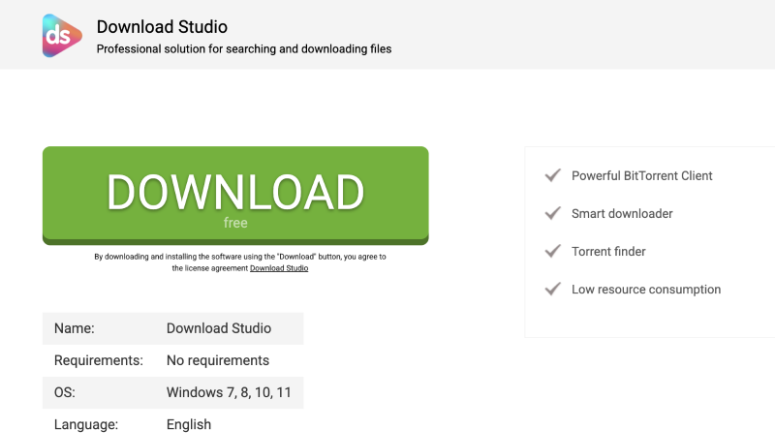
The site advertised a GTA VI download. The site led to a separate “Download Studio” page offering a Windows executable. Analysis found the file was packaged using InstallMate, a commercial installation framework, with an embedded .tsuarch section containing a compressed tiz3 archive.
Further examination identified functionality designed to inspect the environment in which the installer was running. This included checking registry entries for installed software and disk devices, enumerating network adapters, inspecting MAC addresses, and searching for running processes and window titles.
The installer also searched for processes associated with virtualization, debugging, and network analysis, including VMware and VirtualBox components, alongside debugging and monitoring utilities such as OllyDbg, WinDbg, Process Hacker, Process Monitor, Wireshark and Fiddler.
The presence of those checks did not prove that the executable was malicious. The installer contained functionality capable of extracting embedded files, but the investigation did not establish that it was being used to deploy a malicious payload. No definitive malicious payload or command-and-control infrastructure was identified. The software appeared to be InstallRex, which is classified by several security vendors as a potentially unwanted program.
That is still a useful finding; A user looking for GTA VI content could move from an unofficial gaming site to an executable that inspected the local environment, including checking for software commonly used by security researchers.
A second GTA VI lure appeared across twelve organizations
During September 2026, Darktrace alerted on HTTP connections to gta6demo[.]asia across twelve customer environments. Seven of the twelve communicated with infrastructure associated with AS56322 ServerAstra Kft as part of this connectivity.
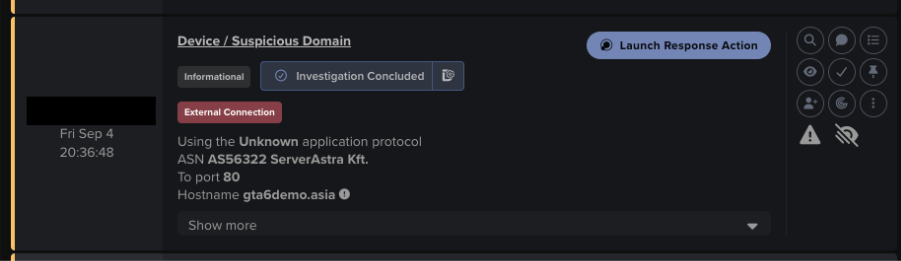
In a case affecting a UK-based customer, Darktrace’s Real-Time AI Analyst further investigated connections to gta6demo[.]asia and generated an incident due to the highly suspicious nature of the behavior.
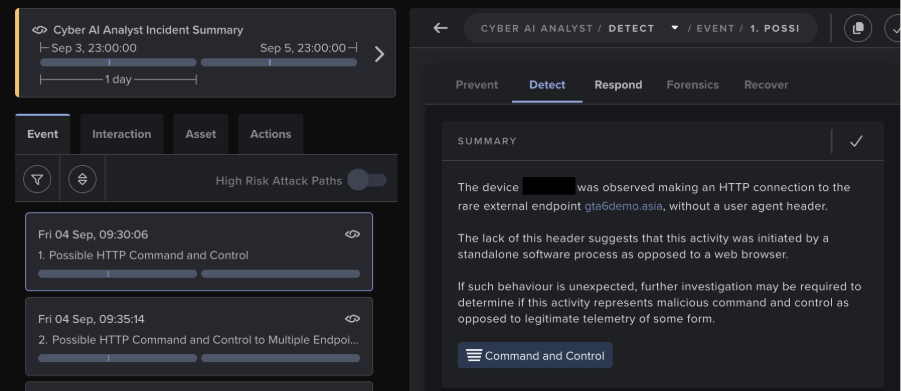
Public threat research has associated gta6demo[.]asia with a campaign advertising a fake GTA VI demo. Users clicking "Play Now" were reportedly directed towards an executable containing the Vidar infostealer [2].
There is a practical difference between this activity and an attack against a games company. The users encountering GTA VI-themed infrastructure can work anywhere. Darktrace saw the activity across several sectors outside Gaming, including Finance, Manufacturing, and Public administration and defense.
A major game release can therefore create security exposure well beyond its publisher. A search for a demo or unofficial download on a corporate device is enough to bring gaming-themed infrastructure into an enterprise environment.
Ransomware operators inside the gaming industry
The attacks Darktrace observed against Gaming companies themselves show different patterns.
In August 2026, Darktrace threat research identified possible malicious activity at a European game developer. Ransomware was ultimately deployed and data was exfiltrated, with the DireWolf ransomware group claiming responsibility.
Darktrace observed suspicious file downloads and beaconing from several devices to rare endpoints alongside Monero cryptocurrency mining, Active Directory and network reconnaissance, unusual administrative RDP connections, activity associated with data staging and HTTP-based exfiltration.
Much of the intrusion was therefore visible before ransomware appeared; the environment was already showing evidence of ingress tooling, external command-and-control communications (C2), reconnaissance, unusual administrative access and data movement.
A separate investigation in December 2025 provides a closer view of this pre-ransomware activity. A European games company was targeted by Qilin ransomware with Darktrace observing scanning and LDAP searches involving userAccountControl, which can expose information useful for identifying accounts and Service Principal Names within Active Directory.
New administrative credentials then appeared on a Domain Controller and the Domain Controller also generated scanning, anomalous RPC, SMB, and SSH activity, and NetShareEnum activity through srvsvc. Elsewhere in the environment, long Remote Desktop sessions and SMB enumeration appeared consistent with lateral movement.
Several devices also transferred data to cloud storage services including WebDrive and Amazon Web Services (AWS). In some cases, large downloads preceded subsequent uploads. Darktrace observed the transfer pattern, although the available telemetry does not establish that every transfer represented attacker-controlled exfiltration.
The activity preceding the Qilin deployment included Active Directory reconnaissance, privileged credential use, network and share enumeration, unusual remote access and significant data movement. Each appeared before ransomware became the defining feature of the incident.
SaaS hijacking shifts the attacker evidence
A separate investigation in May 2026 involved the hijacking of a SaaS account at a Gaming organization.
The compromised account authenticated from several IP addresses that were unusual for the organization. It then performed suspicious SaaS group administration, including creating a new privileged account. The account subsequently sent a high volume of emails assessed as likely malicious spam and potentially intended to compromise additional users.
The following day, an administrative SaaS account authenticated from rare endpoints, raising the possibility that further privileged access had been obtained.
The activity presented a different detection problem from the ransomware cases. Authentication from rare infrastructure, administrative changes, creation of a privileged account and subsequent email activity provided the strongest indications that a legitimate identity had been compromised.
For a Gaming company using hosted platforms for development, communication and business operations, a compromised account with the right permissions can provide considerable access without requiring the attacker to reproduce a conventional network intrusion.
Detecting the intrusion before impact
The ransomware investigations show why encryption should not be the first point at which an incident comes into focus. Darktrace observed LDAP and Active Directory-related reconnaissance, new privileged credentials, unusual Domain Controller activity, remote sessions, network enumeration and abnormal data movement before ransomware deployment.
The SaaS case produced different evidence: authentication from rare infrastructure, unexpected administrative changes and activity performed through a compromised account. GTA VI-themed activity required another approach again, following users through unofficial sites and redirects and examining the software offered for download.
GTA VI has put gaming back into the headlines ahead of its November release. The security activity around it is already visible beyond the games industry, while ransomware and account-compromise investigations show attackers operating inside gaming companies through very different routes.
For defenders, those routes leave evidence before the incident reaches its most damaging stage. The practical work is in recognizing those changes early enough to investigate them.
Credit to Gemma Stubberfield (Cyber Analyst), Ahmed Gardezi (Senior Cyber Analyst), Tara Gould (Malware Research Lead), Nathaniel Jones (SVP, Global Threat Intelligence)
References:
1. https://www.rockstargames.com/VI