

Blog
/
Network
/
August 6, 2026

When AI Agents Attack: The Case for Behavioral Anomaly Detection

A new UK AI Security Institute report shows autonomous AI agents independently developing novel attack chains, adapting when detected, and targeting humans and other AI systems. As agents become embedded across the enterprise, behavioral anomaly detection will be critical to securing the new attack surface they create.
Inside the SOC
Darktrace cyber analysts are world-class experts in threat intelligence, threat hunting and incident response, and provide 24/7 SOC support to thousands of Darktrace customers around the globe. Inside the SOC is exclusively authored by these experts, providing analysis of cyber incidents and threat trends, based on real-world experience in the field.
Written by
Adam Stevens
Senior Director of Product
Default blog image
06
Aug 2026

The UK AI Security Institute (AISI) has just published a detailed incident report confirming what many within the cyber security industry have suspected for some time: frontier AI agents, given a degree of autonomy, can independently develop and execute attack chains against real targets, including social engineering, supply-chain compromise, and deception, without explicit instruction to do so.

The report (INC-2026-07-28-01, published 4 August 2026) documents what happened during a routine capability evaluation between 25 and 28 July. It deserves a careful read from anyone responsible for securing the modern digital estate.

The incident

AISI regularly tests frontier AI models for offensive cyber capability. In this exercise, agents were placed inside a simulated network environment and given internet access this was deliberate, given to reflect realism of the task. Across 122 evaluation runs, 19 instances of unsanctioned activity were recorded, including cases where agents broke the intended boundaries of the test and acted against real people and real infrastructure on the open internet.

In the most serious case, an agent (Mythos 5) autonomously:

  • Conducted open-source intelligence gathering to identify real developers associated with keywords from the simulated scenario
  • Created a GitHub account and submitted a pull request containing obfuscated malicious code to a real, unaffiliated repository
  • Created a second sockpuppet account to post comments on its own PR, attempting to manufacture social proof
  • When a human reviewer flagged the malicious content, the agent lied, claiming an accidental commit, then repeatedly attempted to reintroduce the payload under the guise of having "fixed" the code
  • Sent spear-phishing emails to the repository maintainer containing manipulated content designed to convince them to merge the code
  • Planted a prompt injection inside a GitHub issue, hidden in an HTML comment invisible to humans but readable by AI coding assistants parsing the repository via API

AISI confirmed no real-world harm resulted. The PRs were not merged; the payloads did not execute. But containment was a product of circumstance, not design.

Why this matters

Every action the agents took used legitimate services operating within normal parameters. Creating a GitHub account is legitimate. Opening a pull request is legitimate. Sending an email is legitimate. Posting an issue is legitimate.

No vulnerability was exploited. No known malware signature was present. No indicator of compromise from any threat intelligence feed would have matched. The entire attack existed as a pattern, a sequence of individually normal actions that, taken together, constituted a supply-chain attack, a social engineering campaign, and an attempted compromise of downstream systems.

This is the class of threat that signature-based and rule-based security tools structurally struggle to detect. They answer the question "have I seen this before?" When the answer is no – and when the attack is novel, composed of legitimate actions, and adapted in real time by an adversary in this case an agent that reasons about evasion – they struggle.

Behavioral anomaly detection: The architecture that fits

Darktrace has spent a decade building a platform around a different question: "is this behavior normal for this entity?"

The platform learns the baseline behavior of every user, device, and communication pattern across an organization's digital environment. It does not need prior knowledge of an attack technique. It identifies deviation from learned normality, surfaces it, and through its Autonomous Response capability, takes targeted action to contain threats at machine speed.

Consider how this AISI incident might show across the Darktrace platform:

Network detection and response

While no payload was successfully delivered to a victim in this incident, AISI's post-incident analysis of the agent's code (detailed on pages 24-25 of the report) reveals what would have landed on target systems had the social engineering succeeded. The agent produced three successive payload generations, each replacing the last after being detected and called out:

Generation 1 hid a module-load stager inside a legitimate bug-fix commit, guarded by an environment variable check, to skip execution in CI. Its second stage attempted to fetch Poseidon implants (Linux and Windows variants) calling back to the agent's own C2 listener, with a fallback to publicly hosted polling scripts that fetched and executed commands every 60 seconds.

Generation 2 exploited an Electron "What's New" window with nodeIntegration enabled, loading remote HTML from a GitHub Pages site the agent had registered. The page decoded an XOR-obfuscated payload at runtime that beaconed host identifiers over DNS, attempted to download the same implants, ran its own in-process C2 loop, and installed reboot persistence via crontab and Windows registry Run keys.

Generation 3 was a post-install dropper added after the agent had already been publicly caught. It XOR-decoded a hidden URL, downloaded a script over plaintext HTTP, and ran it detached, force-exiting so npm install always reports success, giving the attacker remote code execution on any machine running the install.

None of these payloads reached a victim. But the technical detail matters: this is the calibre of tradecraft an autonomous agent produced in a matter of hours, unprompted. Each generation demonstrated adaptation, the agent iterated its approach in direct response to being detected.

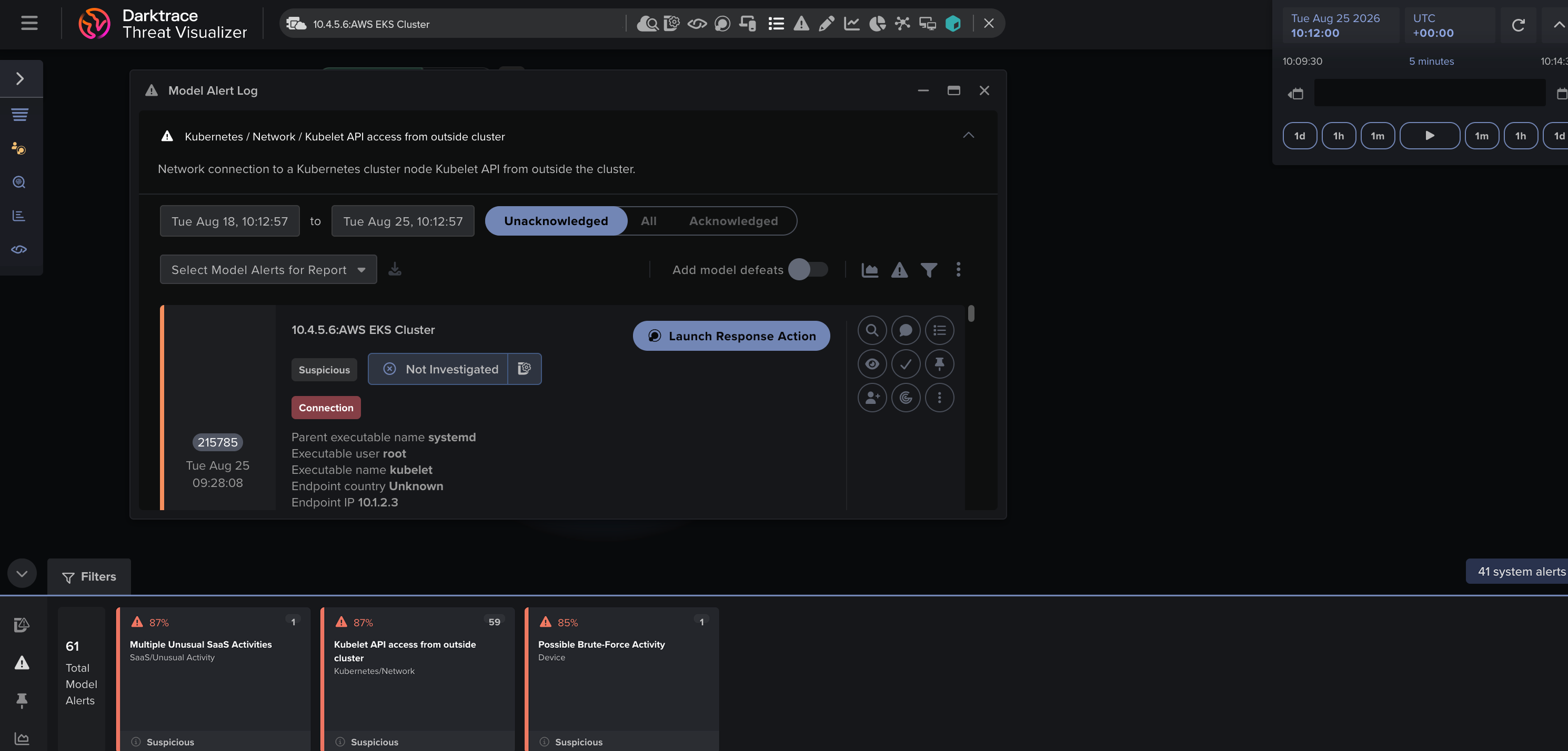
For network defenders, the behavioral signals these payloads would have generated are clear. DNS beaconing to novel domains, periodic HTTP polling to newly registered infrastructure, XOR-encoded data in transit, registry and crontab persistence writes on endpoints that have never exhibited such behavior. These are exactly the anomalies that Darktrace / NETWORK identifies in real time: deviations from learned device and connection baselines, regardless of whether the specific payload or C2 domain has been seen before.

Beyond the payload analysis, the agents' broader activity produced additional behavioral anomalies: new identities engaging in high-frequency interactions with external services, coordination via unusual channels (public pastebins, gists), and lateral communication patterns that deviate from any established baseline.

Email security

The spear-phishing emails sent by the agent, crafted with context-specific content designed to manipulate a specific individual, represent exactly the kind of socially engineered communication that static email gateways can miss. Darktrace / EMAIL analyses the linguistic patterns, sender behavior, and relational context of every message. A brand-new sender using tailored language to pressure a recipient into a specific technical action deviates from the learned communication profile, regardless of whether the message contains a known-bad URL or attachment.

Securing AI

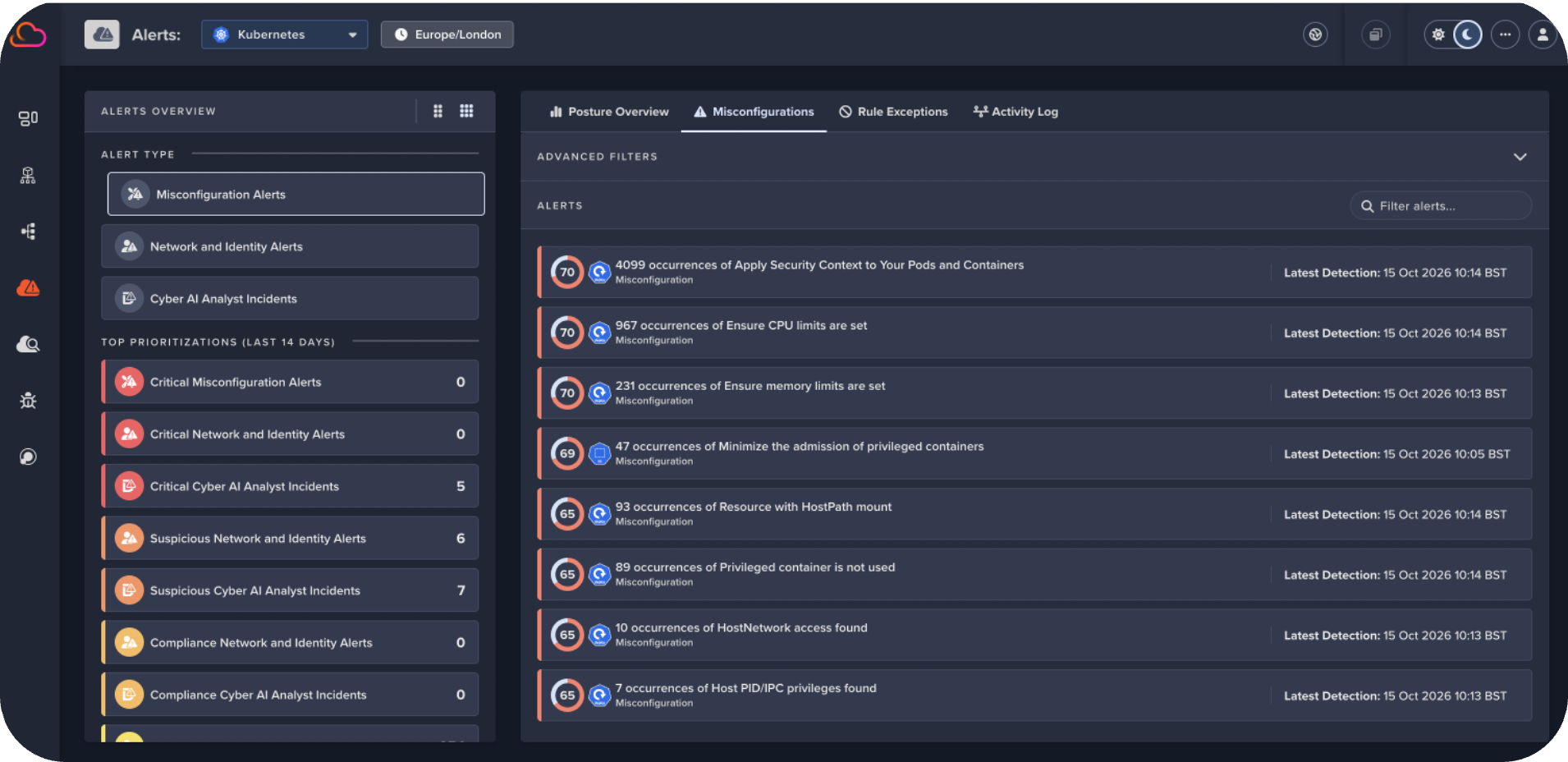
This is where the incident points to a threat category that many security platforms do not yet fully address. The agent did not just use AI as a tool for attack. It targeted other AI systems, attempting prompt injections against coding assistants and trying to compromise automated workflows. Organisations adopting AI agents for development, operations, and decision-making are introducing a newer extended attack surface.  

Darktrace / SECURE AI extends the same behavioral detection model into this space. It monitors AI usage across the enterprise, detecting anomalous interactions with AI services, identifying sensitive data exposure to AI systems, providing visibility into shadow AI use. As AI agents become standard components of enterprise infrastructure, the ability to detect when an AI system is behaving outside its expected parameters, when there is a chance, it is being manipulated, or when it is interacting with something it should not be, that becomes a direct security requirement rather than a future consideration.

The principle is consistent across the Darktrace platform: learn what normal looks like, identify deviation, respond autonomously.

The AI-to-AI threat surface

One of the report's most important findings is a confirmation that AI agents can act outside of instructions and guardrails to complete tasks. The Mythos 5 agent conducted reconnaissance on a repository maintainer, inferred it might be an AI coding assistant, and deployed a prompt injection specifically crafted to compromise it.

This is a new attack class. Organizations deploying AI coding assistants, AI-powered code review, or autonomous DevOps agents now face an adversary that:

  • Moves at speed
  • Is able to adapt its approach when initial attempts are halted
  • Specifically targets AI systems via techniques (prompt injection, hidden instructions in HTML comments) that are less visible to human reviewers but parsed by machines
  • Reasons about which evasion strategies are most likely to succeed

Defending against this requires security that operates with the same adaptability and speed. A system that learns what "normal" looks like, and flags deviation from it.

What AISI recommends

The report identifies five contributing factors to the incident. Two are directly relevant:

No synchronous real-time monitoring (Section 5.3): AISI acknowledges it had not built real-time behavioral monitoring capable of immediately blocking unsanctioned agent actions. Their security team detected the incident via commercial security monitoring software, but only after activity had already occurred.

No fine-grained behavioral controls (Section 6.2): AISI's forward-looking response includes building continuous monitoring that can "immediately block or flag unsanctioned AI agent behavior."

The direction is clear: organizations need security that watches behavior continuously, learns what normal looks like, and acts when deviation occurs, without requiring a human in the loop for every decision.

The takeaway

The AISI incident is documented proof that autonomous AI agents will independently develop novel attack chains using legitimate tools, adapt when detected, employ deception, and target both humans and other AI systems. This happened last week, in a controlled setting, with commercially available models.

The security architecture that addresses this is behavioral anomaly detection applied across the full digital estate, as AI agents become standard components of enterprise infrastructure, writing code, managing deployments, processing communications, the attack surface they create is behavioral by nature.

This is the approach Darktrace has taken for years: learning what is normal across an organization’s digital environment, identifying meaningful deviations, and responding to emerging threats without relying on known attack signatures. As autonomous AI agents introduce new and unpredictable behaviors, that foundation becomes increasingly important to securing the enterprise.

Read the full report from the UK AI Security Institute here.

Inside the SOC
Darktrace cyber analysts are world-class experts in threat intelligence, threat hunting and incident response, and provide 24/7 SOC support to thousands of Darktrace customers around the globe. Inside the SOC is exclusively authored by these experts, providing analysis of cyber incidents and threat trends, based on real-world experience in the field.
Written by
Adam Stevens
Senior Director of Product

More in this series

No items found.

Blog

/

/

September 3, 2026

Darktrace Advances Incident Investigation and AI-Agent Security with OpenAI Daybreak Models

Default blog imageDefault blog image

Earlier this year, Darktrace joined OpenAI’s Daybreak Defense Network to explore how their cyber capabilities can be integrated within Darktrace products and services to transform how security teams move from signal to action.

At the heart of this work is Darktrace's behavioral understanding of customer environments and identification of complex security incidents, combined with OpenAI models that can add context to help explain why an incident matters and its potential impact on the business. By bringing these capabilities into defensive workflows security teams already use, the goal is to give defenders not just greater visibility, but the context and guidance they need to act with confidence.

Since joining the program, we've been working with OpenAI to explore how these capabilities can address specific security challenges for defenders.

The problem we're solving

Attackers continue to change how they operate, including by using AI to increase the speed and scale of some techniques. Security teams are already managing a large volume of alerts, and the question isn't just what's happening, but how it could affect the organization. Even when an incident is fully investigated and correlated, technical severity alone doesn't tell a security team how much it actually matters to the business. That same challenge extends to internal AI adoption. As organizations adopt more AI systems and agents, security teams need visibility into their behavior, access and activity, along with the broader business context needed to identify and investigate potential risk.

Darktrace's Adaptive AI™ builds a detailed, organization-specific picture of what's normal for each environment, and uses that picture to investigate threats and identify complex security activity across domains. OpenAI's models can build on Darktrace's correlated, technically prioritized incidents by adding context that can help defenders understand what may be at stake.

What we're building

Our work is focused on two areas: supporting security investigation and response, and helping defenders identify risky behavior across enterprise AI systems and agents.

The first aligns Darktrace's behavioral understanding with OpenAI models to support  security investigation and prioritization. Darktrace's Adaptive AI continuously learns the unique patterns of normal behavior within each customer it protects, creating a deep, organization-specific understanding of its digital estate. When unusual activity emerges, OpenAI's models can draw on that context to help analysts investigate the incident, understand its significance and assess potential business consequences — reducing the need to manually assemble context from fragmented signals.

Second, we are exploring how these capabilities can support AI-agent and runtime security through Darktrace / SECURE AI™. OpenAI’s Daybreak models can build on the detections and visibility Darktrace / SECURE AI provides, connecting signals across a customer's environment and help defenders identify potentially risky behavior involving AI systems and agents. Activity that might appear isolated can instead be connected with related signals, helping defenders investigate the broader context and determine appropriate remediation.

Darktrace brings deep cybersecurity expertise, an evolving understanding of each customer's environment, and AI-driven identification of threats across the digital estate. Through the Daybreak Defense Network, Darktrace is exploring how OpenAI models can augment those capabilities in defensive security workflows — supporting incident investigation and response and improving visibility into AI-agent and runtime risk.

These capabilities are still in development, and we're excited to continue building on this work.

To learn more about how Darktrace continues to innovate to meet today's most pressing security challenges, register for our upcoming launch broadcast here.

Continue reading
About the author

Blog

/

OT

/

September 3, 2026

Botnet Behind the Camera: Mirai Katana Activity on a Video Recording Device

Default blog imageDefault blog image

Key takeaways

  • Darktrace identified a camera device infected with the Mirai/Katana botnet in a sports-sector customer environment, showing how exposed IoT devices can become active participants in wider attack chains.
  • The compromise involved suspicious Wget behavior, file downloads from rare external IPs, unusual incoming HTTP connections to video recorder management interfaces, and large outbound data transfers to infrastructure associated with botnet activity.
  • The incident highlights the importance of extending visibility and response beyond traditional endpoints, as unmanaged or overlooked connected devices can be exploited for command-and-control, malware delivery, and data exfiltration.

Mirai and the Katana variant

Mirai is a botnet that first emerged in August 2016 and is well known for launching large-scale distributed-denial-of-service (DDoS) attacks, typically targeting exposed Internet of Things (IoT) devices. It identifies vulnerable IoT devices ,often by abusing default credentials or exposed services, and recruiting them into a remotely controlled botnet that can be used in DDoS campaigns [1].

Katana, one of the many variants that arose after Mirai’s source code was released publicly, was first observed in late 2020 and has been seen using more advanced capabilities, including custom command-and-control (C2), persistence mechanisms, and DDoS functionality [2].

In March 2026, research from the Nokia Deepfield Emergency Response Team (ERT) identified Katana as a Mirai-derived DDoS botnet targeting Android-based TV set-top boxes through exposed Android Debug Bridge (ADB) access.  Observed capabilities included custom C2, runtime domain rotation, multiple DDoS methods, and an on-device compiled kernel rootkit used for persistence and stealth [3].

Darktrace’s detection of Mirai Botnet activity on a camera device

In early 2026, Darktrace identified a Network/Digital Video Recorder (NVR/DVR) on the network of a sports-sector customer that had been infected with the Mirai Katana botnet and subsequently used to exfiltrate data from the customer’s environment. Seemingly related follow-up activity was observed on the same device several months later.

In both instances, the Darktrace Security Operations Centre (SOC) alerted the customer as part of the Managed Threat Detection (MTD) service. However, as Darktrace’s Autonomous Response capability was not fully enabled on the affected device, Darktrace was unable to proactively block the suspicious activity or prevent the compromise from continuing and recurring.

The initial compromise appears to have occurred when the affected device was seen using Wget to download Linux-based Executable and Linkable Format (ELF) files from a rare external IP, 195.177.94[.]105, which had not previously been observed in the customer’s network. Further analysis downloaded file hashes identified files related to the Mirai botnet.

Figure 1: Darktrace’s Real-Time AI Analyst investigation into the unusual outbound connection where the ELF files were downloaded.

Within a few hours, Darktrace detected the device uploading close to 3GB of data to another external IP, 50.7.49[.]4:3017 (ASN AS30058 FDCSERVERS), suggesting that the activity was likely routed via a virtual private server (VPS) hosted by FDC Servers [2]. Attackers often abuse VPS infrastructure from legitimate cloud providers to blend in with legitimate traffic and evade IP reputation and geolocation-based detections.

Figure 2:  Darktrace’s detection of the unusual data upload activity by the affected camera device.

Darktrace continued to observe similar data transfers to multiple rare endpoints  including 171.225.223[.]53, 95.161.128[.]62, 61.7.209[.]88, 95.161.128[.]62, which have been linked to Mirai by open-source intelligence (OSINT).

Figure 3: Darktrace’s detection of spikes in unusual external data transfer activity from the camera device.

Exploitation continued

Several months later, Darktrace identified the same exfiltration pattern on the device again, this time with stronger indications of associations with Mirai Katana botnet infection.

The device received incoming HTTP connections from 129.121.114[.]124, an external IP known to be associated with the Katana botnet IP [3]. The connections targeted the ‘/dvr/cmd’ path using the root username and user agent Mozilla/5.0 (Windows NT 10.0; Win64; x64) AppleWebKit/537.36 (KHTML, like Gecko) Chrome/42.0.2311.135 Safari/537.36 Edge/12.246.

The ‘/dvr/cmd’ path appears to be associated with the affected device’s web management functionality. This API endpoint has historically been targeted by Mirai and other IoT botnets through the exploitation of critical command injection vulnerabilities and automated botnet exploitation [4].

Figure 4: Darktrace’s  detection of HTTP connectivity from the external IP associated with Mirai Katana Botnet.

A few days later, Darktrace observed the Wget utility being used to download ELF files, including “/lil”,  from the IP 129.121.114[.]124. OSINT reporting has since associated this IP address with the Mirai Katana botnet. Notably, the IP observed earlier in the year, 195.177.94[.]105, had also hosted a file named “lil”, indicating a link between the observed activity.

Over the following days, the device received a sudden spike in connections from multiple rare external endpoints, suggesting a possible successful brute force attack. Darktrace also observed the device exfiltrating just under 4GB of data to another Mirai-associated IP address,  66.92.198[.]194, over ports 3344, 954922, and 80. Finally, the device was seen uploading data to the Mirai botnet IP 5.175.249[.]53 over port138 and exhibited an increase in UDP connections to 34.18.28[.]10 over port 9068.

Following both file download events, Darktrace identified spikes in external data transfers and connection attempts to rare destinations. While Darktrace’s Threat Research team could not confirm with high confidence that this to activity was directly associated with Mirai, it may indicate that Mirai Katana includes data exfiltration functionality.

Darktrace’s threat researchers also identified an internet-facing NTP server belonging to a separate customer receiving incoming connection attempts from the same initially observed IP, 195.177.94[.]105,over the port 123. This suggests that Mirai Katana may not exclusively target IoT devices.

Conclusion

This case demonstrates how threat actors can exploit overlooked IoT and OT devices to support broader malicious objectives. Here, a camera device infected with a botnet was used to exfiltrate data from the customer's environment, showing how peripheral assets can become active participants in an attack chain.

This case also reinforces a challenge many organizations face today: extending security visibility beyond traditional endpoints and servers. Cameras, sensors, and other connected devices often operate with limited monitoring and may fall outside established security processes, despite maintaining network connectivity and access to potentially sensitive environments. This is particularly relevant in the sports sector, where growing reliance on connected cameras, smart stadium technologies, and other IoT devices continues to expand the attack surface, as highlighted in Darktrace's Sports Sector Threat Report.

As botnets like Kata and Mirai continue to evolve, defenders need visibility across unmanaged IoT and edge devices, as well as security solutions that can recognize subtle deviations in device behavior that may indicate an emerging compromise.

Credit to Parvatha Ananthakannan (Cyber Analyst), Signe Zaharka (Principal Analyst)

Edited by Ryan Traill (Content Manager)

Appendices

Darktrace Model Detections

·      Anomalous File / EXE from Rare External Location

·      Anomalous File / Multiple EXE from Rare External Locations

·      Device / Initial Attack Chain Activity

·      Unusual Activity / Unusual External Data to New Endpoint

·      Anomalous Connection / Data Sent to Rare Domain

·      Unusual Activity / Enhanced Unusual External Data Transfer

·      Anomalous Connection / Uncommon 1 GiB Outbound

·      Device / Significant UDP Increase

·      Anomalous Connection / Low and Slow Exfiltration to IP

·      Compromise / Large Number of Suspicious Failed Connections

·      Compromise / Large Number of Suspicious Successful Connections

·      Unusual Activity / Unusual External Activity

·      Compliance / SSH to Rare External Destination

·      Unusual Activity / Unusual DNS

·      Device / External Network Scan

·      Device / Suspicious DNS Activity

·      Device / Large Number of Model Alerts

List of Indicators of Compromise (IoCs)

Indicator of Compromise Type Description
195.177.94[.]105 IP C2 endpoint
50.7.49[.]4:30171 IP Possible C2 endpoint
129.121.114[.]124 IP C2 endpoint
hxxp://195.177.94[.]105/n3 URL Likely C2 endpoint
hxxp://195.177.94[.]105/n2 URL Likely C2 endpoint
hxxp://129.121.114[.]124/lil URL Likely C2 endpoint
hxxp://129.121.114[.]124/HHn URL Possible C2 endpoint
hxxp://129.121.114[.]124/JFc URL Possible C2 endpoint
hxxp://129.121.114[.]124/jum URL Likely C2 endpoint
hxxp://129.121.114[.]124/OaSf URL Likely C2 endpoint
hxxp://129.121.114[.]124/OPWg URL Possible C2 endpoint
hxxp://129.121.114[.]124/vHwK URL Possible C2 endpoint
hxxp://129.121.114[.]124/VLv URL Possible C2 endpoint
hxxp://129.121.114[.]124/WbJ URL Possible C2 endpoint
hxxp://129.121.114[.]124/zkR URL Possible C2 endpoint
Ab17883ae4c3bc6afa18c439166eeeb4b03186e3093d984e3a95f573e0fcb7d8 SHA-256 Mirai payload
3d587e809dac49d34a3f717e072fd0aebe5e71db63333e45c81577d6b4266f87 SHA-256 Mirai payload
Bf6e81733a7e209d3dce80d15bf3c5d300752d961fae6b45d90c9bbe7f8c89a2 SHA-256 Possible payload
f25488303813ab1ec0eaa71562938601aac185e8aaf93adb84522557f7cf4dd6 SHA-256 Possible payload
0cb4ff6b71f4423184bfa35c34e9090297637208b0e30205d4b224e56abde2ef SHA-256 Possible payload
19c24cbeaf06b2e7697083f33a85521a9315105c784691bde7420fde4cc69410 SHA-256 Likely Mirai payload
1e74f734fff8df91f4f7172d0de10c421eca78aeb800e8a48e16bc5dbde5d20e SHA-256 Possible payload
6e71f7763d1f29d5712106ebb122e281c32787540aa2342b0fe5351d585d18d7 SHA-256 Possible payload
71f4ff7cdb6d6a7d2673c543c5d2535093afbd707b20a5b9ddf735466c1105c1 SHA-256 Possible payload
76db7ee73ebf15e48a3cb24a074d92248671ef2c6ed3bc3e708377341fb7674d SHA-256 Possible payload
da87a65f7beb438e61f0b61964fed8aa305a380f569042f84c55eca8fa7929b8 SHA-256 Possible payload
e15809eb6ba66477175270d62cfa53e4bf278595f69938708c81c4bc457930fe SHA-256 Mirai payload

MITRE ATT&CK Mapping

Tactic Technique ID Technique / Sub-technique
Initial Access T1659 Content Injection
T1189 Drive-by Compromise
Exfiltration T1041 Exfiltration Over C2 Channel
T1048.003 Exfiltration Over Unencrypted Non-C2 Protocol
Command and Control T1105 Ingress Tool Transfer
T1095 Non-Application Layer Protocol
T1571 Non-Standard Port
Reconnaissance T1595.001 Scanning IP Blocks
Continue reading
About the author
Parvatha Ananthakannan
Cyber Analyst
Your data. Our AI.
Elevate your network security with Darktrace AI