
Real-world intrusions across Azure and AWS
As organizations pursue greater scalability and flexibility, cloud platforms like Microsoft Azure and Amazon Web Services (AWS) have become essential for enabling remote operations and digitalizing corporate environments. However, this shift introduces a new set of security risks, including expanding attack surfaces, misconfigurations, and compromised credentials frequently exploited by threat actors.
This blog dives into three instances of compromise within a Darktrace customer’s Azure and AWS environment.
- The first incident took place in early 2024 and involved an attacker compromising a legitimate user account to gain unauthorized access to a customer’s Azure environment.
- The other two incidents, taking place in February and March 2025, targeted AWS environments. In these cases, threat actors exfiltrated corporate data, and in one instance, was able to detonate ransomware in a customer’s environment.
Case 1 - Microsoft Azure
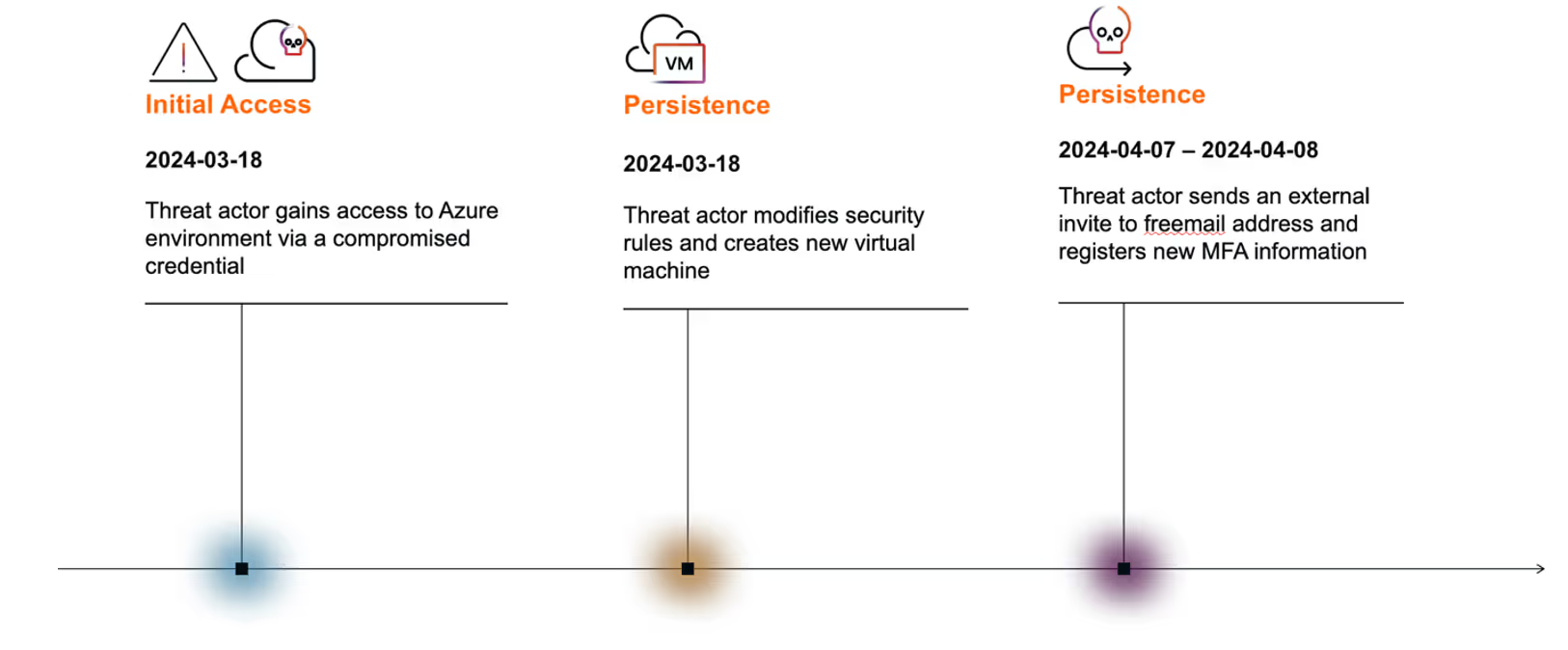
In early 2024, Darktrace identified a cloud compromise on the Azure cloud environment of a customer in the Europe, the Middle East and Africa (EMEA) region.
Initial access
In this case, a threat actor gained access to the customer’s cloud environment after stealing access tokens and creating a rogue virtual machine (VM). The malicious actor was found to have stolen access tokens belonging to a third-party external consultant’s account after downloading cracked software.
With these stolen tokens, the attacker was able to authenticate to the customer’s Azure environment and successfully modified a security rule to allow inbound SSH traffic from a specific IP range (i.e., securityRules/AllowCidrBlockSSHInbound). This was likely performed to ensure persistent access to internal cloud resources.
Detection and investigation of the threat
Darktrace / IDENTITY recognized that this activity was highly unusual, triggering the “Repeated Unusual SaaS Resource Creation” alert.
Cyber AI Analyst launched an autonomous investigation into additional suspicious cloud activities occurring around the same time from the same unusual location, correlating the individual events into a broader account hijack incident.
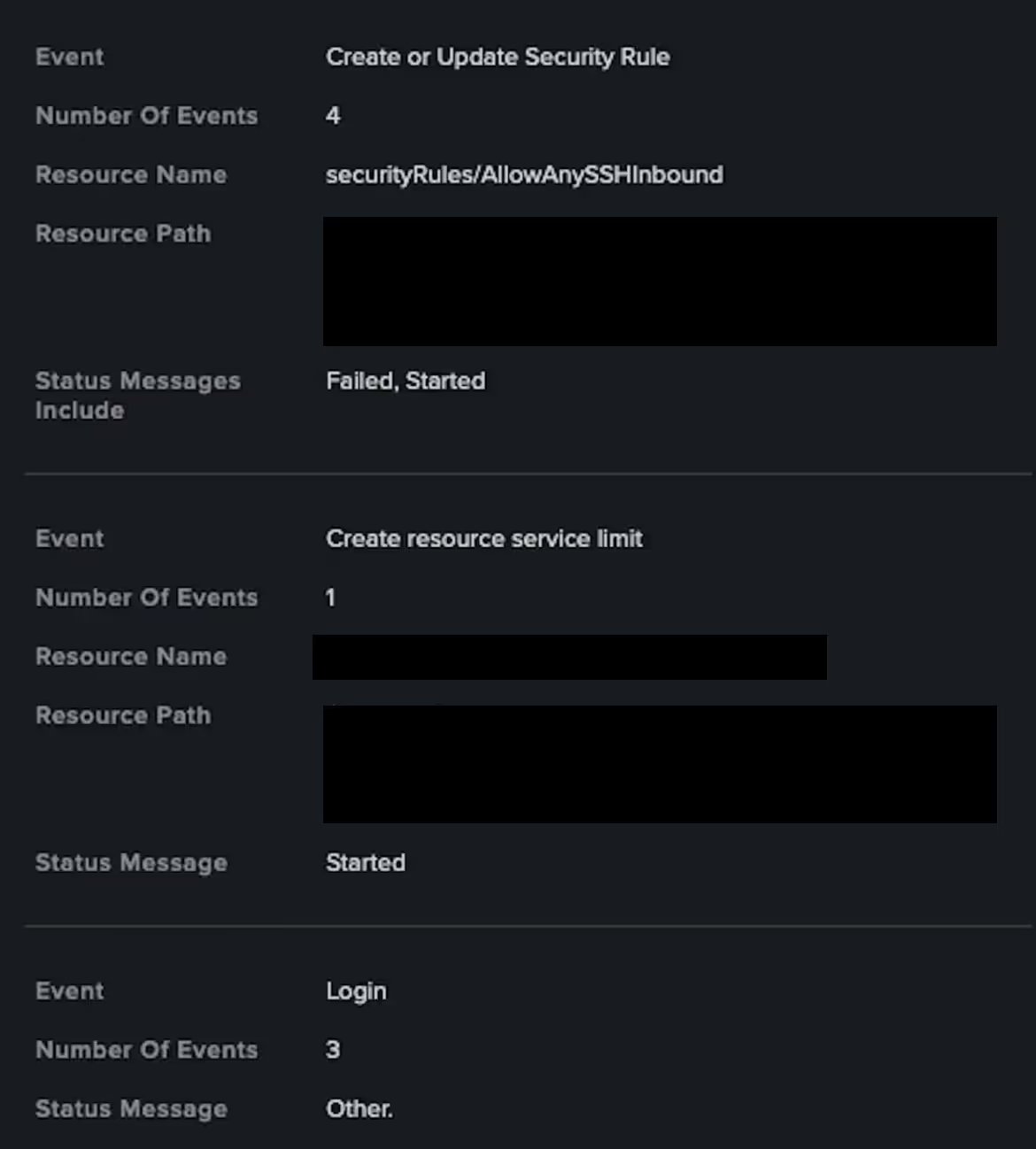
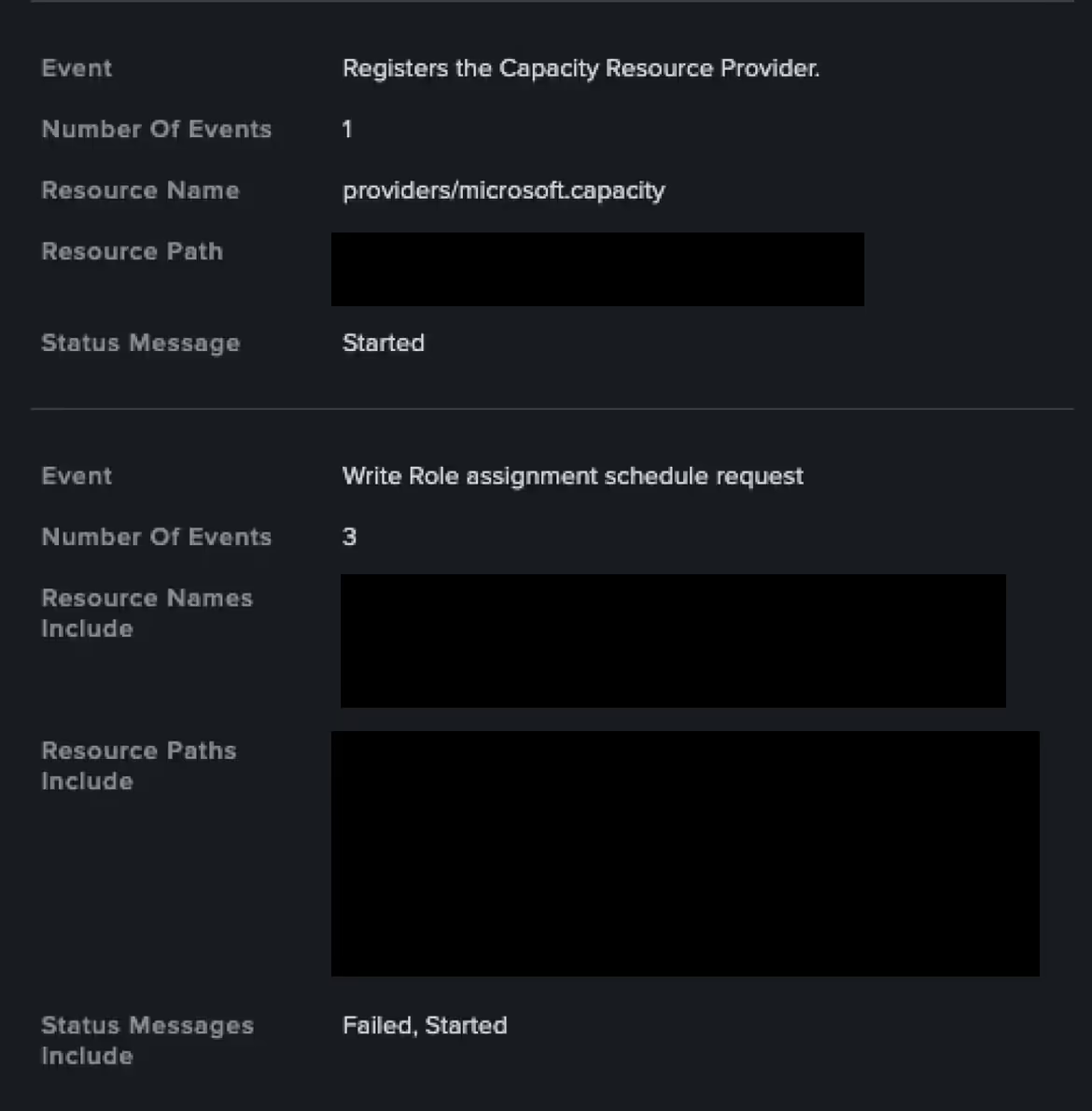
“Create resource service limit” events typically indicate the creation or modification of service limits (i.e., quotas) for a specific Azure resource type within a region. Meanwhile, “Registers the Capacity Resource Provider” events refer to the registration of the Microsoft Capacity resource provider within an Azure subscription, responsible for managing capacity-related resources, particularly those related to reservations and service limits. These events suggest that the threat actor was looking to create new cloud resources within the environment.
Around ten minutes later, Darktrace detected the threat actor creating or modifying an Azure disk associated with a virtual machine (VM), suggesting an attempt to create a rogue VM within the environment.
Threat actors can leverage such rogue VMs to hijack computing resources (e.g., by running cryptomining malware), maintain persistent access, move laterally within the cloud environment, communicate with command-and-control (C2) infrastructure, and stealthily deliver and deploy malware.
Persistence
Several weeks later, the compromised account was observed sending an invitation to collaborate to an external free mail (Google Mail) address.
Darktrace deemed this activity as highly anomalous, triggering a compliance alert for the customer to review and investigate further.
The next day, the threat actor further registered new multi-factor authentication (MFA) information. These actions were likely intended to maintain access to the compromised user account. The customer later confirmed this activity by reviewing the corresponding event logs within Darktrace.
Case 2 – Amazon Web Services
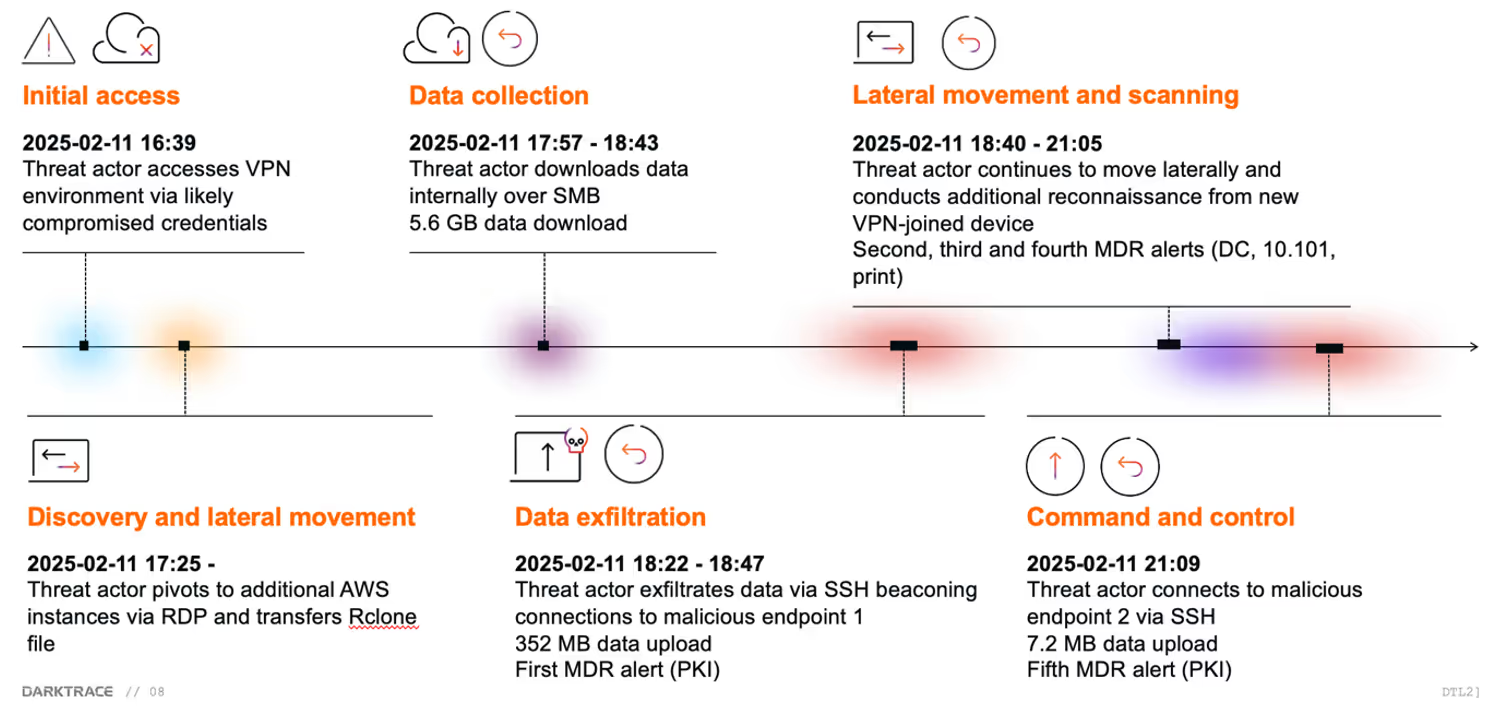
In February 2025, another cloud-based compromised was observed on a UK-based customer subscribed to Darktrace’s Managed Detection and Response (MDR) service.
How the attacker gained access
The threat actor was observed leveraging likely previously compromised credential to access several AWS instances within customer’s Private Cloud environment and collecting and exfiltrating data, likely with the intention of deploying ransomware and holding the data for ransom.
Darktrace alerting to malicious activity
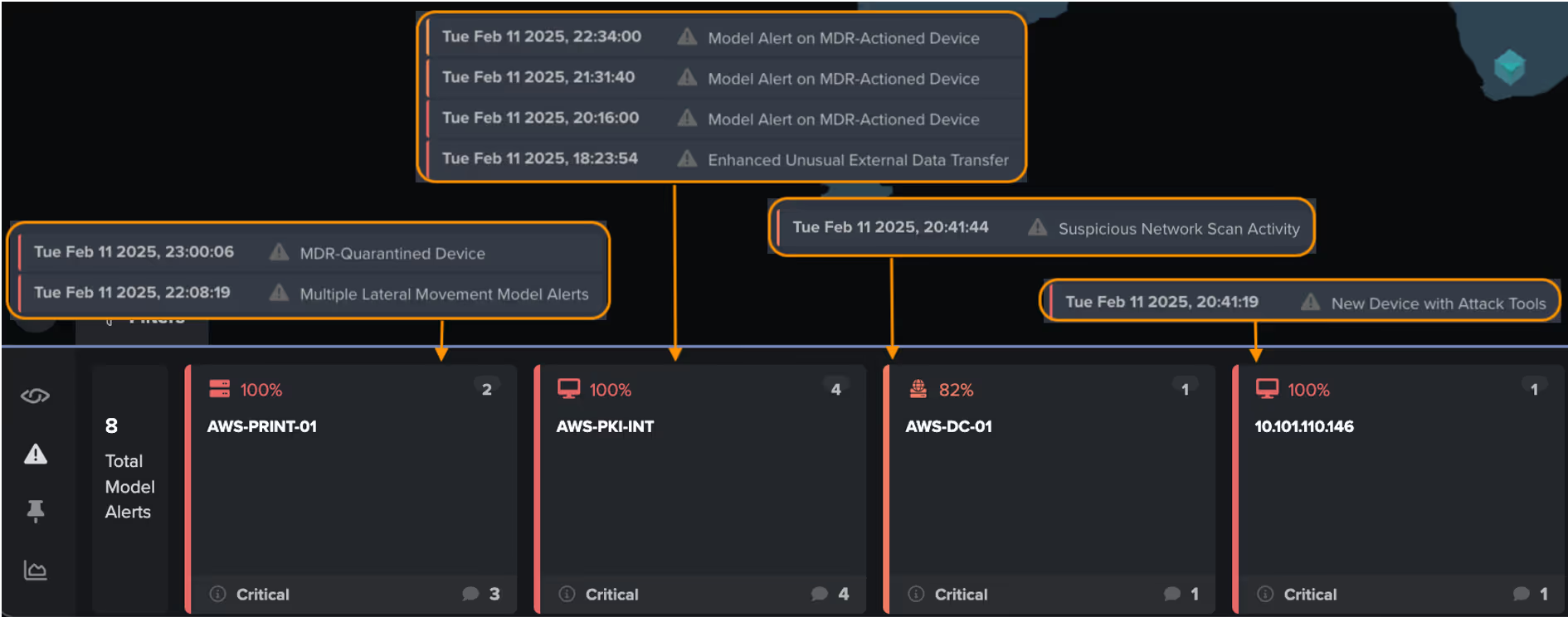
This observed activity triggered a number of alerts in Darktrace, including several high-priority Enhanced Monitoring alerts, which were promptly investigated by Darktrace’s Security Operations Centre (SOC) and raised to the customer’s security team.
The earliest signs of attack observed by Darktrace involved the use of two likely compromised credentials to connect to the customer’s Virtual Private Network (VPN) environment.
Internal reconnaissance
Once inside, the threat actor performed internal reconnaissance activities and staged the Rclone tool “ProgramData\rclone-v1.69.0-windows-amd64.zip”, a command-line program to sync files and directories to and from different cloud storage providers, to an AWS instance whose hostname is associated with a public key infrastructure (PKI) service.
The threat actor was further observed accessing and downloading multiple files hosted on an AWS file server instance, notably finance and investment-related files. This likely represented data gathering prior to exfiltration.
Shortly after, the PKI-related EC2 instance started making SSH connections with the Rclone SSH client “SSH-2.0-rclone/v1.69.0” to a RockHoster Virtual Private Server (VPS) endpoint (193.242.184[.]178), suggesting the threat actor was exfiltrating the gathered data using the Rclone utility they had previously installed. The PKI instance continued to make repeated SSH connections attempts to transfer data to this external destination.
Darktrace’s Autonomous Response
In response to this activity, Darktrace’s Autonomous Response capability intervened, blocking unusual external connectivity to the C2 server via SSH, effectively stopping the exfiltration of data.
This activity was further investigated by Darktrace’s SOC analysts as part of the MDR service. The team elected to extend the autonomously applied actions to ensure the compromise remained contained until the customer could fully remediate the incident.
Continued reconissance
Around the same time, the threat actor continued to conduct network scans using the Nmap tool, operating from both a separate AWS domain controller instance and a newly joined device on the network. These actions were accompanied by further internal data gathering activities, with around 5 GB of data downloaded from an AWS file server.
The two devices involved in reconnaissance activities were investigated and actioned by Darktrace SOC analysts after additional Enhanced Monitoring alerts had triggered.
Lateral movement attempts via RDP connections
Unusual internal RDP connections to a likely AWS printer instance indicated that the threat actor was looking to strengthen their foothold within the environment and/or attempting to pivot to other devices, likely in response to being hindered by Autonomous Response actions.
This triggered multiple scanning, internal data transfer and unusual RDP alerts in Darktrace, as well as additional Autonomous Response actions to block the suspicious activity.
Suspicious outbound SSH communication to known threat infrastructure
Darktrace subsequently observed the AWS printer instance initiating SSH communication with a rare external endpoint associated with the web hosting and VPS provider Host Department (67.217.57[.]252), suggesting that the threat actor was attempting to exfiltrate data to an alternative endpoint after connections to the original destination had been blocked.
Further investigation using open-source intelligence (OSINT) revealed that this IP address had previously been observed in connection with SSH-based data exfiltration activity during an Akira ransomware intrusion [1].
Once again, connections to this IP were blocked by Darktrace’s Autonomous Response and subsequently these blocks were extended by Darktrace’s SOC team.
The above behavior generated multiple Enhanced Monitoring alerts that were investigated by Darktrace SOC analysts as part of the Managed Threat Detection service.
Final containment and collaborative response
Upon investigating the unusual scanning activity, outbound SSH connections, and internal data transfers, Darktrace analysts extended the Autonomous Response actions previously triggered on the compromised devices.
As the threat actor was leveraging these systems for data exfiltration, all outgoing traffic from the affected devices was blocked for an additional 24 hours to provide the customer’s security team with time to investigate and remediate the compromise.
Additional investigative support was provided by Darktrace analysts through the Security Operations Service, after the customer's opened of a ticket related to the unfolding incident.
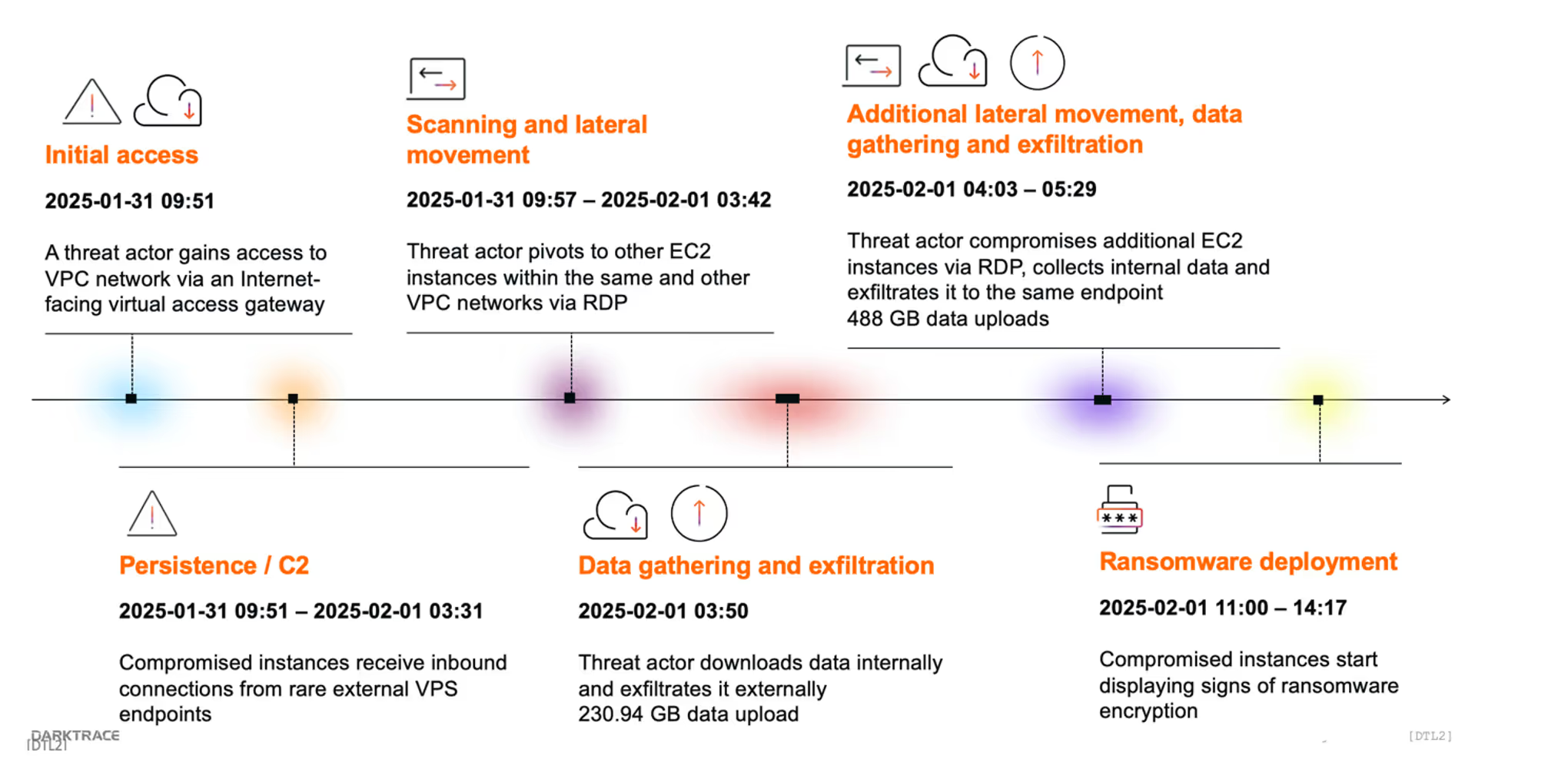
Around the same time of the compromise in Case 2, Darktrace observed a similar incident on the cloud environment of a different customer.
Initial access
On this occasion, the threat actor appeared to have gained entry into the AWS-based Virtual Private Cloud (VPC) network via a SonicWall SMA 500v EC2 instance allowing inbound traffic on any port.
The instance received HTTPS connections from three rare Vultr VPS endpoints (i.e., 45.32.205[.]52, 207.246.74[.]166, 45.32.90[.]176).
Lateral movement and exfiltration
Around the same time, the EC2 instance started scanning the environment and attempted to pivot to other internal systems via RDP, notably a DC EC2 instance, which also started scanning the network, and another EC2 instance.
The latter then proceeded to transfer more than 230 GB of data to the rare external GTHost VPS endpoint 23.150.248[.]189, while downloading hundreds of GBs of data over SMB from another EC2 instance.
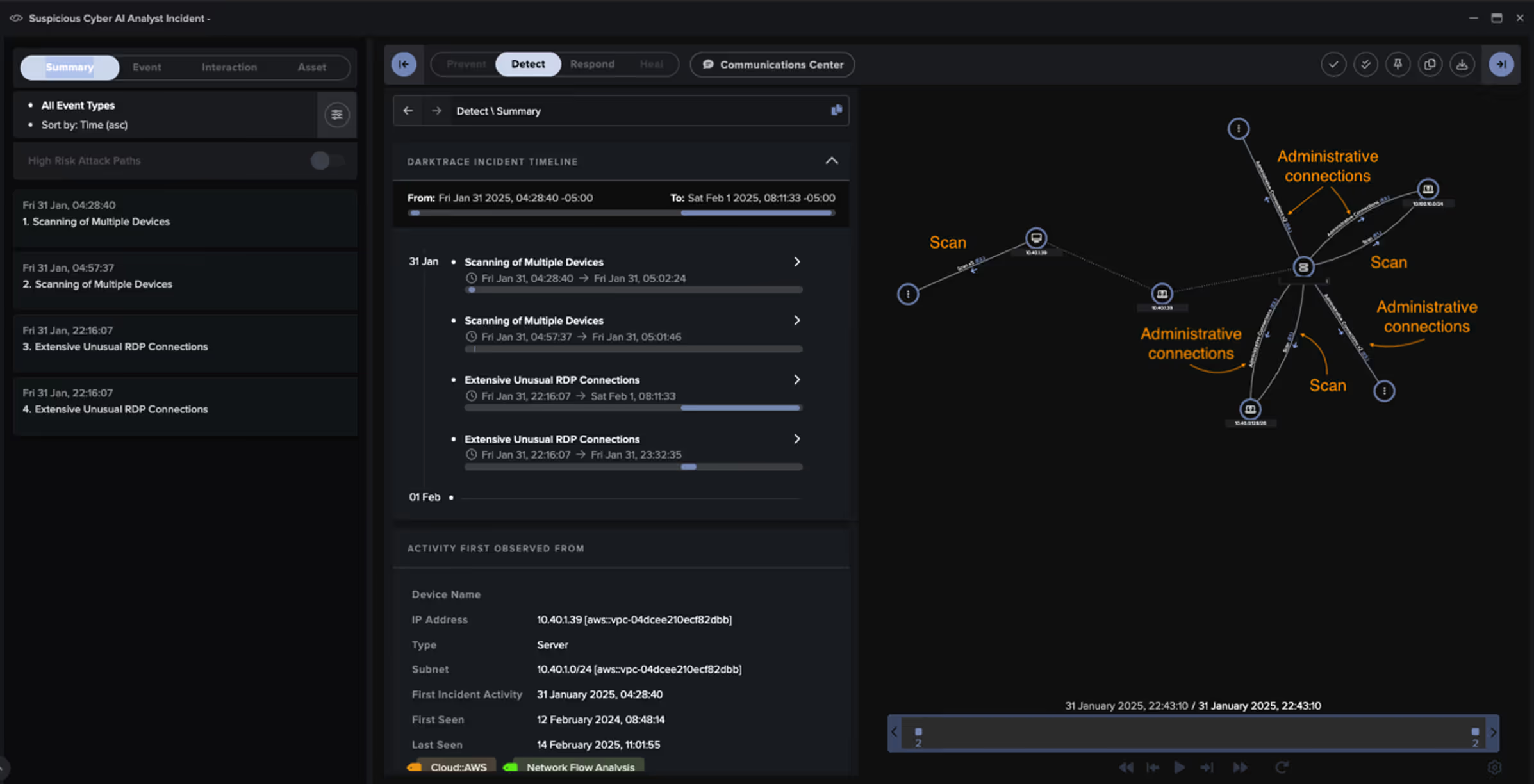
The same behavior was replicated across multiple EC2 instances, whereby compromised instances uploaded data over internal RDP connections to other instances, which then started transferring data to the same GTHost VPS endpoint over port 5000, which is typically used for Universal Plug and Play (UPnP).
What Darktrace detected
Darktrace observed the threat actor uploading a total of 718 GB to the external endpoint, after which they detonated ransomware within the compromised VPC networks.
This activity generated nine Enhanced Monitoring alerts in Darktrace, focusing on the scanning and external data activity, with the earliest of those alerts triggering around one hour after the initial intrusion.
Darktrace’s Autonomous Response capability was not configured to act on these devices. Therefore, the malicious activity was not autonomously blocked and escalated to the point of ransomware detonation.
Conclusion
This blog examined three real-world compromises in customer cloud environments each illustrating different stages in the attack lifecycle.
The first case showcased a notable progression from a SaaS compromise to a full cloud intrusion, emphasizing the critical role of anomaly detection when legitimate credentials are abused.
The latter two incidents demonstrated that while early detection is vital, the ability to autonomously block malicious activity at machine speed is often the most effective way to contain threats before they escalate.
Together, these incidents underscore the need for continuous visibility, behavioral analysis, and machine-speed intervention across hybrid environments. Darktrace's AI-driven detection and Autonomous Response capabilities, combined with expert oversight from its Security Operations Center, give defenders the speed and clarity they need to contain threats and reduce operational disruption, before the situation spirals.
Credit to Alexandra Sentenac (Senior Cyber Analyst) and Dylan Evans (Security Research Lead)
References
[1] https://www.virustotal.com/gui/ip-address/67.217.57.252/community
Case 1
Darktrace / IDENTITY model alerts
IaaS / Compliance / Uncommon Azure External User Invite
SaaS / Resource / Repeated Unusual SaaS Resource Creation
IaaS / Compute / Azure Compute Resource Update
Cyber AI Analyst incidents
Possible Unsecured AzureActiveDirectory Resource
Possible Hijack of Office365 Account
Case 2
Darktrace / NETWORK model alerts
Compromise / SSH Beacon
Device / Multiple Lateral Movement Model Alerts
Device / Suspicious SMB Scanning Activity
Device / SMB Lateral Movement
Compliance / SSH to Rare External Destination
Device / Anomalous SMB Followed By Multiple Model Alerts
Device / Anonymous NTLM Logins
Anomalous Connection / SMB Enumeration
Device / New or Uncommon SMB Named Pipe Device / Network Scan
Device / Suspicious Network Scan Activity
Device / New Device with Attack Tools
Device / RDP Scan Device / Attack and Recon Tools
Compliance / High Priority Compliance Model Alert
Compliance / Outgoing NTLM Request from DC
Compromise / Large Number of Suspicious Successful Connections
Device / Large Number of Model Alerts
Anomalous Connection / Multiple Failed Connections to Rare Endpoint
Unusual Activity / Internal Data Transfer
Anomalous Connection / Unusual Internal Connections
Device / Anomalous RDP Followed By Multiple Model Alerts
Unusual Activity / Unusual External Activity
Unusual Activity / Enhanced Unusual External Data Transfer
Unusual Activity / Unusual External Data Transfer
Unusual Activity / Unusual External Data to New Endpoint
Anomalous Connection / Multiple Connections to New External TCP Port
Darktrace / Autonomous Response model alerts
Antigena / Network / Significant Anomaly / Antigena Enhanced Monitoring from Server Block
Antigena / Network / Manual / Quarantine Device
Antigena / MDR / MDR-Quarantined Device
Antigena / MDR / Model Alert on MDR-Actioned Device
Antigena / Network / Significant Anomaly / Antigena Enhanced Monitoring from Client Block
Antigena / Network / Significant Anomaly / Antigena Alerts Over Time Block
Antigena / Network / Insider Threat / Antigena Network Scan Block
Antigena / Network / Significant Anomaly / Antigena Significant Server Anomaly Block
Antigena / Network / Insider Threat / Antigena SMB Enumeration Block
Antigena / Network / Significant Anomaly / Antigena Controlled and Model Alert
Antigena / Network / Significant Anomaly / Antigena Significant Anomaly from Client Block
Antigena / Network / External Threat / Antigena Suspicious Activity Block
Antigena / Network / Insider Threat / Antigena Internal Data Transfer Block
Cyber AI Analyst incidents
Possible Application Layer Reconnaissance Activity
Scanning of Multiple Devices
Unusual Repeated Connections
Unusual External Data Transfer
Case 3
Darktrace / NETWORK model alerts
Unusual Activity / Unusual Large Internal Transfer
Compliance / Incoming Remote Desktop
Unusual Activity / High Volume Server Data Transfer
Unusual Activity / Internal Data Transfer
Anomalous Connection / Unusual Internal Remote Desktop
Anomalous Connection / Unusual Incoming Data Volume
Anomalous Server Activity / Domain Controller Initiated to Client
Device / Large Number of Model Alerts
Anomalous Connection / Possible Flow Device Brute Force
Device / RDP Scan
Device / Suspicious Network Scan Activity
Device / Network Scan
Anomalous Server Activity / Anomalous External Activity from Critical Network Device
Anomalous Connection / Download and Upload
Unusual Activity / Unusual External Data Transfer
Unusual Activity / High Volume Client Data Transfer
Unusual Activity / Unusual External Activity
Anomalous Connection / Uncommon 1 GiB Outbound
Device / Increased External Connectivity
Compromise / Large Number of Suspicious Successful Connections
Anomalous Connection / Data Sent to Rare Domain
Anomalous Connection / Low and Slow Exfiltration to IP
Unusual Activity / Enhanced Unusual External Data Transfer
Anomalous Connection / Multiple Connections to New External TCP Port
Anomalous Server Activity / Outgoing from Server
Anomalous Connection / Multiple Connections to New External UDP Port
Anomalous Connection / Possible Data Staging and External Upload
Unusual Activity / Unusual External Data to New Endpoint
Device / Large Number of Model Alerts from Critical Network Device
Compliance / External Windows Communications
Anomalous Connection / Unusual Internal Connections
Cyber AI Analyst incidents
Scanning of Multiple Devices
Extensive Unusual RDP Connections
MITRE ATT&CK mapping
(Technique name – Tactic ID)
Case 1
Defense Evasion - Modify Cloud Compute Infrastructure: Create Cloud Instance
Persistence – Account Manipulation
Case 2
Initial Access - External Remote Services
Execution - Inter-Process Communication
Persistence - External Remote Services
Discovery - System Network Connections Discovery
Discovery - Network Service Discovery
Discovery - Network Share Discovery
Lateral Movement - Remote Desktop Protocol
Lateral Movement - Remote Services: SMB/Windows Admin Shares
Collection - Data from Network Shared Drive
Command and Control - Protocol Tunneling
Exfiltration - Exfiltration Over Asymmetric Encrypted Non-C2 Protocol
Case 3
Initial Access - Exploit Public-Facing Application
Discovery - Remote System Discovery
Discovery - Network Service Discovery
Lateral Movement - Remote Services
Lateral Movement - Remote Desktop Protocol
Collection - Data from Network Shared Drive
Collection - Data Staged: Remote Data Staging
Exfiltration - Exfiltration Over C2 Channel
Command and Control - Non-Standard Port
Command and Control – Web Service
Impact - Data Encrypted for Impact
List of IoCs
IoC Type Description + Probability
193.242.184[.]178 - IP Address - Possible Exfiltration Server
45.32.205[.]52 - IP Address - Possible C2 Infrastructure
45.32.90[.]176 - IP Address - Possible C2 Infrastructure
207.246.74[.]166 - IP Address - Likely C2 Infrastructure
67.217.57[.]252 - IP Address - Likely C2 Infrastructure
23.150.248[.]189 - IP Address - Possible Exfiltration Server



.jpeg)