Blog
/
Network
/
August 24, 2022

Detecting Unknown Ransomware: A Darktrace Case Study

Learn how Darktrace uncovered uncategorized ransomware threats in the Summer of 2021 with Darktrace SOC. Stay ahead of cyber threats with Darktrace technology.
Inside the SOC
Darktrace cyber analysts are world-class experts in threat intelligence, threat hunting and incident response, and provide 24/7 SOC support to thousands of Darktrace customers around the globe. Inside the SOC is exclusively authored by these experts, providing analysis of cyber incidents and threat trends, based on real-world experience in the field.
Written by
Emma Foulger
Global Threat Research Operations Lead
Default blog imageDefault blog imageDefault blog imageDefault blog imageDefault blog imageDefault blog image
24
Aug 2022

Uncategorized attacks happen frequently, with new threat groups and malware continually coming to light. Novel and known threat groups alike are changing their C2 domains, file hashes and other threat infrastructure, allowing them to avoid detection through traditional signature and rule-based techniques. Zero-day exploitation has also become increasingly apparent – a recent Mandiant report revealed that the number of identified zero-days in 2021 had dramatically increased from 2020 (80 vs 32). More specifically, the number of zero-days exploited by ransomware groups was, and continues to be, on an upward trend [1]. This trend appears to have continued into 2022. Given the unknown nature of these attacks, it is challenging to defend against them using traditional signature and rule-based approaches. Only those anomaly-based solutions functioning via deviations from normal behavior in a network, will effectively detect these threats. 

It is particularly important that businesses can quickly identify threats like ransomware before the end-goal of encryption is reached. As the variety of ransomware strains increases, so do the number which are uncategorized. Whilst zero-days have recently been explored in another Darktrace blog, this blog looks at an example of a sophisticated novel ransomware attack that took place during Summer 2021 which Darktrace DETECT/Network detected ahead of it being categorized or found on popular OSINT. This occurred within the network of an East African financial organization.
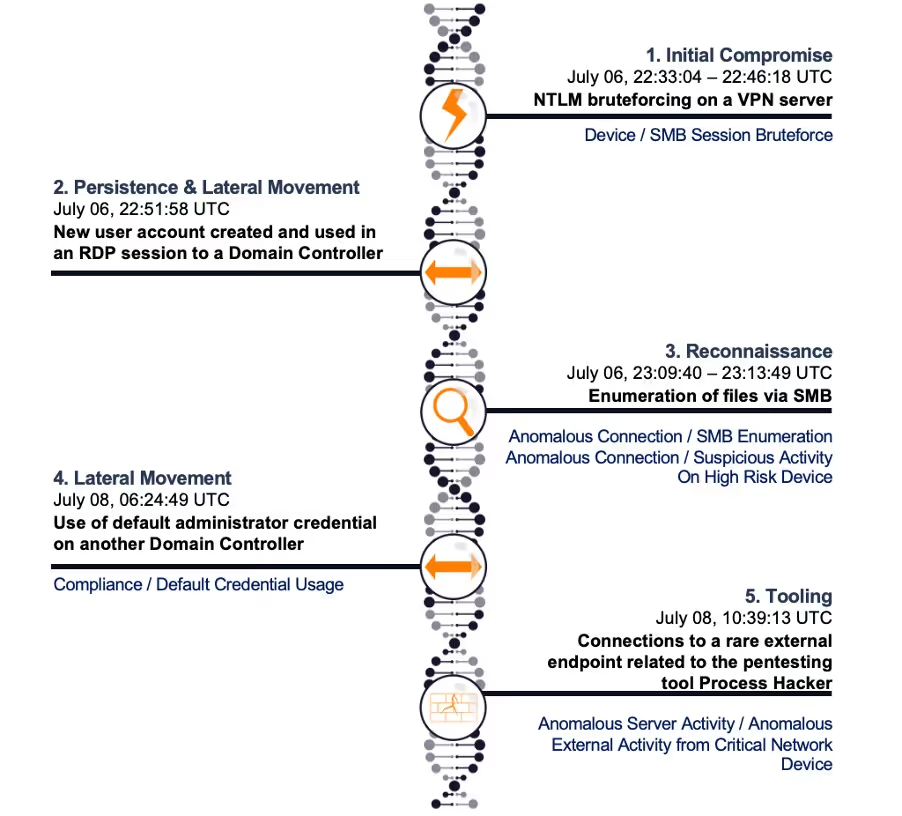
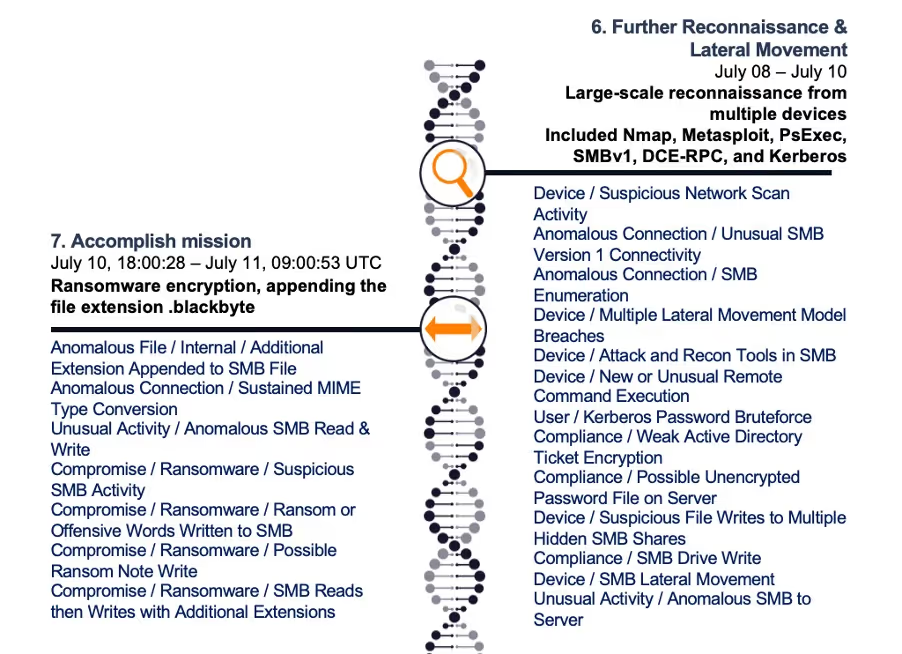
Figure 1- Timeline of (then-uncategorized) Blackbyte ransom attack 

On the 6th of July 2021, multiple user accounts were brute-forced on an external-facing VPN server via NTLM. Notably this included attempted logins with the generic account ‘Administrator’. Darktrace alerted to this initial bruteforcing activity, however as similar attempts had been made against the server before, it was not treated as a high-priority threat.

Following successful bruteforcing on the VPN, the malicious actor created a new user account which was then added to an administrative group on an Active Directory server. This new user account was subsequently used in an RDP session to an internal Domain Controller. Cyber AI Analyst picked up on the unusual nature of these administrative connections in comparison to normal activity for these devices and alerted on it (Figure 2).
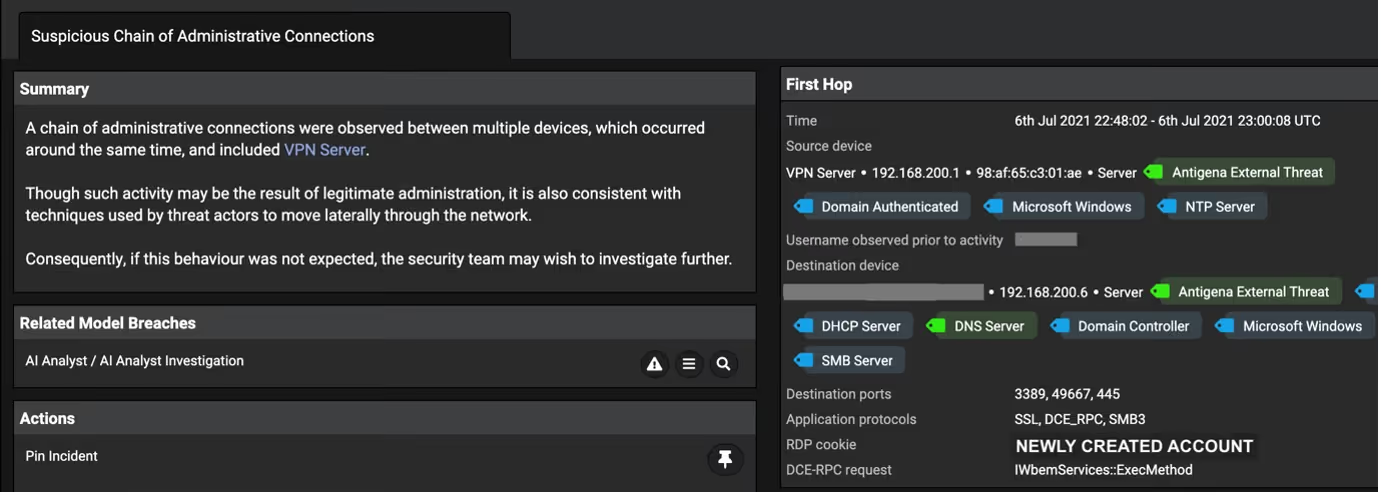
Figure 2: AI Analyst detected the suspicious nature of the initial lateral movement. RDP, DCE-RPC, and SMB connections were seen from the VPN server to the domain controller using the newly created account. Note: this screenshot is from DETECT/Network v.5

Less than 20 minutes later, significant reconnaissance began on the domain controller with the new credential. This involved SMB enumeration with various file shares accessed including sensitive files such as the Security Account Manager (samr). This was followed by a two-day period of downtime where the threat actor laid low. 

On the 8th of July, suspicious network behavior resumed – the default Administrator credential seen previously was also used on a second internal domain controller. Connections to a rare external IP were made by this device a few hours later. OSINT at the time suggested these connections may have been related to the use of penetration testing tools, in particular the tool Process Hacker [2].

Over the next two days reconnaissance and lateral movement activities occurred on a wider scale, originating from multiple network devices. A wide variety of techniques were used during this period: 

·      Exploitation of legitimate administrative services such as PsExec for remote command execution.

·      Taking advantage of legacy protocols still in use on the network like SMB version 1.

·      Bruteforcing login attempts via Kerberos.

·      The use of other penetration testing tools including Metasploit and Nmap. These were intended to probe for vulnerabilities.

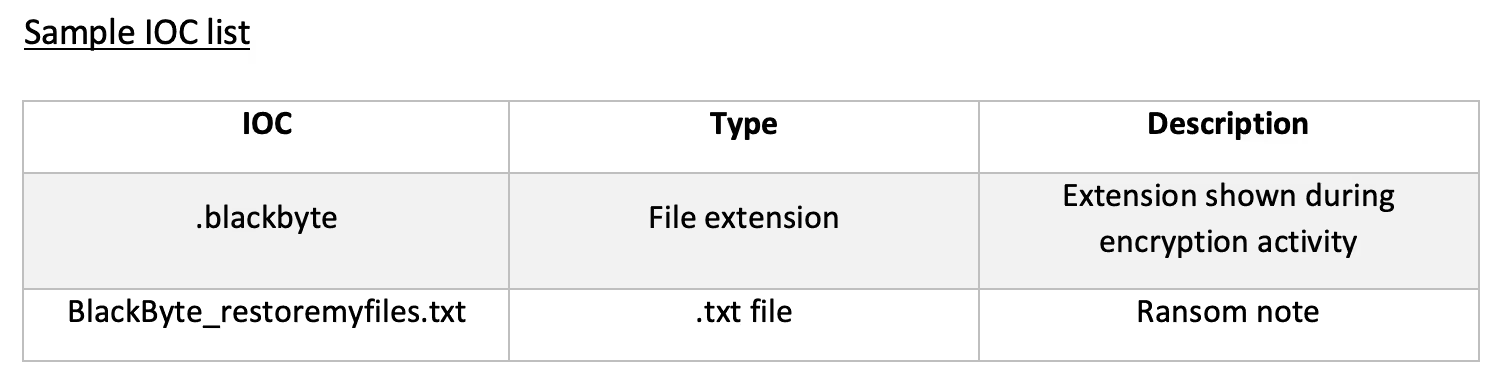
On the 10th of July, ransomware was deployed. File encryption occurred, with the extension ‘.blackbyte’ being appended to multiple files. At the time there were no OSINT references to this file extension or ransomware type, therefore any signature-based solution would have struggled to detect it. It is now apparent that BlackByte ransomware had only appeared a few weeks earlier and,  since then, the Ransomware-as-a-Service group has been attacking businesses and critical infrastructure worldwide [3]. A year later they still pose an active threat.

The use of living-off-the-land techniques, popular penetration testing tools, and a novel strain of ransomware meant the attackers were able to move through the environment without giving away their presence through known malware-signatures. Although a traditional security solution would identify some of these actions, it would struggle to link these separate activities. The lack of attribution, however, had no bearing on Darktrace’s ability to detect the unusual behavior with its anomaly-based methods. 

While this customer had RESPOND enabled at the time of this attack, its manual configuration meant that it was unable to act on the devices engaging in encryption. Nevertheless, a wide range of high-scoring Darktrace DETECT/Network models breached which were easily visible within the customer’s threat tray. This included multiple Enhanced Monitoring models that would have led to Proactive Threat Notifications (PTN) being alerted had the customer subscribed to the service. Whilst the attack was not prevented in this case, Darktrace analysts were able to give support to the customer via Ask the Expert (ATE), providing in-depth analysis of the compromise including a list of likely compromised devices and credentials. This helped the customer to work on post-compromise recovery effectively and ensured the ransomware had reduced impact within their environment. 

Conclusion 

While traditional security solutions may be able to deal well with ransomware that uses known signatures, AI is needed to spot new or unknown types of attack – a reliance on signatures will lead to these types of attack being missed.  

Remediation can also be far more difficult if a victim doesn’t know how to identify the compromised devices or credentials because there are no known IOCs. Darktrace model breaches will highlight suspicious activity in each part of the cyber kill chain, whether involving a known IOC or not, helping the customer to efficiently identify areas of compromise and effectively remediate (Figure 3).  
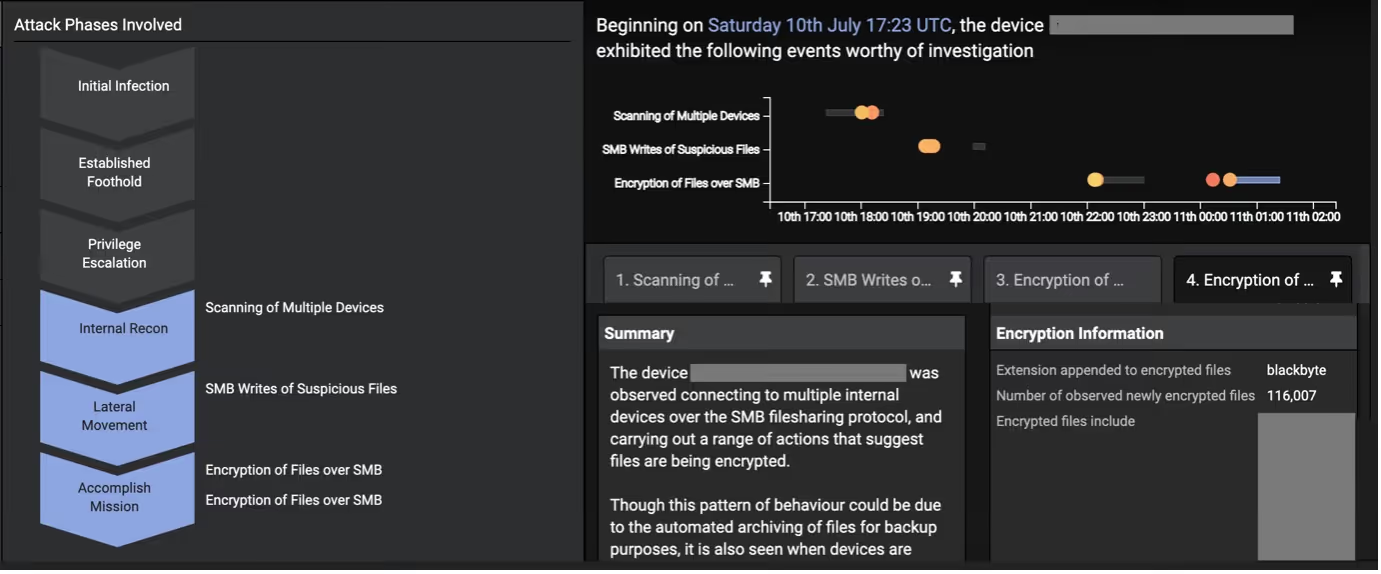
Figure 3: An example of the various stages of the attack on one of the compromise servers being identified by Cyber AI Analyst. Note: this screenshot is from DETECT/Network v.5 

As long as threat actors continue to develop new methods of attack, the ability to detect uncategorized threats is required. As demonstrated above, Darktrace’s anomaly-based approach lends itself perfectly to detecting these novel or uncategorized threats. 

Thanks to Max Heinemeyer for his contributions to this blog.

Appendices

Model Breaches

·      Anomalous Connection / SMB Enumeration

·      Anomalous Connection / Suspicious Activity On High Risk Device

·      Anomalous Server Activity / Anomalous External Activity from Critical Network Device

·      Compliance / Default Credential Usage

·      Device / SMB Session Bruteforce

·      Anomalous Connection / Sustained MIME Type Conversion

·      Anomalous Connection / Unusual SMB Version 1 Connectivity

·      Anomalous File / Internal / Additional Extension Appended to SMB File

·      Compliance / Possible Unencrypted Password File on Server

·      Compliance / SMB Drive Write

·      Compliance / Weak Active Directory Ticket Encryption

·      Compromise / Ransomware / Possible Ransom Note Write

·      Compromise / Ransomware / Ransom or Offensive Words Written to SMB

·      Compromise / Ransomware / SMB Reads then Writes with Additional Extensions

·      Compromise / Ransomware / Suspicious SMB Activity

·      Device / Attack and Recon Tools in SMB

·      Device / Multiple Lateral Movement Model Breaches

·      Device / New or Unusual Remote Command Execution

·      Device / SMB Lateral Movement

·      Device / Suspicious File Writes to Multiple Hidden SMB Shares

·      Device / Suspicious Network Scan Activity

·      Unusual Activity / Anomalous SMB Read & Write

·      Unusual Activity / Anomalous SMB to Server

·      User / Kerberos Password Bruteforce
References

[1] https://www.mandiant.com/resources/zero-days-exploited-2021

[2] https://www.virustotal.com/gui/ip-address/162.243.25.33/relations

[3] https://www.zscaler.com/blogs/security-research/analysis-blackbyte-ransomwares-go-based-variants

Inside the SOC
Darktrace cyber analysts are world-class experts in threat intelligence, threat hunting and incident response, and provide 24/7 SOC support to thousands of Darktrace customers around the globe. Inside the SOC is exclusively authored by these experts, providing analysis of cyber incidents and threat trends, based on real-world experience in the field.
Written by
Emma Foulger
Global Threat Research Operations Lead

More in this series

No items found.

Blog

/

Email

/

December 3, 2025

Darktrace Named as a Leader in 2025 Gartner® Magic Quadrant™ for Email Security Platforms

Default blog imageDefault blog image

Darktrace is proud to be named as a Leader in the Gartner® Magic Quadrant™ for Email Security Platforms (ESP). We believe this recognition reflects what our customers already know: our product is exceptional – and so is the way we deliver it.

In July 2025, Darktrace was named a Customers’ Choice in the Gartner® Peer Insights™ Voice of the Customer for Email Security, a distinction given to vendors who have scores that meet or exceed the market average for both axes (User Interest and Adoption, and Overall Experience). To us, both achievements are testament to the customer-first approach that has fueled our rapid growth. We feel this new distinction from Gartner validates the innovation, efficacy, and customer-centric delivery that set Darktrace apart.

A Gartner Magic Quadrant is a culmination of research in a specific market, giving you a wide-angle view of the relative positions of the market’s competitors. CIOs and CISOs can use this research to make informed decisions about which email security platform can best accomplish their goals. We encourage our customers to read the full report to get the complete picture.

This acknowledgement follows the recent recognition of Darktrace / NETWORK, also designated a Leader in the Gartner Magic Quadrant for Network Detection & Response and named the only Customers’ Choice in its category.

Why do we believe Darktrace is leading in the email security market?

Our relentless innovation which drives proven results  

At Darktrace we continue to push the frontier of email security, with industry-first AI-native detection and response capabilities that go beyond traditional SEG approaches. How do we do it?

  • With a proven approach that gets results. Darktrace’s unique business-centric anomaly detection catches advanced phishing, supply chain compromises, and BEC attacks – detecting them on average 13 days earlier than attack-centric solutions. That’s why 75% of our customers have removed their SEG and now rely on their native email security provider combined with Darktrace.
  • By offering comprehensive protection beyond the inbox. Darktrace / EMAIL goes further than traditional inbound filtering, delivering account and messaging protection, DLP, and DMARC capabilities, ensuring best-in-class security across inbound, outbound, and domain protection scenarios.  
  • Continuous innovation. We are ranked second highest in the Gartner Critical Capabilities research for core email security function, likely thanks to our product strategy and rapid pace of innovation. We’ve release major capabilities twice a year for nearly five years, including advanced AI models and expanded coverage for collaboration platforms.

We deliver exceptional customer experiences worldwide

Darktrace’s leadership isn’t just about excelling in technology, it’s about delivering an outstanding experience that customers value. Let’s dig into what makes our customers tick.

  • Proven loyalty from our base. Recognition from Gartner Peer Insights as a Customers’ Choice, combined with a 4.8-star rating (based on 340 reviews as of November 2025), demonstrates for us the trust of thousands of organizations worldwide, not just the analysts.  
  • Customer-first support. Darktrace goes beyond ticket-only models with dedicated account teams and award-winning service, backed by significant headcount growth in technical support and analytics roles over the past year.
  • Local expertise. With offices spanning continents, Darktrace is able to provide regional language support and tailored engagement from teams on the ground, ensuring personalized service and a human-first experience.

Darktrace enhances security stacks with a partner-first architecture

There are plenty of tools out there than encourage a siloed approach. Darktrace / EMAIL plays well with others, enhancing your native security provider and allowing you to slim down your stack. It’s designed to set you up for future growth, with:

  • A best-in-breed platform approach. Natively built on Self-Learning AI, Darktrace / EMAIL delivers deep integration with our / NETWORK, / IDENTITY, and / CLOUD products as part of a unified platforms – that enables and enhances comprehensive enterprise-wise security.
  • Optimized workflows. Darktrace integrates tightly with an extended ecosystem of security tools – including a strategic partnership with Microsoft enabling unified threat response and quarantine capabilities – bringing constant innovation to all of your SOC workflows.  
  • A channel-first strategy. Darktrace is making significant investments in partner-driven architectures, enabling integrated ecosystems that deliver maximum value and future-ready security for our customers.

Analyst recognized. Customer approved.  

Darktrace / EMAIL is not just another inbound email security tool; it’s an advanced email security platform trusted by thousands of users to protect them against advanced phishing, messaging, and account-level attacks.  

As a Leader, we believe we owe our positioning to our customers and partners for supporting our growth. In the upcoming years we will continue to innovate to serve the organizations who depend on Darktrace for threat protection.  

To learn more about Darktrace’s position as a Leader, view a complimentary copy of the Magic Quadrant report, register for the Darktrace Innovation Webinar on 9 December, 2025, or simply request a demo.

Gartner, Gartner® Magic Quadrant™ for Email Security Platforms, Max Taggett, Nikul Patel, 3 December 2025

GARTNER is a registered trademark and service mark of Gartner, Inc. and/or its affiliates in the U.S. and internationally and is used herein with permission. All rights reserved. Magic Quadrant is a registered trademark of Gartner, Inc. and/or its affiliates and is used herein with permission. All rights reserved.

Gartner does not endorse any vendor, product or service depicted in its research publications, and does not advise technology users to select only those vendors with the highest ratings or other designation. Gartner research publications consist of the opinions of Gartner’s research organization and should not be construed as statements of fact. Gartner disclaims all warranties, expressed or implied, with respect to this research, including any warranties of merchantability or fitness for a particular purpose.

This graphic was published by Gartner, Inc. as part of a larger research document and should be evaluated in the context of the entire document. The Gartner document is available upon request from Darktrace.

[related-resource]

Continue reading
About the author
Carlos Gray
Senior Product Marketing Manager, Email

Blog

/

/

December 2, 2025

Protecting the Experience: How a global hospitality brand stays resilient with Darktrace

Default blog imageDefault blog image

For the Global Chief Technology Officer (CTO) of a leading experiential leisure provider, security is mission critical to protecting a business built on reputation, digital innovation, and guest experience. The company operates large-scale immersive venues across the UK and US, blending activity-driven hospitality with premium dining and vibrant spaces designed for hundreds of guests. With a lean, centrally managed IT team responsible for securing locations worldwide, the challenge is balancing robust cybersecurity with operational efficiency and customer experience.

Brand buzz attracts attention – and attacks

Mid-sized, fast-growing hospitality organizations face a unique risk profile. When systems go down in a venue, the impact is immediate: hundreds of disrupted guest experiences, lost revenue during peak hours, and potential long-term reputation damage. Each time the organization opened a new venue, the surge of marketing buzz attracted attention in local markets and waves of sophisticated cyberattacks, including:

Phishing campaigns leveraging brand momentum to lure employees into clicking on malicious links.

AI-enhanced impersonation using advanced techniques to create AI-generated video calls and deep-researched, contextualized emails  

Fake domains targeting leadership with AI-generated messages that contained insider context gleaned from public information.

“Our endpoint security and antivirus tools were powerless against these sophisticated AI-powered campaigns. We didn’t want to manage incidents anymore. We wanted to prevent them from ever happening.”  - Global CTO

Proactive, preventative security with Darktrace AI

The company’s cybersecurity vision was clear: “Proactive, preventative – that was our mandate,” said the CTO. With a lean and busy IT group, the business evaluated several security solutions using deep-dive workshops. Darktrace proved the best fit for supporting the organization’s proactive mindset, offering:

  • Autonomy without added headcount: Darktrace provided powerful AI-driven detection and autonomous response functions with minimal manual oversight required.
  • Modular adoption: The company could start with core email and network protection and expand into cloud and endpoint coverage, aligning spend with growth.
  • Partnership and responsiveness: “We wanted people we trust, respect, and know will show up when we need them. Darktrace did just that,” said the CTO.
  • Affordability at scale: Darktrace offered reasonable upfront costs plus predictable, sustainable economics as the company and IT infrastructure expanded.  

“The combination of AI capabilities, a scalable model, and a strong engagement team tipped the balance in Darktrace’s favor, and we have not been disappointed,” said the CTO.

Phased deployment builds trust

To minimize disruption to critical hospitality systems like global Point of Sales (POS) terminals and Audio-Visual (AV) infrastructure, deployment was phased:

  1. Observation and human-led response: Initially, Darktrace was deployed in detection-only mode. Alerts were manually reviewed.
  2. Incremental autonomous response: Darktrace Autonomous Response was enabled on select models, taking action on low-risk scenarios. Higher-risk subnets and devices remained under human control.
  3. Full autonomous coverage: With tuning and reinforcement, autonomous response was expanded across domains, trusted to take decisive action in real time. Analysts retained the ability to review and contextualize incidents.

“Darktrace managed the rollout through detailed, professional, and responsive project management – ensuring a smooth, successful adoption and creating a standardized cybersecurity playbook for future venue launches,” said the CTO.  

AI delivers the outcomes that matter  

Measurable efficiency replaces endless alerts

Darktrace autonomous response significantly decreased false alerts and noise. “If it’s quiet, we’re confident there isn’t a problem,” said the CTO. Within six months, Darktrace conducted 3,599 total investigations, detected and contained 320 incidents indicative of an attack, resolved 91% of those events autonomously, and escalated only 9% to human analysts. The efficiency gains were enormous, saving analysts 740 hours on investigations within a single month.  

Precision AI turns inbox chaos into calm

Darktrace Self-Learning AI modeled sender/recipient norms, content/linguistic baselines, and communication patterns unique to the organization’s launch cadence, resulting in:

  • Automated holds and neutralizations of anomalous executive-style messages
  • Rapid detection of novel templates and tone shifts that deviated from the organization’s lived email graph, even when indicators were not yet on any feed
  • Downstream reduction in help-desk escalations tied to suspicious email

Full visibility fuels real-time response

Darktrace gives IT direct visibility without extra licensing, and it surfaces ground truth across every venue, including:

  • Device geolocation and placement drift: Darktrace exposed devices and users operating outside approved zones, prompting new segmentation and access-control policies.
  • Guest Wi-Fi realities: Darktrace AI uncovered high-risk activity on guest networks, like crypto-mining and dark-web traffic, driving stricter VLAN separation and access hygiene.
  • Lateral-movement containment: Autonomous response fenced suspicious activity in real time, buying time for human investigation while keeping POS and AV systems unaffected.

Smarter endpoints for a smarter network

Endpoints once relied on static agents effective only against known signatures. Darktrace’s behavioral models now detect subtle anomalies at the endpoint process level that EDRs often miss, such as misuse of legitimate applications (commonly used in living-off-the-land attacks), unapproved application usage and policy violations. This increases the accuracy and fidelity of network-based investigations by adding endpoint process context alongside existing EDR alerts.

Autonomous response for continuous compliance

Across PCI, GDPR, and cross-border privacy obligations, Darktrace’s native evidencing is helping the team demonstrate control rather than merely assert it:

  • Asset and flow awareness: Knowing “what is where” and “who talks to what” underpins PCI scoping and data-flow diagrams.
  • Layered safeguards: Showing autonomous prevention, network segmentation, and rapid containment supports risk registers and control attestations.
  • Audit-ready artifacts: Investigations and autonomous actions produce artifacts that “tick the box” without additional tooling.  

Defining the next era of resilience with AI

With rapid global expansion underway, the company is using its cybersecurity playbook to streamline and secure future venue launches. In the near term, IT is focused on strengthening prevention, using Darktrace insights to guide new policy updates and infrastructure changes like imposing stricter guest-network posture and refining venue device baselines.

For tech leaders charting their path to proactive cyber defense, the CTO stresses success won’t come from sidestepping AI, but from turning it into a core capability.

“AI isn’t optional – it’s operational. The real risk to your business is trying to out-scale automated adversaries with human speed alone. When applied to the right use case, AI becomes a catalyst for efficiency, resilience, and business growth.” - Global CTO
Continue reading
About the author
The Darktrace Community
Your data. Our AI.
Elevate your network security with Darktrace AI