Cadre de gouvernance de l’IA
AI Governance Framework
Artificial intelligence is no longer a future concept but a core business enabler. It's also a new frontier for cyber-attacks. Enterprises are rapidly adopting AI to drive efficiency, yet this widespread adoption creates a critical challenge for security leaders. Organizations must learn how to harness the power of AI for defense without losing control or introducing unacceptable risk.
The solution lies in establishing structured oversight and clear guardrails through an AI governance framework. Understanding why this approach is essential for cyber resilience, how it works, and the important factors that go into building a robust governance strategy can help your security team deploy AI-based tools more safely and effectively.
What is an AI governance framework?
An AI governance framework is a comprehensive system of policies, processes, standards, and tools designed to ensure an organization's use of AI is secure, ethical, transparent, and accountable.
A comprehensive AI governance framework defines who is responsible for AI decisions, how risks are assessed and mitigated, and what controls must be in place to prevent misuse or unintended consequences.
What is the difference between an AI governance framework and an AI usage policy?
While often used interchangeably, an AI governance framework and an AI usage policy serve distinct purposes within an organization's AI strategy.
AI governance framework
An AI governance framework differs from a basic usage policy in focus, audience, and scope. A governance framework outlines the comprehensive strategy and controls for managing AI throughout its entire life cycle across the business, from development to deployment and monitoring.
The actionable guidance within a framework ensures AI initiatives align with organizational goals and ethical guidelines. Security, legal, compliance, and leadership teams who are responsible for strategic oversight and risk management typically implement and use this type of framework.
An AI governance framework's scope encompasses high-level aspects such as overall AI strategy, risk management protocols, and accountability structures within the organization. Often presented as a structured model, an AI governance framework provides a systematic approach to integrating AI responsibly into business operations.
AI usage policy
An AI usage policy is more of a basic guideline for what is allowed and prohibited when using AI systems and tools. This simple set of rules and procedures concentrates on individuals' practical, day-to-day use of AI tools within the organization, focusing on specific actions, restrictions, and behaviors. Usage policies are primarily for employees, developers, and contractors who use AI tools in their daily work.
Why a governance framework is essential for cyber resilience
Ungoverned AI expands the attack surface, creating new vulnerabilities that adversaries can exploit, such as data poisoning and model evasion attacks. Biased decision-making or skewed algorithms can lead to false positives or negatives, while a lack of transparency hinders incident response and erodes stakeholder trust.
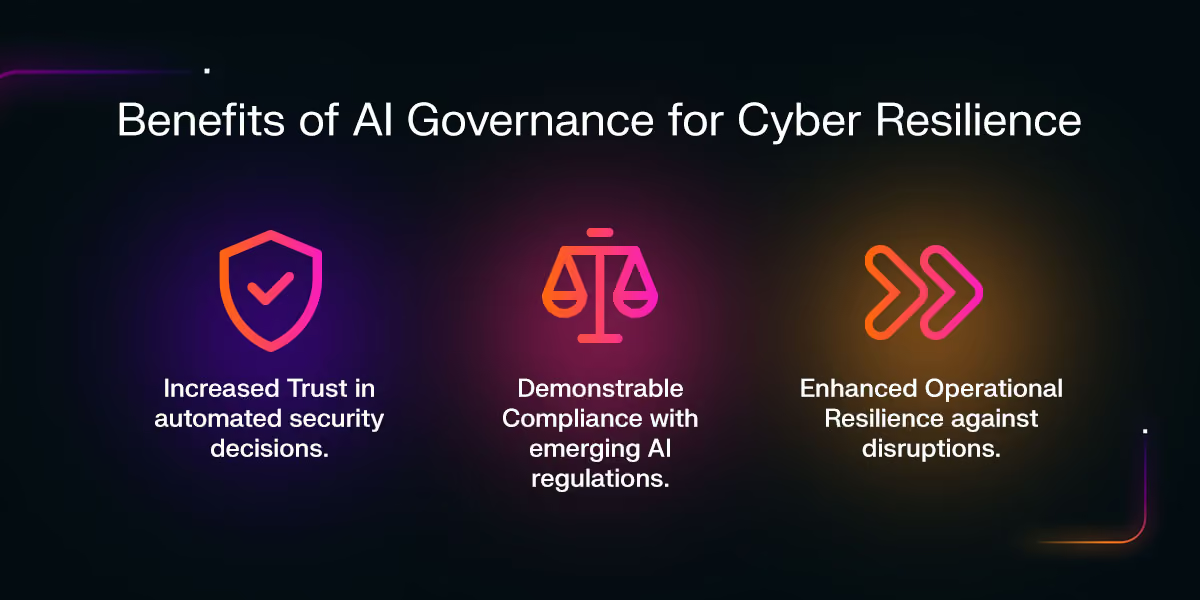
A governance framework offers critical advantages for security operations, including increased trust in automated security decisions, demonstrable compliance with emerging regulations, and enhanced operational resilience. This framework strategy fosters confidence in AI systems by ensuring their reliability, fairness, and security through documented validation and ongoing monitoring. It also provides the necessary structure and documentation to prove adherence to new laws and standards governing AI, which reduces legal and regulatory risk.
By proactively managing AI risks, a framework helps maintain continuous and robust security operations against potential disruptions from compromised or malfunctioning AI systems.
The core pillars of effective AI governance frameworks
Building a successful AI governance framework requires attention to several interconnected components.
Security, robustness, and resilience
Protecting AI models from adversarial attacks such as evasion, poisoning, and model inversion is fundamental to any governance framework. Adversaries increasingly target AI systems, attempting to manipulate training data, exploit model weaknesses, or extract sensitive information from deployed models.
Ensuring model integrity and maintaining performance even when faced with novel or unexpected risks requires continuous validation and security monitoring tailored to AI-specific attack vectors.
Transparency and explainability
Security analysts must understand the reasoning behind an AI's decisions to effectively troubleshoot anomalies, detect attacks, and respond appropriately. AI often presents a "black box" challenge when complex machine learning models, especially deep neural networks, arrive at decisions through opaque internal processes.
Without transparency into how specific features or data points influenced a particular output, analysts cannot identify vulnerabilities or validate that the AI is functioning as intended. Explainability enables your organization to justify AI-driven actions to stakeholders and regulatory bodies, building the trust and accountability necessary for broader AI adoption.
Data governance and privacy
AI models are fundamentally dependent on the quality and integrity of the data they use. Poor data quality, incomplete datasets, or compromised training data can undermine even the most sophisticated algorithms.
Data provenance, secure data pipelines, and strict access controls for both training and operational data are vital for maintaining data privacy and model reliability. An AI governance framework should protect privacy and handle Personally Identifiable Information (PII) in accordance with regulations such as GDPR, ensuring that data collection, storage, and usage meet legal and ethical standards.
Fairness and bias mitigation
Algorithmic bias can negatively impact security outcomes. A biased model could create false positives by unfairly flagging traffic from certain regions, or create false negatives by overlooking novel attack patterns not present in its training data.
Ongoing testing is essential for identifying and mitigating harmful bias before it affects production systems. Regular audits of model outputs, diverse training datasets, and bias detection tools help ensure AI systems make fair and accurate decisions.
Accountability and compliance
An organization's AI governance framework should establish clear human oversight and lines of responsibility for the actions an AI system takes. When an AI-driven security decision affects business operations, there must be designated individuals accountable for reviewing, approving, or overriding those decisions.
Aligning the entire framework with key regulatory standards and guidelines such as the NIST AI Risk Management Framework, Cybersecurity Framework (CSF) 2.0, and the EU AI Act is vital for demonstrating compliance and managing legal risk.
Understanding the basics of the AI governance framework development process
Building and implementing an AI governance framework development process requires a phased approach. Consider the following general best practices as you start developing your framework.
Phase 1: Assess and scope
The initial phase is a discovery and inventory effort. Organizations must identify and catalog all AI systems currently in use or planned for deployment. It's important to categorize AI systems into two domains, identifying each one as internal or external.
Internal defensive AI systems deploy within an organization to enhance security operations, detect threats, and protect internal assets. External workforce AI systems are AI tools or applications that augment human employees by automating tasks, assisting with decision-making, or improving productivity in external-facing roles.
Phase 2: Design and implement
Next, create distinct policies for each domain, such as acceptable use policies for workforce AI and operational parameters for defensive AI. Each category has unique risk profiles and requires tailored controls.
Technical controls can provide visibility into all AI usage and enforce policies across the enterprise. This might include monitoring tools that track AI API calls, data access logging, and automated policy enforcement mechanisms that prevent unauthorized AI deployments.
Phase 3: Monitor and adapt
Governance is an ongoing, cyclical process that requires continuous attention. As AI capabilities evolve and new threats emerge, frameworks must adapt to remain effective.
Monitoring must cover both the behavior of internal AI systems and the evolving landscape of external AI tools that the workforce uses. An AI contextual governance framework must dynamically adapt to new risks and technologies, incorporating lessons learned from incidents and adjusting policies based on changing regulatory requirements and business needs.
Learn more about AI governance
In an era where AI tools expand attack surfaces and introduce new vulnerabilities, an effective AI governance framework is a prerequisite for cyber resilience. Building a comprehensive framework ensures that AI is leveraged safely, ethically, and effectively, turning a potential liability into your greatest asset in cyber defense.
Learn more about responsible AI adoption in Darktrace's guide to implementing AI responsibly in cybersecurity environments.