What is data center cybersecurity?
Much of the conversation surrounding the data center boom has focused on power generation, cooling efficiency and water resources, construction, and compute capacity. In addition, cybersecurity has quietly become one of the most critical operational concerns as modern data centers are becoming some of the most operationally complex networked environments.
The more connected data center environments become, the larger and more dynamic their attack surface grows. What makes data center security particularly challenging is that they no longer resemble traditional enterprise IT environments alone. Instead, they operate like critical infrastructure facilities
Challenges of securing data centers
What makes these environments complicated is that the technologies responsible for keeping them operational: power distribution, cooling systems, airflow management, environmental controls, surveillance, and physical access management, all rely heavily on Operational Technology (OT), Industrial IoT (IIoT), and IoT systems alongside traditional IT infrastructure.
Programmable logic controllers (PLCs), building management systems (BMS), energy management systems (EMS), surveillance cameras, access control platforms, virtualization infrastructure, engineering workstations, contractor laptops, and cloud-connected orchestration systems now coexist within the same environment. Many are connected through routable networks, managed remotely, and accessed by 3rd party OEMs or System Integrators.
Why modern data center infrastructure faces increasing cyber risk
The challenge is not simply that there are more devices. It is that these IT, OT and IOT systems and devices are now deeply interconnected in ways that blur the boundaries between operational and enterprise infrastructure.
OT systems responsible for cooling and power distribution communicate alongside enterprise IT infrastructure. IoT devices used for physical security sit adjacent to cloud-connected management platforms. Third-party vendors and contractors frequently require remote access to maintain operations and optimize performance. AI-driven automation platforms increasingly orchestrate workflows across multiple environments simultaneously.
Every additional connection improves efficiency and scalability, but every additional connection also creates new relationships between systems that adversaries may exploit.
How IT, OT, and IoT convergence expands the data center attack surface
Historically in critical infrastructure environments enterprise IT, and OT or industrial control systems ICS, have been often separated by a DMZ.
That separation has steadily disappeared in pursuit of efficiency and access to valuable data that lives within the OT networks such as how many widgets were produced today. This conceptually is commonly referred to as “IT OT convergence.”
Modern data centers increasingly depend on interconnected systems operating across multiple domains simultaneously and face a similar reality when it comes to IT OT convergence.
This convergence creates efficiency and visibility benefits, but it also introduces structural security challenges that traditional approaches struggle to address.
Many of the OT systems were never originally designed with modern cybersecurity requirements in mind. OT devices often prioritize uptime and operational continuity over security controls. IoT and OT devices may have limited security hardening, are inconsistently patched, or insecure default configurations. Third-party connectivity introduces external dependencies that organizations do not fully control.
As environments converge the attack surface changes and grows, attackers may exploit weaker systems positioned adjacent to critical operations for initial access. For example, a compromised IoT device may provide access into broader infrastructure, or an exposed remote management interface may enable lateral movement into OT systems.
For defenders, rather than forcing segmentation where it’s not possible, focus oversight and monitoring across interconnected systems and how this activity might create operational risk, gaining visibility across these systems will ensure better awareness of and protection across the cracks in your systems attackers look to exploit.
Why traditional data center security tools create visibility gaps
Many organizations still secure IT, OT, and IoT environments through separate tools, teams, and workflows. Historically, this made sense. The environments themselves were more isolated, and the operational priorities were different.
But convergence changes the nature of detection and response.
Modern attacks increasingly move across domains as lateral movement and discovery techniques are pervasive amongst all the most well-known attacks to have disrupted OT. Adversaries may gain access through phishing or credential compromise, establish persistence in IT systems, pivot into operational infrastructure, exploit unmanaged IoT devices, and move laterally across cloud-connected environments.
Viewed independently, many of these signals may appear low priority or disconnected.
An anomalous login attempt, unusual device communication, changes in network traffic patterns, or abnormal behavior from an industrial controller may not appear significant on their own. The problem emerges when these activities are part of a broader attack chain unfolding across multiple systems simultaneously.
Siloed security models struggle to correlate this activity effectively because they lack shared operational context. Security teams may see isolated indicators while missing the relationships between them.
This creates a fundamental visibility problem that has discursive effects across security teams, leading to analyst overload, tedious alert investigations, and slower response times.
The issue is not simply detecting threats faster. It is understanding how activity across IT, OT, IoT, cloud, and remote access systems relate to one another in real time before operational disruption occurs.
Security measures to safeguard modern data center infrastructure
Rule-based systems, predefined indicators, and signature-driven approaches remain useful for identifying known threats, but they are less effective at identifying subtle behavioral deviations, novel attack paths, insider activity, 3rd party supply chain exploitation or attacks that move across operational domains.
Darktrace’s Self-Learning AI approach is designed to operate across converged IT, OT, IoT, and cloud environments. Using multiple layers of AI models, Darktrace solutions come together to achieve behavioral prediction, real-time threat detection and response, and incident investigation, all while empowering your security team with visibility and control.
Because the models are environment-specific, they can adapt across highly diverse infrastructure including operational technology, physical security systems, enterprise IT, cloud workloads, and third-party connectivity.
This enables organizations to build a more unified understanding of activity across the data center.
Unified visibility across interconnected environments
Darktrace provides visibility across IT, OT, IoT, and cloud systems through a centralized platform. Security teams and data center operators can maintain live asset inventories, monitor data flows, identify vulnerable or end-of-life systems, and better understand how interconnected infrastructure communicates across the environment.
This becomes increasingly important in environments where unmanaged devices, transient contractor systems, and third-party connectivity continuously alter operational conditions.
Threat detection, investigation, and response
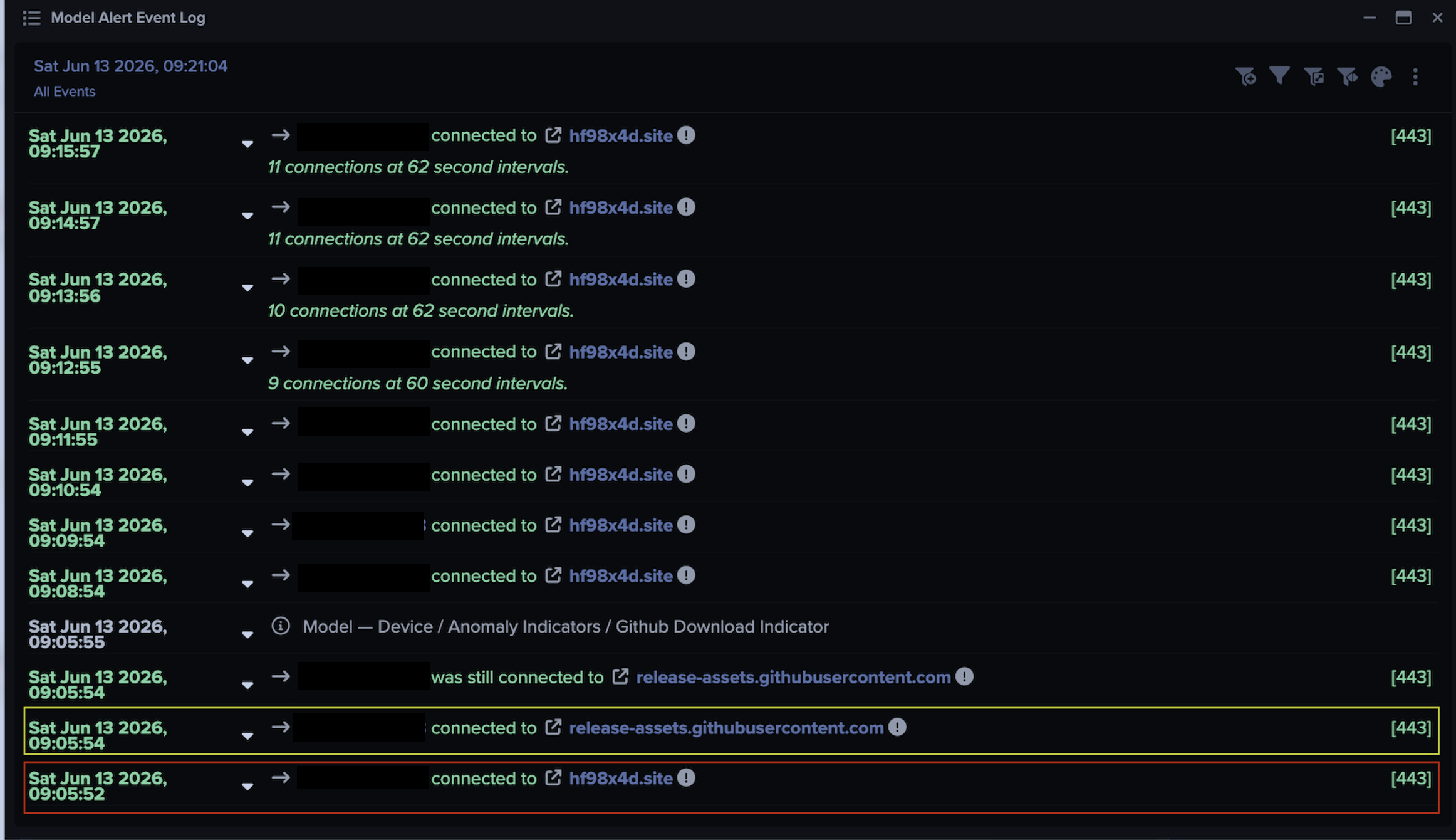
Darktrace applies multiple AI models to identify anomalous activity that may indicate known threats, novel attacks, insider activity, or cross-domain compromise.
By understanding how devices and systems normally behave within the environment, Darktrace can identify subtle deviations that may otherwise remain undetected in siloed environments.
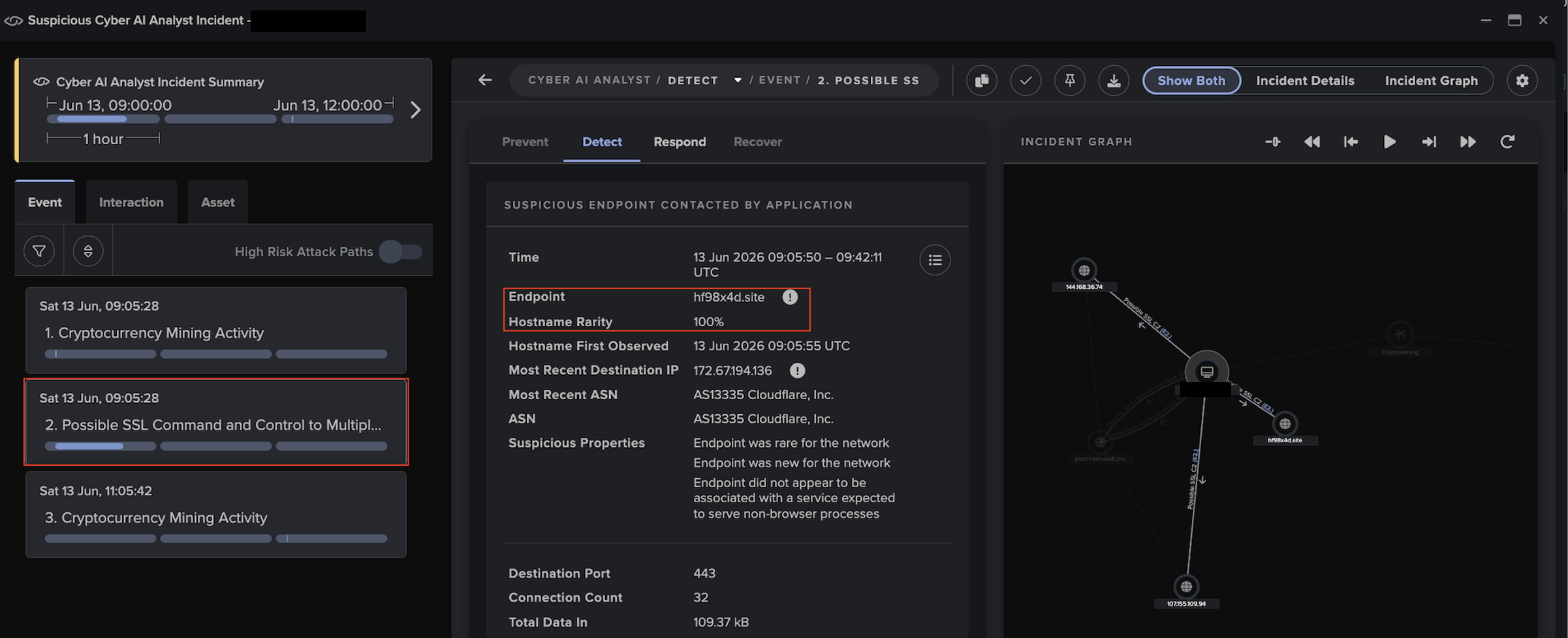
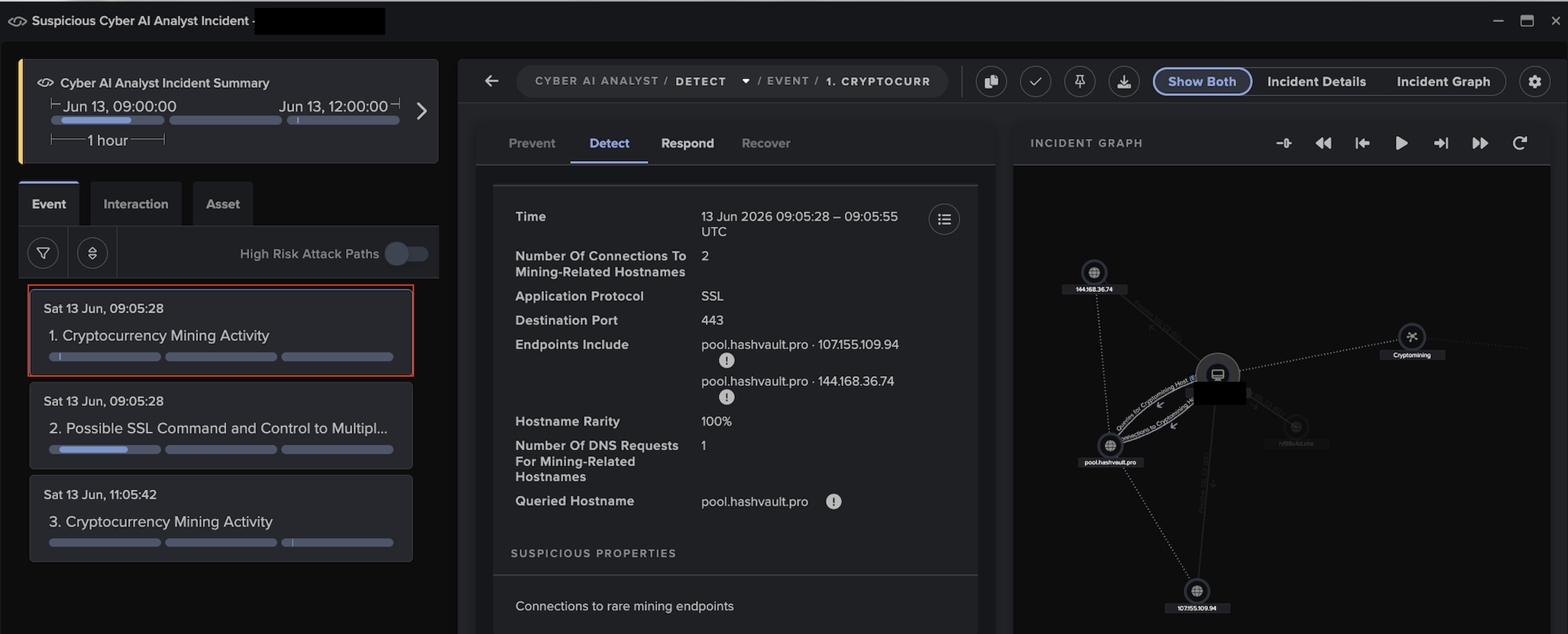
Its autonomous response capabilities can also help contain threats during their early stages before they escalate into operational disruption. Meanwhile, Cyber AI Analyst provides explainable AI-driven investigations that help security teams understand the relationships between events, systems, and users involved in potential incidents.
Proactive risk identification
As data center environments continue to evolve, organizations increasingly need to understand not only active threats, but also where structural weaknesses may exist across interconnected systems.
Through capabilities such as attack path modeling and behavioral risk analysis, Darktrace helps organizations prioritize remediation efforts and identify areas where operational exposure may increase over time.
This supports a more proactive security posture in environments where operational continuity is critical.
Securing the future of interconnected infrastructure
As data centers continue to scale in size, complexity, and operational importance, their reliance on interconnected IT, OT, IoT, cloud, and AI-driven systems will only deepen.
The challenge organizations face is no longer simply protecting individual devices or isolated environments. It is understanding how risk emerges across interconnected systems operating together and detecting threats to these systems in real time.
This is ultimately what makes modern data center security different from traditional enterprise security models. The operational dependencies are broader, the environments are more heterogeneous, and the consequences of disruption and intent of adversaries are more like those in the critical infrastructure space.
Securing these environments therefore requires more than fragmented visibility across disconnected tools. Organizations increasingly need unified approaches capable of understanding relationships across systems, detecting threats early, and responding before operational disruption spreads across critical infrastructure.
As the infrastructure powering the digital economy continues to evolve, cybersecurity resilience will become increasingly inseparable from operational resilience itself.
[related-resource]
Learn more about Darktrace / OT
Revolutionize your OT risk management, detection, and response with the most comprehensive solution purpose built for critical infrastructure.





%201.avif)