Blog
/
Network
/
September 4, 2022

Steps of a BumbleBee Intrusion to a Cobalt Strike

Discover the steps of a Bumblebee intrusion, from initial detection to Cobalt Strike deployment. Learn how Darktrace defends against evolving threats with AI.
Inside the SOC
Darktrace cyber analysts are world-class experts in threat intelligence, threat hunting and incident response, and provide 24/7 SOC support to thousands of Darktrace customers around the globe. Inside the SOC is exclusively authored by these experts, providing analysis of cyber incidents and threat trends, based on real-world experience in the field.
Written by
Sam Lister
Specialist Security Researcher
Default blog imageDefault blog imageDefault blog imageDefault blog imageDefault blog imageDefault blog image
04
Sep 2022

Introduction

Throughout April 2022, Darktrace observed several cases in which threat actors used the loader known as ‘BumbleBee’ to install Cobalt Strike Beacon onto victim systems. The threat actors then leveraged Cobalt Strike Beacon to conduct network reconnaissance, obtain account password data, and write malicious payloads across the network. In this article, we will provide details of the actions threat actors took during their intrusions, as well as details of the network-based behaviours which served as evidence of the actors’ activities.  

BumbleBee 

In March 2022, Google’s Threat Analysis Group (TAG) provided details of the activities of an Initial Access Broker (IAB) group dubbed ‘Exotic Lily’ [1]. Before March 2022, Google’s TAG observed Exotic Lily leveraging sophisticated impersonation techniques to trick employees of targeted organisations into downloading ISO disc image files from legitimate file storage services such as WeTransfer. These ISO files contained a Windows shortcut LNK file and a BazarLoader Dynamic Link Library (i.e, DLL). BazarLoader is a member of the Bazar family — a family of malware (including both BazarLoader and BazarBackdoor) with strong ties to the Trickbot malware, the Anchor malware family, and Conti ransomware. BazarLoader, which is typically distributed via email campaigns or via fraudulent call campaigns, has been known to drop Cobalt Strike as a precursor to Conti ransomware deployment [2]. 

In March 2022, Google’s TAG observed Exotic Lily leveraging file storage services to distribute an ISO file containing a DLL which, when executed, caused the victim machine to make HTTP requests with the user-agent string ‘bumblebee’. Google’s TAG consequently called this DLL payload ‘BumbleBee’. Since Google’s discovery of BumbleBee back in March, several threat research teams have reported BumbleBee samples dropping Cobalt Strike [1]/[3]/[4]/[5]. It has also been reported by Proofpoint [3] that other threat actors such as TA578 and TA579 transitioned to BumbleBee in March 2022.  

Interestingly, BazarLoader’s replacement with BumbleBee seems to coincide with the leaking of the Conti ransomware gang’s Jabber chat logs at the end of February 2022. On February 25th, 2022, the Conti gang published a blog post announcing their full support for the Russian state’s invasion of Ukraine [6]. 

Figure 1: The Conti gang's public declaration of their support for Russia's invasion of Ukraine

Within days of sharing their support for Russia, logs from a server hosting the group’s Jabber communications began to be leaked on Twitter by @ContiLeaks [7]. The leaked logs included records of conversations among nearly 500 threat actors between Jan 2020 and March 2022 [8]. The Jabber logs were supposedly stolen and leaked by a Ukrainian security researcher [3]/[6].

Affiliates of the Conti ransomware group were known to use BazarLoader to deliver Conti ransomware [9]. BumbleBee has now also been linked to the Conti ransomware group by several threat research teams [1]/[10]/[11]. The fact that threat actors’ transition from BazarLoader to BumbleBee coincides with the leak of Conti’s Jabber chat logs may indicate that the transition occurred as a result of the leaks [3]. Since the transition, BumbleBee has become a significant tool in the cyber-crime ecosystem, with links to several ransomware operations such as Conti, Quantum, and Mountlocker [11]. The rising use of BumbleBee by threat actors, and particularly ransomware actors, makes the early detection of BumbleBee key to identifying the preparatory stages of ransomware attacks.  

Intrusion Kill Chain 

In April 2022, Darktrace observed the following pattern of threat actor activity within the networks of several Darktrace clients: 

1.     Threat actor socially engineers user via email into running a BumbleBee payload on their device

2.     BumbleBee establishes HTTPS communication with a BumbleBee C2 server

3.     Threat actor instructs BumbleBee to download and execute Cobalt Strike Beacon

4.     Cobalt Strike Beacon establishes HTTPS communication with a Cobalt Strike C2 server

5.     Threat actor instructs Cobalt Strike Beacon to scan for open ports and to enumerate network shares

6.     Threat actor instructs Cobalt Strike Beacon to use the DCSync technique to obtain password account data from an internal domain controller

7.     Threat actor instructs Cobalt Strike Beacon to distribute malicious payloads to other internal systems 

With limited visibility over affected clients’ email environments, Darktrace was unable to determine how the threat actors interacted with users to initiate the BumbleBee infection. However, based on open-source reporting on BumbleBee [3]/[4]/[10]/[11]/[12]/[13]/[14]/[15]/[16]/[17], it is likely that the actors tricked target users into running BumbleBee by sending them emails containing either a malicious zipped ISO file or a link to a file storage service hosting the malicious zipped ISO file. These ISO files typically contain a LNK file and a BumbleBee DLL payload. The properties of these LNK files are set in such a way that opening them causes the corresponding DLL payload to run. 

In several cases observed by Darktrace, devices contacted a file storage service such as Microsoft OneDrive or Google Cloud Storage immediately before they displayed signs of BumbleBee infection. In these cases, it is likely that BumbleBee was executed on the users’ devices as a result of the users interacting with an ISO file which they were tricked into downloading from a file storage service. 
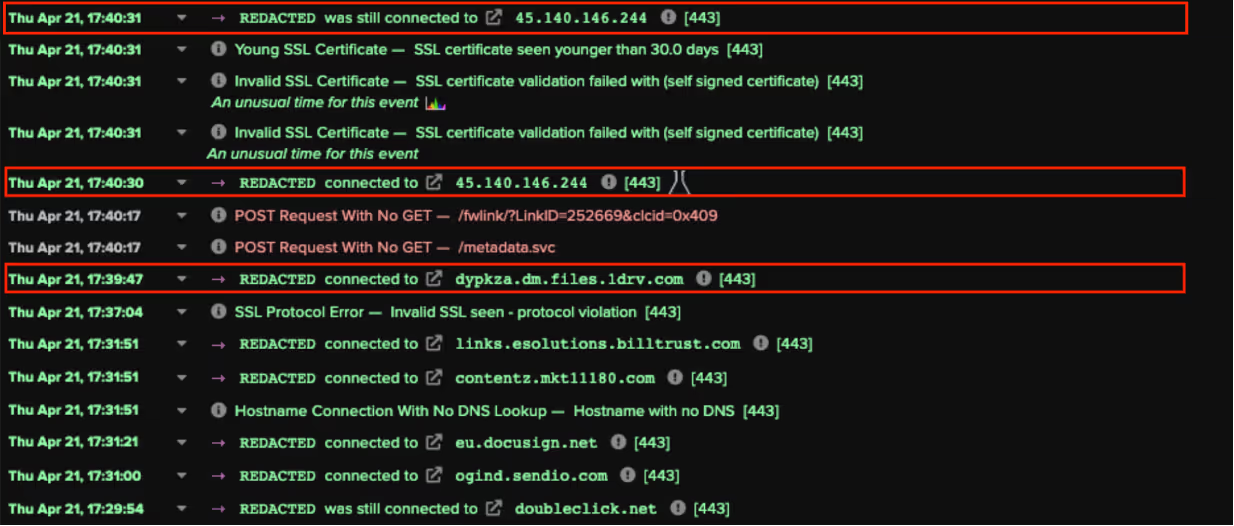
Figure 2: The above figure, taken from the event log for an infected device, shows that the device contacted a OneDrive endpoint immediately before making HTTPS connections to the BumbleBee C2 server, 45.140.146[.]244
Figure 3: The above figure, taken from the event log for an infected device, shows that the device contacted a Google Cloud Storage endpoint and then the malicious endpoint ‘marebust[.]com’ before making HTTPS connections to the  BumbleBee C2 servers, 108.62.118[.]61 and 23.227.198[.]217

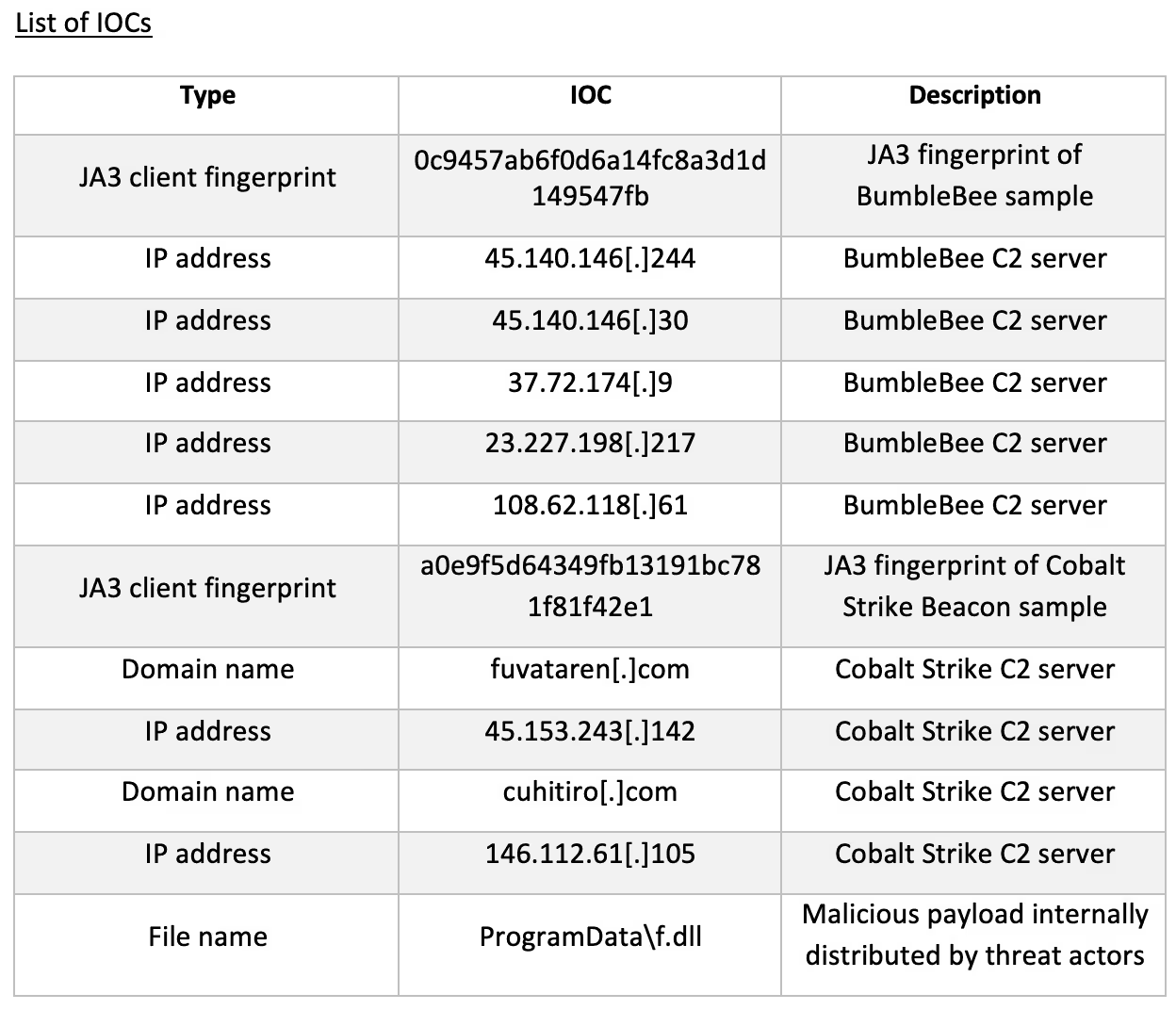
After users ran a BumbleBee payload, their devices immediately initiated communications with BumbleBee C2 servers. The BumbleBee samples used HTTPS for their C2 communication, and all presented a common JA3 client fingerprint, ‘0c9457ab6f0d6a14fc8a3d1d149547fb’. All analysed samples excluded domain names in their ‘client hello’ messages to the C2 servers, which is unusual for legitimate HTTPS communication. External SSL connections which do not specify a destination domain name and whose JA3 client fingerprint is ‘0c9457ab6f0d6a14fc8a3d1d149547fb’ are potential indicators of BumbleBee infection. 
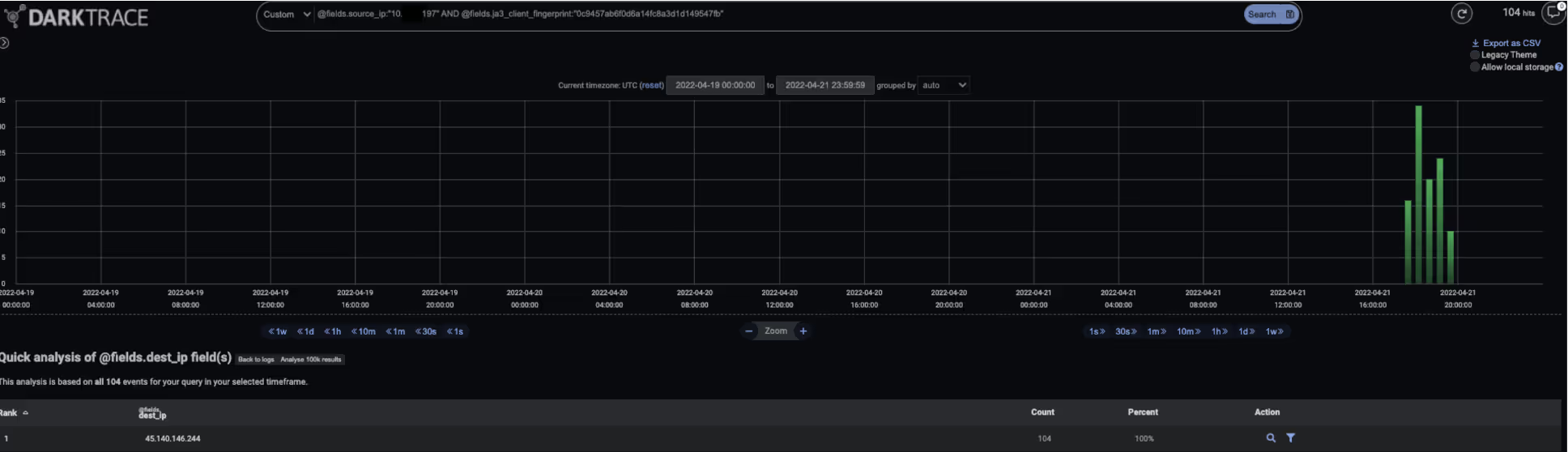
Figure 4:The above figure, taken from Darktrace's Advanced Search interface, depicts an infected device's spike in HTTPS connections with the JA3 client fingerprint ‘0c9457ab6f0d6a14fc8a3d1d149547fb’

Once the threat actors had established HTTPS communication with the BumbleBee-infected systems, they instructed BumbleBee to download and execute Cobalt Strike Beacon. This behaviour resulted in the infected systems making HTTPS connections to Cobalt Strike C2 servers. The Cobalt Strike Beacon samples all had the same JA3 client fingerprint ‘a0e9f5d64349fb13191bc781f81f42e1’ — a fingerprint associated with previously seen Cobalt Strike samples [18]. The domain names ‘fuvataren[.]com’ and ‘cuhirito[.]com’ were observed in the samples’ HTTPS communications. 
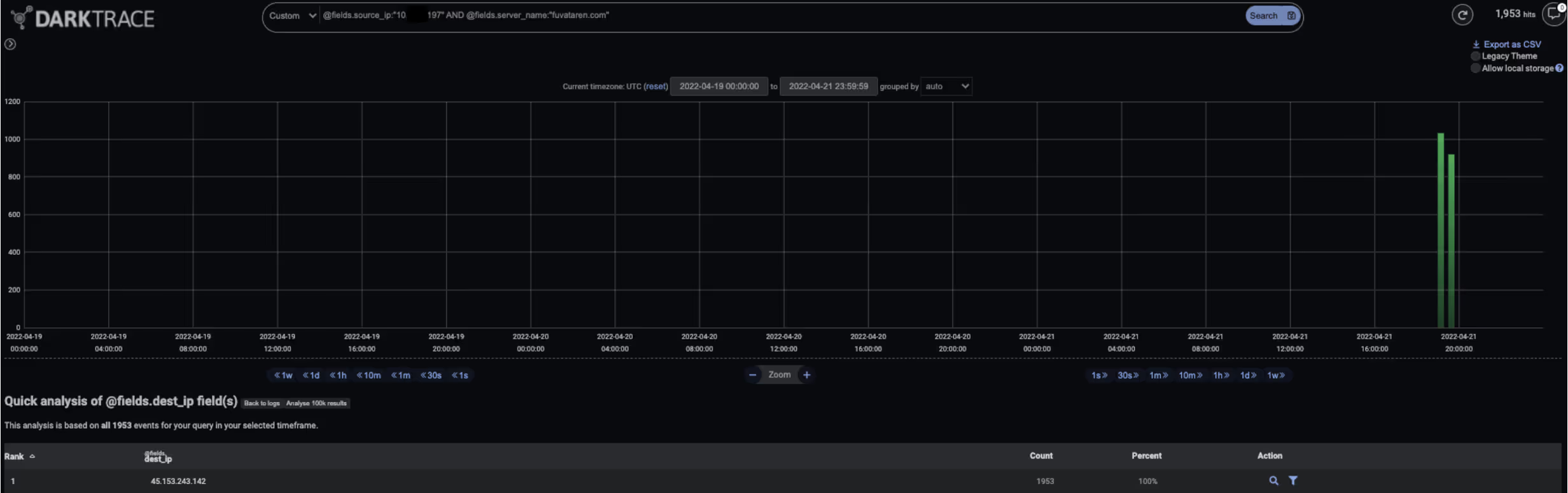
Figure 5:The above figure, taken from Darktrace's Advanced Search interface, depicts the Cobalt Strike C2 communications which immediately followed a device's BumbleBee C2 activity

Cobalt Strike Beacon payloads call home to C2 servers for instructions. In the cases observed, threat actors first instructed the Beacon payloads to perform reconnaissance tasks, such as SMB port scanning and SMB enumeration. It is likely that the threat actors performed these steps to inform the next stages of their operations.  The SMB enumeration activity was evidenced by the infected devices making NetrShareEnum and NetrShareGetInfo requests to the srvsvc RPC interface on internal systems.
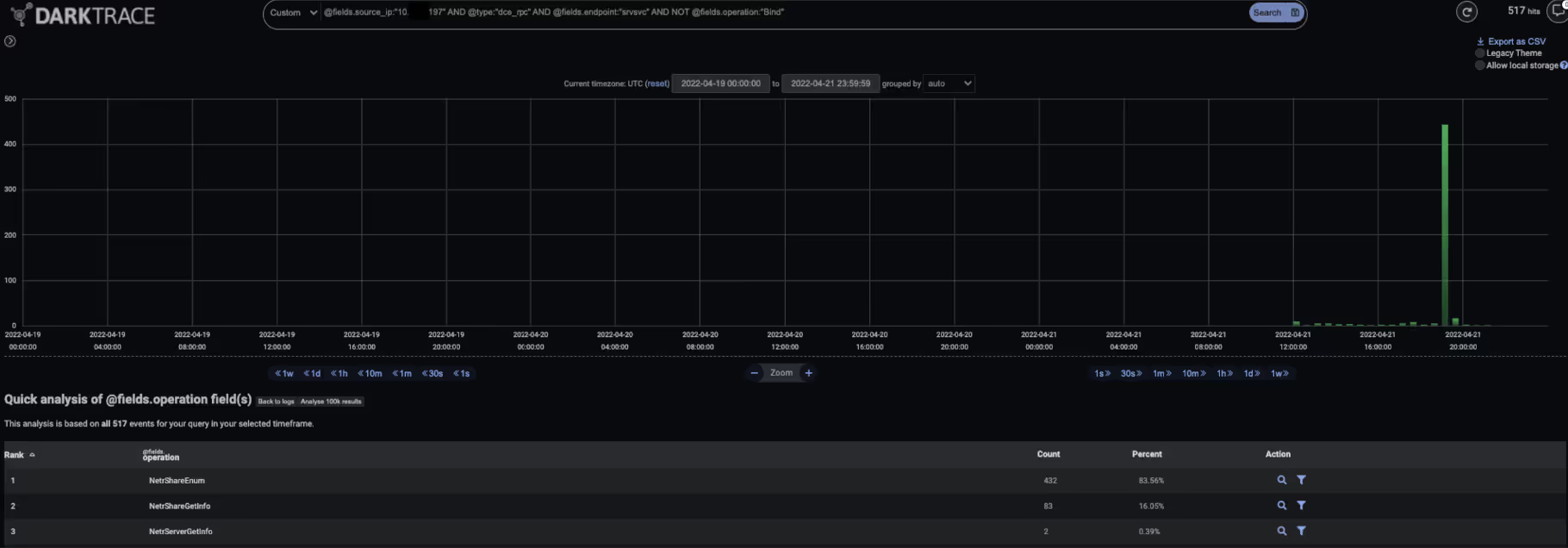
Figure 6: The above figure, taken from Darktrace’s Advanced Search interface, depicts a spike in srvsvc requests coinciding with the infected device's Cobalt Strike C2 activity

After providing Cobalt Strike Beacon with reconnaissance tasks, the threat actors set out to obtain account password data in preparation for the lateral movement phase of their operation. To obtain account password data, the actors instructed Cobalt Strike Beacon to use the DCSync technique to replicate account password data from an internal domain controller. This activity was evidenced by the infected devices making DRSGetNCChanges requests to the drsuapi RPC interface on internal domain controllers. 
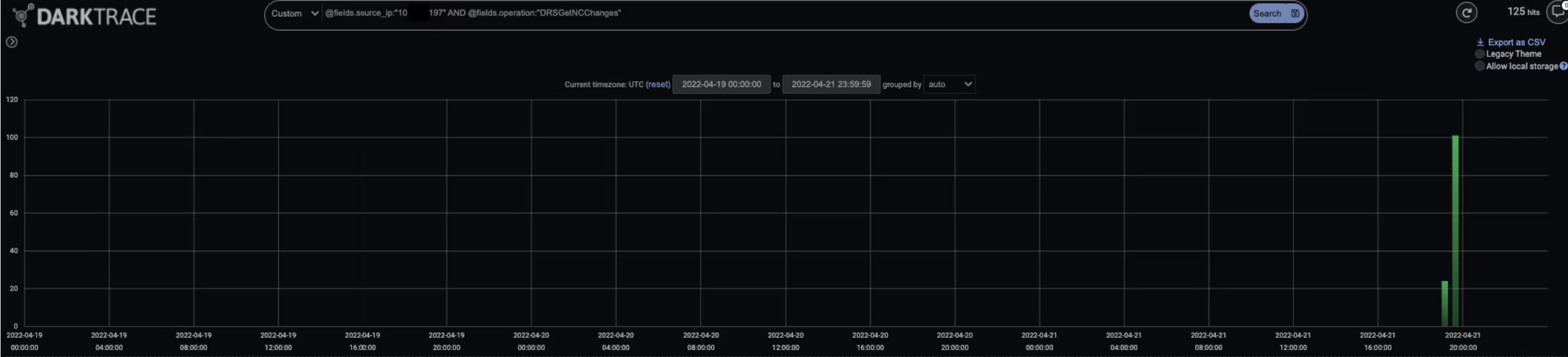
Figure 7: The above figure, taken from Darktrace’s Advanced Search interface, depicts a spike in DRSGetNCChanges requests coinciding with the infected device’s Cobalt Strike C2 activity

After leveraging the DCSync technique, the threat actors sought to broaden their presence within the targeted networks.  To achieve this, they instructed Cobalt Strike Beacon to get several specially selected internal systems to run a suspiciously named DLL (‘f.dll’). Cobalt Strike first established SMB sessions with target systems using compromised account credentials. During these sessions, Cobalt Strike uploaded the malicious DLL to a hidden network share. To execute the DLL, Cobalt Strike abused the Windows Service Control Manager (SCM) to remotely control and manipulate running services on the targeted internal hosts. Cobalt Strike first opened a binding handle to the svcctl interface on the targeted destination systems. It then went on to make an OpenSCManagerW request, a CreateServiceA request, and a StartServiceA request to the svcctl interface on the targeted hosts: 

·      Bind request – opens a binding handle to the relevant RPC interface (in this case, the svcctl interface) on the destination device

·      OpenSCManagerW request – establishes a connection to the Service Control Manager (SCM) on the destination device and opens a specified SCM database

·      CreateServiceA request – creates a service object and adds it to the specified SCM database 

·      StartServiceA request – starts a specified service

Figure 8: The above figure, taken from Darktrace’s Advanced Search interface, outlines an infected system’s lateral movement activities. After writing a file named ‘f.dll’ to the C$ share on an internal server, the infected device made several RPC requests to the svcctl interface on the targeted server

It is likely that the DLL file which the threat actors distributed was a Cobalt Strike payload. In one case, however, the threat actor was also seen distributing and executing a payload named ‘procdump64.exe’. This may suggest that the threat actor was seeking to use ProcDump to obtain authentication material stored in the process memory of the Local Security Authority Subsystem Service (LSASS). Given that ProcDump is a legitimate Windows Sysinternals tool primarily used for diagnostics and troubleshooting, it is likely that threat actors leveraged it in order to evade detection. 

In all the cases which Darktrace observed, threat actors’ attempts to conduct follow-up activities after moving laterally were thwarted with the help of Darktrace’s SOC team. It is likely that the threat actors responsible for the reported activities were seeking to deploy ransomware within the targeted networks. The steps which the threat actors took to make progress towards achieving this objective resulted in highly unusual patterns of network traffic. Darktrace’s detection of these unusual network activities allowed security teams to prevent these threat actors from achieving their disruptive objectives. 

Darktrace Coverage

Once threat actors succeeded in tricking users into running BumbleBee on their devices, Darktrace’s Self-Learning AI immediately detected the command-and-control (C2) activity generated by the loader. BumbleBee’s C2 activity caused the following Darktrace models to breach:

·      Anomalous Connection / Anomalous SSL without SNI to New External

·      Anomalous Connection / Suspicious Self-Signed SSL

·      Anomalous Connection / Rare External SSL Self-Signed

·      Compromise / Suspicious TLS Beaconing To Rare External

·      Compromise / Beacon to Young Endpoint

·      Compromise / Beaconing Activity To External Rare

·      Compromise / Sustained SSL or HTTP Increase

·      Compromise / Suspicious TLS Beaconing To Rare External

·      Compromise / SSL Beaconing to Rare Destination

·      Compromise / Large Number of Suspicious Successful Connections

·      Device / Multiple C2 Model Breaches 

BumbleBee’s delivery of Cobalt Strike Beacon onto target systems resulted in those systems communicating with Cobalt Strike C2 servers. Cobalt Strike Beacon’s C2 communications resulted in breaches of the following models: 

·      Compromise / Beaconing Activity To External Rare

·      Compromise / High Volume of Connections with Beacon Score

·      Compromise / Large Number of Suspicious Successful Connections

·      Compromise / Sustained SSL or HTTP Increase

·      Compromise / SSL or HTTP Beacon

·      Compromise / Slow Beaconing Activity To External Rare

·      Compromise / SSL Beaconing to Rare Destination 

The threat actors’ subsequent port scanning and SMB enumeration activities caused the following models to breach:

·      Device / Network Scan

·      Anomalous Connection / SMB Enumeration

·      Device / Possible SMB/NTLM Reconnaissance

·      Device / Suspicious Network Scan Activity  

The threat actors’ attempts to obtain account password data from domain controllers using the DCSync technique resulted in breaches of the following models: 

·      Compromise / Unusual SMB Session and DRS

·      Anomalous Connection / Anomalous DRSGetNCChanges Operation

Finally, the threat actors’ attempts to internally distribute and execute payloads resulted in breaches of the following models:

·      Compliance / SMB Drive Write

·      Device / Lateral Movement and C2 Activity

·      Device / SMB Lateral Movement

·      Device / Multiple Lateral Movement Model Breaches

·      Anomalous File / Internal / Unusual SMB Script Write

·      Anomalous File / Internal / Unusual Internal EXE File Transfer

·      Anomalous Connection / High Volume of New or Uncommon Service Control

If Darktrace/Network had been configured in the targeted environments, then it would have blocked BumbleBee’s C2 communications, which would have likely prevented the threat actors from delivering Cobalt Strike Beacon into the target networks. 
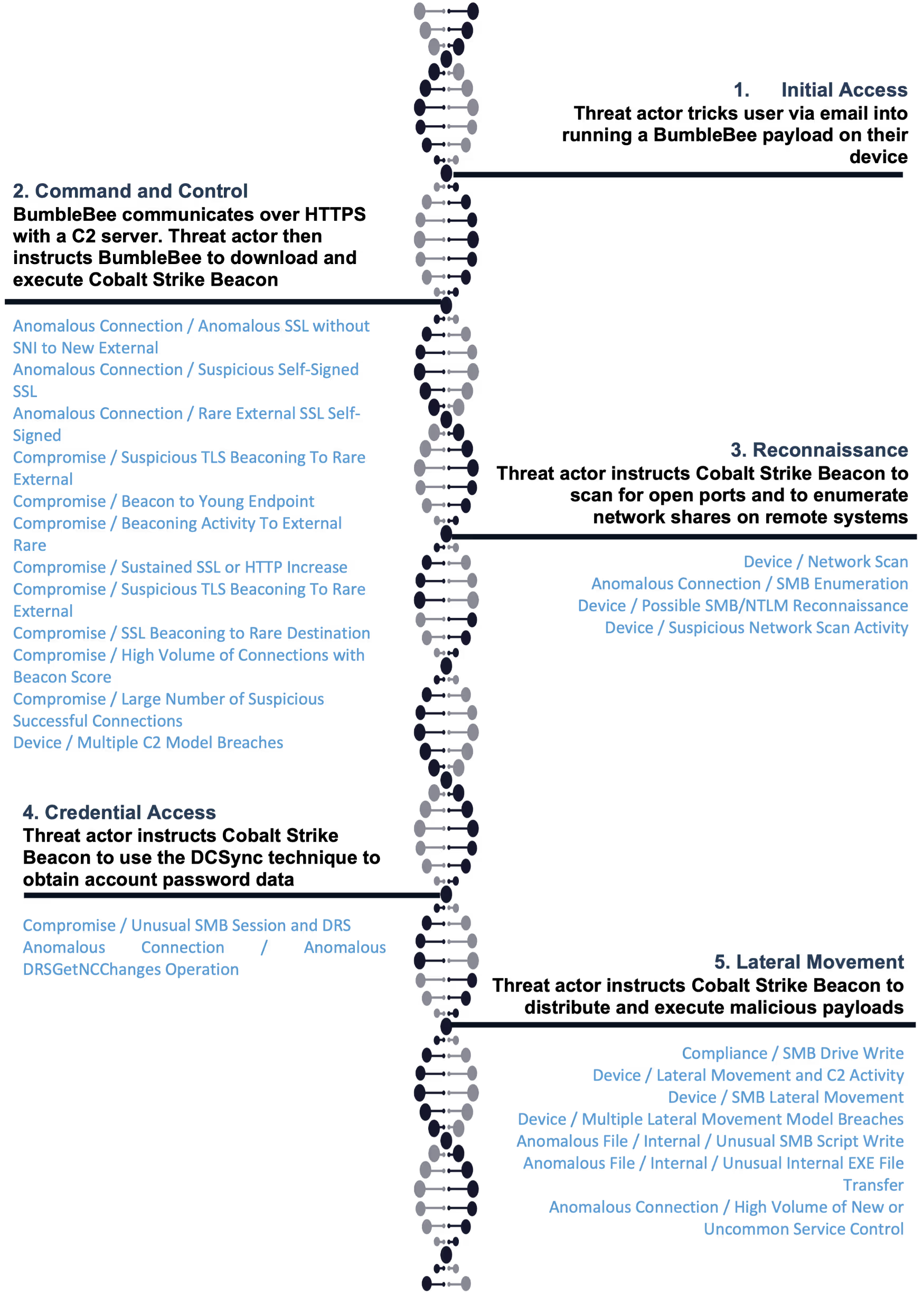
Figure 9: Attack timeline

Conclusion

Threat actors use loaders to smuggle more harmful payloads into target networks. Prior to March 2022, it was common to see threat actors using the BazarLoader loader to transfer their payloads into target environments. However, since the public disclosure of the Conti gang’s Jabber chat logs at the end of February, the cybersecurity world has witnessed a shift in tradecraft. Threat actors have seemingly transitioned from using BazarLoader to using a novel loader known as ‘BumbleBee’. Since BumbleBee first made an appearance in March 2022, a growing number of threat actors, in particular ransomware actors, have been observed using it.

It is likely that this trend will continue, which makes the detection of BumbleBee activity vital for the prevention of ransomware deployment within organisations’ networks. During April, Darktrace’s SOC team observed a particular pattern of threat actor activity involving the BumbleBee loader. After tricking users into running BumbleBee on their devices, threat actors were seen instructing BumbleBee to drop Cobalt Strike Beacon. Threat actors then leveraged Cobalt Strike Beacon to conduct network reconnaissance, obtain account password data from internal domain controllers, and distribute malicious payloads internally.  Darktrace’s detection of these activities prevented the threat actors from achieving their likely harmful objectives.  

Thanks to Ross Ellis for his contributions to this blog.

Appendices 
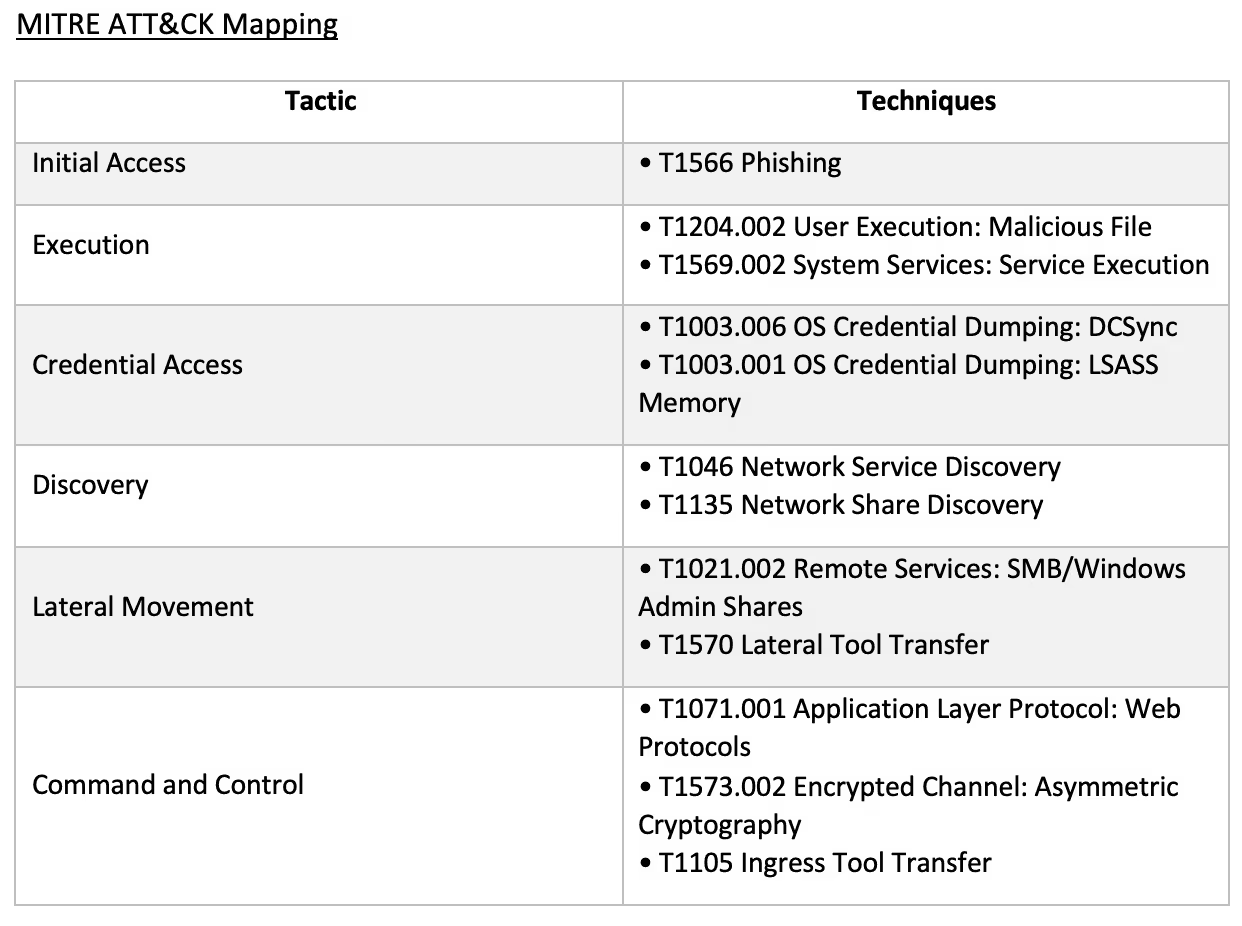
References 

[1] https://blog.google/threat-analysis-group/exposing-initial-access-broker-ties-conti/ 

[2] https://securityintelligence.com/posts/trickbot-gang-doubles-down-enterprise-infection/ 

[3] https://www.proofpoint.com/us/blog/threat-insight/bumblebee-is-still-transforming

[4] https://www.cynet.com/orion-threat-alert-flight-of-the-bumblebee/ 

[5] https://research.nccgroup.com/2022/04/29/adventures-in-the-land-of-bumblebee-a-new-malicious-loader/ 

[6] https://www.bleepingcomputer.com/news/security/conti-ransomwares-internal-chats-leaked-after-siding-with-russia/ 

[7] https://therecord.media/conti-leaks-the-panama-papers-of-ransomware/ 

[8] https://www.secureworks.com/blog/gold-ulrick-leaks-reveal-organizational-structure-and-relationships 

[9] https://www.prodaft.com/m/reports/Conti_TLPWHITE_v1.6_WVcSEtc.pdf 

[10] https://www.kroll.com/en/insights/publications/cyber/bumblebee-loader-linked-conti-used-in-quantum-locker-attacks 

[11] https://symantec-enterprise-blogs.security.com/blogs/threat-intelligence/bumblebee-loader-cybercrime 

[12] https://isc.sans.edu/diary/TA578+using+thread-hijacked+emails+to+push+ISO+files+for+Bumblebee+malware/28636 

[13] https://isc.sans.edu/diary/rss/28664 

[14] https://www.logpoint.com/wp-content/uploads/2022/05/buzz-of-the-bumblebee-a-new-malicious-loader-threat-report-no-3.pdf 

[15] https://ghoulsec.medium.com/mal-series-23-malware-loader-bumblebee-6ab3cf69d601 

[16]  https://blog.cyble.com/2022/06/07/bumblebee-loader-on-the-rise/  

[17]  https://asec.ahnlab.com/en/35460/ 

[18] https://thedfirreport.com/2021/07/19/icedid-and-cobalt-strike-vs-antivirus/

Inside the SOC
Darktrace cyber analysts are world-class experts in threat intelligence, threat hunting and incident response, and provide 24/7 SOC support to thousands of Darktrace customers around the globe. Inside the SOC is exclusively authored by these experts, providing analysis of cyber incidents and threat trends, based on real-world experience in the field.
Written by
Sam Lister
Specialist Security Researcher

More in this series

No items found.

Blog

/

/

December 22, 2025

The Year Ahead: AI Cybersecurity Trends to Watch in 2026

2026 cyber threat trendsDefault blog imageDefault blog image

Introduction: 2026 cyber trends

Each year, we ask some of our experts to step back from the day-to-day pace of incidents, vulnerabilities, and headlines to reflect on the forces reshaping the threat landscape. The goal is simple:  to identify and share the trends we believe will matter most in the year ahead, based on the real-world challenges our customers are facing, the technology and issues our R&D teams are exploring, and our observations of how both attackers and defenders are adapting.  

In 2025, we saw generative AI and early agentic systems moving from limited pilots into more widespread adoption across enterprises. Generative AI tools became embedded in SaaS products and enterprise workflows we rely on every day, AI agents gained more access to data and systems, and we saw glimpses of how threat actors can manipulate commercial AI models for attacks. At the same time, expanding cloud and SaaS ecosystems and the increasing use of automation continued to stretch traditional security assumptions.

Looking ahead to 2026, we’re already seeing the security of AI models, agents, and the identities that power them becoming a key point of tension – and opportunity -- for both attackers and defenders. Long-standing challenges and risks such as identity, trust, data integrity, and human decision-making will not disappear, but AI and automation will increase the speed and scale of the cyber risk.  

Here's what a few of our experts believe are the trends that will shape this next phase of cybersecurity, and the realities organizations should prepare for.  

Agentic AI is the next big insider risk

In 2026, organizations may experience their first large-scale security incidents driven by agentic AI behaving in unintended ways—not necessarily due to malicious intent, but because of how easily agents can be influenced. AI agents are designed to be helpful, lack judgment, and operate without understanding context or consequence. This makes them highly efficient—and highly pliable. Unlike human insiders, agentic systems do not need to be socially engineered, coerced, or bribed. They only need to be prompted creatively, misinterpret legitimate prompts, or be vulnerable to indirect prompt injection. Without strong controls around access, scope, and behavior, agents may over-share data, misroute communications, or take actions that introduce real business risk. Securing AI adoption will increasingly depend on treating agents as first-class identities—monitored, constrained, and evaluated based on behavior, not intent.

-- Nicole Carignan, SVP of Security & AI Strategy

Prompt Injection moves from theory to front-page breach

We’ll see the first major story of an indirect prompt injection attack against companies adopting AI either through an accessible chatbot or an agentic system ingesting a hidden prompt. In practice, this may result in unauthorized data exposure or unintended malicious behavior by AI systems, such as over-sharing information, misrouting communications, or acting outside their intended scope. Recent attention on this risk—particularly in the context of AI-powered browsers and additional safety layers being introduced to guide agent behavior—highlights a growing industry awareness of the challenge.  

-- Collin Chapleau, Senior Director of Security & AI Strategy

Humans are even more outpaced, but not broken

When it comes to cyber, people aren’t failing; the system is moving faster than they can. Attackers exploit the gap between human judgment and machine-speed operations. The rise of deepfakes and emotion-driven scams that we’ve seen in the last few years reduce our ability to spot the familiar human cues we’ve been taught to look out for. Fraud now spans social platforms, encrypted chat, and instant payments in minutes. Expecting humans to be the last line of defense is unrealistic.

Defense must assume human fallibility and design accordingly. Automated provenance checks, cryptographic signatures, and dual-channel verification should precede human judgment. Training still matters, but it cannot close the gap alone. In the year ahead, we need to see more of a focus on partnership: systems that absorb risk so humans make decisions in context, not under pressure.

-- Margaret Cunningham, VP of Security & AI Strategy

AI removes the attacker bottleneck—smaller organizations feel the impact

One factor that is currently preventing more companies from breaches is a bottleneck on the attacker side: there’s not enough human hacker capital. The number of human hands on a keyboard is a rate-determining factor in the threat landscape. Further advancements of AI and automation will continue to open that bottleneck. We are already seeing that. The ostrich approach of hoping that one’s own company is too obscure to be noticed by attackers will no longer work as attacker capacity increases.  

-- Max Heinemeyer, Global Field CISO

SaaS platforms become the preferred supply chain target

Attackers have learned a simple lesson: compromising SaaS platforms can have big payouts. As a result, we’ll see more targeting of commercial off-the-shelf SaaS providers, which are often highly trusted and deeply integrated into business environments. Some of these attacks may involve software with unfamiliar brand names, but their downstream impact will be significant. In 2026, expect more breaches where attackers leverage valid credentials, APIs, or misconfigurations to bypass traditional defenses entirely.

-- Nathaniel Jones, VP of Security & AI Strategy

Increased commercialization of generative AI and AI assistants in cyber attacks

One trend we’re watching closely for 2026 is the commercialization of AI-assisted cybercrime. For example, cybercrime prompt playbooks sold on the dark web—essentially copy-and-paste frameworks that show attackers how to misuse or jailbreak AI models. It’s an evolution of what we saw in 2025, where AI lowered the barrier to entry. In 2026, those techniques become productized, scalable, and much easier to reuse.  

-- Toby Lewis, Global Head of Threat Analysis

Conclusion

Taken together, these trends underscore that the core challenges of cybersecurity are not changing dramatically -- identity, trust, data, and human decision-making still sit at the core of most incidents. What is changing quickly is the environment in which these challenges play out. AI and automation are accelerating everything: how quickly attackers can scale, how widely risk is distributed, and how easily unintended behavior can create real impact. And as technology like cloud services and SaaS platforms become even more deeply integrated into businesses, the potential attack surface continues to expand.  

Predictions are not guarantees. But the patterns emerging today suggest that 2026 will be a year where securing AI becomes inseparable from securing the business itself. The organizations that prepare now—by understanding how AI is used, how it behaves, and how it can be misused—will be best positioned to adopt these technologies with confidence in the year ahead.

Learn more about how to secure AI adoption in the enterprise without compromise by registering to join our live launch webinar on February 3, 2026.  

Continue reading
About the author
The Darktrace Community

Blog

/

Email

/

December 22, 2025

Why Organizations are Moving to Label-free, Behavioral DLP for Outbound Email

Man at laptopDefault blog imageDefault blog image

Why outbound email DLP needs reinventing

In 2025, the global average cost of a data breach fell slightly — but remains substantial at USD 4.44 million (IBM Cost of a Data Breach Report 2025). The headline figure hides a painful reality: many of these breaches stem not from sophisticated hacks, but from simple human error: mis-sent emails, accidental forwarding, or replying with the wrong attachment. Because outbound email is a common channel for sensitive data leaving an organization, the risk posed by everyday mistakes is enormous.

In 2025, 53% of data breaches involved customer PII, making it the most commonly compromised asset (IBM Cost of a Data Breach Report 2025). This makes “protection at the moment of send” essential. A single unintended disclosure can trigger compliance violations, regulatory scrutiny, and erosion of customer trust –consequences that are disproportionate to the marginal human errors that cause them.

Traditional DLP has long attempted to mitigate these impacts, but it relies heavily on perfect labelling and rigid pattern-matching. In reality, data loss rarely presents itself as a neat, well-structured pattern waiting to be caught – it looks like everyday communication, just slightly out of context.

How data loss actually happens

Most data loss comes from frustratingly familiar scenarios. A mistyped name in auto-complete sends sensitive data to the wrong “Alex.” A user forwards a document to a personal Gmail account “just this once.” Someone shares an attachment with a new or unknown correspondent without realizing how sensitive it is.

Traditional, content-centric DLP rarely catches these moments. Labels are missing or wrong. Regexes break the moment the data shifts formats. And static rules can’t interpret the context that actually matters – the sender-recipient relationship, the communication history, or whether this behavior is typical for the user.

It’s the everyday mistakes that hurt the most. The classic example: the Friday 5:58 p.m. mis-send, when auto-complete selects Martin, a former contractor, instead of Marta in Finance.

What traditional DLP approaches offer (and where gaps remain)

Most email DLP today follows two patterns, each useful but incomplete.

  • Policy- and label-centric DLP works when labels are correct — but content is often unlabeled or mislabeled, and maintaining classification adds friction. Gaps appear exactly where users move fastest
  • Rule and signature-based approaches catch known patterns but miss nuance: human error, new workflows, and “unknown unknowns” that don’t match a rule

The takeaway: Protection must combine content + behavior + explainability at send time, without depending on perfect labels.

Your technology primer: The three pillars that make outbound DLP effective

1) Label-free (vs. data classification)

Protects all content, not just what’s labeled. Label-free analysis removes classification overhead and closes gaps from missing or incorrect tags. By evaluating content and context at send time, it also catches misdelivery and other payload-free errors.

  • No labeling burden; no regex/rule maintenance
  • Works when tags are missing, wrong, or stale
  • Detects misdirected sends even when labels look right

2) Behavioral (vs. rules, signatures, threat intelligence)

Understands user behavior, not just static patterns. Behavioral analysis learns what’s normal for each person, surfacing human error and subtle exfiltration that rules can’t. It also incorporates account signals and inbound intel, extending across email and Teams.

  • Flags risk without predefined rules or IOCs
  • Catches misdelivery, unusual contacts, personal forwards, odd timing/volume
  • Blends identity and inbound context across channels

3) Proprietary DSLM (vs. generic LLM)

Optimized for precise, fast, explainable on-send decisions. A DSLM understands email/DLP semantics, avoids generative risks, and stays auditable and privacy-controlled, delivering intelligence reliably without slowing mail flow.

  • Low-latency, on-send enforcement
  • Non-generative for predictable, explainable outcomes
  • Governed model with strong privacy and auditability

The Darktrace approach to DLP

Darktrace / EMAIL – DLP stops misdelivery and sensitive data loss at send time using hold/notify/justify/release actions. It blends behavioral insight with content understanding across 35+ PII categories, protecting both labeled and unlabeled data. Every action is paired with clear explainability: AI narratives show exactly why an email was flagged, supporting analysts and helping end-users learn. Deployment aligns cleanly with existing SOC workflows through mail-flow connectors and optional Microsoft Purview label ingestion, without forcing duplicate policy-building.

Deployment is simple: Microsoft 365 routes outbound mail to Darktrace for real-time, inline decisions without regex or rule-heavy setup.

A buyer’s checklist for DLP solutions

When choosing your DLP solution, you want to be sure that it can deliver precise, explainable protection at the moment it matters – on send – without operational drag.  

To finish, we’ve compiled a handy list of questions you can ask before choosing an outbound DLP solution:

  • Can it operate label free when tags are missing or wrong? 
  • Does it truly learn per user behavior (no shortcuts)? 
  • Is there a domain specific model behind the content understanding (not a generic LLM)? 
  • Does it explain decisions to both analysts and end users? 
  • Will it integrate with your label program and SOC workflows rather than duplicate them? 

For a deep dive into Darktrace’s DLP solution, check out the full solution brief.

[related-resource]

Continue reading
About the author
Carlos Gray
Senior Product Marketing Manager, Email
Your data. Our AI.
Elevate your network security with Darktrace AI