
Blog
/
AI
/
July 17, 2026

How to Secure AI in Stadium Operations?

Stadiums’ scale and complexity make them some of the toughest environments in cybersecurity. Now, we’re adding AI to those operations and bringing a new dimension of risk. Explore how security teams can secure AI in live-event environments to make stadiums safer for fans.
No items found.
Inside the SOC
Darktrace cyber analysts are world-class experts in threat intelligence, threat hunting and incident response, and provide 24/7 SOC support to thousands of Darktrace customers around the globe. Inside the SOC is exclusively authored by these experts, providing analysis of cyber incidents and threat trends, based on real-world experience in the field.
No items found.
Photo of a sports stadiumDefault blog image
17
Jul 2026

Key takeaways

  • AI is entering high-impact stadium functions such as access control, crowd management, ticketing, facilities, and surveillance.  
  • Shadow AI and third-party AI use can create risks that stadium security teams cannot readily see.  
  • Security teams must understand not only which AI systems exist, but also what they can access and what actions they can take.  
  • Live-event resilience requires continuous monitoring and response across AI, IT, OT, identities, and third parties.

‍

Modern stadiums are infrastructure unlike any other. I’ve written before on event day sparking stadiums into life with shops and food stands, transport hubs, vast telecommunications infrastructure, field-side technology and beyond, acting as one super-sized, connected ecosystem. Stadiums’ scale and complexity make them some of the toughest environments in cybersecurity. Now, we’re adding AI to those operations and bringing a new dimension of risk.

The benefits of AI in stadium operations are easy to see. It can help stadium operators move fans safely through crowded gates, forecast demand at concession stands, support biometric entry, identify suspicious behavior on CCTV, and manage heating and ventilation. Used well, it can make live events safer, faster, and more efficient.

But it also changes the security model.

In Darktrace’s recent research into the threat landscape surrounding sports, we asked cybersecurity professionals protecting professional sports organizations where in their footprint a cyber compromise would have the greatest impact. The area they named most, highlighted by 34% of the professionals we spoke to, was stadium operations. At the same time, 35% said their organizations are already using AI in stadium operations, or plan to do so in the next 12 months.

Security teams are no longer just protecting traditional IT systems around a stadium. They are increasingly being asked to protect AI systems that are operating in the stadium’s most fundamental functions.

Approved AI vs. shadow AI in stadium operations

There is a clear difference between AI a stadium’s security team knows about and AI it does not.

Approved AI is the AI that has been reviewed, tested, and integrated into the venue’s operating environment. It may support CCTV analytics, access control, facility management, ticketing, logistics, broadcast operations, or anti-piracy monitoring. It should have clear ownership, access controls, logging, vendor review, and data protection rules. That does not make it risk-free, but it allows security teams to institute proper governance.

Shadow AI is different. It is the unapproved use of AI tools by employees, contractors, or suppliers. It often starts with good intent. Someone wants to work faster. A staff member pastes internal information into a public AI tool to draft a briefing. A developer uses an AI assistant to debug ticketing code. A supplier connects an AI scheduling tool to delivery routes. A designer uploads unreleased venue plans or sponsor material to generate a mockup.

None of those actions may feel like a security decision to the person doing them. But each one can move sensitive operational data into an environment the stadium does not control, creating hidden risk.

The approved AI stack may be visible to security teams. The shadow AI stack often is not.

Why game day increases AI cybersecurity risk

In a typical enterprise environment, a security team may have hours to investigate a strange login or an unexpected connection to a third-party service. Within a stadium, the moment an incident is likely to occur is also the moment when teams are at their most stretched and the incident can have the greatest repercussions: game day.

If an AI system used for crowd management behaves unexpectedly, the issue is not only technical. It may affect physical movement inside the venue.

If a supplier tool is sending operational data to an unapproved AI platform, the issue is not only data governance. It may expose delivery routes, restricted access schedules, or staffing plans.

The most dangerous scenario is not always a loud, dramatic attack but a hidden dependency that no one has mapped such as a vendor adding an AI feature through a software update or a staff workflow using an unapproved tool.

By the time the venue is live, those hidden connections can become operational risk.

The supply chain is part of the stadium attack surface

Any major sporting event is made by its supply chain and partnerships: catering firms, transport providers, broadcast systems, facilities teams. Every piece is necessary and each creates a security channel. The risk of supply chain compromise has been well established for some time and has been the source of some of the most high-profile breaches we’ve seen. The data breach at MSG Entertainment, owner of Madison Square Garden, that was widely reported in March, originated in a breach of Oracle’s E-Business Suite, used in MSG Entertainment’s back-office systems, while the 2018 Olympic Destroyer attack on the Pyeongchang Winter Olympics reportedly began with the compromise of the main IT service provider for the Games. The addition of AI is heightening the risk.

A stadium can have strict rules for its own AI systems, but its vendors may be using separate tools. Some may use AI to manage staffing, delivery windows, inventory, or customer communications. Others may not realize that AI features have been added into software they already use.

This is one of the hardest parts of securing AI in stadium operations. The risk does not always come from a tool the venue selected. It may come from a tool a supplier selected or a feature the supplier did not know had been turned on.

Security teams need to treat vendor AI the same way they treat vendor access. They need to know what suppliers can connect to, what data they can see, what tools they use, and whether those tools introduce new routes for data exposure or lateral movement.

A third-party AI tool does not need deep access to create risk. Sometimes it only needs the right operational detail at the wrong time.

Four questions for securing AI in stadium operations

As AI becomes part of stadium operations, security teams need to move beyond basic approval lists. There are four questions they need to ask:

1. Where is AI being used?

This includes obvious tools, such as computer vision, access control, ticketing, logistics, and facility management. But it also includes less visible AI inside SaaS platforms, vendor tools, browser extensions, developer workflows, smart building systems, and collaboration tools.

2. What can the AI access?

Can it see incident logs, staffing plans, ticketing data, video feeds, building controls, fan information, credentials, or supplier systems? Can it only analyze information, or can it also trigger actions?

3. What can the AI do?

AI agents are not just passive tools. Some can call APIs, update records, generate instructions, trigger workflows, or act with the permissions of a user or service account. In a stadium, that distinction is critical. There is a big difference between an AI system that recommends an action and one that can take an action.

4. What does normal look like?

In your security architecture, static rules will not be enough. AI use changes quickly: tools appear inside existing platforms, vendors add new services, and staff find workarounds when they are under pressure. Security teams need to understand normal behavior across people, identities, devices, networks, cloud services, suppliers, and AI tools so they can spot when something changes.

That is especially important in live-event environments, where small anomalies can matter. A connection to an unapproved AI service may be harmless in one context and serious in another, and an AI agent taking action at 3 a.m. may be expected during setup but suspicious during a match. Context is what turns raw activity into useful security insight. It’s also what enables rapid response. Your own AI-based security systems can respond to threats at machine speed if they can build the live context to know action needs to be taken.

AI can make stadiums safer, but only if it is secured

AI has a real role to play in stadium operations. It can help teams detect crowd pressure earlier, reduce bottlenecks, manage facilities more efficiently, improve the fan experience, and support event teams during high-pressure moments.

The answer is not to slow all AI adoption. That's not the goal. The answer is to make AI visible, governed, and secure before it becomes part of match-day operations.

For stadium operators and event organizers, that means mapping AI use across the venue and supplier ecosystem. It means understanding what each AI system can access and what actions it can take. It means giving staff approved tools that meet their needs, rather than leaving them to find workarounds. It means writing AI use into vendor contracts and audits. And it means monitoring behavior across the full environment, not only the systems that are easiest to see. A stadium cannot secure what it cannot see.

When AI becomes part of how a stadium moves people, controls access, manages facilities, supports suppliers, and protects media rights, it stops being a side project. It becomes part of the event infrastructure.

Event infrastructure must be thoroughly prepared before venue gates open and sustained with the operational resilience required to support a secure, seamless, and reliable event experience.

How Darktrace helps secure AI in stadium operations

Darktrace brings more than a decade of behavioral AI expertise, built on an enterprise‑wide platform designed to operate in complex, ambiguous environments. We protect the large-scale integrated IT and OT environments that underpin stadium operations from the 2022 FIFA World Cup in Qatar, to Formula 1 Grand Prixes around the world and stadiums across the USA.

Other cybersecurity technologies try to predict each new attack based on historical attacks. The problem is that AI operates like humans do. Every action introduces new information that changes how AI behaves, making it unpredictable in nature. Historical attack tactics are now only a small part of the equation, forcing vendors to retrofit unproven acquisitions to secure AI.  

Darktrace is fundamentally different. Our Adaptive AI continuously learns how your people and AI behave, building an understanding of your organization so it can detect and respond autonomously when behavior deviates. Our Behavioral Defense Platform secures your AI, people, and infrastructure as you onboard new workflows, agents, and applications, enabling your AI transformation at scale.

As AI changes what organizations can do, Darktrace helps them move forward with confidence. We give the security teams defending the people and technology within stadium infrastructure the understanding, visibility, and autonomous action they need to protect new technologies as they are integrated into operations, so their organizations drive the progress that will define the AI era.

[related-resource]

Understand Cybersecurity in Global Sport

This sector-wide report examines the threats, signals, and strategic implications for an increasingly digitized sports industry.

No items found.
Inside the SOC
Darktrace cyber analysts are world-class experts in threat intelligence, threat hunting and incident response, and provide 24/7 SOC support to thousands of Darktrace customers around the globe. Inside the SOC is exclusively authored by these experts, providing analysis of cyber incidents and threat trends, based on real-world experience in the field.
No items found.

More in this series

No items found.

Blog

/

AI

/

October 23, 2026

PHP Vulnerabilities, ARTEX and the Growing Role of AI in Cyber Attacks

Default blog imageDefault blog image

The disclosure of CVE-2026-109618 and CVE-2026-109619 placed immediate pressure on organizations running PHP. Both vulnerabilities can allow unauthenticated remote code execution, including in products and appliances where PHP is embedded, and updates depend on third-party vendors [1].

Early guidance focused on patching internet-facing systems and monitoring for behavior associated with successful exploitation, including unexpected command execution, Webroot changes and outbound connections from PHP servers.

Darktrace observed widespread scanning across monitored environments involving hundreds of distinct source IP addresses that public reporting has associated with activity targeting the PHP vulnerabilities. The volume of scanning was significantly greater than the evidence available for successful exploitation. For analysts, that distinction is important. Scanning demonstrates interest in exposed infrastructure; establishing compromise requires evidence of subsequent behavior on the targeted system, including command execution, file modification or unexpected outbound communication.

PHP is not an isolated example. Imperva subsequently demonstrated remote code execution against a vulnerable Node.js build through malicious Brotli data, reproducing execution through compressed HTTP responses and configured request parsers. The same inputs were rejected by the patched runtime. Imperva linked its Node2Shell and PHP2Shell research to the increasing speed of vulnerability discovery and exploit development. [2]

While Darktrace has not observed direct evidence of CVE-2026-109618 or CVE-2026-109619 exploitation, on October 21st we observed a six-month high in detections consistent with zero-day exploitation activity, representing a 64% increase compared to historic data. This increase has not been confirmed as related to the PHP vulnerabilities. Darktrace’s behavioral approach is designed to detect anomalous activity without relying solely on rules written for a specific exploit. Comparable increases were observed around the Log4j disclosure and other globally significant vulnerability disclosures.

AI-assisted vulnerability research

The PHP disclosure arrives as AI systems have become more capable at vulnerability research [3]. OpenAI launched Daybreak in June 2026, combining GPT-5.5-Cyber, Codex Security and partnerships with security researchers and software maintainers. OpenAI says its models have been applied to discovering and generating patches for vulnerabilities in browsers, network infrastructure, FreeBSD and the Linux kernel. Darktrace joined the OpenAI Daybreak Cyber Partner Program in June to explore how OpenAI's cyber capabilities could be integrated within Darktrace products and services [4][10].

OpenAI reported in August that Codex Security Cloud had analyzed more than 30 million commits across more than 30,000 codebases. According to OpenAI, Cloudflare uses models accessed through Daybreak to investigate customer-authorized code and combines findings with live traffic and security signals to assess whether affected routes are active or receiving suspicious traffic, with proposed mitigations and patches remaining subject to customer review [5][6].

Faster discovery still leaves defenders with the work of locating affected software, testing fixes and completing remediation. The PHP case shows that gap clearly, particularly when vulnerable runtimes are embedded inside other products.

Enterprise agents as an attack surface

Darktrace Signal Labs has also examined how a trusted enterprise agent could be abused after an attacker has already obtained access to an environment. In a controlled simulation, researchers demonstrated that, in that post-compromise scenario, the Claude platform’s memory stores feature could be abused to establish a live C2 channel between an external operator and internal Claude Code agents. The external operator was able to dynamically assign network discovery, credential access, and data exfiltration tasks to the agents via this C2 channel. Detection of the agents’ activities relied on the correlation of process creation and network traffic activity from agent harness processes, alongside behavioral analysis to identify deviations from expected behavior. Darktrace has not claimed it observed this memory-store command-and-control technique in operational attacks [7].

AI-assisted attacks in Japan

Evidence from Japan indicates AI being used for vulnerability scanning and attacks outside controlled research. On 21 October, JPCERT/CC published findings from an investigation into recent unauthorized access incidents affecting organizations in Japan. JPCERT/CC states that it confirmed attackers had used AI to scan for known vulnerabilities and conduct attacks through APIs. According to JPCERT/CC, its examination of attack infrastructure found evidence of Android application analysis, API discovery and testing for weaknesses including server-side request forgery, and the infrastructure also targeted services intended for users outside Japan [8].

JPCERT/CC does not identify ARTEX by name in that publication. The named ARTEX attribution comes from separate investigations, including Microsoft's analysis of Storm-0940.

AI in offensive operations

Microsoft describes ARTEX as an open-source, multi-agent penetration-testing system capable of automating activity with limited human interaction. Microsoft reported that Storm-0940, which it assesses to be a China state-aligned actor active since 2021, used ARTEX against hundreds of organizations, and Microsoft attributed the ConnectWise supply-chain compromise [9].

Microsoft observed ARTEX accelerating scanning, reconnaissance, password spraying and OAuth application abuse. Several ARTEX-driven operations reached privileged cloud access less than three hours after initial targeting. Following the ConnectWise compromise, Storm-0940 attempted to authenticate to more than 2,250 tenants at rates of up to 2,900 attempts per minute [9].

Darktrace Threat Research found activity in its own telemetry involving infrastructure later associated with the campaign. On 13 October, Darktrace recorded failed authentication activity involving 144.172.64[.]128, one of the addresses Microsoft later identified as performing sign-ins and Microsoft Graph activity in ConnectWise customer environments. Darktrace analysis identified 65 failed authentication attempts in around 20 minutes.

Figure 1: Darktrace Advanced Search showing failed authentication events involving 144.172.64[.]128 on 13 October 2026, (customer-identifying information redacted).

The telemetry establishes repeated failed authentication from infrastructure later associated with the campaign. It does not establish ARTEX execution or successful compromise. At the time of observation, Microsoft's later attribution was unavailable. Analysts therefore had the behavior itself: repeated failed authentication from the same source over a short period, together with any related identity, application or network activity inside the environment.

Microsoft documented a wider password-spray campaign against 327 accounts across eight organizations between 10 and 14 October. It recorded more than 151,000 failed logons, including more than 111,000 on 11 October, but no successful authentication, token issuance, Graph call or directory change from that campaign. Microsoft also reported that most Storm-0940 targeting was unsuccessful [9].

Where the actor progressed beyond authentication, Microsoft observed service-principal sign-ins followed by Graph and directory operations. Activity included reconnaissance, application credential changes and attempts to modify privileges. Microsoft recommends correlating service-principal sign-ins with Graph activity, directory changes and resource access [9].

Behavior before attribution

The PHP and ARTEX cases begin with different information. PHP defenders knew which software required urgent remediation but initially had limited information about exploitation. Process execution, file modification and outbound communication could still provide evidence of compromise.

The PHP and ARTEX observations also illustrate the difference between volume and impact. Darktrace observed broad scanning around the PHP disclosure, while the ARTEX-associated infrastructure produced concentrated authentication activity. Neither observation independently demonstrates compromise and in each case examining the behavior that follows the initial interaction is the investigative clue.

The Darktrace ARTEX-related observation began with authentication behavior. Microsoft publicly attributed the source infrastructure eight days later. That attribution added context, but it did not change what had originally been recorded in the environment.

AI is now present at several points in this cycle. Daybreak applies models to vulnerability discovery and remediation. Darktrace Signal Labs demonstrated how a trusted enterprise agent could be co-opted in a controlled environment. JPCERT/CC confirmed AI-assisted vulnerability scanning and API attacks in recent incidents. Microsoft documented ARTEX being used by Storm-0940 in active operations [4][7][8][9].

Microsoft's findings also show why scale and impact must be assessed separately. One ARTEX-associated campaign produced more than 151,000 failed logons without successful access, while other operations reached privileged cloud access in less than three hours. Security teams have to distinguish high-volume attempts from activity that progresses through authentication, privilege changes and resource access.

The evidence required to assess these cases remains familiar: authentication records, process execution, application and directory changes, file activity and network communication. AI can increase the rate at which those behaviors occur. Defenders still need to establish their sequence and impact.

Credit to Emma Foulger, Sam Lister, Dylan Evans, Moishe Tajtelbaum

References

[1] NCSC-NL, php2shell vulnerabilities (CVE-2026-109618, CVE-2026-109619), 21 October 2026. https://github.com/NCSC-NL/php2shell

[2] Imperva, https://www.imperva.com/blog/node2shell-from-brotli-data-to-remote-code-execution/

[3] Cyber Security Agency of Singapore, https://www.csa.gov.sg/alerts-and-advisories/alerts/al-2026-151/

[4] OpenAI, Daybreak: Tools for securing every organization in the world, 22 June 2026. https://openai.com/index/daybreak-securing-the-world/

[5] OpenAI Developers, Scaling cyber defenders with Daybreak, 21 August 2026. https://developers.openai.com/blog/scaling-cyber-defenders-with-daybreak

[6] OpenAI, Cloudflare links vulnerability discovery to defense with OpenAI, 21 October 2026. https://openai.com/index/cloudflare-cyber/

[7] Darktrace Signal Labs, Shared Memories as a Covert C2 Channel, draft research supplied for review.

[8] JPCERT/CC, Recent AI-Assisted Cyber Attacks in Japan: Investigating Attack Infrastructure and Techniques, 21 October 2026. https://blogs.jpcert.or.jp/en/2026/10/web_api_attacks.html

[9] Microsoft Security Research and Microsoft Threat Intelligence, AI-driven, large-scale nation-state campaign using ARTEX enables supply chain compromise, 21 October 2026. https://www.microsoft.com/en-us/security/blog/2026/10/21/storm-0940-uses-artex-agentic-ai-connectwise-supply-chain-compromise/

[10] Darktrace, Advancing the Use of Frontier AI in Cybersecurity: Darktrace Joins the OpenAI Daybreak Cyber Partner Program to Explore Defensive AI Integrations, 22 June 2026. https://www.darktrace.com/blog/advancing-the-use-of-frontier-ai-in-cybersecurity-darktrace-joins-the-openai-daybreak-cyber-partner-program-to-explore-defensive-ai-integrations

Continue reading
About the author
Nathaniel Jones
SVP, Global Threat Intelligence

Blog

/

OT

/

October 23, 2026

Beyond the Fridge: Exposed Industrial Control Systems

Default blog imageDefault blog image

Introduction

In October 2026, hundreds of supermarkets across France were reportedly affected by a cyberattack targeting their refrigeration systems. According to public reports, the attackers gained access to internet-connected controllers and modified their settings, forcing refrigeration units into high and extremely low temperatures and causing significant disruption. Total losses have been reported to reach several million euros.

The incident drew attention to the security of industrial refrigeration systems, particularly older devices with exposed management interfaces and known vulnerabilities.

The exact details of how the attackers gained access have not been confirmed, however it is speculated that the public-facing web server could be accessed with the username “admin” and password being the current date. Researchers from Claroty’s Team82 identified a vulnerability in Danfoss AK-SM 8xxA Series in 2025, “CVE-2025-41450", allowing for administrative access using a time-based “code-of-the-day" for authentication [1].

Default credentials, outdated firmware and publicly accessible administrative interfaces have been an issue for years. And yet these systems continue to appear in internet scans and require little sophistication to gain admin access. A simple search of internet-connected devices shows a range of exposed devices from Programmable Logic Controllers (PLCs) and remote gateways, to, yes, more fridges.

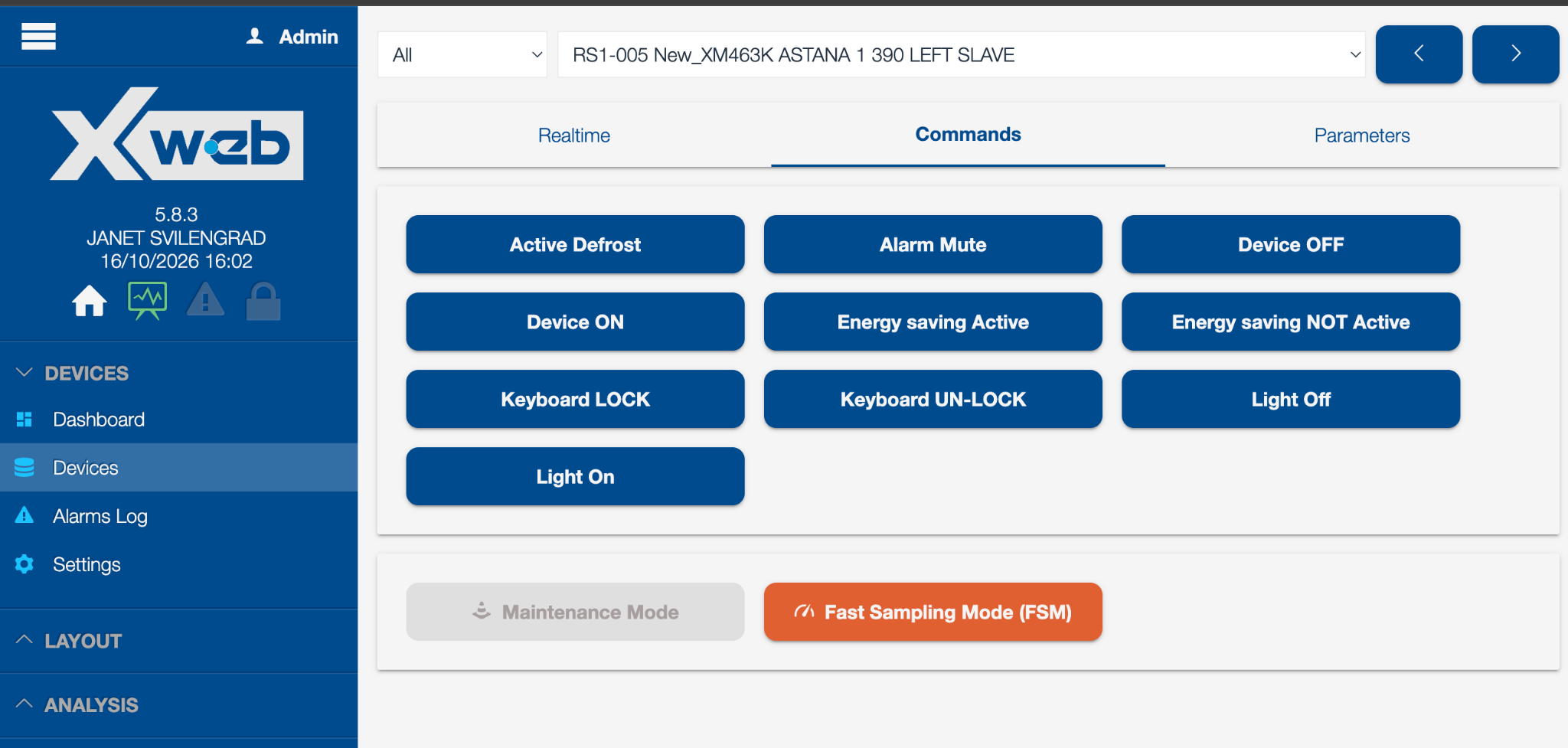
Darktrace malware researchers identified hundreds of IoT and OT devices publicly exposed on the internet, many of which are configured with no authentication, weak credentials, or default credentials. As shown in Figure 1, an exposed Copeland XWEB web interface, used to manage Dixell equipment, including refrigerators, can provide the ability to remotely control connected devices.

‍

Figure 1: Copeland XWEB interface used to control systems including refrigerators and air conditioning.

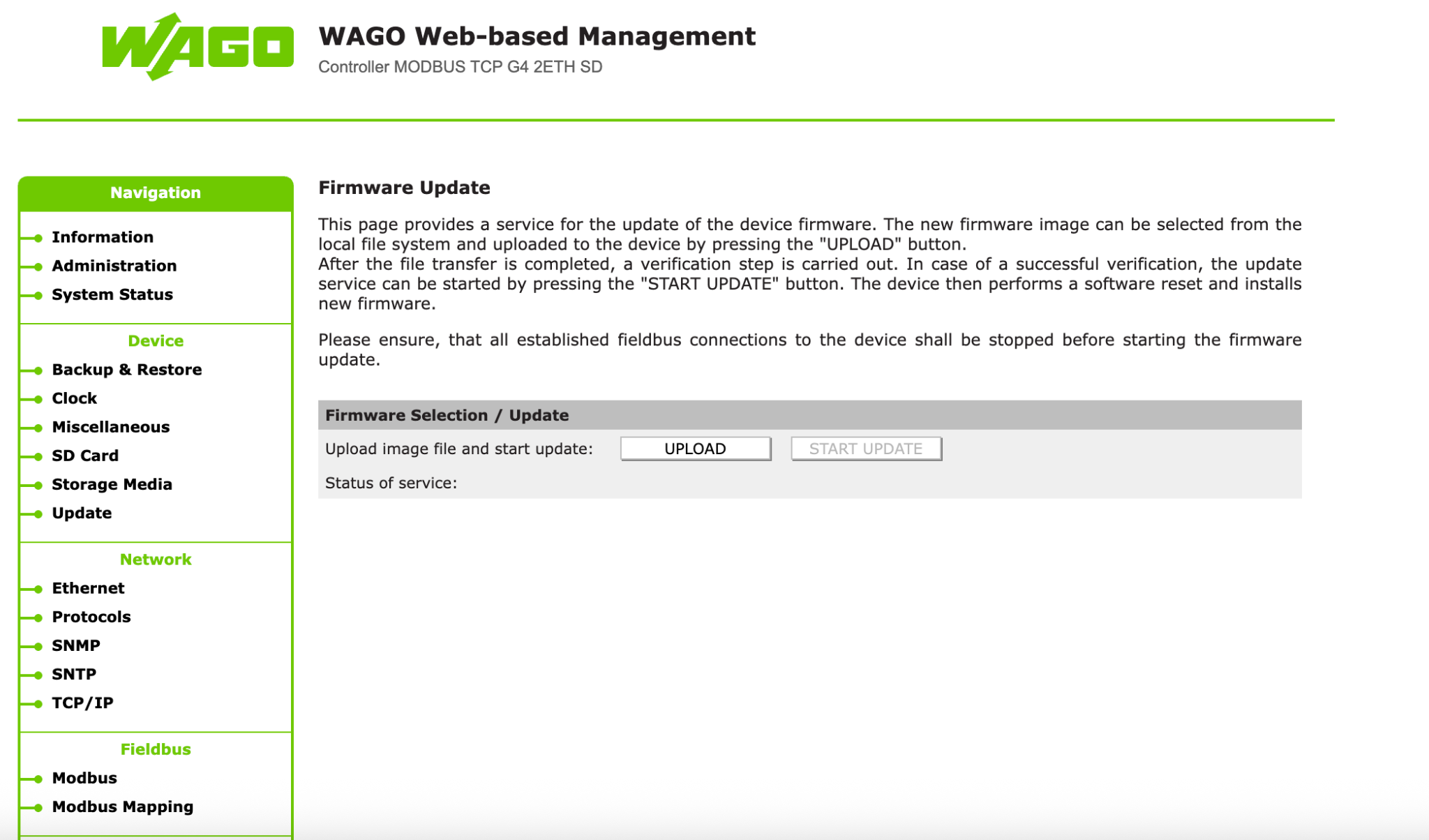
However, it’s not only fridges; web management interfaces for industrial controls are also publicly accessible, often protected only by weak credentials. Figure 2 shows an example of a publicly exposed WAGO interface. The WAGO management interface is a configuration and administration panel for controllers. Through it, a logged-in user can view device details and diagnostics, manage user accounts and passwords, update firmware, back up or restore the full configuration, set the clock, and manage SD card storage. While it typically doesn’t manage switch outputs or read live process values, someone with access could still disrupt operation by changing network or Modbus settings, loading bad firmware or configurations, or by resetting passwords and enabling insecure services.

‍

Figure 2: WAGO Management interface.

‍

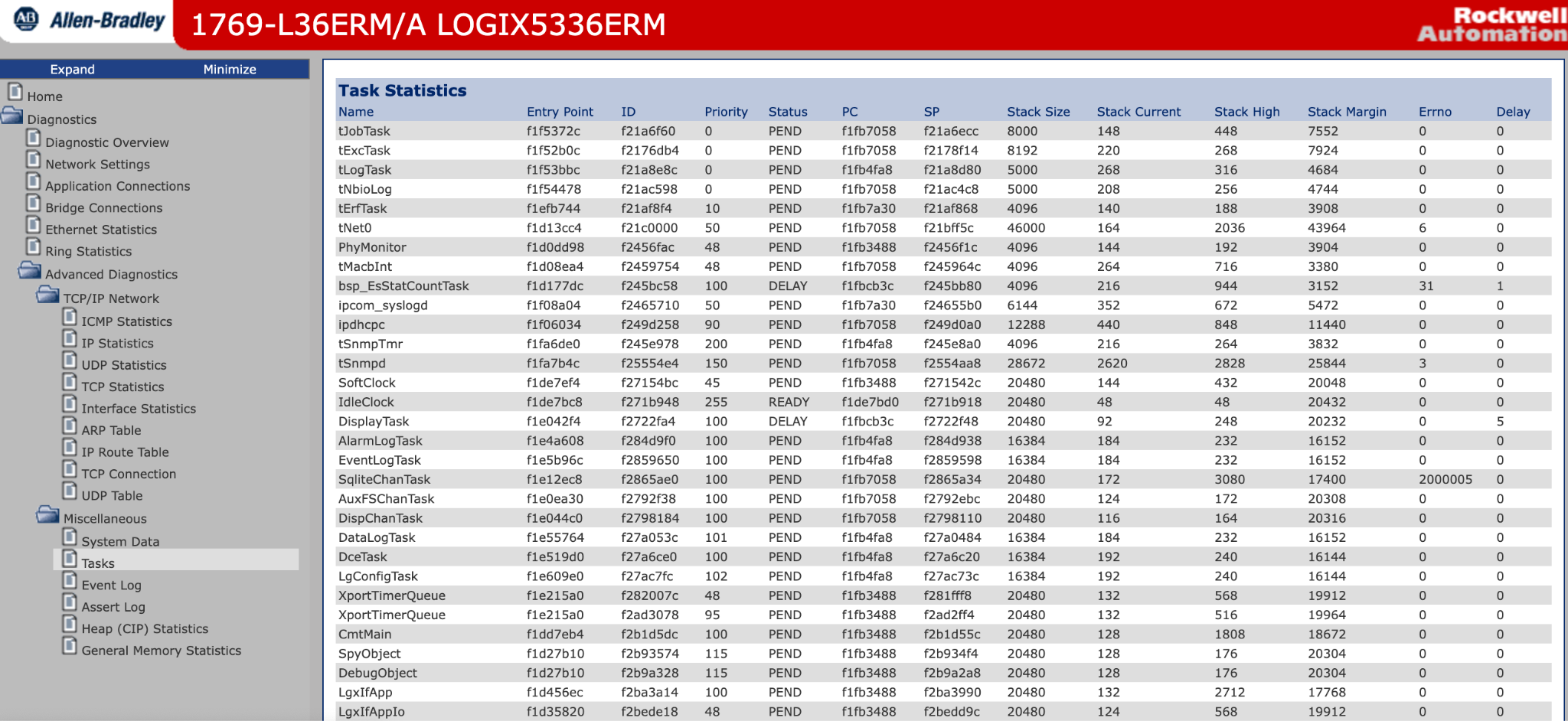
The issue extends beyond management interfaces. During our research, we identified publicly accessible web interfaces belonging to PLCs, including Rockwell Automation Allen-Bradley devices. In each case, the risk arises from how the devices have been deployed and configured, not from a flaw in the vendors’ products.

‍

Figure 3: Web interface for Allen-Bradley CompactLogix controller.

‍

Figure 3 shows the web interface of an Allen-Bradley CompactLogix controller. Unlike the previous examples, this interface provides a view into the controller's operation, including running tasks, network connections, memory usage and diagnostic information. Rockwell Automation's CompactLogix controllers are commonly used to automate industrial processes, from manufacturing and packaging lines to water treatment and material handling systems. Depending on their configuration, these controllers can operate motors, pumps, valves and other physical equipment.

Although in this example the interface shown does not provide direct control over the PLC's logic, it exposes information about the model, firmware, network layout, and connections, which is useful reconnaissance for a bigger attack.

The concern is not necessarily that every exposed interface allows an attacker to immediately manipulate industrial processes. However, these devices are accessible from the public internet in the first place, providing information about systems that may be responsible for controlling physical equipment.

The attacks on refrigeration systems in France highlight the consequences of poorly secured industrial devices. As demonstrated throughout this research, publicly accessible management interfaces are not limited to refrigeration controllers but extend to PLCs and other systems used to manage industrial equipment.

Finding these devices requires little effort. Internet scanners make it possible to identify publicly exposed interfaces quickly, and in some cases these interfaces rely on publicly documented default credentials or have no authentication at all. As attackers increasingly use AI tools, such attacks may be identified and carried out faster and at a greater scale.

The consequences of this access depend on the device and the functionality exposed. While some interfaces provide little more than diagnostic information, others allow users to modify configurations, disrupt communications, or change settings that affect physical equipment. In industrial environments, this can result in operational downtime, damaged equipment and financial losses.

Weak passwords, default credentials and exposed administrative interfaces are not new security issues. Yet their continued presence on internet-connected industrial systems demonstrates how easily preventable weaknesses can leave physical operations vulnerable to attack.

Exposed devices often come from third-party suppliers and contractors, who frequently install refrigeration controllers, gateways and PLCs without the organization ever being aware they are connected to the internet. Asset visibility remains an important foundation, but organizations should assume that some unknown assets and services will exist. Effective security therefore also depends on continuous monitoring, anomaly detection, network segmentation and rapid response, so that risky exposure and unusual activity can be identified and addressed before it becomes disruptive.

Darktrace helps security teams gain visibility across IT and OT and respond to risks: https://www.darktrace.com/products/operational-technology.

Copeland, Dixell, WAGO, Rockwell Automation, Allen-Bradley and CompactLogix are trademarks of their respective owners. Their use here is for identification only and does not imply any affiliation with or endorsement by those owners.

References

1.        https://claroty.com/team82/research/freeze-the-controller-defrost-the-food-uncovering-vulnerabilities-in-danfoss-refrigeration-controllers

‍

Continue reading
About the author
Tara Gould
Malware Research Lead
Your data. Our AI.
Elevate your network security with Darktrace AI