
Key Takeaways
· Darktrace malware researchers have found an ongoing malware campaign using a document-themed lure containing a malicious LNK file and a PDF with an embedded payload.
· The Nim based loader deploys a Rust-based remote access trojan (RAT), using a UAC bypass and DLL search-order hijacking technique targeting Microsoft Edge.
· The RAT uses Discord for C2, creating dedicated channels to manage infected devices and execute commands.
· CikaBika Bot supports system reconnaissance, remote command execution, screenshot capture, and file transfers.
Introduction
In a threat landscape where attackers continue to rely on social engineering techniques to deliver malware, legitimate services are increasingly being abused to support malicious operations. Communications platforms like Discord can provide attackers with a ready-made channel for command-and-control (C2), allowing them to manage compromised devices without establishing dedicated infrastructure.
Malware researchers at Darktrace have identified a campaign distributing CikaBika, a Rust-based RAT that uses Discord for C2. The infection chain begins with a disk image and a malicious Windows shortcut. A Nim loader extracts the final payload and attempts to plant it in Microsoft Edge’s installation directory using a PowerShell UAC bypass. Once running, the RAT collects host information, registers the device with Discord, and accepts commands through a dedicated channel.
Technical Analysis
Initial access and PDF payload
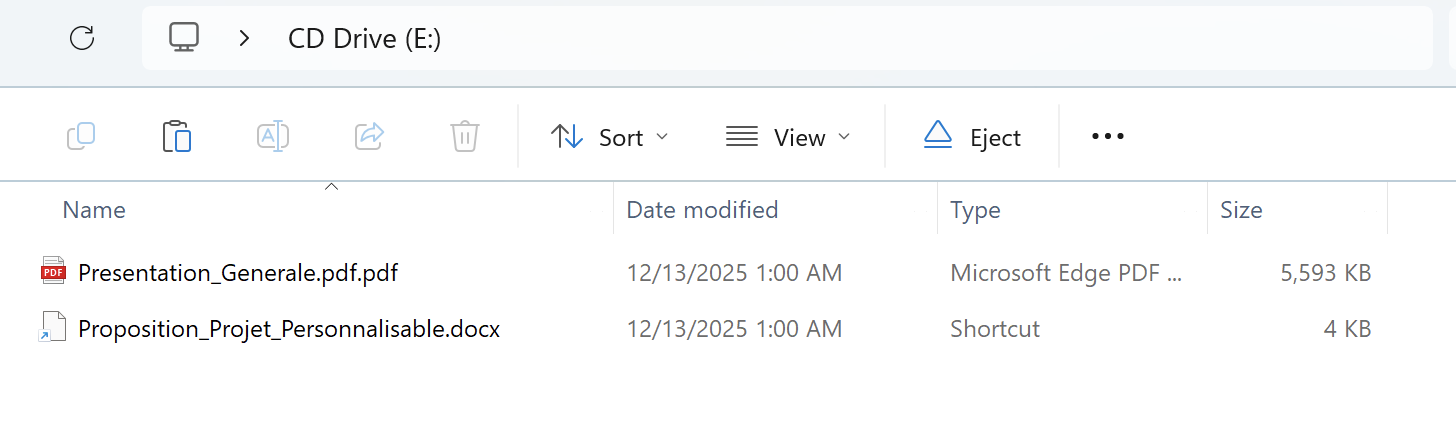
The malware is packaged within a disk image named Proposition_Projet.img. Inside are a PDF titled “Presentation_Generale.pdf.pdf” and a Windows shortcut (LNK) disguised as a Word document, “Proposition_Projet_Personnalisable.docx”. The delivery method has not been confirmed; however, the filenames and document-themed lure are consistent with a phishing campaign.

Opening the shortcut launches a hidden PowerShell process while displaying the PDF as a decoy. The French-language document explains how to produce a written summary or contraction of a text. In the background, PowerShell reads the PDF as bytes and uses the value at offset 239 (0x20) as an XOR key to decode an embedded executable. The resulting payload is written to %TEMP%\IfyuUapz.txt and executed using cmd /c.
Nim loader and UAC bypass
“IfyuUapz.txt” is a Nim-based loader that contains two Base64-encoded blobs: a Rust dynamic-link library (DLL) and a PowerShell deployment script. Both are decoded and written to temporary files, referenced to within the loader as “dllFile” and “copyPs1”. The loader runs the script through a hidden PowerShell process using an encoded command, then attempts to load the DLL using Nim’s loadLib function. If loading fails, it invokes regsvr32.exe and retries.
.png)
The PowerShell component is responsible for moving the DLL to C:\Program Files (x86)\Microsoft\Edge\Application\dbghelp.dll. It first copies the DLL to C:\Windows\Temp\dbghelp.tmp, then modifies HKCU\Software\Classes\ms-settings\shell\open\command so that launching computerdefaults.exe can trigger a command to move the staged DLL into the protected Edge directory. This is an attempt to bypass User Account Control (UAC), which depends on the target’s Windows configuration.
The script also compiles a small C# helper that calls ShowWindow to hide windows associated with Windows Settings and ApplicationFrameHost. It launches the bypass helper three times, checks for the presence of the destination DLL, and attempts to delete the temporary scripts, intermediate DLL, and associated registry changes.
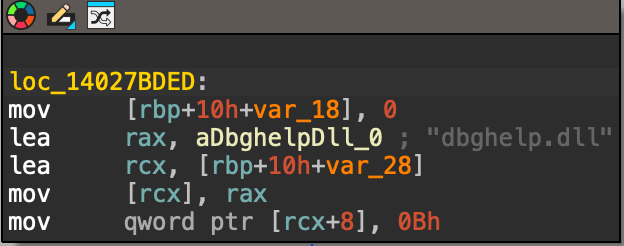
The legitimate msedge.exe has a delay-loaded dependency on dbghelp.dll, and the malicious DLL exports a subset of the functions associated with Microsoft’s debugging library. The attacker appears to be exploiting this dependency through DLL search-order hijacking. However, it does not export every function in Edge’s delay-import table, meaning its compatibility with the host is incomplete. The observed code establishes the intended sideloading route, rather than proving that Edge successfully loaded the planted DLL.
Rust RAT payload
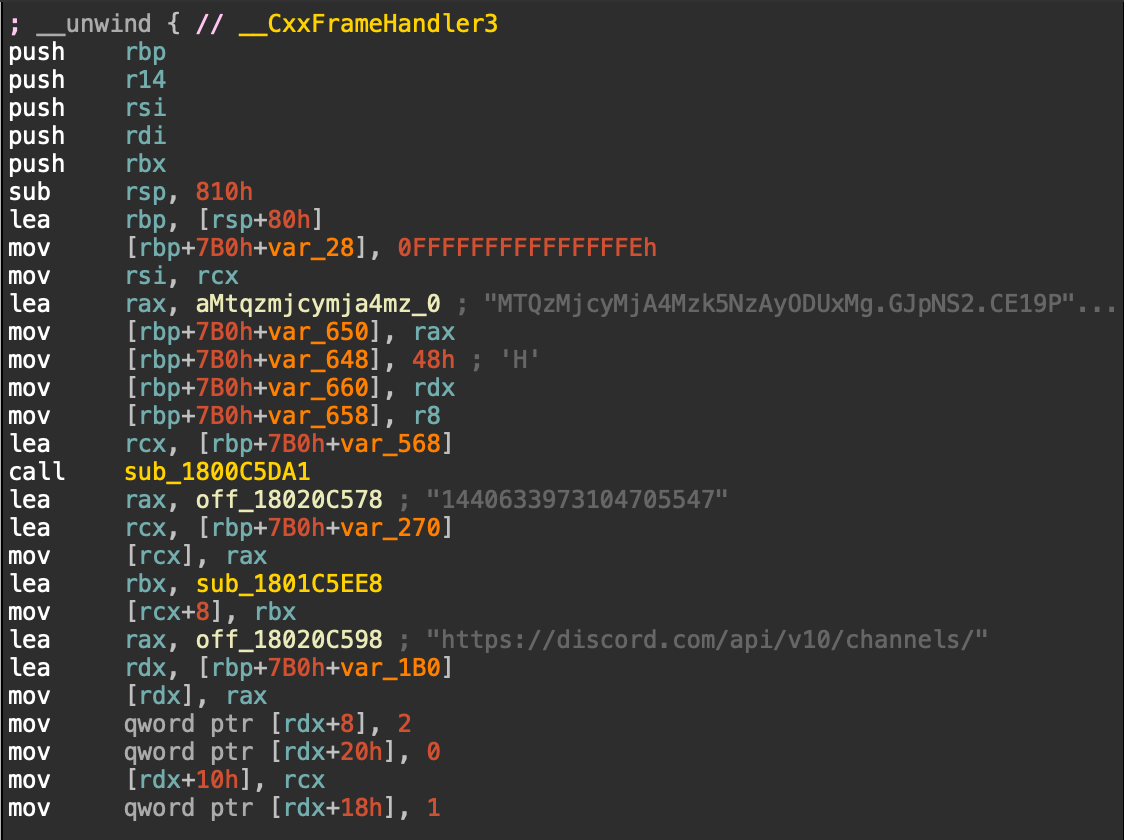
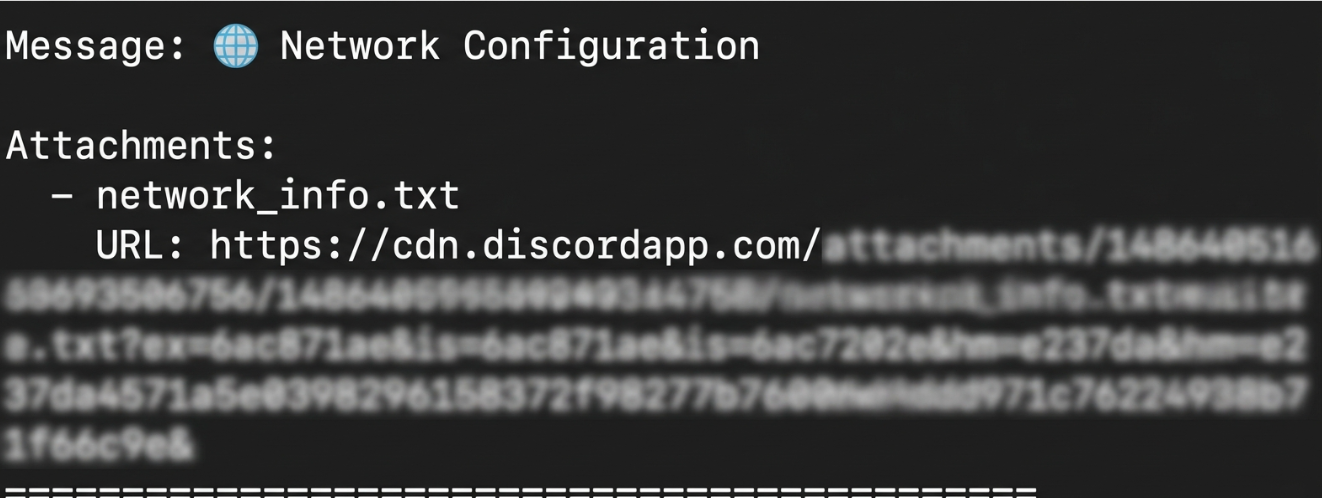
The malicious dbghelp.dll (IfyuUapz.txt) is a Rust-based RAT. At startup, the RAT registers the compromised device with Discord and begins collecting information about the host. Its reconnaissance routine gathers system details, runs tasklist to enumerate processes, executes ipconfig to obtain network configuration, and attempts to take a screenshot. The resulting artifacts include tasklist_startup.txt, network_info.txt, and screenshot.png.
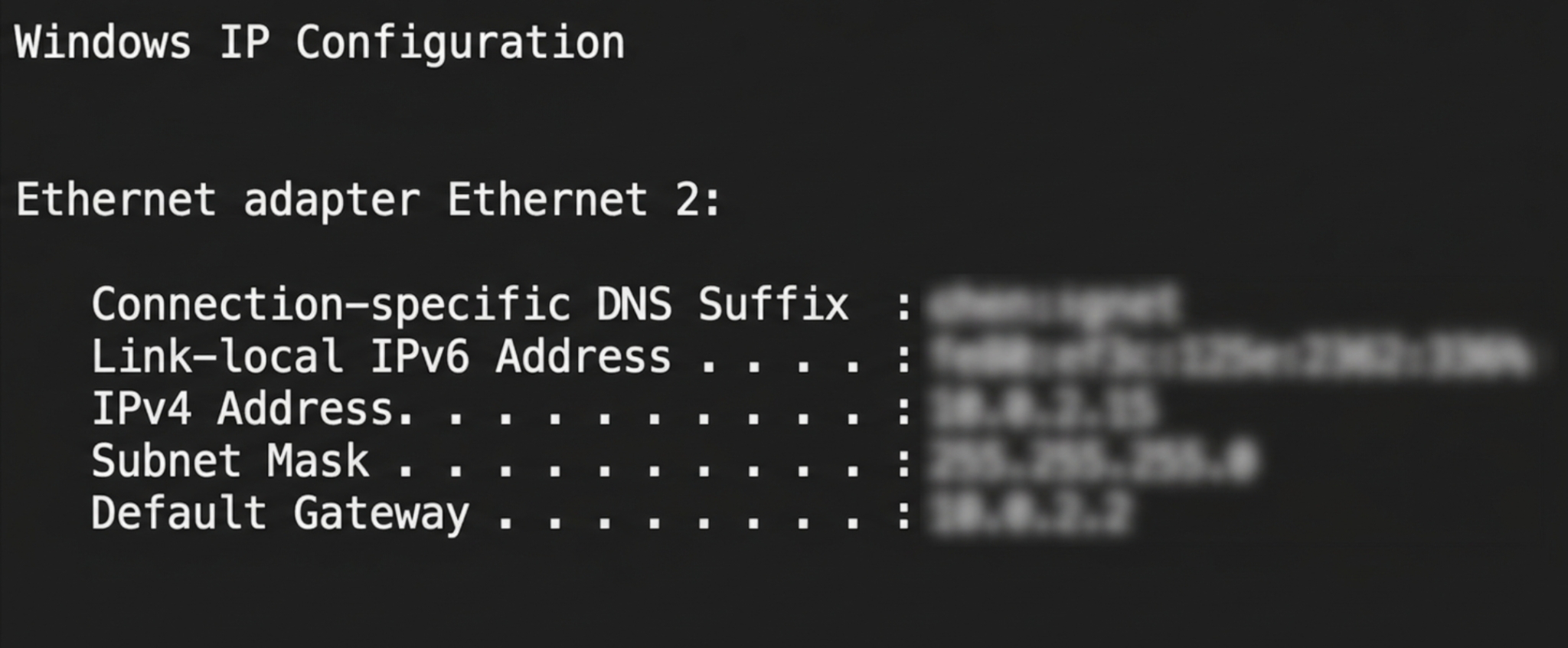
Discord C2
The RAT uses Discord channels to send commands and report results. The operator can send commands to the device’s channel and receive the resulting output in the same conversation. This gives the attacker an interactive command interface without having to operate and maintain a dedicated C2 server.

The command set includes !shell for remote command execution; !sysinfo and !info for host details; !isOn for status checks; !tasklist and !ps for process enumeration; and !kill for process termination. File-transfer commands include !upload and !download. Additional strings and command handlers reference screenshots (!src), camera access (!camera), streaming (!stream), and broadcasting (!broadcast).
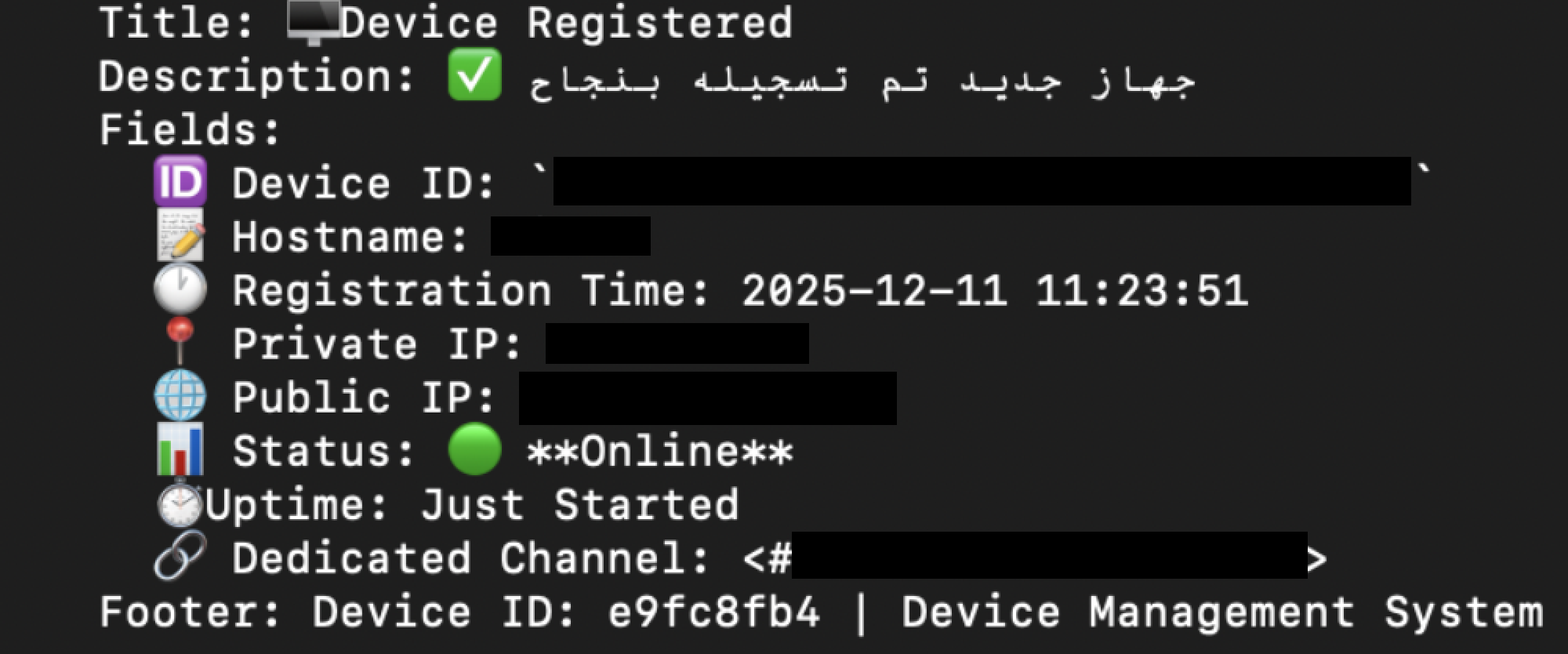
During device registration, the malware retrieves the victim’s public IP address using ipify.com. The registration message records the device ID, hostname, registration time, private and public IP addresses, status, uptime, and the Discord channel assigned to that device.
Operator activity and exfiltration

Once a device is registered, the attacker can issue commands through its dedicated Discord channel. In the observed activity, the attacker compressed a directory into a ZIP and exfiltrated it using ngrok.

The operator can also use !download to retrieve files from target. The example above displays a request for a specific document on the victim’s desktop. The requested file is then returned through the device’s Discord channel, giving the attacker a direct way to store and access selected data.
Conclusion
CikaBika Bot demonstrates how attackers continue to rely on social engineering techniques to deliver malware. Although the initial distribution method has not been confirmed, the use of a disk image containing a shortcut disguised as a Word document, alongside a legitimate-looking PDF, suggests the campaign was designed for phishing.
While Nim is less commonly encountered than C in Windows malware, it has increasingly appeared in malicious tooling. In this case, Nim is used to unpack and deploy a Rust-based RAT, adding another layer to the infection chain.
Once installed, CikaBika Bot uses Discord as its C2 platform, allowing the attacker to manage compromised devices, execute commands, and retrieve files without maintaining dedicated C2 infrastructure. The observed use of Discord channels for individual victims, alongside additional data exfiltration through ngrok, shows how legitimate services can be repurposed to support malicious operations.
Credit to Tara Gould (Malware Research Lead)
Indicators of Compromise (IoCs)
Presentation_Generale.pdf.pdf - eeb52cb95113a131c2c7713c17872da6
Proposition_Projet_Personnalisable.docx.lnk - 62e3e85eca78a0cd7e6669e9f33d936d
dbghelp.dll - c66858718d883bcfb9ce2c19b59f96c9
IfyuUapz.txt - 2deb724a709b0b892248405323350e9b
MITRE ATTACK
T1204.002 – User Execution: Malicious File
T1036.007 – Masquerading: Double File Extension
T1059.001 – PowerShell
T1027 – Obfuscated Files or Information
T1140 – Deobfuscate/Decode Files or Information
T1548.002 – Bypass User Account Control
T1112 – Modify Registry
T1574.001 – DLL Search Order Hijacking
T1036.005 – Masquerading: Match Legitimate Resource Name or Location
T1082 – System Information Discovery
T1016 – System Network Configuration Discovery
T1057 – Process Discovery
T1113 – Screen Capture
T1059.003 – Command and Scripting Interpreter: Windows Command Shell
T1102.002 – Web Service: Bidirectional Communication
T1560.001 – Archive Collected Data: Archive via Utility
T1567 – Exfiltration Over Web Service
T1070.004 – Indicator Removal: File Deletion
T1218.010 – Regsvr32
T1005 – Data from Local System
T1074.001 – Data Staged: Local Data Staging
T1041 – Exfiltration Over C2 Channel
T1564.003 – Hide Artifacts: Hidden Window
T1027.013 – Encrypted/Encoded File