

Cross-domain gaps mean cross-domain attacks
Organizations are built on increasingly complex digital estates. Nowadays, the average IT ecosystem spans across a large web of interconnected domains like identity, network, cloud, and email.
While these domain-specific technologies may boost business efficiency and scalability, they also provide blind spots where attackers can shelter undetected. Threat actors can slip past defenses because security teams often use different detection tools in each realm of their digital infrastructure. Adversaries will purposefully execute different stages of an attack across different domains, ensuring no single tool picks up too many traces of their malicious activity. Identifying and investigating this type of threat, known as a cross-domain attack, requires mastery in event correlation.
For example, one isolated network scan detected on your network may seem harmless at first glance. Only when it is stitched together with a rare O365 login, a new email rule and anomalous remote connections to an S3 bucket in AWS does it begin to manifest as an actual intrusion.
However, there are a whole host of other challenges that arise with detecting this type of attack. Accessing those alerts in the respective on-premise network, SaaS and IaaS environments, understanding them and identifying which ones are related to each other takes significant experience, skill and time. And time favours no one but the threat actor.
Diverse domains and empty grocery shelves
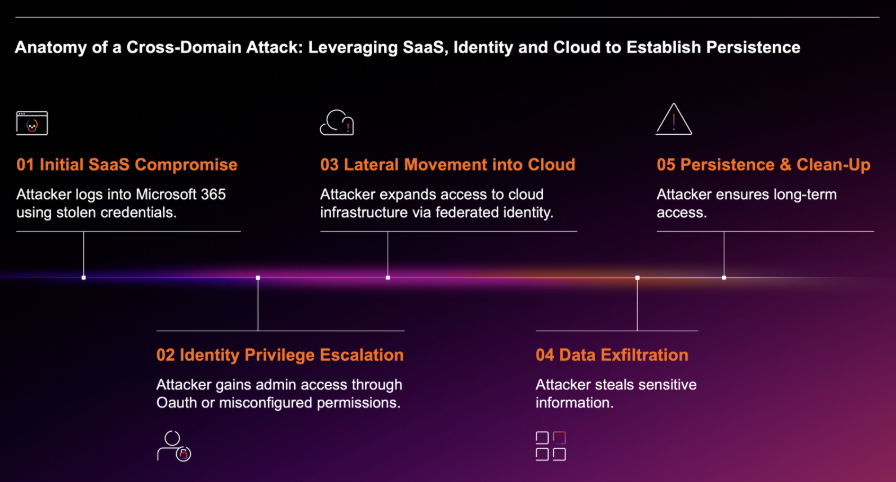
In April 2025, the UK faced a throwback to pandemic-era shortages when the supermarket giant Marks & Spencer (M&S) was crippled by a cyberattack, leaving empty shelves across its stores and massive disruptions to its online service.
The threat actors, a group called Scattered Spider, exploited multiple layers of the organization’s digital infrastructure. Notably, the group were able to bypass the perimeter not by exploiting a technical vulnerability, but an identity. They used social engineering tactics to impersonate an M&S employee and successfully request a password reset.
Once authenticated on the network, they accessed the Windows domain controller and exfiltrated the NTDS.dit file – a critical file containing hashed passwords for all users in the domain. After cracking those hashes offline, they returned to the network with escalated privileges and set their sights on the M&S cloud infrastructure. They then launched the encryption payload on the company’s ESXi virtual machines.
To wrap up, the threat actors used a compromised employee’s email account to send an “abuse-filled” email to the M&S CEO, bragging about the hack and demanding payment. This was possibly more of a psychological attack on the CEO than a technically integral part of the cyber kill chain. However, it revealed yet another one of M&S’s domains had been compromised.
In summary, the group’s attack spanned four different domains:
Identity: Social engineering user impersonation
Network: Exfiltration of NTDS.dit file
Cloud: Ransomware deployed on ESXI VMs
Email: Compromise of user account to contact the CEO
Adept at exploiting nuance
This year alone, several high-profile cyber-attacks have been attributed to the same group, Scattered Spider, including the hacks on Victoria’s Secret, Adidas, Hawaiian Airlines, WestJet, the Co-op and Harrods. It begs the question, what has made this group so successful?
In the M&S attack, they showcased their advanced proficiency in social engineering, which they use to bypass identity controls and gain initial access. They demonstrated deep knowledge of cloud environments by deploying ransomware onto virtualised infrastructure. However, this does not exemplify a cookie-cutter template of attack methods that brings them success every time.
According to CISA, Scattered Spider typically use a remarkable variety of TTPs (tactics, techniques and procedures) across multiple domains to carry out their campaigns. From leveraging legitimate remote access tools in the network, to manipulating AWS EC2 cloud instances or spoofing email domains, the list of TTPs used by the group is eye-wateringly long. Additionally, the group reportedly evades detection by “frequently modifying their TTPs”.
If only they had better intentions. Any security director would be proud of a red team who not only has this depth and breadth of domain-centric knowledge but is also consistently upskilling.
Yet, staying ahead of adversaries who seamlessly move across domains and fluently exploit every system they encounter is just one of many hurdles security teams face when investigating cross-domain attacks.
Resource-heavy investigations
There was a significant delay in time to detection of the M&S intrusion. News outlet BleepingComputer reported that attackers infiltrated the M&S network as early as February 2025. They maintained persistence for weeks before launching the attack in late April 2025, indicating that early signs of compromise were missed or not correlated across domains.
While it’s unclear exactly why M&S missed the initial intrusion, one can speculate about the unique challenges investigating cross-domain attacks present.
Challenges of cross-domain investigation
First and foremost, correlation work is arduous because the string of malicious behaviour doesn’t always stem from the same device.
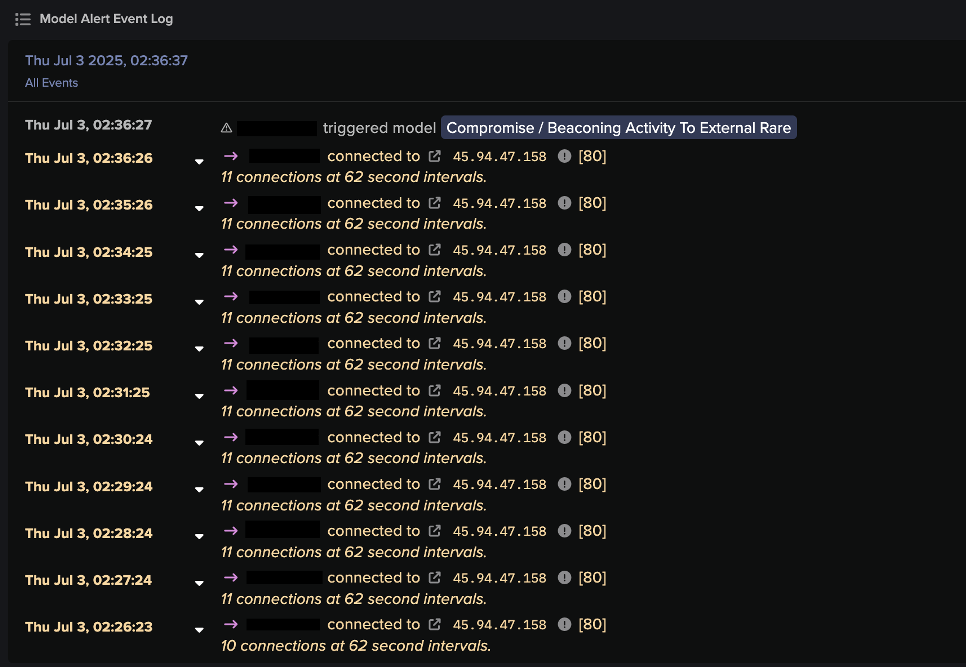
A hypothetical attack could begin with an O365 credential creating a new email rule. Weeks later, that same credential authenticates anomalously on two different devices. One device downloads an .exe file from a strange website, while the other starts beaconing every minute to a rare external IP address that no one else in the organisation has ever connected to. A month later, a third device downloads 1.3 GiB of data from a recently spun up S3 bucket and gradually transfers a similar amount of data to that same rare IP.
Amid a sea of alerts and false positives, connecting the dots of a malicious attack like this takes time and meticulous correlation. Factor in the nuanced telemetry data related to each domain and things get even more complex.
An analyst who specialises in network security may not understand the unique logging formats or API calls in the cloud environment. Perhaps they are proficient in protecting the Windows Active Directory but are unfamiliar with cloud IAM.
Cloud is also an inherently more difficult domain to investigate. With 89% of organizations now operating in multi-cloud environments time must be spent collecting logs, snapshots and access records. Coupled with the threat of an ephemeral asset disappearing, the risk of missing a threat is high. These are some of the reasons why research shows that 65% of organisations spend 3-5 extra days investigating cloud incidents.
Helpdesk teams handling user requests over the phone require a different set of skills altogether. Imagine a threat actor posing as an employee and articulately requesting an urgent password reset or a temporary MFA deactivation. The junior Helpdesk agent— unfamiliar with the exception criteria, eager to help and feeling pressure from the persuasive manipulator at the end of the phoneline—could easily fall victim to this type of social engineering.
Empowering analysts through intelligent automation
Even the most skilled analysts can’t manually piece together every strand of malicious activity stretching across domains. But skill alone isn’t enough. The biggest hurdle in investigating these attacks often comes down to whether the team have the time, context, and connected visibility needed to see the full picture.
Many organizations attempt to bridge the gap by stitching together a patchwork of security tools. One platform for email, another for endpoint, another for cloud, and so on. But this fragmentation reinforces the very silos that cross-domain attacks exploit. Logs must be exported, normalized, and parsed across tools a process that is not only error-prone but slow. By the time indicators are correlated, the intrusion has often already deepened.
That’s why automation and AI are becoming indispensable. The future of cross-domain investigation lies in systems that can:
- Automatically correlate activity across domains and data sources, turning disjointed alerts into a single, interpretable incident.
- Generate and test hypotheses autonomously, identifying likely chains of malicious behaviour without waiting for human triage.
- Explain findings in human terms, reducing the knowledge gap between junior and senior analysts.
- Operate within and across hybrid environments, from on-premise networks to SaaS, IaaS, and identity systems.
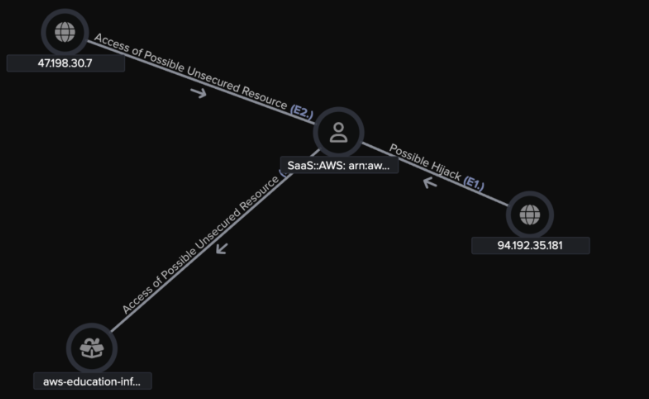
This is where Darktrace transforms alerting and investigations. Darktrace’s Cyber AI Analyst automates the process of correlation, hypothesis testing, and narrative building, not just within one domain, but across many. An anomalous O365 login, a new S3 bucket, and a suspicious beaconing host are stitched together automatically, surfacing the story behind the alerts rather than leaving it buried in telemetry.
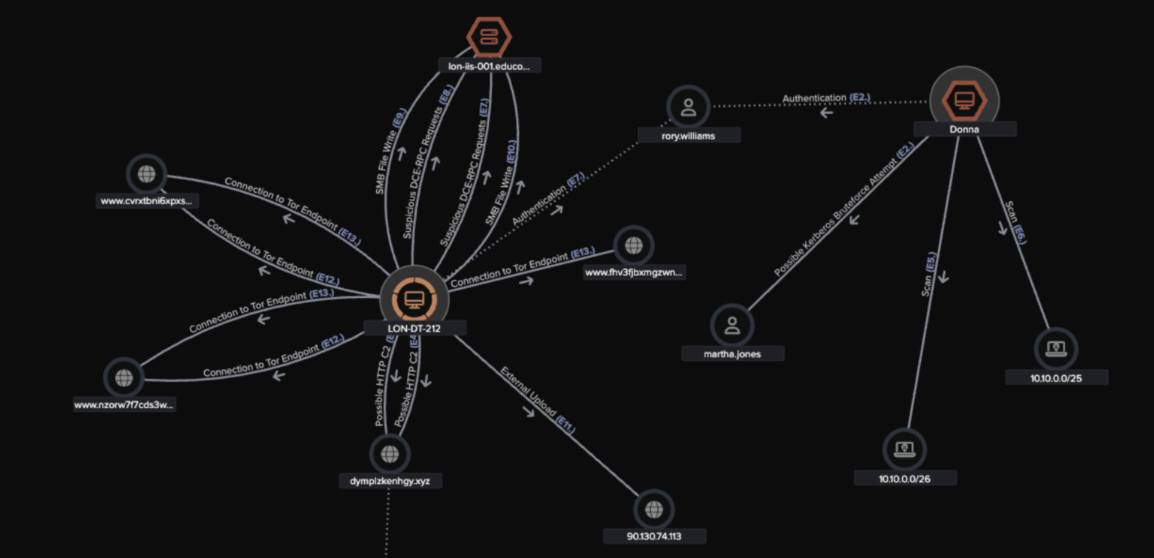
By analyzing events from disparate tools and sources, AI Analyst constructs a unified timeline of activity showing what happened, how it spread, and where to focus next. For analysts, it means investigation time is measured in minutes, not days. For security leaders, it means every member of the SOC, regardless of experience, can contribute meaningfully to a cross-domain response.
Until now, forensic investigations were slow, manual, and reserved for only the largest organizations with specialized DFIR expertise. Darktrace / Forensic Acquisition & Investigation changes that by leveraging the scale and elasticity of the cloud itself to automate the entire investigation process. From capturing full disk and memory at detection to reconstructing attacker timelines in minutes, the solution turns fragmented workflows into streamlined investigations available to every team.
What once took days now takes minutes. Now, forensic investigations in the cloud are faster, more scalable, and finally accessible to every security team, no matter their size or expertise.












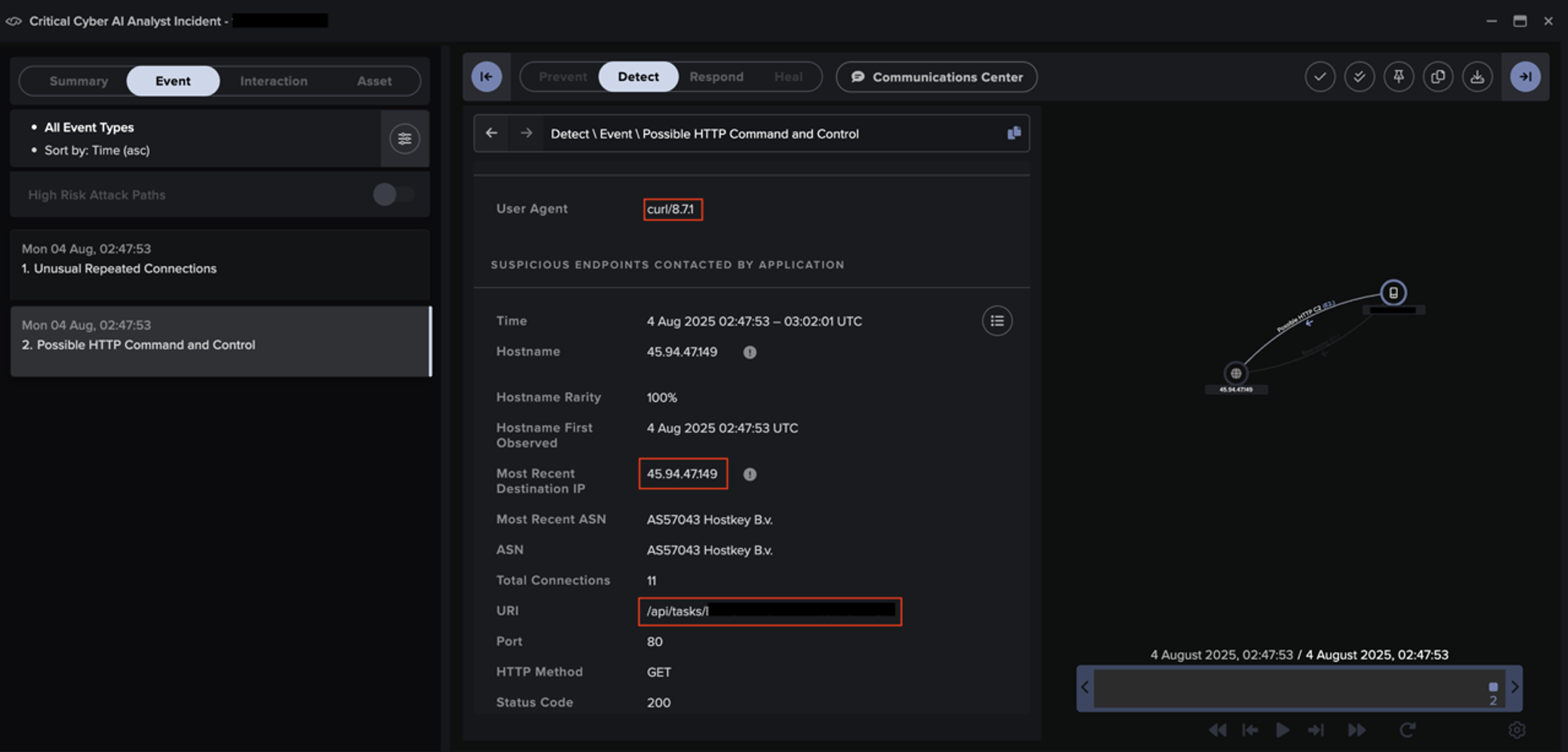
![Autonomous Response’s suggested actions to block suspicious connectivity to IP 45.94.47[.]149 for the device within the second customer environment.](https://cdn.prod.website-files.com/626ff4d25aca2edf4325ff97/6931e3cb1ddc36af8205720b_Screenshot%202025-12-04%20at%2011.40.54%E2%80%AFAM.png)
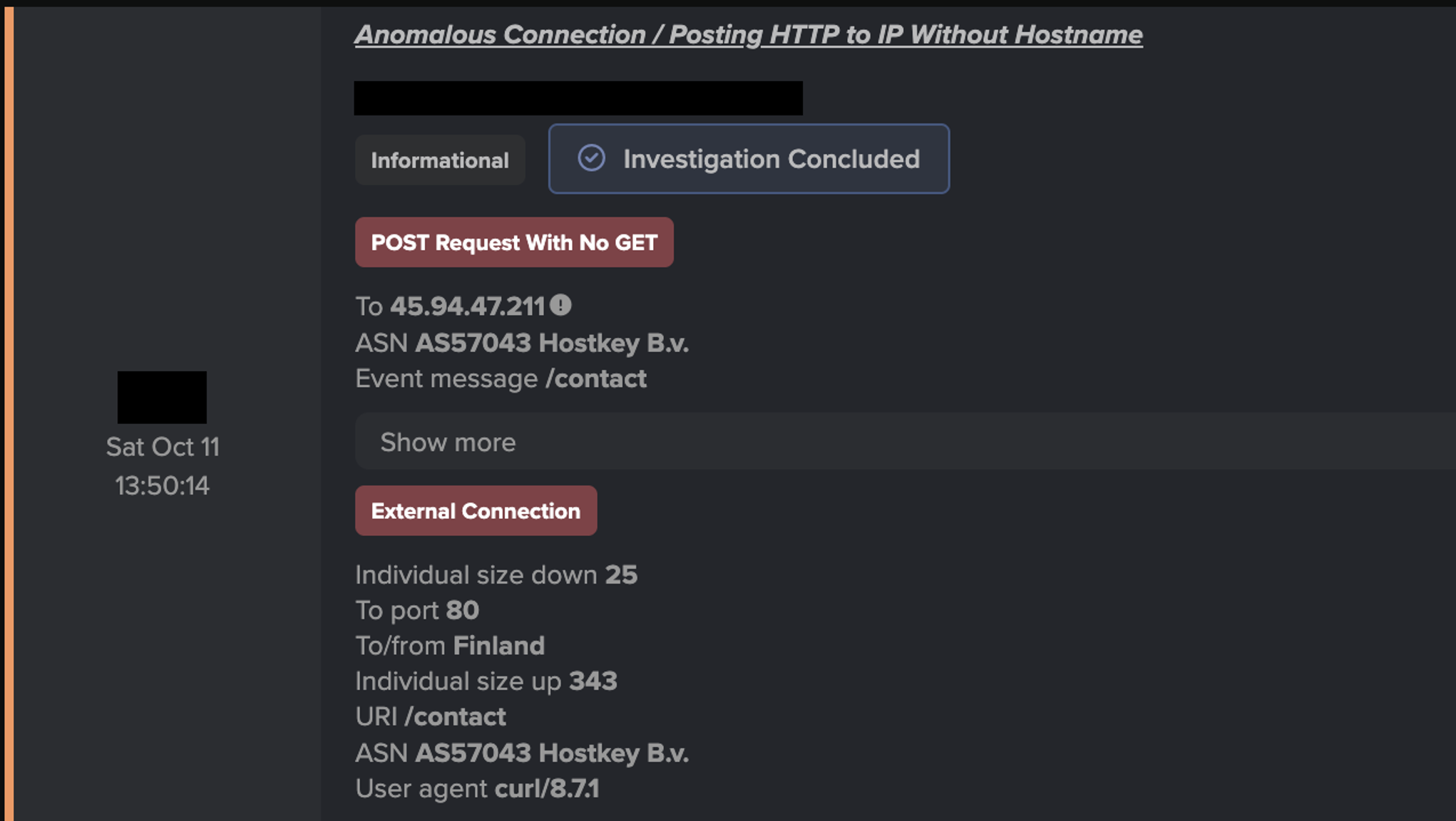
![Cyber AI Analyst investigation finding a successful POST request to 45.94.47[.]144 for the device within the third customer environment.](https://cdn.prod.website-files.com/626ff4d25aca2edf4325ff97/6931e41d22eb7e9a3e8217d5_Screenshot%202025-12-04%20at%2011.42.15%E2%80%AFAM.png)