
Key takeaways
- Darktrace identified a camera device infected with the Mirai/Katana botnet in a sports-sector customer environment, showing how exposed IoT devices can become active participants in wider attack chains.
- The compromise involved suspicious Wget behavior, file downloads from rare external IPs, unusual incoming HTTP connections to video recorder management interfaces, and large outbound data transfers to infrastructure associated with botnet activity.
- The incident highlights the importance of extending visibility and response beyond traditional endpoints, as unmanaged or overlooked connected devices can be exploited for command-and-control, malware delivery, and data exfiltration.
Mirai and the Katana variant
Mirai is a botnet that first emerged in August 2016 and is well known for launching large-scale distributed-denial-of-service (DDoS) attacks, typically targeting exposed Internet of Things (IoT) devices. It identifies vulnerable IoT devices ,often by abusing default credentials or exposed services, and recruiting them into a remotely controlled botnet that can be used in DDoS campaigns [1].
Katana, one of the many variants that arose after Mirai’s source code was released publicly, was first observed in late 2020 and has been seen using more advanced capabilities, including custom command-and-control (C2), persistence mechanisms, and DDoS functionality [2].
In March 2026, research from the Nokia Deepfield Emergency Response Team (ERT) identified Katana as a Mirai-derived DDoS botnet targeting Android-based TV set-top boxes through exposed Android Debug Bridge (ADB) access. Observed capabilities included custom C2, runtime domain rotation, multiple DDoS methods, and an on-device compiled kernel rootkit used for persistence and stealth [3].
Darktrace’s detection of Mirai Botnet activity on a camera device
In early 2026, Darktrace identified a Network/Digital Video Recorder (NVR/DVR) on the network of a sports-sector customer that had been infected with the Mirai Katana botnet and subsequently used to exfiltrate data from the customer’s environment. Seemingly related follow-up activity was observed on the same device several months later.
In both instances, the Darktrace Security Operations Centre (SOC) alerted the customer as part of the Managed Threat Detection (MTD) service. However, as Darktrace’s Autonomous Response capability was not fully enabled on the affected device, Darktrace was unable to proactively block the suspicious activity or prevent the compromise from continuing and recurring.
The initial compromise appears to have occurred when the affected device was seen using Wget to download Linux-based Executable and Linkable Format (ELF) files from a rare external IP, 195.177.94[.]105, which had not previously been observed in the customer’s network. Further analysis downloaded file hashes identified files related to the Mirai botnet.
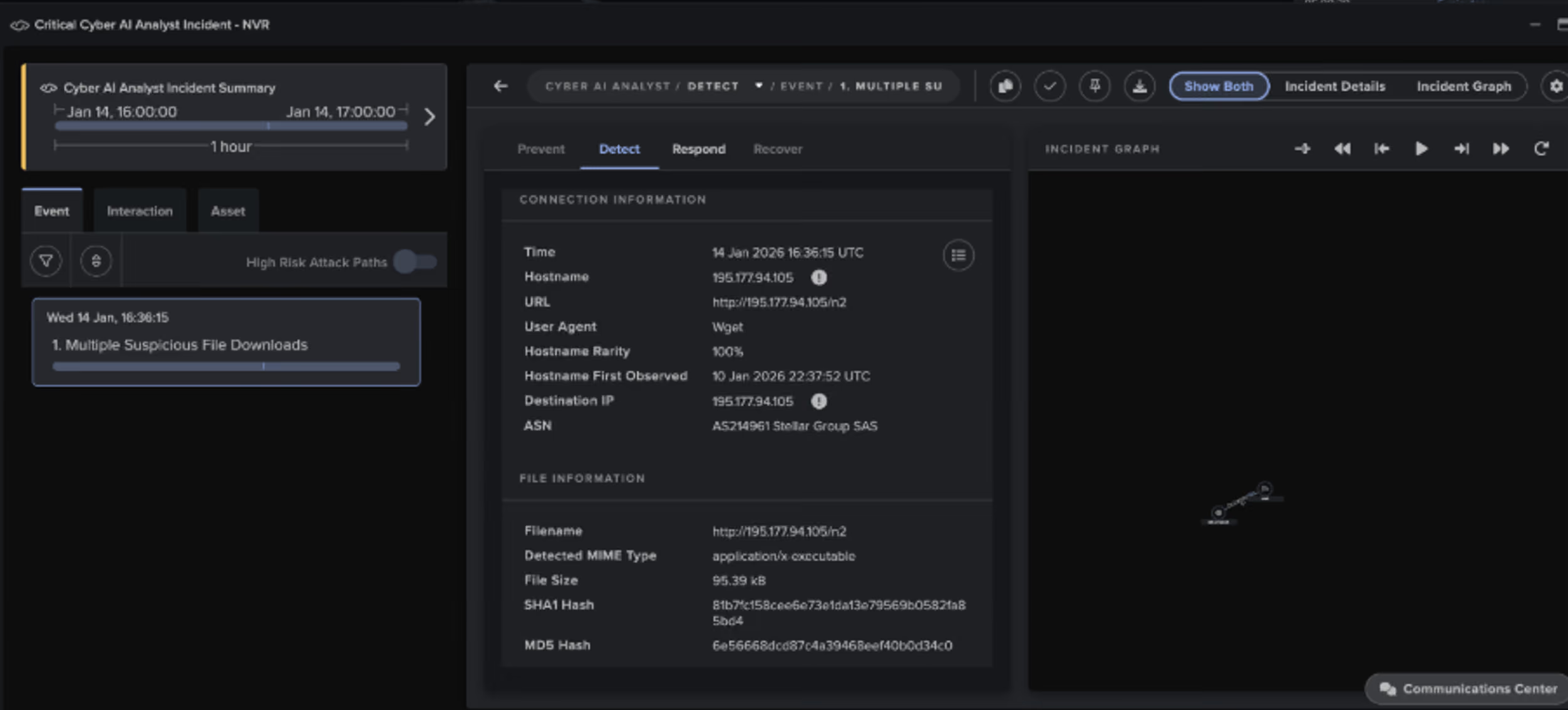
Within a few hours, Darktrace detected the device uploading close to 3GB of data to another external IP, 50.7.49[.]4:3017 (ASN AS30058 FDCSERVERS), suggesting that the activity was likely routed via a virtual private server (VPS) hosted by FDC Servers [2]. Attackers often abuse VPS infrastructure from legitimate cloud providers to blend in with legitimate traffic and evade IP reputation and geolocation-based detections.
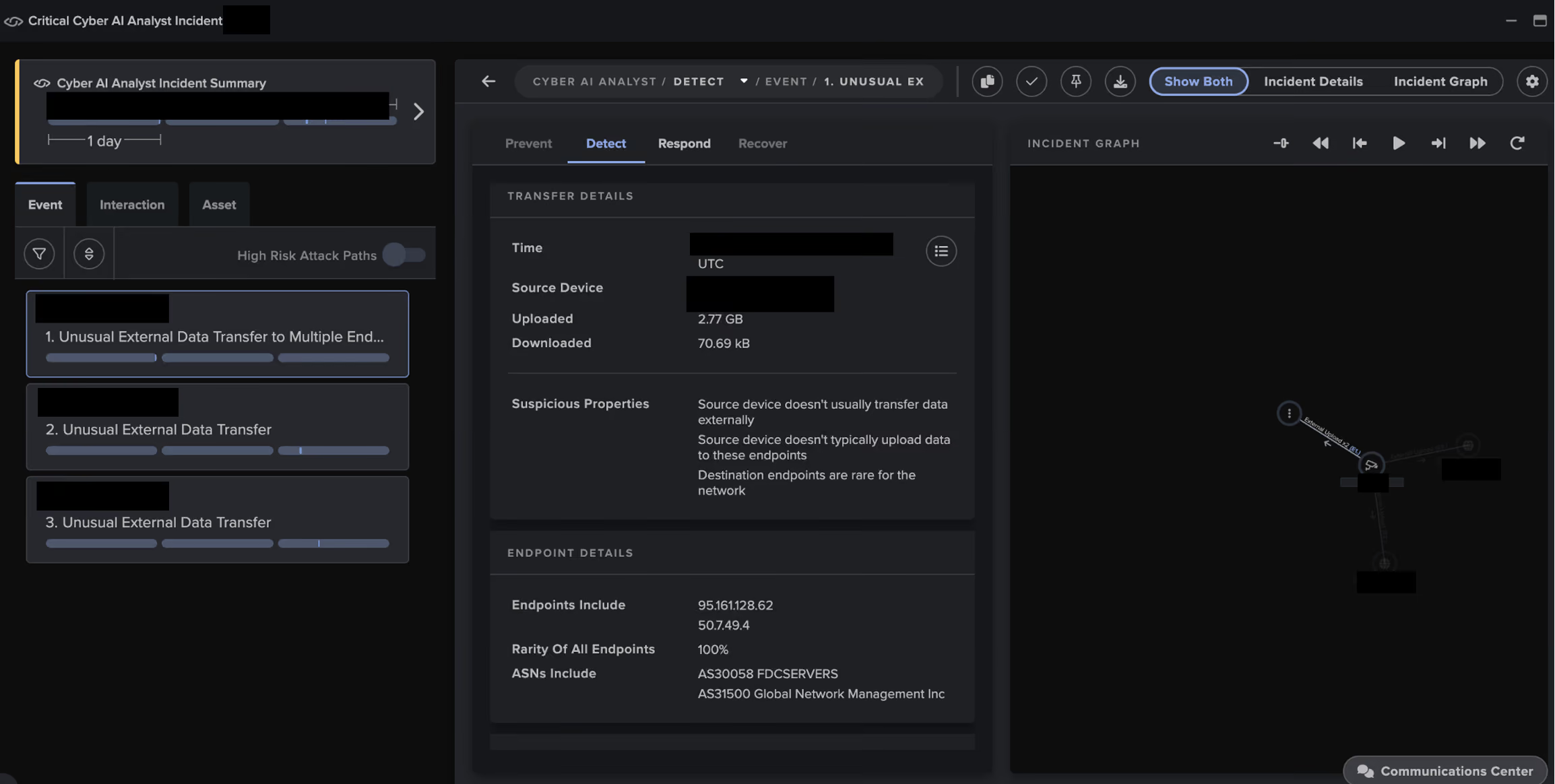
Darktrace continued to observe similar data transfers to multiple rare endpoints including 171.225.223[.]53, 95.161.128[.]62, 61.7.209[.]88, 95.161.128[.]62, which have been linked to Mirai by open-source intelligence (OSINT).
Exploitation continued
Several months later, Darktrace identified the same exfiltration pattern on the device again, this time with stronger indications of associations with Mirai Katana botnet infection.
The device received incoming HTTP connections from 129.121.114[.]124, an external IP known to be associated with the Katana botnet IP [3]. The connections targeted the ‘/dvr/cmd’ path using the root username and user agent Mozilla/5.0 (Windows NT 10.0; Win64; x64) AppleWebKit/537.36 (KHTML, like Gecko) Chrome/42.0.2311.135 Safari/537.36 Edge/12.246.
The ‘/dvr/cmd’ path appears to be associated with the affected device’s web management functionality. This API endpoint has historically been targeted by Mirai and other IoT botnets through the exploitation of critical command injection vulnerabilities and automated botnet exploitation [4].
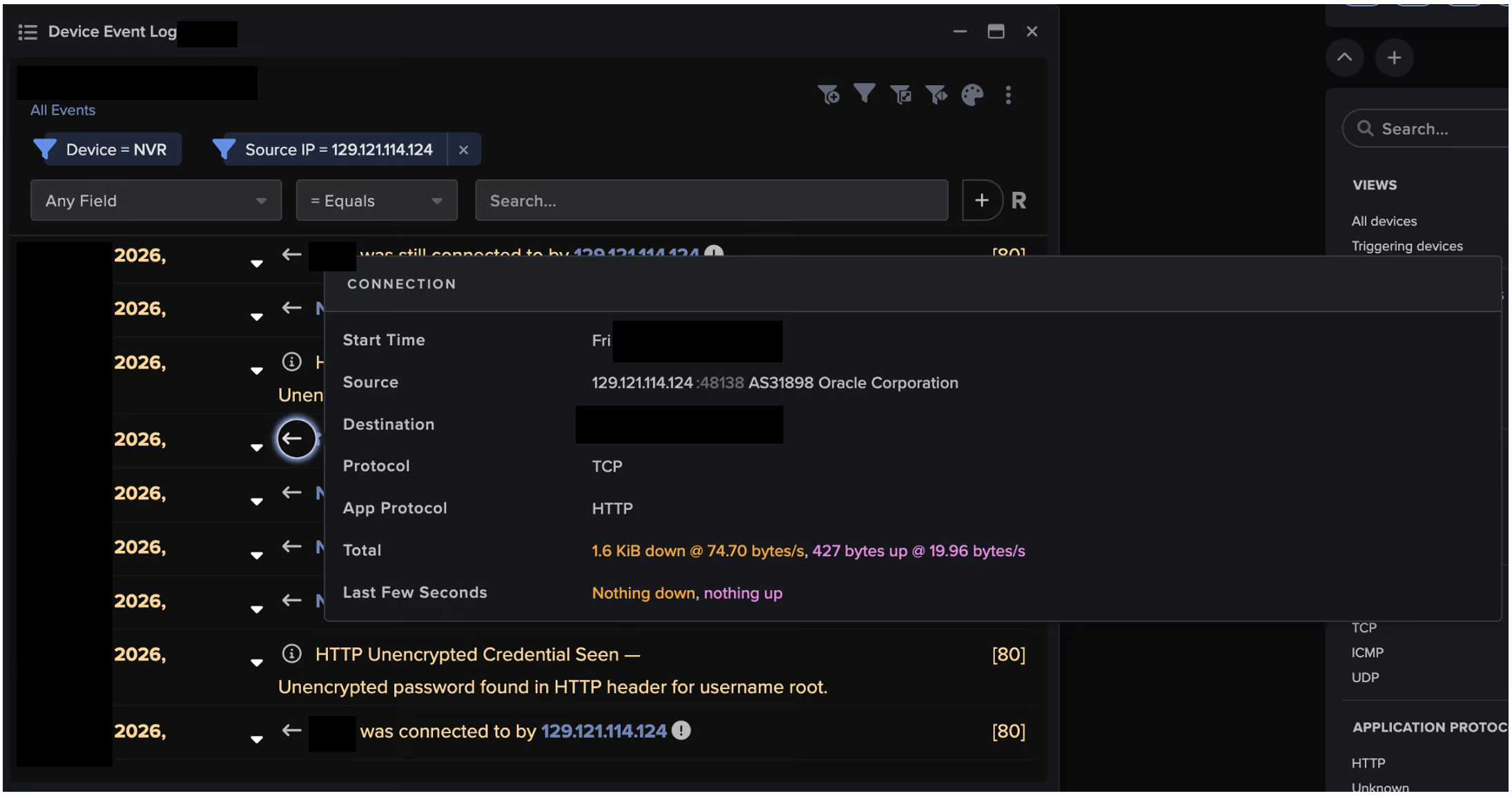
A few days later, Darktrace observed the Wget utility being used to download ELF files, including “/lil”, from the IP 129.121.114[.]124. OSINT reporting has since associated this IP address with the Mirai Katana botnet. Notably, the IP observed earlier in the year, 195.177.94[.]105, had also hosted a file named “lil”, indicating a link between the observed activity.
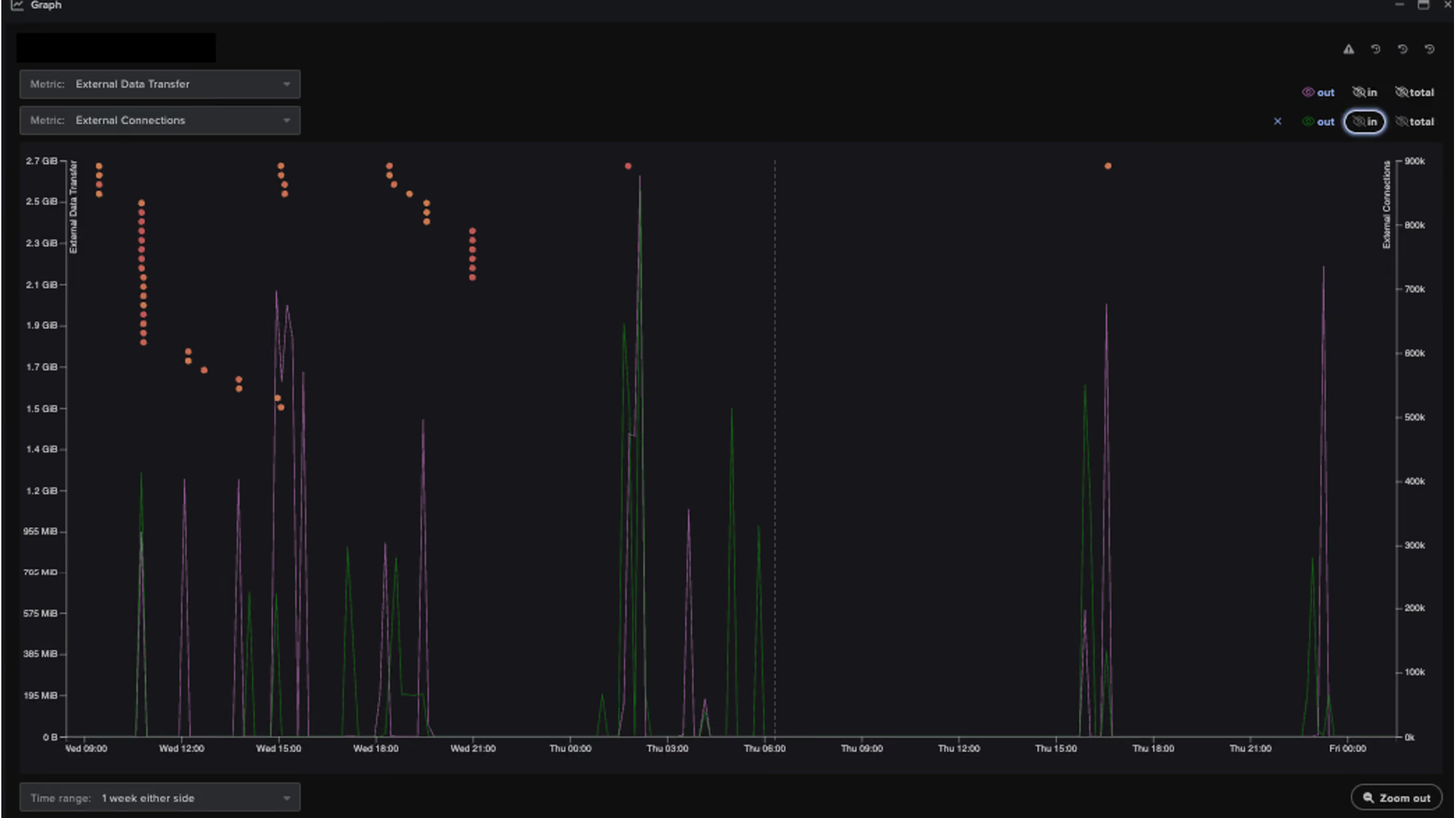
Over the following days, the device received a sudden spike in connections from multiple rare external endpoints, suggesting a possible successful brute force attack. Darktrace also observed the device exfiltrating just under 4GB of data to another Mirai-associated IP address, 66.92.198[.]194, over ports 3344, 954922, and 80. Finally, the device was seen uploading data to the Mirai botnet IP 5.175.249[.]53 over port138 and exhibited an increase in UDP connections to 34.18.28[.]10 over port 9068.
Following both file download events, Darktrace identified spikes in external data transfers and connection attempts to rare destinations. While Darktrace’s Threat Research team could not confirm with high confidence that this to activity was directly associated with Mirai, it may indicate that Mirai Katana includes data exfiltration functionality.
Darktrace’s threat researchers also identified an internet-facing NTP server belonging to a separate customer receiving incoming connection attempts from the same initially observed IP, 195.177.94[.]105,over the port 123. This suggests that Mirai Katana may not exclusively target IoT devices.
Conclusion
This case demonstrates how threat actors can exploit overlooked IoT and OT devices to support broader malicious objectives. Here, a camera device infected with a botnet was used to exfiltrate data from the customer's environment, showing how peripheral assets can become active participants in an attack chain.
This case also reinforces a challenge many organizations face today: extending security visibility beyond traditional endpoints and servers. Cameras, sensors, and other connected devices often operate with limited monitoring and may fall outside established security processes, despite maintaining network connectivity and access to potentially sensitive environments. This is particularly relevant in the sports sector, where growing reliance on connected cameras, smart stadium technologies, and other IoT devices continues to expand the attack surface, as highlighted in Darktrace's Sports Sector Threat Report.
As botnets like Kata and Mirai continue to evolve, defenders need visibility across unmanaged IoT and edge devices, as well as security solutions that can recognize subtle deviations in device behavior that may indicate an emerging compromise.
Credit to Parvatha Ananthakannan (Cyber Analyst), Signe Zaharka (Principal Analyst)
Edited by Ryan Traill (Content Manager)
Appendices
Darktrace Model Detections
· Anomalous File / EXE from Rare External Location
· Anomalous File / Multiple EXE from Rare External Locations
· Device / Initial Attack Chain Activity
· Unusual Activity / Unusual External Data to New Endpoint
· Anomalous Connection / Data Sent to Rare Domain
· Unusual Activity / Enhanced Unusual External Data Transfer
· Anomalous Connection / Uncommon 1 GiB Outbound
· Device / Significant UDP Increase
· Anomalous Connection / Low and Slow Exfiltration to IP
· Compromise / Large Number of Suspicious Failed Connections
· Compromise / Large Number of Suspicious Successful Connections
· Unusual Activity / Unusual External Activity
· Compliance / SSH to Rare External Destination
· Unusual Activity / Unusual DNS
· Device / External Network Scan
· Device / Suspicious DNS Activity
· Device / Large Number of Model Alerts






%201.avif)





.png)