What is a Cloud Workload Protection Platform (CWPP)?
What is a cloud workload protection platform?
A cloud workload protection platform (CWPP) is a vital part of modern cloud security that secures workloads and applications across dynamic cloud environments. Its continuous, automated nature enables it to keep pace with the scalable and ephemeral nature of cloud workloads. A CWPP's architecture consists of a data collection and analysis engine, a centralized management console, and a protection mechanism.
What does a CWPP protect?
A CWPP protects the following types of cloud computing workloads from cybersecurity risks:
- Containers: CWPPs protect containerized applications and their supporting infrastructures. They scan dependencies and images, enforce runtime and admission policies, block exploitable network traffic paths, and detect anomalous behavior.
- Virtual machines (VMs): A CWPP enforces least-privilege access and network segmentation, reducing lateral movement across your company's virtualized environments.
- Storage: This tool can detect misconfigurations, enforce access and encryption policies, and scan objects for malware. These capabilities secure data stored in various cloud storage services.
- Databases: CWPPs guard server and container databases that run in cloud environments, preventing data loss and theft.
- Serverless functions: A CWPP secures a serverless application's code and execution. It analyzes code for secrets and vulnerabilities, restricts network or egress paths, and validates identity and access management permissions.
- Physical servers: A CWPP uses host-based agents and applies network controls to help contain risks.
- APIs: CWPPs detect malicious or anomalous API usage to and from workloads, integrating with gateway controls and protecting the application programming interfaces that connect your cloud services. They enforce policies, discover API endpoints that workloads expose, and baseline normal call patterns.
- Service layers: A CWPP uses segmentation, runtime monitoring, and secret hygiene checks to protect interservice communication such as message queues, middleware, and service mesh. This ability safeguards your underlying services and application layers.
Benefits of CWPPs for cloud security
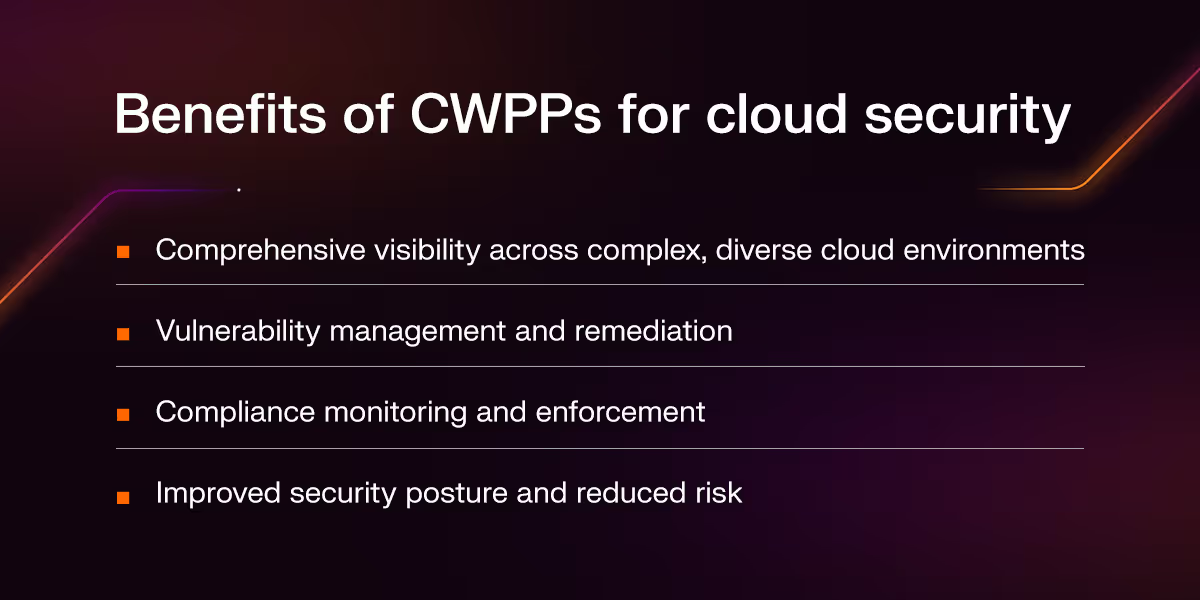
CWPPs offer the following benefits for cloud security:
- Comprehensive visibility across complex, diverse cloud environments: A CWPP mitigates visibility gaps and accelerates incident triage with a single source of truth. This capability reduces manual inventory work, improving capacity planning and accountability across teams.
- Vulnerability management and remediation: CWPPs prioritize what truly matters, shrink backlogs, and reduce emergency downtime. In doing so, they help your organization meet remediation service level agreements (SLAs) and free your teams to focus on high-level priorities rather than low-risk findings.
- Compliance monitoring and enforcement: Implementing a CWPP accelerates your audits and reduces the need to manually gather evidence. A CWPP enforces consistent controls across cloud environments, lowering compliance overhead and the risk of fines.
- Improved security posture and reduced risk: With a CWPP to help protect your cloud systems, you can expect fewer and less severe incidents, a smaller blast radius, and higher availability. Deploying a CWPP can result in measurable posture improvements for increased customer and executive confidence.
Learn more about cloud protection with Darktrace
Darktrace is a leading cybersecurity partner with advanced, AI-powered solutions built for the dynamic cloud computing environment and evolving adversarial techniques. Our comprehensive technology empowers your team with real-time threat detection capabilities, proactive risk management, and enhanced compliance. Learn more by exploring our blog, reviewing the Darktrace / CLOUD solution brief, or downloading the CISO's Guide to Cloud Security.