
ブログ
/
AI
/
July 10, 2026

AIインフラがアタックサーフェスの一部に

ダークトレースは、Amazon Bedrockサービスに接続されたAIゲートウェイが侵害され、その後暗号通貨マイニングインフラとの通信が観測された事例を調査しました。このインシデントは、AIゲートウェイが企業のアタックサーフェス(攻撃対象領域)の一部となりつつあること浮き彫りにしており、ビヘイビア分析、クラウドの可視性、そしてAIインフラをアイデンティティおよびワークロードとあわせて保護することの重要性を示しています。
Inside the SOC
Darktrace cyber analysts are world-class experts in threat intelligence, threat hunting and incident response, and provide 24/7 SOC support to thousands of Darktrace customers around the globe. Inside the SOC is exclusively authored by these experts, providing analysis of cyber incidents and threat trends, based on real-world experience in the field.
Written by
Angel Arribas Lopez
Associate Principal Cyber Analyst
Default blog image
10
Jul 2026

AIインフラとアタックサーフェスの進化

多くの組織が生成AIを実運用環境に導入するなかで、企業のクラウド環境内に新たなインフラのレイヤーが出現しています。それはAIゲートウェイです。AIゲートウェイはユーザー、アプリケーション、基盤モデルの間に位置し、多くの場合クラウドの特権アクセスを保持し、さまざまなAIサービスへのアクセスを大規模に管理しています。

AIゲートウェイとは?

AIゲートウェイはユーザー、アプリケーション、基盤モデルの間に位置し、多くの場合クラウドの特権アクセスを保持し、さまざまなAIサービスへのアクセスを大規模に管理しています。

こうした役割から、AIゲートウェイは企業のアタックサーフェスのますます重要な一部になりつつあります。AIゲートウェイが侵害されれば、攻撃者に対して計算リソースへのアクセスだけでなく、クラウドアイデンティティ、モデルサービス、機密性の高いプロンプト、そして他の接続されたシステムへのアクセスも提供してしまいます。

このブログでは、Amazon Bedrock サービスに接続されたAIゲートウェイが侵害され、その後暗号通貨マイニングインフラとの通信が観測された事例をダークトレースがどのように調査したかを解説します。問題のインスタンスは、その構成、ならびに関連するIAM(Identity and Access Management)ロールから、Amazon BedrockでホスティングされるAIサービスへのゲートウェイとして機能していることがわかりました。疑わしい侵害アクティビティが発生した後、このホストは既知の暗号通貨マイニングインフラに繰り返し通信を行い、その後シャットダウンされた様子が観測されました。Darktrace はこのアクティビティを検知し、Enhanced MonitoringおよびManaged Threat Detectionサービスを通じてエスカレーションを行いました。

この事例では最終的影響は不正な暗号通貨マイニングでしたが、このインシデントが注目に値するのはその発生場所です。侵害されたアセットは、クラウドインフラ、アイデンティティ、各種AIサービスの交差する場所に位置していました。最近の調査では、LiteLLM等のAIゲートウェイが、認証情報、モデルへのアクセス、クラウド権限を中央管理するその能力から、攻撃者にとって魅力的な標的となる可能性が明らかになっています。このアクティビティと公開されているLiteLLM脆弱性を直接結びつける証拠は見つかっていませんが、このインシデントは、AIインフラを個別のアプリケーション層として見るのではなく、重要なアタックサーフェスの一部として扱う必要性があることを表しています[1]。

暗号通貨マイニングがクラウド侵害後のアクティビティとしてよく見られる背景

暗号通貨マイニングはクラウド環境において、侵害後のアクティビティとして収益性の高いものとなり得ます。クラウド資産にアクセスできるようになった後、攻撃者はマイニングソフトウェアを展開して被害者の計算リソースを悪用し金銭的利益を得ることができます。この種のアクティビティは多くの場合機会主義的なものであり、露出したサービス、弱い認証情報、漏洩したアクセスキー、脆弱なアプリケーション、あるいはクラウドワークロードの設定ミスなどを標的として実行されます。

典型的なクラウド上での暗号通貨マイニング侵入には次のようなアクティビティが含まれます:

  • 露出したあるいは脆弱なクラウドインフラの特定
  • 露出したサービス、認証情報、またはアプリケーションの脆弱性を通じたアクセスの獲得
  • マイニングソフトウェアのダウンロードおよび実行
  • マイニングプールインフラへのアウトバウンド接続を繰り返し確立
  • アクティビティが検知され停止されるまで継続して計算リソースを消費

この事例において注目すべき要素は暗号通貨マイニングだけではありません。それが発生した場所が、AI関連アクティビティをサポートするクラウドインフラ上だったことです。この事例は、AIサービスを実現するためのアセットも、よくあるクラウド侵害リスクにさらされる可能性があることを示しています。

Amazon Bedrockに接続されたAIゲートウェイの侵害を調査

2026年6月12日、DarktraceはLiteLLM-Proxyという名前のAmazon Web Service (AWS) EC2インスタンスから暗号通貨マイニング発生中とみられるアクティビティを観測しました。このインスタンスはLiteLLMアクティビティをサポートしており、Amazon Bedrockリソースへのアクセス権を有するインスタンスプロファイルと関連付けられていました。  

AIゲートウェイは大規模言語モデルへのアクセスを中央管理するよう設計されており、多くの場合AIアプリケーションに対する認証、ルーティング、ログ、ポリシー適用を扱っています。セキュリティの視点から見ると、クラウド権限、モデルアクセス、アプリケーションワークフローを単一の制御ポイントに集約する役割も果たしています。その結果、AIゲートウェイの侵害は、侵害されたホストだけにとどまらない影響を及ぼす可能性があります。

確定的な初期アクセスベクトルは確認できませんでしたが、このアクティビティはインターネットに接続されているシステムの侵害でよく見られる次のような順序に従っていました。ブルートフォースアクセス、ペイロードの投下、そしてマイニングプールインフラに対する繰り返しのアウトバウンド接続です。

ステージ1: インターネットに露出したSSHからの初期アクセス

暗号通貨マイニングアクティビティが観測される前、LiteLLM-Proxy EC2インスタンスはSSH(ポート22)が0.0.0.0/0に対して開かれ、外部に公開されていました。
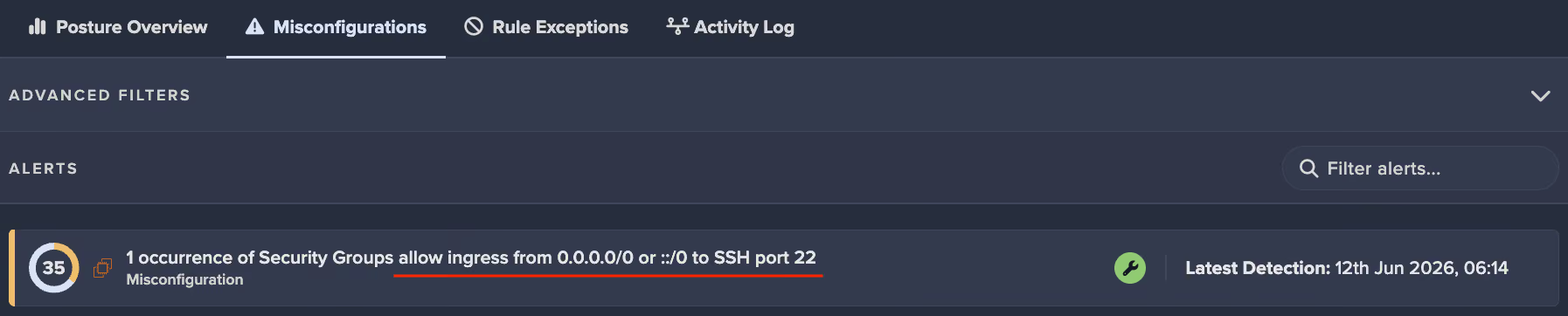
図1:EC2インスタンスがSSHポート22に対してすべてのインバウンドトラフィックを許可している設定ミスをDarktraceが警告

暗号通貨マイニングアクティビティに先立って、Darktraceはこのインスタンスに対する大量のインバウンド接続の試みが外部IPアドレス(主に145.241.123[.]102)からポート22に対して行われていることを観測しました。これはブルートフォースアクティビティを示唆するものです [2]。これらの接続の多くは短命であり、数秒しか続いておらず、スキャニングまたはログインの失敗を示していました。
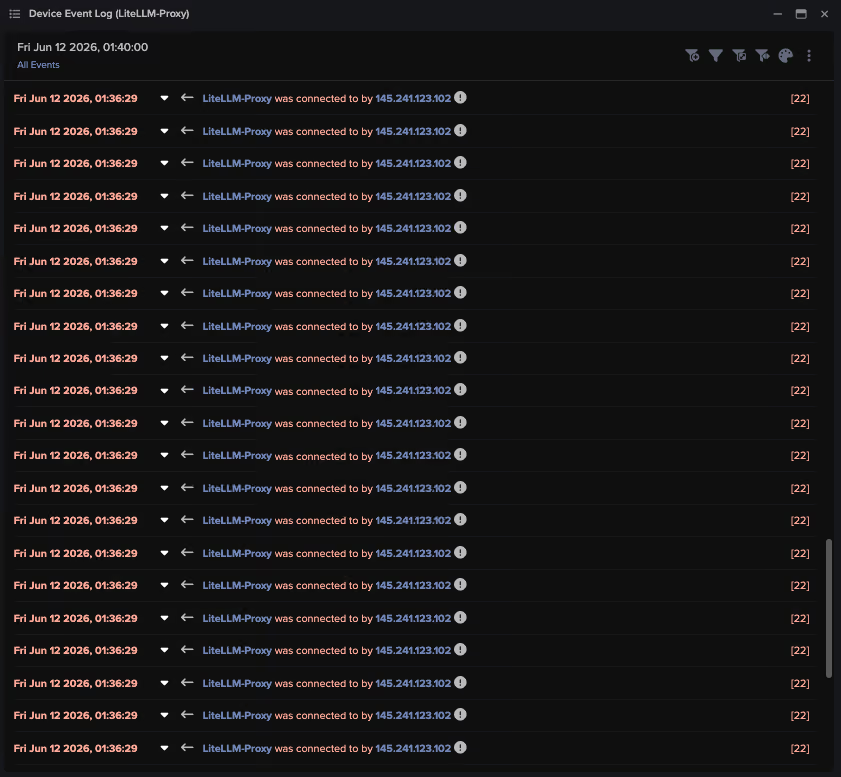
図2:Darktraceがデバイスのポート22に対する不審なインバウンド接続試行を検知

入手できたテレメトリーではこれらのインバウンドSSH接続のいずれかが認証の成功につながったかどうかの確認に至らず、このアクティビティが初期アクセスベクトルであると断定することはできませんでした。しかしながら、SSHの露出、外部IPアドレスからのインバウンド接続、それに続くマイニングアクティビティは、SSHがアクセス経路の可能性が高いことを示唆しています。

ステージ2: AIゲートウェイへのXMRigマルウェアのダウンロード

最初に観測されたマイニングプールへの接続の後、このEC2インスタンスは3.42 MBのデータをポート80上のHTTP接続を介して外部エンドポイント185.62.1[.]8にダウンロードしました。このエンドポイントは暗号通貨マイニングマルウェアXMRigを含むZIPファイルをホスティングしていました[3][4]。ホストレベルのログは入手できなかったため、ダークトレースはマイニングツールがどのように実行されたか、あるいは前のSSHアクティビティがペイロード投下を直接的に可能にしたかどうかを確認できませんでした。しかしながら、ダウンロードのタイミングとその後ほどなくマイニングプールへの接続が繰り返されたことは、このインスタンスが侵害されて不正な計算アクティビティに使われたという評価を裏付けています。

ステージ3 – 侵害されたAIゲートウェイが暗号通貨マイニングインフラと通信

わずか数分後、DarktraceはLiteLLM-ProxyEC2インスタンスがHTTPs(ポート443)でホスト名pool.hasvault[.]proに対して接続していることを確認しました。最初の接続の後、同じホスト名に対して繰り返しアウトバウンド接続が観測されました。これは、侵害されたホストがマイニングインフラと通信しワークを受け取り、結果を送信するという、暗号通貨マイニングプールとの通信のパターンと一致しています。

このアクティビティがDarktraceのEnhanced Monitoringモデル“Compromise / HighPriority Crypto Currency Mining”をトリガーし、ダークトレースのSOCにより顧客に対してエスカレーションされました。また、このアクティビティはCyber AI Analystによって分析され、関連するイベントが1つの調査ナラティブにまとめられました。これにより、影響を受けたクラウドアセットからマニングプールへの繰り返しの接続を特定することができました。
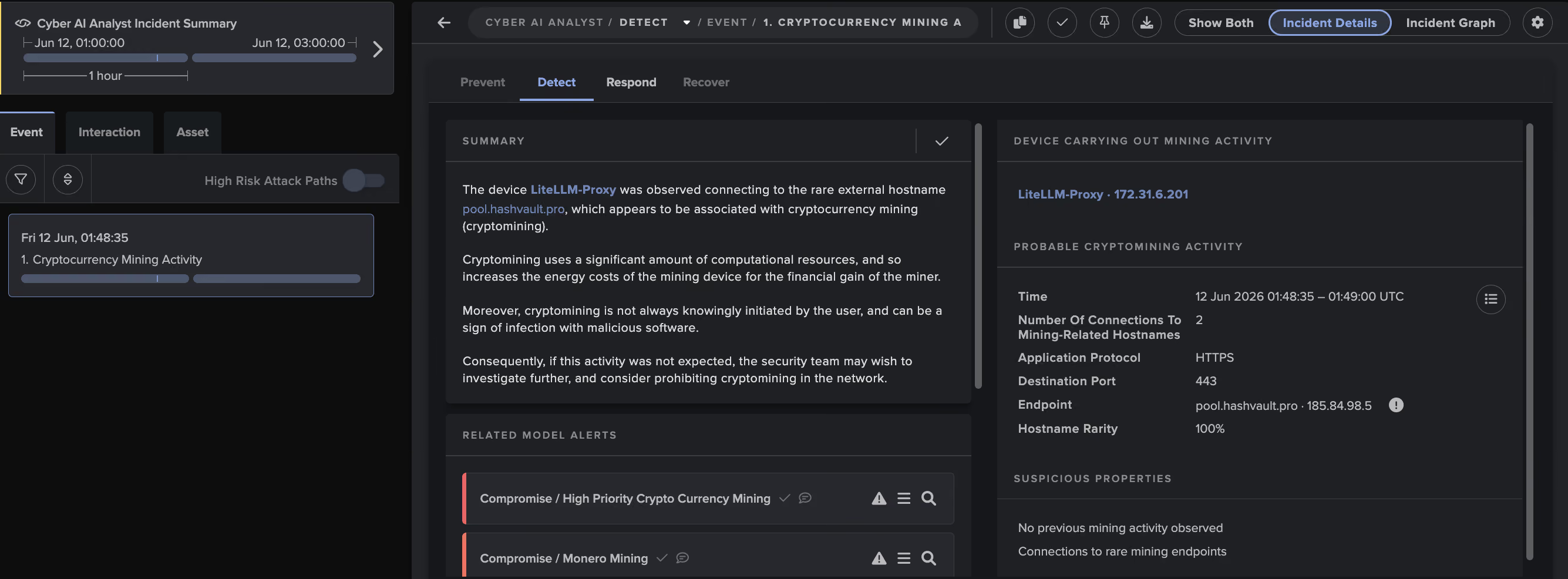
図3:CyberAI Analystによる暗号通貨マイニングアクティビティの調査  

ポート443上のHTTPSの使用にも注目すべきです。なぜならば、単独で見れば、このトラフィックそのものは疑わしく見えないかもしれないからです。しかしこのケースでは、接続先、接続の量、そして類似のアクティビティが他にないことなどが、この通信を疑わしいものとして特定するのに必要な、動作のコンテキストを提供することになりました。

ステージ4: Managed Threat Detectionサービスによるリソース乱用の特定

暗号通貨マイニングアクティビティがダークトレースのManaged Threat Detectionサービスにより検知され、ダークトレースのSOCによりレビューされました。レビューの結果、このアクティビティは顧客向けにエスカレーションされました。このエスカレーションにより、顧客はAWS環境で現在発生中のリソースの乱用について、タイムリーな通知を受けることができました。

ステージ5: クラウド認証情報の不正使用とみられる疑わしいIAMアクティビティ

これとは別に、6月13日、Darktraceは別のIAMユーザーから発生した疑わしいアクティビティを検知しました。
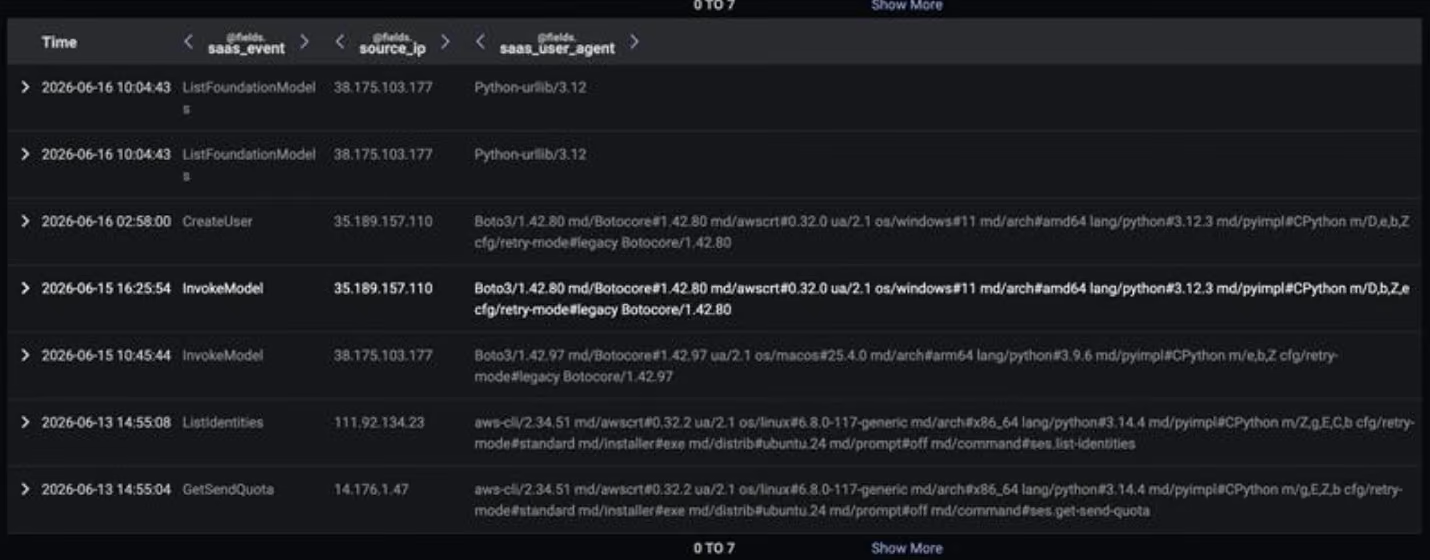
図4: DarktraceのAdvanced Search機能が別のIAMユーザーが実行した疑わしいアクティビティをハイライト

まず、このユーザーは “GetSendQuota”イベントを試行している様子が見られました。このアクションは少なくとも過去3か月間にこのアカウントによって実行されたことのないアクションです。また、このコマンドのソースIPアドレスは14.176.1[.]47でした。地理位置情報はベトナムであり、このユーザーのアクティビティがAmazon IPアドレスから最も多く見られた場所です。さらに、このアクティビティに対してAWS CLIが使用されており、これもこのユーザーにとって通常とは異なる振る舞いでした。このことは、Darktraceの“IaaS / Unusual Activity / UnusualAWS CLI Activity”モデルによって検知されました。
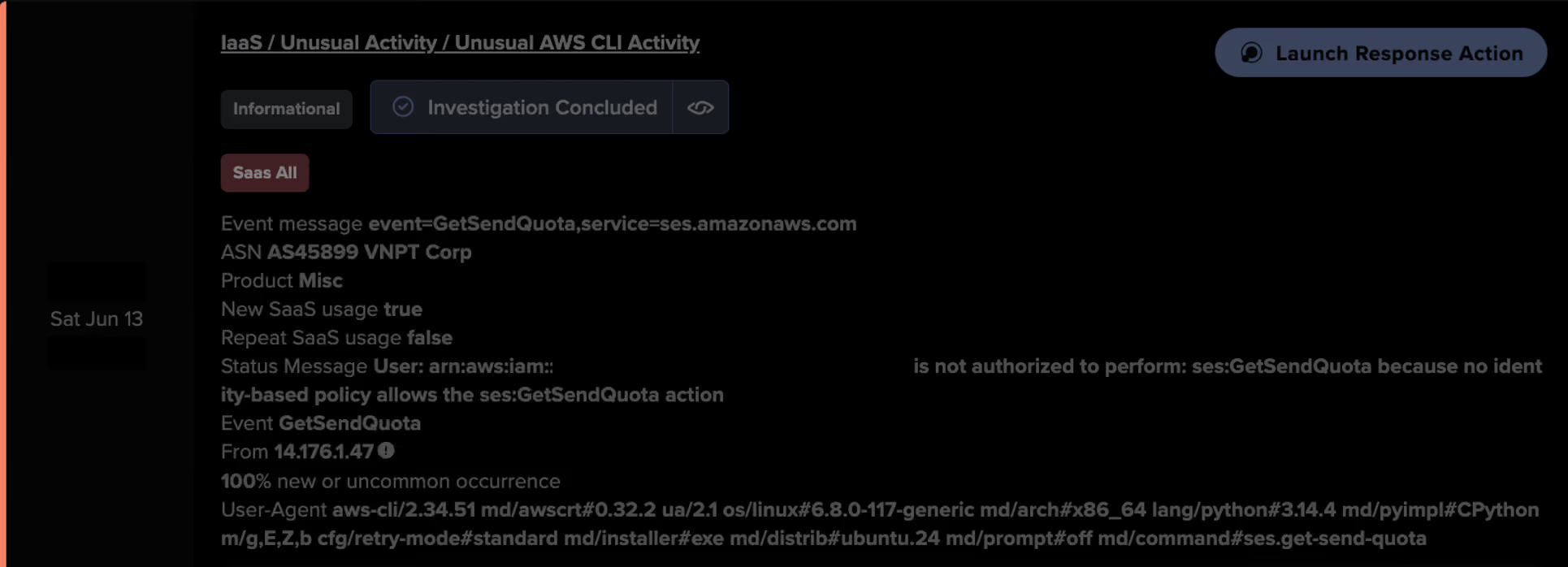
図5: Darktraceによる “GetSendQuota” イベントの検知

このIAMユーザーからは、長期アクセスキーを使った疑わしいアクティビティがさらに観測されました。中でも、“InvokeModel” および “ListFoundationModels”コマンドの失敗が検知されており、モデル列挙や起動などAmazon Bedrockサービスとのやり取りを試行したことがわかります。これは前日観測されたLiteLLM侵害への関連を思わせますが、2つのイベントを確定的に結びつける証拠は不十分でした。

“CreateUser”コマンドの試行も注目に値します。なぜなら要求されたユーザー名は意味が薄いものであり、新しいアカウントを作成することにより永続性を確立する試みと見られるからです。このアクティビティはDarktraceのモデル“IaaS / Admin / New AWS UserAccount Creation”をトリガーしました。
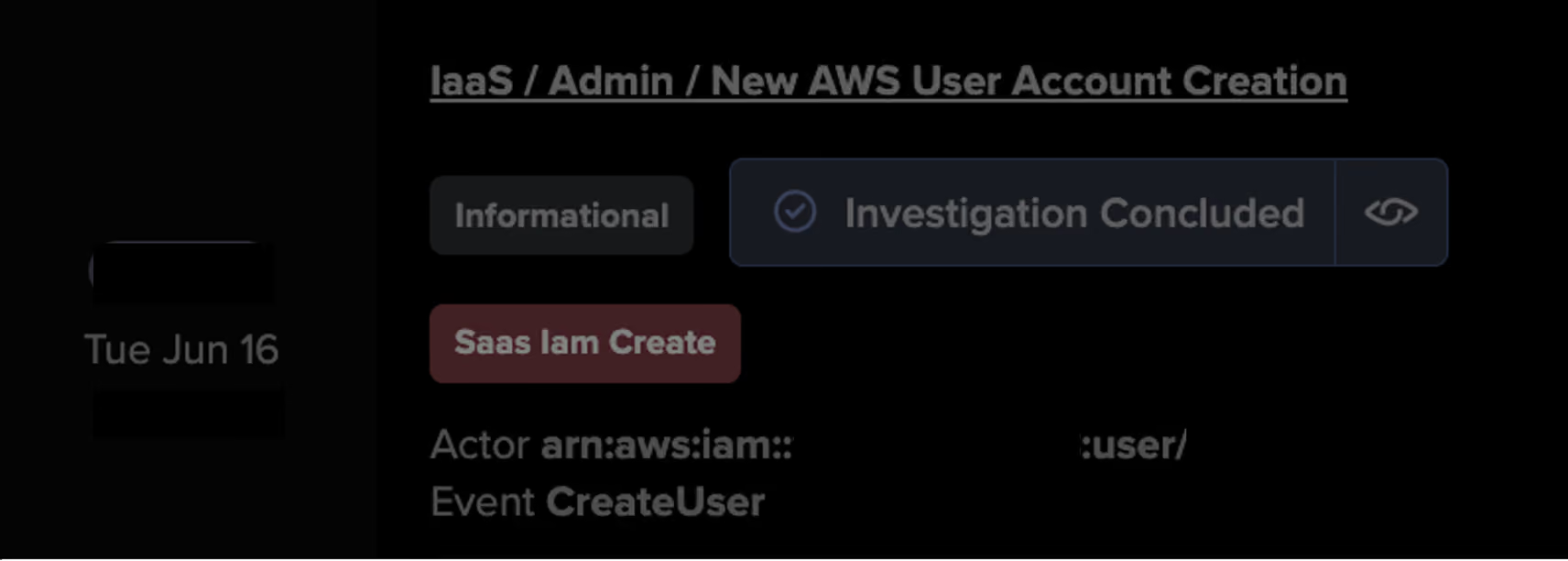
図6:Darktraceによる“CreateUser” イベントの検知

2つのインシデント間に結びつきは確認できなかったものの、このIAMアクティビティには重要な意味があります。これは、クラウド侵害の調査においてワークロードのテレメトリーとコントロールプレーンのテレメトリーの両方を取り入れることの重要性を表しています。EC2暗号通貨マイニングアクティビティが計算リソースの乱用を示す一方、IAMアクティビティは認証情報の侵害や長期アクセスキーの不正使用、そしてクラウトサービスの不正使用の可能性を示唆しているからです。

AIインフラ保護のための重要な教訓

このインシデントの重大性は暗号通貨マイニングアクティビティそのものではなく、それが発生した場所にあります。侵害されたシステムはAmazon Bedrockサービスへのアクセス権を持つAIゲートウェイとして機能し、クラウドインフラ、アイデンティティ、そしてさまざまなAIオペレーションの交差する場所に位置していました。組織がAI機能を実運用環境に導入していくなかで、これらのプラットフォームは、露出したサービス、認証情報窃取、クラウドの設定ミスなどを通じて攻撃者がすでに狙っているアタックサーフェスの一部となりつつあるのです。

このケースでは詳細な侵入経路は特定されておらず、ワークロードの侵害と調査中に検知された疑わしいIAMアクティビティの間に決定的なつながりは確認されませんでしたが、これらのイベントは全体的な現状を裏付けています。つまり、AIインフラは個別のテクノロジースタックとして扱うのではなく、クラウド環境全体の一部として保護しなければならないとうことです。

このケースでは、最も目立った侵害の兆候は暗号通貨マイニングインフラとの通信でした。しかしここで得られたより重要な教訓は、このインシデントの全貌が理解される前にDarktraceのビヘイビア分析により明らかになった、高い権限を持つAI関連アセットを取り巻くリスクです。AIゲートウェイによりクラウド権限、モデルアクセス、アプリケーションワークフローがますます集約されるなかで、防御者は個別のアラートに集中するよりも、ワークロード、アイデンティティ、サービスの間でどのように動作がつながっているかを理解することに重点を置く必要があるでしょう。

協力:Angel Arribas Lopez (Associate Principal Cyber Analyst)、Nathaniel Jones (Field CISO/VP Threat Research)、Emma Foulger (Global Threat Ops)、Mark Turner(Security Researcher)

編集:Ryan Traill (Content Manager)

付録

Darktraceによるモデル検知結果

·       Compromise / High Priority Crypto Currency Mining

·       Compromise / Monero Mining

·       Device / Internet Facing Device with High Priority Alert

·       IaaS / Unusual Activity / Unusual AWS CLI Activity

·       IaaS / Admin / New AWS User Account Creation

MITRE ATT&CK マッピング

初期アクセス – 外部リモートサービス – T1133

初期アクセス – 有効なアカウント – T1078

実行 – コマンドおよびスクリプトインタプリタ – T1059

永続化 – アカウント作成 – T1136

探索 – クラウドサービス探索 – T1526

影響 – リソースハイジャッキング– T1496

参考資料

[1] https://docs.litellm.ai/blog/security-update-march-2026

[2] https://www.abuseipdb.com/check/145.241.123.102

[3] https://urlscan.io/search/#185.62.1.8

[4] https://www.virustotal.com/gui/file/85de36ff66fae9f4b059cbedf6d36e017ebc26c828f99f911a96e78636f21200/community

Inside the SOC
Darktrace cyber analysts are world-class experts in threat intelligence, threat hunting and incident response, and provide 24/7 SOC support to thousands of Darktrace customers around the globe. Inside the SOC is exclusively authored by these experts, providing analysis of cyber incidents and threat trends, based on real-world experience in the field.
Written by
Angel Arribas Lopez
Associate Principal Cyber Analyst

More in this series

No items found.

Blog

/

Network

/

July 28, 2026

Hiding in Plain Sight: Uncovering a Multi-Stage Ransomware Attack Through Behavioral Detection

Default blog imageDefault blog image

Why ransomware has changed

Ransomware attacks have continued to increase globally, with 698 incidents reported in May 2026, representing a 48% rise compared to 472 incidents in May 2025 [1]. At the same time, the ransomware landscape is evolving. Several major ransomware groups, including LockBit [2], have been disrupted by successful joint law enforcement operations, resulting in a shift away from a small number of dominant actors towards a more fragmented and distributed ecosystem. This is increasingly composed of smaller groups who play a specialized role in the attack, such as initial access brokers, affiliates or developers.

As a result, ransomware tactics, techniques, and procedures (TTPs) are becoming more diverse and less predictable. On top of this, adversaries are leveraging native tools and legitimate penetration testing frameworks to evade detection. Anomaly-based detection is therefore critical to identify pre-ransomware activity, rather than relying on signatures associated with a handful of well-known ransomware groups.

As these attacks often unfold over several days, there is a critical window for defenders to act. In this context, behavioral-based detection plays a vital role in identifying suspicious pre-ransomware activity, and enabling early intervention before encryption or exfiltration occurs.

Inside a modern ransomware intrusion

In early 2026, Darktrace detected activity within a customer’s environment related to a multi-stage ransomware intrusion from the initial compromise. This activity does not appear to be attributable to a specific ransomware group, and no known ransomware payload was observed until the final stage.

The attack aligns with a broader industry trend in which compromised virtual private network (VPN) credentials are used as an entry point, followed by rapid internal reconnaissance and lateral movement using legitimate administrative tools. This growing preference for native tools and legitimate frameworks in cyber-attacks illustrates that it is increasingly unreliable to depend solely on traditional indicators of compromise such as known malware signatures or exploit detection.

The intrusion also involved the use of Sliver, an open-source adversary emulation framework, which is increasingly observed in real-world attacks. Originally designed for penetration testing and red teaming, Sliver has gained traction among threat actors as a stealthier alternative to more heavily signatured frameworks such as Cobalt Strike. As a legitimate framework, its use further complicates detection for security tools that rely on known malicious signatures.

Darktrace’s detection of a ransomware event in a customer’s environment

The initial compromise appears to have occurred via compromised credentials used over the VPN shortly before, or at the onset of the first indicators of suspicious activity. While it remains unclear as to how or when the threat actors gained access to these credentials, the use of initial access brokers (IABs) is a common feature of modern ransomware operations. This suggests that access to the environment may have been established several days or weeks beforehand.

The intrusion unfolded over three days, presenting multiple opportunities for early detection and intervention before ransomware deployment. The attack progressed through a compressed but structured sequence: initial access and reconnaissance were completed within hours, followed by privilege escalation and lateral movement the next day, and culminating in data exfiltration and encryption shortly thereafter. Throughout each stage, distinct behavioral anomalies emerged across the network providing clear indicators of malicious activity well before the ransomware was deployed.

While Darktrace’s Autonomous Response capability was enabled within the customer’s environment, it was not fully configured across the impacted devices, allowing the attack to progress to ransomware deployment. Had Autonomous Response been fully deployed across the affected systems, it could have taken targeted action against the earliest stages of malicious activity, potentially disrupting the intrusion before it escalated.

Figure 1: Timeline of the attack progression.

Day 1: Reconnaissance and privilege escalation

The threat actor gained access via compromised VPN credentials and initiated internal reconnaissance. Darktrace detected anomalous scanning behavior, including unusual port scanning activity and widespread network enumeration.

Specifically, Darktrace detected a high volume of east-west scanning activity across a broad range of ports, with TCP connections targeting ports 21, 80, 445, 4899 and 8080. Associated URIs suggested the use of Nmap, a widely used penetration testing tool. This highlights how attackers often leverage legitimate penetration testing tools for malicious reconnaissance, enabling them to blend into normal network activity and evade traditional signature-based detection methods.

Figure 2: Darktrace's detection of a sharp increase in anomalous internal connections, triggering multiple high-severity model alerts associated with reconnaissance activity.

Several devices were observed using administrative credentials to carry out privileged actions in a manner that was highly anomalous for the environment. This activity was accompanied by behavior consistent with SMB authentication scanning, suggesting efforts to identify and access additional systems. As the activity intensified, an increasing number of devices became involved, signalling lateral movement and further spread across the network.

Darktrace also identified privilege escalation through active directory (AD) replication abuse, specifically via the drsuapi::DRSGetNCChanges function. This technique allows an attacker with sufficient privileges to request directory replication data from a domain controller (DC), enabling them to extract credentials, including password hashes, without directly interacting with user accounts. Commonly associated with ‘DCSync’ attacks, this technique is frequently used to obtain highly privileged credentials and enable further escalation within an environment.

Figure 3: Darktrace’s detection of anomalous AD replication activity indicative of privilege escalation.

This activity was seen alongside the use of the now obsolete SMBv1, repeated NTLM authentication attempts using multiple variations of ‘Administrator’ credentials, reverse DNS scanning, and large-scale network scanning. Darktrace observed widespread use of SMBv1 across the customer’s environment, exposing a significant security weakness. As a legacy protocol with well-documented weaknesses, SMBv1 can be exploited to facilitate lateral movement, allowing the attackers to expand their access following initial compromise.

Day 3: Lateral Movement, Command & Control, and Exfiltration

Two days later, the attacker escalated privileges and expanded their foothold using living-off-the-land (LOTL) techniques such as PSExec, WMI, and RDP. Concurrently, Darktrace identified command-and-control (C2)-style communications consistent with the Sliver framework, alongside rare outbound connections to cloud infrastructure indicating potential data exfiltration. The volume and severity of observed activity increased as attack behavior intensified.

The device was observed conducting extensive lateral movement, leveraging LOTL techniques to evade detection. Activity included WMI execution (e.g. ExecQuery), DCE-RPC activity, SMB sessions and file writes, most of which were successful, as well as the deployment of PSEXESVC.exe via ADMIN$ shares and prolonged RDP sessions. Darktrace identified this behavior as highly anomalous for the environment. Such activity is commonly associated with the transfer of attacker tooling, remote command execution, and the establishment of persistent access across compromised systems.  

Figure 4: Darktrace’s detection of a spike in RPC binding events indicative of potential lateral movement.

On the same day, Darktrace detected C2-style SSL communications originating from multiple internal devices to rare external endpoints. These connections exhibited anomalous characteristics, including invalid SSL certificates and repeated connection patterns resembling beaconing. Analysis of the observed JA3 fingerprint further linked the activity to Sliver, the adversary simulation framework referenced earlier, as the hash has previously been associated with Sliver-related infrastructure [3]. The use of this framework reflects a broader trend of attackers repurposing legitimate offensive security tools for stealthy C2 communications. Connections to 137[.]220[.]59[.]55 (ASN AS20473 AS-VULTR) indicated that the communications were likely routed via a virtual private server (VPS) hosted by Vultr. Attackers often utilize VPS infrastructure from legitimate cloud providers like Vultr to obscure their true origin, blend into benign traffic, and evade IP-based detection mechanisms [4].

Figure 5: Darktrace’s Cyber AI Analyst detection of two linked unusual connections to Vultr infrastructure.

Darktrace also observed a device initiating SSL connections to safedata.s3[.]wasabisys[.]com, an endpoint associated with Wasabi cloud storage. Darktrace recognized that neither the destination nor the associated IP address had previously been observed within the environment.  More than 200 MB of data was subsequently uploaded externally to endpoints sharing the same JA3 client hash, indicating a sustained transfer session and potential data exfiltration to third-party storage. The apparent exfiltration prior to encryption is consistent with a double-extortion ransomware strategy.

Figure 6: Darktrace’s Cyber AI Analyst detection of more than 30 rare outbound connections to a Wasabi cloud storage endpoint, indicative of potential data exfiltration

Day 4: Encryption

The attack culminated in ransomware deployment, marking the transition from suspicious network activity to a business-impacting incident. Using SMB-based propagation, the threat actor encrypted thousands of files across the network, affecting multiple systems and disrupting normal operations. Throughout the encryption event, the legacy SMBv1 protocol was used extensively across multiple internal systems, resulting in a significant increase in newly encrypted files.

Figure 7: Darktrace’s detection of abnormal spikes in SMB activity and associated model alerts, indicative of ransomware encryption and propagation.

Darktrace’s Cyber AI Analyst automatically investigated and correlated the encryption activity and related events into a single incident narrative, providing the customer with real-time visibility into the attack while significantly reducing investigation time.

Figure 8: Darktrace’s Cyber AI Analyst’s investigation into the encryption activity. AI Analyst incident detailing example encryption activity in real time. Related events are automatically correlated and summarized into a clear narrative, reducing investigation time.

Defender action recommendations

What Could Have Stopped the Attack Earlier?

Although the attack ultimately resulted in ransomware deployment, there were multiple opportunities to detect, contain, and disrupt the intrusion before encryption occurred. The following actions could have significantly reduced the overall impact:

Detect and investigate indicators of reconnaissance and lateral movement

  • Unusual scanning
  • Active Directory replication anomalies consistent with DCSync activity
  • Anomalous use of native tools and processes indicative of LOTL attacks
  • Unusual use of common reconnaissance tools such as Nmap and NetScan

Contain compromised credentials and affected devices

  • Disable and reset compromised VPN credentials
  • Isolate devices performing anomalous scanning and lateral movement activity

Block suspicious external communications and data exfiltration

  • Use anomaly-based detection to detect and block repeated outbound connections to rare external infrastructure
  • Prevent data exfiltration to unauthorized cloud storage services such as Wasabi

Conclusion

The incident highlights the importance of anomaly-based detection, particularly against attacks that primarily use native or legitimate tools to evade traditional security measures. Darktrace identified suspicious activity from the first day of the compromise, providing multiple opportunities to disrupt the intrusion before it progressed to lateral movement and data exfiltration.

In this instance, detection was not the limiting factor; response time was. Prompt investigation and containment of devices exhibiting anomalous behavior could have prevented lateral movement, data exfiltration, and ultimately ransomware deployment.

As adversaries increasingly prioritize stealth over custom malware, relying instead on legitimate tools, valid credentials, and trusted infrastructure, traditional signature-based detection becomes less effective. Identifying subtle behavioral deviations early remains critical to disrupting attacks before they escalate into full-scale ransomware incidents.

Credit to Alexandra Evzona (Cyber Analyst), Priya Thapa (Senior Cyber Analyst)
Edited by Ryan Traill (Content Manager)

Appendices

References

[1] https://industrialcyber.co/ransomware/check-point-reports-ransomware-attacks-jump-48-year-over-year-despite-decline-in-overall-cyberattack-activity/

[2] https://www.europol.europa.eu/media-press/newsroom/news/law-enforcement-disrupt-worlds-biggest-ransomware-operation

[3] https://fieldeffect.com/blog/field-effect-mitigates-not-so-simplehelp-exploits-enabling-deployment-of-backdoors

[4] https://www.darktrace.com/blog/from-vps-to-phishing-how-darktrace-uncovered-saas-hijacks-through-virtual-infrastructure-abuse

Indicators of Compromise (IoCs)

IP Addresses

  • 137[.]220[.]59[.]55 – Potential C2 infrastructure (Vultr AS20473)
  • 38[.]27[.]106[.]123 – Wasabi cloud storage endpoint associated with potential data exfiltration
  • 38[.]27[.]106[.]128 – Wasabi cloud storage endpoint associated with potential data exfiltration
  • 38[.]27[.]106[.]117 – Wasabi cloud storage endpoint associated with potential data exfiltration

Domains

  • safedata[.]s3[.]wasabisys[.]com – Potential data exfiltration endpoint
  • *.wasabisys[.]com – Associated Wasabi cloud storage infrastructure

JA3 Fingerprint

  • d6828e30ab66774a91a96ae93be4ae4c – Associated with the Sliver adversary emulation framework

Files

  • Delete[.]me – File observed during reconnaissance activity, commonly associated with NetScan

Darktrace Model Coverage

·       Anomalous Connection / Active Remote Desktop Tunnel

·       Anomalous Connection / Anomalous Remote Registry Service Control

·       Anomalous Connection / Multiple Failed Windows UDP

·       Anomalous Connection / New or Uncommon Service Control

·       Anomalous Connection / New or Uncommon Service Enumeration

·       Anomalous Connection / New User Agent to IP Without Hostname

·       Anomalous Connection / SMB Enumeration

·       Anomalous Connection / Suspicious Activity On High Risk Device

·       Anomalous Connection / Suspicious Read Write Ratio

·       Anomalous Connection / Sustained MIME Type Conversion

·       Anomalous Connection / Uncommon 1 GiB Outbound

·       Anomalous Connection / Unusual Admin RDP Session

·       Anomalous Connection / Unusual Admin SMB Session

·       Anomalous Connection / Unusual SMB Version 1 Connectivity

·       Anomalous File / EXE from Rare External Location

·       Anomalous File / Internal / Additional Extension Appended to SMB File

·       Anomalous Server Activity / Outgoing from Server

·       Compromise / Beaconing Activity To External Rare

·       Compromise / Ransomware / Possible Ransom Note Read

·       Compromise / Ransomware / Ransom or Offensive Words Written to SMB

·       Compromise / Ransomware / Suspicious SMB Activity

·       Device / Anonymous NTLM Logins

·       Device / Attack and Recon Tools

·       Device / Initial Attack Chain Activity

·       Device / Large Number of Model Alerts

·       Device / Long Agent Connection to New Endpoint

·       Device / Multiple Lateral Movement Model Alerts

·       Device / Network Scan

·       Device / New or Uncommon SMB Named Pipe

·       Device / New or Unusual Remote Command Execution

·       Device / New User Agent

·       Device / Possible RPC Lateral Movement

·       Device / Possible SMB/NTLM Brute Force

·       Device / RDP Scan

·       Device / SMB Lateral Movement

·       Device / SMB Session Brute Force (Non-Admin)

·       Device / SMB Version 1 Access Failures

·       Device / Suspicious File Delete Activity

·       Device / Suspicious Network Scan Activity

·       Device / Unusual SMB Error Detected

·       Device / Unusual SMB To Critical Resource

·       Device / Unusual Winreg Operation

·       Unusual Activity / Multiple Failed Internal Connections

·       Unusual Activity / Possible RPC Recon Activity

·       Unusual Activity / Sustained Anomalous SMB Activity

·       Unusual Activity / Unusual External Data to New Endpoint

·       Unusual Activity / Unusual External Data Transfer

·       Unusual Activity / Unusual File Storage Data Transfer

·       Unusual Activity / Unusual Large Internal Transfer

·       User / New Admin Credentials on Client

·       User / NTLM Login from Unauthenticated Device

Autonomous Response Model Alerts

·       Antigena / Network / External Threat / Antigena Ransomware Block

·       Antigena / Network / External Threat / Antigena Suspicious File Block

·       Antigena / Network / Insider Threat / Antigena Active Threat SMB Write Block

·       Antigena / Network / Insider Threat / Antigena Internal Anomalous File Activity

·       Antigena / Network / Insider Threat / Antigena Large Data Volume Outbound Block

·       Antigena / Network / Insider Threat / Antigena Network Scan Block

·       Antigena / Network / Insider Threat / Antigena Unusual Privileged User Activities Block

·       Antigena / Network / Manual / Quarantine Device

·       Antigena / Network / Significant Anomaly / Antigena Alerts Over Time Block

·       Antigena / Network / Significant Anomaly / Antigena Controlled and Model Alert

·       Antigena / Network / Significant Anomaly / Antigena Enhanced Monitoring from Client Block

·       Antigena / Network / Significant Anomaly / Antigena Enhanced Monitoring from Server Block 100

·       Antigena / Network / Significant Anomaly / Antigena Significant Anomaly from Client Block

MITRE ATT&CK MAPPING

Command and control - Protocol Tunneling - T1572

Command and control – Web Protocols – T1071.001

Credential Access- Exploitation for Credential Access- T1212

Credential Access- Password Guessing- T1110

Discovery- File and Directory Discovery- T1083

Discovery- Network Service Discovery- T1046

Discovery- Network Share Discovery- T1135

Discovery- Remote System Discovery- T1018

Exfiltration- Exfiltration Over C2 Channel- T1041

Exfiltration- Exfiltration to Cloud Storage- T1567

Impact- Data Encrypted for Impact- T1486

Impact- Data Encrypted for Impact- T1486

Impact- Service Stop - T1489

Initial Access- Public-Facing Application- T1190

Lateral Movement- Exploitation of Remote Services- T1210

Lateral Movement- Remote Desktop Protocol- T1021

Lateral Movement- SMB/Windows Admin Shares- T1021

Lateral Movement- Taint Shared Content- T1080

Persistence- Modify Registry- T1112

Privilege Escalation- Exploitation for Privilege Escalation- T0890

Privilege Escalation- Valid Accounts- T1078

Reconnaissance- Scanning IP Blocks- T1595

Reconnaissance- Vulnerability Scanning- T1595

Resource Development- Malware- T1588

Stealth- File Deletion- T1070

Continue reading
About the author
Alexandra Evzona
Cyber Analyst

Blog

/

Email

/

July 24, 2026

Darktrace / EMAIL Expands Behavioral Defense Across Email and Collaboration Workflows

Default blog imageDefault blog image

Email and collaboration tools do more than carry messages. They are where organizations approve payments, share sensitive data, reset credentials, and make thousands of everyday decisions. Increasingly, they are interfaces through which humans direct AI agents in their daily activity. Email, Slack and Teams are high volume, rich with sensitive data, and an easy place to hide malicious activity.

The opportunity isn’t lost on bad actors. Darktrace / EMAIL detected more than 32 million high-confidence phishing emails globally in 2025, and 70% of those messages passed DMARC authentication.  Phishing is increasingly difficult to detect and familiar trust signals alone are not enough. People and security teams need to understand how a message fits the normal behavior of the sender, recipient, and organization. They also need to correlate activity across platforms to spot threats that span multiple channels.

To effectively secure against today’s evolved threats, security teams need to act at two levels: they need to help each employee make a safer decision ‘in the moment’, and they need to understand the wider patterns that may expose the business to risk.

Darktrace is introducing four new capabilities in Darktrace / EMAIL to address both challenges. The new features explain suspicious content more clearly to end users, strengthen the capabilities of Darktrace / Adaptive Human Defense with richer guidance, let organizations define their own patterns for detecting sensitive data in messages, and give security teams a process-level view of risk across email and collaboration workflows.

Darktrace / EMAIL Inbox Analysis highlights risky content within your emails

A warning is more useful when it explains what the user should look at. To help do that, we’ve expanded Darktrace / EMAIL’s Inbox Analysis Add-In to highlight potentially dangerous content within the body of emails that Darktrace / EMAIL flags as potentially suspicious or high risk.  

The add-in can highlight language designed to create urgency, financial references, requests for payment, suspicious links, and content that is unusual for the sender. Each highlighted element includes a pop up that explains why it may be suspicious. Instead of asking an employee to accept a verdict without context, the analysis helps them examine the message and make a more informed decision.

Enhanced Just-In-Time Training Banners in Darktrace / Adaptive Human Defense

Enhanced Just-In-Time Training Banners build on the same principle. The banners now include a contextual header, actionable advice, and specific detection context. This gives employees more useful guidance at the point of risk without adding unnecessary information or cognitive load.

Together, the capabilities help turn a warning into a short learning moment. Employees can see what looks unusual, understand what action to take, and build their judgment.

Custom Sensitive Data Detection in Darktrace / EMAIL - Data Loss Prevention

Sensitive data is different for every business. Standard categories such as payment card details or government identifiers matter, but organizations also have their own customer codes, project names, research formats, account structures, and internal identifiers.

Custom Sensitive Data Detection in Darktrace / EMAIL - Data Loss Prevention allows administrators to write custom expressions for the data their organization needs to protect. Matched content can trigger existing model actions and data loss prevention (DLP) workflows, extending Darktrace's DLP capabilities.

This extends data loss detection beyond a fixed library of common data types. Security teams can apply controls to information that is sensitive in the context of their own organization and adapt those controls as the business changes.

Introducing Email and Collaboration Workflow Risk Posture Dashboards

Some of the most important risks are not isolated events. They are repeated ways of working that create an opening for error, misuse, or attack. For example, a payment request may be one suspicious message, but a recurring approval workflow that relies on weak verification is a business process risk.

The new Email and Collaboration Workflow Risk Posture Dashboard analyzes email and collaboration data across Email, Microsoft Teams, Slack and Zoom to provide a process-level view of risk in the organization. These may include financial authorization workflows, sensitive data sharing patterns, and activity that could expose credentials.

The dashboard brings these patterns into a view and provides actionable recommendations. This helps security teams determine where to investigate or strengthen controls, where ownership needs to be clarified, and where the business may need to change a risky process. It gives CISOs a clearer view of how human and communication risk is embedded in everyday operations, not only where individual alerts occur.

Behavior connects the individual decision to the wider risk

These capabilities build on Darktrace’s unique behavioral approach to security. We use Adaptive AI to learn how people and AI normally behave within an organization, creating the context needed to recognize when activity changes.

Within the Darktrace Behavioral Defense Platform, Darktrace / EMAIL helps protect people against phishing, account takeover, data exfiltration, and human risk across email and collaboration tools. The new capabilities extend that protection in both directions. They give employees clearer context for the decision in front of them, while giving security leaders a broader view of the workflows and behavior that create risk across the organization.

The result is not simply more alerts. It is a better understanding of why something is risky, what action to take, and where the organization can reduce risk before a familiar process becomes an easy route for an attacker.

[related-resource]

Continue reading
About the author
Carlos Gray
Senior Product Marketing Manager, Email
あなたのデータ × DarktraceのAI
唯一無二のDarktrace AIで、ネットワークセキュリティを次の次元へ