.avif)




Anthropic’s Mythos and what it means for security teams
Recent attention on systems such as Anthropic Mythos highlights a notable problem for defenders. Namely that disclosure’s role in coordinating defensive action is eroding.
As AI systems gain stronger reasoning and coding capability, their usefulness in analyzing complex software environments and identifying weaknesses naturally increases. What has changed is not attacker motivation, but the conditions under which defenders learn about and organize around risk. Vulnerability discovery and exploitation increasingly unfold in ways that turn disclosure into a retrospective signal rather than a reliable starting point for defense.
Faster discovery was inevitable and is already visible
The acceleration of vulnerability discovery was already observable across the ecosystem. Publicly disclosed vulnerabilities (CVEs) have grown at double-digit rates for the past two years, including a 32% increase in 2024 according to NIST, driven in part by AI even prior to Anthropic’s Mythos model. Most notably XBOW topped the HackerOne US bug bounty leaderboard, marking the first time an autonomous penetration tester had done so.
The technical frontier for AI capabilities has been described elsewhere as jagged, and the implication is that Mythos is exceptional but not unique in this capability. While Mythos appears to make significant progress in complex vulnerability analysis, many other models are already able to find and exploit weaknesses to varying degrees.
What matters here is not which model performs best, but the fact that vulnerability discovery is no longer a scarce or tightly bounded capability.
The consequence of this shift is not simply earlier discovery. It is a change in the defender-attacker race condition. Disclosure once acted as a rough synchronization point. While attackers sometimes had earlier knowledge, disclosure generally marked the moment when risk became visible and defensive action could be broadly coordinated. Increasingly, that coordination will no longer exist. Exploitation may be underway well before a CVE is published, if it is published at all.
Why patch velocity alone is not the answer
The instinctive response to this shift is to focus on patching faster, but treating patch velocity as the primary solution misunderstands the problem. Most organizations are already constrained in how quickly they can remediate vulnerabilities. Asset sprawl, operational risk, testing requirements, uptime commitments, and unclear ownership all limit response speed, even when vulnerabilities are well understood.
If discovery and exploitation now routinely precede disclosure, then patching cannot be the first line of defense. It becomes one necessary control applied within a timeline that has already shifted. This does not imply that organizations should patch less. It means that patching cannot serve as the organizing principle for defense.
Defense needs a more stable anchor
If disclosure no longer defines when defense begins, then defense needs a reference point that does not depend on knowing the vulnerability in advance.
Every digital environment has a behavioral character. Systems authenticate, communicate, execute processes, and access resources in relatively consistent ways over time. These patterns are not static rules or signatures. They are learned behaviors that reflect how an organization operates.
When exploitation occurs, even via previously unknown vulnerabilities, those behavioral patterns change.
Attackers may use novel techniques, but they still need to gain access, create processes, move laterally, and will ultimately interact with systems in ways that diverge from what is expected. That deviation is observable regardless of whether the underlying weakness has been formally named.
In an environment where disclosure can no longer be relied on for timing or coordination, behavioral understanding is no longer an optional enhancement; it becomes the only consistently available defensive signal.
Detecting risk before disclosure
Darktrace’s threat research has consistently shown that malicious activity often becomes visible before public disclosure.
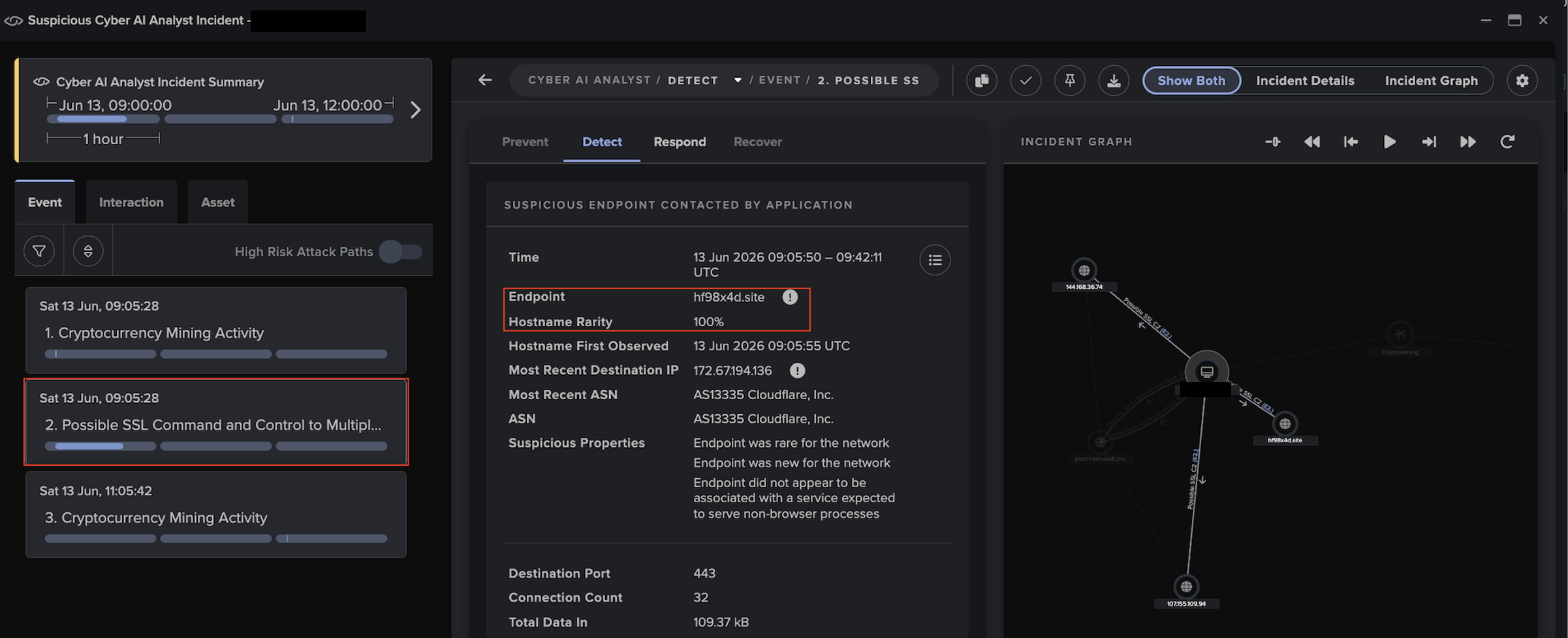
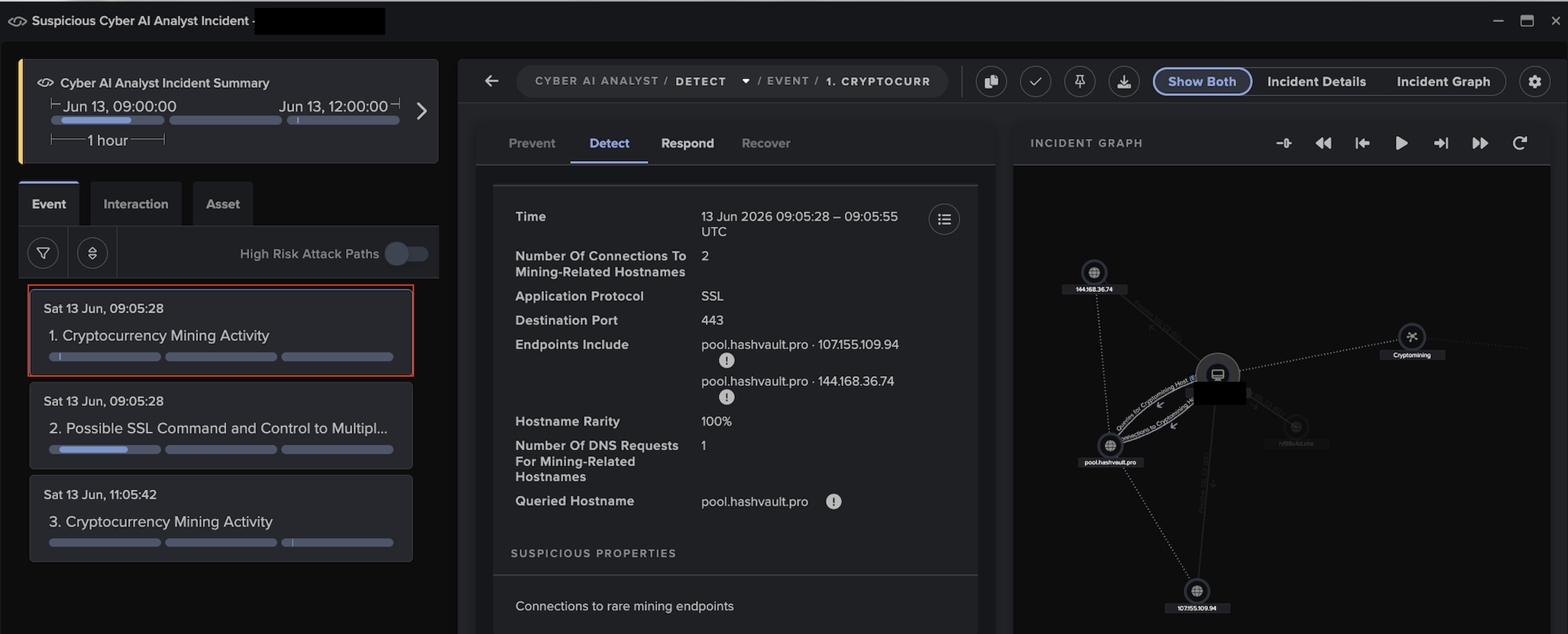
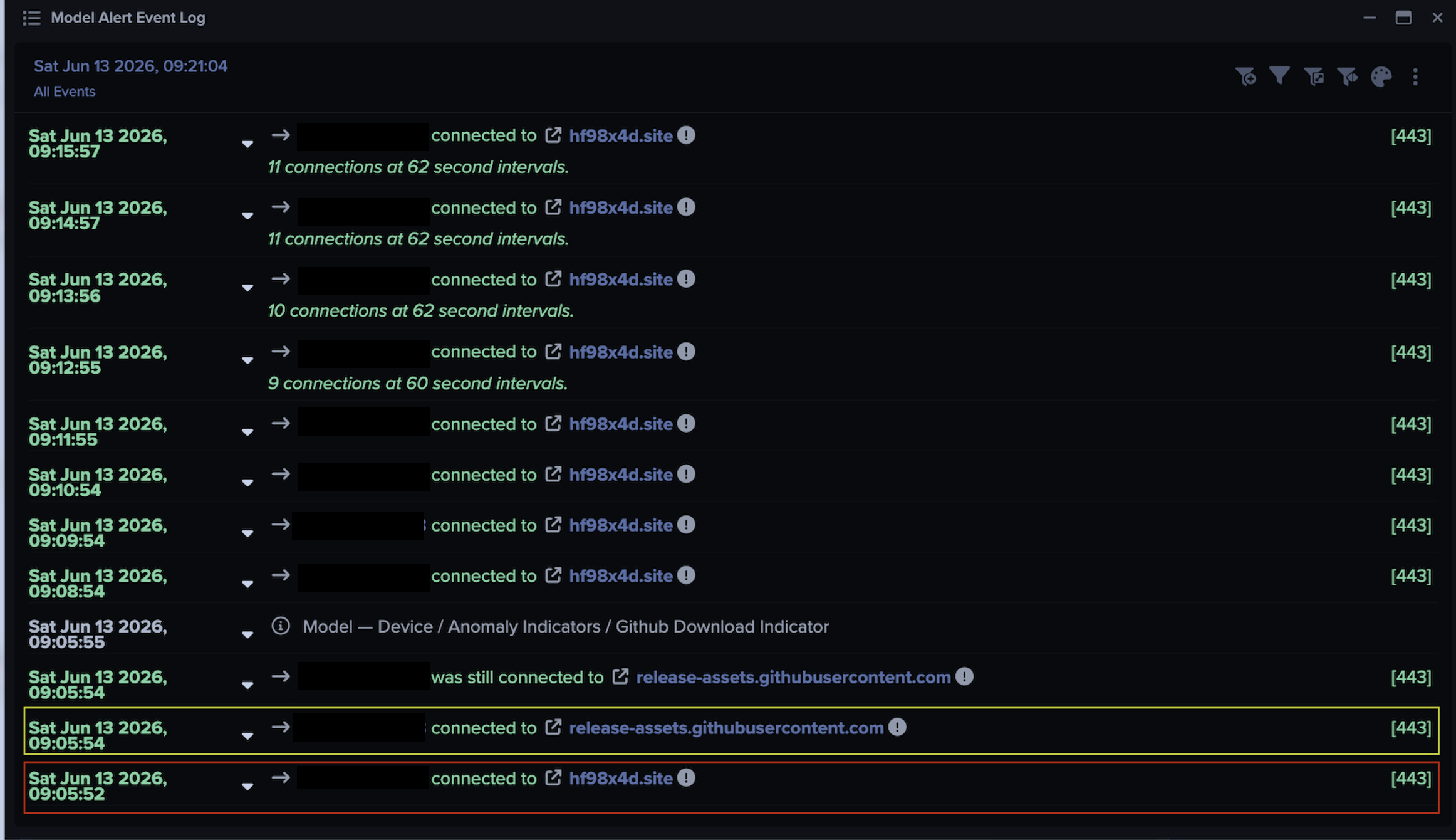
In multiple cases, including exploitation of Ivanti, SAP NetWeaver, and Trimble Cityworks, Darktrace detected anomalous behavior days or weeks ahead of CVE publication. These detections did not rely on signatures, threat intelligence feeds, or awareness of the vulnerability itself. They emerged because systems began behaving in ways that did not align with their established patterns.
This reflects a defensive approach grounded in ‘Ethos’, in contrast to the unbounded exploration represented by ‘Mythos’. Here, Mythos describes continuous vulnerability discovery at speed and scale. Ethos reflects an understanding of what is normal and expected within a specific environment, grounded in observed behavior.
Revisiting assume breach
These conditions reinforce a principle long embedded in Zero Trust thinking: assume breach.
If exploitation can occur before disclosure, patching vulnerabilities can no longer act as the organizing principle for defense. Instead, effective defense must focus on monitoring for misuse and constraining attacker activity once access is achieved. Behavioral monitoring allows organizations to identify early‑stage compromise and respond while uncertainty remains, rather than waiting for formal verification.
AI plays a critical role here, not by predicting every exploit, but by continuously learning what normal looks like within a specific environment and identifying meaningful deviation at machine speed. Identifying that deviation enables defenders to respond by constraining activity back towards normal patterns of behavior.
Not an arms race, but an asymmetry
AI is often framed as fueling an arms race between attackers and defenders. In practice, the more important dynamic is asymmetry.
Attackers operate broadly, scanning many environments for opportunities. Defenders operate deeply within their own systems, and it’s this business context which is so significant. Behavioral understanding gives defenders a durable advantage. Attackers may automate discovery, but they cannot easily reproduce what belonging looks like inside a particular organization.
A changed defensive model
AI‑accelerated vulnerability discovery does not mean defenders have lost. It does mean that disclosure‑driven, patch‑centric models no longer provide a sufficient foundation for resilience.
As vulnerability volumes grow and exploitation timelines compress, effective defense increasingly depends on continuous behavioral understanding, detection that does not rely on prior disclosure, and rapid containment to limit impact. In this model, CVEs confirm risk rather than define when defense begins.
The industry has already seen this approach work in practice. As AI continues to reshape both offense and defense, behavioral detection will move from being complementary to being essential.